
Why Your Driveway Deserves a Budget-Friendly Makeover
Affordable driveway ideas can transform your home’s curb appeal without draining your savings account. Here are the most cost-effective options to consider:
Top Budget-Friendly Driveway Materials:
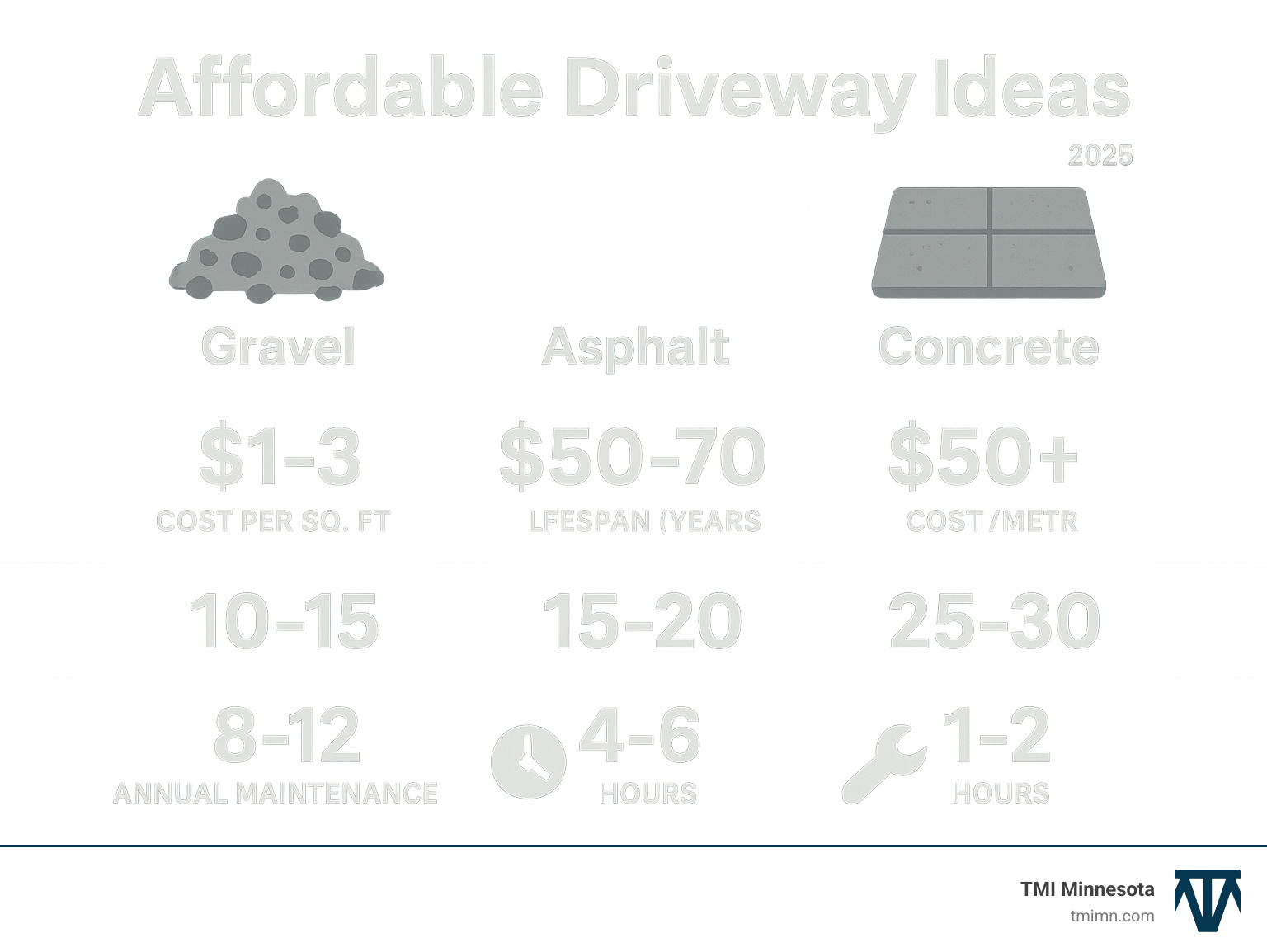
- Gravel – $1-3 per sq ft (cheapest option, great drainage)
- Asphalt – $50-70 per sq meter (smooth surface, moderate cost)
- Concrete Pavers – $25+ per sq meter (design flexibility, easy repairs)
- Poured Concrete – Starting at $50 per sq meter (most durable, longest lasting)
Your driveway is the first thing visitors see when they arrive at your home. A cracked, stained, or outdated driveway can hurt your home’s first impression – and potentially its value. The good news? You don’t need to spend thousands to create a driveway that looks great and functions well.
Whether you’re dealing with a “long ribbon of ugliness” (as one homeowner described their old driveway) or simply want to boost your curb appeal, there are proven solutions that fit almost any budget. From DIY-friendly gravel installations to professional concrete paving, the right choice depends on your specific needs, climate, and long-term goals.
The key is balancing upfront costs with maintenance requirements. While gravel might cost less initially, concrete can last twice as long with minimal upkeep. Smart homeowners also consider factors like drainage, local weather, and whether they want to tackle installation themselves or hire professionals.
I’m Christopher Deanovic, Operations Leader at TMI Minnesota, where I’ve helped hundreds of Minnesota homeowners transform their properties through thoughtful hardscape design and expert installation. My experience with affordable driveway ideas has shown me that the right material choice can dramatically improve both function and aesthetics without breaking your budget.
The Most Budget-Friendly Driveway Materials Ranked
When you’re exploring affordable driveway ideas, it’s tempting to focus only on that initial price tag. But here’s the thing – the cheapest material upfront might end up costing you more in the long run if you’re constantly fixing potholes or replacing sections every few years.
Think of it like buying shoes. You could grab a $20 pair that falls apart in six months, or invest in a $60 pair that lasts for years. The same logic applies to driveways, except the stakes are higher – we’re talking about thousands of dollars and your home’s curb appeal.
The sweet spot is finding materials that balance low upfront costs with reasonable durability. You want something that won’t break the bank today but also won’t have you pulling your hair out with maintenance headaches tomorrow.
| Material | Average Cost per Sq. Ft. | Lifespan | DIY-Friendliness | Maintenance Level |
|---|---|---|---|---|
| Gravel | $1 – $3 | 10-15 years | High | High |
| Asphalt | $4.6 – $6.5 (approx.) | 15-20 years | Low | Medium |
| Concrete Pavers | $2.3 – $7.5 (material only) | 25-50 years | Medium | Medium |
| Poured Concrete | $4.6 – $7.5 (approx.) | 25-30 years | Low | Low |
Note: Costs can vary significantly based on your location, project size, and material quality – especially here in Minnesota where our freeze-thaw cycles can be tough on driveways.
Gravel takes the crown for absolute lowest cost, coming in at just $1-3 per square foot. If you’re handy with basic tools and don’t mind getting your hands dirty, you can tackle gravel installation yourself and save even more. The trade-off? You’ll be raking it back into place after heavy rains and dealing with weeds poking through.
Asphalt offers that classic smooth driveway look most of us grew up with. At around $4.6-6.5 per square foot, it costs more than gravel but gives you that professional appearance. The downside is you’ll need to reseal it every few years to keep it looking good and prevent cracks from turning into major problems.
Poured concrete is where you start seeing serious long-term value. Yes, the initial cost is similar to asphalt, but concrete can last 25-30 years with minimal fuss. It handles our Minnesota winters better than most materials and rarely needs more than an occasional cleaning.
Concrete pavers split the difference beautifully between cost and style. Material costs start around $2.3 per square foot for basic concrete blocks, though they can go higher for fancier designs. The big advantage? If one section gets damaged, you can replace just those pavers instead of redoing the whole driveway.
Your best choice depends on what matters most to you right now. Tight budget and willing to do the work yourself? Gravel is your friend. Want something that looks professional without breaking the bank? Consider asphalt or basic concrete pavers. Thinking long-term and want to set it and forget it? Poured concrete might be worth the extra investment upfront.
Top Affordable Driveway Ideas for Instant Curb Appeal
When it comes to affordable driveway ideas, you have more options than you might think. Each material brings its own personality to your home’s entrance, and understanding their unique characteristics helps you make the smart choice for your situation and budget.
Let’s explore the four most popular and cost-effective options that can transform your driveway without emptying your wallet.
1. Gravel & Crushed Stone: The Ultimate DIY-Friendly Option
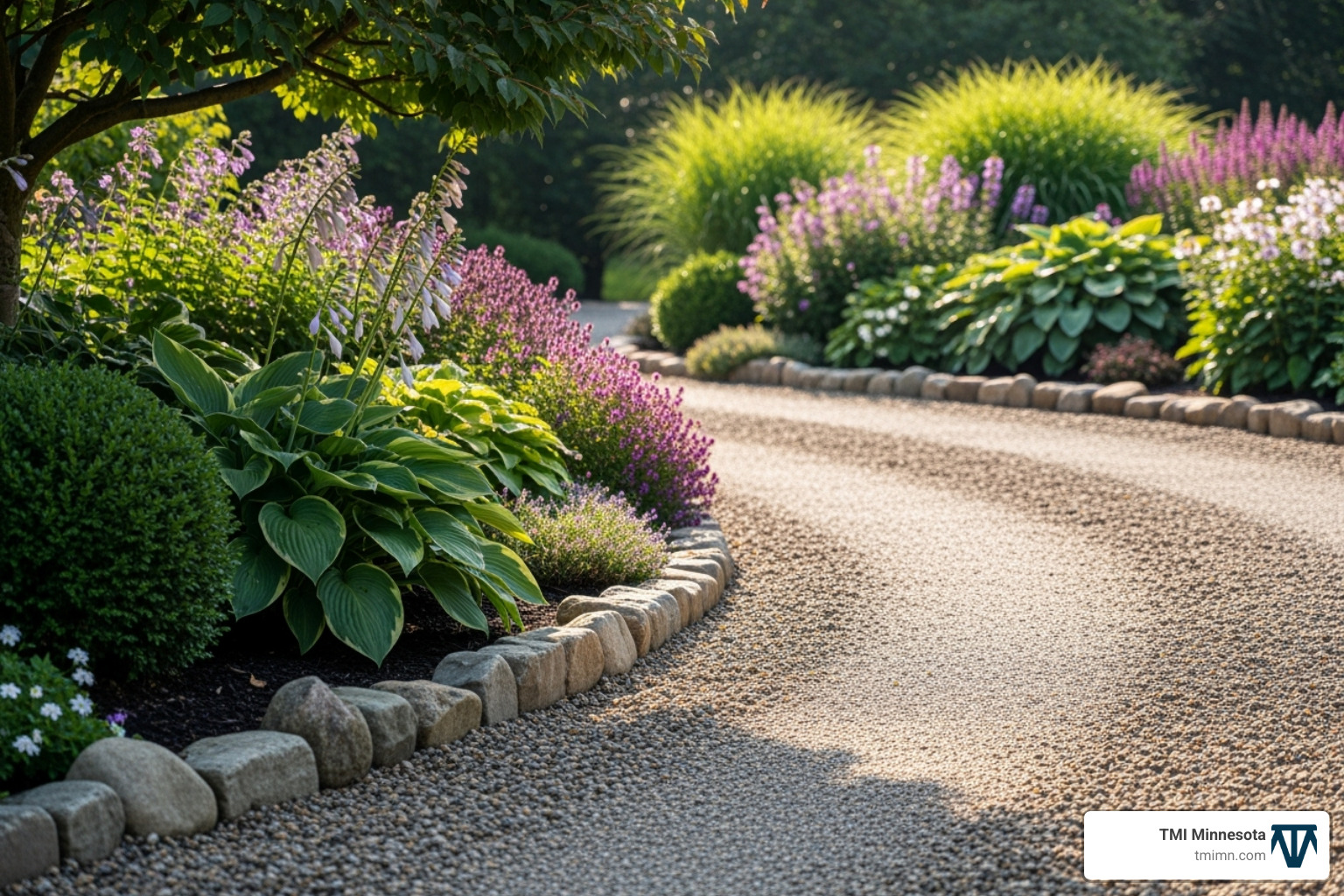
If you’re looking for the most budget-friendly option that you can tackle yourself, gravel is your champion. At just $1-3 per square foot, it’s hard to beat for upfront cost. I’ve seen homeowners create beautiful, functional driveways for a fraction of what other materials cost.
Gravel shines brightest when you need excellent drainage. The stones naturally allow rainwater to soak through, which is fantastic for Minnesota’s heavy spring rains and helps prevent that annoying pooling you get with solid surfaces. Plus, you’re doing the environment a favor by letting water return to the ground naturally.
The DIY-friendly nature of gravel makes it especially appealing. With some basic tools and a free weekend, most homeowners can install their own gravel driveway. Just remember that proper preparation is key – you’ll want to excavate about 6-8 inches deep and install good edging to keep those stones where they belong.
But let’s be honest about the trade-offs. Gravel requires ongoing attention. You’ll find yourself raking out tire ruts, especially after heavy use or storms. Weeds love to pop up through gravel unless you install proper barriers, and stones have a habit of migrating onto your lawn and sidewalks.
When choosing your gravel type, limestone gravel binds together nicely for a more stable surface, while river rock offers beautiful aesthetics but tends to shift more. For the most practical choice, consider crusher run – a mix of crushed stone and rock dust that compacts into a surprisingly solid surface over time.
One pro tip: stick with 20mm gravel for driveways. Smaller stones get stuck in tire treads, and trust me, that gets old fast when you’re picking pebbles out of your garage floor.
For expert guidance on creating the perfect foundation for your gravel driveway, our Hardscape Design Services can help ensure your project starts on solid ground.
2. Asphalt (Tarmac): The Classic, Cost-Effective Choice
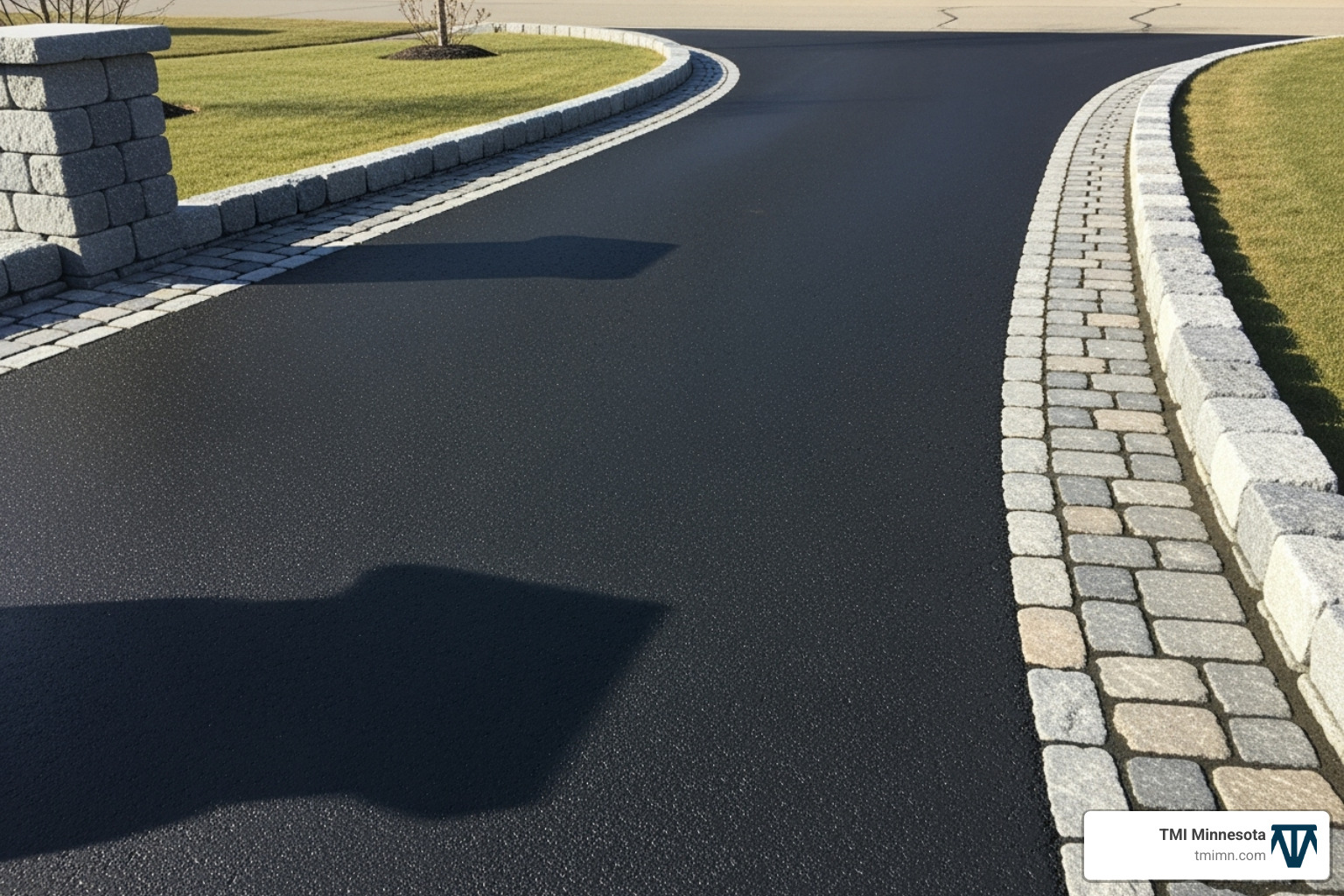
Asphalt hits that sweet spot between affordability and performance that makes it a favorite among homeowners. At roughly $4.60-6.50 per square foot, it costs more than gravel upfront but delivers a professional-looking surface that handles Minnesota winters like a champ.
The smooth, uniform surface asphalt provides is genuinely satisfying to drive on. No more bouncing over gravel or navigating around potholes. Snow removal becomes a breeze too – just what you need when dealing with our long winters.
Asphalt’s flexibility is actually one of its hidden strengths. Unlike rigid concrete, asphalt can handle the freeze-thaw cycles that are so hard on driveways in our climate. It bends slightly rather than cracking, which helps it last longer in challenging conditions.
The main commitment with asphalt comes in the form of regular resealing every five years. Think of it as sunscreen for your driveway – that protective layer prevents UV damage and keeps water from seeping into cracks. Skip this step, and you’ll see your investment deteriorate much faster.
While asphalt doesn’t offer the design flexibility of pavers, you can improve its appearance with attractive borders. Belgian block edging creates a classic, upscale look that transforms a simple asphalt driveway into something special.
The installation process requires professional equipment and expertise, but the quick turnaround means you’ll have a finished driveway in just a day or two. That’s pretty appealing when you’re tired of dealing with a muddy or damaged surface.
Explore our comprehensive Driveway Paving Solutions to see how we can create the perfect asphalt driveway for your home.
3. Poured Concrete: A Durable, Long-Term Investment
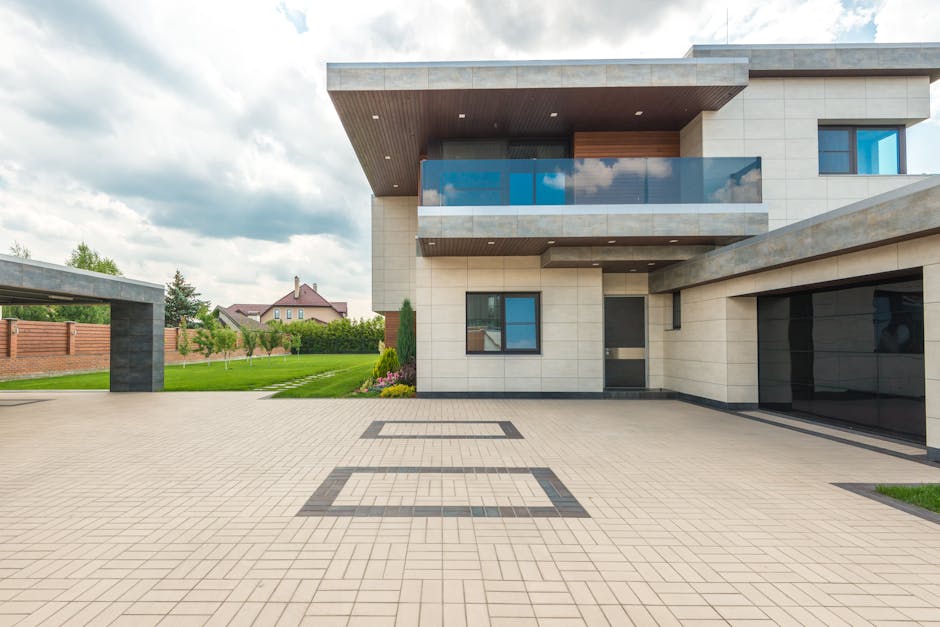
When you want to invest in something that will outlast your mortgage, poured concrete is the way to go. Starting at around $4.60-7.50 per square foot, it requires a bigger upfront investment but pays dividends in longevity and low maintenance.
A well-installed concrete driveway can last 25-30 years or more with minimal fuss. That’s roughly twice the lifespan of asphalt, which makes the higher initial cost look pretty reasonable when you do the math. Over time, concrete often becomes the most economical choice.
The maintenance requirements are refreshingly simple. Occasional cleaning, maybe sealing a crack here and there, and you’re done. No regular resealing like asphalt, no raking like gravel. It’s the “set it and forget it” option for busy homeowners.
Plain concrete offers a clean, contemporary look that works with almost any home style. But here’s where it gets interesting – concrete doesn’t have to be plain. Stamped concrete can mimic the appearance of stone, brick, or tile at a fraction of the cost of the real thing. You get the durability of concrete with the visual appeal of premium materials.
The biggest consideration with concrete is that professional installation is essential. Proper drainage, expansion joints, and curing require expertise and specialized equipment. This isn’t a weekend DIY project, but the results speak for themselves.
Concrete also adds genuine value to your property. A beautiful, well-maintained concrete driveway improves curb appeal and can be a selling point when it’s time to move.
Find the versatility and beauty of concrete with our Driveway Ideas Concrete showcase, featuring designs that prove concrete can be both practical and stunning.
4. Concrete Pavers: Versatility on a Budget
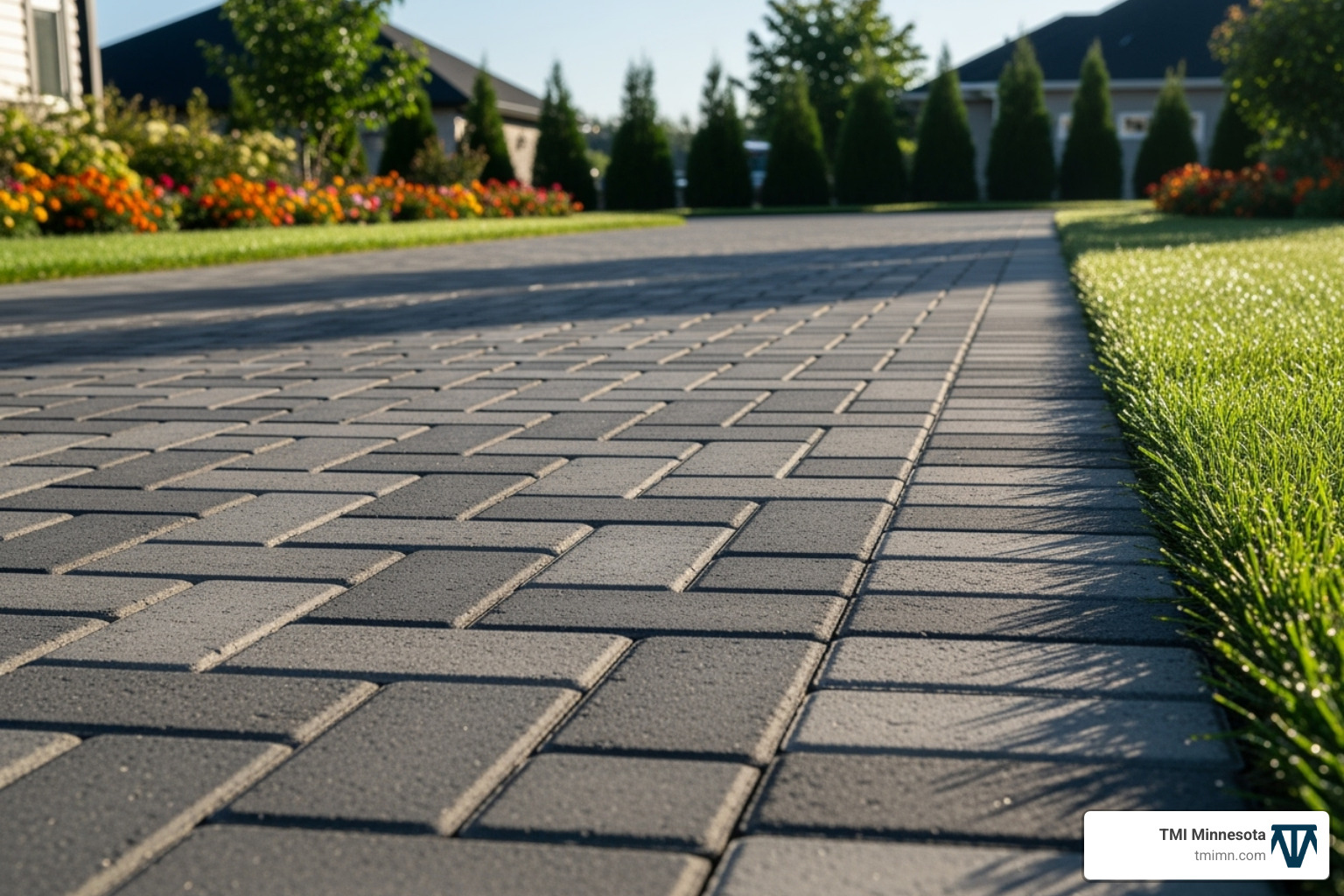
Concrete pavers might just be the most underrated option in the affordable driveway ideas category. Starting at around $2.30 per square foot for materials, they offer incredible design flexibility without the premium price tag of natural stone.
The design possibilities are virtually endless. You can create intricate patterns, mix colors, add borders, or keep it simple and classic. Want to match your home’s brick exterior? There’s a paver for that. Prefer a modern, geometric look? Pavers can do that too.
One of the most practical advantages of pavers is easy repair. If a section gets stained or damaged, you can replace individual pavers without redoing the entire driveway. Try doing that with poured concrete or asphalt! This feature alone can save significant money over the driveway’s lifetime.
Permeable paver options are gaining popularity for good reason. They allow water to drain through the joints into the ground below, helping manage stormwater runoff while looking fantastic. It’s an eco-friendly choice that many municipalities actually encourage.
The durability of quality concrete pavers rivals poured concrete, with lifespans of 25-50 years when properly installed. They handle freeze-thaw cycles well because individual units can move slightly without creating the large cracks you might see in solid surfaces.
Proper installation is crucial for pavers to perform their best. The base preparation and leveling require attention to detail, but the results are worth it. Polymeric sand between joints helps prevent weeds and keeps pavers locked in place.
For ambitious DIYers, smaller paver projects can be manageable, but larger driveways benefit from professional installation to ensure proper drainage and long-term stability.
Learn the techniques and best practices with our guide on How to Install Hardscape Pavers, designed to help you understand what goes into creating a beautiful, lasting paver surface.
Creative & Eco-Friendly Driveway Solutions
Go beyond the basics with these innovative ideas that are kind to your wallet and the planet.
Sometimes the best affordable driveway ideas come from thinking outside the box. You don’t have to stick with traditional materials to create something beautiful and budget-friendly. Let me share some creative approaches that can save money while helping the environment.
Eco-Friendly Permeable Pavers
Permeable pavers are like having your cake and eating it too – they’re environmentally responsible and surprisingly affordable. These clever systems allow water to drain right through the surface instead of running off into storm drains.
The magic happens beneath your feet. When it rains, water seeps through the pavers and joints, soaking into the ground naturally. This means less flooding in your neighborhood and more water going back into underground aquifers where it belongs.
Grass pavers offer the best of both worlds. These grid systems let you park on what looks like a lawn. The sturdy plastic or concrete grids support your car’s weight while grass grows through the openings. It’s perfect if you want that natural look but need a stable surface that won’t turn into a muddy mess.
The environmental benefits add up quickly. You’re reducing runoff, recharging groundwater, and creating a more natural landscape. Plus, many permeable systems last 25 years or more, making them a smart long-term investment.
Some areas even offer incentives for permeable surfaces since they help manage stormwater. That could mean fewer permits and regulations to deal with, which translates to lower costs and less hassle.
Our team at TMI Minnesota understands how to integrate these sustainable solutions seamlessly into your landscape. Check out our Hardscape Design Services to see how we can create an eco-friendly driveway that fits your budget and style.
Design Tricks to Lower Costs and Boost Style
Smart design choices can make even the most basic materials look expensive. The secret is knowing where to splurge and where to save.
Keep shapes simple for maximum savings. Straight lines and rectangular driveways cost significantly less than curves and complex patterns. Every cut, every angle, and every custom shape adds labor time and material waste. A simple design doesn’t mean boring – it means more money in your pocket.
Driveway ribbons cut costs dramatically. Instead of paving the entire width, create two concrete or asphalt strips where your tires go. Fill the center with gravel, grass, or decorative pavers. You’ll use half the expensive material while creating a unique look that stands out from typical solid driveways.
Mix materials for maximum impact. Combining different textures and colors creates visual interest without the high cost of premium materials throughout. Try asphalt with decorative stone accents, or concrete pavers with gravel borders.
Borders make everything look intentional. Even a basic gravel driveway looks professional with proper edging. Belgian block borders create clean lines that separate your driveway from landscaping, adding that polished touch that makes people think you spent more than you did. Our Belgium Block Driveway Designs show how these details transform ordinary driveways.
Strategic lighting adds drama after dark. Solar-powered fixtures or low-voltage LEDs can illuminate your driveway beautifully without adding much to your electric bill. Good lighting makes any driveway look more expensive and welcoming.
The landscaping around your driveway matters just as much as the driveway itself. Thoughtful plantings, mulched beds, and well-placed trees can make a basic concrete or asphalt surface look like it belongs in a magazine. Our Driveway Landscaping Designs can inspire ways to integrate your driveway into your overall yard design.
Even if you’re dreaming of something more elaborate like our Front Yard Half Circle Driveway Designs, these cost-saving tricks can help you achieve that upscale look without the upscale price tag. Sometimes the smallest details, like our Concrete Driveway Borders, make the biggest difference in how expensive your driveway appears.
Frequently Asked Questions about Affordable Driveway Ideas
We get a lot of questions from homeowners who want to balance cost with quality when choosing their driveway. After helping hundreds of Minnesota families transform their outdoor spaces, I’ve noticed the same concerns come up again and again. Let me share our expert insights on the most common questions about affordable driveway ideas.
What is the absolute cheapest way to pave a driveway?
Gravel wins hands down for the lowest upfront cost. At just $1-$3 per square foot, it’s hard to beat when you’re working with a tight budget. I’ve seen homeowners save thousands by choosing gravel over other materials, especially for longer driveways where every square foot adds up.
Crushed concrete comes in as a close second for rock-bottom pricing. This recycled material is both cost-effective and environmentally friendly – you’re literally giving old concrete a second life. While it’s often used as a base layer, crushed concrete can work beautifully as a standalone surface, particularly for utility areas or more casual driveway approaches.
Here’s where you can really slash costs: DIY installation. Labor often makes up 50% or more of professional installation costs, so rolling up your sleeves can lead to significant savings. However, the cheapest upfront option isn’t always the most economical long-term. Gravel might cost less initially, but you’ll spend more time and money on maintenance – raking, weeding, and adding fresh material every few years.
The key is thinking about your maintenance considerations realistically. Are you someone who enjoys weekend yard projects, or would you prefer a “set it and forget it” solution?
Can I install one of these affordable driveway ideas myself?
Absolutely! Some affordable driveway ideas are perfect for DIY enthusiasts, while others definitely call for professional expertise.
Gravel installation is the most beginner-friendly option. The process involves measuring your area accurately, excavating 6-8 inches deep, installing proper edging to keep everything contained, and laying landscape fabric for weed prevention. Then you’ll add a base layer of larger crushed stone, compact it thoroughly, and finish with your decorative gravel layer. Required tools include basic items like shovels, rakes, a wheelbarrow, and a plate compactor (which most tool rental shops carry).
Paver installation steps up the complexity but remains doable for patient DIYers. You’ll follow similar excavation steps, but then need to create a perfectly level sand bed and lay each paver with precision. The devil’s in the details – proper joint spacing and final compaction make the difference between a professional-looking result and a wobbly mess.
When to hire a professional becomes crystal clear with asphalt and poured concrete. These materials require specialized equipment, precise temperature control, and years of experience to get right. Attempting these yourself often leads to expensive do-overs that cost more than hiring professionals initially. Safety is another major concern – hot asphalt and heavy concrete equipment aren’t forgiving of mistakes.
At TMI Minnesota, we’ve seen well-intentioned DIY concrete projects that ended up costing double what professional installation would have cost. Our Hardscape Installation Cost guide can help you understand when the investment in professional expertise makes sense.
How does driveway design impact the overall cost?
Design choices can make or break your budget, sometimes more dramatically than material selection itself. I’ve watched homeowners choose expensive materials for simple designs that looked stunning, while others picked budget materials but got carried away with complex patterns that blew their budget.
Simple shapes and straight lines are your wallet’s best friends. Rectangular driveways require minimal cutting, generate less waste, and need fewer labor hours. Every curve you add increases complexity – and cost.
Intricate patterns can turn an affordable material into an expensive project quickly. While our Front Yard Half Circle Driveway Designs create stunning curb appeal, they inherently cost more than straight approaches due to the precision cutting and skilled labor required.
Borders and edging add polish but also add expense. Simple Concrete Driveway Borders can dramatically improve your driveway’s appearance, but factor these extras into your budget from the start. I always tell clients that a simple driveway with quality edging often looks better than a complex pattern with no finishing touches.
The smartest approach? Start with your must-haves and add decorative elements as budget allows. A well-executed simple design beats a poorly executed complex one every time.
Conclusion: Making the Right Choice for Your Home
Your driveway sets the stage for your entire property. It’s the first thing guests see and one of the biggest factors in your home’s curb appeal. The good news? You don’t need to spend a fortune to create something beautiful and functional.
Balancing cost, aesthetics, and durability is the key to making the right choice. Gravel offers the lowest upfront cost and works perfectly for homeowners who don’t mind regular maintenance. Asphalt provides that classic smooth surface at a reasonable price, though you’ll need to plan for resealing every few years. Concrete pavers give you design flexibility and easy repairs, while poured concrete delivers best longevity with minimal upkeep.
Think about your long-term investment, not just today’s budget. A gravel driveway might cost $1-3 per square foot initially, but the ongoing maintenance adds up. Meanwhile, concrete might cost more upfront but can last 30 years with almost no maintenance. That’s the difference between a quick fix and a lasting solution.
Enhancing curb appeal doesn’t always mean choosing the most expensive option. Sometimes it’s about smart design choices – adding Belgian block edging to a simple asphalt driveway, mixing materials for visual interest, or incorporating thoughtful landscaping around your new surface.
At TMI Minnesota, we’ve helped hundreds of Twin Cities homeowners steer these decisions. Our experience with affordable driveway ideas has shown us that the right material choice depends entirely on your specific situation – your budget, your home’s style, your local climate, and how much maintenance you want to handle.
We believe every home deserves a welcoming entrance that reflects the care and pride you put into your property. Whether you’re ready to tackle a DIY gravel installation or want professional guidance on a concrete project, we’re here to help you create an outdoor space that truly lifts your yard living experience.