
Why Modern Homeowners Are Choosing Hybrid Paving Solutions
Artificial block paving offers a modern solution for driveways, patios, and walkways by combining the strength of concrete pavers with the look of grass or gravel. This hybrid system creates a durable, permeable surface that supports heavy vehicles, manages stormwater, and eliminates the need for lawn maintenance in high-traffic areas.
Key features include:
- High Load Capacity: Supports up to 4,000 lbs, easily handling SUVs and trucks.
- Low Maintenance: Requires no mowing, watering, or fertilizing.
- Superior Drainage: A 100% permeable design reduces runoff and flooding.
- Long Lifespan: Lasts 20-25 years with proper installation.
- Eco-Friendly: Supports groundwater recharge and can contribute to LEED certification.
This system is ideal for Minnesota homeowners seeking year-round green aesthetics without the challenges of natural grass. It consists of concrete blocks with open cells installed over a compacted stone sub-base. The cells are filled with artificial turf or gravel, creating a surface that looks natural but is engineered for performance. Unlike traditional paving that contributes to runoff, this permeable design allows rainwater to filter back into the soil, reducing urban flooding and heat island effects.
I’m Christopher Deanovic, Operations Leader at Task Masters. I’ve helped many Minnesota homeowners install artificial block paving systems that blend beauty with function, solving real-world problems with a solution built for our climate.
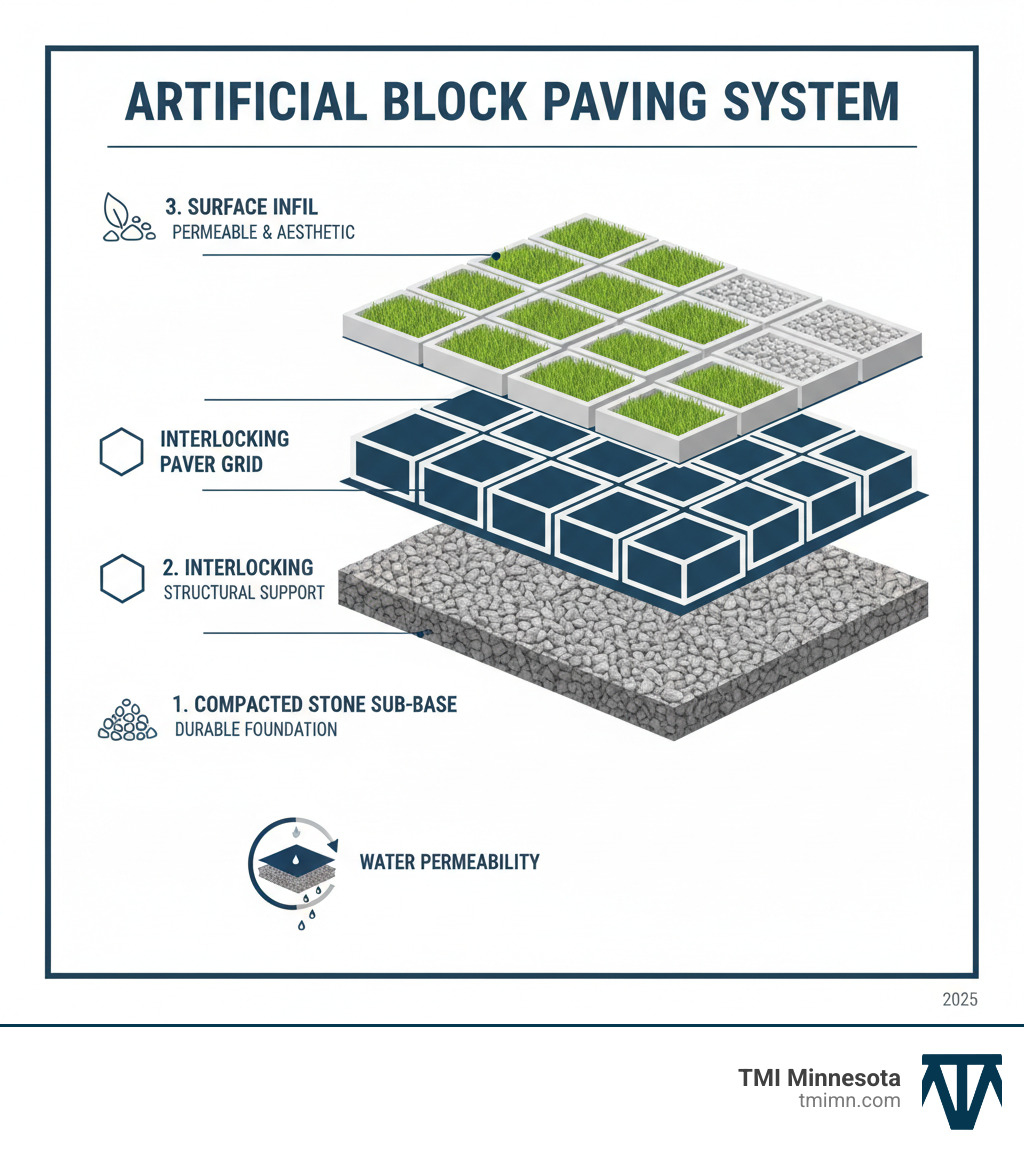
Quick artificial block paving terms:
What is Artificial Block Paving?
Artificial block paving is a hybrid landscaping system that combines the strength of concrete pavers with the natural aesthetic of grass or gravel. Unlike solid pavers, this system features blocks with open cells. These cells are filled with either durable artificial turf or permeable gravel, creating a surface that is both robust and visually appealing.
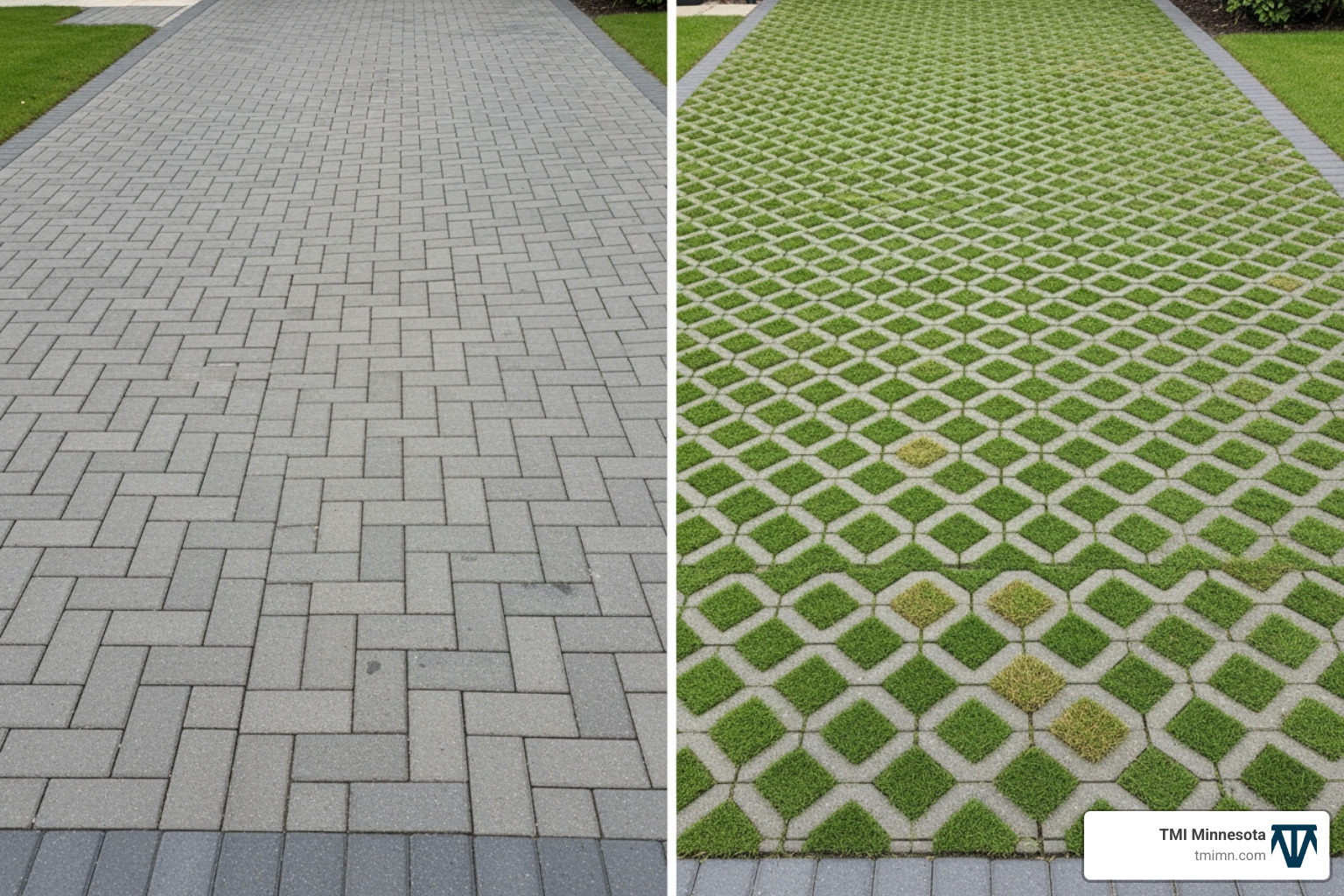
The primary difference from traditional block paving lies in its permeability. Standard paving creates an impermeable surface, causing rainwater to run off into storm drains and contribute to local flooding. Artificial block paving is designed to be fully permeable, allowing water to filter through the surface and absorb naturally into the ground below.
While the concept of what is block paving? is ancient, this modern iteration improves it with significant environmental and aesthetic benefits. A popular version uses concrete blocks with large openings where artificial turf inserts are secured with a water-resistant adhesive. This creates a seamless blend of hardscape and softscape, providing the beauty of a lawn in areas that must withstand heavy use, like a driveway.
This system solves a common challenge: creating a strong, load-bearing surface that also looks natural and drains water effectively. It’s a smart, sustainable choice for Twin Cities homeowners looking to upgrade their outdoor spaces. For a deeper dive, see our Artificial Turf Pavers Complete Guide.
The Core Benefits: Why Choose a Grass and Paver System?
Artificial block paving offers a unique combination of beauty, performance, and practicality, making it a popular choice for Minnesota homeowners. These systems provide significant advantages for driveways, patios, and other outdoor spaces.
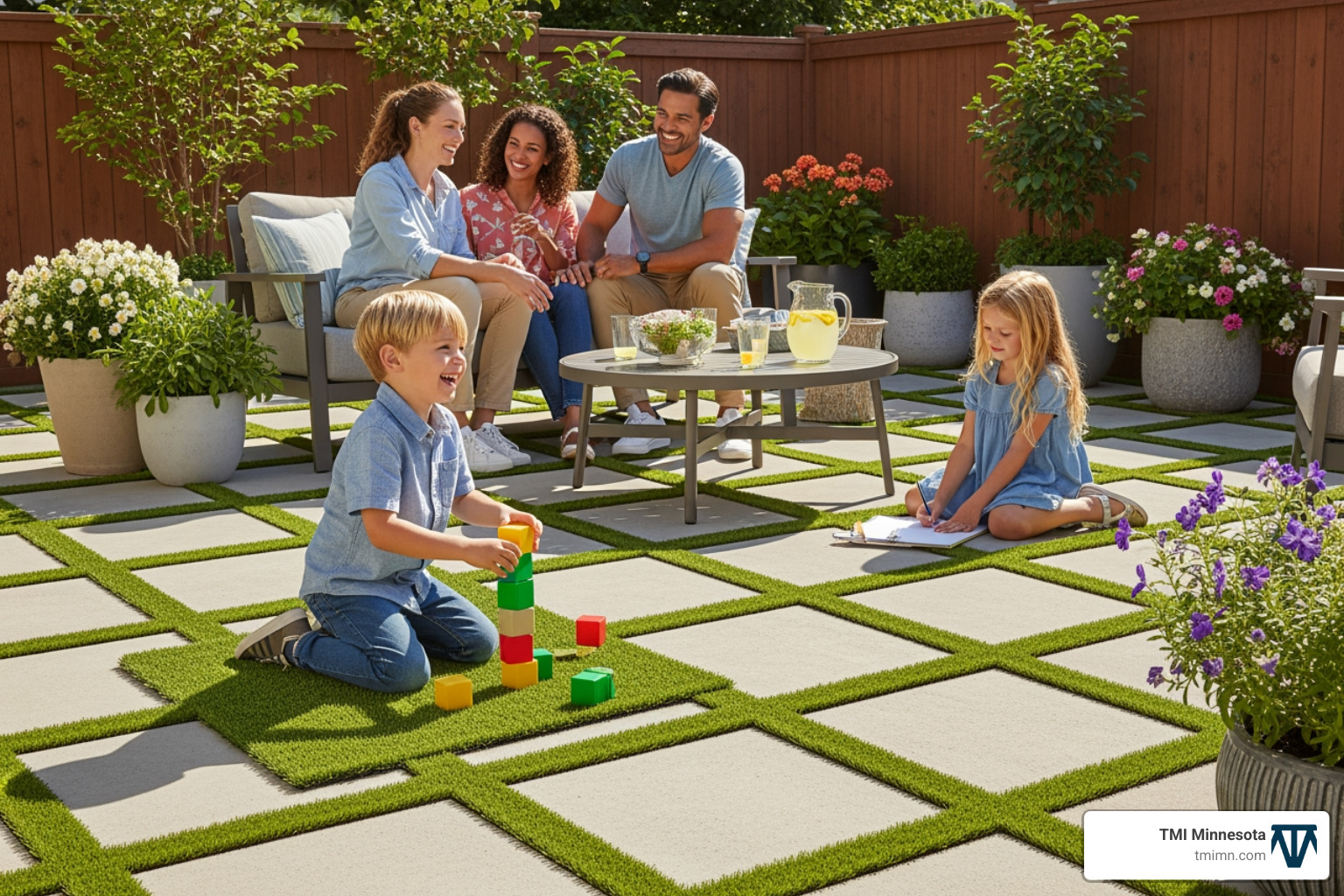
Best Durability and Strength
These systems are engineered for toughness. The concrete pavers can support up to 4,000 LBS, making them suitable for full-size SUVs and trucks. The strength is derived from the high-psi concrete and an interlocking design that distributes weight evenly across a compacted sub-base. This ensures a durable, long-lasting surface that resists wear and tear from regular vehicle traffic. For more on creating a durable driveway, see our Block Paving Driveway Ultimate Guide.
Low Maintenance, Year-Round Greenery
Enjoy a lush, green surface without the constant upkeep. Artificial block paving requires no mowing, watering, or fertilizing. The synthetic turf is UV-stabilized to prevent fading and weather-resistant to handle Minnesota’s climate extremes, from summer sun to winter ice. This provides consistent curb appeal all year long, eliminating the muddy ruts and brown patches common with natural grass in high-use areas. Learn about the latest turf innovations in our guide to Modern Artificial Grass.
Superior Drainage and Environmental Impact
The environmental benefits are a key feature. These systems are fully permeable, allowing rainwater to pass through the surface and into the ground. This dramatically reduces stormwater runoff, mitigates local flooding, and helps recharge natural groundwater supplies. The aggregate base layers also filter pollutants from the water. Furthermore, these surfaces absorb less heat than traditional asphalt, helping to reduce the urban heat island effect. As noted in a report from the EPA, permeable pavements are a best practice for stormwater management and can contribute to LEED certification.
Materials and Construction of Artificial Block Paving Systems
The longevity and performance of artificial block paving come from its carefully engineered materials and construction. Each component plays a critical role in creating a surface that is strong, permeable, and built to last.
The Building Blocks: Materials Explained
A typical installation consists of several layers working in concert:
- Geotextile Fabric: A permeable fabric laid on the native soil to prevent the stone base from sinking while allowing water to pass through.
- Sub-Base Layer: A deep layer of clean, crushed stone that provides the primary structural support and creates voids for water drainage.
- Laying Course: A thin layer of finer, angular crushed rock that creates a level bed for the pavers.
- Concrete Pavers: Specially engineered blocks with open cells and high compressive strength (often 8000psi) to handle heavy vehicle loads.
- Infill Material: The open cells are filled with either synthetic turf or angular gravel. The turf is made from durable, UV-resistant polymers like those found in sturdy synthetic turf products and is secured with adhesive. The gravel provides a different aesthetic while maintaining permeability.
Each material is selected for its specific function: the concrete for strength, the aggregates for drainage, and the infill for aesthetics and surface stability.
Built to Last: Lifespan and Durability of artificial block paving
With proper installation, artificial block paving systems are designed to last 20-25 years. This durability is backed by manufacturer warranties that reflect the quality of the materials.
The concrete blocks are engineered to withstand Minnesota’s freeze-thaw cycles, while the synthetic turf components resist UV degradation and weather damage. The system’s interlocking design and permeable nature prevent the cracking and heaving that can affect solid pavements, as water drains through instead of freezing on the surface.
Many systems also have a strong sustainability profile. Concrete pavers may contain recycled content, and some plastic grid systems are made from 100% recycled materials. The Synthetic Turf Council notes that quality turf is recyclable and free of harmful ingredients. This combination of longevity and climate resilience makes artificial block paving a smart long-term investment for Twin Cities homeowners.
Design, Installation, and Maintenance
Changing your outdoor space with artificial block paving is a process that blends precision engineering with creative design. From installation to long-term care, these systems are designed for performance and ease of use.
The Installation Process from Start to Finish
A professional installation is key to a long-lasting surface. The process involves several critical stages:
- Site Preparation: The area is excavated to the required depth, and the native soil is compacted to create a stable foundation.
- Edge Restraints: Sturdy kerbs are installed around the perimeter to lock the system in place.
- Sub-Base Installation: A geotextile fabric is laid down, followed by a deep, compacted layer of clean, crushed stone. This provides structural support and drainage.
- Laying the Pavers: A fine-crushed rock laying course is screeded level, and the interlocking concrete blocks are placed on top.
- Infill and Finishing: The open cells are filled with either artificial turf pods (secured with adhesive) or angular gravel. The entire surface is then compacted to settle the blocks and infill.
For more on our approach, see our guide to Artificial Grass Installation.
Aesthetic Freedom: Design Options with artificial block paving
Artificial block paving offers significant creative flexibility. You can customize your space with:
- Geometric Patterns: Choose from classic herringbone, modern linear layouts, and other Block Pave Patterns to match your home’s style.
- Hybrid Designs: Combine permeable grass blocks with traditional solid pavers to create borders, accents, and unique visual contrasts.
- Gravel Infill: Select from various colors and sizes of gravel to complement your landscape’s existing stone features or create a bold new look.
This versatility allows for surfaces that appear as lush lawns but can support vehicles, or patios that blend seamlessly with garden areas. For more ideas on combining materials, explore our guide on Artificial Turf With Pavers.
Simple Upkeep for Lasting Beauty
Maintenance is minimal compared to traditional lawns or paving. Key tasks include:
- Rinsing the surface with a hose to remove dust and debris.
- Using a leaf blower or broom to clear away leaves and twigs.
- Occasionally brushing turf fibers with a stiff broom to keep them upright.
- Topping up gravel infill if it settles over time.
- Cleaning spills promptly with mild soap and water.
There is no mowing, watering, fertilizing, or resealing required.
Beyond the Driveway: Other Applications
The strength and beauty of artificial block paving make it ideal for many applications beyond driveways, including:
- Walkways and garden paths
- Patios and fire pit areas
- Pool surrounds (offering a cooler, slip-resistant, and well-drained surface)
- RV pads and overflow parking areas
- Slope stabilization to prevent erosion
- Commercial Block Paving for eco-friendly parking lots
Comparing Paving Solutions
Choosing the right paving material involves balancing cost, durability, maintenance, and environmental impact. As experts in blending Hardscape and Softscape elements, we help homeowners find the perfect fit. Here’s how artificial block paving compares to other common options:
| Feature | Artificial Block Paving | Traditional Concrete Pavers | Asphalt | Permeable Asphalt/Concrete |
|---|---|---|---|---|
| Cost | Moderate to High (due to specialized materials/install) | Moderate | Low | Moderate to High |
| Durability | High (20-25 years, 4,000 LBS+ load capacity) | High (20-30+ years, varies by quality) | Moderate (15-20 years, prone to cracking) | Moderate to High (can be less durable than solid) |
| Maintenance | Very Low (no mowing, minimal cleaning) | Low (occasional cleaning, joint sand replenishment) | Moderate (sealcoating, crack repair) | Moderate (regular vacuuming/jetting to prevent clogging) |
| Environmental Impact | Very High (permeable, reduces runoff, heat island, often recycled materials) | Low (impermeable, contributes to runoff) | Low (impermeable, heat island effect) | High (permeable, reduces runoff) |
| Aesthetics | Unique, green, natural look; versatile designs | Classic, wide range of colors/patterns | Industrial, black, limited design options | Functional, less aesthetic appeal than pavers |
While the initial cost may be higher, artificial block paving provides exceptional long-term value. Its key advantages are its very low maintenance, superior environmental performance, and unique aesthetic possibilities. Unlike other options, it delivers high durability and a natural, green appearance without the upkeep of a lawn or the environmental drawbacks of impermeable surfaces. This makes it a smart investment that improves property value, reduces your environmental footprint, and creates a beautiful, easy-to-care-for outdoor space.
Frequently Asked Questions about Artificial Grass Blocks
Here are answers to the most common questions we receive from Twin Cities homeowners about artificial block paving.
Can artificial block paving really handle the weight of a truck?
Yes, absolutely. These systems are engineered to support heavy loads, with some rated for up to 4,000 LBS. The strength comes from high-density concrete blocks combined with an interlocking design that distributes weight across a deeply compacted sub-base. This prevents rutting and allows the surface to easily handle daily traffic from SUVs and mid-sized trucks.
How does it handle snow and ice in Minnesota?
Artificial block paving performs very well in winter. Its permeable design allows meltwater to drain through the surface, which significantly reduces the formation of hazardous ice patches that plague solid pavements. For snow removal, plastic shovels are recommended. Plowing is also possible if the blade is kept slightly raised to avoid catching the blocks. For ultimate convenience, heating elements can be installed underneath the pavers.
Is it a good choice for the environment?
Yes, it is an excellent environmental choice. The key benefits include:
- Stormwater Management: Its permeability drastically reduces runoff, which is a major advantage noted by sources like the Journal of Environmental Management and the EPA.
- Groundwater Recharge: It allows rainwater to filter back into the soil, replenishing the natural water table.
- Use of Recycled Materials: Many systems incorporate recycled plastics and concrete, reducing waste.
- No Chemicals: With artificial turf infill, you eliminate the need for fertilizers and pesticides.
- Reduced Heat Island Effect: The surface absorbs less heat than dark asphalt, helping to keep the area cooler.
By choosing artificial block paving, you are making a positive impact on your local environment.
Conclusion
Artificial block paving is a comprehensive solution that merges the durability of hardscaping with the green appeal of a natural landscape. For homeowners in the Twin Cities, it offers a surface engineered to handle heavy vehicles and harsh Minnesota winters while providing year-round beauty with minimal maintenance.
Its environmental benefits are just as significant. By managing stormwater, recharging groundwater, and reducing the need for lawn chemicals, this system is a sustainable choice you can feel good about. It’s a smart investment that delivers on strength, aesthetics, and eco-friendliness.
At TMI Minnesota, we specialize in changing outdoor spaces with innovative solutions like artificial block paving. We’ve seen how it lifts properties by creating functional, beautiful areas that last. If you’re ready to reimagine your driveway or patio, browse our Block Paving Driveway Designs for inspiration. Contact us for a consultation to create something durable, sustainable, and uniquely yours.