
Why Proper Drainage is Critical for Your Artificial Grass Investment
If you’ve invested in artificial grass, you expect a beautiful, low-maintenance lawn year-round. But without proper artificial grass drainage solutions, that perfect lawn can quickly turn into a soggy, unusable mess. As one civil engineer noted, the primary cause of base failure in synthetic turf is “Water, water and more water.”
Poor drainage leads to serious problems like standing water, which breeds mold, mildew, and unpleasant odors. It can damage the turf’s backing, causing wrinkles and separating seams. In Minnesota’s climate of heavy rains and freeze-thaw cycles, these issues are magnified.
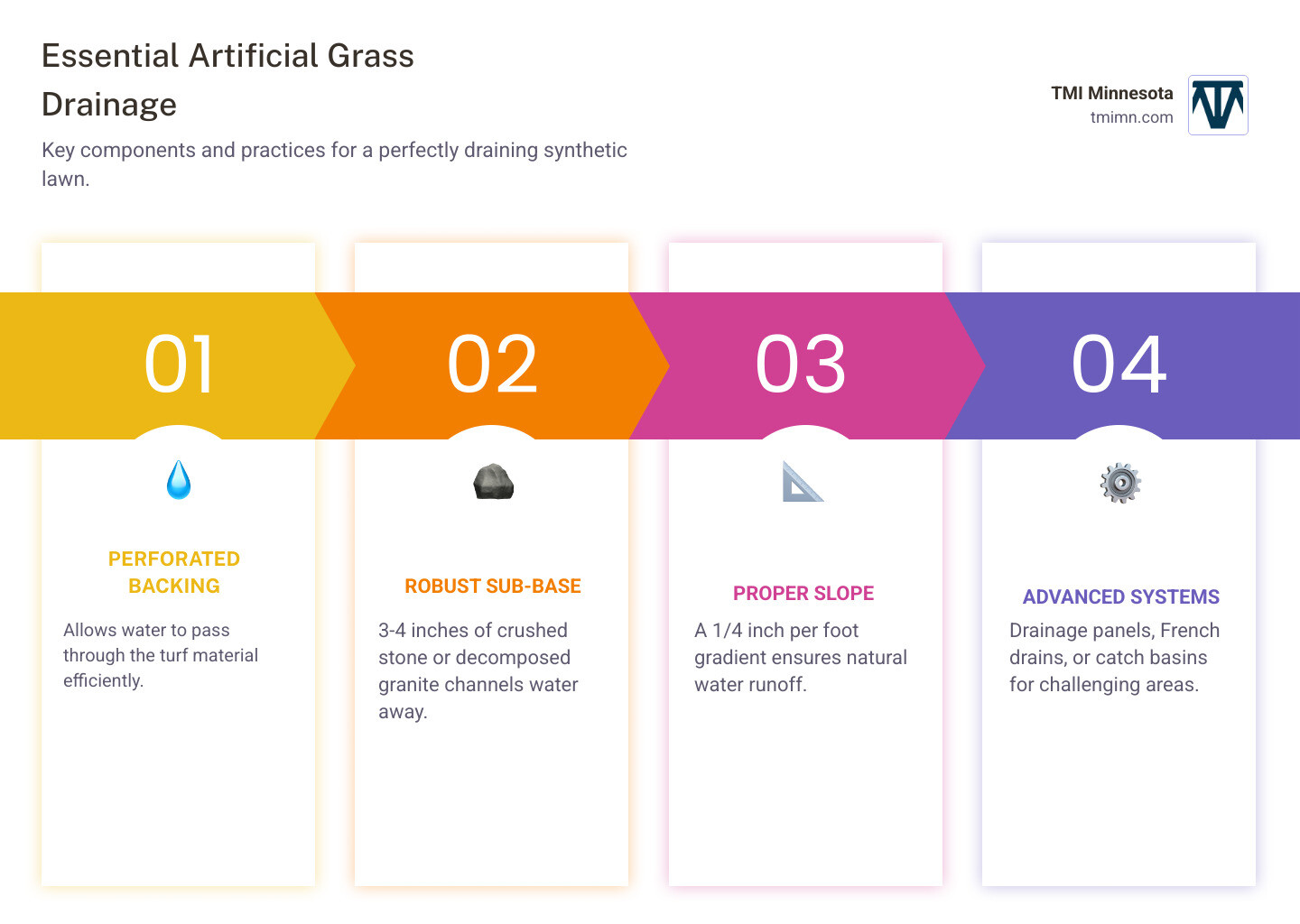
The good news is that a professionally installed system ensures your lawn looks pristine after every rainfall. The secret lies in the layers beneath the surface, which include:
- Permeable backing to let water pass through the turf.
- A sub-base layer of 3-4 inches of crushed stone to channel water away.
- A proper slope (1/4 inch per foot) for natural runoff.
- Advanced systems like French drains for challenging areas.
With the right approach, artificial grass can drain over 300 inches of water per hour, far exceeding the industry minimum. Water disappears within minutes, leaving a dry, comfortable surface for your family.
I’m Christopher Deanovic, Operations Leader at Task Masters. I’ve seen how proper drainage makes the difference between a failed investment and a stunning outdoor space that performs flawlessly for years. Understanding how water moves through your turf system is the foundation of success.
How Artificial Grass Drainage Works
Understanding artificial grass drainage solutions is simple. The system is engineered to handle water far better than many natural lawns, keeping your surface dry and ready for use.
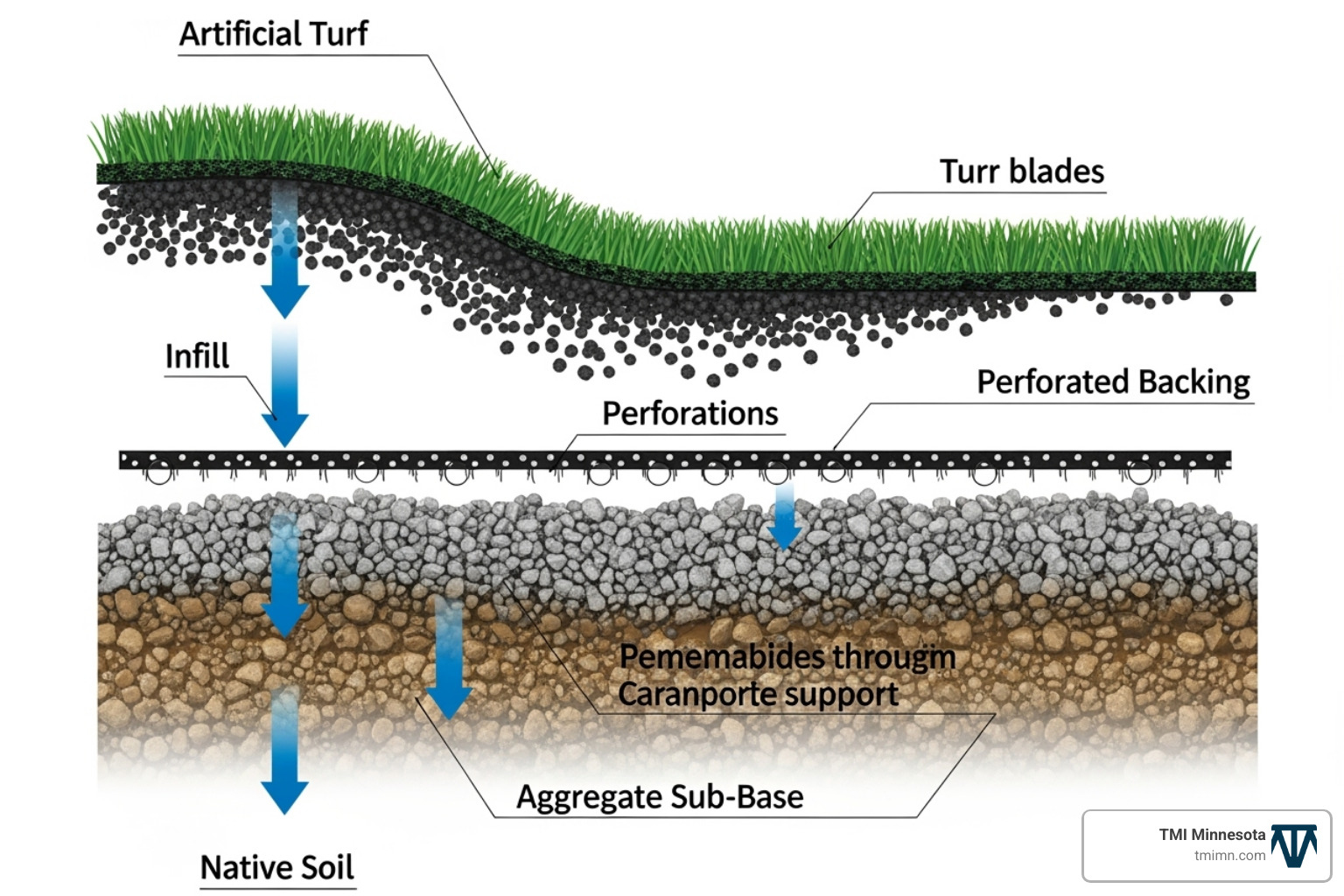
Here’s how it works: Rainwater moves down through the turf blades and infill material. It then passes through perforations in the turf’s backing and enters the sub-base—a layer of crushed stone that channels water into the soil below or directs it to drainage points.
This combination of vertical drainage (downward) and horizontal drainage (sideways through the sub-base) prevents water from pooling on the surface. The system’s permeability determines how quickly your lawn dries. Modern synthetic turf is designed for heavy downpours, with a water flow rate that can exceed 300 inches per hour, far surpassing what’s needed for a torrential storm.
The Core Components of a Drainage System
Each layer of the drainage system plays a specific role:
The artificial turf backing is where drainage begins. Most turf has perforated backing with small holes for water to pass through. For areas needing superior drainage, like pet zones, fully permeable backing allows water to pass through the entire surface.
Infill material, the granules between grass blades, keeps blades upright and allows water to flow through to the backing without clogging the drainage holes.
The sub-base layer is the system’s workhorse. Typically 3-4 inches of compacted crushed stone or decomposed granite, this stable, porous foundation channels water away from the turf and into the ground.
Geotextile fabric is placed beneath the sub-base. It prevents weeds from growing up and keeps the sub-base material from mixing with the native soil, ensuring long-term drainage efficiency.
Artificial vs. Natural Grass Drainage
Surprisingly, artificial grass often drains better than natural grass. A natural lawn’s drainage depends entirely on the soil beneath it. Heavy clay soil, common in Minnesota, drains slowly, leading to puddles and mud that can make a lawn unusable for days. Soil compaction from foot traffic makes the problem worse over time.
Artificial grass is engineered for optimal drainage. While the Synthetic Turf Council requires a minimum drainage rate of 14 inches per hour, quality products can handle over 300 inches per hour.
| Feature | Artificial Grass Drainage | Natural Grass Drainage |
|---|---|---|
| Drainage Rate | Superior vertical drainage designed for heavy rainfall. Minimum 14 inches per hour, with premium products exceeding 300 inches per hour. | Highly variable depending on soil type and compaction. Clay soils drain very slowly. |
| Puddle Formation | Rare—water passes quickly through turf and sub-base. | Common in low spots and compacted areas, leading to standing water and mud. |
| Recovery Time | Usable almost immediately after rainfall. No mud, no waiting. | Can take hours or days to dry out. Often leaves muddy, unusable areas. |
| Soil Compaction | Not an issue. Sub-base maintains its porosity over time. | A major problem that gets worse over time, reducing water infiltration. |
In tests, artificial grass systems absorb and drain far more water than natural lawns, which reduces runoff into storm drains. Our clients love that they can use their lawn right after a storm, without tracking mud into the house. This is one of the biggest artificial grass benefits and is a direct result of smart drainage design.
Common Problems Caused by Poor Drainage
Puddles on your artificial lawn are the first sign that your artificial grass drainage solutions are failing. This isn’t just an eyesore; it’s a serious issue that can ruin your investment.
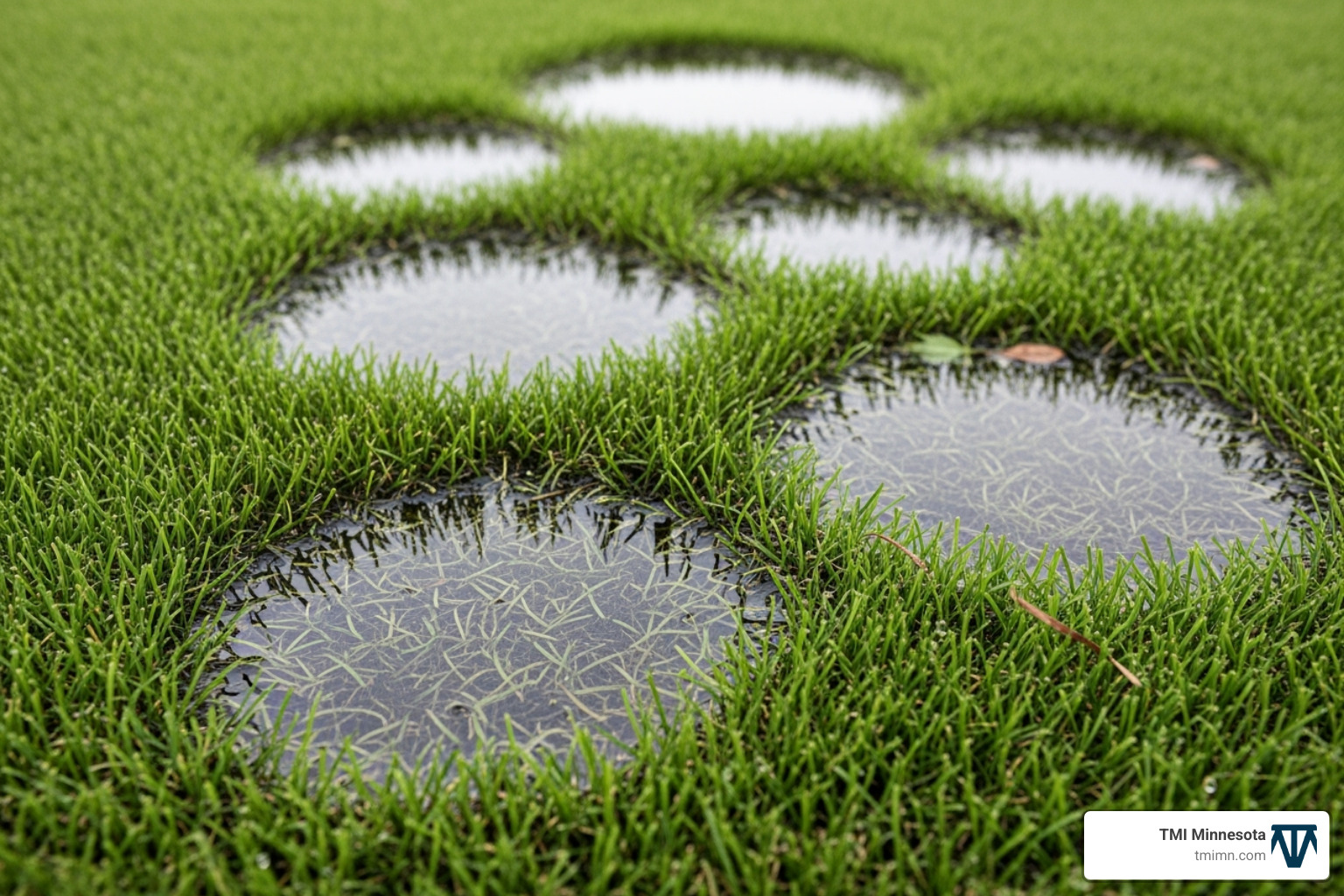
Standing water is the most obvious problem, but it leads to others. Puddles create a breeding ground for mold and mildew on the turf backing and infill. If you have pets, the mix of water and pet waste creates persistent, foul odors. Constant moisture also encourages weeds to sprout and provides a perfect habitat for mosquitoes. For tips on dealing with standing water, see this guide on how to remove standing water from a lawn.
Long-Term Consequences for Your Turf
Poor drainage slowly destroys your artificial grass, which should last 15-20 years. Chronic moisture can cut that lifespan in half.
- Structural Damage: Constant moisture breaks down turf fibers and backing, causing wrinkles and ripples. The adhesive on seams can weaken, causing them to separate and fray.
- Infill Displacement: Water washes away infill material, creating uneven surfaces and causing grass blades to flatten.
- Sub-base Erosion: Water pooling underneath can shift the aggregate materials, creating dips and soft spots in the foundation.
- Reduced Safety: Uneven, slippery surfaces become tripping hazards for family and guests. You can find more on turf flooding issues and their impacts.
Can Drainage Issues Be Fixed After Installation?
Yes, but fixing drainage problems after installation is difficult and expensive. The issue usually lies in the sub-base or grading, not the turf itself. A proper fix requires ripping up the turf to address the underlying problem.
This may involve regrading the entire area, adding more drainage material, or installing a French drain. The turf is then reinstalled, assuming it’s still in good condition. The cost of these repairs can be nearly as much as the initial installation.
This is why we stress getting it right from the start. A professional assessment before installation prevents these costly headaches. Our team specializes in landscape installation in Twin Cities and emphasizes proper planning. If you’re already facing drainage issues, call a professional for an assessment to diagnose the problem and recommend the best course of action.
Comprehensive Artificial Grass Drainage Solutions
Effective artificial grass drainage solutions depend on a solid foundation. The preparation and engineering that happen underneath the turf are what separate a thriving lawn from one that fails.
Best Practices for Installation
Optimal drainage begins long before the turf is unrolled. Cutting corners on ground preparation leads to future problems.
- Excavation: We remove existing grass and about four inches of soil to create room for a robust base layer that promotes water flow.
- Slope Creation: We grade the area with a gentle slope of about 1/4 inch per foot (a 2-3% grade) away from buildings to ensure water naturally runs off.
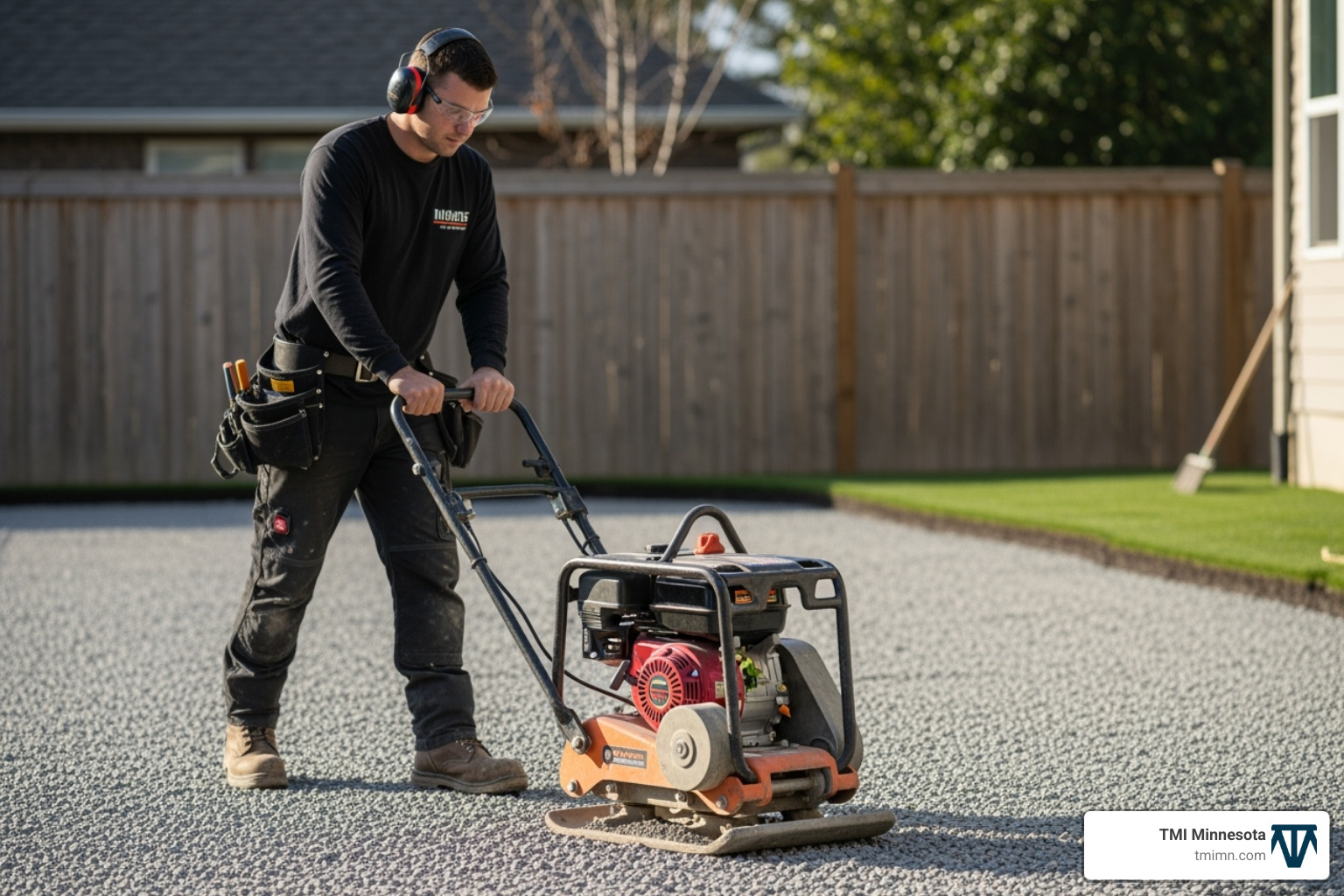
- Compaction: The sub-base material is compacted with a vibrating plate compactor. This creates a dense, stable layer that remains porous enough for water to pass through.
- Pre-Installation Testing: Before laying the turf, we soak the sub-base to test its drainage. Any issues with pooling are corrected immediately, preventing expensive post-installation fixes.
Our team follows these meticulous steps on every artificial grass installation to ensure it’s done right.
Choosing the Right Sub-Base for Artificial Grass Drainage Solutions
The sub-base is the backbone of your drainage system. The right material, depth, and porosity are critical.
We recommend materials like crushed stone (3/8 inch or smaller), decomposed granite, or Class II road base. These materials compact to form a firm, stable surface while remaining permeable. The sub-base layer should be 3-4 inches deep after compaction to provide both stability and the capacity to handle heavy rain. For pet areas or yards with poor natural drainage, a multi-layer “drainage sandwich” can be created to improve flow and control odors.
Advanced Artificial Grass Drainage Solutions for Challenging Areas
Standard methods aren’t always enough for sites with heavy clay soil, high water tables, or rooftop installations. In these cases, we use advanced solutions.
- Drainage Panels: Modular systems like AirDrain or Drainbase are placed under the turf to create an air void for rapid water removal. They are lightweight, made from recycled materials, and help cool the surface, making them ideal for pet areas and rooftops. These panels can drain hundreds of inches of water per hour and align with sustainable landscaping techniques.
- French Drains: A classic solution, these gravel-filled trenches with a perforated pipe redirect water away from the lawn, often installed along property lines or at the base of slopes.
- Catch Basins: These are installed at low points to collect surface water and channel it into an underground drainage system, preventing pooling.
- Permeable Pavers: Integrating permeable paver driveways or patios can improve overall site drainage by allowing water to filter through hard surfaces instead of running onto your lawn.
We assess each property to determine the right combination of solutions for the best long-term results.
Application-Specific & Climate Considerations
Effective artificial grass drainage solutions must be custom to your specific application and local climate. A system for a dry climate will not suffice for Minnesota’s weather.
Environmental factors are critical. Freeze-thaw cycles can damage the base if water is trapped and freezes. A system that drains quickly prevents this. For areas with heavy rainfall, high-performance turf that drains over 300 inches of water per hour is essential. Your native soil type also matters; heavy clay soil may require a deeper sub-base or advanced drainage, while sandy soil drains easily. Factoring in these elements is part of creating sustainable landscaping techniques that last.
Drainage for Pet Turf, Rooftops, and Sports Fields
Different applications require different drainage strategies.
Pet Turf Systems: These require maximum drainage to maintain a fresh, hygienic space. We use fully permeable backing, antimicrobial infill to neutralize odors, and sometimes add drainage panels to flush away pet waste effectively. Our pet friendly landscape designs prioritize drainage for this reason.
Rooftop Installations: Weight is a major concern on rooftops, so heavy aggregate sub-bases are not an option. We use lightweight drainage panels or specialized foam underlayment systems. These provide excellent drainage without overloading the structure. Learn more in our guide to artificial grass for rooftops.
Sports Fields: Drainage is critical for player safety and field performance. A saturated field affects shock absorption and increases injury risk. Advanced drainage panels help maintain consistent safety ratings (HIC and Gmax) by preventing water saturation and protecting the shock-absorbing layers.
Frequently Asked Questions about Artificial Grass Drainage
Here are answers to the most common questions we receive about artificial grass drainage solutions.
How much water can artificial grass drain?
Modern artificial turf has impressive drainage capacity. While the Synthetic Turf Council’s minimum standard is 14 inches of water per hour, many high-quality products can drain over 300 inches per hour. When installed with a proper sub-base, the system sheds water faster than it falls, even in a heavy downpour. This means no standing water and a lawn that’s usable almost immediately after rain.
What is the best base material for artificial grass drainage?
Crushed aggregate is our top recommendation. This includes materials like crushed stone, decomposed granite, or Class II road base. These materials are ideal because they compact to create a firm, stable foundation while remaining porous enough for water to flow through freely. We use a layer that is 3-4 inches deep and avoid organic materials that can decompose and cause settling. Proper depth and compaction are just as crucial as the material itself.
Do I need a separate drainage system for my artificial grass?
For most residential lawns, the answer is no. A properly installed turf system with a permeable backing and a well-prepared sub-base can handle typical rainfall on its own.
However, a separate system like a French drain or catch basin is recommended for properties with challenging conditions. These include:
- Heavy clay soil that prevents water from soaking into the ground.
- A high water table that causes saturation from below.
- Low spots where water naturally collects.
- Significant runoff from nearby driveways or patios.
A professional assessment before installation is the best way to determine if your property needs additional artificial grass drainage solutions. We can evaluate your site and provide honest guidance on what your lawn truly needs.
Conclusion
Artificial grass drainage solutions are the invisible heroes of a great outdoor space. When they work correctly, you don’t notice them—your lawn simply stays dry, fresh, and ready for use, no matter the weather.
From the permeable backing to the graded sub-base, each component works together to create a complete system that prevents puddles and ensures longevity. Here in the Twin Cities, we design systems to handle Minnesota’s heavy rains and freeze-thaw cycles, making your lawn truly year-round. No more waiting for the ground to dry or cleaning up muddy paw prints.
While understanding drainage is helpful, proper execution requires professional expertise to protect your investment. The team at TMI Minnesota has transformed countless outdoor spaces with precision and care, ensuring beautiful results that last.
Your yard should be a source of joy. With the right drainage and quality products like Foreverturf, you can have a stunning, low-maintenance lawn for decades. We’re here to make that happen. Contact us to learn more about our Foreverturf solutions and how we can create a functional outdoor space perfectly suited to your needs.