
Transform Your Underused Rooftop Into a Green Living Space
Artificial grass for rooftops offers the perfect solution for creating lush, functional outdoor spaces without the weight and maintenance challenges of natural grass. Here’s what you need to know:
Key Benefits:
- Lightweight design – weighs significantly less than natural sod
- Excellent drainage – prevents water pooling and roof damage
- Wind resistant – when properly secured with infill ballast
- Fire safety – Class A fire-rated options available for commercial buildings
- Low maintenance – no watering, mowing, or fertilizing required
Essential Components:
- UV-resistant artificial turf with permeable backing
- Drainage layer (tiles or mats) to protect roof membrane
- Shock pad for comfort and cushioning
- Infill material for ballast and blade support
- Professional-grade adhesives for secure installation
For many buildings, rooftops represent purely functional spaces that protect from the elements. However, these underused areas hold tremendous potential for creating vibrant social gathering spaces where people can relax in what experts call the “healing environment” of green spaces.
Whether you’re looking to transform a bare concrete rooftop into a family retreat or add value to commercial property, artificial turf provides a practical pathway to maximize your square footage. The installation process requires careful attention to structural weight limits, proper drainage systems, and wind uplift prevention – but the results can dramatically improve your outdoor living experience.
At TMI Minnesota, our hands-on experience with countless rooftop projects throughout Minnesota has taught us the critical importance of proper system selection and professional installation techniques. We help property owners open up the potential of artificial grass for rooftops through expert design and installation.

Why Go Green on Top? Key Benefits and Planning Essentials
There’s something magical about stepping onto a rooftop and finding yourself surrounded by lush, green space instead of gray concrete. For decades, rooftops served one purpose: keeping the weather out. But today’s property owners are finding these forgotten spaces can become some of the most valuable square footage they own.
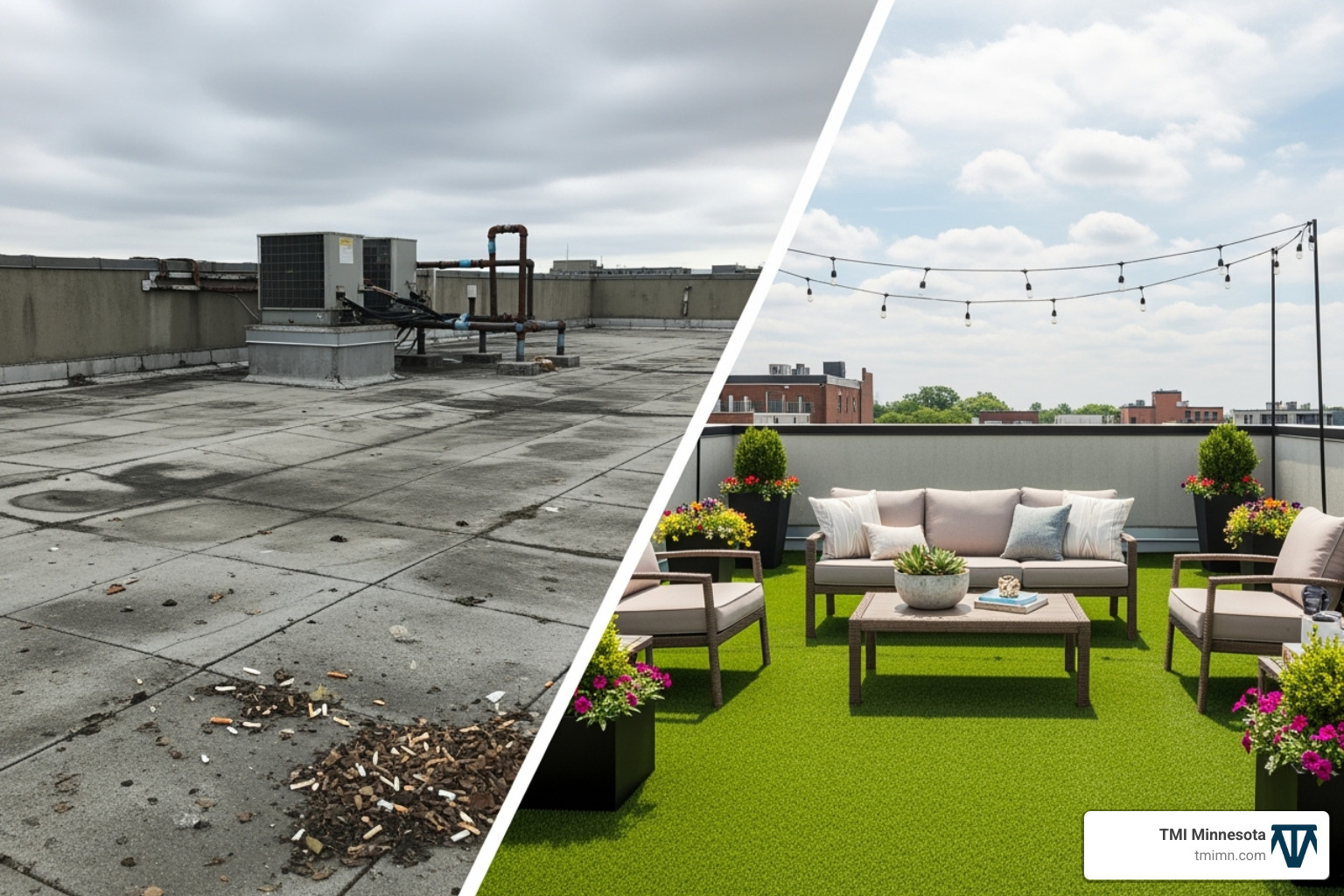
The change from unused rooftop to green oasis brings immediate benefits that go far beyond looks. Artificial grass for rooftops creates usable living space where none existed before, effectively expanding your property’s footprint without adding square footage to your tax bill. This expanded outdoor area directly boosts property value and opens up possibilities you never considered.
Commercial property owners are finding rooftop green spaces become their secret weapon. These areas serve as unique venues for company events, client meetings, or employee break spaces that set their building apart from the competition. It’s truly a great amenity for commercial buildings that can justify higher rents and attract quality tenants.
The environmental benefits surprise many people. Water conservation becomes automatic – no more weekend watering sessions or worrying about drought restrictions. You’ll eliminate the need for fertilizers, pesticides, and weekly mowing, which aligns perfectly with sustainable landscaping techniques. Some artificial grass products even use plant-based backing made from renewable resources like soybeans instead of petroleum-based materials.
There’s also the sound absorption factor that urban dwellers especially appreciate. The turf system helps dampen noise from foot traffic, conversations, and city sounds, creating a more peaceful environment both on the rooftop and in the spaces below. After a long day, that quiet green retreat feels like a world away from the hustle and bustle.
Key Considerations for Artificial Grass for Rooftops
Before you start dreaming about your rooftop paradise, let’s talk about the technical side that makes it all possible. Success depends on getting these fundamentals right from the start.
Structural integrity tops our priority list every single time. Your roof needs to handle the additional weight of the complete turf system – that includes the grass, infill, drainage layers, and any water that might accumulate during heavy storms. We often recommend bringing in a structural engineer for larger installations because it’s better to be absolutely certain than sorry later.
Weight load calculations become especially important when you consider that some systems use up to 5 pounds per square foot of infill material for wind resistance. That might not sound like much, but spread across a large rooftop, those pounds add up quickly.
Drainage planning requires careful attention since water can’t simply soak into the ground like it would in your yard. We design systems that channel water efficiently through the turf to your existing gutters and drains, preventing pooling that could damage your roof membrane or create ice hazards in winter.
Wind uplift resistance becomes critical in Minnesota where strong winds can turn improperly secured turf into an expensive kite. We use strategic infill placement and industrial-grade adhesives to keep everything firmly in place, even during severe weather.
Don’t forget about local building codes – they vary by municipality and can affect everything from weight limits to fire safety requirements. Roof membrane protection guides all our installation methods since we never want to compromise your roof’s waterproofing with unnecessary penetrations.
The Aesthetic and Functional Appeal
The real magic happens when you see how artificial grass for rooftops transforms not just the space, but how people use it. We’re essentially changing unused space into what becomes the favorite part of many properties.
Creating a backyard oasis in the middle of the city feels almost impossible until you experience it firsthand. The consistently green, lush surface provides that connection to nature that urban living often lacks. Whether you envision intimate dinner parties under the stars or a peaceful morning coffee spot, the turf provides a comfortable, attractive foundation. Our backyard oasis designs showcase the incredible possibilities.
Families love having soft, safe play areas where kids can run around without the scraped knees that come with concrete surfaces. The cushioning effect of properly installed turf systems makes playtime safer and more enjoyable. Parents appreciate the splinter-free, mud-free environment that stays clean and attractive.
Pet-friendly surfaces solve multiple problems at once. No more muddy paws tracking through the house, no grass stains on clothing, and easy cleanup when accidents happen. The artificial surface also discourages pests like fleas and ticks that thrive in natural grass environments.
Perhaps the best part is enjoying year-round green that looks perfect regardless of Minnesota’s weather extremes. No brown patches during summer droughts, no muddy mess during spring thaw, and no winter dormancy period. Your rooftop retreat stays beautiful and ready for use in every season.
The integration with outdoor living upgrades creates cohesive outdoor environments that feel natural and inviting, turning forgotten rooftop space into the crown jewel of your property.
Selecting the Perfect System for Your Rooftop or Balcony
Think of choosing artificial grass for rooftops like picking the perfect outfit for a special occasion. You wouldn’t wear flip-flops to a formal dinner, and you shouldn’t install just any turf on your rooftop. The exposed environment up there demands specific features and components that work together seamlessly.
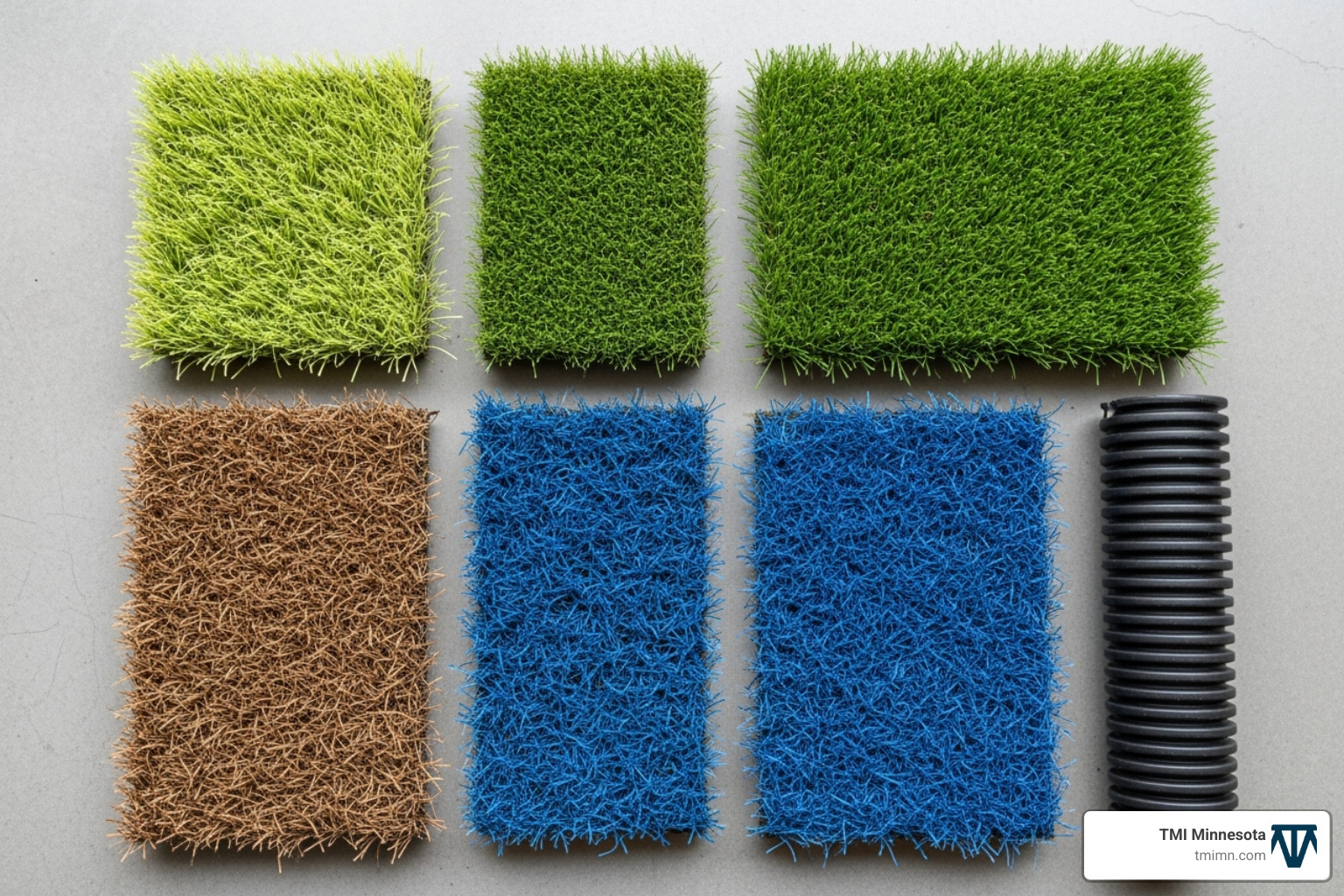
At TMI Minnesota, we’ve learned that every rooftop tells its own story. Some face brutal afternoon sun, others battle constant wind, and many deal with both. That’s why we take time to understand your specific situation before recommending the perfect system. It’s not just about what looks good – it’s about what will perform beautifully for years to come.
Choosing the Best Artificial Grass for Rooftops
Your rooftop is basically nature’s testing ground. Between scorching sun, driving rain, and Minnesota’s famous winds, only the toughest turf will thrive up there. Here’s what we look for when selecting the right artificial grass for rooftops.
Pile height and face weight might sound technical, but they’re really about comfort and durability. Taller pile heights around 1-1/2 inches give you that lush, natural grass feel underfoot. Higher face weights mean denser, more resilient turf that bounces back from heavy foot traffic. Think of it as the difference between a thin bathroom rug and a plush living room carpet.
Rooftops get hot – sometimes uncomfortably so. That’s where cooling technologies become your best friend. Some advanced turfs feature hollow grass blades that work like tiny evaporative coolers. Others use special blade shapes like C-shape or S-blade designs to diffuse light and keep surface temperatures manageable. Trust me, your bare feet will thank you on those sunny summer days.
UV-stabilized yarns are absolutely non-negotiable for rooftop installations. Without this protection, your beautiful green space could fade to an unappetizing beige within a few seasons. These specially treated fibers maintain their vibrant color year after year, even under constant sun exposure.
Water management starts with permeable backing. This feature allows water to flow freely through the turf to the drainage system below. Without it, you’d essentially be creating a shallow swimming pool on your roof – not exactly the look we’re going for.
For commercial and multi-family buildings, safety considerations become paramount. We prioritize products with a Class A Fire Rating (ASTM E108), and some innovative products achieve this rating without requiring infill. Beyond fire safety, we consider non-slip surfaces and fall ratings – some products offer protection from falls up to 9 feet, making them ideal for family-friendly spaces.
The Importance of Underlayment and Infill
Here’s where the magic really happens – in the layers you never see. The turf itself is just the beautiful top layer of a sophisticated system designed to handle everything Mother Nature throws at it.
Drainage tiles or mats are the unsung heroes of any rooftop installation. Products like specialized drainage tiles, geocell grids, or fiberglass grating create essential void space beneath your turf. For example, some geocell systems maintain over 90% air void, holding a significant amount of water per square foot when needed while allowing proper drainage. This system prevents water pooling while promoting air circulation that helps regulate temperature and prevents mold or mildew.
Shock-absorbing pads transform your rooftop from a hard concrete surface into something wonderfully comfortable. Products like shock-absorbing foam pads or waterproof underlays cushion every step while providing critical fall protection for play areas. They also help create that uniform, professional appearance that makes your installation look seamless.
While some modern turfs work without it, infill serves as ballast in most rooftop applications – think of it as the anchor that keeps everything in place. It supports grass blades, creates a natural feel underfoot, and most importantly, adds weight to prevent your beautiful turf from taking flight during windstorms.
Silica sand remains our go-to infill choice, typically using 30 to 50 mesh applied at about 2 pounds per square foot. It’s reliable, effective, and provides the perfect balance of support and stability. For pet areas or spaces requiring extra odor control, we recommend specialized infills with antimicrobial or odor-absorbing properties. These advanced materials go beyond basic sand, offering improved performance and hygiene benefits that keep your rooftop space fresh and inviting.
When all these components work together, you get more than just artificial grass – you get a complete rooftop ecosystem designed to perform beautifully for decades.
The Installation Process for Artificial Grass on Rooftops
Installing artificial grass for rooftops requires a completely different approach than your typical backyard project. Think of it like the difference between building a treehouse and constructing a skyscraper – both involve building, but the stakes and complexity are worlds apart.
While you might tackle a small balcony project yourself if you’re handy, most rooftop changes really benefit from professional expertise. There’s just too much that can go wrong with drainage, wind resistance, and structural considerations. Our team’s experience with Artificial Turf Landscaping means we’ve seen it all and know how to handle the unique challenges that rooftops present.
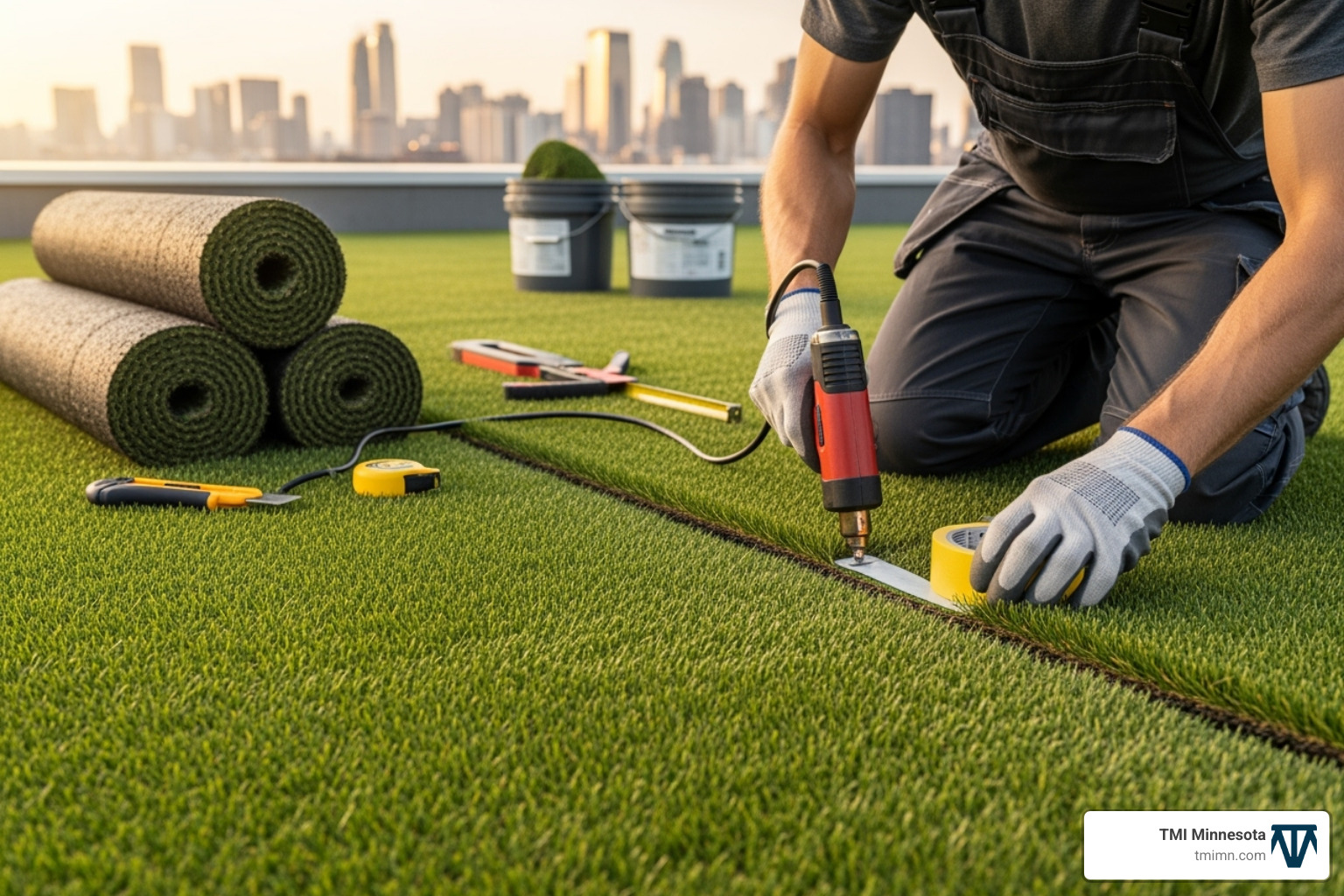
Let me walk you through our proven installation process, step by step.
Step 1: Surface Preparation and Edging
Every great rooftop change starts with a clean slate. We begin by thoroughly cleaning the roof surface, removing every bit of debris, dust, and old materials. It might seem like overkill, but trust me – starting with a spotless surface makes all the difference in how well everything bonds together.
Next comes the detective work. We carefully inspect for damage in the existing roof membrane, looking for any cracks, punctures, or weak spots that could spell trouble down the road. If we find issues, we fix them before moving forward. Sometimes we’ll add a protective layer over the existing membrane, giving you an extra barrier against potential problems.
Here’s where rooftop installations get tricky – we need to secure everything without turning your roof into Swiss cheese. That’s why we install a perimeter nailer board using high-strength adhesive instead of screws or nails. These plastic composite or treated wood boards create a solid edge for the turf while keeping your roof membrane intact.
The adhesive we use isn’t your average hardware store variety. We rely on professional-grade, moisture-cured urethane adhesives that create an incredibly strong bond. We also cut drainage slots in the nailer board every few inches – water needs somewhere to go, and proper air circulation prevents moisture buildup. You can find more details on securing turf with a border if you’re curious about the technical aspects.
Step 2: Laying the Drainage and Comfort Layers
Now we start building the foundation that makes everything work. Rolling out the drainage system is like creating the circulatory system for your rooftop – it needs to be perfect or problems will follow.
Whether we’re using specialized drainage tiles, geocell grids, or fiberglass grating panels, each piece gets carefully positioned and often interlocked to create one continuous, liftd platform. The key is making sure water can flow freely from any point on the surface to the roof’s existing drains. With some grid systems, we even staple tabs to the nailer board for extra stability.
Complete coverage means exactly that – no gaps, no shortcuts. The drainage layer extends all the way to the perimeter, creating a clear path for water to escape. Standing water under artificial turf is like leaving wet towels in a gym bag – nothing good comes from it.
After the drainage layer comes the comfort layer. Placing shock pads or underlayment requires precision cutting around obstacles and careful fitting to create a uniform surface. These pads do more than just make the surface comfortable – they’re a crucial safety feature that absorbs impact and helps prevent injuries.
Step 3: Installing and Securing the Turf
Finally, the moment you’ve been waiting for – installing the actual artificial grass for rooftops. We position the turf rolls and then do something that might surprise you: we wait. Letting the turf relax for several hours or even overnight eliminates wrinkles and ensures it lies perfectly flat.
Trimming edges for a precise fit requires both skill and patience. Using razor-sharp utility knives and specialized cutting tools, we cut the turf to match every angle and curve of your rooftop. It’s like tailoring a custom suit – the fit has to be perfect.
For larger areas, seaming turf panels together becomes an art form. We carefully align edges, apply specialized seaming adhesive to tape placed underneath, and press everything together firmly. When done right, the seam virtually disappears, creating the illusion of one continuous piece of grass.
The final step is applying adhesive to secure the perimeter to the nailer board. This bond, sometimes reinforced with staples driven into the nailer board (never the roof membrane), prevents wind from getting underneath the turf. In Minnesota, where we know a thing or two about wind, this step can make or break your installation.
Step 4: Applying Infill and Final Grooming
We’re in the home stretch now, but these final steps are what transform your turf from good to great. Spreading infill evenly across the surface isn’t just about appearance – it’s about physics. The right amount of infill (typically silica sand at about 2 pounds per square foot) adds crucial weight to resist wind uplift while helping grass blades stand tall.
Using a power broom to work infill into the fibers ensures even distribution and proper blade support. This process gives the turf its natural look and feel while providing the ballast needed to keep everything secure in high winds.
The finishing touch involves brushing the grass blades to an upright position, creating that fresh, vibrant appearance that makes people do a double-take. Is it real or artificial? That’s exactly the reaction we’re going for.
We wrap up with a thorough final site cleanup, leaving your new rooftop oasis spotless and ready for its first barbecue, morning coffee, or whatever you’ve been dreaming about doing up there.
Frequently Asked Questions about Rooftop Turf
Over the years, we’ve helped countless property owners steer the ins and outs of rooftop turf installations. These are the questions that come up most often during our consultations, along with the honest answers we’ve learned through hands-on experience.
Can artificial turf be installed over concrete, wood, or membrane roofing?
Absolutely! Artificial grass for rooftops works beautifully over virtually any structurally sound surface – whether that’s concrete, wood decking, or membrane roofing like TPO. The magic lies in understanding what each surface needs to create a lasting, problem-free installation.
Concrete rooftops are actually quite common in our projects. The main challenge here is ensuring proper water management, since concrete doesn’t naturally shed water like other surfaces. We solve this by incorporating robust drainage mat systems beneath the turf and sometimes creating strategic drainage pathways to prevent any pooling issues.
Wood deck installations tend to be more straightforward. If your deck boards are in good shape with reasonable gaps, we can often work directly with the existing surface. For decks with larger gaps or aging wood, we might recommend a floating tile system to create that perfect, uniform base your turf deserves.
Membrane roofing requires our most careful approach – and honestly, it’s where our expertise really shines. With surfaces like TPO (which we see a lot in commercial buildings), we use a completely non-penetrating installation method. This means high-strength, moisture-cured urethane adhesives instead of screws or nails that could compromise your roof’s waterproofing. The specialized drainage layer becomes absolutely critical here, protecting your existing roof while ensuring water flows exactly where it should.
How do you maintain artificial grass on a rooftop?
Here’s the best part about artificial grass for rooftops – the maintenance is refreshingly simple compared to what you might expect. No more weekend mornings spent mowing or worrying about brown patches during Minnesota’s unpredictable weather.
Your main task is keeping things clean and clear. A leaf blower or stiff broom handles most debris removal, and trust me, this becomes second nature after a few weeks. When spills happen (and they will), a simple rinse with your garden hose takes care of most issues. Pet owners love how easy cleanup becomes – just rinse and go.
The drainage aspect requires a bit of attention, but nothing complicated. Keep an eye on your roof’s gutters and drains to make sure water can flow freely from beneath the turf. A clogged drain can create problems, but they’re easily prevented with regular checks.
In high-traffic areas, you might notice the grass fibers getting a bit flat over time. A quick cross-brushing with a stiff broom brings them right back to life, keeping that fresh, vibrant look we all love. For larger spaces, a power broom makes this even easier.
We also recommend occasionally checking the edges and seams, especially after strong winds. It’s rare to find issues, but catching small problems early prevents bigger headaches down the road.
What is the long-term value of installing rooftop artificial turf?
This question gets to the heart of why we’re so passionate about artificial grass for rooftops. Yes, the upfront investment is higher than leaving your rooftop bare or choosing basic decking options. But when you look at the bigger picture, the numbers tell a compelling story.
The cost savings start immediately and compound over time. You’ll eliminate water bills for irrigation, never buy another bag of fertilizer, and forget about hiring lawn care services. With artificial turf reducing water consumption by up to 70%, those savings add up faster than most people expect.
Then there’s the durability factor. Quality artificial turf systems can last up to 20 years with minimal maintenance. Think about what other outdoor improvements offer that kind of longevity – very few. Over two decades, you’re looking at incredibly low per-year costs for a space that stays beautiful and functional regardless of weather.
But the real value goes beyond dollars and cents. We’ve watched clients transform unused rooftops into their favorite gathering spaces – places where families spend summer evenings, where coworkers take breaks, where kids play safely above the city streets. That improved quality of life is hard to put a price on.
For property values, the impact is tangible. A well-designed rooftop with artificial grass becomes a major selling point that sets your property apart. In commercial settings, it can attract premium tenants who value unique amenities. The return on investment often exceeds what traditional improvements deliver.
Conclusion: A Lasting Investment in Your Outdoor Lifestyle
When you step back and look at everything we’ve covered, it’s clear that artificial grass for rooftops represents so much more than just another home improvement project. It’s really about reclaiming space you never knew you had and turning it into something that genuinely improves how you live.
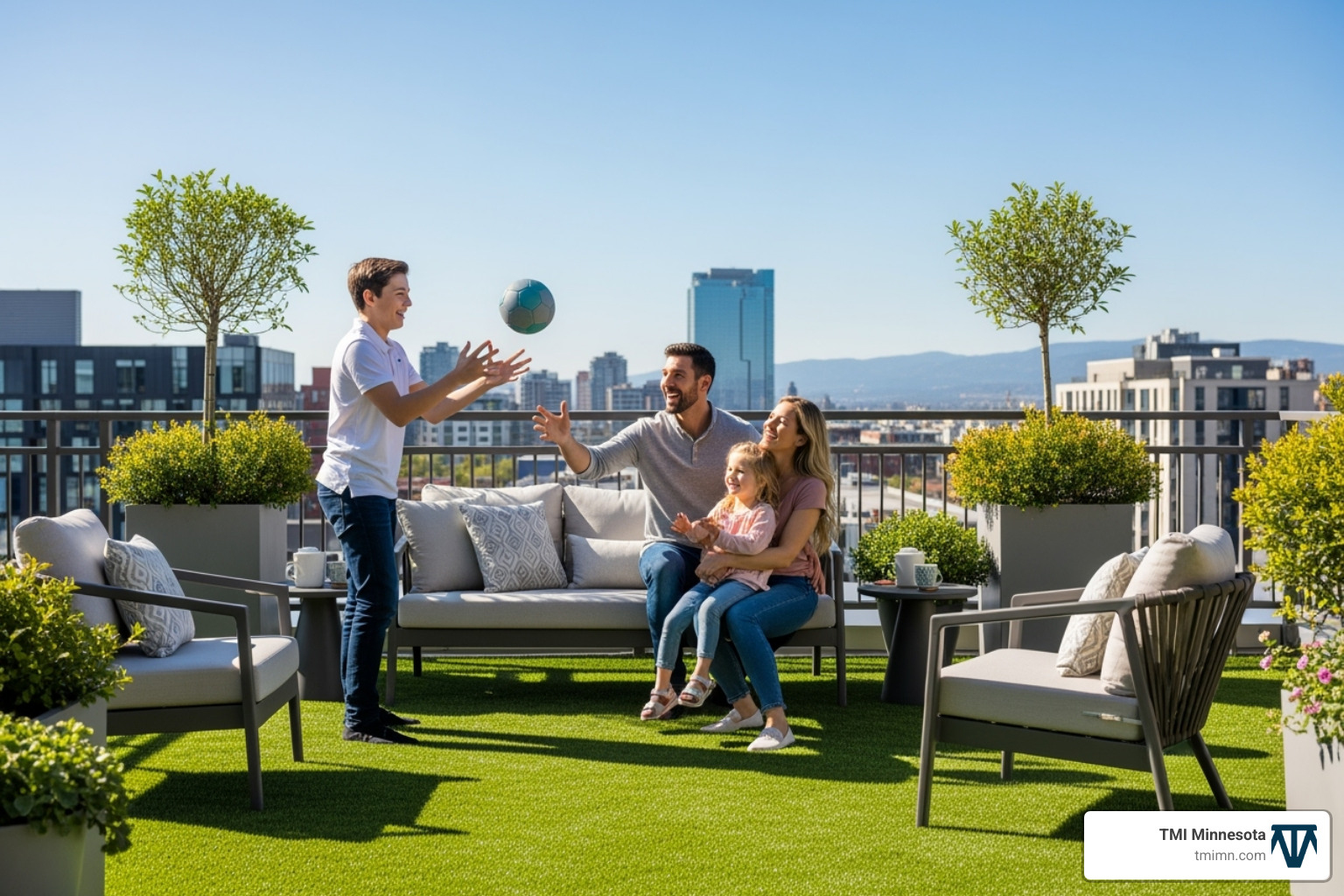
Think about it: you’re taking what was probably just empty, unused space above your head and creating a place where your family actually wants to spend time. Maybe it becomes your morning coffee spot, your kids’ favorite play area, or the perfect place to host friends for evening gatherings. The year-round green appeal means it looks inviting no matter what Minnesota’s weather throws at it.
The practical benefits make just as much sense as the lifestyle ones. You’re looking at decades of use with minimal upkeep, significant water savings, and a surface that stays safe and comfortable underfoot. For commercial properties, it’s often the difference between having ordinary rooftop space and offering something that truly sets your building apart.
What I find most rewarding about these projects is watching how quickly people adapt to having this new outdoor room. Within weeks of installation, rooftops that sat empty for years become the heart of family life or the go-to space for building tenants.
At TMI Minnesota, we’ve learned that successful rooftop changes require more than just laying down turf. It’s about understanding how drainage systems work with your specific roof, ensuring proper wind resistance, and integrating the artificial grass seamlessly with other Hardscape and Softscape elements to create a cohesive outdoor environment.
The investment you make today in artificial grass for rooftops pays dividends in increased property value, reduced maintenance costs, and most importantly, in the countless hours you’ll spend enjoying your newly transformed space. It’s one of those improvements that you’ll appreciate more with each passing season.
Ready to create your own rooftop retreat? Explore our ForeverLawn® solutions! Let’s work together to turn that underused space above your head into the outdoor oasis you’ve been dreaming about.