
Why Schools Are Switching to Artificial Grass
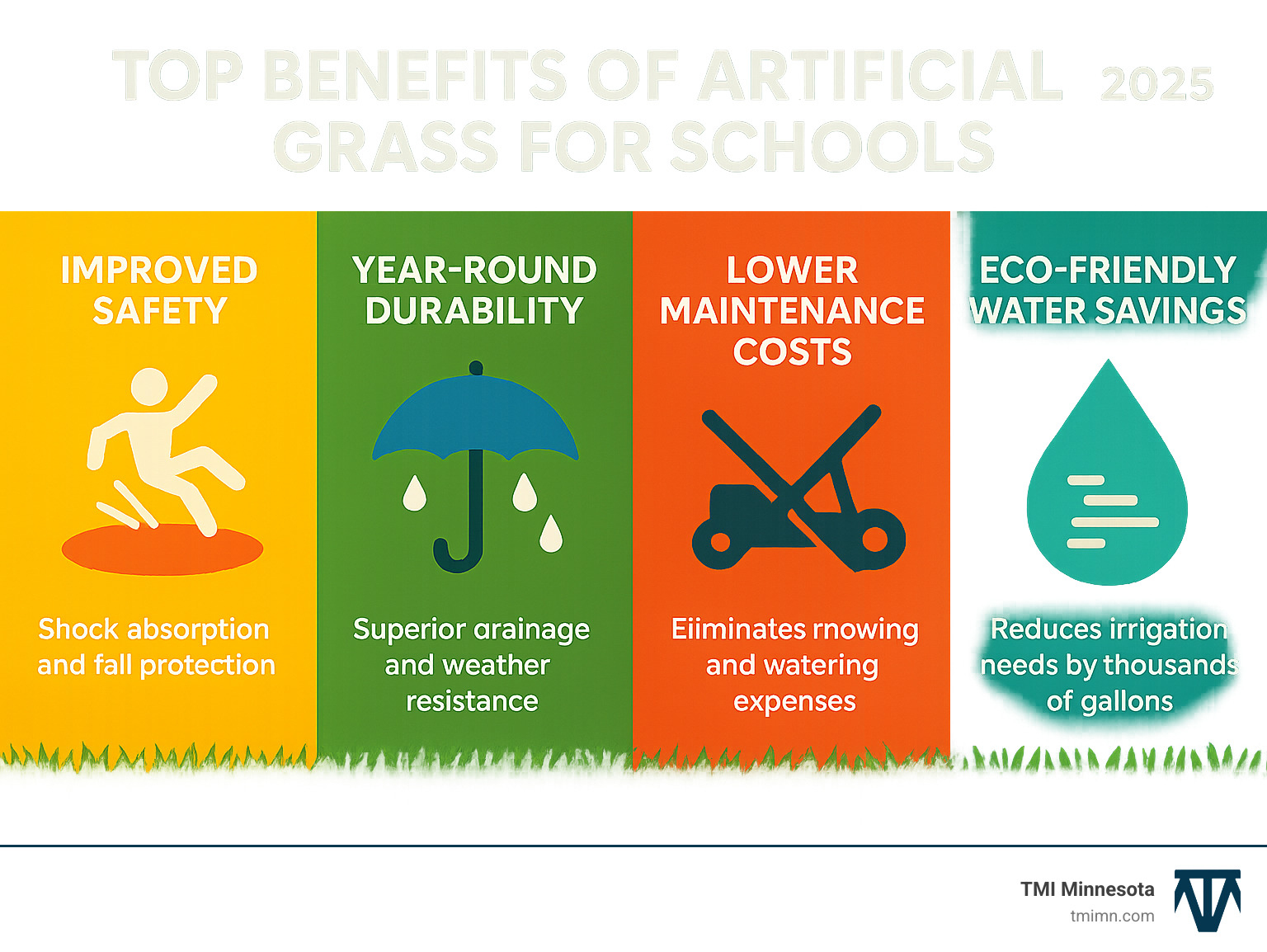
Artificial grass for schools is changing how educational institutions approach playground safety, maintenance costs, and year-round usability. Modern synthetic turf offers a durable, safe, and cost-effective alternative to traditional grass fields that struggle with heavy foot traffic, weather damage, and ongoing maintenance demands.
Key benefits of artificial grass for schools:
- Improved Safety – Shock-absorbent surfaces with fall height certification up to 3 meters
- Year-Round Use – Superior drainage eliminates mud and maintains playability in all weather
- Cost Savings – No mowing, watering, or chemical treatments reduce long-term expenses
- Durability – Withstands high traffic with 15-20 year lifespan
The numbers tell a compelling story. According to the Canadian Public Health Association, over 1,500 children were sent to emergency rooms for playground injuries in 2015 alone. Many of these injuries could be prevented with properly installed artificial turf that provides consistent cushioning and eliminates uneven, worn patches common in natural grass playgrounds.
“If there’s one thing children love, it’s the ability to play and run outside in the grass. When it comes to caregivers, teachers, and guardians, all you want is for your kids to enjoy themselves in a safe environment,” notes one industry expert.
Traditional school grounds face constant challenges – muddy conditions after rain, brown patches from overuse, ongoing maintenance costs, and safety concerns from uneven surfaces. Artificial turf eliminates these problems while creating vibrant, engaging spaces where children can play safely year-round.
I’m Christopher Deanovic, Operations Leader at TMI Minnesota, where I’ve helped transform numerous outdoor spaces including school environments through thoughtful landscape design and high-quality artificial grass for schools installations. My hands-on experience with synthetic turf projects has shown me how the right surface can dramatically improve both safety and functionality for educational institutions.
The Best Benefits of Artificial Grass for Schools
When school administrators start exploring artificial grass for schools, they quickly find three game-changing advantages that make synthetic turf an exceptional investment. These benefits – improved safety, significant cost savings, and reliable all-weather performance – work together to create outdoor spaces where children can thrive while schools operate more efficiently.
Enhancing Child Safety on the Playground
Every parent’s worst nightmare is getting that phone call from school about a playground injury. Unfortunately, these calls happen far too often. Over 1,500 children were sent to emergency rooms for playground injuries in 2015 alone, according to the Canadian Public Health Association. Many of these accidents could have been prevented with better playground surfaces.
Traditional grass playgrounds create safety hazards that most people don’t even think about. Worn patches turn into hard dirt. Uneven surfaces create trip hazards. Muddy conditions make everything slippery. Artificial grass for schools eliminates these problems by providing a consistently safe surface that protects children during play.
The superior shock absorption of quality artificial turf makes the biggest difference in preventing serious injuries. When properly installed with advanced foam underlays like EchoPlay Underpadding, synthetic grass cushions falls dramatically better than natural surfaces. A 1-inch underpadding provides a 6-foot fall rating, while 2-inch padding offers an impressive 12-foot fall rating. Some systems are critical fall height certified up to 3 meters – perfect for areas under climbing equipment.
Beyond cushioning falls, artificial grass creates a healthier play environment. The non-toxic materials mean children aren’t exposed to pesticides, fertilizers, or other harmful chemicals commonly used on natural grass. This is especially important for younger children who tend to put their hands in their mouths after playing.
Parents of children with grass allergies particularly appreciate how synthetic turf provides an allergen-free play space. No more sneezing, watery eyes, or having to stay indoors during peak pollen season. The smooth, consistent surface also means fewer scraped knees and elbows from rough or abrasive ground.
Modern artificial grass systems can even include antimicrobial protection through specialized infills that fight bacteria and microbes. This creates a more sanitary play surface – crucial in school settings where children are constantly sharing space.
For more detailed information about creating the safest possible play environment, check out our guide on safe turf for kids and learn about the benefits of antimicrobial infill.
Long-Term Cost Savings and Low Maintenance
The financial benefits of artificial grass for schools become crystal clear when you compare five-year maintenance costs. While natural grass seems cheaper upfront, the ongoing expenses add up quickly and never stop.
| Expense Category | Natural Grass Field (5-Year Cost) | Artificial Turf Field (5-Year Cost) |
|---|---|---|
| Mowing | High (weekly/bi-weekly service) | None |
| Watering | Very High (daily irrigation) | Minimal (cleaning only) |
| Fertilizing | High (multiple applications yearly) | None |
| Seeding/Patching | Moderate (constant repairs) | None |
| Chemical Treatments | Moderate (pesticides, herbicides) | None |
| Labor Costs | Very High (staff time or contractors) | Minimal (occasional maintenance) |
| Total | Substantial Ongoing Expenses | One-Time Install + Minor Upkeep |
The savings go far beyond just dollars and cents. No more mowing means no fuel costs, equipment maintenance, or staff time spent on weekly grass cutting. No watering requirements can save schools thousands of gallons annually – particularly valuable in drought-prone areas. This water conservation approach aligns perfectly with drought resistant landscaping strategies many schools are adopting.
Eliminating chemical treatments not only saves money but creates a safer environment for children and staff. No more scheduling around fertilizer applications or worrying about chemical exposure during outdoor activities.
With a lifespan of 15-20 years, artificial turf transforms from an expense into a smart long-term investment. Schools can redirect those saved maintenance dollars toward educational programs, new equipment, or other facility improvements that directly benefit students.
All-Weather Durability for Uninterrupted Play
Nothing frustrates teachers and students more than having to cancel outdoor activities because the playground is too muddy, too dusty, or just plain unusable. Natural grass simply can’t handle the constant traffic that school playgrounds endure, especially when weather conditions aren’t perfect.

High-traffic resistance is where artificial grass truly shines. The dense, resilient fibers are engineered to bounce back from constant use. While natural grass develops bare spots and compacted areas within months, quality synthetic turf maintains its appearance and functionality for years of heavy play.
The superior drainage capabilities solve one of the biggest problems with traditional playgrounds. Advanced permeable backings allow water to drain incredibly fast – some systems can handle up to 437 gallons per hour! This means children can return to play shortly after rain stops, instead of waiting days for muddy conditions to dry out.
UV protection built into the fibers prevents fading and degradation from sun exposure. The playground looks vibrant and inviting year after year, maintaining that “new” appearance that makes outdoor spaces more appealing to children.
Most importantly, year-round usability means outdoor play and learning never have to stop. Rain or shine, hot or cold, the surface remains consistent and safe. No more muddy shoes tracked through hallways. No more disappointed children stuck inside during recess. No more scheduling headaches around field conditions.
This reliability encourages more outdoor physical activity, which research shows is crucial for children’s physical and mental development. When schools can count on their outdoor spaces being available 365 days a year, they naturally incorporate more outdoor learning and play into their programs.
Designing the Perfect Play and Learning Space
Beyond its practical benefits, artificial grass for schools also offers incredible versatility in design, allowing us to create engaging and functional play and learning environments custom to the unique needs of each institution.
Choosing the Right Type of Artificial Grass for Schools
Selecting the appropriate type of artificial grass is crucial for ensuring safety, performance, and longevity in a school setting. We consider several factors to recommend the best product for your specific needs:
- Pile Height and Face Weight: These characteristics influence the look, feel, and durability of the turf. For playgrounds, we often recommend higher face weights (density of fibers) to withstand heavy foot traffic and provide a softer, more cushioned surface. Pile heights can vary based on the intended use, from shorter piles for sports areas to slightly longer, lush piles for general play zones.
- Material Composition: Most high-quality artificial grass is made from polyethylene, polypropylene, or nylon fibers. Polyethylene is a popular choice for playgrounds due to its softness, durability, and realistic appearance. We ensure the materials are 100% non-toxic and free of lead and heavy chemicals, giving parents and educators peace of mind. Some premium products even use proprietary metallocene polymers for best durability.
- Permeable Backing: A good drainage system starts with the turf’s backing. We use products with permeable polyurethane backings that allow water to flow through efficiently, preventing waterlogging and ensuring quick drying.
- Infill Options: The infill material is critical for safety, stability, and hygiene. Common options include:
- Silica Sand: Provides ballast and helps the blades stand upright.
- Crumb Rubber: Offers excellent shock absorption, but can retain heat.
- Organic Infills: Materials like coconut fibers and cork granules offer natural cushioning and can be more environmentally friendly.
- Antimicrobial Infills: Products like Envirofill, infused with Microban, inhibit bacterial growth, making the surface more hygienic for children. Envirofill is also non-toxic and non-hazardous, tested free of heavy metal toxicity.
- Cooling Infills: Innovations like TºCool Infill or COOLPLAY/Greenplay infills can help reduce surface temperatures, making play more comfortable on hot days.
We also strongly recommend choosing North American-made products. As industry experts, we know that the U.S. has some of the strictest consumer-protection laws, ensuring higher quality materials and fewer harmful additives compared to many overseas manufacturers. Our ForeverTurf products are designed with these high standards in mind. For a deeper understanding of what makes turf high-quality, take a closer look at high-quality turf materials.
Creative Customization for Play and Learning
One of the most exciting aspects of artificial grass for schools is the ability to customize the space to improve both play and learning. Gone are the days of plain green fields; now, schoolyards can become vibrant, interactive educational landscapes.

We can transform school environments with:
- Colored Turf Options: Artificial grass comes in a wide spectrum of colors beyond traditional green. We can use these colors to create visually stimulating areas, define different play zones, or even incorporate school colors into the design.
- Inlaid Games and Markings: Imagine a hopscotch court that never fades, a permanent four-square grid, or a winding snake pathway built directly into the turf. We can precisely cut and inlay shapes, numbers, letters, and classic games directly into the artificial grass, encouraging active play and learning. The “Perfectly Green Playtime” range, for example, offers various shapes and drawings.
- School Logos and Mascots: Showcase school pride by embedding your school’s logo or mascot directly into the turf. This creates a strong sense of identity and ownership for students and the community.
- Zoned Play Areas: Different colors or patterns can be used to delineate specific activity zones, such as a red zone for ball games, a blue area for water play (no actual water, just imagination!), or a yellow area for quiet reading. This helps manage traffic flow and provides structure to playtime.
- Sensory Pathways: For younger children or those with special needs, we can design sensory pathways using different textures of turf, varying pile heights, or even incorporating small, safe elements to create a multi-sensory experience that stimulates development.
These customization options turn a simple playground into an “exciting adventure playground,” fostering creativity, physical activity, and social interaction. For more inspiration, explore our ideas for creative outdoor play spaces.
Professional Installation: The Foundation of Safety and Longevity
The most beautiful artificial grass for schools in the world won’t perform well if it’s not installed properly. Think of it like building a house – you can have the finest materials, but without a solid foundation and skilled craftsmanship, everything falls apart. That’s why professional installation isn’t just recommended; it’s absolutely essential for creating safe, durable play spaces that will serve your school for decades.
The Critical Steps of a Durable Installation
When we arrive at your school to install artificial turf, we’re not just rolling out grass and calling it a day. Our installation process follows a precise sequence that’s been refined through years of experience creating safe outdoor spaces.
Site preparation is where the magic begins. We carefully remove all existing grass, weeds, and debris, then excavate the area to about 3 inches deep. This might seem like overkill, but this step determines whether your playground will be level, stable, and safe for years to come.
Next comes base construction, which is honestly one of the most critical parts of the entire process. We lay down a foundation of crushed stone that gets compacted until it’s rock-solid. This creates the stable, level surface that prevents your turf from developing dips, bumps, or soft spots that could become tripping hazards. We also install a plastic membrane barrier to keep any stubborn weeds from trying to grow up through the turf later.
Proper drainage systems are built into every layer of the installation. Beyond the permeable backing of the turf itself, we design the entire sub-base to channel water away efficiently. This means no puddles, no soggy spots, and kids can get back to playing almost immediately after rain showers.
For playground areas, shock pad underlayment is absolutely non-negotiable. These specialized foam pads go beneath the artificial grass to provide the cushioning that meets critical fall height safety standards. It’s this underlayment that can mean the difference between a minor tumble and a serious injury.
Secure seaming requires both skill and patience. Each section of turf must be joined with industrial-strength tape and adhesive, with careful attention to pile direction so the finished surface looks completely natural. Poor seaming creates visible lines and potential tripping hazards – something we never compromise on.
Finally, infill application completes the installation. We carefully distribute the chosen infill material (typically 10-15 kg per square meter) throughout the turf. This infill helps grass blades stand upright, provides additional cushioning, and improves drainage performance.
Every step matters, and cutting corners on any part of this process can compromise safety and durability. You can learn more about our meticulous approach by reviewing the details on our ForeverTurf installation process.
Understanding Lifespan and Warranty
When schools invest in artificial grass for schools, they’re making a decision that should serve students for many years. Understanding what to expect in terms of lifespan and warranty protection helps ensure you get the full value of your investment.
High-quality artificial turf typically lasts 15 to 20 years, even in busy school environments where hundreds of kids play every day. That’s impressive durability when you consider the constant running, jumping, and activity these surfaces endure. The key factors that affect longevity include the quality of materials, intensity of use, UV exposure, and how well the surface is maintained over time.
Manufacturer warranties vary, but reputable products often come with 10 to 15-year coverage against defects and premature wear. These warranties aren’t just marketing promises – they reflect genuine confidence in the product’s durability. We make sure our clients understand exactly what’s covered and how to maintain their warranty protection.
Here’s something many people don’t realize: professional installation is often required to maintain warranty coverage. Manufacturers know that even the best materials can fail if they’re not installed correctly. Poor base preparation, inadequate drainage, or improper seaming can void warranties and lead to expensive problems down the road.
Annual inspections are particularly important for safety surfaces under play equipment. These yearly check-ups can catch small issues before they become big problems, extending the life of your investment and ensuring ongoing safety compliance.
With proper installation and basic maintenance, your school’s artificial turf will provide a safe, beautiful play surface that serves students for decades. It’s an investment in both safety and peace of mind that pays dividends year after year.
Frequently Asked Questions about Artificial Grass in Schools
When school administrators and parents first consider artificial grass for schools, they naturally have questions about this modern playground solution. Having worked with numerous educational institutions, I’ve found these concerns are completely understandable – after all, you want what’s best for the children in your care.
Let me address the most common questions we hear and share what our experience has taught us about synthetic turf in school environments.
Is artificial grass environmentally friendly?
This is probably the question I’m asked most often, and it’s a thoughtful one. The environmental impact of artificial grass for schools isn’t black and white, but when you look at the full picture, the benefits are quite compelling.
The biggest environmental win is water conservation. Think about how much water a traditional school field needs – we’re talking thousands of gallons every year just to keep it green and usable. With artificial grass, that daily watering becomes completely unnecessary. In areas like the Twin Cities, where drought conditions can impact water availability, this conservation makes a real difference.
Then there’s the chemical factor. Natural grass requires fertilizers, pesticides, and herbicides to stay healthy and safe for children. These chemicals don’t just disappear – they run off into storm drains and eventually reach our waterways. Artificial grass eliminates this chemical runoff entirely, protecting local ecosystems.
We also see reduced carbon emissions because there’s no need for gas-powered mowers, trimmers, or other maintenance equipment. No more weekly mowing means cleaner air around your school.
I’ll be honest though – artificial grass is a manufactured product, and that does have an environmental cost in terms of production energy. At the end of its 15-20 year lifespan, recycling can be challenging. However, manufacturers are increasingly using recycled materials and designing products with end-of-life recycling in mind.
When you balance the ongoing environmental benefits against these initial concerns, most schools find that artificial turf supports their sustainability goals. For more ideas on creating environmentally conscious outdoor spaces, explore our guide to eco-friendly landscape design.
How hot does artificial grass get in the sun?
I won’t sugarcoat this – older artificial grass could get uncomfortably hot on sunny days. But the good news is that turf technology has come a long way in solving this problem.
Modern artificial grass systems use cooling infill technologies that make a dramatic difference. Products like TºCool Infill and COOLPLAY infills work through evaporative cooling – similar to how your body uses sweat to cool down. These specialized infills can keep the surface significantly cooler than traditional synthetic turf.
The turf fibers themselves have also improved. Newer materials are designed with better heat dissipation properties and less reflective surfaces that don’t absorb as much heat in the first place.
We also recommend incorporating shade structures into playground designs. Whether it’s strategically planted trees, canopies, or pergolas, shade makes any surface more comfortable during peak heat hours. It’s just good playground design.
Here’s some perspective: even on a hot day, artificial grass with proper infill typically stays cooler than asphalt or concrete surfaces. And unlike natural grass that can become patchy and uncomfortable in drought conditions, artificial turf maintains a consistent, cushioned surface.
How is artificial grass cleaned and sanitized?
One of the things school maintenance staff love most about artificial grass is how simple it is to keep clean. After years of dealing with muddy natural fields and constant upkeep, the ease of synthetic turf maintenance is refreshing.
Daily maintenance is incredibly straightforward. A quick sweep or leaf blowing removes debris like leaves and paper. That’s usually all that’s needed for routine care.
For regular cleaning, a simple rinse with a garden hose handles dust, pollen, and minor spills. The permeable backing we use in our installations means water drains quickly – no standing puddles or soggy areas to worry about.
When deeper cleaning is needed, mild, non-toxic cleaners work perfectly with water. The engineered drainage system makes it easy to apply cleaning solutions and rinse them away completely.
The real game-changer for schools is antimicrobial infill. Products like Envirofill contain Microban technology that actively inhibits bacteria, mold, and mildew growth. This is especially valuable in high-traffic areas where lots of children play every day. Learn more about the benefits of antimicrobial infill for school applications.
Compare this to natural grass, which can harbor bacteria in muddy spots, requires chemical treatments, and creates ongoing maintenance headaches. With artificial grass for schools, your maintenance team spends less time on groundskeeping and more time on what really matters – supporting your educational mission.
Transform Your School’s Outdoor Space Today
In conclusion, artificial grass for schools represents a monumental leap forward in creating ideal outdoor environments for children. We’ve seen how it dramatically improves child safety on playgrounds through shock absorption and non-toxic materials, significantly reduces long-term costs by eliminating the need for constant maintenance, and provides all-weather durability for uninterrupted play year-round.
The ability to customize these spaces with vibrant colors, inlaid games, and school logos transforms simple playgrounds into dynamic, engaging learning and play zones, promoting physical activity and combating issues like screen addiction.
At TMI Minnesota, we specialize in changing outdoor spaces with unique designs, offering comprehensive hardscape and softscape installations throughout the Twin Cities area. Our unique selling proposition is using leading-edge products to lift yard living, and our ForeverTurf solutions are a testament to this commitment. We believe that a well-designed outdoor space is an extension of the classroom, fostering growth, creativity, and joy.
If you’re considering upgrading your school’s outdoor facilities, we invite you to explore the possibilities of artificial grass. Let us help you create a playground that is not only beautiful and functional but also a safe, durable, and cost-effective asset for your school community for decades to come.
Learn more about our ForeverTurf solutions and start your project today.