
Why Artificial Grass Maintenance Matters for Your Investment
Artificial grass maintenance is the key to protecting your landscaping investment and keeping your lawn looking perfect year-round. While artificial turf requires significantly less upkeep than natural grass, it’s not completely maintenance-free.
Quick maintenance essentials:
- Remove debris weekly with a leaf blower or stiff broom
- Rinse regularly to wash away dust and pollen
- Brush against the grain monthly to keep blades upright
- Clean spills immediately to prevent staining
- Address pet waste promptly for odor control
The research shows that artificial grass typically lasts 15-25 years with proper care, compared to natural grass that demands weekly mowing, watering, and fertilizing. Your artificial lawn needs attention just once or twice per year versus the constant upkeep of traditional grass.
The difference is dramatic: artificial turf eliminates mowing, reduces water usage by thousands of gallons annually, and cuts your lawn care time by over 90%. But simple maintenance steps ensure your investment stays beautiful and functional for decades.
I’m Christopher Deanovic, Operations Leader at TMI Minnesota, where I’ve helped countless homeowners transition from high-maintenance natural lawns to beautiful artificial turf solutions. My experience in landscape design has shown me that proper artificial grass maintenance is the secret to maximizing both the lifespan and appearance of your synthetic lawn.

The Essentials of Artificial Grass Maintenance
Think of artificial grass maintenance like caring for a beautiful indoor rug – except this one lives outside and handles everything from morning dew to weekend barbecues. The truth is, artificial turf isn’t completely hands-off, but it’s pretty close. With just a few simple steps, you’ll keep your lawn looking magazine-perfect year after year.
The secret lies in understanding what your artificial grass actually needs. Unlike natural grass that demands constant feeding and watering, synthetic turf just wants to stay clean and stand tall. Debris removal keeps organic matter from breaking down and creating unwanted guests like weeds. Regular rinsing washes away dust and pollen that can dull the vibrant green color. Brushing the fibers prevents matting and keeps everything looking naturally fluffy.
Don’t forget about the infill check – those tiny granules between the grass blades aren’t just decoration. They support the fibers, provide cushioning underfoot, and help with drainage. A quick visual inspection every few months ensures everything stays in perfect balance.

Your Basic Artificial Grass Maintenance Routine
Creating a simple routine makes artificial grass maintenance feel effortless. The beauty is in how little time it actually takes compared to mowing, edging, and fertilizing natural grass every week.
Light traffic areas like decorative patches or side yards might only need attention once a month. Heavy traffic zones where kids play soccer or dogs run laps benefit from weekly care. It’s that simple – more use means more attention.
Seasonal adjustments make sense too. Spring brings pollen that needs rinsing away. Fall means more leaves to remove. Winter gives your turf a break, while summer heat might require extra rinsing to keep things fresh.
The actual work couldn’t be easier. Rinsing away dust and pollen takes just minutes with a garden hose and gentle spray nozzle. Brushing against the grain with a stiff broom lifts the fibers and removes small debris in one motion. Think of it as fluffing a pillow – you’re just encouraging everything to stand up straight and look its best.
Your essential toolkit is refreshingly short: a garden hose with spray nozzle for rinsing, a stiff-bristled broom or artificial grass rake for brushing (never metal – it can damage the fibers), and a leaf blower for quick debris removal. Pet owners might add a pet-safe deodorizer and mild cleaning solution like diluted vinegar for spot cleaning.
Check out our Grooming Artificial Grass: DIY Tips for step-by-step guidance that makes you feel like a pro.
How to Remove Debris Like Leaves and Twigs
Here’s where artificial grass maintenance gets interesting. Natural grass would eventually decompose those fallen leaves, but artificial turf needs your help. Left alone, organic debris traps moisture and creates the perfect environment for weeds and moss – exactly what you installed artificial grass to avoid.
Leaf blower techniques make quick work of most debris. Set it to medium speed to avoid disturbing the infill, and work systematically across your lawn. The key is consistency – a few minutes weekly beats an hour-long cleanup session later.
Sometimes you need the personal touch. Raking with a stiff broom lets you target stubborn twigs and lift matted areas simultaneously. Always brush against the grain to encourage the fibers to stand tall. It’s oddly satisfying watching your lawn transform from slightly flattened to perfectly upright.
Preventing organic buildup is really about timing. Those beautiful oak trees might drop leaves gradually all season, but letting them accumulate creates problems. A quick weekly sweep keeps everything manageable and your turf looking pristine.
The importance of prompt removal can’t be overstated. What starts as a few innocent leaves can become a breeding ground for unwanted growth if moisture gets trapped underneath. Plus, your neighbors will wonder how you keep such a perfect lawn with seemingly no effort.
Want to create an outdoor space that complements your low-maintenance turf? Explore our landscaping solutions that work beautifully together for maximum impact with minimal upkeep.
Tackling Spills, Stains, and Pet-Related Issues
Let’s be honest – accidents happen. Whether it’s a spilled glass of red wine during your backyard barbecue or your dog having a little too much fun on the lawn, your artificial grass is designed to handle life’s messy moments. The beauty of quality artificial turf is that it’s incredibly stain-resistant, and with the right approach, you can tackle almost any cleanup challenge.
The golden rule for any spill is simple: act quickly. The faster you address a mess, the easier it’ll be to clean. When something spills, your first instinct might be to scrub vigorously, but resist that urge. Instead, blot, don’t rub. Rubbing can actually push the stain deeper into the fibers or spread it to a larger area.
For most everyday spills, you probably already have everything you need in your kitchen. A mixture of mild dish soap and warm water works wonders for common messes. For tougher situations, equal parts white vinegar and water creates an effective, non-toxic cleaning solution that’s safe for your family and pets.
Pet owners know that proper artificial grass maintenance includes some special considerations. Pet waste needs prompt attention not just for cleanliness, but for odor control too. This is where enzyme cleaners become your best friend – they actually break down organic matter at the molecular level, eliminating odors at their source rather than just masking them.
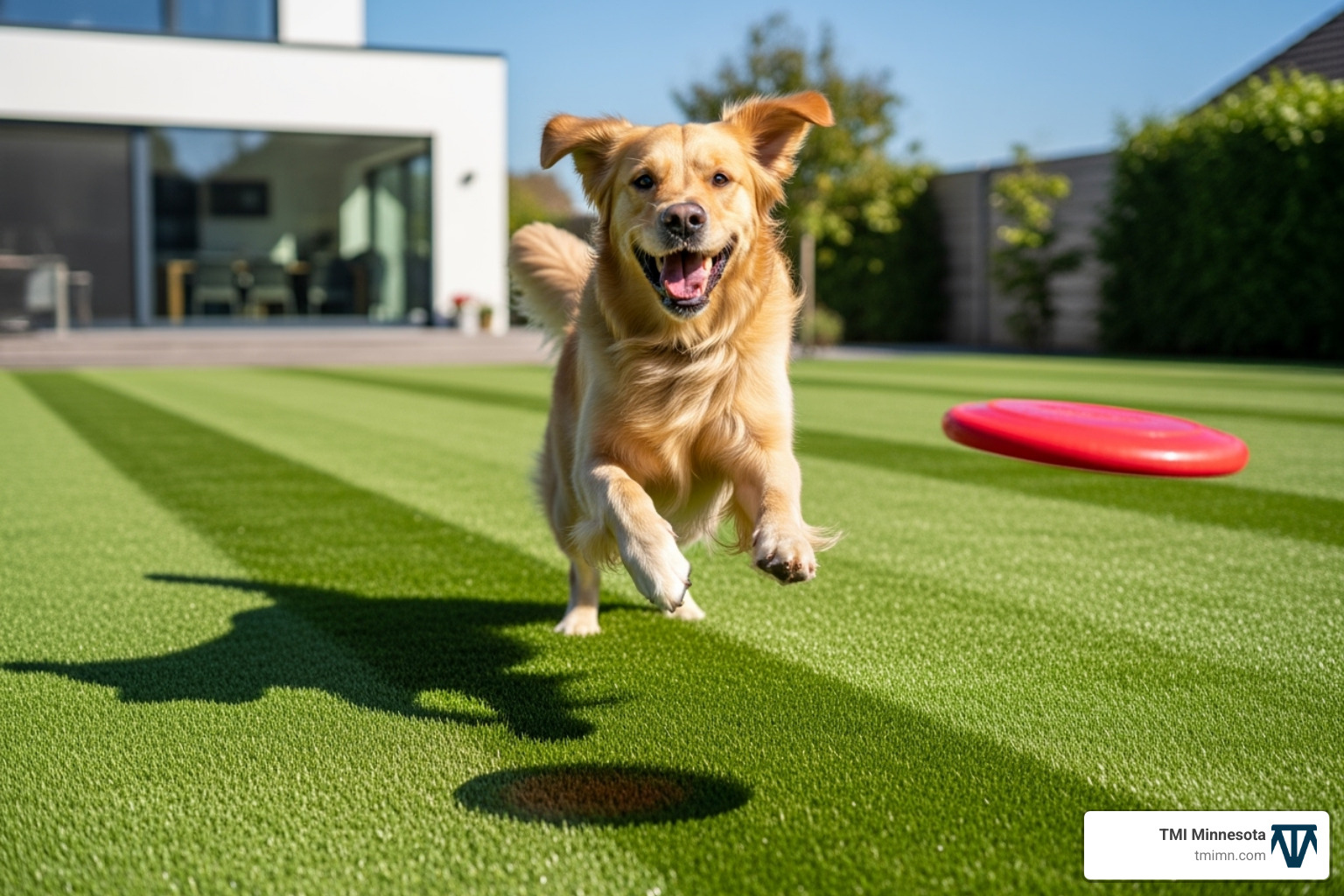
The Best Way to Clean Stains on Artificial Grass
Different stains call for different strategies, but don’t worry – we’ve tested these methods countless times with our clients, and they really work.
For everyday spills like drinks, food, or coffee, start by blotting up any excess liquid immediately. Then rinse the area with cool water from your garden hose. If there’s still a residue, mix some mild household detergent with warm water and gently work it in with a sponge or soft brush. For stubborn mild stains, try a 3% ammonia solution mixed with water, but always rinse thoroughly afterward.
Tougher stains like motor oil, grease, or ink need a bit more attention. After blotting away what you can, mineral spirits work incredibly well for oil-based stains. Apply a small amount to a clean cloth, gently blot the stain, then rinse the area thoroughly. Here’s a pro tip: always test mineral spirits on a hidden corner first to make sure it won’t affect your turf’s color.
Sticky substances like gum or tree sap might seem impossible to remove, but we have a cool trick that works every time. The secret is freezing them first. You can use aerosol refrigerants (the kind used for cleaning electronics) or even dry ice if you have access to it. Once the sticky stuff becomes brittle, carefully scrape it off with a plastic putty knife. Never use metal tools – they can damage your turf fibers.
The sooner you tackle any stain, the better your results will be. That red wine spill that seems catastrophic right now? It’ll clean up easily if you act fast.
Specific Artificial Grass Maintenance for Pet Owners
We love helping pet owners create beautiful outdoor spaces their furry friends can enjoy safely. Artificial grass maintenance for pet owners involves a few extra steps, but they’re simple and make a huge difference in keeping your lawn fresh and hygienic.
Solid waste removal is straightforward – just like you’d do on natural grass, scoop it up daily. If possible, let it dry slightly before removal, as this makes the job cleaner and easier. Quick daily cleanup prevents odors and keeps bacteria from building up.
Rinsing urine spots is crucial, especially during warmer months or if you have multiple pets. While urine drains through artificial turf beautifully, regular hosing of your pets’ favorite spots helps flush away any residue and keeps everything smelling fresh.
For odor control, enzyme cleaners are worth their weight in gold. Products specifically designed for artificial turf break down odor-causing bacteria naturally. If you prefer a DIY approach, that trusty vinegar and water solution works here too – it’s antimicrobial and completely safe for pets. Simply spray the area and let it dry. Some of our clients also sprinkle baking soda on problem areas before rinsing to absorb lingering odors.
Always choose pet-safe cleaning products or stick with natural alternatives like vinegar. Harsh chemicals and bleaches can be toxic to your pets and might damage your turf investment.
Pet hair removal is easy with a stiff-bristled broom or artificial grass rake. For dogs that shed heavily, regular brushing keeps the hair from building up. The key is working against the grain of the turf to lift both hair and fibers.
At TMI Minnesota, we understand that your pets are family members who deserve a safe, clean space to play. That’s why we offer specialized options – learn about our safe turf for kids and pets to find solutions designed with your furry friends in mind.
Revitalizing and Repairing Your Artificial Lawn
Even with excellent artificial grass maintenance, your lawn will eventually show some wear and tear. High-traffic areas naturally flatten over time, and heavy furniture can leave lasting impressions. The good news? Most of these issues are easy fixes that you can handle yourself.
Think of it like fluffing your favorite couch cushions. Just as cushions lose their shape with use, artificial grass blades can get pressed down and need a little help standing back up. Regular revitalization keeps your lawn looking fresh and extends its lifespan significantly.
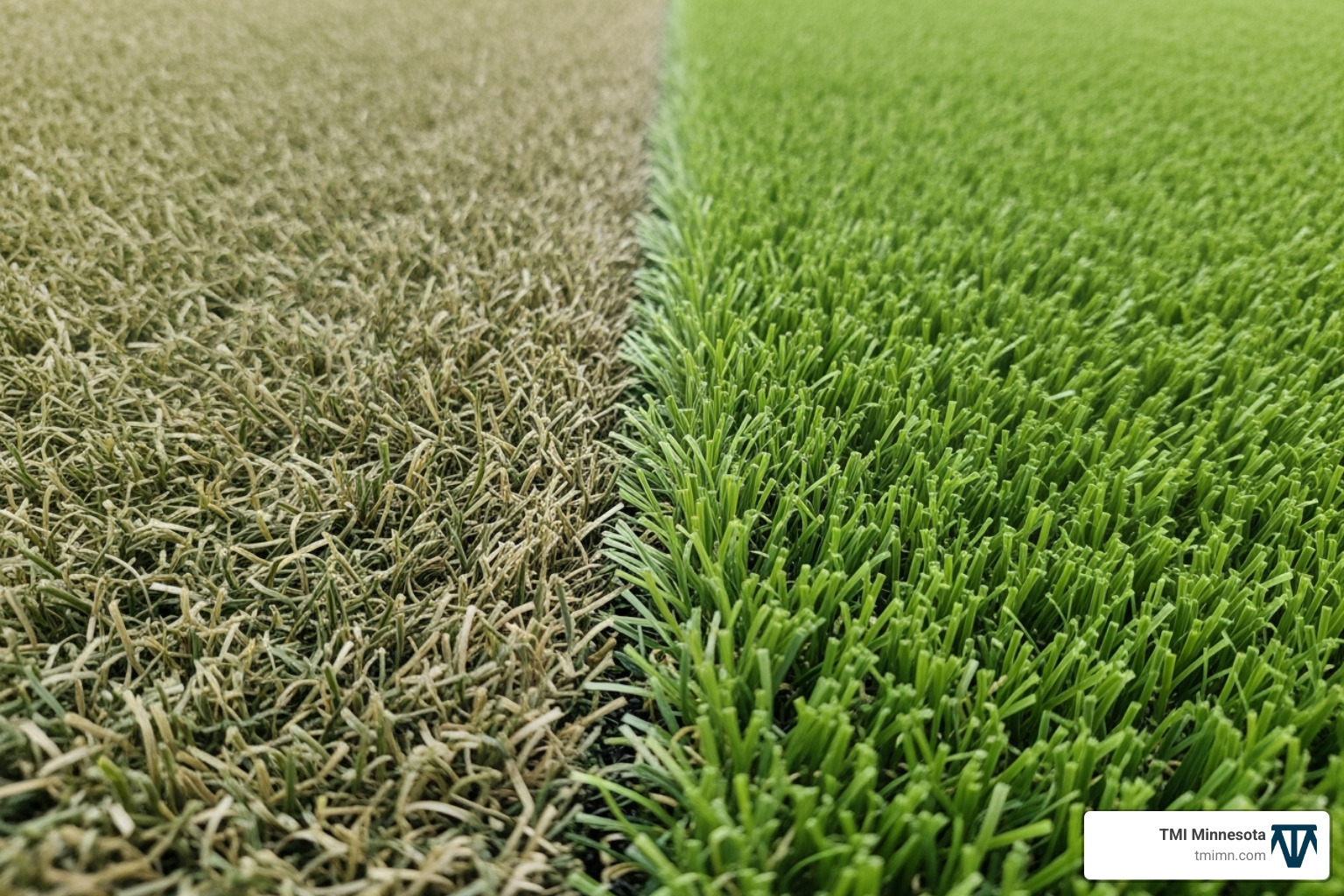
How to Revitalize Matted or Flattened Grass Blades
Matted grass blades are completely normal, especially in areas where kids play, pets run, or you walk frequently. The secret to bringing them back to life is cross-brushing – working against the natural direction of the fibers.
Start by identifying which way your grass blades are leaning. Then, using a stiff-bristled broom or artificial grass rake, brush firmly in the opposite direction. This lifts each blade and helps them remember their original upright position. It’s surprisingly satisfying to watch flat areas spring back to life!
For high-traffic areas like pathways or under patio furniture, you’ll want to do this monthly. Less-used areas might only need attention every few months. The key is catching the flattening early – it’s much easier to fix grass that’s slightly flat than grass that’s been matted down for months.
Power brooms are game-changers for larger lawns or stubborn areas. These specialized tools work like a power washer for your turf, efficiently standing up thousands of grass blades with minimal effort. Most homeowners find that power brooming once or twice a year keeps their entire lawn looking professionally maintained.
Don’t forget about infill redistribution while you’re brushing. The sand or rubber particles between your grass blades can shift over time, leaving some areas less supported. As you brush, you’re naturally moving this infill back where it belongs, giving your grass blades the foundation they need to stay upright.
Common Signs Your Artificial Grass Needs Repair
Most artificial turf issues are minor and easily fixable, but knowing what to look for helps you catch problems early. Seam separation is probably the most common issue we see – this is when the edges where two pieces of turf meet start pulling apart. You’ll notice a gap or line where you can see the ground underneath.
Wrinkles or buckling happen when the turf doesn’t lie completely flat anymore. This usually occurs around the edges or in areas where the ground has shifted slightly. Small wrinkles aren’t a big deal, but larger ones can create tripping hazards.
Persistent drainage issues are worth investigating. While artificial grass drains much better than natural grass, water shouldn’t pool on the surface for hours after rain. This might mean the infill has become compacted or shifted in that area.
Fading or discoloration is rare with modern turf, but it can happen in spots that get intense reflected sunlight from windows or glass doors. Tears or burns from sharp objects, barbecue coals, or fireworks need immediate attention to prevent them from spreading.
Most of these issues are preventable with regular artificial grass maintenance, but when repairs are needed, it’s often best to call in professionals. Our team at TMI Minnesota handles everything from simple seam repairs to complete sections replacement through our professional installation and repair services.
The beauty of artificial turf is that even when problems do arise, they’re usually isolated to small areas. Unlike natural grass where disease or damage can spread across your entire lawn, artificial grass problems stay put, making repairs straightforward and cost-effective.
Artificial vs. Natural Grass: A Maintenance Comparison
When homeowners ask us about switching to artificial turf, the maintenance comparison always comes up. And honestly, it’s one of the most compelling reasons to make the switch. The difference between artificial grass maintenance and caring for natural grass is like comparing a quick weekly tidy-up to a part-time job.
Think about your typical weekend with natural grass. You’re out there mowing every week or two, watering daily during dry spells, fertilizing multiple times per season, and constantly weeding. Then there’s the pesticide treatments, the raking (especially brutal in fall), and the endless cycle of reseeding bare spots. Most homeowners spend hundreds of hours each year just keeping their natural lawn looking decent.
With artificial grass, you’ll spend maybe a few hours total per year on maintenance. A monthly rinse and brush, occasional debris removal, and spot cleaning when needed. That’s it.
| Maintenance Task | Natural Grass | Artificial Grass |
|---|---|---|
| Mowing | Weekly or bi-weekly | Never |
| Watering | Daily or several times a week, especially in dry climates | Only for cleaning, occasionally for cooling |
| Fertilizing | Seasonally (multiple times a year) | Never |
| Weeding | Weekly or as needed | Spot treatment for occasional airborne weeds |
| Pesticides | As needed for pest control | Rarely, if ever |
| Raking/Blowing | Weekly, especially in fall | As needed for debris, typically less often |
| Annual Time | Hundreds of hours | A few hours |
The environmental benefits make the switch even more appealing. Water conservation is huge – natural lawns can guzzle thousands of gallons annually, while artificial grass only needs occasional rinsing. In drought-prone areas or places with water restrictions, this difference is game-changing and supports broader conservation goals, like those promoted by the EPA’s WaterSense program.
We love seeing clients find how artificial turf eliminates the need for chemical fertilizers and pesticides. No more worrying about runoff affecting local waterways or keeping kids and pets off treated areas. Your yard becomes a safer, cleaner space for everyone.
Perhaps the best part? Your lawn looks consistently perfect year-round. No brown patches during heat waves, no muddy mess after storms, no thin spots from heavy foot traffic. Rain or shine, your artificial grass maintains that lush, green appearance that makes neighbors wonder what your secret is.
This change isn’t just about saving time – it’s about reclaiming your weekends and enjoying a beautiful yard without the constant work. Learn more about the benefits of reduced irrigation and how artificial turf supports sustainable landscaping practices.
Frequently Asked Questions about Artificial Grass Care
Over the years, we’ve noticed that homeowners tend to ask similar questions about caring for their artificial turf. These questions usually come up during our consultations or after installation, when people want to make sure they’re doing everything right to protect their investment. Let me share the answers to the most common ones we hear.
How often should artificial grass be cleaned?
This is probably the question we get asked most often, and honestly, the answer depends on how you use your lawn. Think of it like cleaning your house – a busy family home needs more attention than a weekend cottage.
For most homeowners without pets or lots of surrounding trees, artificial grass maintenance involves a monthly rinse and brush. This simple routine removes dust and pollen while keeping those grass blades standing tall and looking their best.
If your lawn gets heavy use or serves as your pet’s bathroom, you’ll want to give it attention weekly. This keeps everything hygienic and prevents any odors from building up. Trust me, your neighbors will thank you!
Debris removal is different – this happens whenever Mother Nature decides to drop leaves, twigs, or pine needles on your lawn. During fall, you might find yourself out there with a leaf blower several times a week. It’s not hard work, but staying on top of it prevents organic matter from breaking down and creating problems.
For a deeper clean, we recommend doing a more thorough job every three to four months. Some of our clients with low-traffic areas can even stretch this to once a year.
What is the best way to handle snow and ice?
Winter weather and artificial grass actually get along quite well, but there’s a right way and a wrong way to handle snow and ice.
The best approach is usually the easiest one – just let it melt naturally. Your artificial turf is built to handle frost and cold without any damage. Sometimes the simplest solution really is the best one!
If you have light, fluffy snow and want to clear it off, a plastic snow shovel or stiff broom works perfectly. Just remember to push with the grain of the turf, not against it. Think of it like brushing hair – you want to go in the direction the fibers naturally lay.
Here’s what you absolutely shouldn’t do: avoid metal shovels and salt at all costs. Metal shovels can cut or tear your turf fibers, and salt can build up over time, potentially blocking drainage and leaving unsightly residue. If you get a hard layer of ice, resist the urge to chip it away. Let it thaw on its own – your turf will be fine.
Can I use a vacuum cleaner on my artificial grass?
I get this question a lot, especially from homeowners who love their powerful shop vacuums. The short answer is no, we don’t recommend it, and here’s why.
Your artificial grass has something called infill – usually sand or small rubber particles – that sits at the base of the fibers. This infill is incredibly important because it keeps the grass blades upright, provides cushioning when you walk on it, and helps with drainage. A vacuum cleaner will suck up this essential infill, leaving you with flat, lifeless-looking grass.
Plus, most household vacuums aren’t designed for outdoor use and can be damaged by moisture or fine debris.
Better alternatives work much better anyway. A leaf blower handles light debris beautifully, while a stiff-bristled broom or artificial grass rake does wonders for brushing and lifting small particles. For rinsing, nothing beats a good old-fashioned garden hose. These tools are not only safer for your artificial lawn – they’re actually more effective too.
The beauty of artificial grass maintenance is that it’s straightforward once you know what works and what doesn’t. Stick to these simple guidelines, and your lawn will look fantastic for years to come.
Conclusion
Taking care of your artificial lawn really comes down to a few simple habits that become second nature over time. Artificial grass maintenance isn’t complicated – it’s about removing debris when you see it, giving your turf a monthly rinse and brush, and dealing with spills quickly when life happens.
Think about it this way: you’ve made a smart investment that’s going to give you years of beautiful, green lawn without the weekly mowing, constant watering, or seasonal fertilizing that natural grass demands. The small amount of time you spend on maintenance – maybe a few hours total each year – protects that investment and keeps your outdoor space looking magazine-perfect.
We’ve seen countless homeowners at TMI Minnesota make this transition and never look back. They love having more time for weekend barbecues instead of weekend yard work. They appreciate the consistent beauty that doesn’t depend on weather or seasons. And they feel good about conserving thousands of gallons of water every year.
The best part? Once you get into a simple routine of occasional rinsing and brushing, maintaining your artificial turf becomes as automatic as sweeping your kitchen floor. You’ll hardly think about it, but you’ll always enjoy the results.
Your artificial lawn is designed to last decades with minimal care, giving you the perfect outdoor space you’ve always wanted. At TMI Minnesota, we’re passionate about changing outdoor spaces with unique designs and leading-edge products that make your life easier and your yard more beautiful.
Ready to join the thousands of homeowners who’ve finded the joy of a perfect lawn with almost no work? Transform your yard with ForeverTurf and let us help you create the outdoor space you’ll love coming home to every single day.