
Transform Your Outdoor Living Space
Backyard patio ideas range from simple DIY projects to luxurious outdoor living spaces. Here are the top solutions homeowners are implementing in 2024:
- Concrete pavers – Versatile, durable, and available in countless patterns ($8-25/sq ft installed)
- Flagstone patios – Natural stone with unique character (costs vary by region)
- Gravel patios – Budget-friendly at $1.50/sq ft for DIY installation
- Outdoor kitchens – From simple grill stations to full cooking islands
- Fire features – Firepits, fireplaces, or chimineas for extended seasonal use
- Pergolas and shade structures – Define space while providing relief from sun
- Vertical gardens – Maximize greenery without sacrificing floor space
- Zoned layouts – Separate areas for dining, lounging, and cooking
Adding a patio can increase your home’s value by up to 12%, making it one of the smartest outdoor investments you can make. More than 60% of homeowners plan to upgrade their outdoor spaces within the next two years, recognizing that patios are no longer just concrete slabs—they’re extensions of our indoor living spaces.
The perfect patio balances form and function, creating a space that’s both beautiful and practical. Whether you have a sprawling backyard or a compact corner, the right design can transform your outdoor area into a retreat that reflects your lifestyle and improves your property.
I’m Christopher Deanovic, Operations Leader at Task Masters, where I’ve helped countless Minnesota homeowners design and build their dream backyard patio ideas that blend innovative design with meticulous craftsmanship to create outdoor environments that improve lifestyles and exceed expectations.
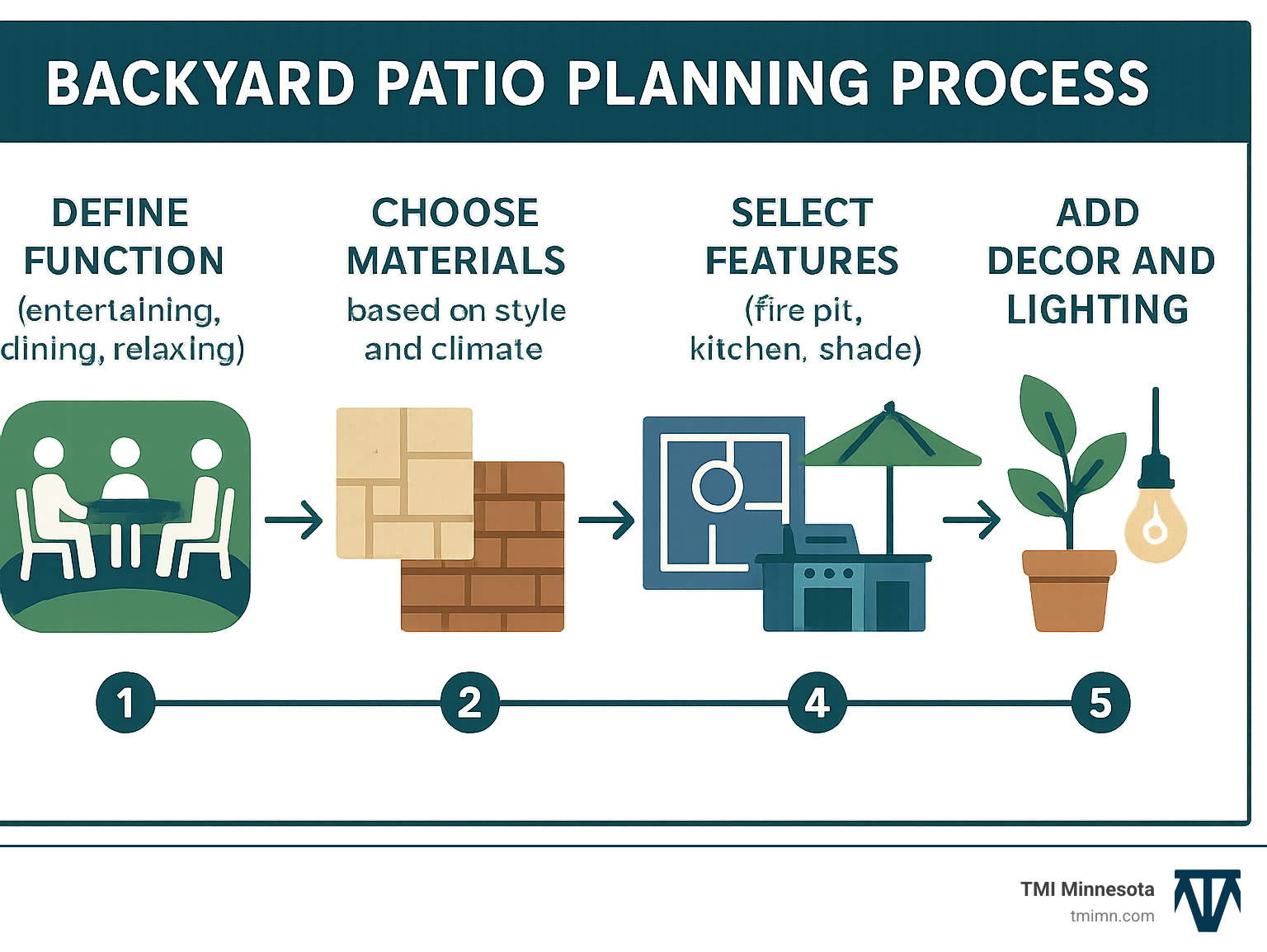
Simple guide to Backyard patio ideas terms:
– Hardscape design services
– Landscape renovation services
– Tree planting services
Backyard patio ideas: 8 Inspiring Directions
When planning your outdoor oasis, it helps to explore different design directions that complement your home’s architecture, personal style, and how you’ll use the space. Here in the Twin Cities, we see patios in all shapes and styles that not only look stunning but also stand up to our challenging Minnesota seasons.
From sleek modern designs to Mediterranean-inspired spaces bursting with warmth, the right patio dramatically increases your home’s functional square footage and boosts resale value. Let’s explore eight inspiring directions your backyard patio ideas can take.
Classic Paver Elegance
Brick pavers remain a top choice for Minnesota patios, and for good reason. They offer incredible versatility in patterns and colors while providing excellent durability against our notorious freeze-thaw cycles.
One of our clients in Edina transformed their backyard with a herringbone paver pattern in warm terracotta tones. They added a curved seat wall that doubles as extra seating during gatherings and cleverly retains a sloped section of their yard. The result feels both functional and timeless.
Herringbone patterns create visual interest and structural stability, while running bond offers that classic brick-wall look many homeowners love. Basketweave patterns bring traditional appeal, and circular designs create natural focal points for fire pits or dining areas.
For an extra touch of elegance, consider adding seat walls around your patio’s perimeter. These low walls (typically 18-24 inches high) provide casual seating without extra furniture and beautifully define the space.
Learn more about enhancing your outdoor living space with our Outdoor Living Upgrades.
Rustic Flagstone Retreat
For a more natural, organic look, flagstone creates a patio with character and charm that actually improves with age. These irregular stone slabs fit together like a puzzle, creating a one-of-a-kind surface that blends beautifully into the landscape.
“Flagstone patios have a timeless quality that works with almost any home style,” notes our landscape architect. In a recent Minnetonka project, we used locally sourced limestone with creeping thyme planted between the stones. It creates a fragrant carpet when walked on and softens the hardscape beautifully.
Each stone brings unique character and natural texture to your space. The permeable joints allow water drainage when properly installed, and many Minnesota homeowners appreciate that flagstone can be sourced locally, reducing environmental impact. The natural cooling properties mean it doesn’t retain heat like darker materials – a blessing on hot summer days.
The cost varies significantly based on local quarrying. In Minnesota, we’re fortunate to have access to beautiful limestone and sandstone options that don’t require long-distance shipping.
Sleek Concrete Statements
For modern homes and contemporary designs, concrete offers clean lines and minimalist appeal at a reasonable price. No longer just a utilitarian gray slab, today’s concrete patios can be colored, stamped, polished, or saw-cut to create stunning outdoor spaces.
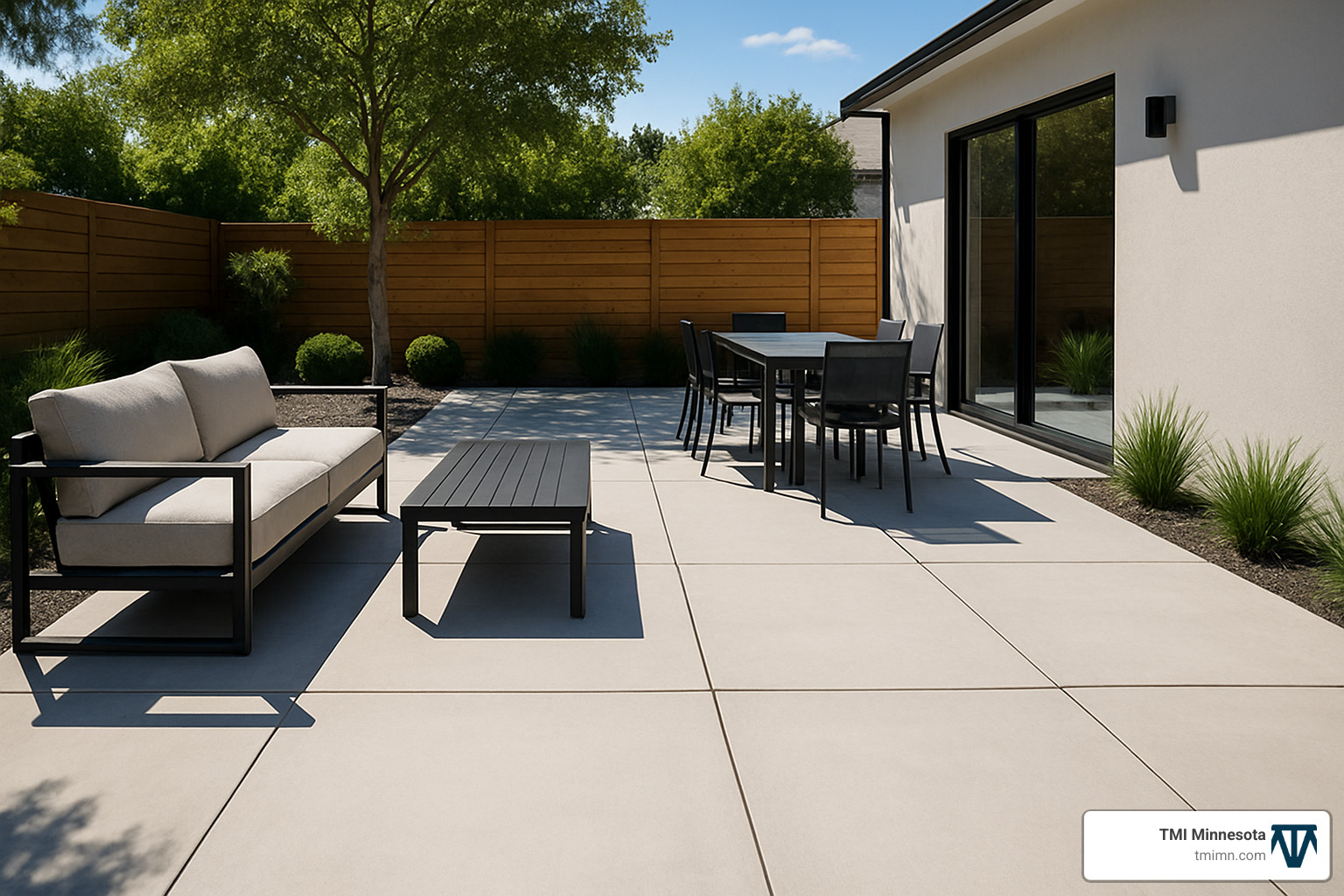
“Large-format concrete slabs with minimal joints create a sleek, uninterrupted surface that’s perfect for modern furniture,” explains our concrete specialist. We recently completed a project in Plymouth with charcoal-dyed concrete featuring subtle saw-cut lines in a geometric pattern. It completely transformed their backyard into a sophisticated entertaining space.
Concrete offers budget-friendly appeal at typically $6-15 per square foot installed. It can be poured in almost any shape, dyed in numerous colors, and even stamped to mimic more expensive materials. It also provides an excellent canvas for showcasing outdoor furnishings and decor.
| Concrete Type | Average Cost | Durability | Aesthetic Options | DIY Friendly? |
|---|---|---|---|---|
| Poured Concrete | $6-10/sq ft | High (with proper installation) | Color, stamping, saw-cuts, polishing | No – requires special equipment |
| Concrete Pavers | $8-20/sq ft | Very high | Endless shapes, colors, patterns | Yes – moderate difficulty |
Gravel & DG Chill Zones
For budget-conscious homeowners or those seeking a more casual vibe, gravel and decomposed granite (DG) patios offer excellent drainage and that distinctive crunchy sound underfoot that many find surprisingly appealing.
“Gravel patios are having a moment,” our landscape designer notes. They’re incredibly cost-effective at around $1.50 per square foot for DIY installation, with excellent drainage properties. We recently helped a St. Paul family create a cozy fire pit area using pea gravel surrounded by boulders – perfect for their informal gatherings and marshmallow roasting sessions.
Pea gravel offers small, rounded stones comfortable for bare feet, while decomposed granite provides a finer material that compacts for a firmer surface. Crushed stone gives you angular pieces that lock together for stability.
The secret to a successful gravel patio lies in proper installation – excavate 4-6 inches, install landscape fabric to prevent weed growth, add a base layer of compacted crushed stone, top with 2-3 inches of your chosen gravel, and finish with sturdy edging to keep everything contained.
For more information on permeable surfaces like gravel, you might find this scientific research on permeable surfaces helpful.
Tile & Terra-Cotta Charm
For those drawn to Mediterranean or Spanish-inspired designs, outdoor-rated tile and terra-cotta create patios with bold color and distinctive character. These materials work especially well in sheltered areas or as accents within larger patio designs.
We recently worked with a client who wanted to bring the feel of their Spanish vacation to their Minnesota backyard. We created a small courtyard patio using frost-resistant terra-cotta tiles in a traditional pattern. Combined with potted citrus plants they bring inside during winter, it creates a perfect Mediterranean escape.
For homeowners watching their budget, one clever hack we’ve seen is painting concrete in geometric patterns to mimic expensive tile. Using concrete stain or specialized outdoor paint, you can create the appearance of intricate tile work at a fraction of the cost.
In Minnesota’s climate, choose frost-resistant, non-porous tiles rated specifically for outdoor use. Ensure proper installation with adequate drainage, consider heated systems for high-traffic winter areas, and use appropriate grout and sealants designed for freeze-thaw conditions.
Mixed-Material Mash-Ups
Some of the most interesting patios combine multiple materials for textural contrast and visual interest. Wood decking alongside stone pavers, metal inlays within concrete, or turf strips between pavers all create dynamic, multi-dimensional spaces.
“Mixed materials allow you to naturally define different zones within a patio,” explains our hardscape specialist. In a recent Wayzata project, we used concrete pavers for the dining area, switching to wooden decking for the lounge space, with a decorative pebble border between them. The contrast in textures naturally guides guests to different functional areas.
Wood decking with stone borders creates wonderful textural play, while pavers with artificial turf strips bring in unexpected greenery. Concrete with metal, glass, or LED inlays offers contemporary flair, and gravel with stepping stone pathways adds rhythm and movement to your space.
The key to successful mixed-material patios is thoughtful transitions between surfaces and maintaining a cohesive color palette that ties everything together.
Compact Courtyard Magic – small Backyard patio ideas
Limited space doesn’t mean limited possibilities. Small patios can be just as functional and beautiful as larger ones when designed thoughtfully. In fact, compact spaces often become the most cherished outdoor rooms because every inch serves both beauty and function.
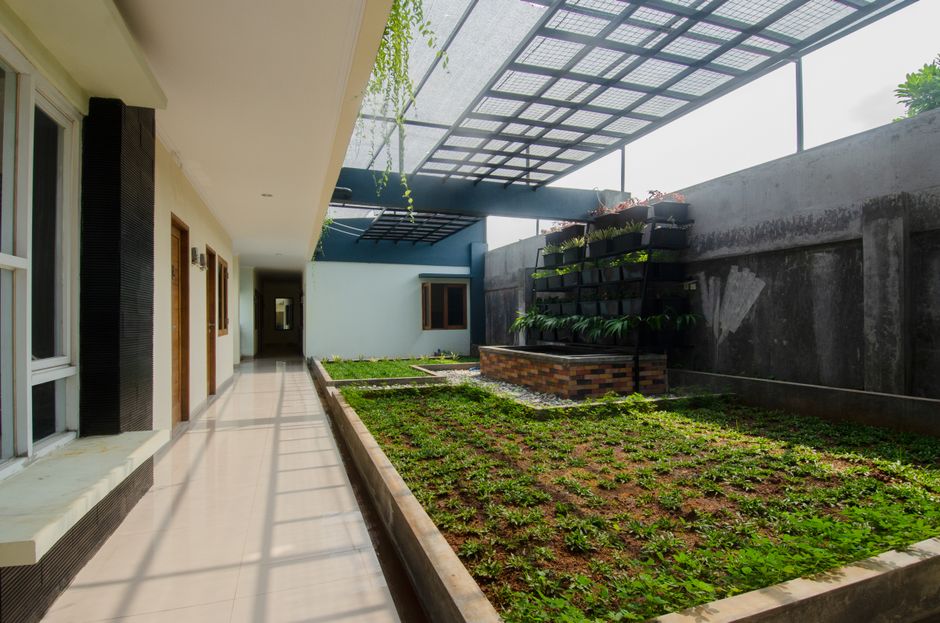
“One of our favorite projects was a tiny 10′ x 12′ courtyard in South Minneapolis,” shares our small-space specialist. By installing a vertical garden on one wall, using multi-functional furniture with hidden storage, and hanging an outdoor mirror to visually double the space, we created an intimate outdoor room that feels much larger than its actual dimensions.
For small backyard patio ideas, think vertically with wall-mounted planters and trellises. Choose foldable furniture that can be reconfigured as needed. Strategically placed mirrors reflect light and create the illusion of more space. Built-in benches with storage underneath maximize functionality, while lighter flooring colors make the space feel more open. Multi-functional features like a fire table that converts to dining bring versatility to limited square footage.
Luxe Poolside Lounge
For the ultimate backyard retreat, poolside patios combine the best of hardscape and water features. These spaces require careful material selection for safety and comfort, with non-slip surfaces that remain cool underfoot.
“Travertine is our go-to material for pool decks,” notes our pool specialist. It naturally stays cooler than concrete or pavers, provides excellent slip resistance when wet, and has a luxurious look that lifts the entire backyard. Combined with strategic low-voltage lighting, it creates a resort-like atmosphere right at home.
The most successful pool patios incorporate cool-to-the-touch decking materials like travertine. Integrated sun shelves or shallow lounging areas within the pool add versatility. Water features such as fountains or scuppers provide soothing ambient sound. Thoughtful lighting extends enjoyment into evening hours while enhancing safety. Designated dry lounging areas adjacent to the water give options for relaxation, and shade structures offer welcome relief from direct sun.
Choose the Right Surface: Pros, Cons & Costs
Picking the perfect patio material might feel overwhelming, but it’s actually the foundation of your outdoor oasis. I’ve helped hundreds of Minnesota homeowners steer this decision, and I can tell you that the right choice balances your style, budget, and our unique climate challenges.
Let’s break down your options in a way that makes sense:
| Material | Durability | Cost Range | DIY Difficulty | Maintenance | Best For |
|---|---|---|---|---|---|
| Concrete (poured) | High | $6-15/sq ft | Not DIY friendly | Low (sealing every 2-3 years) | Modern designs, budget-conscious projects |
| Concrete Pavers | Very high | $8-25/sq ft | Moderate | Low (occasional joint sand) | Traditional or contemporary styles, DIY-friendly |
| Brick | High | $10-30/sq ft | Moderate | Medium (moss removal, occasional repointing) | Classic, traditional homes |
| Flagstone | High | $15-30/sq ft | Difficult | Medium (joint maintenance, sealing) | Natural, organic designs |
| Gravel | Medium | $1.50-5/sq ft | Easy | Medium (topping up, weed control) | Casual spaces, budget projects, DIY |
| Tile | Medium | $15-30/sq ft | Difficult | Low (regular cleaning, grout maintenance) | Mediterranean designs, sheltered areas |
| Wood/Composite | Medium (wood) to High (composite) | $15-35/sq ft | Moderate | High (wood) to Low (composite) | Transitional spaces, deck extensions |
I recently helped a family in Maple Grove who couldn’t decide between concrete pavers and flagstone. They loved the natural look of stone but worried about the higher price tag. We found a beautiful compromise using concrete pavers with a flagstone appearance that saved them nearly 40% while still achieving the organic feel they wanted. Sometimes the perfect solution isn’t obvious until you explore all the options with someone who’s seen it all!
Material Cheat-Sheet – Backyard patio ideas
When Minnesota winters hit (and we all know they hit hard), your patio materials need to stand strong. Here’s what I’ve learned after years in the field:
Longevity in Minnesota Climate:
Concrete pavers have become my go-to recommendation for most Twin Cities homes. They handle our freeze-thaw cycles like champions when properly installed. Natural stone like granite and properly installed limestone also perform beautifully year after year. I’ve seen well-installed paver patios last 25+ years with minimal maintenance – impressive considering what our weather throws at them!
Slip Resistance When Wet:
Safety matters, especially if you have kids or older adults using the space. Those gorgeous polished surfaces might look stunning in magazines, but they become skating rinks when wet. Instead, textured finishes like brushed concrete or natural-cleft stone provide sure footing even after a summer shower. For pool areas, I always recommend materials specifically rated for wet environments.
Heat Retention:
Ever walked barefoot on a dark patio in July? Ouch! Darker materials like charcoal pavers or black granite can reach temperatures up to 30° hotter than lighter options. For sunny spots, consider lighter colors or naturally cooling materials like limestone or cedar. Your feet will thank you during our humidity-soaked summer afternoons.
Local Availability:
There’s something special about using stone that comes from our Minnesota quarries. Not only does it reduce transportation costs and environmental impact, but it also connects your home to the natural landscape around us. Our local limestone has beautiful variations you won’t find elsewhere, and it’s perfectly adapted to our climate because, well, it came from here!
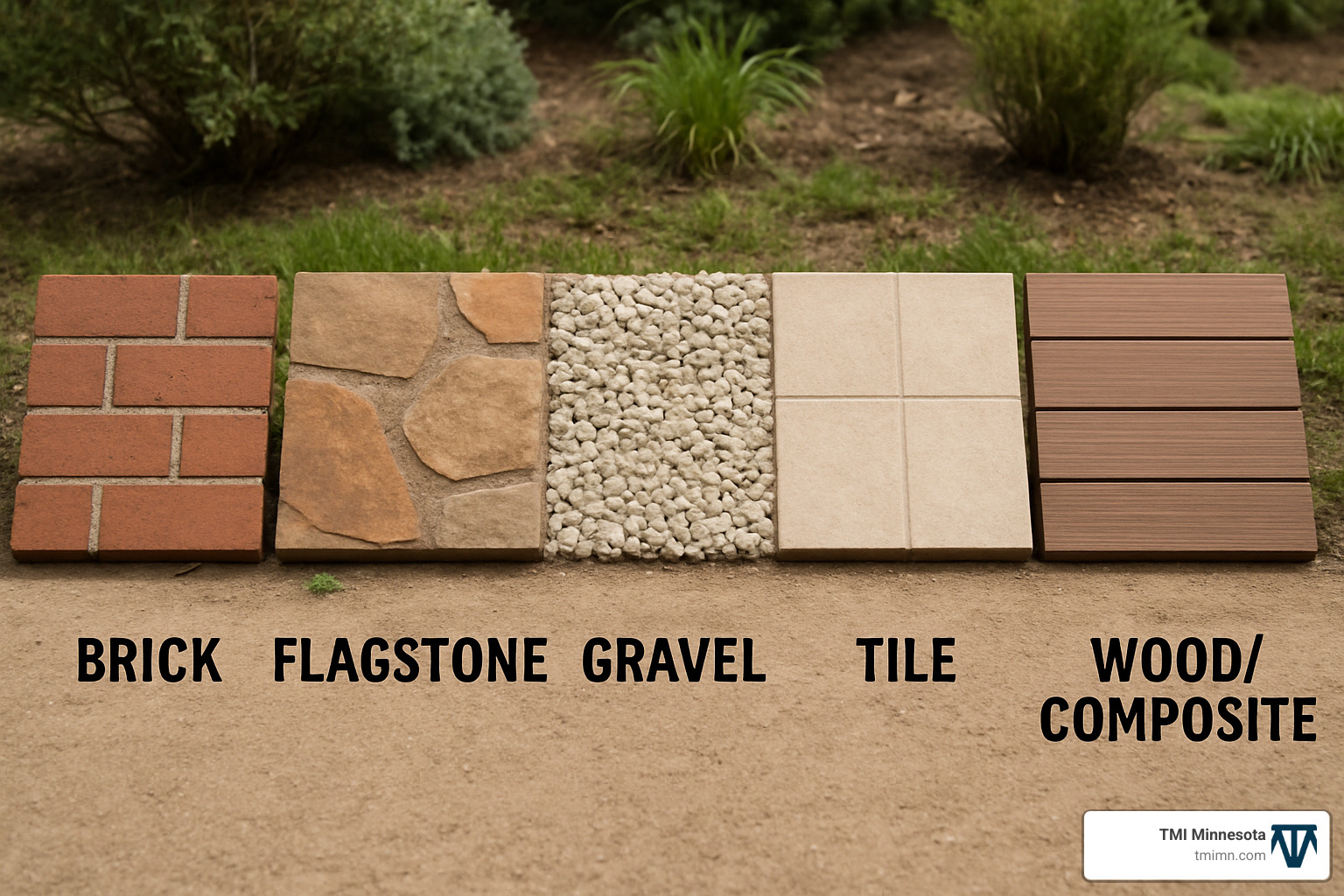
When you’re ready to dive deeper into material selection, our design team at TMI Minnesota can bring samples to your home. There’s nothing like seeing how different materials look against your house in natural lighting. Plus, we can share maintenance tips specific to your yard’s conditions – like which sealers work best in heavily shaded areas or how to prepare certain materials for winter.
The perfect patio material isn’t just about looks or price – it’s about finding the sweet spot where beauty, durability, and lifestyle needs meet. And in Minnesota, that sweet spot needs to handle everything from -30° winter days to humid 90° summers!
Budget-Smart & DIY Upgrades Anyone Can Tackle
Who says creating a gorgeous outdoor space requires emptying your savings account? With a little creativity and some weekend warrior spirit, you can transform your backyard into an inviting retreat without the premium price tag. Here are some of our favorite wallet-friendly backyard patio ideas that deliver serious wow-factor:
Concrete slab you’ve been hiding under outdoor rugs? It might be the perfect canvas for a dramatic change. One of our St. Louis Park clients used a Moroccan tile stencil and three colors of concrete stain to create what looks exactly like expensive imported tile. Their friends can’t believe it cost less than $200 in materials and a Saturday afternoon of work!
“The best budget changes start with seeing potential in what you already have,” explains our design consultant. “That cracked concrete you’re planning to demolish? It might be the perfect material for a charming crazy-pave overlay.”
This technique uses broken concrete pieces (often available free from demolition sites or your own removal) arranged in a mosaic pattern. Fill the gaps with polymeric sand or plant ground cover between the pieces for a one-of-a-kind patio surface that looks intentionally artistic rather than broken.
Fire features add instant ambiance to any outdoor space, but custom stonework can easily run thousands. “We installed a $300 fire pit kit for a client that looks nearly identical to a $3,000 custom stone version,” shares our installation team leader. “Once it’s surrounded by the right furniture and landscaping, nobody can tell the difference.” For more inspiration, check out our Outdoor Fire Pit Construction services.
Furniture often consumes the biggest chunk of outdoor budgets, but DIY options like pallet sectionals offer style and comfort at a fraction of retail prices. With some sanding, weather-resistant paint, and custom cushions, you can create unique seating perfectly sized for your space. The best part? These pieces often outlast store-bought options in our Minnesota weather.
For those starting completely from scratch, gravel remains the most DIY-friendly patio surface. A proper gravel patio can be installed in a weekend for pennies on the dollar compared to other materials. The secret is thorough preparation – use quality landscape fabric underneath, proper compaction of your base, and sturdy edging to keep everything contained.
Define your new space with container gardens made from unexpected finds. We’ve seen stunning planters created from old wooden crates, galvanized stock tanks, and even vintage wheelbarrows. These upcycled elements add personality while saving hundreds compared to large commercial planters.
For additional DIY patio paint inspiration that can transform your space, visit this external DIY patio paint inspo gallery.
Weekend Projects Under $500
Looking for quick changes you can tackle before your next weekend cookout? Here are our favorite budget-friendly projects that deliver maximum impact:
A stencil kit patio makeover costs just $100-200 in materials but looks like you spent thousands. This project typically takes 1-2 days depending on your patio size and drying time between coats. The key is proper surface preparation and patience with the stenciling process.
No existing hardscape? A simple pea gravel patio runs about $300-500 for a 100 square foot area. This budget covers landscape fabric, edging material, base rock, and the decorative gravel top layer. The instant gratification factor is high – you’ll be enjoying your new space by Sunday afternoon.
Nothing creates magical ambiance faster than overhead string lights ($100-300). Use wooden posts set in concrete, existing trees, or your home’s eaves to support commercial-grade string lights. Pro tip: choose warm white bulbs rather than cool white for a more flattering, cozy glow.
Combine beauty and function with a vertical herb wall ($150-250). Starting with a wooden pallet, landscape fabric, potting soil, and herb plants, you can create a living wall that provides fresh herbs all season. Mount it securely to a sunny wall adjacent to your patio where the fragrance can improve your outdoor dining experience.
Money-Saving Material Tips
Smart sourcing can stretch your patio budget significantly further. Here’s how our budget-savvy clients find quality materials without breaking the bank:
Salvaged brick offers character you simply can’t buy new. Architectural salvage yards often have reclaimed brick at 40-60% less than new materials. The weathered patina and slight irregularities create instant charm and historical connection.
For deck-style patios, recycled composite materials made from reclaimed plastic and wood fibers offer long-term value. While the upfront cost exceeds traditional wood, the maintenance-free durability makes it economical over time. You’ll never spend another weekend staining or sealing!
The sharing economy has revolutionized home improvement projects. Join local buy-nothing groups on social media where neighbors frequently give away leftover materials. We’ve seen clients score free pavers, edging materials, and even high-end outdoor furniture simply by being in the right online community.
Timing your purchases can lead to substantial savings. Plan your patio project for end-of-season sales when retailers clear inventory. Late fall and early spring typically offer discounts of 40-70% on everything from furniture to containers and even hardscape materials. Your patience will be rewarded with dramatic savings.
With these budget-friendly approaches, your dream patio might be more accessible than you thought. The most impressive outdoor spaces aren’t necessarily the most expensive – they’re the ones created with creativity, personality, and a willingness to roll up your sleeves.
Shade, Comfort & Year-Round Use
Minnesota’s variable climate presents unique challenges for outdoor living spaces. From scorching summer days to snowy winters, creating a comfortable patio means planning for all seasons. The right shade structures and comfort features can extend your patio’s usable season by several months.
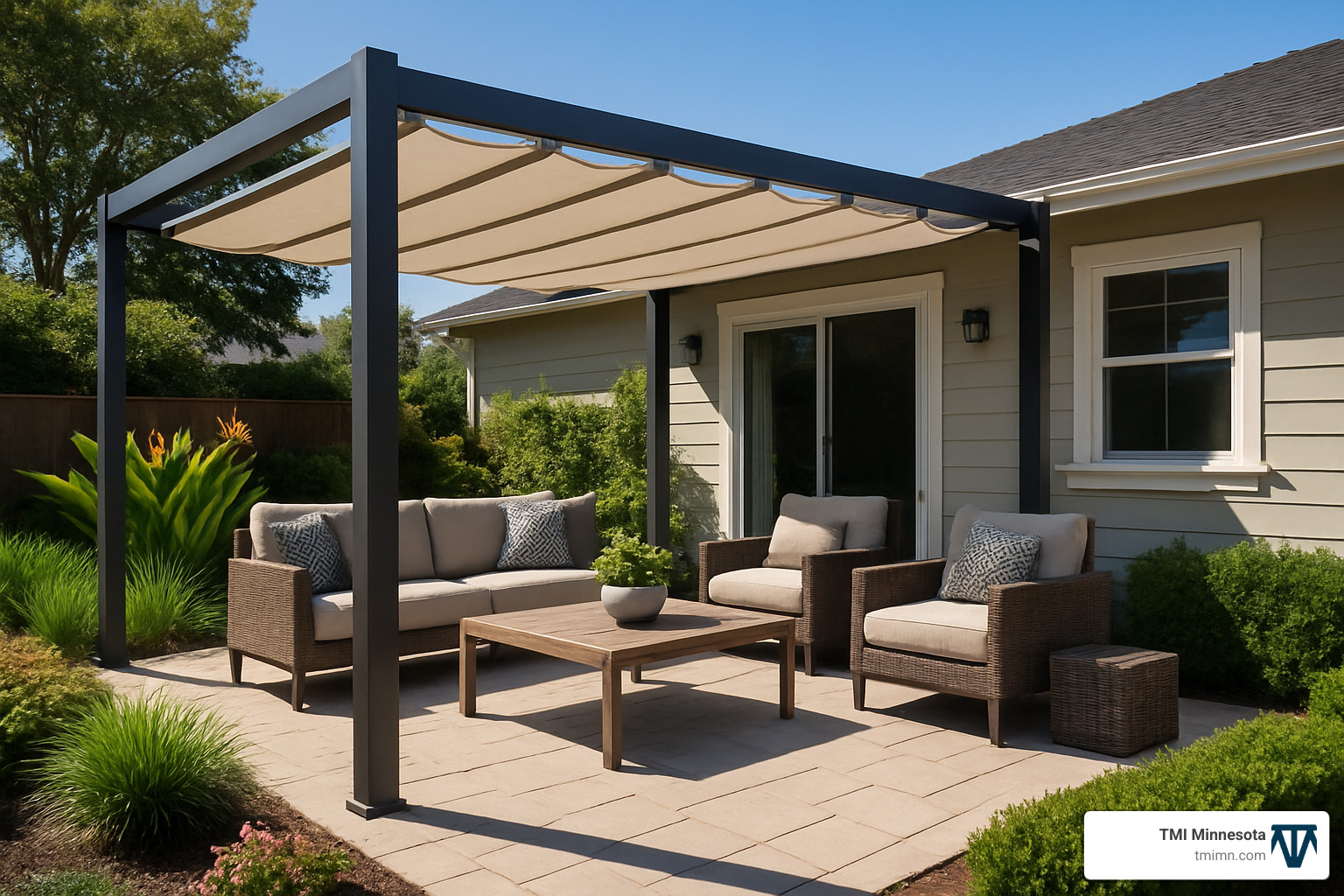
“We’re seeing more clients request patios they can use three or even four seasons of the year,” notes our design team. “Thoughtful shade structures, outdoor heating elements, and strategic wind barriers can make your patio comfortable from early spring through late fall.”
When I meet with homeowners across the Twin Cities, they’re often surprised to learn how many options exist for extending their outdoor enjoyment. Pergolas have become incredibly popular, offering that perfect balance of filtered shade while allowing for gentle breezes. Many of my clients are choosing modern versions with adjustable louvers that can open completely on milder days or close tightly when the sun is intense.
For those wanting the warm look of wood without the maintenance headaches, Alumawood covers have been a game-changer. These aluminum structures perfectly mimic the appearance of timber while standing up to our harsh Minnesota winters without warping or rotting. Plus, they provide the perfect framework for mounting ceiling fans, string lights, and even those cozy infrared heaters that make cool autumn evenings on the patio absolutely delightful.
Budget-conscious homeowners needn’t feel left out either. Quality umbrellas remain one of the most flexible shade options around. I always recommend investing in a good cantilever style that can be adjusted throughout the day as the sun moves – your future sunburn-free self will thank you!
For those with a more artistic bent, sun sails create stunning geometric patterns overhead while providing effective shade. I recently helped a Minnetonka family install a series of overlapping triangular sails in different blues and greens that not only protect their dining area from the midday sun but also cast the most beautiful colored shadows across their patio.
And let’s not forget about those Minnesota mosquitoes! Retractable screens have revolutionized outdoor living here, allowing you to enjoy the views and fresh air without becoming an all-you-can-eat buffet for the local insect population. These can be seamlessly integrated into pergolas or attached directly to your home’s exterior.
Find more about our Modern Outdoor Designs that maximize comfort in Minnesota’s climate.
Build-In Shade Structures
When incorporating built structures into your patio design, it helps to understand the options and their distinct advantages.
Pergola styles vary widely in both appearance and functionality. Traditional wood pergolas (typically cedar or redwood) offer natural beauty that ages gracefully, though they’ll require occasional maintenance. Aluminum versions provide the longest lifespan with virtually no upkeep – perfect for busy families. Fiberglass options strike a nice middle ground, being lightweight yet remarkably weather-resistant, while vinyl structures offer affordability and low maintenance for budget-conscious homeowners.
For areas where you want complete protection from unexpected summer showers, gable covers shine. These pitched-roof structures keep both sun and rain at bay while maintaining that open-air feeling on the sides. They’re particularly valuable over dining areas or outdoor kitchens where you don’t want weather interrupting your gatherings.
Many of my clients are surprised by the versatility of polycarbonate roofs. These translucent panels offer the perfect compromise for areas where you want protection without sacrificing natural light. They effectively block harmful UV rays while allowing a gentle, diffused light to filter through – creating a bright, airy space even on the hottest days.
Cost-wise, expect to invest between $2,000-5,000 for a basic wooden pergola, while Alumawood versions typically run $5,000-12,000 installed. Full gable covers represent a larger investment at $8,000-20,000 installed, reflecting their more substantial construction. If you already have a structure in place, adding a retractable canopy system costs approximately $3,000-8,000, depending on size and complexity.
Portable & Plant-Based Shade
Not every shade solution requires a major construction project. Flexible, non-permanent options can be just as effective and often more budget-friendly.
Cantilever umbrellas have come a long way from the wobbly patio umbrellas of yesteryear. These side-post models provide adjustable shade without that annoying center pole that always seems to be exactly where you want to put the serving platter. The premium models even include wind sensors that automatically close the canopy when gusts pick up – a feature that’s saved countless umbrellas from becoming impromptu sailboats across Minnesota backyards.
For a more natural approach, bamboo screens offer a beautiful blend of privacy and filtered light. They create a warm, organic feel while helping to block prevailing winds – a particularly useful feature during our breezy spring and fall evenings. I love how they cast dappled shadows that dance across the patio throughout the day.
Nature provides some of the most beautiful shade solutions through climbing vines. When paired with a sturdy pergola or trellis, fast-growing varieties like grape, clematis, or honeysuckle create living canopies that evolve with the seasons. I always recommend deciduous varieties to my Minnesota clients – they provide cooling shade during summer then conveniently drop their leaves in fall, allowing warming sunlight through during our colder months.
For those wanting a touch of the tropics, strategically placed palm clusters in decorative containers create movable shade islands that can be rearranged as needed. In our climate, these would naturally be seasonal additions that move indoors once temperatures drop, but they create a stunning resort-like atmosphere during our precious summer months.
By thoughtfully combining these shade strategies with proper heating elements and wind protection, your backyard patio ideas can evolve into a true three-season outdoor room that extends your enjoyment well beyond the traditional Minnesota outdoor season.
Function First: Zoning Food, Fire & Fun
Ever walked into someone’s backyard and just felt like everything was in the right place? That’s no accident. The most successful patios aren’t just beautiful—they’re thoughtfully divided into zones that make sense for how you actually live.
“When we start a design, we always ask clients how they plan to use the space,” explains our lead designer. “Someone who loves to entertain large groups needs a very different layout than someone seeking a quiet reading retreat. By defining zones for dining, lounging, cooking, and gathering, we create a flow that feels natural and intuitive.”
Think of your patio as a home without walls. You wouldn’t put your kitchen, living room, and dining room all in one undivided space indoors, so why do it outside? Creating distinct areas for different activities makes even modest-sized patios feel more functional and spacious.
Your dining area should be sized to accommodate your household plus the guests you typically entertain. We usually place these zones on the flattest, most stable surfaces with some overhead protection from sun and light rain. After all, nobody wants their perfect dinner interrupted by a surprise shower!
For the lounge space, comfort is king. Arrange seating to encourage conversation, usually around a coffee table or fire feature as a central focal point. This is where you’ll spend lazy Sunday afternoons and evening conversations, so make it count.
If you love to cook outdoors, your cooking station deserves careful placement. Position it for convenient access to indoor utilities while keeping smoke away from seating areas. We’ve all had that experience of constantly shifting positions as the wind changes direction and blows smoke in our faces—proper planning prevents this!
Between cooking and dining zones, consider adding a bar or serving area with a counter-height surface. This creates a natural transition space and gives guests a place to perch while chatting with the cook or serving themselves buffet-style.
A fire feature almost always becomes the heart of a great patio. Whether it’s a simple fire pit or an elaborate fireplace, these gathering spots create natural focal points and extend your patio season well into fall—something particularly valuable here in Minnesota.
For families with younger children, we often incorporate a kids’ corner that’s visible from adult seating areas. This allows for easy supervision while maintaining more sophisticated spaces for grown-ups. Simple elements like a small sandbox, chalkboard wall, or water play table can keep little ones entertained while adults enjoy conversation.
The secret to making all these zones work together is thoughtful traffic flow. Create pathways that feel natural and avoid arrangements that force guests to walk through one activity zone to reach another. Nothing kills conversation faster than people constantly cutting through your seating area to reach the drinks!
Learn more about our approach to Outdoor Dining Space Design.
Outdoor Kitchens & Grill Pads
The outdoor cooking trend continues to grow in Minnesota, and for good reason—food just tastes better outside! Options range from simple grill stations to elaborate kitchens that rival their indoor counterparts.
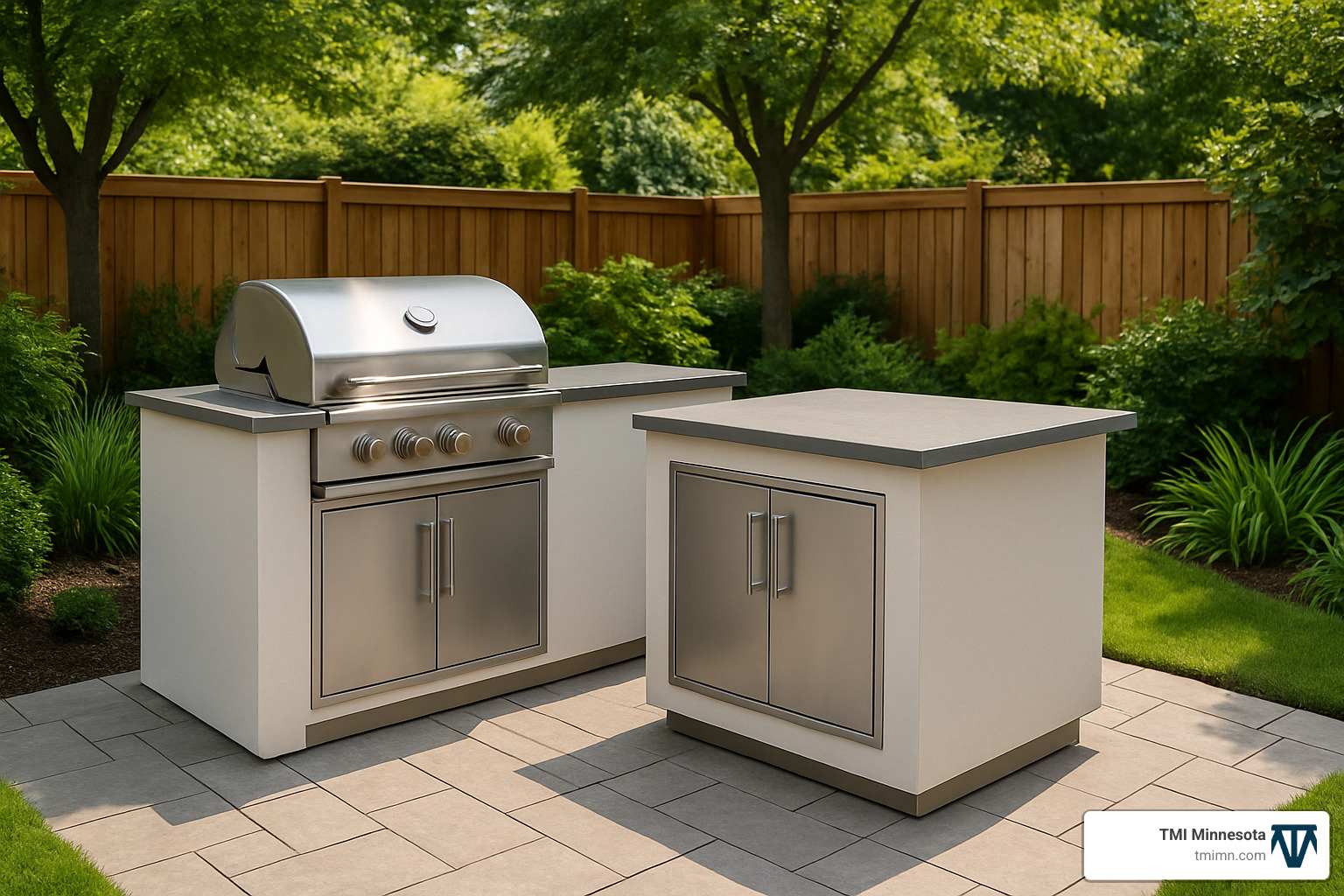
“An outdoor kitchen doesn’t have to be elaborate to be functional,” advises our outdoor living specialist. “Even a modest setup with a quality grill, small prep surface, and convenient storage can dramatically improve your entertaining capabilities.”
I remember one client in Eden Prairie who insisted they just needed “a place for the grill.” After some gentle questioning, we finded they were hosting weekly summer gatherings where they’d constantly run back and forth to their indoor kitchen. We designed a simple cooking station with just enough counter space and a small refrigerator drawer. The following summer, they called just to tell us how much those small additions had transformed their entertaining experience.
The essentials for any outdoor cooking area include a built-in grill (whether gas, charcoal, or both), at least 16-24 inches of prep counter on either side of cooking surfaces, and some weather-resistant storage for utensils and supplies. If budget allows, adding a compact outdoor-rated refrigerator or even just an ice drawer means fewer trips inside for cold beverages.
A small sink is something clients often skip to save money, then later wish they’d included. Being able to rinse vegetables or wash hands without running inside is surprisingly valuable. And if you can incorporate some bar seating, you’ll create social interaction with the cook—after all, everyone always ends up in the kitchen anyway!
When selecting countertop materials, balance good looks with practicality. Granite offers durability but can become hot in direct sun. Concrete provides customizable color options and excellent heat resistance. Porcelain resists staining and requires minimal maintenance, while soapstone develops a beautiful patina over time and has naturally antibacterial properties.
For more inspiration for your backyard patio ideas, explore our Contemporary Outdoor Kitchens gallery.
Fire Features & Cozy Corners
Nothing extends the seasonal use of a Minnesota patio like a well-designed fire feature. From simple portable fire pits to elaborate stone fireplaces, adding warmth creates a natural gathering point and allows you to enjoy your outdoor space well into our chilly fall evenings.
“Fire features are consistently the most requested element in our patio designs,” notes our hardscape specialist. “They provide practical warmth on cool evenings and create an almost magnetic focal point that draws people together.”
There’s something primal about gathering around a flame that brings out the best conversations. I’ve watched reserved neighbors become animated storytellers and busy families slow down to simply enjoy each other’s company—all centered around the dancing flames of a well-designed fire feature.
Sunken fire pits built below the level of surrounding seating create a cozy, camp-like feel that’s perfect for casual gatherings. The lowered design helps contain sparks and shields flames from our sometimes gusty Minnesota winds. Plus, there’s something comforting about sitting with your feet extended toward the warmth.
For a more architectural statement, modern fireplaces provide directional heat and a strong visual anchor for your patio design. They can also incorporate practical elements like wood storage, built-in seating, or even a mounting area for an outdoor TV above the mantel.
If you’re looking for something more flexible or have a smaller space, portable chimineas offer excellent heat with minimal smoke. Their front-loading design originated in Mexico and has been refined over centuries. The portability makes them perfect for smaller patios or rental properties where permanent installations aren’t possible.
When planning any fire feature, take time to consider the fuel type that works best for your lifestyle. Wood-burning options offer that irreplaceable crackling sound and authentic smell but require more maintenance. Gas features provide instant on/off convenience with no cleanup. Your choice should reflect how you’ll actually use the space, not just what looks best in photos.
Also think carefully about seating placement—typically 4-6 feet from the flame provides comfortable warmth without overheating. And always check local regulations before installation, as some communities have restrictions on open flames, particularly during dry seasons.
Lighting, Privacy & Landscaping Finish
The finishing touches of lighting, privacy elements, and strategic landscaping transform a basic patio into a true outdoor room. These elements work together to create ambiance, extend usable hours, and integrate your hardscape with the surrounding landscape.
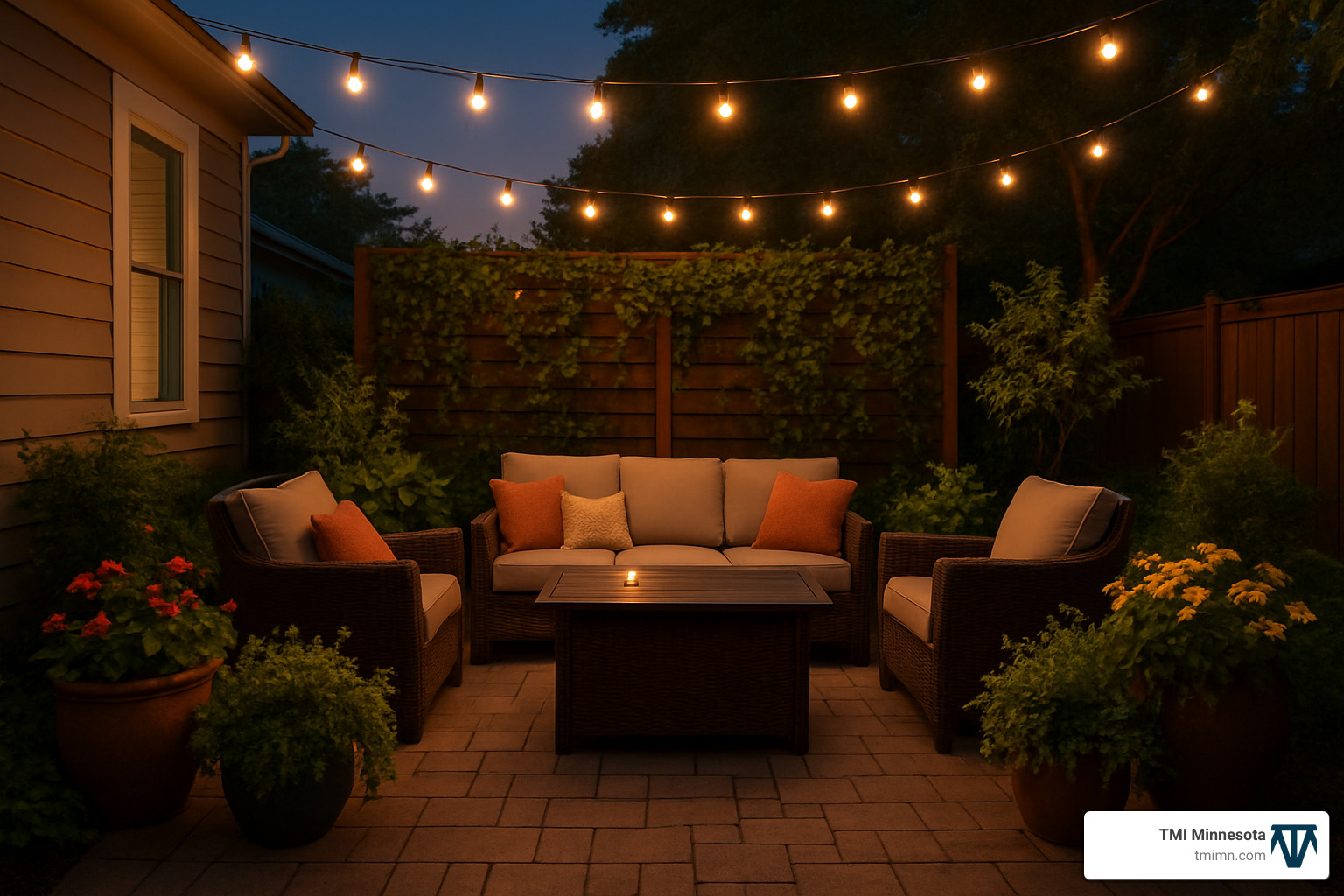
The magic of a great patio often happens after dark, which is why thoughtful lighting makes such a difference. Effective outdoor lighting combines multiple sources at different heights to create layers of illumination. String lights overhead create that magical canopy effect that makes everyone look their best. Path lights ensure safe navigation between different zones. Uplights highlight architectural features or magnificent trees, while task lighting near cooking and dining areas ensures you can actually see what you’re eating!
“We recommend low-voltage LED systems for most applications,” advises our lighting specialist. “They’re energy-efficient, safe to install near water features, and can be controlled via smartphone for customizable scenes.” Being able to adjust lighting with the tap of a finger—dimming for intimate dinners or brightening for game nights—adds tremendous versatility to your outdoor space.
Privacy is another essential element that helps outdoor spaces feel like true extensions of your home. Nothing ruins a relaxing evening faster than feeling like you’re on display for the neighborhood. Creating a sense of enclosure makes patios feel more intimate and room-like without building actual walls.
Lattice screens with climbing plants offer privacy that improves with time as vegetation fills in. Tall ornamental grasses provide seasonal screening that moves beautifully in the breeze. Strategic tree placement can block sightlines from neighbors while adding shade and beauty. For more immediate results, decorative panels or pergola sides with outdoor curtains create instant privacy with architectural interest.
Finally, don’t underestimate the power of well-placed greenery to soften the edges of your hardscape. Container gardens are the perfect finishing touch for any backyard patio ideas, adding color and life to your outdoor room. Large containers anchor corners and define boundaries, while raised planters bring greenery to eye level where you can appreciate the details.
Herb containers placed near cooking areas provide both beauty and function—nothing beats snipping fresh basil or rosemary right into your outdoor-grilled dishes. And using seasonal flowers allows you to change color schemes throughout the year, keeping your patio feeling fresh and current with minimal effort.
Learn more about enhancing your patio with our Outdoor Lighting Installations that can transform your space from day to night.
Frequently Asked Questions about Backyard Patio Ideas
What patio material lasts longest with the least upkeep?
When Minnesota homeowners ask me about low-maintenance patio materials, I always point them toward concrete pavers first. They’re the champions of our harsh freeze-thaw cycles because they flex slightly with ground movement, unlike poured concrete which tends to crack over time. Most of my clients are thrilled to find they rarely need to do more than occasional sweeping and maybe refreshing the joint sand every few years.
“I installed concrete pavers at my Eden Prairie home seven years ago,” shares Michael, one of our longtime clients. “Besides hosing them down in spring, I’ve done almost nothing, and they still look fantastic.”
For those with a bit more budget flexibility, porcelain pavers have become my secret weapon for truly hassle-free patios. Their non-porous surface shrugs off wine spills and tree sap like nothing happened. They never need sealing, but they do come with a higher price tag than concrete options.
If you’re planning a raised outdoor space, composite decking materials might be worth considering. While not technically a traditional patio surface, these wood alternatives only need occasional cleaning with soap and water—no staining, sealing, or refinishing required. Perfect for busy families or vacation properties.
How can I make a small patio feel larger and more inviting?
Small patios can actually become the most charming outdoor spaces with a few designer tricks I’ve refined over years of working with challenging Twin Cities properties.
I love creating diagonal patterns with pavers or decking boards—this simple change draws the eye outward and instantly makes your space feel more expansive. Pair this with vertical elements like climbing plants on a trellis or tall, slender planters to pull the gaze upward and create the illusion of more room.
One of my favorite small patio changes involved a tiny Linden Hills backyard where we installed built-in bench seating around the perimeter. “It completely changed how we use the space,” the homeowner told me later. “Without chairs taking up floor space, we can actually host dinner parties now, and the benches double as storage for cushions and games.”
Light colors work wonders in tight spaces. I often recommend lighter stone or concrete for small patios because they reflect more light and create an airier feel. The same goes for furniture—opt for visually lightweight pieces with open designs rather than bulky options that dominate the space.
Mirrors might seem like an indoor trick, but outdoor-rated mirrors can be magical in small patios. I recently helped a client mount a large mirror on their garden wall, positioned to reflect their container garden. Visitors often comment that it feels twice as large as it actually is.
When space is truly at a premium, multi-functional pieces earn their keep. Look for coffee tables that expand for dining, benches with hidden storage, or modular furniture that can be reconfigured based on your needs that day.
What’s the smartest way to add shade on a tight budget?
I’ve helped dozens of Minnesota homeowners create shade without emptying their wallets. My favorite budget-friendly solution? Sail shades. These fabric panels create dramatic, architectural shade when tensioned between your house, trees, or simple posts. At roughly $50-200 depending on size and quality, they deliver serious bang for your buck.
“We were quoted $8,000 for a pergola,” remembered Jamie from Minnetonka. “Instead, we installed three sail shades in an overlapping pattern for under $500 total. They’ve survived three Minnesota summers and provide perfect shade for our dining area.”
For the truly budget-conscious, I’ve had great success with repurposed materials. One of my favorite projects involved creating a rustic pergola using salvaged barn wood and galvanized pipes. The materials cost less than $300, and it has a character you simply can’t buy off the shelf.
Don’t underestimate the power of strategic plantings, either. Fast-growing vines like morning glory can create living shade within a single season when trained up simple wire supports. Plant them in spring, and by July, you’ll have a beautiful, cooling canopy. While you wait for perennial options to establish, these annual vines provide immediate impact.
For ultimate flexibility, quality portable umbrellas in weighted stands let you move shade where needed and store them during harsh weather. Look for umbrellas with vents at the top to withstand our occasional summer gusts.
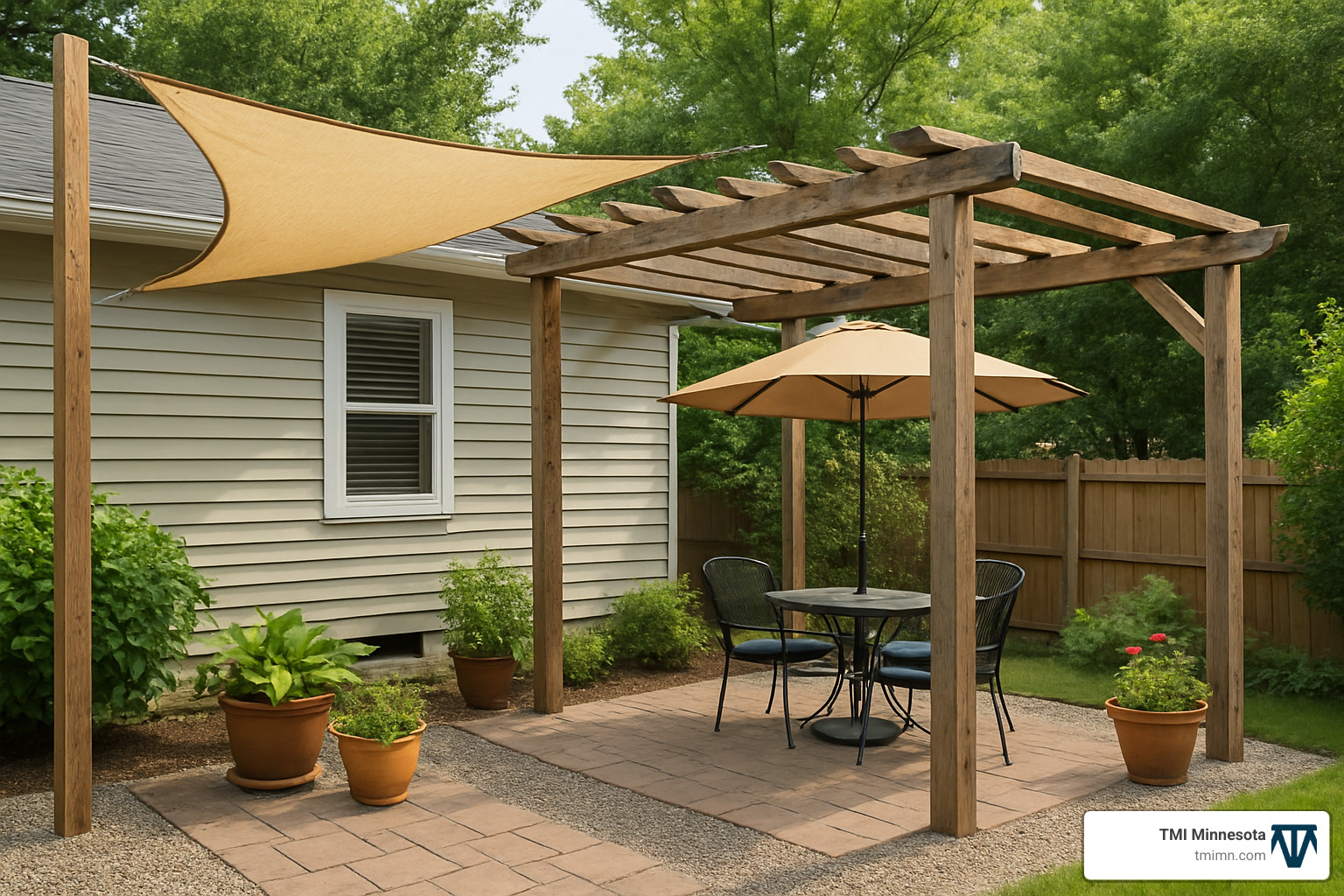
My most budget-conscious shade solution ever? We helped a young couple in St. Paul create a lovely shaded dining space using four pressure-treated posts, simple cross beams, and outdoor canvas drop cloths draped across the top. The entire structure cost under $400 in materials, and five years later, they’ve only needed to replace the fabric once. Sometimes the simplest solutions are the most satisfying.
Conclusion
There’s something magical about stepping into your backyard and finding a space that feels like it was designed just for you. Whether you’re dreaming of a cozy gravel nook for quiet morning coffees or an expansive entertainment area where neighborhood gatherings come alive, the perfect patio strikes that sweet balance between your lifestyle and your property’s natural features.
Here at TMI Minnesota, we’ve seen how thoughtfully designed outdoor spaces become natural extensions of the home—not just places to sit, but spaces where life happens. Where kids chase fireflies on summer evenings. Where friends linger long after dinner is done. Where you find yourself sneaking out with a blanket on chilly fall mornings just to watch the sunrise with your coffee.
We love how backyard patio ideas evolve from simple sketches to spaces that transform daily life. Our team brings decades of Minnesota-specific experience to every project, creating patios that not only withstand our challenging freeze-thaw cycles but actually thrive through all four of our distinct seasons.
When you’re ready to bring your outdoor dreams to life, we’re here to walk alongside you through every step:
We’ll start with a thoughtful design consultation where we listen more than we talk—because your vision matters most. You’ll benefit from our expert material guidance, helping you steer options that make sense for both your style preferences and our unique Minnesota climate. Our installation team brings meticulous attention to every detail, ensuring your hardscape isn’t just beautiful today but remains solid for years to come.
Beyond the patio itself, we’ll help integrate softscape elements that make your space feel complete—from strategic privacy plantings to container gardens that bring seasonal color. And those finishing touches matter: lighting that creates evening ambiance, irrigation that keeps everything lush, and special features that make the space uniquely yours.
The possibilities truly are endless, and your dream outdoor space is closer than you might think. The patios we love most aren’t the biggest or most expensive—they’re the ones that perfectly reflect the families who use them. The ones where every detail feels intentional. The ones that invite you outside even when indoor comforts beckon.
Ready to transform your backyard into the outdoor haven you’ve been imagining? Contact the experts today — TMI Minnesota can turn your patio possibilities into reality.