
Creating Magical Outdoor Play Spaces
Remember the magic of childhood play? That sense of trip and endless possibility? Backyard playground ideas can bring that magic right to your home, changing an ordinary yard into a world of exploration where kids develop crucial physical, social, and cognitive skills while having the time of their lives.
I’ve seen how a thoughtfully designed play space can become the heart of family life. Swing sets aren’t just for fun—they build upper body strength and balance. Sandboxes invite hours of sensory play and creativity for the little ones. Climbing walls help kids develop confidence along with those gross motor skills. Natural play areas spark imagination while beautifully complementing your landscaping. And on hot Minnesota summer days, water features provide both sensory exploration and welcome relief from the heat.
| Playground Feature | Benefits | Best For |
|---|---|---|
| Swing Sets | Upper body strength, balance | All ages, medium to large yards |
| Sandboxes | Sensory play, creativity | Toddlers to elementary, any yard size |
| Climbing Walls | Gross motor skills, confidence | Ages 4+, can be adapted to small spaces |
| Natural Play Areas | Imagination, environmental awareness | All ages, creates harmony with landscaping |
| Water Features | Sensory exploration, summer cooling | Toddlers to teens, requires drainage planning |
The benefits go beyond just fun. Children with access to outdoor play spaces are five times more likely to maintain a healthy weight, according to the National Park and Recreation Association. That’s huge! But safety matters too—with over 200,000 playground-related injuries annually, thoughtful design isn’t just nice to have, it’s essential.
Don’t worry if you’re working with a cozy courtyard rather than a sprawling lawn. The best backyard playground ideas can be scaled to fit your space and budget. The secret is creating age-appropriate features that grow with your children while complementing your overall landscape design.
The most magical playgrounds strike that perfect balance between structured equipment and open-ended play opportunities. This allows kids to exercise both their bodies and imaginations. And here’s a tip from years of experience: place your play area where adults can comfortably supervise from nearby seating areas, giving children the independence to explore while keeping safety in view.
I’m Christopher Deanovic, Operations Leader at Task Masters, and I’ve helped countless Minnesota families create outdoor spaces where memories are made every day with backyard playground ideas that perfectly balance safety, durability, and creative play for kids of all ages.

Backyard playground ideas vocab explained:
– Hardscape design services
– Landscape renovation services
– Tree planting services
Plan & Protect: Safety, Surfacing & Maintenance
Safety isn’t just about preventing injuries—it’s about creating a space where kids feel brave enough to explore and take those healthy risks that help them grow. Did you know nearly 80 percent of playground tumbles are from falls? That’s why choosing the right ground cover is probably the most important safety decision you’ll make for your backyard playground ideas.
“The right surfacing material can mean the difference between a minor bump and a serious injury,” explains Michael Baldwin, a Certified Playground Safety Inspector. “In the United States, over 600 kids a day end up in emergency rooms due to playground injuries, and over 70% are related to falls.”
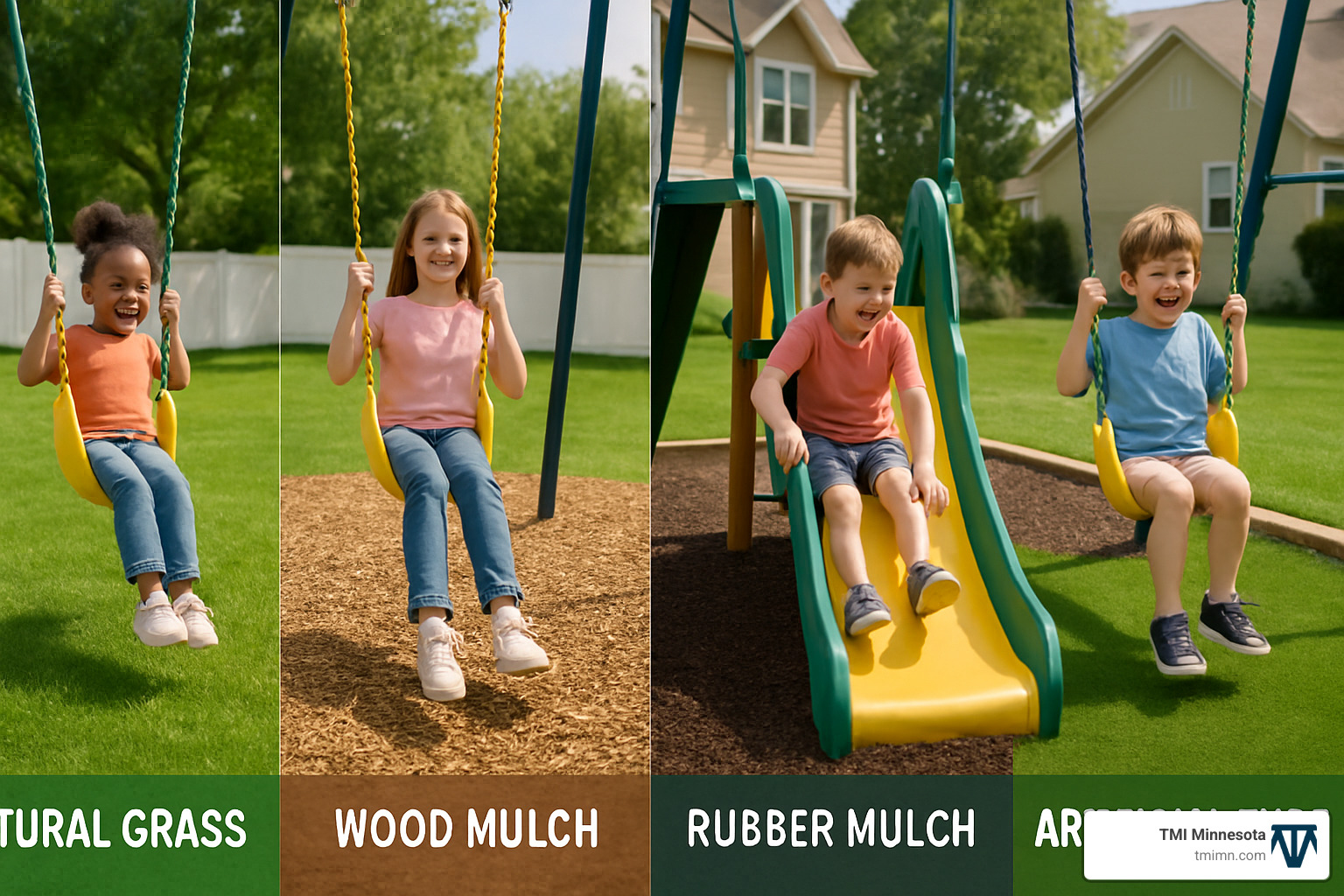
Comparing Surfacing Options
| Surface Type | Pros | Cons | Maintenance | Cost |
|---|---|---|---|---|
| Natural Grass | Aesthetically pleasing, already in place | Poor shock absorption, wears down quickly | Weekly mowing, watering, reseeding | $ |
| Wood Mulch | Natural look, moderate cost, good drainage | Needs regular replenishment, can harbor insects | Add new mulch yearly, rake weekly | $$ |
| Rubber Mulch | Superior shock absorption, long-lasting | Higher upfront cost, can get hot in summer | Rinse occasionally, top up every 3-5 years | $$$ |
| Artificial Turf | Clean appearance, excellent drainage, no mud | Highest initial investment, requires proper base | Brush monthly, rinse spills promptly | $$$$ |
For the little ones under 6, safety surfacing should cushion at least 4 inches deep. Older, more adventurous climbers need 6 inches or more—especially under high-flying zones like swings and slides. If you’re considering artificial turf (a Minnesota favorite that stands up to our weather extremes), professional installations with proper shock-absorbing padding typically last 10-12 years, even with daily play sessions.
When planning your play zone, remember to create adequate clearance zones of at least 6 feet around equipment (9 feet for swings and slides). All structures should be firmly anchored to prevent tipping, and you’ll want to establish a habit of weekly inspections to catch any protruding bolts or splintered wood before little hands find them.
Proper drainage is especially important in Minnesota, where spring melt can turn playgrounds into puddle zones. Installing drainage holes or permeable surfaces prevents standing water that can damage equipment and create slippery conditions. And always match play features to your children’s developmental stages—what’s perfect for your 8-year-old might be frustrating or dangerous for your toddler.
“Playground equipment and hardware should be well-kept,” advises Deanna Tomaselli from Voice of Play. “Rust and other deterioration are signs to reevaluate maintenance procedures.”
Seasonal Maintenance Tips
Our Minnesota seasons demand a bit of extra care for outdoor play spaces:
Spring: Once the snow melts, it’s time for a thorough inspection. Look for winter damage, replenish surfacing material that may have compacted, and tighten any hardware that frost heave might have loosened.
Summer: Those beautiful sunny days can create surprisingly hot surfaces. Check metal slides and dark-colored equipment before letting kids play. It’s also prime time to maintain shade structures and clean water features that might develop algae.
Fall: As beautiful as those falling leaves are, they can create slippery surfaces and clog drainage. Regular cleaning prevents both problems, while also preparing drainage systems for the inevitable snow melt.
Winter: Consider removing or covering certain components, especially fabric or plastic elements that might crack in extreme cold. Keep access paths clear of snow and ice for safer winter play.
By investing time in proper surfacing and regular maintenance, you’re not just creating a safer play environment—you’re protecting your investment and ensuring years of backyard trips. The Public Playground Safety Checklist from the Consumer Product Safety Commission offers additional guidance worth reviewing as you plan your space.
The Trip Swing & Slide Hub
The classic swing set and slide combination remains the cornerstone of backyard playground ideas for good reason. This versatile setup provides a perfect balance of active play and imaginative possibilities that children return to year after year.
“A high-quality wooden swing set, when properly cared for, can last 10 to 20 years or even longer,” notes Casey Hanson, a playground equipment specialist. “That makes it one of the best investments for family entertainment.”
When designing your swing and slide hub, consider including multi-level platforms to create distinct play zones. An enclosed clubhouse offers both shade and endless imaginative play opportunities, while a mix of swing types accommodates children of different ages. Don’t forget about slide options – straight slides provide classic fun, while spiral or tube slides add excitement and variety.
Climbing elements like ladders, rock walls, or rope nets give kids different ways to access the structure, building strength and coordination. And always include proper guardrails for platforms over 30 inches high to keep the fun safe.
Lucy and Owen, ages 4 and 2, test their parents’ DIY swing set daily. “The slide gets the most action,” their mother shares, “but the enclosed clubhouse on the upper deck gives them a shaded space to relax when they tire of climbing.”
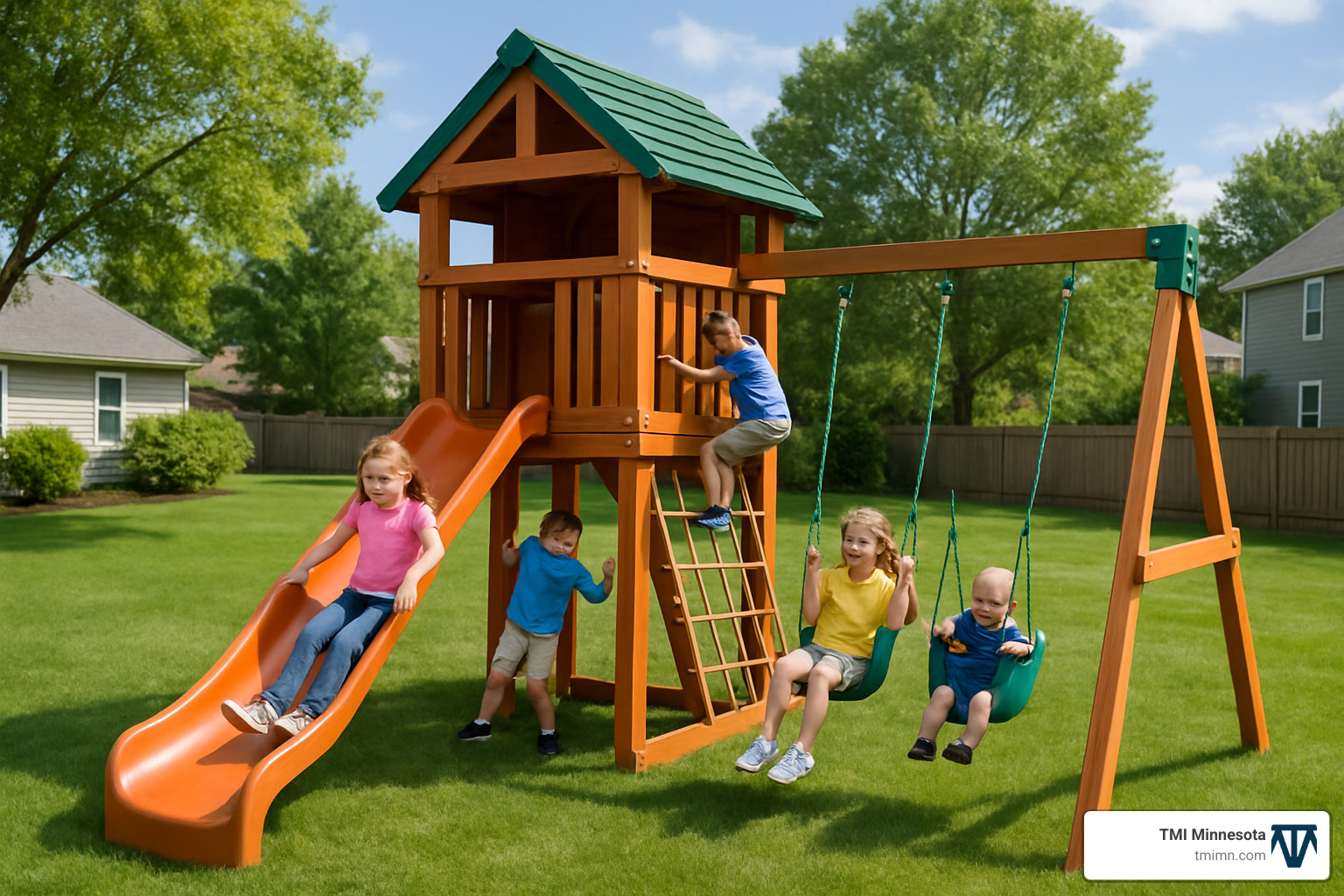
Remember to maintain at least 6 feet of clearance around your play structure (more for swings), and properly anchor everything to prevent tipping. A good wood stain will protect your investment while regular maintenance ensures years of safe play. For inspiration on creating truly magical outdoor spaces, check out our Creative Outdoor Play Spaces guide.
Choosing Durable Equipment
The materials you select dramatically impact both safety and longevity. For wooden structures, pressure-treated pine offers the best balance of affordability and durability when properly maintained. More premium options include cedar or redwood, which naturally resist rot and insects but come with a higher price tag. Modern composite materials require minimal maintenance but typically involve a larger initial investment.
“I decided on pressure-treated pine for our DIY backyard playground,” shares April, a Minnesota parent. “With annual maintenance, it’s held up beautifully for over six years now, even through our harsh winters.”
All hardware should be galvanized or stainless steel to prevent rust, with carriage bolts used for main structural connections. Plastic components should be UV-resistant to prevent cracking and fading in Minnesota’s intense summer sun.
Annual sealing of wooden components is essential, especially in our climate where freeze-thaw cycles can be tough on outdoor structures. A quick inspection each spring helps catch small issues before they become safety concerns or costly repairs.
At TMI Minnesota, we often recommend partial DIY approaches—where we handle the site preparation, anchoring, and safety surfacing while homeowners assemble the play structure according to manufacturer specifications. This hybrid approach ensures professional-grade safety with the satisfaction and cost savings of DIY.
Small-Space Magic: Backyard Playground Ideas for Tiny Yards
Don’t let a small yard crush your playground dreams! Some of the most magical backyard playground ideas actually come from working with limited space. When square footage is tight, creativity tends to soar.
“In reality, you can usually fit all the elements into a small yard that you can in a big yard,” explains Lillian Robison, a landscape designer. “You just might be more limited on size, and you may need to prioritize multi-function spaces.”
A compact yard forces you to think differently – usually upward and inward – creating play spaces that are often more innovative than their sprawling counterparts. The secret? Making every square inch count.
Maximizing Minimal Square Footage
Even in a tiny 10×10 foot space, you can create a playground that kids will love. The trick is thinking vertically rather than horizontally. Vertical play towers give children multiple levels of fun without eating up your entire yard. Wall-mounted features like climbing holds, chalkboards, or activity panels turn boring fences into interactive play zones.
For flexibility, consider fold-away elements that can be tucked away when not in use. That swing that brings so much joy? Design it so it can be unhooked and stored when adults want to use the patio.
I recently visited a Twin Cities family who transformed their narrow side yard – just 12×15 feet – into what they call their “Multidimensional Fun” zone. They combined a compact tunnel, swing, and mini trampoline on colored safety surfacing. The kids absolutely love it, and the parents love that it didn’t require a massive yard makeover.
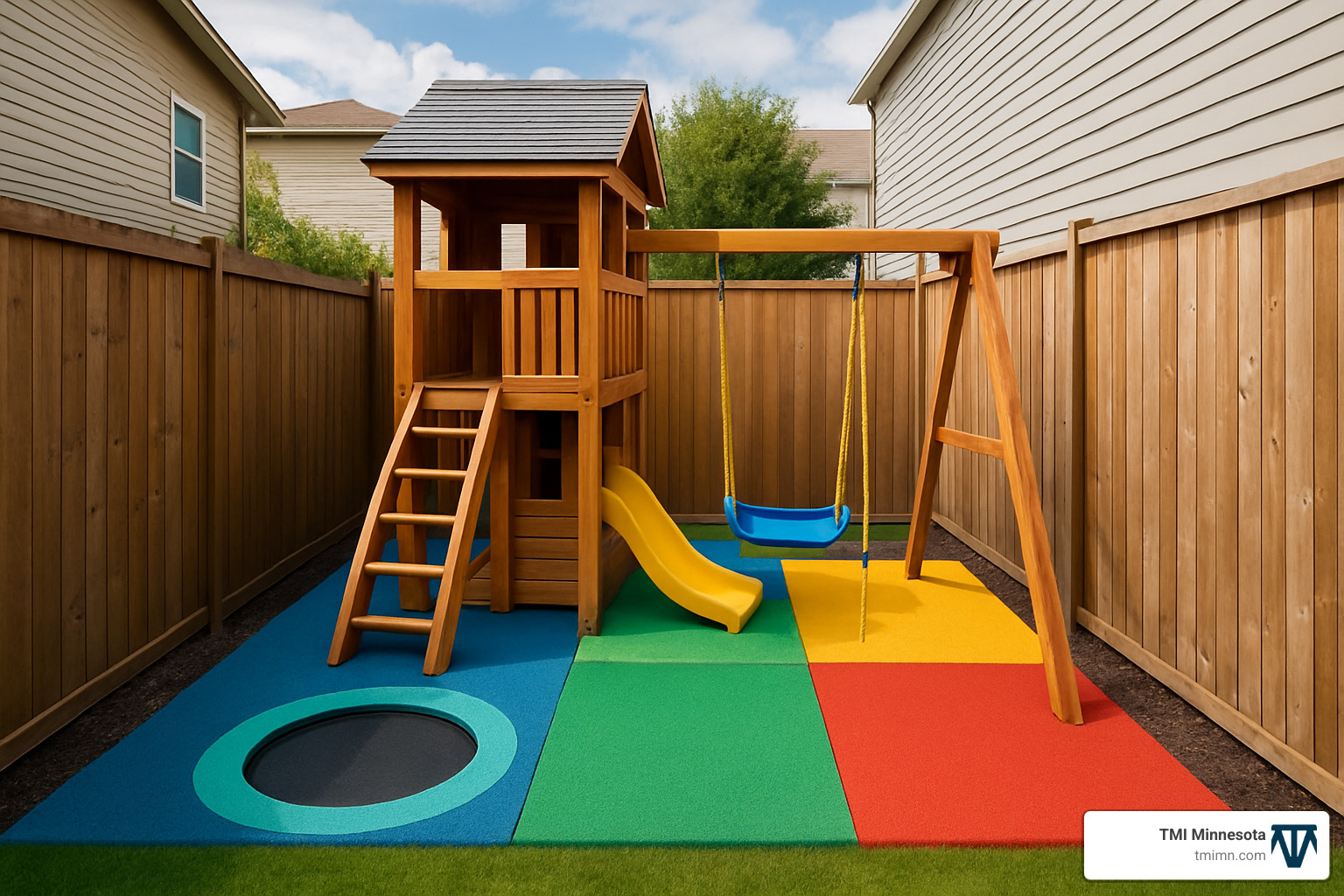
Don’t forget to look up! Overhead play elements like monkey bars or hanging features provide entertainment without taking up precious ground space. And those often-ignored corners? They’re perfect spots for sandboxes or climbing features.
Design Tips for Backyard Playground Ideas in Compact Areas
Smart design makes small spaces feel bigger and work harder. Multi-function benches provide seating for adults while hiding storage for toys underneath. Vertical gardens add natural beauty without consuming play space – and kids love watching plants grow up walls and fences.
“We painted our wooden fence with exterior flat latex enamel to create a giant outdoor chalkboard,” shares a Minneapolis homeowner. “It takes up zero floor space but provides endless entertainment.”
The space beneath raised platforms isn’t just empty – it’s opportunity! Under-deck storage keeps toys organized and out of sight. Use strategic zoning to create distinct activity areas with different surfacing materials. A small patch of artificial turf, a tiny deck, and a pea gravel digging spot can make even the smallest yard feel like it contains multiple play destinations.
Visual tricks help too. Circular designs and varied textures create a sense of expanded space. Mirrors (safely installed with shatterproof materials) can make play areas feel twice as big.
Shade and Privacy Solutions
In cozy yards, shade and privacy become even more important. Retractable shade sails offer sun protection without permanent structures that might make your space feel cramped. Potted trees provide movable greenery that offers natural shade and screening as needed.
For more permanent solutions, consider pergolas with climbing vines that create overhead interest while supporting plants. On hot summer days, hanging curtains made from outdoor fabric can create privacy, block wind, and provide shade exactly where you need it.
By thoughtfully combining these elements, even the tiniest urban lot can become a magical playground that children adore and parents appreciate for its efficient use of space. Visit our Modern Outdoor Designs page for more inspiration on making the most of limited yard space.
With a bit of creativity and smart planning, your small yard might just become the neighborhood’s most inventive play spot!
Budget DIY Obstacle Course & Balance Zone
Creating an engaging backyard playground doesn’t have to empty your wallet. In fact, some of the most beloved play spaces are built using reclaimed materials, basic tools, and a splash of creativity. An obstacle course and balance zone offers endless physical challenges that can grow with your children.
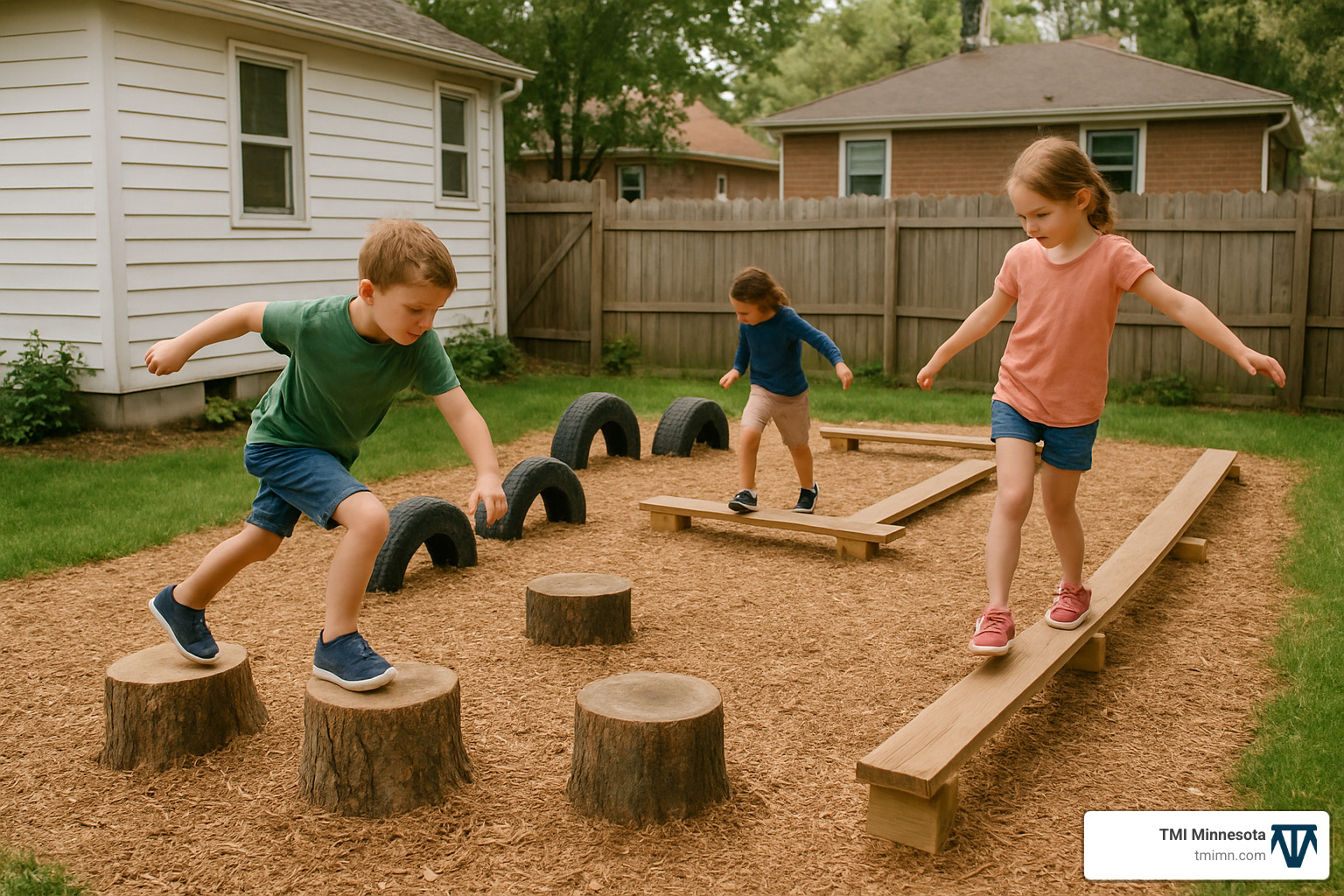
“Kids will think you are the coolest parent ever!” laughs one DIY blogger who created a complete backyard playground ideas setup using tree stumps, tires, and scrap lumber for under $300.
Materials with Maximum Impact
The beauty of DIY obstacle courses lies in their simplicity. Tree stumps of varying heights create natural stepping stones and balance challenges that kids love to steer. Reclaimed tires, when buried halfway, transform into tunnels, problems, or climbing features that spark hours of play. Wooden pallets can become balance beams, bridges, or simple climbing walls with just a bit of sanding and sealing.
Large rocks serve double duty as climbing features and attractive boundary markers, while rope is perhaps the most versatile material – perfect for simple swings, climbing nets, or balance lines that challenge growing skills.
One Minnesota family received a free 30 cubic yard woodchip delivery from a local arborist, which they spread as safe landing zones throughout their DIY obstacle course. “The arborist was happy to drop them off rather than pay disposal fees,” the homeowner explained. “Our kids call it their ‘ninja training ground’ and use it every day.”
What Are the Most Budget-Friendly Backyard Playground Ideas?
The most economical approaches combine thoughtful sourcing with phased implementation. Sourcing free materials through Facebook Marketplace, Craigslist, or neighborhood groups can yield treasure troves of playground components. Many families find success by upcycling household items – changing old furniture, kitchen sinks, or plastic tubs into creative play features.
Phased construction allows you to build your playground in stages as time and budget allow, while hosting a playground-raising party turns construction into a community event. Invite friends to help with building in exchange for food and fun, creating memories along with play spaces.
“We built our DIY wooden balance beam for less than $20,” shares a Twin Cities parent. “It’s been one of the most-used features in our backyard for three years running. The kids never seem to tire of walking, jumping, and creating games around it.”
Perhaps most importantly, focus on open-ended features that inspire creative play rather than single-purpose equipment. A simple log can become a balance beam, rocket ship, or hiding spot depending on a child’s imagination that day.
Safety on a Budget
Even budget-conscious builds must prioritize safety. Use food-grade sealants on wooden components that children might touch or mouth, and sand all edges thoroughly to prevent splinters. Before accepting second-hand play equipment, always check for recalls and inspect for structural integrity.
Secure all components to prevent tipping or collapse, particularly important for stacked or liftd features. And don’t skimp on fall zones – maintain adequate cushioning with affordable materials like engineered wood fiber around all climbing elements.

A DIY approach doesn’t just save money—it creates opportunities for personalization to your specific yard and your children’s interests. The process of building together becomes a memorable family project that teaches valuable skills while creating a sense of ownership and pride. As one parent put it, “My kids value our backyard playground so much more knowing they helped build it with their own hands.”
For more inspiration on changing your outdoor spaces with creative, budget-friendly solutions, check out our Backyard Change Services or explore evidence-based research on how active play benefits children’s development from the National Recreation and Park Association.
Sensory Oasis: Sand, Water & Mud Kitchen Station
There’s something almost magical about watching children completely absorbed in sensory play. Their little fingers dig through cool sand, splash in water, or carefully mix mud “ingredients” as they create imaginary feasts. These simple activities are powerhouses for development, engaging multiple senses at once while sparking creativity and learning.
“One of my most vivid childhood memories is making mud pies in our backyard,” shares a Minnesota parent. “Now my kids light up picking vegetables from our garden and ‘cooking’ them in their outdoor mud kitchen.”
Creating a dedicated sensory zone in your backyard might seem like inviting mess, but the developmental benefits far outweigh the cleanup. Plus, with thoughtful design, you can minimize the chaos while maximizing the fun.
Creating the Ultimate Sensory Station
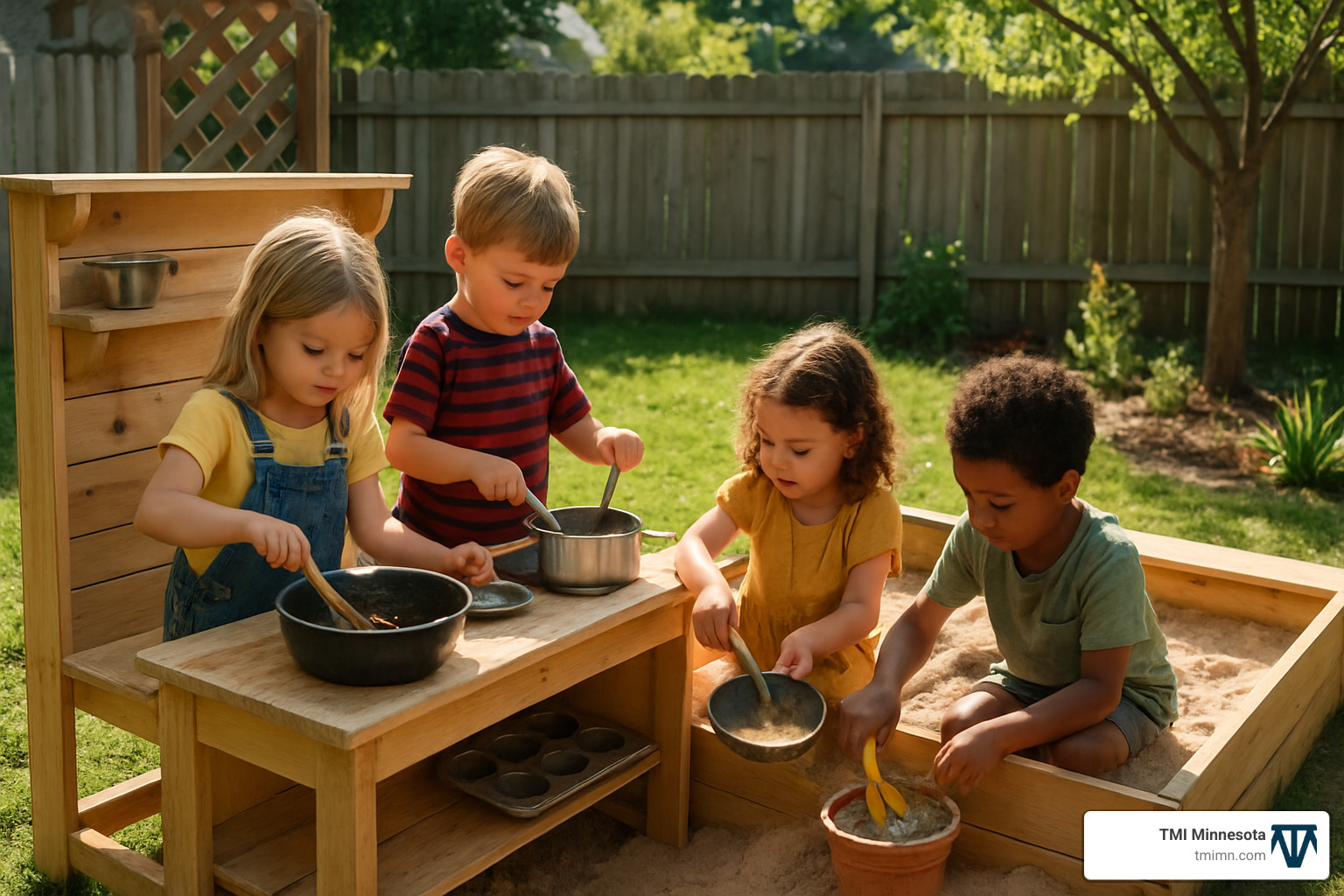
The perfect sensory play area combines several key elements working together. Start with a covered sandbox – large enough for a couple of kids to play comfortably, but with a secure lid to keep out neighborhood cats and debris when not in use. Next to this, consider adding a water table at just the right height for little explorers to pour, splash and experiment without having to bend uncomfortably.
The crown jewel for many backyard sensory zones is a simple mud kitchen – essentially a counter-height surface with containers, old pots and pans, and perhaps a pretend sink. Children absolutely love “cooking” with natural materials, and this space becomes a hub for imaginative play.
Don’t forget practical additions like storage solutions – weather-resistant bins keep toys organized and protected from the elements. And because Minnesota summers can get intense, some form of shade structure is essential for comfortable play even on sunny days.
One creative Twin Cities family built a colorful 6×7 foot rectangular sandbox using pressure-treated lumber with interlocking wooden slats for the floor. Their clever design incorporated corner benches and PVC pipe holders for beach umbrellas, providing built-in shade exactly where needed.
Pros and Cons of Sand & Water Features
While sensory stations offer tremendous benefits, it’s worth considering both sides of these messy-but-magical play spaces:
On the plus side, sensory play powerfully develops fine motor skills as children scoop, pour, and manipulate materials. It naturally encourages imaginative play – that mud quickly becomes soup, cake, or magical potions in a child’s mind. These areas also provide natural learning about scientific concepts like volume, density, and properties of matter. Many parents are surprised to find that sensory stations offer calming, focused activity for high-energy children who might struggle to sit still elsewhere.
The challenges are real too. Sand can be messy and tends to migrate throughout your yard (and home). Standing water requires vigilant supervision for safety and regular changing to stay clean. Mud play definitely calls for easy cleanup solutions and weather-appropriate clothing.
“Sandboxes can be messy and attract cats unless covered,” notes one parent on a local forum, “but we use baby powder to remove sand from hair and clothes effectively, and the developmental benefits are worth the extra cleanup.”
Practical Tips for Sensory Play Success
Making your sensory station both fun and manageable comes down to a few smart strategies. Plan to replace sandbox sand every 1-2 years to keep it clean and fresh. Good drainage is essential for water and mud areas – nobody wants a swampy backyard after playtime ends.
Consider creating a designated rinse station nearby where kids can wash hands and feet before heading indoors. Always use child-safe, biodegradable materials for sensory elements, especially if you have curious younger children who might taste-test their creations. Finally, establish clear boundaries about where sensory materials can and cannot go to prevent your entire yard from becoming one giant sandbox.
At TMI Minnesota, we’ve designed dozens of sensory play areas with clever drainage solutions built right in. Our approach ensures that water features don’t create soggy yard areas and that mud kitchens have appropriate runoff management – because sensory play should be fun for kids without creating headaches for parents.
With thoughtful planning, your backyard playground ideas can include a sensory oasis that becomes the heart of outdoor play, fostering development while creating memories that last a lifetime.
Sky’s the Limit: Climbing Wall & In-Ground Trampoline Combo
When it comes to backyard playground ideas that truly excite older kids and challenge growing bodies, nothing beats the thrill of vertical trips combined with bouncing fun. A climbing wall paired with an in-ground trampoline creates the ultimate high-energy play zone that children rarely outgrow.
“The great thing about this combination is you get the best of all worlds,” explains Mark, a playground design specialist I recently spoke with. “Climbing builds upper body strength and problem-solving skills, while jumping develops balance, coordination, and delivers pure joy.”
Kids who might be hesitant about heights often gain confidence gradually through climbing, while the trampoline provides an exhilarating reward system for conquering fears. This powerful pairing keeps children engaged longer than almost any other playground combination.
Creating Your Vertical Trip Zone
The magic of a vertical play zone is in the details. Most successful installations include an angled climbing wall (typically 10-15 degrees from vertical for beginners) with varied climbing holds in different shapes, sizes, and colors to create multiple routes. Adding rope or net climbing options provides alternative challenges that work different muscle groups.
For the trampoline component, in-ground installation creates a seamless look that blends with your landscape while dramatically reducing fall height. One clever Twin Cities family embedded their 14-foot round trampoline within synthetic turf, eliminating the typical trip hazard of trampoline legs while creating a unified aesthetic that pleased both kids and parents.
“We debated for months between a traditional above-ground trampoline and an in-ground model,” shares Jennifer, a Bloomington homeowner. “The in-ground version cost more initially, but the safety benefits and how beautifully it integrates with our yard made it worth every penny.”
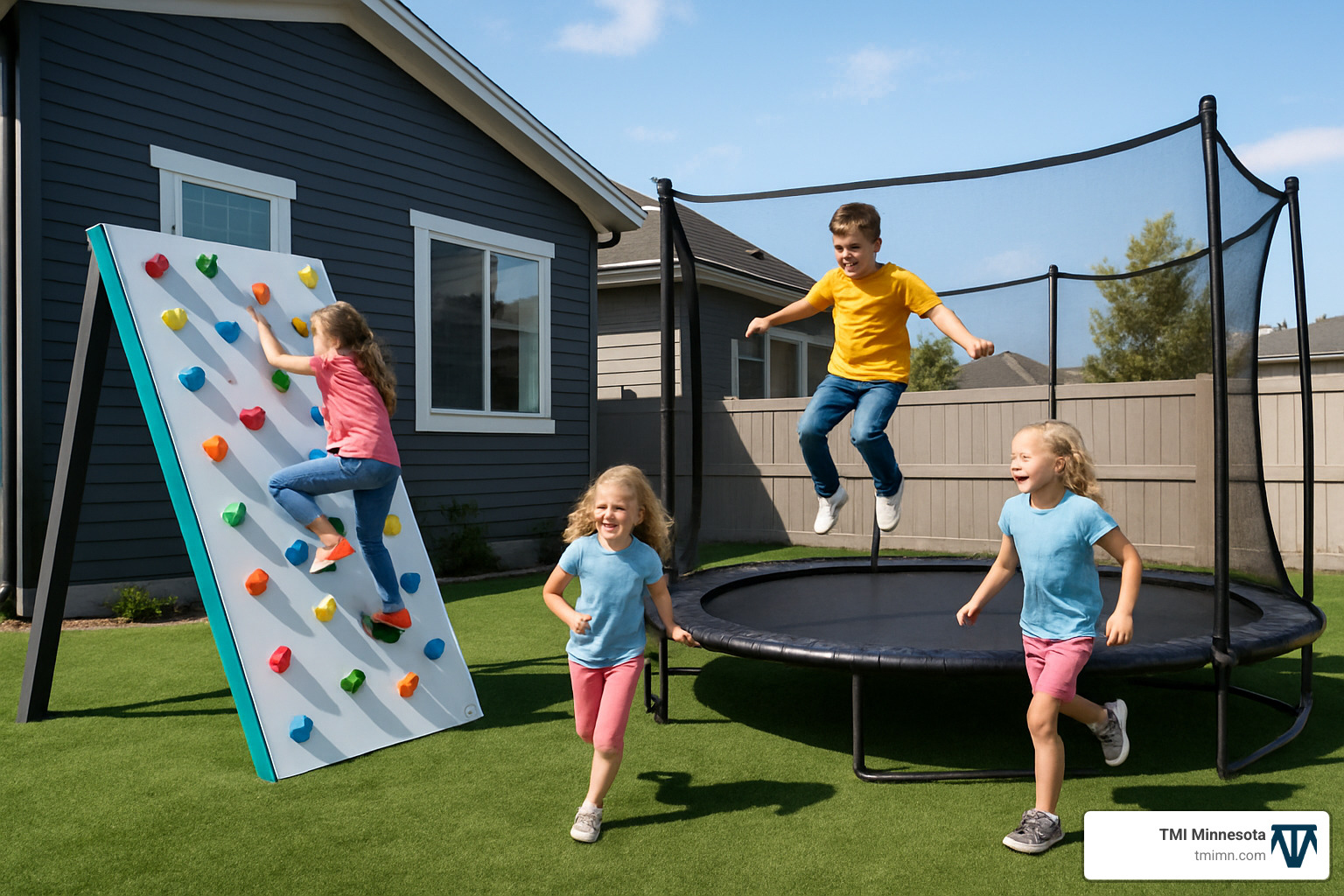
Don’t forget the importance of safety enclosures – proper netting prevents falls from the trampoline – and shock-absorbing surfacing around all equipment. The right surfacing material can transform an accident into a minor incident, particularly with features that invite jumping and climbing.
Safety Considerations for Advanced Play Equipment
With higher-challenge equipment comes increased responsibility for safety. Always follow manufacturer guidelines for installation and weight limits – these aren’t suggestions but critical safety parameters. Proper fall protection around climbing features typically means 6-12 inches of safety surfacing, with depth varying based on potential fall height.
“I decided to be overly cautious when securing our climbing wall,” shares Tom, a DIY playground builder whose kids now spend hours on their backyard wall. “Each hold is attached with two bolts rather than one, and we test the entire structure regularly by having my 200-pound brother-in-law climb it before letting the kids try.”
Using commercial-grade components rated for outdoor playground use might cost more initially, but they dramatically outlast consumer-grade alternatives. Maintaining adequate spacing between features prevents collision injuries, especially important when you have multiple children playing simultaneously.
Age-appropriateness matters too – most climbing walls are suitable for ages 4+ with supervision, while younger children might need modified holds and closer monitoring. The beauty of a DIY climbing wall is that you can adjust the difficulty as your children grow and develop stronger climbing skills.
Maintaining High-Energy Equipment
Weekly inspections become a necessary ritual with high-energy play equipment. I recommend creating a simple checklist that includes examining climbing holds for security, checking trampoline springs and mats for signs of deterioration, and ensuring proper tension in safety netting.
Seasonal maintenance makes a huge difference in equipment longevity. Many families adjust climbing routes periodically to provide new challenges – simply repositioning holds creates an entirely fresh climbing experience. Weather protection matters too – quality covers during severe weather or winter months can extend the life of your investment by years.
“We replace about 20% of our climbing holds each spring,” explains a family with three active climbers. “It’s not that they wear out – the kids just love getting new shapes and challenges. It’s way cheaper than replacing the entire wall and keeps their interest peaked.”
At TMI Minnesota, we’ve helped dozens of families create these dynamic play zones that grow with children through their teenage years. The right combination of climbing and bouncing features can transform a backyard into the neighborhood hotspot while building physical fitness that translates to better performance in organized sports and everyday life.
Nature Play Garden & Fairy Trail
Connecting children with nature through play creates magical experiences that foster imagination, environmental awareness, and sensory development. A nature play garden integrates natural elements like logs, boulders, plants, and water to create an ever-changing playground that grows alongside your children.
“Play is an essential tool in a child’s development,” explains Deanna Tomaselli from Voice of Play. “Research shows that outdoor free play gives kids many valuable benefits, including the development of physical, emotional, social and cognitive skills.”
Designing Your Natural Wonderland
Picture your children hopping across log balance beams made from fallen trees, their faces lighting up as they conquer each step. Nearby, a cluster of boulders invites little climbers to test their strength and problem-solving skills. This is the magic of natural play spaces – they challenge children in ways plastic equipment simply cannot.
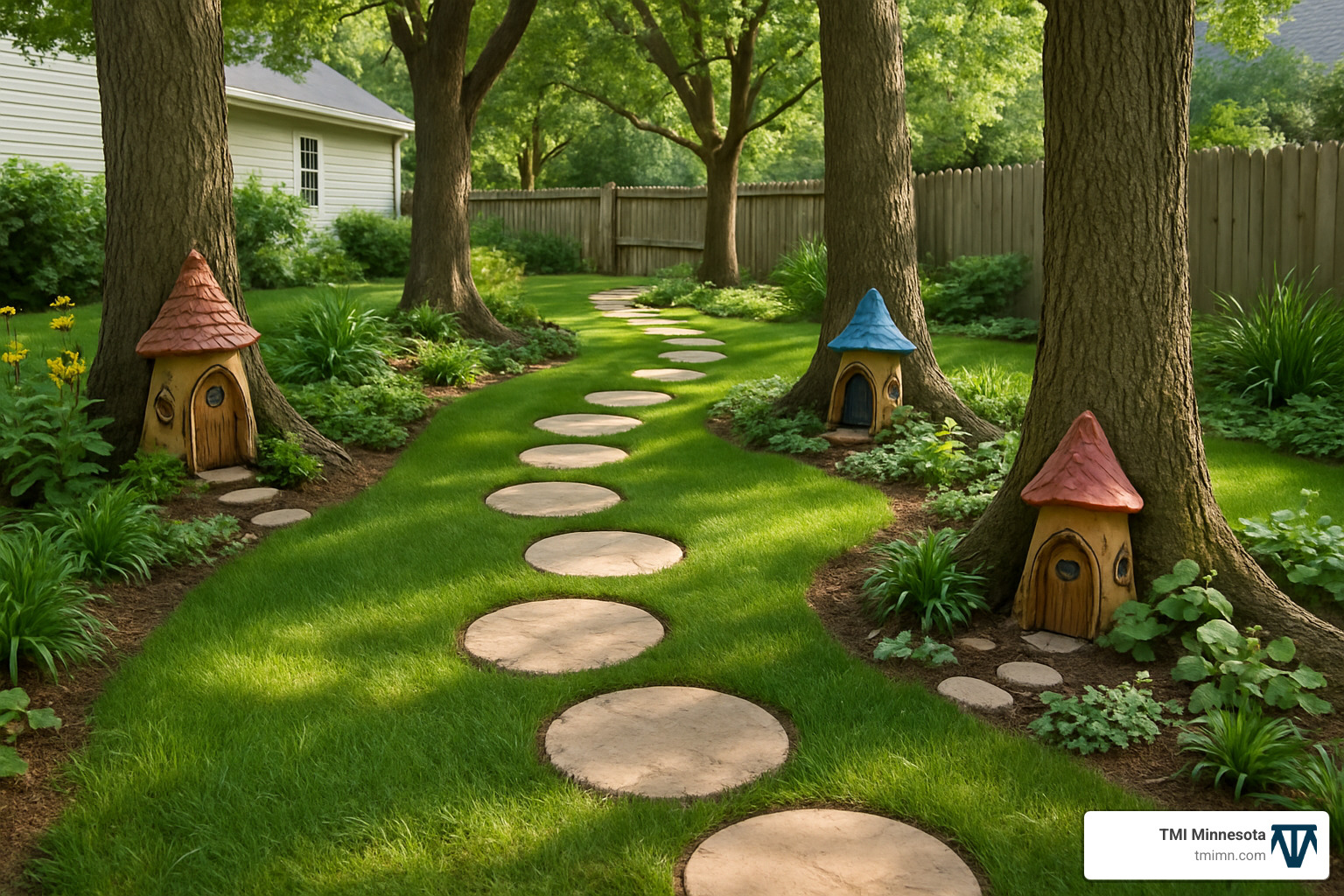
A thoughtfully designed nature garden doesn’t need to be elaborate. Start with a winding path of stepping stones that leads to secret spots throughout your yard. One Minneapolis family created a “fairy trail” with stepping stones leading to tiny doors installed at tree bases, changing their ordinary backyard into an enchanted journey that changes with the seasons.
Fairy houses become instant favorites as children create miniature dwellings from twigs, bark, and pebbles. These small structures spark hours of imaginative play while teaching respect for natural materials.
Including native plants does double duty – they’re typically hardier and require less maintenance while attracting butterflies, birds, and beneficial insects. Your children will delight in spotting a monarch butterfly landing on milkweed they helped plant or watching goldfinches visit native coneflowers.
“My kids now recognize more bird species than I do,” laughs one Minnesota mother whose shade trees not only provide cooling cover for play but have become living classrooms for nature observation.
Incorporating Natural Elements
Creating microhabitats throughout your yard gives children diverse play experiences. A sunny wildflower patch might sit near a shady nook with ferns and moss-covered rocks. These varied environments teach children about different ecosystems right in their backyard.
Sensory pathways engage children’s tactile development as they walk across different textures – smooth stones, crunchy wood chips, soft moss. These pathways can connect different play zones while stimulating developing minds.
Many parents find that child-tended gardens become beloved features of their natural playgrounds. “We call our sandbox area the ‘construction site’ and fill it with dump trucks and excavators,” shares one Twin Cities parent. “It’s surrounded by native plants that attract butterflies, creating a magical setting for outdoor play.”
Building simple wildlife habitats like bird houses or pollinator gardens adds another dimension to natural play. Children develop empathy and environmental stewardship as they learn to care for the creatures visiting their yard. One family created a small pond with native water plants that attracted frogs – an endless source of fascination for their young explorers.
The best nature play spaces use natural materials throughout. Untreated wood, stone, and plant materials create an authentic environment that weathers beautifully and blends with your existing landscape, unlike plastic alternatives that often look out of place and deteriorate quickly.
Seasonal Engagement
One of the greatest benefits of nature play gardens is their ever-changing character. In spring, children delight in planting activities, splashing in puddles, and watching for new growth. Summer brings water play, bug hunting trips, and harvesting edible plants from the garden.
Fall transforms your nature playground with colorful leaves for jumping in and natural treasures like acorns and pinecones for collecting. Even winter offers unique opportunities – snow forts, animal tracking in fresh snow, and winter bird feeding keep the outdoor trips going year-round.
By designing with all seasons in mind, you create a playground that offers new findies and activities throughout the year, even during Minnesota’s challenging winters.
At TMI Minnesota, we specialize in creating nature play spaces that seamlessly integrate with your existing landscape, using native plants and natural materials to create sustainable, low-maintenance play environments that benefit both children and local ecosystems. Learn more about our Backyard Oasis Designs to see how we can help transform your yard into a natural wonderland.
Inclusive Multi-Age Sports Court & Chill Zone
The best backyard playground ideas grow alongside your family, welcoming children of all ages while giving everyone a place to play together. A thoughtfully designed sports court with nearby relaxation spaces creates that perfect family-friendly balance where toddlers, teens, and parents all feel at home.
“I’ve seen families completely transform how they spend time together after adding a multi-age play space,” shares Michael, a Twin Cities landscape designer. “These areas become the heart of outdoor family life—a place where memories are made.”
Creating Flexible Play Spaces
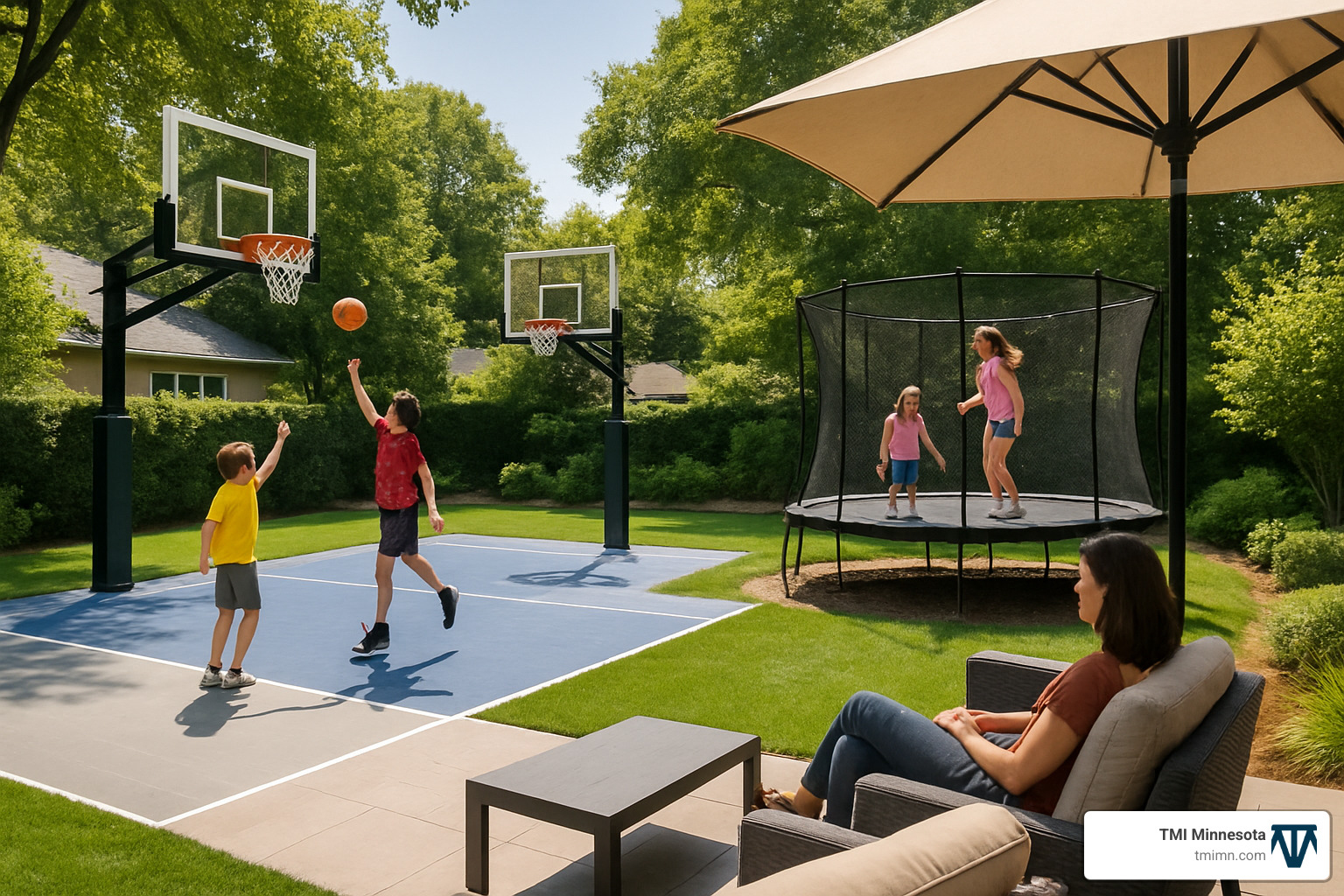
When designing a space that works for everyone, think about including elements that adapt to different abilities and interests. A synthetic turf field provides an all-weather surface that stays playable after rain and requires minimal maintenance. Adding adjustable equipment like basketball hoops that can be raised or lowered makes the space work for the shortest and tallest family members.
Chalk-friendly surfaces give kids the freedom to create their own games and boundaries, allowing the space to transform based on their imaginations. Meanwhile, comfortable seating areas let adults supervise comfortably or join in the fun when invited.
Don’t forget about shade! Strategic shade sails or pergolas protect both active players and relaxing spectators from Minnesota’s summer sun. For families with members who use mobility devices, smooth, firm pathways ensure everyone can access the fun.
Many Twin Cities families are even creating designated pet-friendly zones where four-legged family members can safely play without disrupting sports games or damaging equipment.
Growing with Your Family
The secret to creating a backyard playground that lasts through childhood and beyond is adaptability. Installing modular components that can be reconfigured gives you flexibility as your kids grow and their interests change. Smart families plan for equipment swaps from the beginning—designing with the understanding that today’s toddler slide might become tomorrow’s teen climbing wall.
“We installed our basketball hoop on an adjustable post,” explains Sarah, a Minneapolis mom of three. “It started at 6 feet for our kindergartner and now stands at regulation height for our high schooler—same equipment, completely different play experience.”
Consider features with conversion potential, like play areas that can easily transition into teen hangout spaces with minimal changes. Including adult-friendly elements from the start ensures the space remains relevant even as children grow older.
One creative Twin Cities family added solar-powered motion sensor lights to their sports court, extending playtime into evening hours. “It’s become the neighborhood gathering spot,” they shared. “Our teenagers and their friends shoot hoops until dinner time, and sometimes we adults take over for our own games after the kids are in bed.”
Balancing Active and Passive Zones
Every successful playground balances high-energy play with opportunities for quieter activities. Tucked-away reading nooks with comfortable seating provide peaceful retreats for kids who need a break from active play. Weather-resistant art stations encourage creative expression outdoors, while conversation pits with circular seating naturally foster face-to-face interaction.
Hammocks or swing seats offer gentle movement for sensory seekers who prefer calmer experiences. Nature observation areas—perhaps with a bird feeder or butterfly-attracting plants—create quiet zones for watching wildlife.
“My youngest loves basketball, but my middle child prefers quieter activities,” says Tom, a St. Paul father. “Our chill zone with built-in benches and a small table for drawing gives her somewhere to be while her brother plays. They’re doing different things but still spending time together outside.”
This thoughtful balance ensures that children with varying energy levels, sensory needs, and play preferences all find spaces where they feel comfortable and engaged. At TMI Minnesota, we excel at creating integrated backyard designs where play areas flow naturally into adult entertaining spaces, allowing everyone to enjoy the outdoors together while maintaining the overall beauty of your landscape.
Frequently Asked Questions about Backyard Playground Ideas
How deep should safety surfacing be?
Safety surfacing depth isn’t just a checkbox item—it’s your child’s invisible safety net. The right depth creates that crucial cushion that can transform a potential emergency room visit into a “brush it off and keep playing” moment.
For equipment under 4 feet tall, you’ll want at least 6 inches of loose-fill material like wood chips or rubber mulch. When your play structure reaches the 4-8 foot range, bump that up to 9-12 inches to accommodate those higher falls.
If you’re creating a space for the littlest triprs under age 6, ensure at least 4 inches of rubber mulch. For the older, higher-climbing crowd, 6 inches becomes your minimum. And don’t forget those high-traffic landing zones—areas beneath swings and at the bottom of slides need 25-50% more material since they take the most impact.
“In the United States, over 600 kids a day end up in emergency rooms due to playground injuries, and over 70% are related to falls,” shares Michael Baldwin, a Certified Playground Safety Inspector. “Proper surfacing is your first line of defense.”
For families considering unitary surfacing options like poured-in-place rubber or artificial turf with padding, professional installation is essential. These surfaces require precise engineering to meet impact standards specific to your equipment heights—not something you want to guess at.
Can I install a backyard playground myself or hire pros?
The DIY-or-pro decision really comes down to an honest assessment of your skills, tools, available time (be realistic!), and how complex your backyard playground ideas truly are.
Certain projects naturally lend themselves to weekend warrior status. Sandboxes, simple balance beams, and basic swing sets from kits can be satisfying DIY achievements. Natural play features using logs and boulders or ground-level sensory stations also fall into the “you’ve got this” category for most homeowners with basic tools.
However, some elements deserve professional attention. In-ground trampoline installation requires precise excavation and drainage. Poured rubber surfacing needs specialized equipment and expertise to cure properly. Complex multi-level structures, anything involving electrical work like lighting, or large playsets requiring concrete footings benefit from experienced hands.
April, who built her own backyard playground, offers this practical wisdom: “I’m not a professional builder. If you’re unsure about structural integrity or safety features, it’s worth consulting with professionals.”
Many families find the sweet spot with a hybrid approach. At TMI Minnesota, we often guide homeowners through which elements they can confidently tackle themselves while we handle the more technical components that ensure long-term safety and durability.
How do I keep the play area clean and pest-free?
A clean playground isn’t just about aesthetics—it’s about health, safety, and making sure your beautiful backyard space remains inviting year after year.
Sandboxes require special attention as they can quickly become neighborhood cat litter boxes if left uncovered. Invest in a tight-fitting cover that’s easy to remove and replace (otherwise, you’ll be tempted to skip it). Plan to replace sand entirely every 1-2 years, and consider sprinkling a bit of cinnamon throughout as a natural ant deterrent. One simple rule makes a big difference: keep food away from play areas to avoid creating a wildlife buffet.
“Sandboxes are indeed gross if you don’t have one with a cover,” one practical parent notes. “Baby powder by the back door helps remove sand from children after sandbox play—a simple trick that saves your floors and your sanity.”
For the broader playground area, weekly maintenance prevents bigger headaches. Rake loose-fill surfacing to prevent compaction and remove fallen debris. Keep vegetation trimmed back from play structures to reduce insect habitats. Cedar mulch offers a natural bonus as it naturally repels many insects without harsh chemicals.
Don’t overlook drainage—standing water becomes both a safety hazard and a mosquito breeding ground. Monthly cleaning of plastic and metal components with mild soap and water prevents grime buildup and extends equipment life.
Here in Minnesota, our unique seasonal challenges require thoughtful pest management. At TMI Minnesota, we design with these local conditions in mind, incorporating natural deterrents and proper drainage from the start, minimizing the need for chemical interventions while keeping your play space welcoming for children rather than critters.
Conclusion
Changing your backyard into a playground paradise isn’t just about installing equipment—it’s about creating a magical space where childhood memories take root. Whether you’ve fallen in love with a classic swing-and-slide setup, been enchanted by a nature-inspired sensory garden, or gotten excited about an active sports zone, thoughtful planning that balances safety with fun makes all the difference.
The evidence is clear: kids who have regular access to quality outdoor play spaces grow up healthier in body and mind. They develop stronger social skills as they negotiate turns on the swing or collaborate on backyard projects. They build confidence as they master new physical challenges. And perhaps most importantly, they forge a deeper connection to the natural world that will stay with them for life.
Your investment in backyard playground ideas pays extraordinary dividends—not just in your children’s development, but in creating the backdrop for countless “remember when” stories that your family will share for decades to come.
Here in the Twin Cities, we at TMI Minnesota understand that every family’s needs and every yard’s potential are unique. Our team specializes in creating custom outdoor play spaces that blend seamlessly with your overall landscape design. We use leading-edge products and sustainable practices to create backyard playgrounds that stand up to both Minnesota’s challenging seasons and the boundless energy of enthusiastic children.
We walk alongside you from the moment inspiration strikes to the day your children race out to enjoy their new play space. Whether you’re envisioning a complete professional installation or seeking expert guidance for your DIY projects, our team brings the perfect balance of creativity and practical know-how to help you create an outdoor space your whole family will love.
Ready to bring your backyard playground ideas to life? Our TMI Minnesota team is just a conversation away. We’d love to help you create a play space that grows with your family, adapts to your children’s changing interests, and transforms ordinary afternoons into extraordinary trips.
Let’s create something magical together. Your backyard’s potential is waiting to be open uped, and your children’s perfect playground is just beginning to take shape.