
Creating Your Private Outdoor Sanctuary
Looking for backyard privacy solutions? Here are the most effective options:
- Fences – Traditional wood or vinyl barriers (6-foot height standard)
- Living screens – Hedges, trees, or bamboo for natural coverage
- Privacy screens – Decorative panels that filter views while allowing airflow
- Pergolas and structures – Overhead coverage with optional side screening
- Shade sails and curtains – Flexible, affordable options for temporary privacy
According to a 2023 Houzz survey, 63% of homeowners who renovated their outdoor spaces cited privacy as a top priority. This makes perfect sense – your backyard should be a tranquil escape where you can relax without feeling exposed to neighbors or passersby.
Creating privacy in your outdoor space isn’t just about blocking unwanted views. It’s about crafting a personal retreat that feels secure and intimate, whether you’re hosting a family barbecue or enjoying a quiet morning with coffee.
The right privacy solution transforms how you experience your backyard, turning an open, vulnerable area into a cozy outdoor room that invites you to linger longer.
Many homeowners struggle with finding the perfect balance – creating privacy without making their yard feel closed in or blocking precious natural light. Others face challenges with limited space, budget constraints, or navigating local regulations that restrict fence heights and structures.
I’m Christopher Deanovic, Operations Leader at Task Masters, where I’ve helped countless Minnesota homeowners transform their exposed backyards into private retreats using innovative backyard privacy solutions that balance aesthetics with functionality.
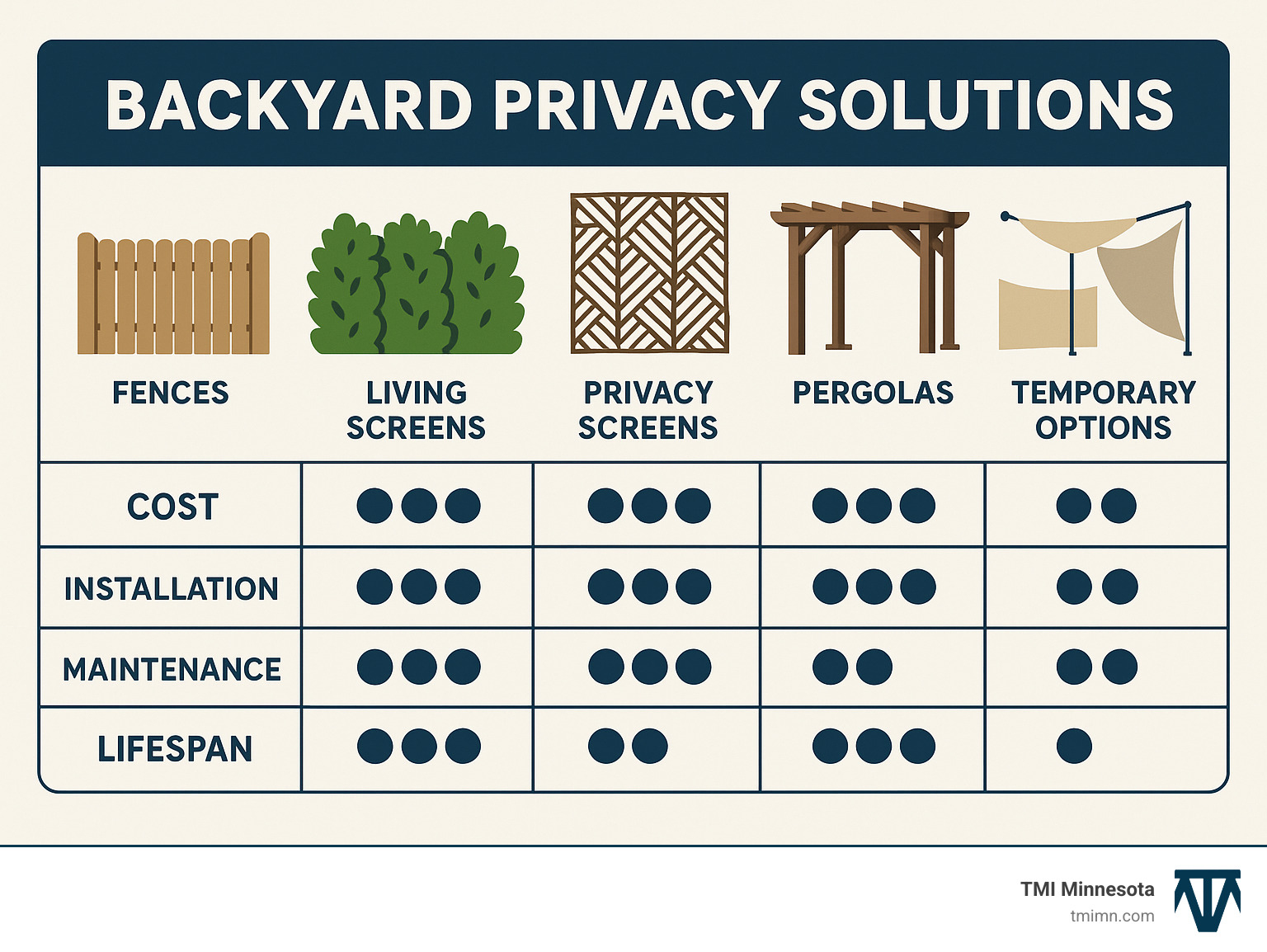
Simple guide to backyard privacy solutions terms:
– landscape design for small yards
– outdoor lighting installations
– creative outdoor play spaces
Assess Your Outdoor Privacy Needs
Before jumping into specific backyard privacy solutions, take time to understand exactly what privacy challenges your yard faces. Every outdoor space has its own unique exposure points and concerns.
“Privacy isn’t just about blocking views,” explains landscape architect Stefano Marinaz. “It’s about creating a sense of enclosure that makes you feel comfortable in your own space.”
Start by spending time in your yard at different parts of the day. Notice where you feel exposed and which areas feel overlooked. Pay attention to these key factors:
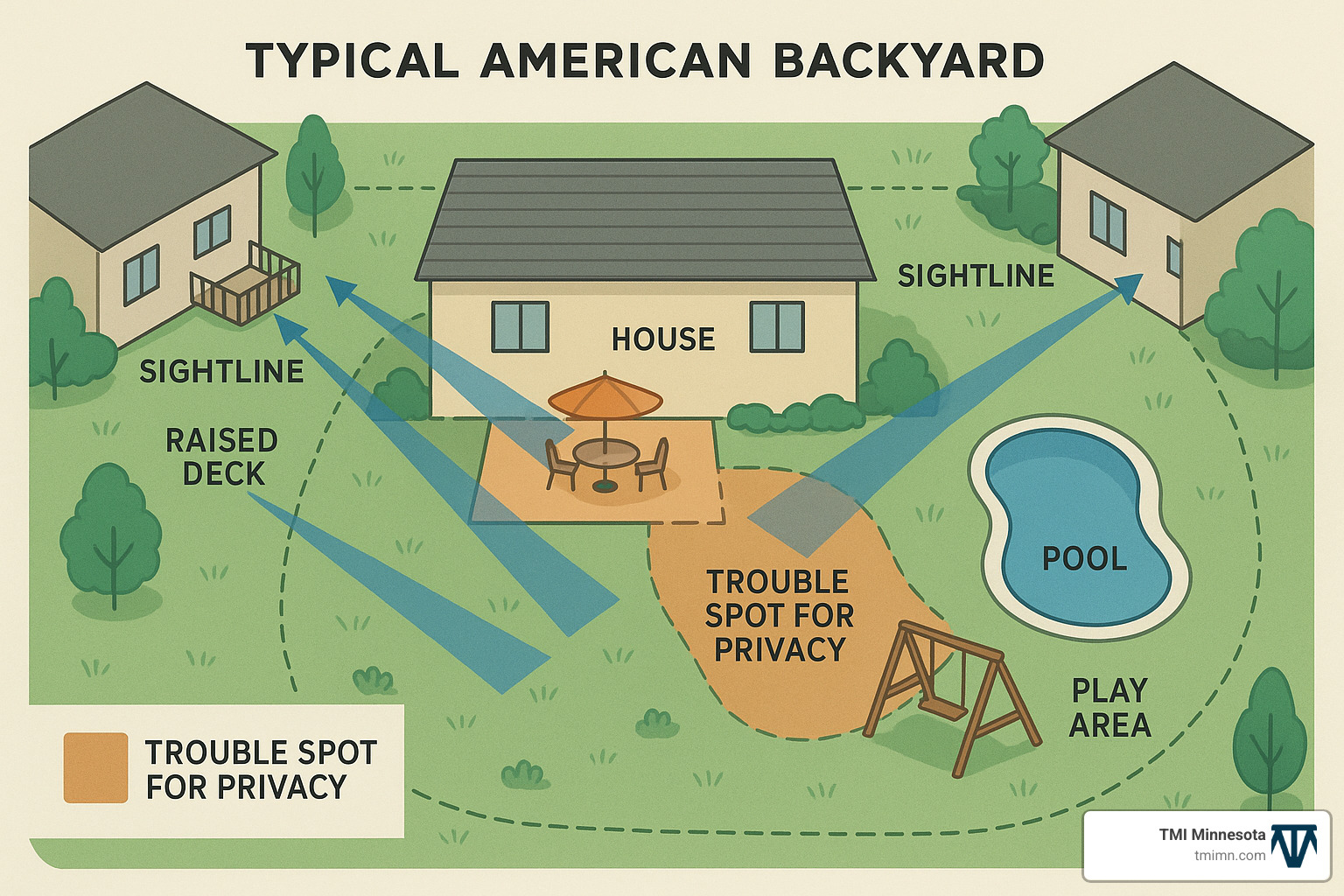
When assessing your space, consider viewpoints where neighbors can see into your yard and sightlines that create direct lines of vision from surrounding properties. Don’t forget about noise hotspots that bring unwanted sounds from streets or neighbors into your sanctuary. If your yard has slope challenges, higher properties may have downward views into your space. Finding the right sun & shade balance ensures your privacy solutions won’t block desired sunlight, and understanding your wind exposure prevents creating wind tunnels or blocking cooling breezes.
A Twin Cities homeowner we worked with finded that while her 6-foot fence provided ground-level privacy, her neighbor’s second-story windows had a clear view of her entire patio. This required a targeted solution combining tall arborvitae plantings with a pergola cover.
Mapping Trouble Spots
Creating a simple privacy map of your yard helps visualize problem areas. Walk your property perimeter and make note of privacy vulnerabilities.
Pay special attention to neighbor windows that look directly into your space. Also note any raised decks or liftd areas that peer over existing fences. Be sure to identify pool & patio zones where you spend most of your time, as these areas typically need the most privacy. Don’t forget about children’s play areas that might benefit from additional screening for both privacy and safety.
One Reddit user shared: “We’ve owned our home for five years now and had some people move in next door that track everything… their deck sits above the 6 ft mark and they can see everything going on in our yard.”
This common problem requires thinking beyond standard fence heights. For liftd viewpoints, consider strategically placed canopy trees or tall columnar evergreens that grow above fence height. Pergolas with retractable canopies provide overhead protection, while shade sails positioned at angles can block downward views effectively.
Setting Goals & Budget
According to the National Association of Realtors, adding a privacy fence can recover up to 50% of its cost in home value at resale. While this is encouraging, it’s important to balance investment with practical considerations.
The choice between DIY vs. professional installation significantly impacts your budget, as labor typically accounts for 50-70% of fence installation costs. Your timeline matters too—structures provide immediate privacy while plants need time to grow. When planning, account for material costs (wood fencing ranges from $15-30 per linear foot for materials alone) and ongoing maintenance requirements for your chosen solution.
When setting your budget, consider these average costs for popular backyard privacy solutions:
Wood privacy fences typically run $40-$70 per linear foot installed, while vinyl privacy fences cost $25-$40 per linear foot installed. If you prefer a natural approach, living hedges average $15-$45 per plant plus installation costs. For overhead privacy, pergolas range from $2,500-$10,000+ depending on size and materials. Decorative privacy screens can be more affordable at $100-$500 per panel plus installation.
“We always recommend allocating at least 10% of your budget for unexpected costs,” advises Kim Thibodeau, a landscape designer. “Especially when dealing with sloped yards or challenging soil conditions.”
At TMI Minnesota, we’ve found that the most successful privacy projects start with a thorough assessment of needs before any purchasing decisions are made. This upfront planning helps avoid costly mistakes and ensures your backyard privacy solutions truly improve your outdoor living experience.
Choosing the Right Backyard Privacy Solutions for Your Space
Finding the perfect backyard privacy solutions is a bit like putting together a puzzle – you need pieces that fit your space, style, and practical needs. The good news? You don’t have to choose just one approach. In fact, the most inviting private yards often combine several strategies to create layers of privacy that feel natural rather than fortress-like.
Hardscape Heroes: Fences, Walls & Pergolas
When you need privacy right now (not three years from now when plants mature), hardscape elements deliver instant results while adding structure and style to your yard.
Wood and vinyl fences remain the classic go-to for a reason. As landscape designer Stefano Marinaz puts it, “Hardwood lasts longer; it’s like iron…more durable and nicer.” Cedar varieties like Port Orford and Alaskan Yellow resist decay and insects beautifully, making them worth the investment.
Most homeowners opt for the standard 6-foot fence height, though local rules may vary. For a modern look, consider horizontal slats, while vertical boards offer timeless appeal. A clever trick? Add a 12-18 inch lattice topper for extra height without making your yard feel closed in. And don’t forget to leave about 2 inches of clearance at the bottom – this allows for proper drainage and gives small wildlife a pathway through your neighborhood.
It’s no wonder a 2024 report from The Spruce found privacy fences among the top three most requested backyard upgrades, with over 70% of homeowners considering them essential for outdoor comfort.
For something with more permanence, stone walls create undeniable privacy with the bonus of dampening neighborhood noise. “Nothing creates privacy quite like a stone wall,” according to Martha Stewart Living. Beyond traditional stone, modern options include eye-catching gabion walls (those metal cages filled with stones), sleek concrete or stucco walls, or even combination approaches. One Twin Cities client of ours loves the 3-foot stone retaining wall topped with a 4-foot decorative metal fence we installed – it solved their privacy needs while becoming the yard’s architectural focal point.
Pergolas offer a different kind of privacy – overhead coverage that’s particularly effective against those annoying second-story viewpoints from neighboring homes. They define outdoor “rooms” while still maintaining an open, airy feel.
More info about Custom Pergola Builders
To improve your pergola’s privacy factor, consider adding retractable canopies, training climbing vines like wisteria or clematis, hanging plants in baskets, or even side curtains that can be drawn when needed. Don’t forget integrated lighting – privacy should work day and night!

For modern homes, decorative panels offer a fresh alternative to traditional fences. These laser-cut screens allow filtered light while blocking direct views, often in powder-coated aluminum that resists Minnesota’s weather extremes. As one landscape architect told Martha Stewart Living, “These panels not only soften the garden’s boundaries but also provide essential privacy and a quiet escape from urban surroundings.”
Living Screens: Hedges, Trees & Vertical Gardens
Nature provides some of the most beautiful privacy solutions, and they get better with time. According to a 2022 Extra Space Storage survey, 58% of homeowners use landscaping as their primary privacy method – and for good reason.
Arborvitae and other evergreens offer year-round screening that softens your yard’s boundaries. Emerald Green arborvitae grows 12-15 feet tall while staying just 3-4 feet wide, perfect for narrow spaces between homes. If you have more room, Leyland cypress soars to impressive heights but needs about 25 feet of width at maturity. For something different, Nellie R Stevens holly provides dense foliage plus cheery red berries in winter, while Skip laurel offers glossy leaves in a compact 10-18 foot package.
As one garden forum expert advised, “Smaragd (Emerald Green) arborvitae grows to 12–15 feet tall, stays narrow, and requires minimal trimming.” This makes it ideal for tight spaces where you still need substantial privacy.
Bamboo creates a lush, exotic screen that grows incredibly fast – sometimes too fast! If you’re considering bamboo, choose clumping varieties rather than running types to prevent it from taking over your yard. For running bamboo, always install root barriers, as these ambitious plants can spread more than 30 feet underground. Container planting offers even better control, and be sure to select cold-hardy varieties for Minnesota’s challenging climate.
Don’t overlook deciduous options just because they lose leaves in winter. “Columnar European hornbeam provides dense privacy even when leafless in winter,” notes one garden expert. These neat trees reach 30-40 feet tall but stay a manageable 10-15 feet wide. Serviceberry, ninebark, and viburnum also make excellent privacy plantings with the bonus of seasonal flowers, berries, or fall color.
When space is tight, look up! Vertical gardens maximize privacy in limited areas by using walls and fences as growing space. Attach trellis panels to existing fences, install modular living wall systems, or train climbing plants on simple wire supports. These living walls don’t just provide privacy – they absorb sound too.
Scientific research on noise-barrier plants
Hybrid Magic: Layered Green & Structure Combos
The most inviting private yards combine structures with plantings for depth and interest. This layered approach creates privacy that feels natural rather than forced.
Privacy planter boxes pull double duty – they raise plants higher for better screening while often providing built-in seating. Many are mobile, making them perfect for renters or those who like to rearrange their outdoor spaces seasonally. As one DIY enthusiast shared, “I built a privacy planter for a fraction of the cost of buying pre-made options. It’s simple, uses standard cedar fence pickets, and creates both a planter and a privacy screen in one structure.”
Lattice with vines offers immediate screening while supporting beautiful climbing plants. Try installing lattice toppers on existing fences or creating freestanding screens, then plant fast-growing vines like clematis, honeysuckle, or ivy. Add string lights, and you’ve got evening ambiance along with your privacy.
For defined outdoor spaces, cabanas create intimate retreats while blocking unwanted views. Martha Stewart Living highlighted this approach, noting that using “a cabana as a standalone privacy structure distinct from fences or hedges” creates a destination within your yard rather than just a barrier around it.
Privacy planters offer flexible screening that can evolve with your needs. “A privacy planter provides a DIY option combining a planter and privacy screen in one project,” explains a popular DIY blogger. These versatile structures can be rearranged as needed, allow for seasonal plantings, and work beautifully on decks and patios where in-ground planting isn’t possible.
For complete enclosure, trellis-pergola combinations create outdoor rooms that feel private from all angles. Attach trellis panels between pergola posts, train different vines on both vertical and horizontal surfaces, and add retractable side curtains for adjustable privacy. With thoughtful lighting, these spaces become magical retreats for evening use.
By mixing and matching these backyard privacy solutions, you’ll create a space that feels like a natural extension of your home – private, personal, and perfectly suited to your lifestyle.
DIY and Budget-Friendly Backyard Privacy Solutions
Who says creating privacy has to cost a fortune? With a little creativity and weekend warrior spirit, you can implement effective backyard privacy solutions without emptying your wallet. I’ve seen homeowners transform exposed backyards into cozy retreats using materials from the hardware store and a few hours of effort.

Weekend Project: $100 Curtain Screen
I recently spoke with a homeowner who solved her privacy dilemma with an ingenious $100 solution that anyone can tackle in a weekend.
“Our neighborhood sits on a hill, so we’ve lived with a huge house staring directly into our backyard for years,” she told me with a laugh. “I finally had enough and came up with a simple fix that transformed our outdoor experience!”
Her budget-friendly curtain screen used just four materials:
– Three 8-foot 4×4 posts ($24)
– Canvas drop cloths as curtains ($30)
– Two sturdy curtain rods ($28)
– LED post caps for evening ambiance ($12)
The installation was straightforward – she called utility companies before digging (always a must!), marked her posts at 13 inches for proper depth, and used a level to ensure everything stood straight. A clever touch was adding grommets to the bottom corners of the drop cloths to anchor them against Minnesota’s summer breezes.
“I couldn’t be happier with how it turned out,” she shared. “The drop cloths have this lovely, natural texture that looks surprisingly neat outdoors. And when evening comes, those LED caps create the most beautiful soft glow around our new private space.”
Thrifty Bamboo Panel Build
Another homeowner I connected with created stunning custom bamboo privacy screens for her deck after being shocked by commercial prices.
“I wanted something stylish but couldn’t justify spending hundreds on pre-made panels,” she explained. “So I designed my own bamboo screens that graduated from 6 feet tall down to 3 feet, creating this beautiful curved privacy line that follows our deck edge.”
Her approach was brilliantly simple. She used inexpensive bamboo fencing cut to custom heights, thin wood strips for framing, and exterior-grade cup hooks that allowed for easy seasonal removal. The secret to her success? Building each frame directly in place rather than struggling to assemble it on the ground first.
“After a full year of Minnesota weather, they’ve held up beautifully – no mold, no warping,” she noted proudly. “Lattice would have cost over $200, and honestly, I find these bamboo screens far more attractive. They give our deck this peaceful, slightly exotic feel that everyone comments on.”
Renters’ Tricks for Temporary Backyard Privacy Solutions
Renters face special challenges when creating privacy since permanent installations aren’t an option. As someone who rented for years before buying, I’ve collected some clever temporary solutions that leave no trace when you move.
Freestanding Screens provide instant privacy without damaging property. One DIY enthusiast created a gorgeous screen using dimensional lumber and lath boards arranged in a graduated pattern. The key to stability was joining the feet at the back with a solid 2×4, creating a self-supporting structure that could withstand summer winds.
Container Trees offer natural screening that moves with you. I’ve seen amazing changes using large planters with fast-growing arborvitae or columnar junipers positioned strategically along deck edges. Even ornamental grasses in tall containers create seasonal privacy with beautiful movement. One gardening friend places potted bamboo in rectangular planters, creating a modern, zen-like privacy wall she can reconfigure whenever needed.
Retractable Shades provide privacy exactly when and where you want it. A particularly clever solution I spotted on a rental patio used rectangular umbrellas tilted toward the overlooking apartment building. This created an adjustable privacy shield that could be opened or closed depending on who was home next door.
For more inspiration, check out our collection of Backyard Privacy Screens that work beautifully for both homeowners and renters alike.
Creating privacy doesn’t require permanent changes or professional installation. With a bit of imagination and a Saturday afternoon, you can transform your exposed outdoor space into a secluded retreat that feels like it’s miles from prying eyes.
Navigating Regulations, Climate & Maintenance
Creating your private backyard oasis involves more than just selecting the right backyard privacy solutions. You’ll need to steer local regulations, consider Minnesota’s unique climate challenges, and plan for ongoing maintenance to keep your sanctuary looking its best for years to come.

Understanding Local Rules Before You Build
I can’t tell you how many times I’ve seen homeowners invest in beautiful privacy structures only to face the heartbreak of having to modify or remove them due to overlooked regulations. Before installing any permanent privacy structure, take time to research your local rules.
Most municipalities cap fence height at 6 feet in side and rear yards, with stricter limits (often just 3-4 feet) for front yards. If you live in an HOA community, expect even more specific requirements about materials, colors, and designs that maintain neighborhood aesthetics.
“I learned the hard way that even adding a simple pergola required a building permit,” shared one Minneapolis homeowner. “The inspector actually stopped by during construction and we had to pause everything while scrambling to get approval.”
Don’t forget about setbacks, which typically require privacy structures to be positioned a certain distance from property lines. This is especially important when considering where to place that beautiful new fence or living hedge.
One clever homeowner I worked with found a wonderful workaround for height restrictions: “Adding lattice atop my existing fence gave us the extra privacy we needed without violating the 6-foot height limit.” That’s because many jurisdictions don’t count decorative lattice extensions (typically 12-18 inches) toward the official fence height measurement.
If you’re eyeing a variance to exceed standard limits, prepare for a more involved process. You’ll likely need to submit formal drawings, pay additional fees, and potentially attend a hearing where neighbors can voice any concerns.
Maintenance Showdown: Living Screens vs. Hardscape
When choosing between living screens and hardscape solutions, consider the ongoing care each requires. There’s no truly maintenance-free option, but some choices are certainly less demanding than others.
Living screens like arborvitae hedges create stunning natural barriers, but they need regular watering during establishment (especially through our dry Minnesota summers), seasonal pruning to maintain their shape, and occasional fertilizing to keep them lush and healthy. The upside? They improve with age, growing more effective and beautiful as years pass.
“My arborvitae hedge looked sparse and wimpy for the first two years,” laughed one St. Paul homeowner. “Now it’s a gorgeous living wall that birds nest in and provides complete privacy from my neighbor’s second-story windows.”
Hardscape solutions like fences and pergolas offer immediate privacy but come with their own maintenance needs. Wood fences require staining or sealing every 2-3 years to prevent weathering and rot in our harsh climate. Even “maintenance-free” vinyl fences need occasional cleaning to prevent algae buildup in shady areas.
For Minnesota’s extreme temperature swings, material selection is absolutely crucial. Choose hardy plant species rated for Zone 3 or 4 that can withstand temperatures down to -50°F without damage. White pines, certain arborvitae varieties like ‘Techny’ and ‘Nigra’, and sturdy Ninebark are particularly resilient choices for our northern climate.
Metal components in privacy structures should be checked annually for rust or loose connections, especially after winter’s freeze-thaw cycles. Fabric elements like shade sails or privacy curtains typically need replacement every 3-5 years due to UV damage and weather exposure.
Extra Benefits: Shade, Noise & Wind Protection
Well-designed backyard privacy solutions deliver benefits far beyond just blocking unwanted views. They can transform your entire outdoor experience by addressing other environmental challenges.
Did you know that installing a properly designed privacy fence or screen can reduce noise levels in your backyard by up to 10 decibels? That’s enough to make the difference between enjoying a peaceful conversation and straining to hear over neighborhood noise. For maximum sound dampening, opt for solid rather than slatted fences, or consider mass-loaded vinyl barriers hidden behind more decorative screens.
“We installed a living wall along our property line facing a busy street,” shared one Edina homeowner. “Not only did it create privacy, but the dense plantings actually reduced traffic noise enough that we can now enjoy dinner conversations on our patio without shouting.”
Privacy structures can also create favorable microclimates in your yard. A pergola with adjustable covers provides welcome shade during our hot summer days while allowing you to open things up for stargazing on cool evenings. Solid barriers strategically placed can block those biting winter winds that make Minnesota outdoor living challenging.
Wind protection is particularly valuable in our open prairie landscapes. Rather than creating a single solid wall (which can actually create turbulence on the leeward side), consider staggered plantings that diffuse wind more effectively. Semi-permeable screens with 30-50% solid material reduce wind speed without creating the vacuum effect that can damage plants or send patio furniture flying.
Hoerr Schaudt green buffers offers excellent examples of how strategic plantings can create comfortable outdoor rooms even in challenging climates like ours.
Bamboo hedges have become increasingly popular in Minnesota landscapes not just for their exotic beauty, but for their effectiveness as noise barriers. Their dense foliage and flexible stems actually absorb sound waves while providing neat screening. Just be sure to select clumping varieties appropriate for our climate zone to avoid unwanted spreading.
By thoughtfully addressing regulations, maintenance needs, and climate considerations from the start, your backyard privacy solutions will provide years of enjoyment with minimal headaches along the way.
Frequently Asked Questions About Backyard Privacy Solutions
What are the fastest-growing plants for privacy?
Looking for quick results? Mother Nature can actually work surprisingly fast when you choose the right plants.
Leyland Cypress trees are privacy superstars, shooting up 3-4 feet each year until they reach impressive heights of 60+ feet. If you’re looking for something a bit more manageable, Green Giant Arborvitae grows almost as quickly (3-5 feet annually) but tops out at a more reasonable 30-40 feet.
For truly remarkable growth, nothing beats bamboo – some varieties can grow up to 3 feet in a single week during peak growing season! Talk about instant gratification. Privet hedges are another reliable option, adding 2-3 feet per year once established, while Hybrid Poplars can stretch upward 5-8 feet annually in ideal conditions.
“Fast-growing privacy trees like arborvitae and bamboo can provide a living privacy screen in as little as 2-3 years,” according to landscape experts I’ve worked with.
A smart approach is to combine these quick growers with temporary backyard privacy solutions like trellises or screens. This gives you immediate privacy while your permanent green screen matures – the best of both worlds!
How can I increase privacy without losing natural light?
This is the classic privacy dilemma – how do you block unwanted views without creating a dark, cave-like yard? The good news is you don’t have to choose between privacy and sunshine.
Try incorporating filtered privacy elements like decorative panels with artistic cutouts that block direct sightlines while allowing light to dance through. Strategic placement is also key – use solid privacy screens only where you absolutely need them, not across your entire perimeter.
Varying your privacy heights works wonders too. Keep elements taller where neighbors can see in directly, but lower in areas where you just need basic screening. This creates a more natural look while maximizing light.
Materials matter enormously. Consider using frosted glass or polycarbonate panels that diffuse light beautifully while obscuring views. One client of mine installed mirrored elements that cleverly bounced light into previously shaded corners while completely blocking the neighbor’s view.
“Adding lattice or shade cloth extensions to the top of the existing fence” provides additional height without completely blocking light, as one DIY expert pointed out to me recently.
A landscape designer I collaborate with offered this creative tip: “Shade sails serve dual functions of providing shade and blocking overhead views from raised decks.” These can be angled strategically to block specific sightlines while welcoming sunshine from other directions.
Do I need a permit to build a privacy fence?
In most places, yes – and skipping this step can lead to headaches down the road.
Most cities and towns require permits for fences over a certain height (typically 6 feet). The cost varies widely, from as little as $20 to $200+ depending on where you live. When applying, you’ll generally need to provide property surveys and detailed plans of what you intend to build.
Processing times vary tremendously – some municipalities offer same-day approval, while others might keep you waiting several weeks. And if you live in an HOA community, you’ll likely need their blessing before even approaching the city.
“Verify municipal fence and planting regulations prior to any modifications,” advises a wise forum contributor. This simple step can save significant headaches and potential removal costs if you build something that doesn’t meet code.
Here’s an interesting loophole worth exploring: living fences (hedges) often face different regulations than constructed fences. “Some cities allow unlimited hedge height but regulate planted hedges separately from fences,” notes a landscape designer I consulted. This creates an opportunity for taller privacy screens where fence height is restricted by local ordinances.
When in doubt, a quick call to your local building department can clarify exactly what you need before starting your backyard privacy solutions project.
Conclusion
Creating privacy in your backyard isn’t just about blocking nosy neighbors—it’s about crafting a personal sanctuary where you can truly unwind and be yourself. Whether you’ve fallen in love with classic wood fencing, living green screens, or creative hybrid solutions, the right backyard privacy solutions completely transform how you experience your outdoor space.
Throughout this guide, we’ve explored everything from weekend DIY projects costing less than $100 to comprehensive professional installations that can add significant value to your home. The beauty of privacy design is finding that perfect balance between immediate results, visual appeal, practical maintenance, and your available budget.
At TMI Minnesota, we’ve seen how the right privacy elements can turn an exposed, uncomfortable yard into a cozy retreat that homeowners actually use. Our team understands Minnesota’s unique climate challenges—from brutal winters to humid summers—and can help you steer local regulations while designing privacy solutions that complement your home’s architecture and lifestyle.
I’ve found that the most successful backyards rarely rely on just one privacy strategy. The magic happens when elements work together—perhaps a partial fence with strategic evergreen plantings, or a pergola draped with flowering vines and outdoor curtains. These layered approaches create depth and interest while providing the seclusion you crave.
Privacy design is deeply personal. What works for your neighbor might not be right for your space, your maintenance tolerance, or your aesthetic preferences. Take time to assess your specific needs before diving into installation.
Ready to transform your exposed backyard into a private retreat where you can truly relax? We’d love to help you explore the possibilities that would work best for your unique space.
And while you’re enhancing your outdoor privacy, why not consider other upgrades that complement your new sanctuary? Explore ForeverTurf for low-maintenance lawns that pair beautifully with privacy screens and require virtually no upkeep, giving you more time to actually enjoy your newly secluded outdoor oasis.