
Transform Your Bathroom: From Idea to Reality
Planning a bathroom remodel usually starts the same way. You save a few photos, fall in love with one dramatic tile wall, then get stuck trying to figure out what will still look good after daily showers, cleaning, toothpaste splatter, and hard water. Tile sets the mood of the room, but it also affects how the bathroom performs.
That's why the best bathroom tile remodel ideas aren't just about style. They need to work with your layout, your budget, your cleaning tolerance, and the way the room gets used every day. Bathrooms stay one of the most specified places for tile because wet rooms need surfaces that can handle repeated moisture, cleaning, and abrasion, and the category keeps evolving through new shapes, dimensions, and finishes rather than being replaced by something else, as noted in this bathroom tile inspiration overview.
This guide breaks down 10 strong options for 2026, from timeless choices to trend-forward looks that still make sense in a real home. The focus is practical. Where each idea works best, where it doesn't, what it costs to execute at a high level, and what installers wish homeowners knew before they ordered material.
If your remodel also needs to support accessibility or aging in place, this guide to remodeling for elderly safety is worth reading before final selections are locked in.
And when you're ready to stop guessing from samples and screens, the Task Masters Design Experience Center gives you a place to compare materials in person and make decisions with confidence.
Table of Contents
- 1. Large Format Tiles 12×24 or Larger
- 2. Subway Tile with Modern Twists
- 3. Natural Stone Tiles Marble Slate Granite Travertine
- 4. Hexagon and Geometric Tile Patterns
- 5. Wood-Look Porcelain Tiles
- 6. Cement and Concrete-Look Tiles
- 7. Terrazzo Tiles and Terrazzo-Look Porcelain
- 8. Mosaics and Mixed Material Tiles
- 9. Subway Tile Alternatives Brick Zellige and Handmade Tiles
- 10. Waterproof Luxury Vinyl Plank and Tile Flooring as Tile Alternative
- Top 10 Bathroom Tile Remodel Comparison
- Your Next Step Experience Your Remodel Before It's Built
1. Large Format Tiles 12×24 or Larger
You walk into a small bathroom and the room feels busy before you notice anything else. Large-format tile fixes that in many remodels because it quiets the visual field and reduces the grid of grout joints that can make a bath feel chopped up. For homeowners who want a cleaner, more architectural look, 12×24 and larger tiles are often the strongest starting point.

In our design-build work, I usually steer clients toward porcelain in this category. It holds up well, handles moisture reliably, and gives you the look of stone or concrete without the same maintenance load. Large format works especially well on shower walls, primary bath floors, and vanity feature walls where you want fewer visual breaks.
The benefit is straightforward. Less grout usually means easier cleaning and a more continuous look. The trade-off is installation tolerance. These tiles show every framing issue, low spot, and hump in the substrate, so prep work matters more here than it does with smaller tile.
Pro tip: Large-format tile rewards good prep and exposes bad prep immediately.
Where it works best
Some placements are safer than others:
- Shower walls: One of the best uses. Fewer joints, cleaner sightlines, and a more custom look.
- Main bathroom floors: Good if the floor is flat and the tile has enough slip resistance for wet traffic.
- Vanity walls: Strong choice for a modern focal point without adding a busy pattern.
- Tight shower floors: Usually not the best fit. Smaller tile conforms to slope better and gives more traction underfoot.
Finish matters too. Matte and soft-texture surfaces tend to wear better in wet areas than polished tile, especially in family bathrooms. If you want help coordinating tile with cabinetry, lighting, and wall finishes, our custom home interior design team can help you compare those materials as one package instead of making isolated choices.
Budget tier and maintenance reality
This is usually a mid-range to upper-mid-range tile decision, mostly because labor can climb fast. The tile itself may be reasonable, but handling larger pieces, planning layout lines, reducing lippage, and making clean cuts around niches, valves, and corners takes more skill and more time.
Here is the practical breakdown we give clients at Task Masters' Design Center:
- Budget tier: Mid-range to premium, depending on tile size, edge detail, and pattern matching
- Maintenance: Low to moderate, especially with porcelain and a quality grout selection
- Installation difficulty: Moderate to high, depending on flatness, room size, and tile dimensions
If the room is compact, large tile can still work well. It often makes the space feel more open, especially when the floor and shower walls share a related tone. These bathroom remodel ideas for small spaces pair well with large-format layouts when the goal is to make a small bath read cleaner and less segmented.
One last caution. I avoid polished large-format tile on bathroom floors unless the homeowner understands the slip risk and is committed to regular upkeep. It looks sharp in photos. In real daily use, a matte porcelain usually performs better.
2. Subway Tile with Modern Twists
Subway tile still works. It's survived decades of design change because it's simple, adaptable, and easy to pair with almost anything. The mistake isn't choosing subway tile. The mistake is installing it in the most predictable way possible and expecting it to feel custom.
A better approach is to change one variable. Size, grout color, finish, pattern, or orientation. That's usually enough to move it from builder-basic to intentional.
Fresh ways to use a classic
A 3×6 white ceramic still belongs in bathrooms. But so does a 2×8 in a stacked vertical pattern, a 4×12 with a handmade surface, or a 6×12 in a low-sheen finish. In a St. Paul bath with older architecture, a herringbone layout can feel appropriate. In a cleaner-lined Minneapolis home, vertical stack often feels sharper.
Good updates to consider:
- Colored grout: Light gray or medium taupe can soften maintenance headaches without making the room look harsh.
- Oversized formats: Larger subway shapes modernize the look without losing the classic reference.
- Accent-only use: Running subway tile in the shower or on one vanity wall often looks better than wrapping every wall.
At Task Masters' Design Center, this is one of the easiest categories to compare in person because finish variation matters. A flat matte white and a softly undulated glazed white read very differently once they're under lighting and next to cabinetry. For broader finish coordination, custom home interior design ideas help tie tile to the rest of the room instead of treating it as a standalone decision.
Trade-offs homeowners usually miss
Subway tile gives you lots of joints. That can be a benefit or a drawback depending on where it goes. On shower walls, the scale feels familiar and forgiving. On floors, especially in larger bathrooms, it can start to look busy unless the layout is carefully controlled.
Darker grout can hide staining better, but it also becomes part of the design. Choose it because you like the contrast, not just because you're afraid of cleaning.
If you want bathroom tile remodel ideas that won't feel dated quickly, subway is still one of the safest choices. Just update the execution.
3. Natural Stone Tiles Marble Slate Granite Travertine
You fall in love with a marble shower in the showroom. Six months after the remodel, the important question shows up. Will you still like it after hard water spots, shampoo residue, and the wrong cleaner touch the surface? That is the right way to judge natural stone.
Stone brings depth, color variation, and texture that printed surfaces still struggle to match. It also brings higher material cost, more selective installation, and ongoing maintenance. At Task Masters' Design Center, this is one of the categories I slow homeowners down on because the trade-offs are real, and they matter more in bathrooms than they do in many other rooms.
Where natural stone works best
Natural stone usually performs best in bathrooms where the design goal justifies the upkeep.
- Marble: Bright, polished, classic, and high-end. Best for primary baths, feature walls, and homeowners who will protect the finish.
- Slate: Textured, darker, and more forgiving visually. Good for floors and bathrooms that need traction and a grounded look.
- Granite: Dense and durable. Often a practical pick when you want real stone with less delicacy than marble.
- Travertine: Warm and soft-looking, with old-world character. Works well in traditional or Mediterranean-leaning bathrooms, but it needs careful sealing and cleaning.
I often recommend stone as a feature instead of a full-room finish. A shower back wall, vanity wall, or framed accent area gives you the character of stone without committing every wet surface to the same level of maintenance.
Budget and installation reality
Stone usually lands in the upper budget tiers once material, waste, sealing, and labor are included. Installation is rarely as straightforward as it looks on a sample board. Thickness can vary. Color can vary. Veining direction matters. Some stones also need more lippage control and substrate prep than homeowners expect.
A few field notes make a big difference:
- Order extra material. Natural variation means every piece is not interchangeable.
- Dry-lay the tile first. This helps control veining, shade shifts, and patchy-looking areas.
- Use the right finish for the location. Honed, brushed, or textured finishes are often a better choice than polished stone on bathroom floors.
- Confirm sealing requirements before installation starts. Some products need sealing before grouting, not after.
Poor stone installation is expensive to fix. Good planning matters more here than it does with many porcelain options.
Maintenance is the decision point
Many remodels falter when homeowners choose stone for the look, then live with it like porcelain. Bathrooms do not allow that mistake for long.
Marble and travertine can etch from acidic cleaners and common bath products. Slate can hold onto soap film if the surface is heavily textured. Travertine's pores and fill areas need attention over time. Even durable stone benefits from proper sealing and cleaning routines.
Choose natural stone because you want the character and accept the upkeep. Choose porcelain if you want the look to stay easier to manage year after year.
For busy family bathrooms, kids' baths, and showers that get used hard every day, stone is often better in a limited feature role. If the goal is marble style with less maintenance risk, marble-look porcelain is usually the smarter build decision.
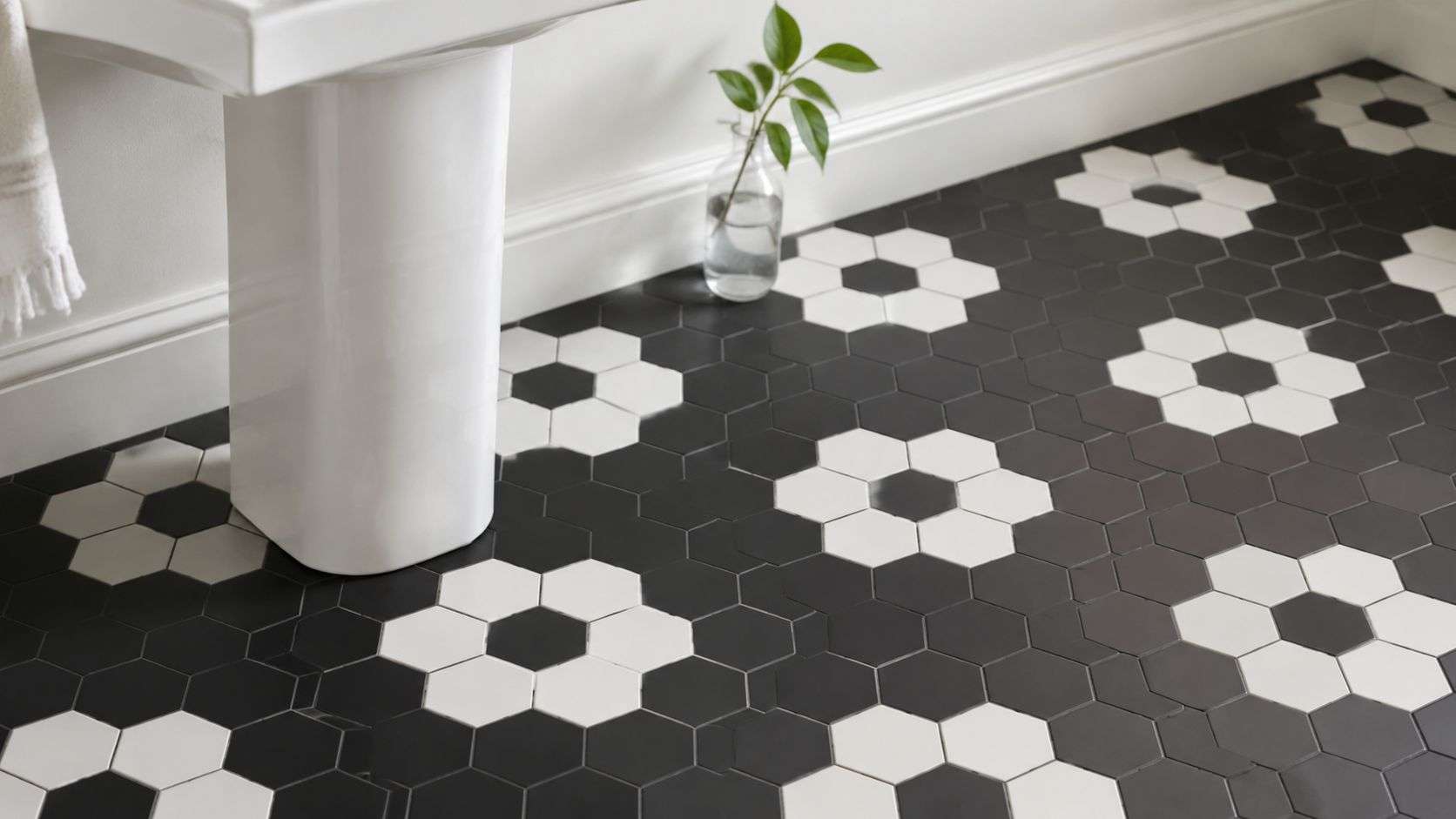
4. Hexagon and Geometric Tile Patterns
Some tile creates interest through color. Geometric tile creates it through shape. Hexagons, penny rounds, diamonds, pickets, and other geometry-driven patterns can turn a plain bathroom into a room with real personality, even in a restrained palette.
That said, shape-heavy tile needs restraint. The pattern should have a job. If everything is competing for attention, the bathroom starts feeling smaller and noisier.
Best places to use it
I like geometric tile most on shower floors, small bathroom floors, and contained accent zones. A black-and-white hex floor can look fantastic in a vintage-leaning bath. Penny rounds can give a shower pan grip and texture. A modern picket tile can freshen a niche or back wall without overwhelming the room.
Strong use cases include:
- Shower floors: Smaller pieces conform better to slope and create more grout lines for traction.
- Powder rooms: Pattern reads as intentional and playful in a smaller footprint.
- Accent borders or panels: Useful when you want contrast without committing to a full room of movement.
Where people overdo it
The common mistake is pairing a geometric floor with a busy wall tile, loud countertop, and strong wallpaper. One dramatic pattern is enough in most bathrooms. If you want geometry on the floor, keep the surrounding field tile calmer.
Another thing to watch is cleaning. More joints mean more grout exposure. A penny round shower floor can be beautiful and practical underfoot, but it asks more of you than a simpler wall field tile. That's not a reason to avoid it. It's just part of making an informed choice.
For homeowners who want bathroom tile remodel ideas with personality but not chaos, geometry works best when one surface leads and the rest support it.
5. Wood-Look Porcelain Tiles
Wood-look porcelain solves a very specific problem. You want warmth under a vanity and across the bathroom floor, but real hardwood isn't the right material for repeated moisture exposure. This category gives you the visual comfort of wood with the practical performance of tile.
When manufacturers get the print, edge, and surface texture right, the result can look surprisingly convincing. The best versions avoid repetitive grain and avoid that plastic-looking orange tone that gives lower-grade products away.
Why this option keeps getting specified
Bathrooms can feel cold fast. White walls, glass, chrome, and stone all push the room in that direction. A wood-look floor balances that out. It works especially well in transitional bathrooms, spa-style primary suites, and remodels where the homeowner wants a softer look than gray stone or concrete.
A few combinations that tend to work:
- Oak-look porcelain with white walls: Clean and warm without feeling rustic.
- Walnut-look porcelain with matte black hardware: More dramatic, better in larger baths.
- Ash-toned planks with stone accents: Good if you want something calm and Scandinavian-leaning.
Practical advice from the field
This is one of the easiest categories to get wrong if the pattern repeat is too obvious. Always look at multiple boxes or full boards before committing. A great showroom sample can turn into a less convincing full floor if too many planks repeat.
Installation pattern matters too. A slight stagger usually reads better than an aggressive offset that creates visual rhythm you'd never see in real hardwood. On the floor, I'd also favor matte or lightly textured finishes.
Because this is still porcelain, it fits the broader reason tile remains central to bathrooms. Tile has a long material history, and porcelain became a major remodeling material in the modern era because it's dense, water-resistant, and durable. That's part of why it remains a core finish in wet rooms, as noted earlier.
If you want warmth without surrendering durability, this is one of the most dependable bathroom tile remodel ideas available.
6. Cement and Concrete-Look Tiles
Concrete-look tile is for homeowners who want a bathroom to feel clean, modern, and a little architectural. It strips away ornament and puts more focus on shape, lighting, and fixtures. In the right house, it looks refined. In the wrong one, it can feel cold and unfinished.
That's why material pairing matters so much. Concrete-look tile usually needs something warmer next to it.
How to keep it from feeling sterile
The strongest concrete-look bathrooms mix textures. A soft oak vanity, warm brass hardware, linen tones, or a fluted glass partition can offset the cooler surface. If everything is gray, black, and flat, the room often feels harder than intended.
A few design moves that help:
- Use it as the field tile: Let it cover the floor or shower walls, then introduce warmth through cabinetry and textiles.
- Choose a porcelain version: You get the aesthetic without the maintenance burden of actual poured or cement-heavy surfaces.
- Limit the darkest tones in small bathrooms: Deep charcoal can look great, but it shrinks the room quickly.
The best concrete-look bathrooms don't rely on the tile to do all the work. They rely on contrast.
Budget tier and execution notes
Concrete-look porcelain often lands in the middle of the pack from a material standpoint, but labor still depends on size, layout, and prep. If you're using larger pieces, substrate flatness matters just as much here as it does with marble-look slabs or large-format stone visuals.
This is a strong fit for modern loft-style bathrooms, lower-level bath remodels, and homeowners who want a disciplined palette. It's a weaker fit if you already know you like brighter, more decorative, or more traditional interiors. Good bathroom tile remodel ideas should support the rest of the home. They shouldn't fight it.
7. Terrazzo Tiles and Terrazzo-Look Porcelain
Terrazzo has presence. It introduces motion, color variation, and a slightly playful energy without committing to a literal pattern like floral encaustic or heavy geometry. That makes it useful in bathrooms that need one strong visual move.
Authentic terrazzo has real appeal, but in many remodels terrazzo-look porcelain is the smarter specification. It's easier to integrate into a typical residential tile install and simpler to live with.

Where terrazzo works best
I rarely recommend full-room terrazzo in a standard bathroom unless the rest of the design is very restrained. It's usually stronger as an accent floor, shower wall, vanity backdrop, or niche treatment. In a powder room, you can be bolder. In a shared family bath, you usually want more moderation.
Best applications:
- Accent wall behind vanity: Great if the vanity and mirror are simple.
- Bathroom floor with plain wall tile: Lets terrazzo carry the room.
- Niche or bench face: Small area, big personality.
The design balance that matters
Terrazzo already contains visual information. Flecks, chips, color variation, and movement are built in. Because of that, pair it with cleaner fixtures and simpler cabinetry. Let it be the decorative layer.
This category also benefits from in-person viewing more than almost any other. Screen images flatten terrazzo. At the Design Center, homeowners usually make faster decisions once they can compare a subtle terrazzo-look porcelain against a louder, more multicolor version next to cabinetry, paint, and hardware.
If you want a bathroom that feels custom without feeling overly formal, terrazzo is one of the more flexible bathroom tile remodel ideas to consider.
8. Mosaics and Mixed Material Tiles
A bathroom can feel custom fast with the right mosaic. It can also feel busy fast.
That trade-off is why I usually treat mosaics as accent material, not the main surface. Glass, stone, ceramic, and mixed-material sheets bring texture, reflect light differently, and break up large runs of field tile. Used in the right spot, they give a bathroom a finished look that reads intentional instead of overdesigned.
At Task Masters' Design Center, this is one of the categories homeowners benefit from seeing in person. A sample board that looks subtle online can read much louder once it is next to vanity finishes, grout colors, and lighting options.
Where mosaics usually earn their keep
Mosaics perform best where detail matters more than square footage. They add interest without forcing the whole room to carry that level of pattern and grout.
Best uses include:
- Shower niches and recessed shelves: A compact focal point that adds contrast and helps the niche feel integrated into the design.
- Shower floors: Small-format tile handles slope well and usually gives better footing than larger tile.
- Vanity backsplashes: Good place to introduce color, shimmer, or texture without covering a full wall.
- Bench faces or narrow accent bands: Works well when the surrounding tile is quiet and consistent.
Mixed-material mosaics need more caution. Stone and glass in the same sheet can look rich, but different thicknesses and finishes make installation harder and cleaning less predictable over time. In a family bathroom, I often steer homeowners toward a porcelain or ceramic mosaic that gives a similar layered look with fewer maintenance issues.
Budget and maintenance need a realistic look
Mosaics are rarely the cheapest tile choice once labor is factored in. The material itself may be moderate in price, but installation takes more time. Sheet alignment, edge cuts, corner transitions, and grout cleanup all require patience. If the installer rushes it, the sheet pattern can show and the whole job looks off.
Maintenance matters too. More tile pieces mean more grout joints. More grout joints mean more places for soap residue, hard water buildup, and discoloration to collect, especially in showers.
A practical consideration:
- Budget tier: Usually midrange to high, depending on material and how much cutting the layout requires
- Maintenance level: Moderate to high in wet areas because of the added grout
- Best value: Small, high-impact areas instead of full walls or full floors
Mosaic tile gives you detail and personality. It also gives you more grout to clean and more labor to pay for.
Installation details that separate a good result from a sloppy one
Mesh backing helps with handling. It does not guarantee a clean installation.
A setter still has to keep sheet lines from telegraphing, adjust for walls that are not perfectly flat, and plan cuts so the pattern looks balanced at corners and edges. With mixed materials, the installer also has to account for varying tile thickness so the surface does not end up uneven.
My rule for homeowners is simple. If you want mosaic, use it where the craftsmanship will be visible and worth the cost. A niche, shower floor, or vanity backsplash often gives you the design payoff people want without committing the whole bathroom to a higher-maintenance surface.
9. Subway Tile Alternatives Brick Zellige and Handmade Tiles
A lot of homeowners reach this point in the selection process after realizing standard subway tile feels a little too clean and predictable, but they still want a simple rectangular layout. That is usually where brick tile, zellige, and other handmade options enter the conversation at our design center. They keep the familiar shape, but the surface has more life, more texture, and more variation once light hits it.
That variation is the selling point. It is also the first trade-off to understand.
What you're really buying with handmade tile
Factory-made tile gives you consistency. Handmade tile gives you character through uneven glaze, softened edges, slight size differences, and reflected light that changes throughout the day. In the right bathroom, that looks rich and layered. In the wrong bathroom, it can read as irregular in a way the homeowner did not expect.
I steer homeowners toward these materials when they want the bathroom to feel collected rather than perfectly uniform. They work especially well in spaces with warm woods, painted vanities, plaster-like wall colors, and simpler flooring that does not compete with the wall tile.
Some pairings that usually work well:
- Cream or white zellige with a white oak or walnut vanity
- Handmade brick tile on a vanity wall with large-format porcelain on the floor
- Muted green, clay, or sand-toned artisan tile with quieter metal finishes like satin nickel or brushed brass
Budget, maintenance, and where they make the most sense
This category usually lands in the midrange to high-end budget tier, and sometimes higher if the tile is imported or the installer has to spend extra time sorting pieces by size and tone.
A practical breakdown:
- Budget tier: Midrange to premium
- Maintenance level: Moderate, depending on glaze, grout color, and how much texture the tile has
- Best use: Feature walls, vanity backsplashes, shower walls, and powder rooms
- Best value move: Use handmade tile in one focal area, then pair it with a simpler field tile elsewhere
That last point matters. Homeowners often get a better result by mixing materials instead of covering every wall in artisan tile. If the remodel budget needs to stay in check, some of the best home renovation ideas on a budget come from using premium finishes only where the eye lands first.
Installation is where this choice succeeds or fails
These tiles ask more from the installer than standard porcelain or ceramic. The setter has to decide how much variation to blend, how tight the joints should be, and when a wall needs to be adjusted so the finished surface looks intentional instead of sloppy.
Homeowners should also expect a different visual standard. Corners may look softer. The lines will not read as perfectly strict. Glaze pooling and surface waviness are part of the product, especially with zellige and true handmade tile.
At Task Masters' Design Center, this is the point where samples matter more than catalog photos. A board sample can show color. It usually does not show the full range of shade variation, edge irregularity, or reflectivity you get across an entire wall. Laying out multiple pieces together before ordering helps set realistic expectations and prevents disappointment later.
These options can look outstanding. Buy them because you want movement, texture, and variation. If you want every line sharp and every tile identical, factory-made porcelain is usually the better fit.
10. Waterproof Luxury Vinyl Plank and Tile Flooring as Tile Alternative
A homeowner walks into the Design Center wanting the look of a bathroom refresh without the cost and downtime of full tile removal. In that situation, waterproof luxury vinyl plank or tile often earns a place in the conversation.
I recommend it selectively.
For bathroom floors outside the shower, waterproof vinyl can solve real problems. It installs faster than tile in many remodels, feels warmer under bare feet, and usually lowers labor costs if the existing floor is flat and the room layout is simple. It also works well for phased projects where the shower is being rebuilt now and the rest of the room needs a durable finish that keeps the budget under control.
The trade-off is straightforward. Vinyl handles moisture well. It does not replace tile in areas with constant standing water, heavy spray, or drain-related slope requirements.
Best uses for waterproof vinyl in a bathroom
At Task Masters' Design Center, I usually steer homeowners toward vinyl in these cases:
- Powder rooms where water exposure stays limited
- Guest bathrooms that need a durable, lower-cost floor update
- Basement bathrooms where comfort underfoot matters
- Budget-conscious remodels that still need a clean, finished look
- Fast-turn projects where reducing demolition is part of the plan
Where tile still does the better job
Some areas still call for traditional tile and proper waterproofing methods:
- Shower floors
- Shower walls
- Tub surrounds with frequent splash exposure
- Any area that needs a sloped surface to direct water to a drain
That distinction matters more than the product label. "Waterproof" flooring is not the same as a complete wet-area assembly.
Budget, maintenance, and installation reality
This option usually sits in the budget to mid-range tier, depending on wear layer, locking system, and subfloor prep. The product cost can look attractive on paper, but poor prep ruins the value fast. If the floor underneath has dips, ridges, or bounce, vinyl will telegraph those flaws and wear unevenly.
Maintenance is simple. Routine sweeping and damp mopping usually handle it. Long term, the main concern is edge failure from water getting where it should not, especially around toilets, tubs, and poorly sealed transitions.
A few professional tips homeowners should know:
- Ask what subfloor prep is included before comparing quotes
- Use tile or another true wet-zone finish inside the shower area
- Pay attention to transitions at doorway thresholds and tub edges
- Do not assume a no-demo installation is automatically the best installation
- Bring home full-size samples, because small chips rarely show the pattern repeat or surface sheen accurately
For many households, the strongest approach is a mixed-material bathroom. Use vinyl on the main floor if budget, comfort, or schedule pushes the project that way. Use tile where water management matters most. That strategy often delivers better value than forcing one material into every surface. If cost control is part of the plan, these budget-friendly home renovation ideas can help narrow priorities before final selections are made.
Top 10 Bathroom Tile Remodel Comparison
A comparison table is useful here, but only if it helps you narrow choices fast. In our design-build work, the right tile is rarely about looks alone. It comes down to where the material goes, how much maintenance your household will keep up with, and how demanding the installation will be.
The table below uses relative ranges for budget and installation difficulty. Those labels are for planning, not fixed pricing or universal labor standards. Final cost and complexity depend on tile size, room layout, substrate condition, pattern choice, waterproofing needs, and local labor rates.
| Tile option | Install difficulty | Budget tier | Best fit | Maintenance level | Design-build notes |
|---|---|---|---|---|---|
| Large Format Tiles (12×24 or Larger) | High | Mid-range to Premium | Contemporary bathrooms, shower walls, visually cleaner layouts | Low to Moderate | Fewer grout joints can make cleaning easier, but flat walls and floors matter. Lippage shows fast on big tile. |
| Subway Tile with Modern Twists | Low to Moderate | Budget to Mid-range | Classic remodels, transitional bathrooms, simple wall applications | Moderate | A reliable choice with a lot of flexibility. Pattern, grout color, and edge treatment do most of the design work. |
| Natural Stone Tiles (Marble, Slate, Granite, Travertine) | High | Premium | Primary baths, feature walls, higher-end remodels | High | Stone brings depth and variation that manufactured products often imitate. It also asks more from the homeowner over time. |
| Hexagon and Geometric Tile Patterns | Moderate to High | Mid-range to Premium | Statement floors, niche walls, smaller feature areas | Moderate to High | Strong visual payoff. More cuts and more grout joints usually mean more labor and more upkeep. |
| Wood-Look Porcelain Tiles | Moderate | Mid-range | Bathrooms that want warmth without real wood risk | Low | One of the most practical crossover materials. Layout matters if you want it to read like wood instead of tile strips. |
| Cement and Concrete-Look Tiles | Moderate | Mid-range | Minimalist, industrial, and modern spaces | Low to Moderate | Good for a quieter palette. The room usually needs warmth from lighting, vanity finishes, or textiles to avoid feeling flat. |
| Terrazzo Tiles and Terrazzo-Look Porcelain | Moderate | Mid-range to Premium | Powder baths, playful floors, feature walls | Low to Moderate | This category covers a wide range of looks. Porcelain versions are usually easier to live with than true terrazzo-inspired specialty products. |
| Mosaics and Mixed Material Tiles | High | Mid-range to Premium | Shower floors, accents, decorative insets | Moderate to High | Best used with purpose. A little often goes further than covering a whole room. |
| Subway Tile Alternatives, Brick, Zellige, and Handmade Tiles | High | Mid-range to Premium | Character-driven bathrooms, niche details, vanity walls | Moderate | Irregular edges and surface variation are part of the appeal. They also require tighter layout planning and installer judgment. |
| Waterproof Luxury Vinyl Plank and Tile Flooring as Tile Alternative | Low to Moderate | Budget to Mid-range | Main bathroom floors outside direct shower exposure | Low | Useful when comfort, speed, or budget leads the project. It works best when the transition details and subfloor prep are handled correctly. |
A few patterns show up quickly when homeowners review these options at Task Masters' Design Center:
- Lowest maintenance usually points to porcelain-based products.
- Highest installation risk usually comes from large-format tile, handmade tile, and intricate patterns.
- Best value often comes from pairing a straightforward field tile with one focused accent material.
- Premium materials can look impressive, but they only hold up well when the room is built around their care requirements.
My practical advice is simple. Choose the material category first, then choose the style inside that category. That keeps the remodel grounded in budget, maintenance expectations, and installation reality before color and pattern start pulling the project off course.
Your Next Step Experience Your Remodel Before It's Built
Reading about tile is helpful. Deciding from a thumbnail image isn't. Bathrooms are tactile spaces, and tile decisions change once you see scale, finish, edge detail, and color variation in real light.
That's especially true when you're comparing options that seem similar online. A matte porcelain and a honed stone visual may look almost identical on a screen. In person, one may feel calm and elegant while the other feels flat. A handmade tile that looked charming in a close-up may feel too irregular once it's paired with your vanity finish and countertop sample.
The best bathroom tile remodel ideas come together when style and use are evaluated at the same time. That means asking practical questions before material is ordered. Will this floor be slippery when wet? Will this grout color age well? Does this feature tile still make sense if the room gets daily use from kids or guests? Is this a forever remodel, or a smart update for resale and near-term enjoyment?
At Task Masters' Design Experience Center in the Twin Cities, that process becomes much easier. Homeowners can compare large-format porcelain, subway variations, stone visuals, terrazzo looks, geometric shapes, and alternative flooring options side by side. They can hold samples next to cabinetry, fixture finishes, paint colors, and layout concepts instead of trying to imagine how everything might work together.
That hands-on process matters because remodel decisions are connected. Tile choice affects cleaning. It affects slip comfort. It affects how large or small the room feels. It affects how polished the finished bathroom looks once lighting, mirrors, glass, and trim are installed. In a design-build setting, those decisions don't live in isolation. They're part of one coordinated plan.
Task Masters also brings an advantage many homeowners need when decision fatigue starts setting in. You don't have to sort through every product category alone. The team can help narrow choices based on how you live, what level of maintenance you want, and where it makes sense to invest versus simplify. That's how a bathroom avoids becoming trendy but frustrating, or safe but forgettable.
The right tile should do more than photograph well. It should support the way your bathroom gets used every morning and every night. It should feel right underfoot, clean up without constant regret, and still look intentional after the novelty wears off.
If you're serious about getting this remodel right, see the materials before you commit. Touch the surfaces. Compare the finishes. Walk through the options with people who understand both design and construction. That's how a good idea turns into a bathroom you'll still like years after installation day.
If you're ready to move from inspiration to a plan, Task Masters Inc. can help you design, select, and build a bathroom that looks right and performs well in daily life. Visit the Design Experience Center to compare materials in person, talk through your goals, and get expert guidance on the tile choices that fit your style, budget, and home.