
Why Sustainable Landscaping Matters for Minnesota Homeowners
Eco-friendly landscaping tips can transform your outdoor space, protect Minnesota’s environment, and save you money. Sustainable landscaping is about creating outdoor spaces that work with nature, not against it. The benefits are significant: lower water bills, less maintenance, increased home value, and a healthier environment for your family and local wildlife.
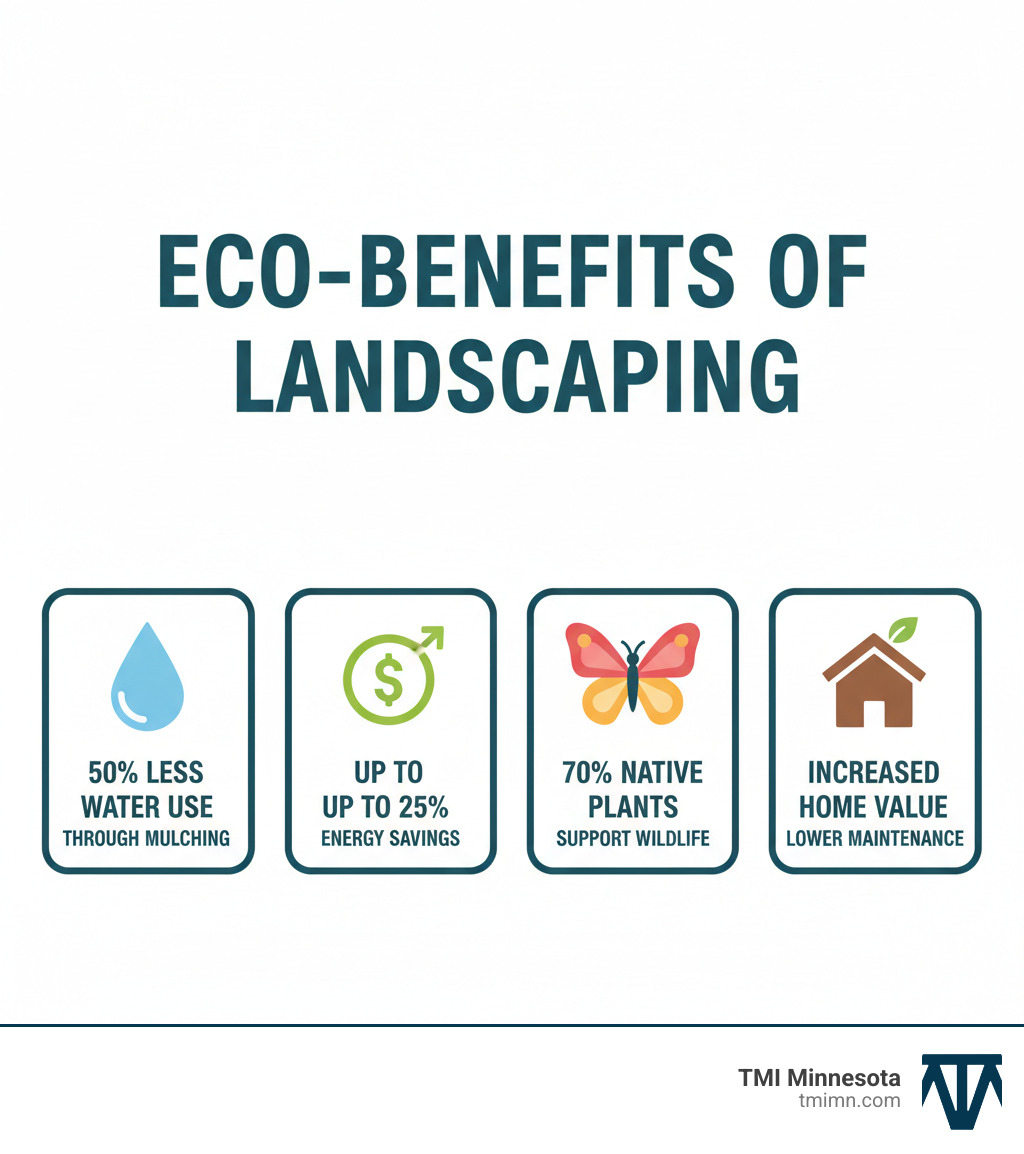
Sustainable practices offer impressive results. Mulching can cut your outdoor water usage by up to 50%, and strategic tree placement can boost your home’s energy efficiency by 25%. It’s no wonder that 92% of realtors recommend enhancing curb appeal, and sustainable design is a powerful way to do so.
At TMI Minnesota, we help homeowners implement eco-friendly landscaping tips to create beautiful, sustainable outdoor spaces perfectly suited to our local climate. Our team combines innovative design with practical solutions to deliver landscapes that improve your lifestyle while reducing your environmental impact.
Top Eco-Friendly Landscaping Tips:
- Choose native plants – Aim for 70% native species to reduce water use and support local wildlife
- Build healthy soil – Use compost and mulch to retain moisture and reduce waste
- Water smart – Install drip irrigation and harvest rainwater to conserve resources
- Use permeable hardscaping – Select porous pavers or gravel to manage stormwater
- Plant trees strategically – Place deciduous trees for shade to cut energy costs by up to 25%
- Create wildlife habitats – Provide food, water, and shelter for beneficial insects and birds
- Practice natural pest management – Use integrated pest management instead of chemicals
Similar topics to Eco-friendly landscaping tips:
The Foundation: Smart Soil and Plant Choices
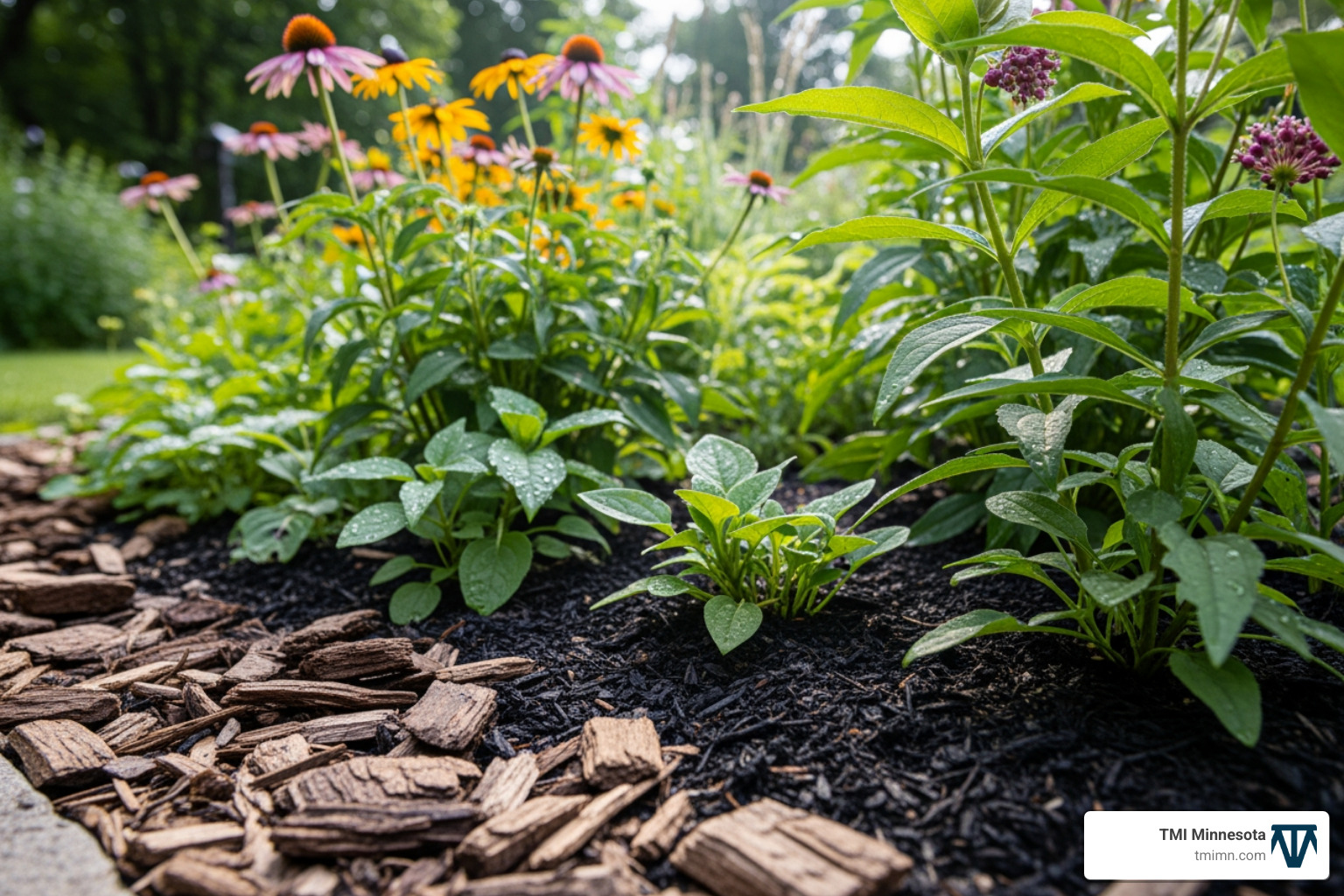
Think of your soil as the foundation of your landscape. By starting with healthy soil and choosing plants adapted to Minnesota, you’ll create a garden that practically takes care of itself. Healthy soil is a living ecosystem, with billions of organisms that cycle nutrients, retain water, and filter pollutants. When you nurture your soil, you’re building a resilient landscape from the ground up. Let’s explore some practical eco-friendly landscaping tips that start with soil and plant choices.
Accept Minnesota Native Plants
Native plants are the secret weapon of sustainable landscaping. They have adapted over thousands of years to our local climate, making them incredibly low maintenance. Once established, they thrive without constant watering, fertilizing, or chemical pesticides.
Native plants are also remarkably water-efficient. Most can survive on Minnesota’s natural rainfall alone after their first year, which means lower water bills. Perhaps most importantly, they are essential for supporting local wildlife. Our native birds, butterflies, and beneficial insects depend on these plants for food and shelter. Aiming for 70% native plants in your landscape provides a significant benefit to the local ecosystem.
For more guidance on selecting the perfect native species, visit our page on Minnesota Native Plants.
Here are 5 hardy native plants that thrive in Minnesota gardens:
- Purple Coneflower (Echinacea purpurea): These tough perennials handle drought while attracting butterflies and bees.
- Wild Bergamot (Monarda fistulosa): A pollinator magnet with aromatic leaves that also makes great tea.
- Butterfly Milkweed (Asclepias tuberosa): Essential for Monarch butterflies, as it’s the only plant their caterpillars can eat.
- Black-Eyed Susan (Rudbeckia hirta): Cheerful, nearly indestructible yellow flowers that brighten any garden.
- New England Aster (Symphyotrichum novae-angliae): Provides crucial late-season nectar for migrating monarchs and other pollinators.
Build Healthy Soil with Composting and Mulching
Two of the most effective eco-friendly landscaping tips for building incredible soil are composting and mulching. Composting turns kitchen scraps and yard waste into a nutrient-rich fertilizer. This natural amendment improves soil structure, increases water retention, and promotes healthier root growth—all for free. To start, simply mix “green” materials (kitchen scraps, grass clippings) with “brown” materials (dry leaves, shredded cardboard), keep the pile moist, and turn it occasionally.
Mulching is like a protective blanket for your garden beds. A 3-4 inch layer of organic mulch like wood chips or shredded leaves can reduce water evaporation by up to 50%. Mulch also suppresses weeds, moderates soil temperature, and enriches the soil as it breaks down. Remember to leave a few inches of space around the base of trees and shrubs to prevent rot. For more ways to improve your garden beds, explore our Softscape Services.
Rethink Your Lawn: Low-Maintenance Alternatives
Traditional grass lawns are demanding, requiring significant water, mowing, and fertilizing. The good news is that you have beautiful, low-maintenance alternatives.
Xeriscaping uses water-wise design principles, selecting drought-tolerant plants that thrive with minimal irrigation. This approach dramatically reduces water use while creating a unique landscape. Find inspiration with our Xeriscape Landscaping Ideas.
Ground covers like moss or clover form a dense mat that needs little to no mowing, watering, or pesticides. They also help retain soil moisture and prevent erosion.
“No-mow” or “slow-grow” seed mixes are perfect if you like the look of grass but not the weekly mowing. These blends require mowing only once every few weeks.
Artificial grass can be a practical choice for hard-to-maintain areas. It eliminates the need for watering, mowing, and fertilizing entirely. Learn more on our Artificial Grass Installation page.
Top Eco-friendly Landscaping Tips for Water Management
Smart water management is one of the most important eco-friendly landscaping tips for Minnesota homeowners. It protects our lakes and rivers from polluted runoff and conserves a precious resource. The goal is to keep water on your property where it can soak into the ground, rather than letting it rush into storm drains. By using efficient irrigation and capturing rainwater, we can reduce waste while keeping our landscapes lush.
Implement Smart Watering and Irrigation
How and when you water makes all the difference. Watering deeply but infrequently encourages plant roots to grow deeper, making them more drought-resistant. Instead of a quick daily sprinkle, give your plants a thorough soaking and let the soil dry out before watering again.
Drip irrigation systems and soaker hoses are game-changers for water conservation, delivering water directly to the root zone with minimal waste. They can save 50% or more water compared to traditional sprinklers. Smart irrigation controllers take the guesswork out of watering by using local weather data to adjust schedules automatically.
Hydrozoning is the practice of grouping plants with similar water needs together. This prevents overwatering some plants while underwatering others, saving a tremendous amount of water. For guidance on modern irrigation, visit our Landscape Irrigation Solutions page.
Harvest Rainwater and Manage Stormwater
Your roof collects thousands of gallons of water each year. Instead of letting it run into the street, you can capture and use it.
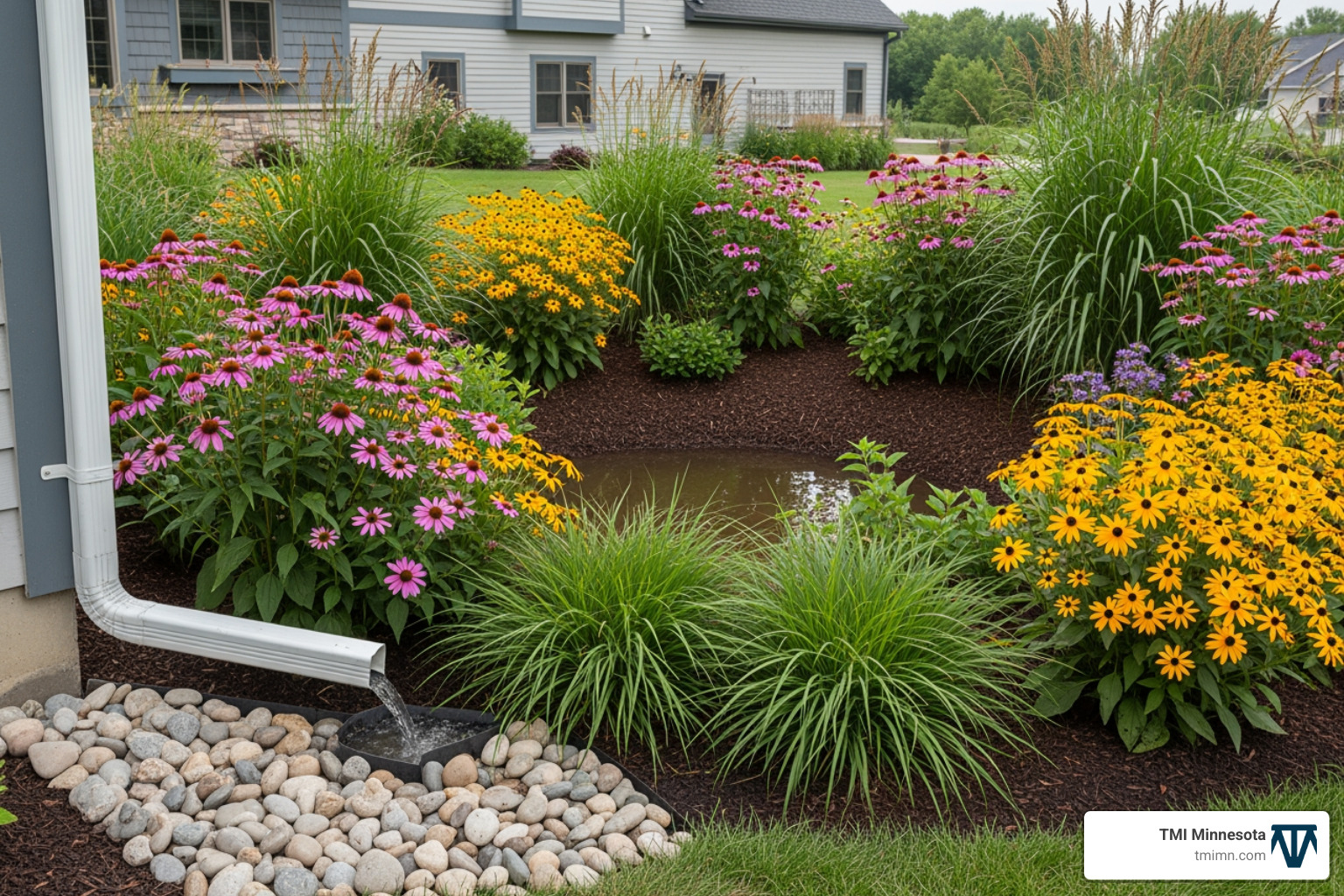
Rain barrels and cisterns are simple solutions for collecting rainwater from your downspouts. This gives you a free, chlorine-free supply for watering your garden. Every gallon you capture is a gallon that isn’t contributing to polluted stormwater runoff.
Rain gardens take stormwater management to the next level. These are shallow depressions planted with native, flood-tolerant species, placed where runoff collects. They absorb and filter massive amounts of rainwater, recharging groundwater supplies and reducing the burden on storm drains. A well-designed rain garden can be a stunning focal point that is also an ecological powerhouse. For detailed guidance, check out our Rain Garden Design MN resources. The EPA landscaping tips for water conservation also offer excellent strategies.
Sustainable Structures: Hardscaping, Lighting, and Energy
Structural elements like patios, walkways, and lighting are where design meets function. By making thoughtful choices, these features can become powerful allies in your sustainability efforts, helping to reduce runoff, lower energy bills, and shrink your carbon footprint. In fact, sustainable landscaping design can increase your home’s energy efficiency by up to 25%.
Choose Permeable and Recycled Hardscape Materials
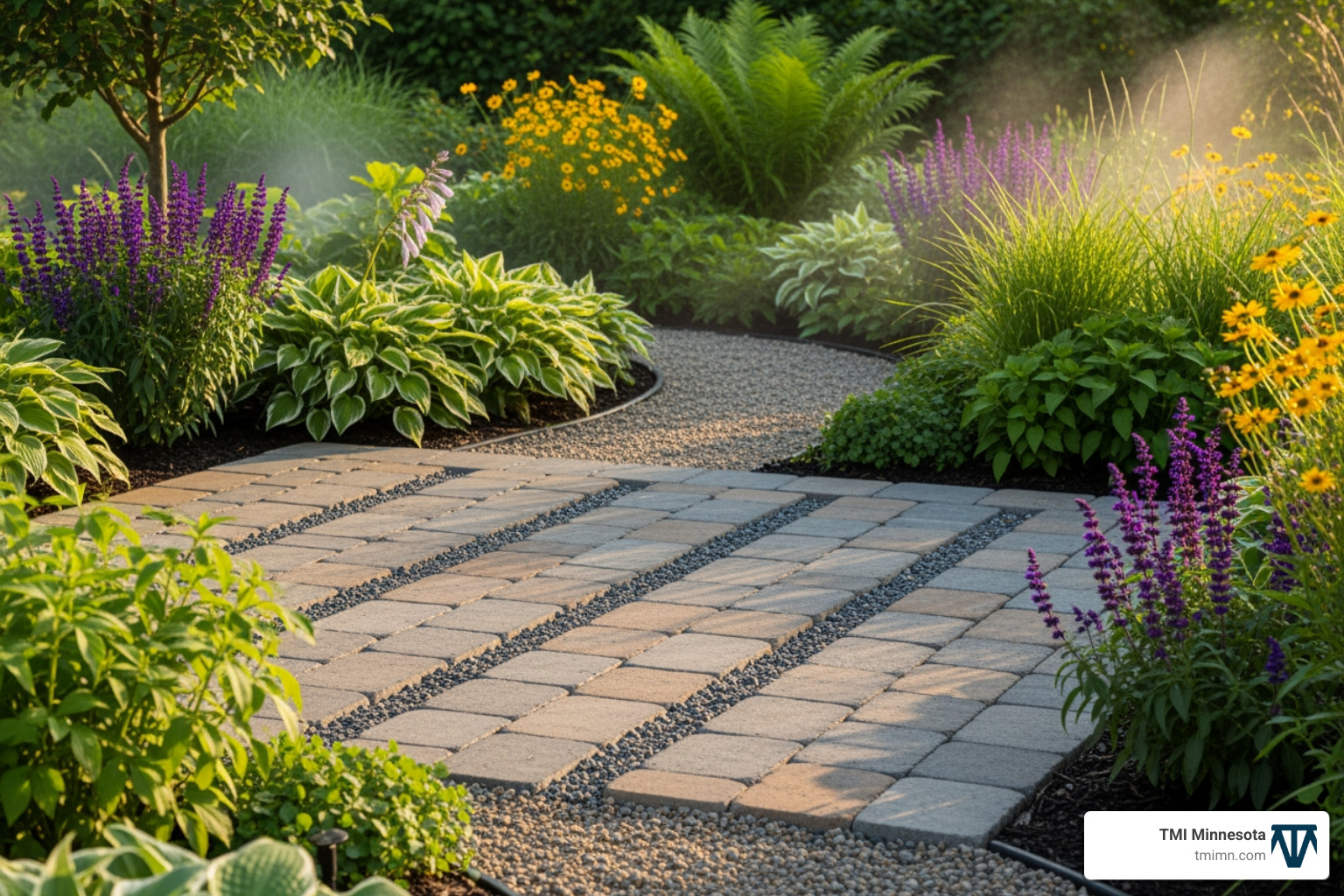
Traditional concrete and asphalt surfaces send rainwater rushing into storm drains, carrying pollutants with it. Permeable pavers are one of the smartest eco-friendly landscaping tips you can use. They allow rainwater to filter through into the ground below, reducing runoff and recharging groundwater. They are perfect for driveways, patios, and walkways. Learn more about these solutions on our Permeable Paver Driveways page.
Gravel paths and porous concrete are other permeable options that manage stormwater effectively. Using reclaimed materials like old brick or salvaged stone adds character to your landscape while keeping resources out of landfills. For all your hardscaping needs, visit our Hardscape Installations page.
Plant Trees for Energy Efficiency
Trees are multitaskers that can genuinely reduce your heating and cooling costs. The trick is strategic placement. Deciduous shade trees planted on the north and west sides of your home act as natural air conditioners, blocking the intense summer sun. In the fall, they drop their leaves, allowing winter sunlight to stream through and warm your home.
Evergreen trees and dense shrubs planted to face prevailing winter winds act as windbreaks, protecting your home from cold gusts and reducing your heating load. The Arbor Day Foundation offers excellent guidance on how to plant trees for energy savings. If you’re ready to add these energy-saving giants to your property, our team offers expert Tree Planting Services.
Install Energy-Efficient Outdoor Lighting
Modern lighting technology allows you to illuminate your landscape beautifully without wasting energy. Solar-powered lights are a great choice, as they operate without any electricity cost and even work during power outages. They can save you over $100 per year compared to traditional lighting.
LED bulbs use a fraction of the electricity of old incandescent bulbs and last for an astonishingly long time, reducing both energy consumption and maintenance. Smart features like motion sensors and timers ensure lights are only on when needed. By directing light downward, we also reduce light pollution, which benefits nocturnal wildlife. For creative and efficient ways to illuminate your outdoor spaces, explore our Landscape Lighting Ideas.
Create a Living Ecosystem in Your Backyard
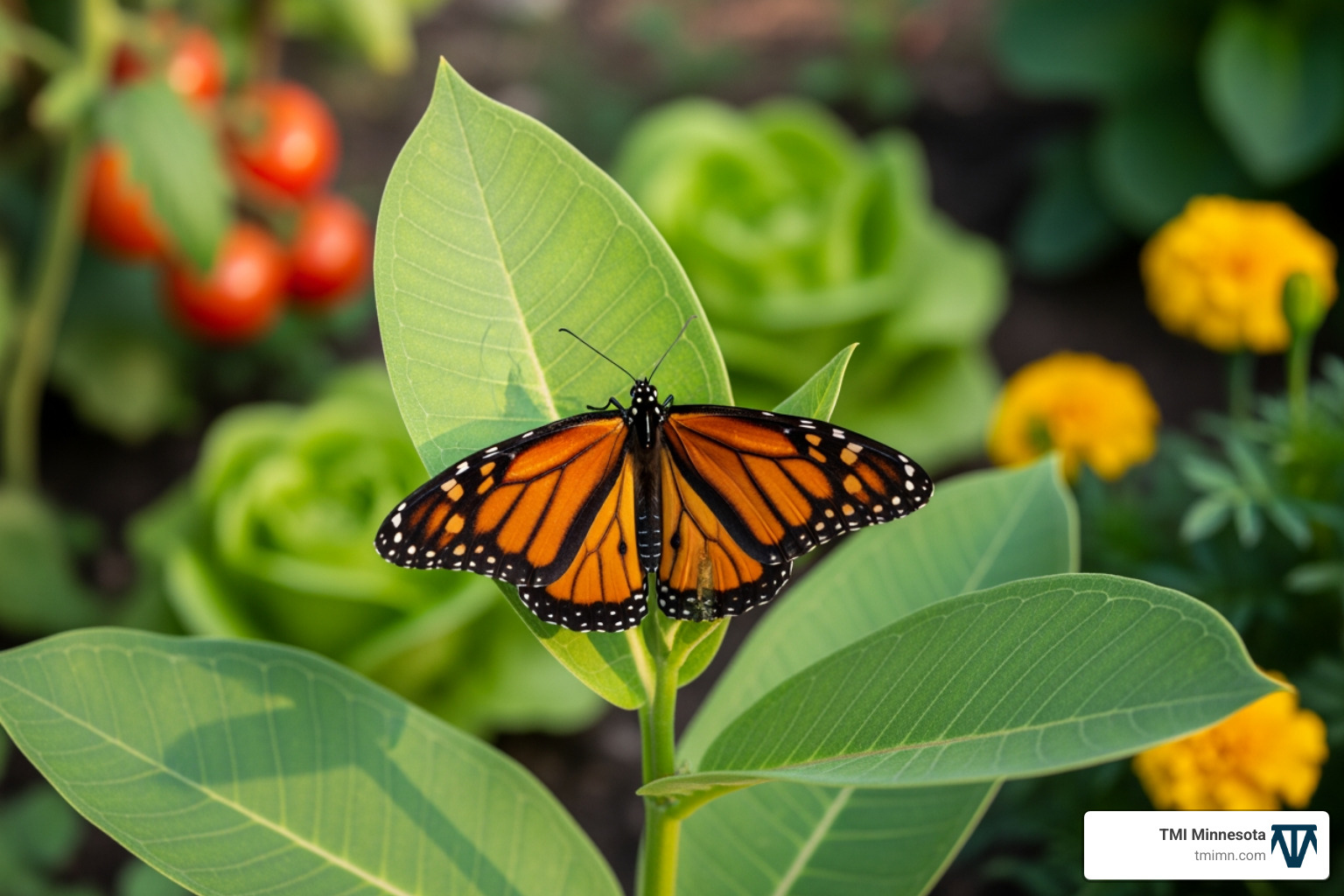
One of the most rewarding eco-friendly landscaping tips is to transform your backyard into a vibrant living ecosystem. By designing our spaces to support wildlife, grow food, and manage pests naturally, we create a yard that gives back to nature while enriching our lives. Our yards can serve as vital refuges for birds, butterflies, and beneficial insects, especially in urban areas where natural habitats are fragmented.
Design a Haven for Local Wildlife
Creating a wildlife-friendly yard is simple: provide food, water, and shelter. Native plants are the best food source, offering nectar, seeds, and host leaves. A simple birdbath provides water, while dense shrubs, trees, and birdhouses offer shelter. Layered plantings—from groundcovers to shrubs to trees—create diverse habitats at different heights, attracting a wider variety of species. By planting a diverse mix of native flowers, you’ll also attract beneficial insects that act as natural pollinators and pest predators.
For ideas on creating a yard that works for both wildlife and pets, check out our Pet-Friendly Landscape Design page.
Integrate an Edible Garden
Integrating an edible garden is one of the most satisfying ways to go green. Growing your own food dramatically reduces “food miles”—the distance food travels from farm to plate—and eliminates packaging waste. You also have complete control over what goes into your soil, ensuring your produce is free from synthetic chemicals.
Raised garden beds offer excellent drainage and soil control, while herb spirals maximize growing space in a compact footprint. Fruit trees and berry bushes can be beautifully integrated into ornamental landscapes, providing both visual appeal and delicious harvests. For inspiration, explore our Edible Garden Landscape Ideas.
Eco-friendly Landscaping Tips for Pest Management
Instead of reaching for chemical sprays that can harm bees and other beneficial creatures, adopt Integrated Pest Management (IPM). This holistic strategy focuses on prevention and natural solutions. Start by attracting natural predators like ladybugs and lacewings by planting a diverse range of native flowers. Companion planting, such as placing marigolds near vegetables, can also naturally deter pests.
Simple physical barriers like row covers or even hand-picking pests can be very effective. The foundation of natural pest management is building healthy soil. Strong, healthy plants are naturally more resistant to pests and diseases, reducing the need for intervention.
Frequently Asked Questions about Eco-Friendly Landscaping
We often hear similar questions from Minnesota homeowners curious about making their landscapes more sustainable. Here are answers to some of the most common inquiries.
How can landscaping choices impact my home’s energy bills?
Your landscaping can act as natural climate control for your home. Strategic planting is the key. Planting deciduous trees on the north and west sides provides shade in the summer, reducing A/C costs. In winter, they lose their leaves, allowing sunlight to warm your home. Planting dense evergreen trees as windbreaks can block cold winter winds, reducing your heating load. Shading your outdoor A/C unit can also increase its efficiency. According to the U.S. Department of Energy, a well-designed landscape can reduce your energy use by up to 25%.
What are the main benefits of xeriscaping?
Xeriscaping is a design approach that minimizes the need for irrigation. Its main benefits go beyond just saving water.
- Reduced water usage: By using drought-tolerant plants, you can significantly cut down on outdoor watering and lower your water bills.
- Lower maintenance: Xeriscaped gardens require less mowing, pruning, and general upkeep than traditional lawns.
- Fewer pests and no fertilizers: Drought-tolerant and native plants are often more resistant to local pests and thrive without supplemental fertilizers, reducing chemical use.
For more design ideas, explore our Xeriscape Garden page.
How do I start composting at home?
Composting is one of the easiest and most impactful eco-friendly landscaping tips. It turns kitchen and yard waste into a valuable soil amendment.
- Choose a location: Select a warm, partly sunny spot for a compost bin or pile.
- Balance materials: The key is to balance “green” materials (nitrogen-rich kitchen scraps, grass clippings) with “brown” materials (carbon-rich dry leaves, shredded cardboard). Aim for roughly equal parts.
- Maintain the pile: Keep the compost moist, like a wrung-out sponge. Turn it every week or two with a pitchfork to add air and speed up decomposition.
Avoid adding meat, dairy, or oily foods, which can attract pests. In six to nine months, you’ll have rich compost ready for your garden.
Conclusion
Creating a sustainable outdoor space is a meaningful way to care for your property, community, and environment. By implementing eco-friendly landscaping tips—from choosing native plants to harvesting rainwater—you can build a landscape that keeps giving back.
An eco-friendly yard requires less water, fewer chemicals, and less maintenance. Your water bills drop, your weekends open up, and your property value can increase. When you plant trees strategically, you can reduce energy costs by up to 25%. When you mulch, you can cut outdoor water use in half. Every choice contributes to a healthier ecosystem.
At TMI Minnesota, our landscape design experts understand Minnesota’s unique climate. We’ve helped countless Twin Cities homeowners create beautiful, sustainable landscapes that work with nature. Whether you’re interested in a rain garden, native plants, or a complete redesign, we’re here to guide you.
Your yard has incredible potential. The journey doesn’t have to happen all at once—even small changes make a real difference. Ready to transform your yard into an eco-friendly oasis?
Contact our landscape design team today! Let’s create something extraordinary together.