
Why Finding the Best Turf for Shade Matters for Your Minnesota Lawn
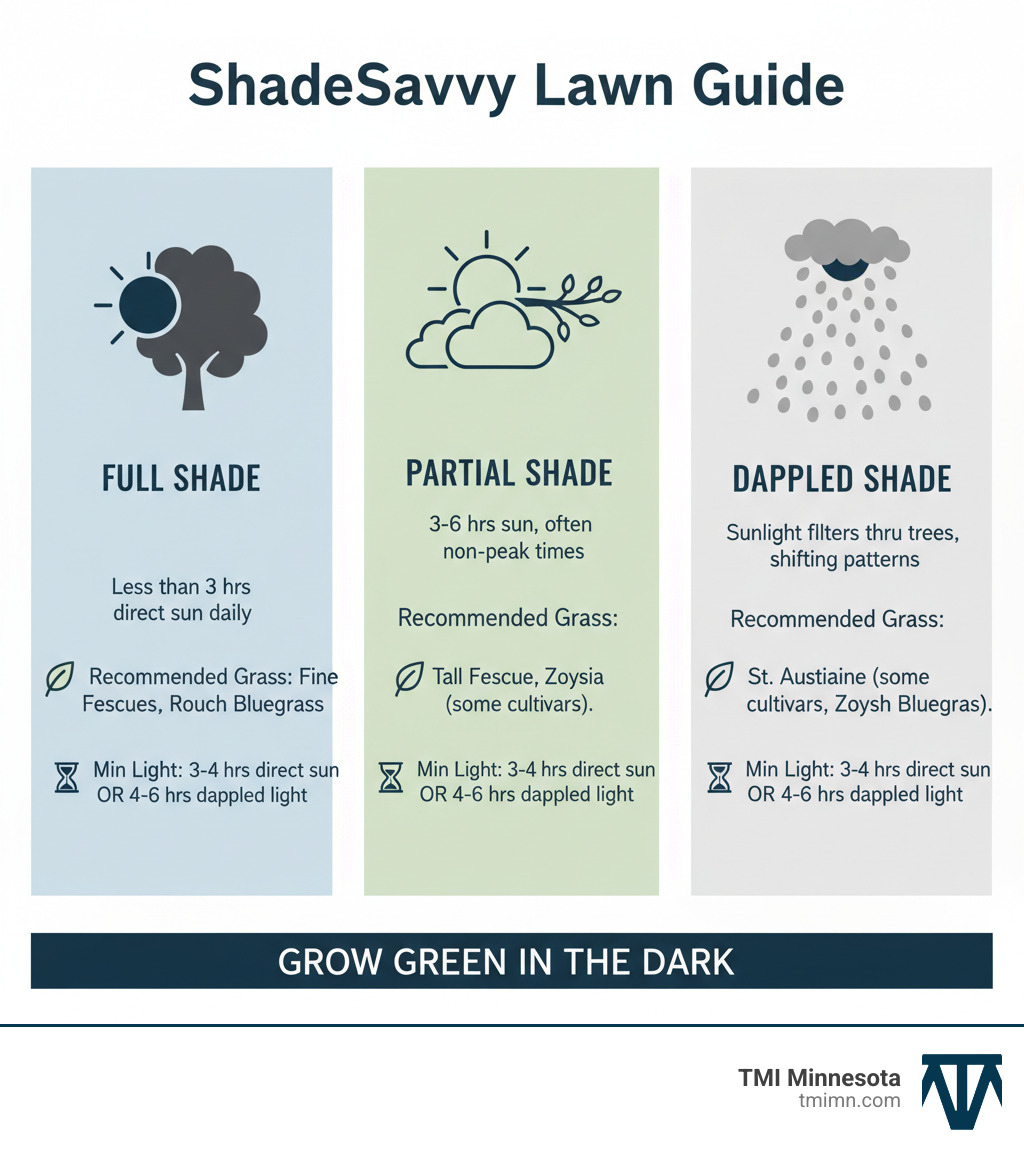
Finding the best turf for shade depends on your climate. For Minnesota’s cool-season weather, Fine Fescues are the top choice, thriving with just 3-4 hours of direct sunlight. Tall Fescue offers good wear tolerance with moderate shade performance, while Rough Bluegrass excels in moist, shady areas. In warmer zones, St. Augustine and Zoysia cultivars perform well with similar light requirements. All shade-tolerant grasses need a minimum of 3-4 hours of direct sun or 4-6 hours of dappled light daily to survive.
Shade is often a nightmare for grass. Without enough light for photosynthesis, turf becomes thin, patchy, and disease-prone. Shaded areas also stay wet longer, face competition from tree roots, and recover poorly from foot traffic. The good news is that choosing the right grass species makes all the difference.
Understanding your specific shade conditions—whether you’re dealing with full, partial, or dappled shade—is the first step to selecting the best turf for your yard.
I’m Christopher Deanovic, Operations Leader of Task Masters (TMI Minnesota). I’ve spent years helping homeowners transform challenging landscapes across Minnesota. Through countless projects, I’ve learned which grass varieties thrive in low-light conditions and which maintenance practices create a lush green carpet instead of a struggling lawn.
Quick best turf for shade definitions:
Why Grass Struggles in the Shade: Understanding the Challenges
Think of grass trying to grow in shade like asking a solar panel to work at night. Every blade depends on photosynthesis to convert sunlight into energy. When light is blocked, a perfect storm of challenges arises that would test even the best turf for shade.
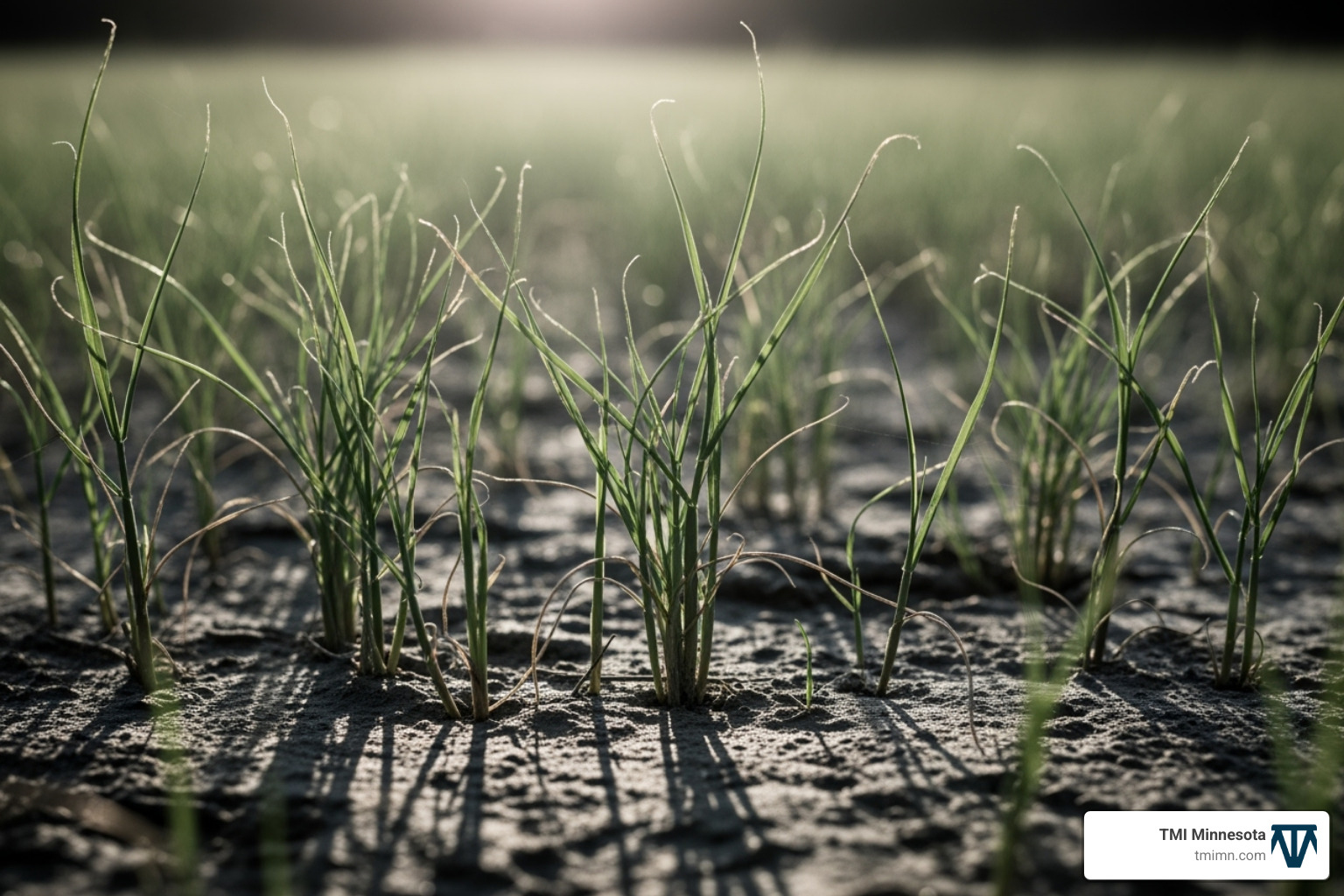
Reduced photosynthesis is the root of the problem. Without enough sun, grass can’t produce energy. It becomes thin and spindly as it stretches for light, and its roots grow weaker and shallower. This leaves the turf vulnerable to drought, disease, and foot traffic.
Shade creates other issues, too:
- Increased Moisture: Shaded areas stay wet longer, creating a welcome mat for fungal diseases like brown patch and powdery mildew.
- Weed Invasion: While grass struggles, many weeds thrive in cooler, moister conditions and quickly take over.
- Poor Traffic Recovery: Stressed, slow-growing shade grass can’t bounce back from foot traffic, leading to worn paths and bare spots.
- Root Competition: Tree roots are aggressive competitors, hogging water and nutrients that your grass desperately needs.
- Poor Soil: Constant leaf litter and moisture can lead to compacted, poorly drained soil with an unbalanced pH.
Assessing Your Yard’s Specific Shade Conditions
Before choosing a grass, you need to be a shade detective. Not all shade is the same.
- Measure Sunlight: Don’t guess. On a sunny day, check your problem areas hourly to see if they get the critical minimum of 3-4 hours of direct sun or 4-6 hours of dappled light.
- Note the Timing: Morning sun is gentler and helps dry dew, reducing disease risk. Hot afternoon sun can stress even shade-adapted grasses.
- Identify Shade Type: Full shade (under 3 hours of sun) is toughest. Partial shade (3-6 hours) offers good options. Dappled shade (filtered through trees) is the most forgiving.
- Consider the Source: Building shade is consistent and dense. Tree shade changes with the seasons, which can be an advantage for spring growth.
- Test Your Soil: Shaded areas often become acidic. A soil test kit will tell you your pH level (most grasses prefer 6.0-7.5) so you can make amendments.
- Assess Drainage: Dig a 6-12 inch hole, fill it with water, and see how long it takes to drain. If water is still there after a few hours, you have a drainage problem. Our landscape design services can help address these issues before planting.
This detective work is worth the time. Once you understand your conditions, you can choose a grass with a real fighting chance or consider softscape services if grass isn’t a viable option.
Top Cool-Season Grasses for Low-Light Lawns
Here in Minnesota, we rely on cool-season grasses, which thrive in the 65-80°F temperatures of spring and fall. While most turf varieties prefer full sun, selective breeding has given us excellent shade-tolerant options that make the most of limited light.
For specific guidance on seed selection in our region, the Buying turfgrass seed for Minnesota lawns | UMN Extension resource is invaluable.
Fine Fescues: The best turf for shade in cooler climates
When clients ask for the best turf for shade in Minnesota, Fine Fescues are our first answer. This family of grasses genuinely thrives in low-light conditions.
- Creeping Red Fescue spreads to fill in bare spots.
- Chewings Fescue grows in bunches, creating a dense, fine-textured lawn.
- Hard Fescue is exceptionally tough and requires minimal maintenance.
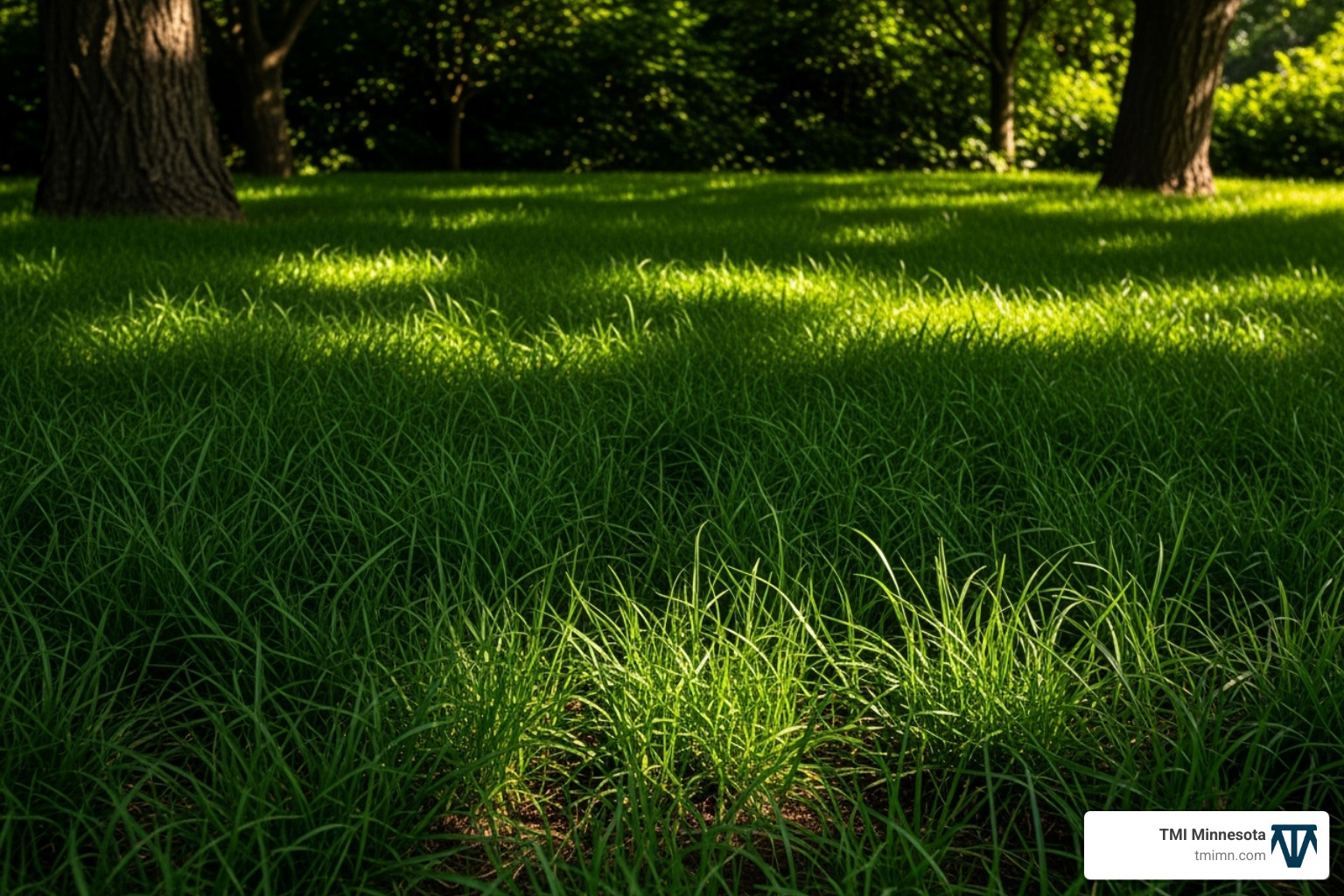
Fine Fescues have delicate, needle-like blades that allow light to penetrate the turf canopy, enabling more efficient photosynthesis. They can thrive with as little as four hours of dappled sunlight daily. They are also low-maintenance, needing less fertilizer and water than most turf types, and are surprisingly drought-tolerant once established. We often recommend blends of different Fine Fescue types for the best resilience.
Tall Fescue
If your shaded areas also see foot traffic, Tall Fescue’s durability is a major asset. Modern varieties have a much finer blade than older types. Its secret weapon is a deep root system that can reach two to three feet into the soil, allowing it to access water and nutrients that shallow tree roots can’t. It handles moderate foot traffic well but grows in bunches, so you may need to overseed occasionally to maintain density. Tall Fescue needs about four to six hours of sun daily, making it a great performer in partial shade.
Shade-Tolerant Bluegrass Varieties
Standard Kentucky Bluegrass struggles in shade, but some bluegrass options are worth considering.
Rough Bluegrass (Poa trivialis) is the shade superstar of the family, flourishing with just four hours of dappled sunlight. However, it has poor heat and drought tolerance, making it suitable only for consistently moist, cool, and shady areas. We typically use it in blends, allowing it to dominate in the shadiest, wettest spots.
Some Kentucky Bluegrass cultivars have been bred for improved shade tolerance. While not as shade-loving as Fine Fescues, they perform better than standard varieties in partial shade. For Minnesota yards with varied light, a blend of Fine Fescues and shade-tolerant Kentucky Bluegrass is often ideal, combining the fescue’s shade performance with the bluegrass’s aesthetic and self-repairing capabilities.
A Closer Look at the Best Turf for Shade: Leading Warm-Season Varieties
While we primarily work with cool-season grasses in Minnesota, it’s helpful to know the top warm-season options. These grasses thrive in the heat of the southern U.S. and the “transition zone,” where temperatures consistently hit 80-95°F.
St. Augustine Cultivars: The best turf for shade in warmer zones
St. Augustine is the go-to shade grass in warm regions. Its broad blades and aggressive spreading habit create a lush, dense lawn that outcompetes weeds. Many varieties perform beautifully with just four hours of direct sunlight daily.
- Palmetto St. Augustine is the most popular patented variety, known for its impressive resilience to shade, cold, heat, and drought.
- CitraBlue St. Augustine offers a rich blue-green color and is considered by many to be equal or superior to Palmetto in shade tolerance and disease resistance.
Zoysia Grass Varieties
Zoysia grass forms a dense, carpet-like turf that is exceptionally drought-resistant and wear-tolerant. It can thrive in partial shade with as little as 3-4 hours of daily direct sun. Its dense growth habit, spreading via both rhizomes and stolons, naturally chokes out weeds.
- Empire Zoysia is a versatile favorite, tolerating up to 50% shade in low-traffic areas.
- Zeon Zoysia is often considered one of the best turf for shade among warm-season grasses, needing at least four hours of direct sunlight.
| Grass Type | Climate | Shade Tolerance | Texture | Growth Habit | Min. Sunlight (Daily) | Key Advantages |
|---|---|---|---|---|---|---|
| Fine Fescue | Cool-Season | High (best cool-season) | Fine, needle-like | Bunch/Creeping | 3-4 hours (dappled) | Low maintenance, drought tolerant, thrives in cool shade |
| Tall Fescue | Cool-Season | Moderate | Medium | Bunch | 4-6 hours (dappled/partial) | Deep roots, good wear tolerance, good winter hardiness |
| Rough Bluegrass | Cool-Season | Exceptional (best bluegrass for shade) | Medium | Creeping | 4 hours (dappled) | Very high shade tolerance, prefers moist areas |
| St. Augustine | Warm-Season | Excellent | Coarse, broad | Spreading | 4 hours (direct) | Dense, fast-spreading, good for humid climates |
| Zoysia | Warm-Season | Good | Fine to Medium | Spreading | 3-4 hours (direct) | Dense, wear resistant, drought tolerant, low water |
Best Practices for Maintaining a Thriving Shade Lawn
Selecting the best turf for shade is just the beginning. Grass in shade is more vulnerable and needs special care to thrive. Your maintenance routine must be thoughtfully adjusted to give your shade lawn the fighting chance it deserves.
Mowing, Watering, and Fertilization
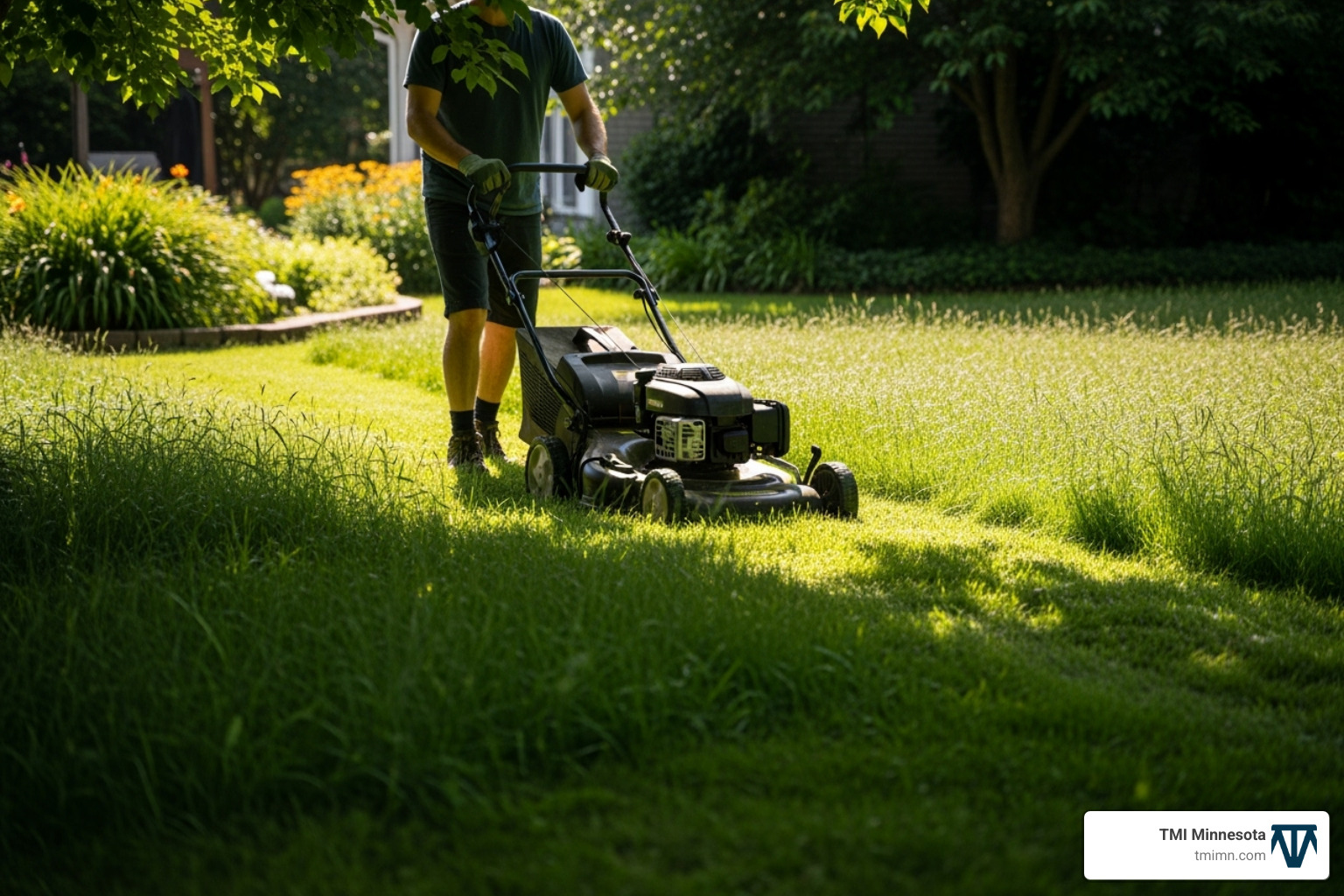
- Mow Higher: This is essential. Set your mower to 3-4 inches. Taller blades act like larger solar panels, capturing more of the scarce sunlight for photosynthesis. Taller grass also shades the soil, preventing weed growth.
- Water Smartly: Shaded areas stay damp longer, so overwatering is a major risk that invites fungal disease. Water deeply but less frequently. Always water in the morning so blades can dry before nightfall. The exception is grass under large trees, which may need more water due to root competition.
- Fertilize Differently: Heavy nitrogen fertilizer promotes weak, disease-prone growth in shade. Use about half the fertilizer you’d apply to sunny areas, and choose a formula lower in nitrogen and higher in potassium, which strengthens the grass’s disease resistance.
Improving Your Lawn’s Environment
- Increase Light: Pruning tree branches to improve light can work wonders. Thinning the canopy and raising lower branches allows more dappled sunlight to filter through.
- Improve Airflow: Pruning also improves air circulation, helping grass dry faster and reducing disease pressure.
- Aerate Soil: Aeration relieves compacted soil, allowing air, water, and nutrients to reach the roots. This is critical in shaded areas competing with tree roots.
- Manage Soil and Traffic: Correct pH imbalances revealed by a soil test. If drainage is poor, aeration or adding organic matter can help. For persistent issues, our softscape services can provide integrated solutions. Finally, minimize foot traffic on vulnerable shade grass by installing stepping stones or designated paths.
Managing Pests and Diseases
Shaded lawns are prime real estate for pests and diseases due to moisture and stressed grass. Be vigilant.
- Know the Warning Signs: Watch for thinning grass, spindly blades, a yellowing color, or the appearance of moss and algae. These are signs your grass is losing the battle.
- Prevent Fungal Disease: The best defense is proper watering—deeply, infrequently, and only in the morning. Keeping grass blades dry overnight is crucial. Never water a shaded lawn in the evening.
- Treat Problems: If fungal issues like brown patch or powdery mildew persist, targeted fungicide treatments may be necessary. For weeds, use pre-emergent herbicides in spring or post-emergent products safe for your grass type.
When Grass Won’t Grow: Alternatives for Deep Shade
Sometimes, despite your best efforts, an area is simply too shady for grass. When a spot receives less than 3 hours of direct sunlight daily, even the best turf for shade will fail. Instead of fighting a losing battle, it’s time to pivot to alternatives that thrive in deep shade.
Natural Ground Covers and Softscaping
For deeply shaded areas, natural ground covers create a living carpet that thrives where grass fails. These plants bring texture and visual interest with far less maintenance.
- Shade-Loving Plants: Hostas, ferns, and native Minnesota ground covers like Wild Ginger are excellent choices that flourish in low light.
- Mulch Beds: A simple layer of quality mulch suppresses weeds, retains moisture, and creates a clean, finished look. You can add a few shade plants for spots of color.
- Rock Gardens: Combining decorative stones with select shade-tolerant plants creates a striking, low-maintenance feature, especially in areas with poor drainage.
These alternatives can create habitat, improve soil health, and require less water than a struggling lawn. Our softscape design team can help you integrate these elements beautifully. Learn more about our comprehensive softscape services to see how we transform challenging spots.
The Ultimate Low-Maintenance Solution: Artificial Turf
For areas where you still want the look and function of a lawn without the struggle, modern artificial turf is an ideal solution.
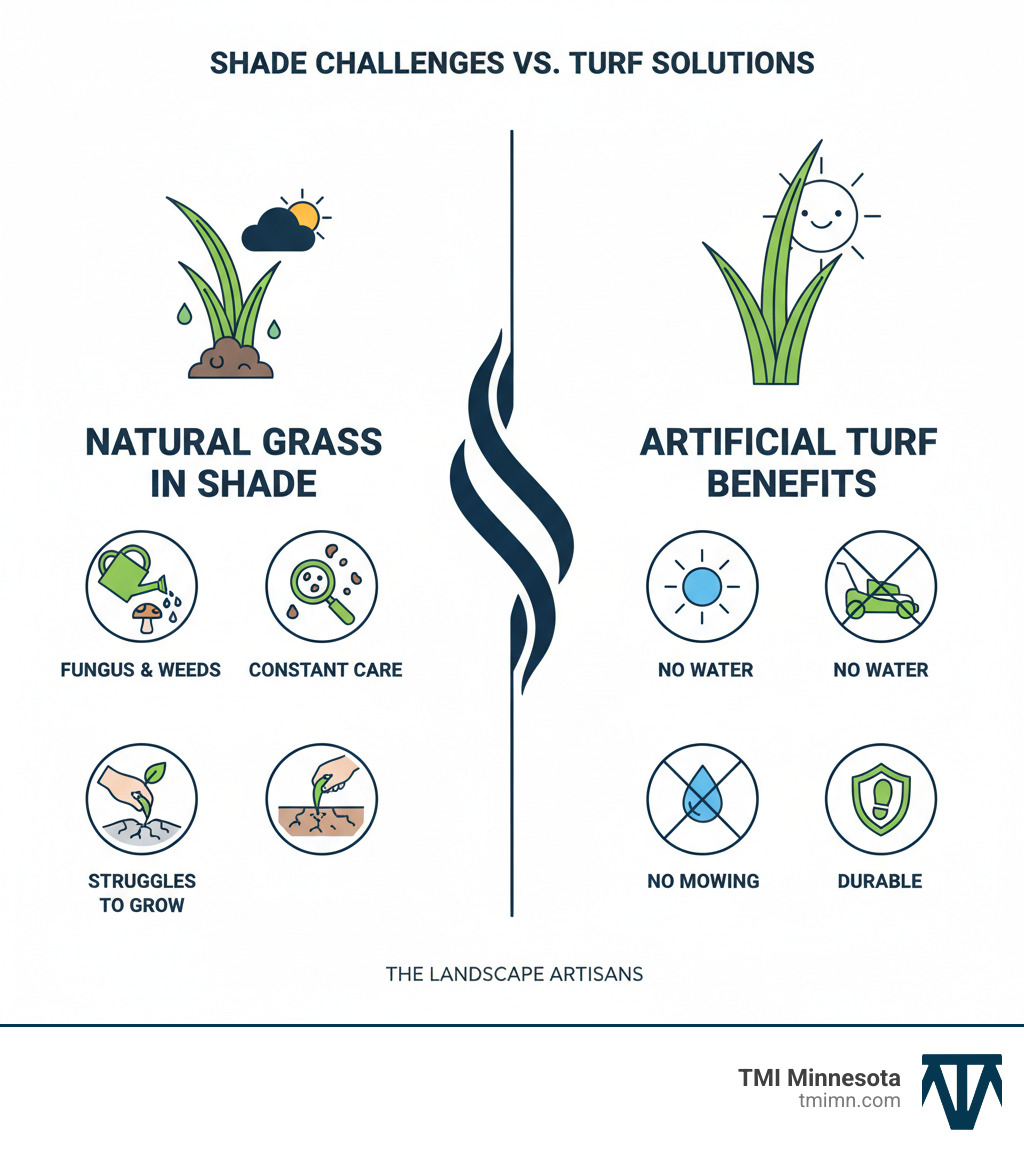
Artificial turf’s biggest advantage is that it requires zero sunlight, making it perfect for the darkest corners of your property. It also eliminates mowing, watering, and fertilizing. It provides a consistent green appearance year-round and offers superior durability against heavy foot traffic from kids and pets. Today’s turf is safe, drains quickly, and eliminates mud. Explore our Artificial Grass Benefits and Artificial Turf Landscaping pages to see how this versatile solution can work for you.
Frequently Asked Questions about Shade-Tolerant Turf
Here are answers to the most common questions we hear from Minnesota homeowners about growing grass in shady spots.
How much sun does shade-tolerant grass actually need?
The term “shade-tolerant” doesn’t mean no sun. Even the best turf for shade needs light for photosynthesis. As a rule, most shade-tolerant grasses require a minimum of three to four hours of direct sunlight each day. Alternatively, four to six hours of dappled or filtered sunlight—the kind that filters through tree branches—can also be sufficient. Without this minimum, grass will become thin, weak, and eventually die. Always assess how much light your area gets before planting.
Can I mix different types of shade-tolerant grass seed?
Yes, and we highly recommend it. Mixing different grass seeds is a smart strategy for creating a resilient lawn. Each species has different strengths, so a blend offers increased resilience against disease, drought, and wear. This approach is especially valuable in yards with varied light conditions, as the best-suited grass will thrive in each specific micro-environment. For Minnesota, a blend of Fine Fescues and shade-tolerant Kentucky Bluegrass is often a great choice, creating a more uniform and healthy lawn.
What are the first signs my shaded grass is in trouble?
Catching problems early is key, as shaded grass is more vulnerable to stress. Watch for these red flags:
- Thinning or patchiness: The grass is losing density and can’t hold its ground.
- Elongated, spindly blades: The grass is desperately stretching for light.
- Yellowing or pale green color: A sign of inefficient photosynthesis or nutrient deficiency.
- Moss or fungus: An indication that conditions are too damp and dark for grass to compete.
- Slow recovery from foot traffic: The grass lacks the vigor to bounce back from stress.
Conclusion
Growing a healthy lawn in the shady corners of your yard is a common challenge, but it’s achievable with the right strategy. Success starts with honestly assessing your light conditions—even the best turf for shade needs at least 3-4 hours of direct sun or 4-6 hours of dappled light daily.
For our Minnesota climate, Fine Fescues are the champions of shade, while Tall Fescue offers a great balance of shade tolerance and durability. In warmer regions, St. Augustine and Zoysia are top performers.
Selecting the right seed is only half the battle. Your shaded lawn needs special care: mow higher, water deeply but infrequently in the morning, and use a fertilizer lower in nitrogen and higher in potassium to build resilience.
In areas with deep shade (less than three hours of sun), it’s often best to accept alternatives. Shade-loving plants like hostas and ferns can create stunning features. For a perfect, zero-maintenance lawn in any light, ForeverTurf artificial grass is the ultimate solution.
At TMI Minnesota, we specialize in turning challenging outdoor spaces into places you love. Whether you need help selecting the right grass, improving your lawn care, or exploring creative alternatives, we have the expertise to help. Ready to transform your shade challenges? Explore ForeverTurf installation for a perfect lawn in any light and let us help you create the outdoor space you’ve been imagining.