
What Are the Best Xeriscaping Ideas for Your Yard?
Xeriscaping ideas can transform your outdoor space into a beautiful, low-maintenance landscape that uses up to 60% less water than a traditional lawn.
Here are the most popular xeriscaping ideas to get you started:
- Rock gardens with drought-tolerant ground covers and boulders
- Ornamental grasses and sedges that need mowing just once a year
- Permeable paver pathways with creeping plants filling the gaps
- Pollinator gardens with native perennials like echinacea and coneflowers
- Mediterranean herb sections with lavender, rosemary, and thyme
- Mulch-focused designs using wood chips or gravel as the main feature
- Rain gardens in low spots that drain within 48 hours
- Succulent containers on patios and decks
- Pet-friendly zones with artificial turf and hardy ground covers
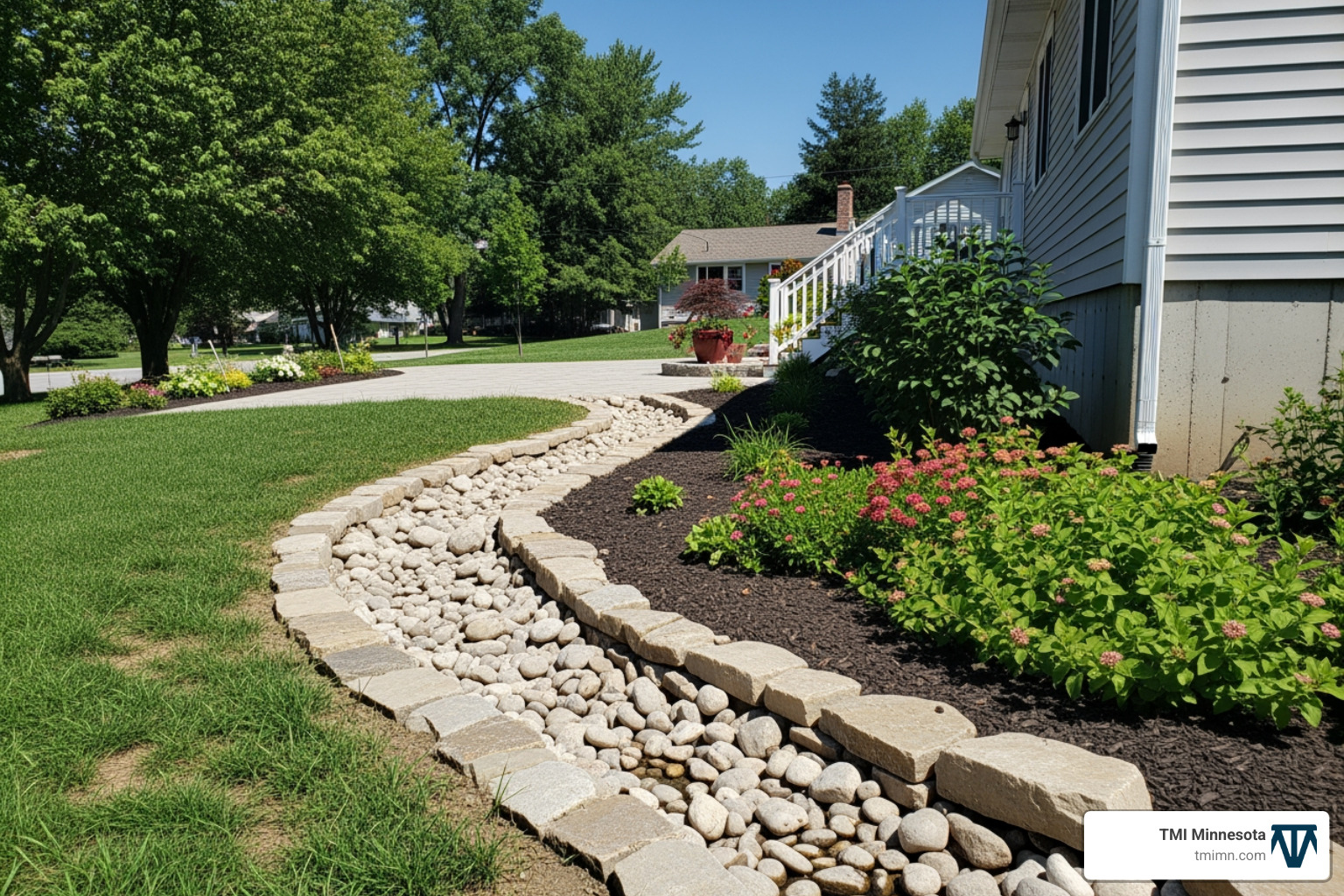
- Dry creek beds that redirect rainwater while looking great
Most homeowners picture a xeriscape yard as a flat patch of gravel baking in the sun with a cactus or two. That couldn’t be further from the truth.
A well-designed xeriscape can have color in every season, room for kids and pets, edible herbs, and a front yard that turns heads for the right reasons. Whether you have a sloped backyard, a shady side yard, or a tiny front garden, there is a water-wise approach that works for your space and your budget.
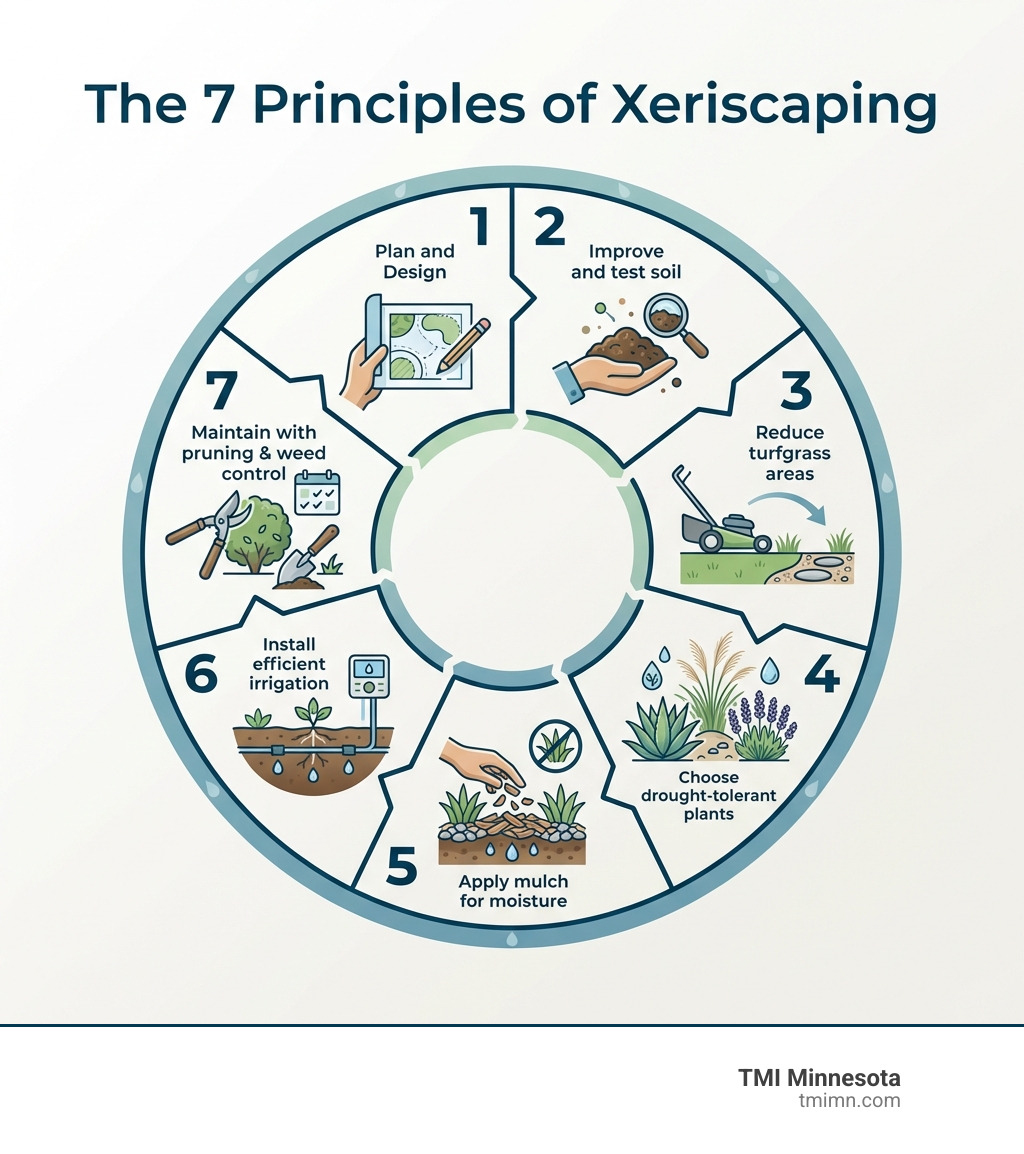
The term xeriscape comes from the Greek word xeros, meaning dry. It was coined in the early 1980s by Denver Water as a practical answer to drought. Today it has grown into a full landscaping philosophy built on seven core principles: smart planning, soil care, reduced turf, drought-tolerant plants, mulching, efficient irrigation, and ongoing maintenance.
The good news? You don’t have to overhaul everything at once. Many homeowners start small, swapping a patch of thirsty lawn for gravel and native plants, and build from there.
I’m Christopher Deanovic, Operations Leader at TMI Minnesota, where I’ve spent years helping homeowners across the region plan and build outdoor spaces that are both stunning and sustainable — including many projects centered around xeriscaping ideas. In the sections below, I’ll walk you through the most creative, practical, and budget-friendly approaches to get your xeriscape started.
Quick xeriscaping ideas terms:
Core Principles and Benefits of Water-Wise Design
When we talk about xeriscaping ideas, we aren’t just talking about saving a few gallons of water. We are talking about a fundamental shift in how we view our yards. Traditional lawns, especially those featuring Kentucky bluegrass, are essentially “green deserts” that require upwards of 40 inches of water per year to stay healthy. In many regions, that simply isn’t sustainable.
By following Sustainable Landscaping Techniques, we can create a landscape that works with nature rather than against it. One of the most effective ways to do this is through “hydrozoning”—grouping plants with similar water needs together. This ensures you aren’t overwatering your drought-tolerant shrubs just to keep a few thirsty annuals alive.
Xeriscaping vs. Zeroscaping vs. Traditional Lawns
It is a common mistake to use the terms “xeriscaping” and “zeroscaping” interchangeably. However, they represent very different approaches to the yard.
| Feature | Traditional Lawn | Xeriscaping | Zeroscaping |
|---|---|---|---|
| Water Needs | High (frequent irrigation) | Low (up to 60% less) | Very Low to None |
| Maintenance | Weekly mowing/weeding | Seasonal pruning/mulching | Minimal (mostly weeding) |
| Biodiversity | Low (monoculture) | High (pollinator-friendly) | Low (often rock-only) |
| Visual Appeal | Uniform green | Diverse textures/colors | Often stark/minimalist |
| Soil Health | Dependent on chemicals | Improved via organic mulch | Often neglected |
The Environmental and Financial Impact
The benefits of these xeriscaping ideas go straight to your wallet and the local ecosystem. Xeriscaping can reduce water and maintenance costs by up to 60%. Beyond the savings, a water-wise yard contributes to “urban cooling.” While gravel-heavy yards can actually increase heat (as rocks reflect sun), a xeriscape that uses organic mulch and shade trees can lower the temperature under the canopy by 10 to 20 degrees on a hot summer day.
Furthermore, by using native species, you support local biodiversity. Native plants are naturally resistant to local pests and diseases, meaning you can ditch the harsh pesticides and fertilizers.
10 Creative Xeriscaping Ideas for Modern Yards
Modern xeriscaping ideas are all about balance. We love to combine the structure of hardscaping—like pavers and stone walls—with the soft, flowing textures of drought-tolerant plants. This creates a yard that feels intentional and high-end, rather than just “dry.”
A successful Xeriscape Garden uses visual texture to provide year-round interest. Think about the contrast between a smooth, dark basalt boulder and the airy, golden plumes of Karl Foerster feather reed grass. By layering different heights and colors, you ensure the garden looks just as good in the dormant winter months as it does in the peak of summer.
Budget-Friendly Xeriscaping Ideas for Front Yards
You don’t need a massive budget to boost your curb appeal with xeriscaping ideas. In fact, some of the most charming yards are built on a budget.
- Start with Seeds: Native flower seeds can often be found for less than $5. While they take longer to establish than nursery starts, they are incredibly resilient.
- Free Mulch: Many municipalities offer free wood chips to residents. A thick 3-inch layer of mulch is the single best way to suppress weeds and keep soil moist.
- Pea Gravel Seating: While a professional patio might cost $4,500, a cozy pea gravel seating area can be installed for around $335.
- Plant Division: Once your Minnesota Native Plants are established, you can often divide perennials like hostas or coneflowers to fill in other areas of the yard for free.
- DIY Rock Gardens: Use local rocks found on your property or sourced cheaply from a landscape supply yard to create focal points.
For a deeper dive into species selection, check out our Xeriscape Garden Plants Complete Guide.
Specialized Xeriscaping Ideas for Pets and Fire Safety
If you have a four-legged friend, your xeriscaping ideas need to be durable. We often recommend Artificial Turf Landscaping for dog runs because it requires zero water and stays green regardless of “pet spots.” When choosing plants, always consult the ASPCA list of toxic and non-toxic plants for pets to ensure your pup stays safe.
For those in fire-prone areas, xeriscaping is a vital safety tool. Following Fire Smart Canada’s Guide to Landscaping, we suggest creating a “defensible space” within 30 feet of your home. This means using non-combustible mulches like gravel or river rock near the foundation and choosing fire-resistant plants with moist, supple leaves rather than resinous evergreens.
Functional Hardscapes and Edible Elements
Hardscaping is the “bones” of your Xeriscape Landscaping Ideas. We recommend permeable pavers for walkways; they allow rainwater to soak back into the ground rather than running off into the street.
You can also make your xeriscape productive! Many Mediterranean herbs like lavender, rosemary, and thyme are naturally drought-tolerant and thrive in the well-drained soil typical of a xeriscape. These can be planted in Drought-Tolerant Garden Design patterns or in succulent containers on your deck.
If you have a low spot in your yard that tends to collect water, consider a rain garden. Rain Garden Design MN focuses on using deep-rooted plants that can handle “wet feet” for a short period but are hardy enough to survive dry spells. These gardens typically dry out in less than 48 hours, preventing mosquito breeding.
Planning, Costs, and Implementation Strategies
While DIY is great for small projects, a full-scale xeriscape transformation often benefits from professional design. A typical professional project range is between $10,000 to $19,000, depending on the size of the yard and the complexity of the hardscaping.
The first step in any Drought-Resistant Landscaping plan is a site analysis. We look at the slope of your land, the soil type, and the microclimates (areas of sun and shade). For sloped properties, we might suggest terracing or retaining walls to prevent erosion and create level planting “zones.”
Irrigation and Water Management
Even a xeriscape needs water while it is getting established. Garden Irrigation Systems like drip irrigation are the gold standard for water-wise yards. Unlike traditional sprinklers that lose water to evaporation and wind, drip systems deliver water directly to the root zone.
We also love incorporating rainwater harvesting. A 1,000-square-foot roof can shed over 500 gallons of water during just one inch of rain. Redirecting this water into cisterns or rain barrels is a pillar of Eco-Friendly Landscape Design. Pairing this with a smart WiFi controller that adjusts watering based on local weather forecasts can save you hundreds on your utility bills.
Maintenance and Seasonal Care for Longevity
One of the best “selling points” for these xeriscaping ideas is the reduced workload. However, “low maintenance” does not mean “no maintenance.”
- Weed Control: In the first two years, you’ll need to stay on top of weeding while your plants fill in. Using landscape fabric is often discouraged in planting beds as it can hinder gas exchange and kill soil health; instead, rely on thick mulch.
- Mulch Replenishment: Organic mulch breaks down over time, adding nutrients to the soil. Plan to top it off every 2-3 years.
- Pruning: Most xeric plants are slow-growing and only need a “haircut” once a year, typically in late winter or early spring.
- Winter Interest: Don’t cut back your ornamental grasses in the fall! Leave them standing to provide texture and movement during the winter months. They also provide vital habitat for overwintering pollinators.
Protecting Your Legacy: Mature Trees
A common mistake in xeriscaping ideas is neglecting mature trees when removing a lawn. If a tree has spent 20 years drinking from a lawn’s irrigation, cutting that water off abruptly can kill it. When transitioning, ensure you install separate drip lines for your trees and avoid piling heavy rocks or gravel directly over their root zones, as this can trap heat and suffocate the roots.
Frequently Asked Questions about Xeriscaping Ideas
Is xeriscaping the same as “zeroscaping”?
No. Zeroscaping often refers to a landscape with no plants at all—just rocks or dirt. Xeriscaping is “dry landscaping” that uses a wide variety of plants adapted to the local climate. A true xeriscape is full of life, color, and texture.
How much can I save on my water bill with xeriscaping?
Most homeowners see a reduction of 50% to 60% in their outdoor water use. In some cases, once the plants are fully established (usually after 2-3 years), you may only need to water during extreme heat waves.
What are the best drought-tolerant plants for cold climates?
In the Twin Cities and similar regions, look for native perennials like Purple Coneflower (Echinacea), Little Bluestem grass, and various Sedums. These plants are “hardy,” meaning they can survive our freezing winters and still bounce back to handle a dry, hot summer.
Conclusion
At TMI Minnesota, we believe your yard should be a place of relaxation, not a source of endless chores and high water bills. By implementing creative xeriscaping ideas, you can elevate your yard living while staying true to the principles of sustainability. Whether you are looking for a Transform Your Landscape: Creative Xeriscape Designs for a Beautiful Front Yard or just want to explore more Xeriscape Landscaping Ideas, our team is here to help.
Using leading-edge products and custom hardscape designs, we can help you transition from a thirsty lawn to a vibrant, water-wise sanctuary that thrives in every season. Ready to start your transformation? Let’s build something beautiful together.