
Why Block Paving and Concrete Transform Outdoor Spaces
Block paving and concrete offer homeowners a durable, attractive solution for driveways, patios, and walkways that combines strength with design flexibility. Here’s what you need to know:
Quick Answer: Block Paving & Concrete Basics
- What it is: Individual concrete blocks (pavers) laid in interlocking patterns on a sand bed over compacted sub-base
- Key benefits: Superior durability (20-25 years), easy repairs, crack-resistant design, and unlimited aesthetic options
- Best for: Driveways, patios, walkways, pool decks, and commercial hardscaping
- Cost: Higher upfront than asphalt but better long-term value due to easier maintenance
- Installation: Requires proper excavation, sub-base preparation, edge restraints, and sand jointing
If you’ve ever admired a beautifully patterned driveway or wondered why some pavements hold up better than others, the answer often lies in block paving. Unlike poured concrete that cracks under stress, concrete pavers interlock to distribute loads evenly across the surface. This modular design means individual blocks can expand and contract with temperature changes without damaging the overall pavement.
The versatility is remarkable. Concrete block paving works equally well for a residential patio hosting family gatherings and heavy-duty applications like airport taxiways. You can choose from countless colors, textures, and patterns—from rustic cobblestone looks to sleek modern designs. Plus, if you ever need to access underground utilities, you can simply lift and replace blocks without visible scarring.
Modern concrete pavers also address environmental concerns. Permeable versions allow rainwater to filter through joints into the ground, reducing runoff and supporting sustainable drainage systems. Many products incorporate up to 50% recycled materials, making them an eco-conscious choice.
I’m Christopher Deanovic, Operations Leader at Task Masters, where I’ve overseen countless hardscape projects throughout Minnesota involving block paving and concrete installations. My hands-on experience with both residential and commercial applications has shown me how proper material selection and installation techniques create outdoor spaces that remain beautiful and functional for decades.
This guide walks you through everything from choosing the right concrete pavers to understanding installation requirements, maintenance needs, and cost considerations. Whether you’re planning a new driveway or refreshing an existing patio, you’ll learn how to make informed decisions that improve both your home’s curb appeal and your outdoor living experience.

Block paving and concrete terminology:
Understanding Block Paving and Concrete Materials
When we talk about block paving and concrete, we are diving into a world of high-performance engineering that looks like art. In the Twin Cities, where our weather swings from humid summers to bone-chilling winters, the material you choose for your hardscape matters more than you might think.
The Science of the Block
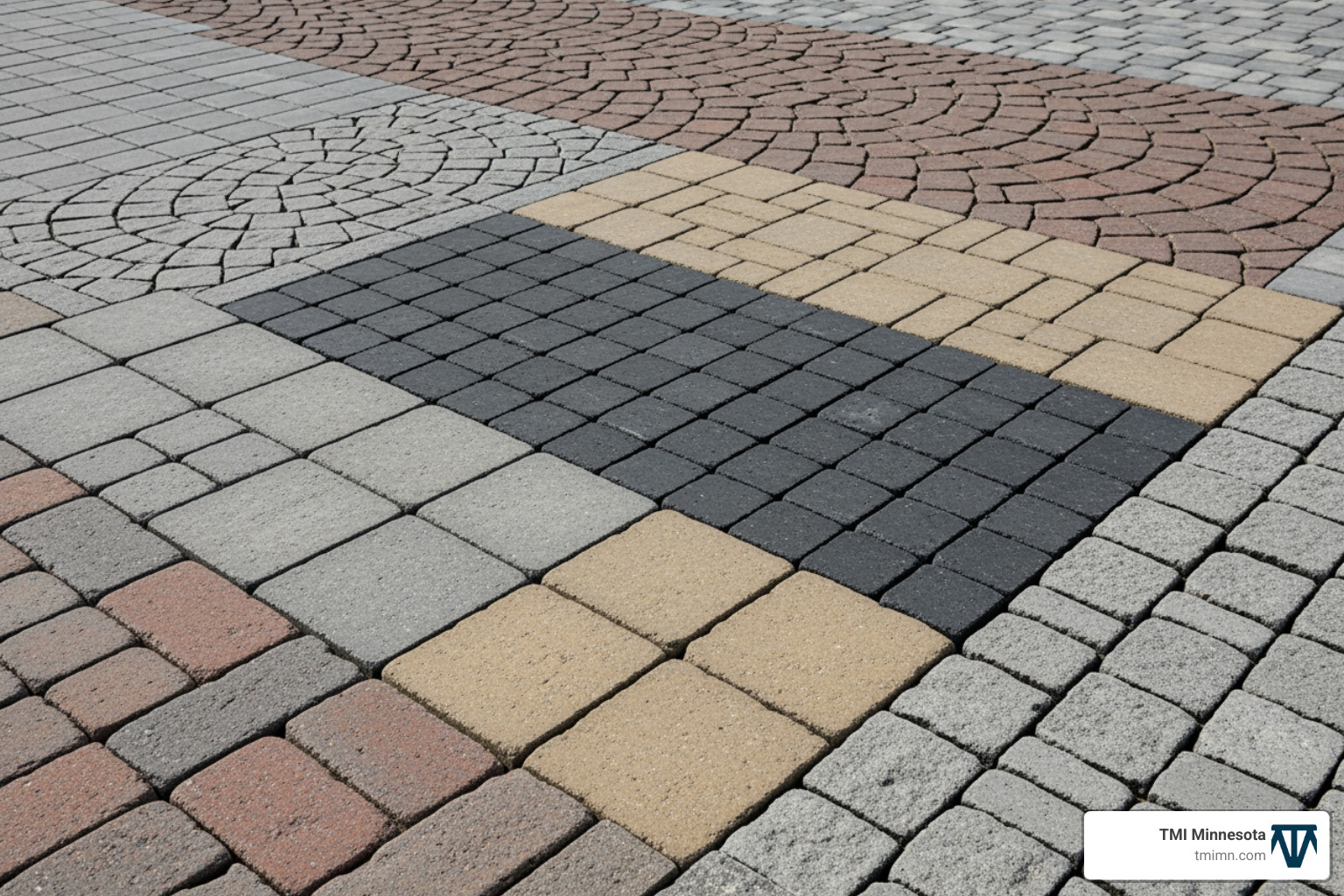
Concrete pavers are not just “bricks made of cement.” They are manufactured in tightly controlled factory environments to ensure they meet rigorous Concrete paving blocks technical data standards. These blocks are typically made from a mix of crushed stone, sand, and cement.
One of the most important distinctions in the industry is between through-color and face-mix blocks:
- Through-color: The entire block is saturated with pigment. If you chip it, the color remains consistent throughout.
- Face-mix: This involves a two-stage manufacturing process. The bottom of the block is high-strength concrete, while the top “face” (about 5-10mm) is made with finer aggregates and higher-quality pigments. This often results in a more vibrant, durable surface finish that resists fading better than traditional through-color blocks.
Durability and Resistance
In Minnesota, frost resistance is non-negotiable. Because concrete pavers are individual units, they have a natural ability to handle the freeze-thaw cycle. Unlike a solid slab of poured concrete, which might heave and crack when the ground expands, a block paved surface “breathes.”
These blocks also boast incredible chemical resistance. Whether it’s road salt from a Twin Cities winter or an accidental oil spill in the driveway, high-quality concrete paving blocks are designed to withstand the elements without disintegrating. Their load-bearing capacity is also significantly higher than standard poured concrete, often exceeding 8,000 psi (pounds per square inch).
Benefits of Concrete Block Paving Over Other Surfaces
Why choose pavers over a standard poured driveway? It comes down to physics and long-term value.
- Load Distribution: Because the blocks are laid in an interlocking pattern, they act as a flexible mat. When a heavy vehicle drives over them, the load is distributed across several blocks and into the sub-base, preventing the localized stress that causes cracks in solid surfaces.
- Crack Resistance: We’ve all seen the “Minnesota spiderweb” of cracks on old asphalt and concrete driveways. Paving blocks avoid this entirely. If the ground shifts, the blocks move slightly and then settle back into place. For more on this, check out our Concrete Driveways Ultimate Guide.
- Flexible Construction: The “flexible” nature of block paving means it is laid on an unbound bed of sand. This allows for natural expansion and contraction without the need for unsightly expansion joints required in poured concrete.
- Repairability: If a single block gets stained or damaged, we don’t have to rip up the whole driveway. We simply pop out the offender and drop in a new one. It’s like Legos for your yard!
Aesthetic Versatility of Concrete Block Paving
One of the most exciting parts of our job at TMI Minnesota is helping homeowners steer the massive color palettes and textures available. You aren’t stuck with “concrete gray” anymore.
- Color and Texture: You can choose colors that mimic natural stone hardscapes or opt for deep charcoals and warm earth tones. Textures range from smooth, contemporary finishes to tumbled, weathered looks that provide old-world charm.
- Delineating Spaces: We often use different colors or shapes to create block paving driveway designs that feature borders or “rug” patterns. This is a great way to separate a parking area from a pedestrian walkway.
- Curb Appeal: A well-designed paver entrance can significantly increase your home’s resale value. Whether you want a sleek charcoal block paving step or a complex bracken monoblock driveway, the customization options are limitless.
Design Patterns and Functional Applications
The pattern you choose isn’t just about looks; it’s about structural integrity. The way the blocks “knit” together determines how well the surface handles traffic.
Popular Laying Patterns
- Herringbone (45° or 90°): This is the gold standard for driveways. The interlocking nature of the herringbone pattern provides the highest level of resistance to “creeping” (blocks shifting forward due to vehicle braking) and “shoving” (blocks moving sideways during turns).
- Basketweave: This pattern pairs blocks together in alternating horizontal and vertical pairs. It’s a classic look best suited for patios or walkways with light foot traffic.
- Stretcher Bond: Also known as a running bond, this is a simple, clean pattern where blocks are laid in parallel rows. It’s excellent for making a block paving path look longer or wider.
For more inspiration on how these look in action, explore our guide on Block Pave Patterns.
Residential and Commercial Uses
While we love changing backyards, block paving and concrete are equally vital in commercial settings. From pedestrian zones in shopping centers to heavy-duty loading bays, the strength of an 80mm or 100mm thick block is unparalleled. In residential settings, we often combine artificial turf pavers to create a lush, green-meets-stone aesthetic that is very popular in modern Twin Cities landscapes.
Permeable Concrete Paver Solutions
In many parts of the Twin Cities, managing water runoff is a major priority. Permeable paver driveways are a brilliant solution for Sustainable Drainage Systems (SuDS).
Unlike standard pavers, permeable blocks have wider joints or specialized “nibs” that create gaps. These gaps are filled with small, clean stone (not sand) that allows rainwater to flow directly through the surface and into a specialized stone sub-base. This recharges the groundwater and prevents the “lake” that often forms at the end of a driveway during a Minnesota downpour. It’s a win for your yard and a win for the environment. You can find more Block Paving technical specifications regarding these systems to see if they fit your specific drainage needs.
The Installation Process: From Preparation to Finish
A paver project is only as good as what’s underneath it. At TMI Minnesota, we follow a strict process to ensure your investment doesn’t sink or shift over time.
Step 1: Excavation and Sub-base
For a standard domestic driveway, we typically excavate to a depth of 200-250mm (about 8-10 inches). This allows for:
- 100-150mm of compacted sub-base (Class 5 or similar crushed rock).
- 40mm of bedding sand.
- 60mm or 80mm for the pavers themselves.
During excavation, we look for “soft spots” in the soil. If the sub-grade is questionable, we might install a non-woven geo-membrane to prevent the sub-base from sinking into the dirt over time.
Step 2: Edge Restraints
This is the most common place where DIY projects fail. Without strong edge restraints, your pavers will eventually spread outward, and the joints will open up. We use heavy-duty concrete curbs or specialized plastic edging secured with long steel spikes to keep everything locked tight.
Step 3: Screeding the Sand
We use a washed concrete sand for the bedding layer. It’s spread and “screeded” to a perfectly flat profile. Once this sand is down, nobody walks on it! We work from the laid blocks forward to keep the sand bed pristine.
Step 4: Laying and Cutting
The blocks are laid in the chosen pattern. We always pull from at least three different packs of pavers at once. Why? To ensure that any slight color variations between batches are randomized, preventing “blotching” or “banding” on your driveway. For edges and corners, we use a diamond-blade saw to ensure precise “cutting-in.”
Step 5: Jointing and Compaction
Once the blocks are laid, we sweep kiln-dried jointing sand over the surface. Then, we use a heavy plate vibrator (often with a protective mat) to vibrate the blocks into the sand bed. This process forces sand up from the bottom and down from the top, creating the “interlock” that makes the surface so strong. For a detailed walkthrough, see our Install Block Paving Driveway Guide.
Regulations and Planning Considerations
While the UK has very specific national rules for front garden paving, here in the Twin Cities, regulations are usually handled at the municipal or watershed district level.
Most cities have “impervious surface” limits. This means you can only cover a certain percentage of your lot with surfaces that don’t absorb water (like standard concrete or rooftops). This is where Hardscape Installation for Drainage and Erosion Control becomes vital. Using permeable pavers can often help you bypass these limits because they are considered “pervious” surfaces. Always check with your local city hall or a professional contractor before starting a large-scale project to ensure you have the correct permits.
Maintenance and Long-Term Performance
One of the best things about block paving and concrete is that they are relatively low-maintenance, but “low” doesn’t mean “no.”
Cleaning and Sealing
A good sweep every now and then does wonders. We recommend a professional cleaning and sealing every 3-5 years. Sealing protects the color from UV fading and makes it much easier to clean up spills. If you have an unfortunate car leak, knowing how to remove oil from block paving driveway surfaces quickly is key—usually involving a specialized degreaser and a bit of elbow grease.
Dealing with Efflorescence
Don’t panic if your brand-new pavers develop a white, powdery film. This is called efflorescence. It’s a natural occurrence where calcium salts from the concrete rise to the surface. In most cases, it will naturally wash away with rain within the first year.
Weed Control
A common myth is that weeds grow up through pavers. In reality, weed seeds usually blow into the joints from above. Keeping your jointing sand topped up and using a joint stabilizer (or polymeric sand) can almost entirely prevent this. If you do see a stray dandelion, a quick spray of glyphosate or a dash of boiling water usually does the trick.
Frequently Asked Questions about Block Paving
Is block paving more expensive than other driveway options?
Initially, yes. The manufacturing time for the blocks and the intensive labor required for a proper hardscape installation cost more than a simple asphalt pour. However, when you factor in the 20-25 year lifespan and the fact that it adds significant resale value to your home, the long-term cost is often lower. You won’t be paying for a total replacement in 10 years like you might with asphalt.
How long does a concrete paver driveway last?
With proper installation and minimal maintenance, you can easily expect 20-25 years of service. Many of the projects we see are still in fantastic structural shape after three decades. The secret is the sub-base; if the foundation is solid, the blocks will stay level. Check out our Block Paving Contractors Guide 2025 for tips on finding a team that builds for longevity.
Do I need a weed barrier under my pavers?
This is a point of much debate! Technically, a weed barrier (fabric) under the sand bed doesn’t stop weeds from growing in the joints (since they grow from the top down). However, a geo-textile fabric is useful for keeping your sub-base from mixing with the soil below. So, we use it for structural stability, not necessarily for weed “magic.” For more on this, see our guide on Patio Paver Installation.
Conclusion
At TMI Minnesota, we believe that your outdoor space should be an extension of your home. Whether it’s a grand driveway that welcomes you back every evening or a quiet patio for morning coffee, the combination of block paving and concrete offers the perfect blend of durability and beauty.
Our team specializes in changing Twin Cities yards with leading-edge products and professional craftsmanship. We don’t just lay blocks; we design environments that lift your yard living experience. Ready to start your change? Transform your driveway with professional block paving designs and let us help you build something that lasts a lifetime.