
Why Your Outdoor Space Deserves More Than Just a Patio
Transform outdoor space into something truly special, and you’re not just adding a nice place to sit—you’re investing in your home’s value, your family’s lifestyle, and your own well-being. According to industry data, homes with well-maintained landscaping sell for 5-12% more than comparable homes without it, and the average ROI for landscaping projects ranges from 100-200%.
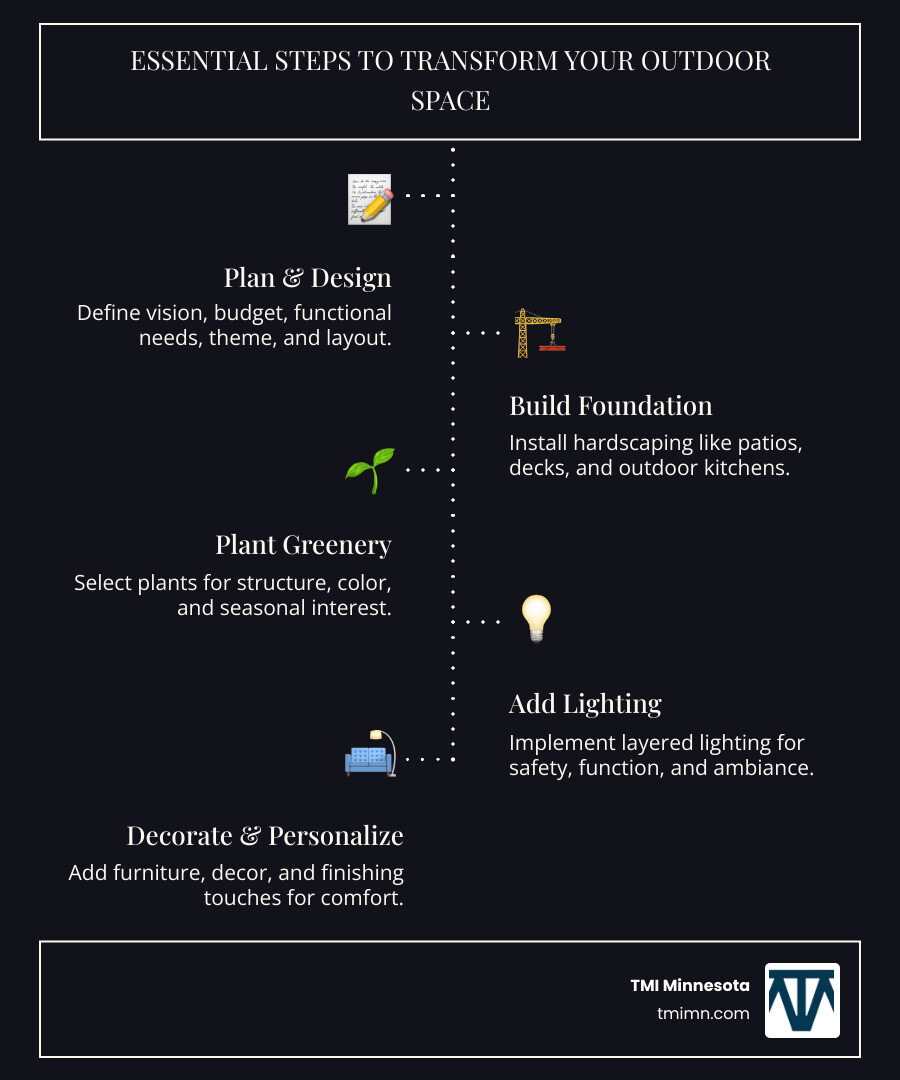
Here are the essential steps to transform your outdoor space:
- Plan – Define your vision, budget, and functional needs
- Design – Choose a cohesive theme and layout that fits your lifestyle
- Build – Install hardscaping elements like patios, decks, or outdoor kitchens
- Plant – Select appropriate plants for structure, color, and seasonal interest
- Light – Add layered lighting for safety, function, and ambiance
- Decorate – Personalize with furniture, decor, and finishing touches
Many homeowners feel stuck with an outdated yard that doesn’t meet their needs, from a small patio to sparse landscaping. The good news is that changing your outdoor space doesn’t require starting from scratch—it’s about making strategic improvements that maximize beauty and function. A well-designed outdoor space extends your living area, provides a venue for gatherings, and creates a personal retreat right outside your door. With over 70% of homeowners willing to spend more on homes with desirable outdoor living areas, the change is more achievable than you might think.
I’m Christopher Deanovic, and as Operations Leader at Task Masters (TMI Minnesota), I’ve helped countless homeowners transform outdoor spaces throughout Minnesota by blending innovative design with practical craftsmanship. My hands-on approach ensures every project reflects your unique vision while maximizing your yard’s potential.
Essential transform outdoor space terms:
The Foundation: Planning Your Outdoor Change
This section covers the crucial first steps of any project, ensuring a cohesive and successful result. We’ll explore how to define your needs, choose a style, and select the right materials and plants from the start.
Defining Your Vision, Budget, and Garden Design
The most crucial step in any successful outdoor change is meticulous planning. This involves defining a clear vision, establishing a realistic budget, and understanding garden design to prevent costly mistakes.
First, conduct a thorough site inventory. Look at existing conditions: soil type, water drainage, climate (especially our distinct Twin Cities seasons), and any vegetation worth keeping. Map out sun exposure, microclimates, utilities, and existing hardscape to understand the canvas you’re working with.
Next, determine your needs. How do you want to use your yard? For quiet contemplation, lively entertaining, or a play area? Consider your aesthetic preferences, preferred maintenance level, and budget. A clear financial plan is essential, as initial landscaping is often the most costly part. We help create a base map and functional diagrams, grouping related activities (like cooking and dining) and separating incompatible ones.
Finally, understand the range of costs, from design fees to materials. Maintenance preferences will influence material and plant selection. We also check local planning permissions for structures like fences or walls to ensure compliance.
By taking the time to truly define your vision and plan carefully, we ensure your outdoor change is not just beautiful, but also functional, sustainable, and custom to your unique lifestyle. For a deeper dive into planning your dream backyard, check out this garden design guide. You can also explore our Home Backyard Makeover Guide for more inspiration.
How to Apply Popular Landscape Design Themes
Once we have a solid plan, it’s time to infuse personality into your outdoor space with a distinct design theme. Choosing a theme helps create a cohesive and captivating environment. While we can certainly blend styles, understanding the core elements of popular landscape design themes can help us craft a space that feels just right for your Twin Cities home.
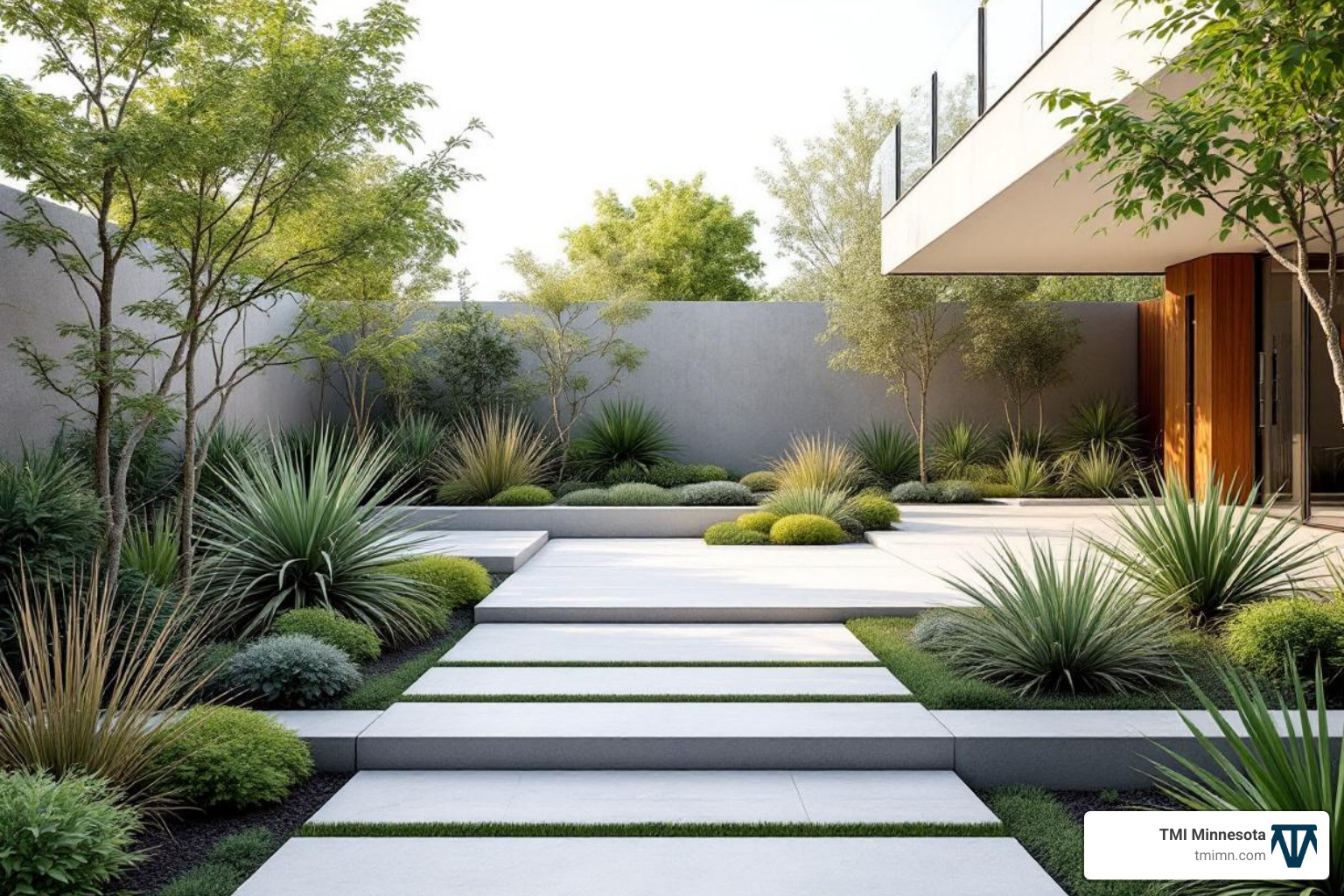
- Modern Design: Perfect for a polished, uncluttered look, modern design emphasizes clean lines, geometric shapes, and minimalist planting. It uses materials like concrete, metal, and glass for sleek sophistication and a seamless transition from a contemporary interior. Our Modern Outdoor Backyard Designs Guide offers more insights into this popular aesthetic.
- Luxury Design: This theme creates a lavish retreat with high-end materials and elaborate features. Think custom pergolas, sophisticated outdoor kitchens, fire pits, and captivating water features. Lush plantings and manicured lawns complete the opulent feel.
- Farmhouse Style: This style brings rustic charm with natural materials like wood, stone, and brick in fences, paths, and patios. Abundant, informal plantings of perennials and herbs create an inviting atmosphere, complemented by vintage accents and cozy seating.
- Spanish Influence: A Spanish design offers a vibrant, Mediterranean escape. It incorporates terracotta tiles and pots, colorful plantings like lavender and citrus (in containers for Minnesota), and decorative elements like wrought iron furniture and water features.
Each of these themes offers a unique way to lift your yard living, and we can help you integrate your chosen style seamlessly into your property. For more ideas on various aesthetics, explore our Contemporary Garden Styles guide.
Mastering Plant Selection to Transform Your Outdoor Space
Plants bring life, color, and texture to any outdoor space. Mastering plant selection is crucial for a visually appealing, low-maintenance environment that thrives in Minnesota. We consider a plant’s form, texture, color, and mature size to ensure it fits the overall design.
A key principle is focusing on foliage for year-round interest, especially evergreens for our long winters. Also, consider how light affects a plant’s appearance throughout the day.
- Mass planting: Using large groupings of the same variety creates a bold, cohesive statement and simplifies maintenance by suppressing weeds.
- Layering techniques: Arranging plants by height (tallest in back, shortest in front) adds depth and dimension to garden beds.
- Repetition: Repeating certain plants, colors, or forms creates a rhythmic flow that unifies the landscape.
For Twin Cities homeowners, selecting low-maintenance plants suited to our climate is paramount. Use the USDA Plant Hardiness Zone Map to ensure plants can survive our winters. We also recommend incorporating Minnesota Native Plants, which are naturally adapted to our area. Always ensure proper spacing to prevent overcrowding and reduce future maintenance.
Building the Bones: Hardscaping, Structures, and DIY Projects
With a solid plan and plant palette in mind, it’s time to construct the permanent elements that form the backbone of your outdoor living area. This includes everything from functional entertainment hubs to clever DIY improvements that improve both curb appeal and usability.
Creating Functional Outdoor Rooms with Kitchens, Fire, and Water
Extending your home’s living space into the outdoors means creating distinct “rooms” that serve specific functions. These functional outdoor rooms often become the focal points of a transformed backyard, inviting gathering and relaxation.

- Outdoor Kitchens: A top trend for 2025, outdoor kitchens offer full functionality with weatherproof appliances, work surfaces, sinks, and refrigerators. We carefully plan for utilities and use durable, non-porous materials to ensure safety and longevity, truly lifting your entertaining game. Explore our expertise in Outdoor Kitchen Installation.
- Fire Pits: The allure of a flickering flame on a cool Minnesota evening is undeniable. Fire pits create cozy gathering spots perfect for conversation. Whether built-in or portable, they provide warmth, ambiance, and a natural focal point, with many modern units using easy-to-operate propane. Find more about Outdoor Fire Pit Construction.
- Water Features: The soothing sound of trickling water transforms a space into a tranquil sanctuary. Fountains, ponds, or waterfalls add relaxation and beauty, serving as either a focal point or a subtle accent to improve your yard’s sensory experience. We specialize in Water Feature Installations that perfectly complement your landscape.
- Pergolas & Decks: These structures define function. A deck can increase home value by up to 10%, offering a platform for dining or lounging. Pergolas provide shade and define outdoor “rooms,” making a patio feel more intimate, and can be adorned with plants or screens for comfort.
These elements, thoughtfully integrated, allow us to create outdoor rooms that are as functional and comfortable as any indoor space, ready for year-round enjoyment (with the right heating, of course!).
Practical DIY Projects to Transform Your Outdoor Space
Not every outdoor change needs to be a massive undertaking. Practical DIY projects can significantly improve curb appeal and functionality with a bit of elbow grease.
- Window boxes instantly add charm and color to your home’s exterior when filled with vibrant flowers or herbs.
- A deck revamp with a fresh coat of durable paint can work wonders. Adding wrap-around stairs can also improve flow and access.
- Privacy screens, whether slatted or trellises with climbing plants, are a cost-effective way to create seclusion.
- Simple landscaping DIYs like using landscape edging kits and adding fresh mulch give a polished look while retaining moisture and suppressing weeds.
- Even covering unsightly elements like a crawl space opening with a custom-built box can drastically improve an area’s appearance.
These achievable projects contribute significantly to the aesthetic and usability of your outdoor space. For more inspiration and step-by-step guides, check out these DIY Projects That Can Transform Your Outdoor Space or our comprehensive Backyard Improvement Ideas Ultimate Guide.
Defining Spaces, Framing Views, and Creating Transitions
A well-designed outdoor space flows seamlessly with defined areas and thoughtful transitions.
- Pathways guide movement and create a sense of journey. Straight paths with pavers suit formal gardens, while curved paths in naturalistic settings invite exploration. For more ideas, visit our Garden Pathway Ideas.
- Patios are the primary areas for living and dining. Pavers are a popular choice, offering more customization and durability than stamped concrete. Our team excels in Patio Paver Installation.
- Landscape edging gives garden beds a polished look, defining planting areas and separating them from lawns or paths.
- Softening hardscapes involves integrating plants, like groundcovers in paver cracks, to blur the lines between hard and soft elements.
- Arbors and fencing frame views and create transitions. An arbor can be a gateway, while fencing can define boundaries or create backdrops for planting. These elements ensure your space feels coherent and inviting.
Landscaping Techniques to Lift Your Yard
With the structure in place, it’s time to bring your space to life with plants. This section details professional techniques for creating a lush, visually appealing, and balanced landscape that thrives in our Minnesota environment.
Enhancing Entries and Going Vertical
Enhancing your home’s entry dramatically boosts curb appeal and sets a welcoming tone.
Curb appeal starts at the street. We cluster plants along foundation walls and front steps, mixing varieties for height and texture to soften the home’s vertical lines. A mix of evergreens and seasonal color in containers provides year-round interest. Our Curb Appeal Landscaping services are designed to make your home stand out.
For smaller Twin Cities yards, vertical gardening is a game-changer. It maximizes space by using hanging planters, trellises, or living walls to grow plants up fences and pergolas. This technique, a core part of our Softscape Design approach, adds beauty, privacy, and shade without using valuable ground space.
Using Repetition for Balance and Unity
In landscape design, harmony is achieved through thoughtful repetition of plants and design elements. This technique creates balance, unity, and a sense of rhythm.
We use repeating plants, like a specific ornamental grass, in multiple beds to create a visual thread that makes the landscape feel cohesive. Similarly, repeating colors or repeating forms (like columnar evergreens) can achieve the same unifying effect, bringing a sense of calm and structure.
Repetition can create both symmetrical balance (mirrored elements for formal gardens) and asymmetrical balance (equilibrium without being identical for naturalistic designs). The goal is to avoid a “botanical collection” look and instead create a curated, peaceful environment. Our work in Beautiful Garden Landscaping often showcases these principles to create harmonious outdoor spaces.
The Finishing Touches: Lighting and Decor
The final layer of your change involves adding personality, comfort, and ambiance. Learn how to use lighting and decor to make your outdoor space truly inviting, extending its usability and enjoyment long after the sun goes down.
Essential Elements of a Successful Outdoor Lighting Scheme
A well-designed outdoor lighting scheme is essential for both functionality and ambiance, increasing usability and safety after sunset. We focus on creating layered lighting for the perfect balance of brightness and evening enjoyment.
- Path Lighting: Crucial for safety, this illuminates paths to functional areas like fire pits and entryways to prevent falls.
- Uplighting: Showcases trees, architectural features, or unique plants, allowing you to appreciate your landscaping after sundown.
- String Lights & Lanterns: Incredibly versatile for pure ambiance, these are perfect for patios or strung through trees.
- Recessed & Task Lighting: Brighter task lighting is necessary for safety in areas like outdoor kitchens or grilling stations.
- Motion-Sensor Lighting: On the periphery of your property, these improve security without disrupting entertaining areas.
The goal is to integrate lighting stylishly, balancing utility with ambiance. For more ideas on illuminating your yard, check out our Backyard Garden Lighting Ideas and learn about professional Outdoor Lighting Installations that bring your vision to light.
How to Use Outdoor Decor to Improve Style and Comfort
Adding personality and comfort with outdoor decor makes your space a true extension of your home.
Furniture arrangement is key to creating inviting outdoor rooms. Arrange seating to encourage conversation or define zones for dining and lounging. Multi-functional furniture is great for maximizing space. Explore our Outdoor Seating Areas for ideas.
Outdoor rugs instantly ground a seating area, adding warmth and color. Unexpected elements like mirrors can expand the perceived size of a space, while artwork and sculptures add a distinctive, personal touch.
We also consider practical elements that improve comfort:
- Drapes and Curtains add elegance and shade.
- Swings and Hammocks offer spots for relaxation.
- Decorative Pillows and Throws in weatherproof fabrics add pops of color.
- Outdoor Heaters extend usability into cooler Twin Cities evenings.
- Cocktail Carts are a convenient addition for entertaining.
The goal is to create a welcoming hangout spot that is both beautiful and useful. For a wealth of inspiration, dive into these Patio Decorating Ideas: 120 Best Awe-Inspiring Design Tips.
Frequently Asked Questions about Outdoor Changes
We often hear similar questions from homeowners eager to transform their outdoor spaces. Here are some of the most common, along with our expert answers.
What is the best way to start an outdoor change project?
The best way to start is with a comprehensive plan. Begin with a site analysis of your existing conditions (soil, drainage, sun patterns). Then, define how you want to use the space, set a realistic budget, and choose a complementary design theme. Creating a base map of your property is a crucial first step to avoid costly mistakes and ensure the final design meets your needs.
What elements give the best return on investment for an outdoor makeover?
In the Twin Cities, certain improvements offer excellent returns. Hardscaping like a new deck or patio can increase home value by up to 10%. Well-designed landscaping can add 5-12% to your home’s value. Features that extend usability, such as outdoor kitchens and fire pits, are also highly desirable and create functional outdoor rooms that improve a home’s appeal.
How can I make a small outdoor space feel larger and more functional?
Small yards are an opportunity for creative design. To make a small space feel larger, use vertical space with trellises or living walls. Use mirrors to create an illusion of depth and opt for multi-functional furniture. Stick to a cohesive color palette and minimal decor. Finally, defining distinct zones with outdoor rugs or planters can make the area feel more organized and usable.
Conclusion
A thoughtful outdoor change does more than just improve your home’s curb appeal; it creates a valuable, functional extension of your living space for relaxation and entertainment. By combining smart planning, structural elements, and personal touches, you can create a backyard oasis that brings joy for years to come. From defining your vision and choosing the perfect design theme to building functional outdoor rooms and adding the right finishing touches, every step contributes to a space that reflects your lifestyle and improves your property’s value. The team at TMI Minnesota specializes in bringing these unique visions to life with expert design and installation, using leading-edge products to lift yard living for homeowners across the Twin Cities.
Ready to start your own change? Explore our landscape design services to see how we can help.