
Why Your Driveway Pattern Matters
Block pave patterns are more than just pretty designs – they’re the foundation of a driveway that combines beauty, strength, and lasting value for your home.
Most Popular Block Pave Patterns:
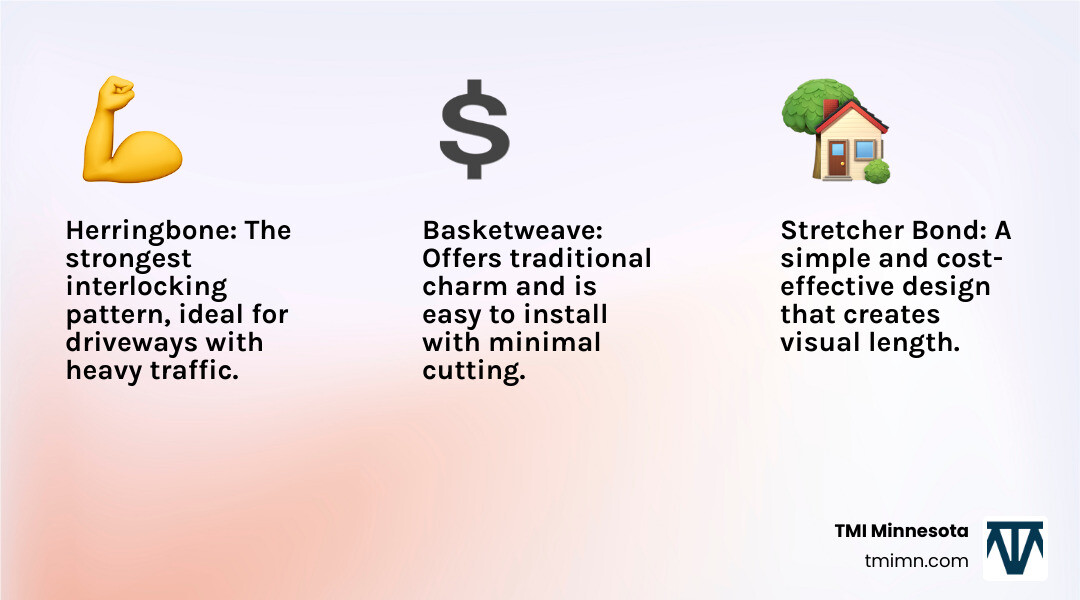
- Herringbone – Strongest interlocking pattern, ideal for driveways with heavy traffic
- Stretcher Bond – Simple, cost-effective design that creates visual length
- Basketweave – Traditional checkerboard effect, easy to install with minimal cutting
- Stack Bond – Clean grid pattern, perfect for modern contemporary looks
- Circular Patterns – Eye-catching focal points for entrances and courtyards
Your driveway is often the first thing visitors notice about your home. Research shows that the herringbone pattern is the most popular choice among customers due to its interlocking strength and durability. Different patterns affect not just appearance, but also how well your driveway handles Minnesota’s harsh winters and heavy vehicle loads.
The right pattern choice impacts three key areas: curb appeal, structural integrity, and long-term maintenance costs. While stretcher bond patterns create an illusion of length and work well for narrow spaces, herringbone patterns provide superior stability for areas with substantial traffic or heavy loads.
Color combinations matter too. Common options like buff, brindle, and charcoal can be mixed to create stunning contrasts, while borders and edge courses add that professional finishing touch that makes your driveway look intentional and well-planned.
I’m Christopher Deanovic, Operations Leader at Task Masters, where I’ve spent years helping Minnesota homeowners transform their outdoor spaces through thoughtful hardscape design and expert craftsmanship. My hands-on experience with block pave patterns has shown me how the right design choice can dramatically improve both the beauty and functionality of any driveway.
The Classics: 3 Popular Block Pave Patterns Explained
When you’re looking to transform your driveway or patio, the pattern you choose can make all the difference between “nice” and “wow!” These block pave patterns aren’t just about looks – they’re about creating a surface that works hard for your Minnesota home while looking great year after year.
Think of it this way: your pattern choice affects everything from how well your driveway handles our brutal winters to how much you’ll spend on the project. Some patterns are workhorses built for heavy traffic, while others shine in creating beautiful, welcoming spaces for entertaining.
Let’s explore the three most popular block pave patterns that have earned their reputation through decades of proven performance. Each has its own personality and strengths, and I’ll help you figure out which one fits your home best. For even more design inspiration, check out our collection of Block Paving Driveway Designs.
| Pattern | Durability | Typical Cost (Installation) | Best Use Cases |
|---|---|---|---|
| Herringbone | Excellent (Highest) | Moderate to High | Driveways, high-traffic areas, commercial spaces |
| Stretcher Bond | Good (Moderate) | Low to Moderate | Pathways, patios, low-traffic driveways, borders |
| Basketweave | Fair to Good (Less Interlock) | Low to Moderate | Patios, garden paths, decorative areas, traditional homes |
1. Herringbone Pattern: The Gold Standard for Strength
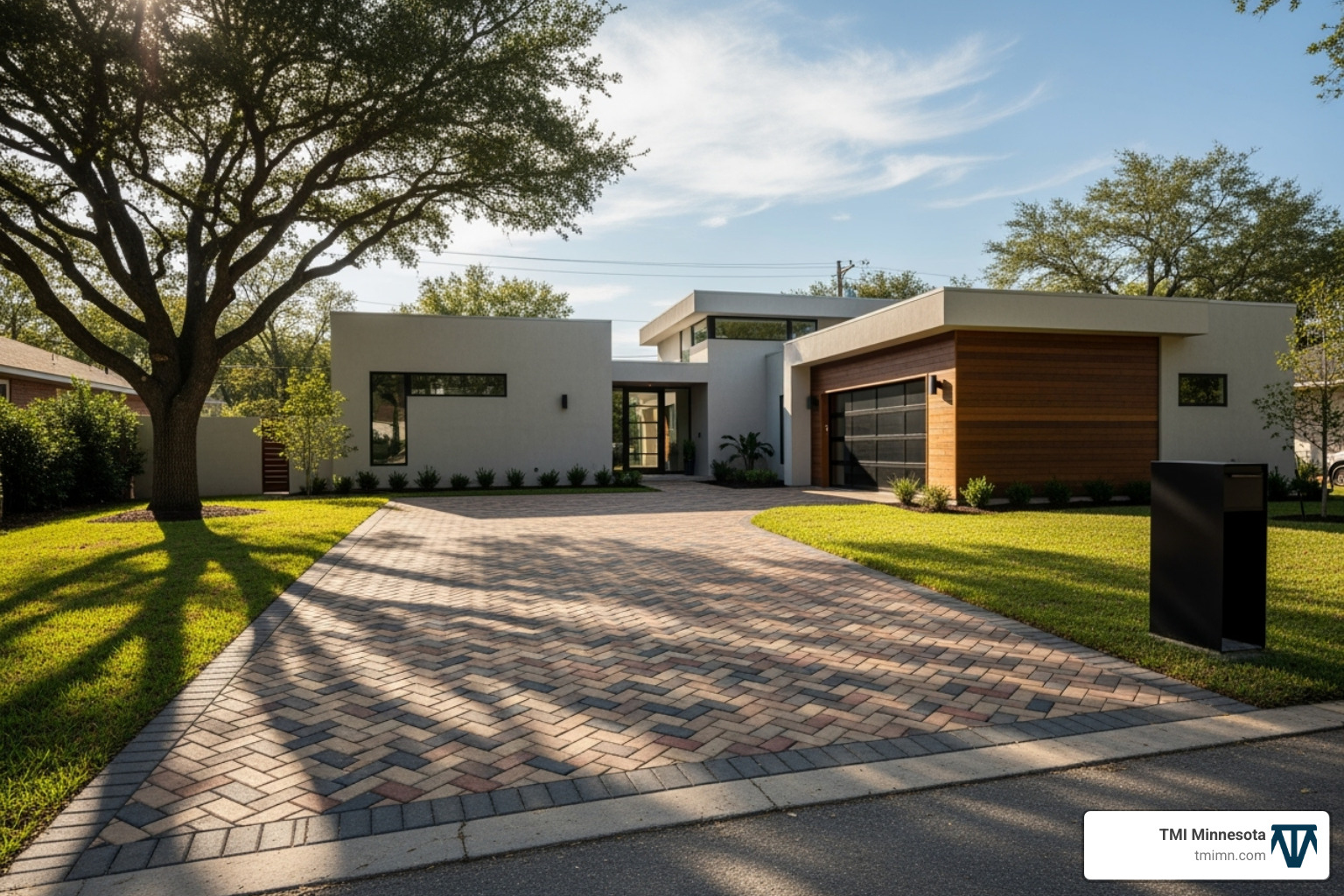
If patterns were superheroes, herringbone would definitely be the one with super strength. This interlocking design creates a zigzag formation that’s absolutely unbeatable when it comes to handling heavy traffic and weight distribution.
Here’s what makes herringbone so special: those blocks lock together like puzzle pieces, preventing any shifting or movement even when your teenager decides to practice parking maneuvers in the driveway. The pattern spreads weight evenly across the entire surface, which is exactly what you want when Minnesota’s freeze-thaw cycles try to wreak havoc on your pavement.
You’ve got two main angles to choose from with herringbone. The 90-degree angle runs parallel to your house or driveway edge and offers maximum strength – perfect for driveways that see daily use from multiple vehicles. The 45-degree angle creates more visual movement and works beautifully in larger spaces, though it requires a bit more cutting at the edges.
Both versions deliver that timeless appeal that works with everything from colonial homes to modern designs. Yes, herringbone might cost a bit more upfront due to the precision installation required, but when you consider the driveway stability and longevity you’re getting, it’s an investment that pays off for decades.
2. Stretcher Bond (Running Bond): Simple & Neat
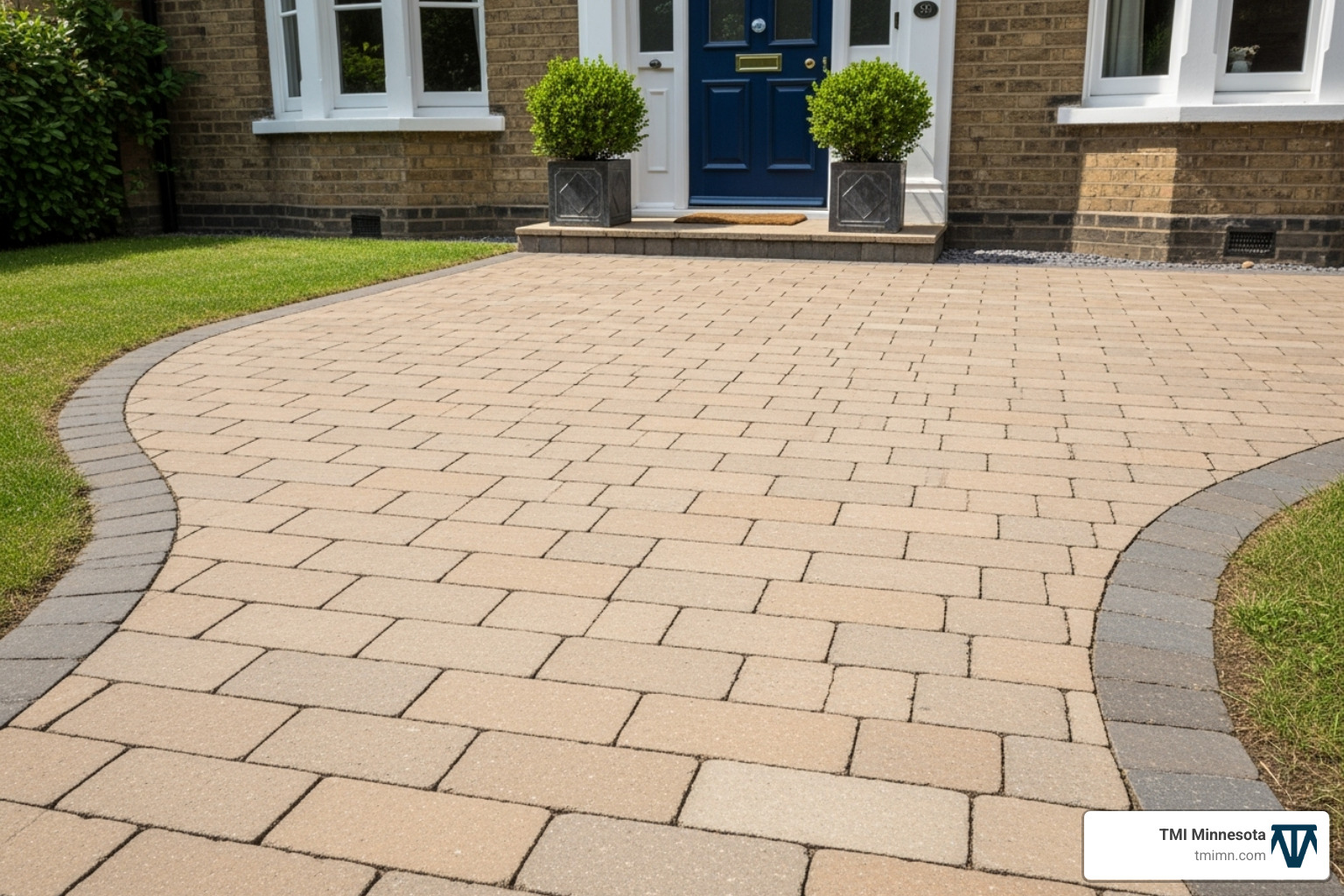
Sometimes the best solutions are the simplest ones. Stretcher bond proves this beautifully with its clean, straightforward design that delivers both cost-effective installation and lasting appeal.
Picture a brick wall laid on its side – that’s essentially what stretcher bond gives you. Each row of blocks is offset by half a block’s length, creating those neat, staggered joints that give your space a classic, organized look. It’s like the reliable friend of block pave patterns – not flashy, but always dependable.
The magic of stretcher bond lies in its ability to create an illusion of length. When you lay the blocks running in the same direction as your pathway or driveway, the space automatically looks longer and more expansive. This trick works wonders for narrow driveways or smaller patios where you want to maximize the visual impact.
Installation is refreshingly straightforward with stretcher bond. There’s minimal cutting required, which keeps your costs down and reduces waste. While it doesn’t offer the interlocking strength of herringbone, it provides plenty of stability for pathways, patios, and lighter-traffic areas. The uniform look works beautifully as a backdrop for your landscaping, letting your plants and outdoor furniture take center stage.
3. Basketweave Pattern: Timeless, Traditional Charm
Nothing says “classic elegance” quite like the basketweave pattern. This design creates a beautiful checkerboard effect by arranging paired blocks in alternating horizontal and vertical positions, giving your space that handcrafted, traditional feel that never goes out of style.
What makes basketweave so appealing for homeowners is its perfect balance of beauty and practicality. The easy installation process requires minimal cutting, which translates directly to savings in both labor and materials. Your installer will thank you, and so will your budget.
This pattern absolutely shines in courtyards, garden patios, and areas where you want to create a sense of warmth and tradition. Imagine hosting a summer barbecue on a basketweave patio – there’s something about that woven texture that makes spaces feel more intimate and welcoming.
The decorative appeal of basketweave makes it a natural choice for traditional properties, but don’t think it’s limited to older homes. This pattern adds character and visual interest to any space where foot traffic is the main concern rather than heavy vehicles.
While basketweave doesn’t provide the same structural interlocking as herringbone, it offers something equally valuable: a timeless charm that makes your outdoor space feel established and thoughtfully designed from day one.
Beyond the Basics: Unique and Decorative Block Pave Patterns
Once you’ve mastered the classic patterns, a whole world of creative possibilities opens up. The beauty of block pave patterns lies in their flexibility – you can create something truly unique that reflects your personality and makes your home stand out from the neighborhood.
Think of these advanced patterns as the difference between wearing a nice suit and wearing a custom-custom one that fits you perfectly. Both look good, but one is unmistakably yours. For more visual inspiration on how these creative designs come to life, check out these Driveway Designs Pictures.
Circular and Fan Patterns: Creating a Stunning Focal Point
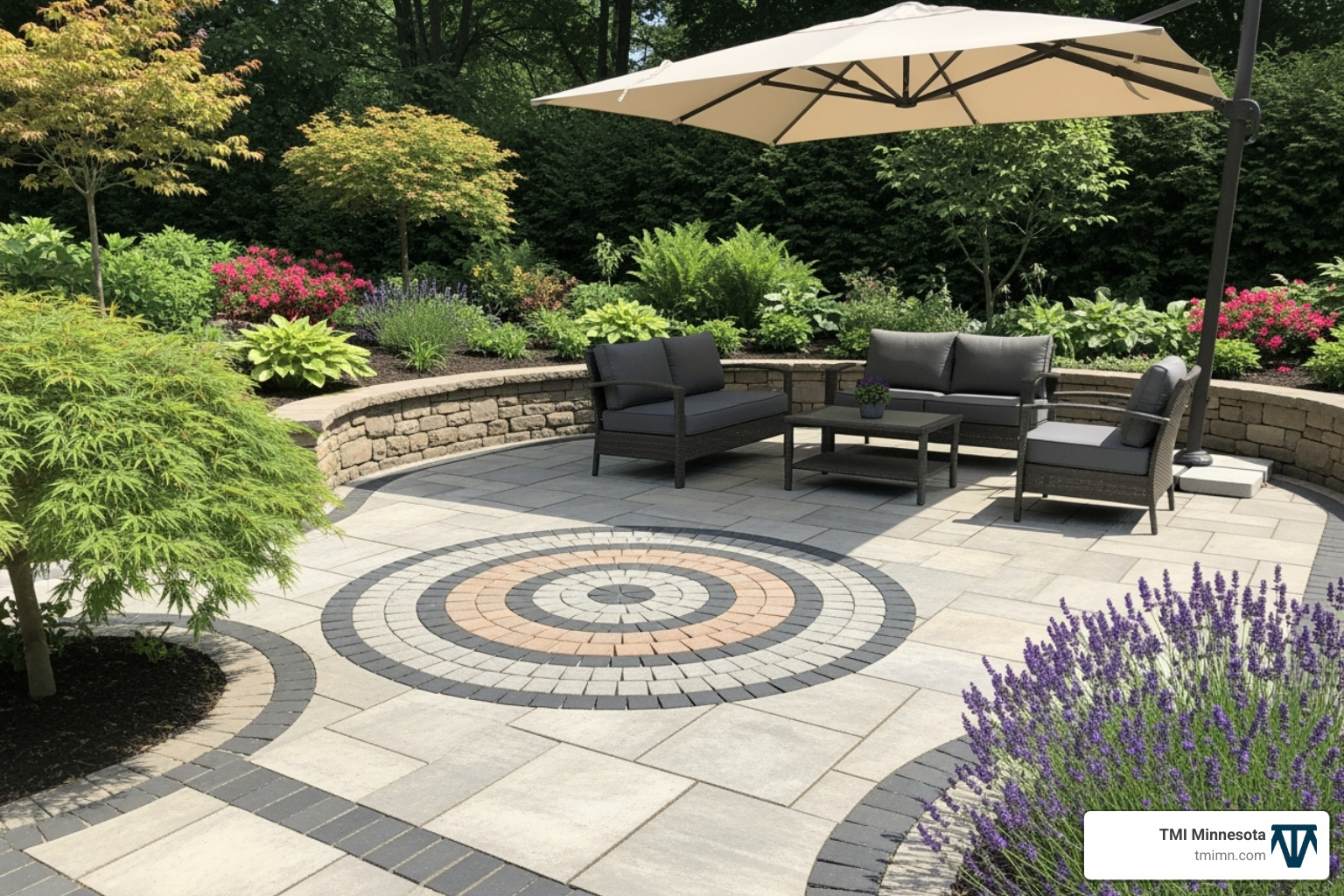
Sometimes your outdoor space needs a showstopper – something that makes visitors stop and say “wow.” That’s where circular and fan patterns shine brightest.
Picture pavers laid in concentric circles, radiating outward like ripples in a pond. This creates an instant focal point that draws the eye and adds serious visual impact to your space. We love using circular patterns for patio dining areas or as a grand entrance feature. There’s something almost magical about how they transform an ordinary space into something special.
The European fan pattern takes this concept even further. Imagine neat arcs sweeping across your driveway entrance, creating the kind of sophisticated look you’d see in historic European courtyards. It’s perfect for homeowners who want to add a touch of old-world charm and make a bold first impression.
These patterns work best in larger spaces where they have room to breathe. A circular pattern tucked into a tiny corner won’t have the same impact as one that dominates a spacious courtyard or driveway entrance. Yes, they require more careful planning and cutting, but the result is pure architectural eye candy.
Mixed, Random, and Textured Styles
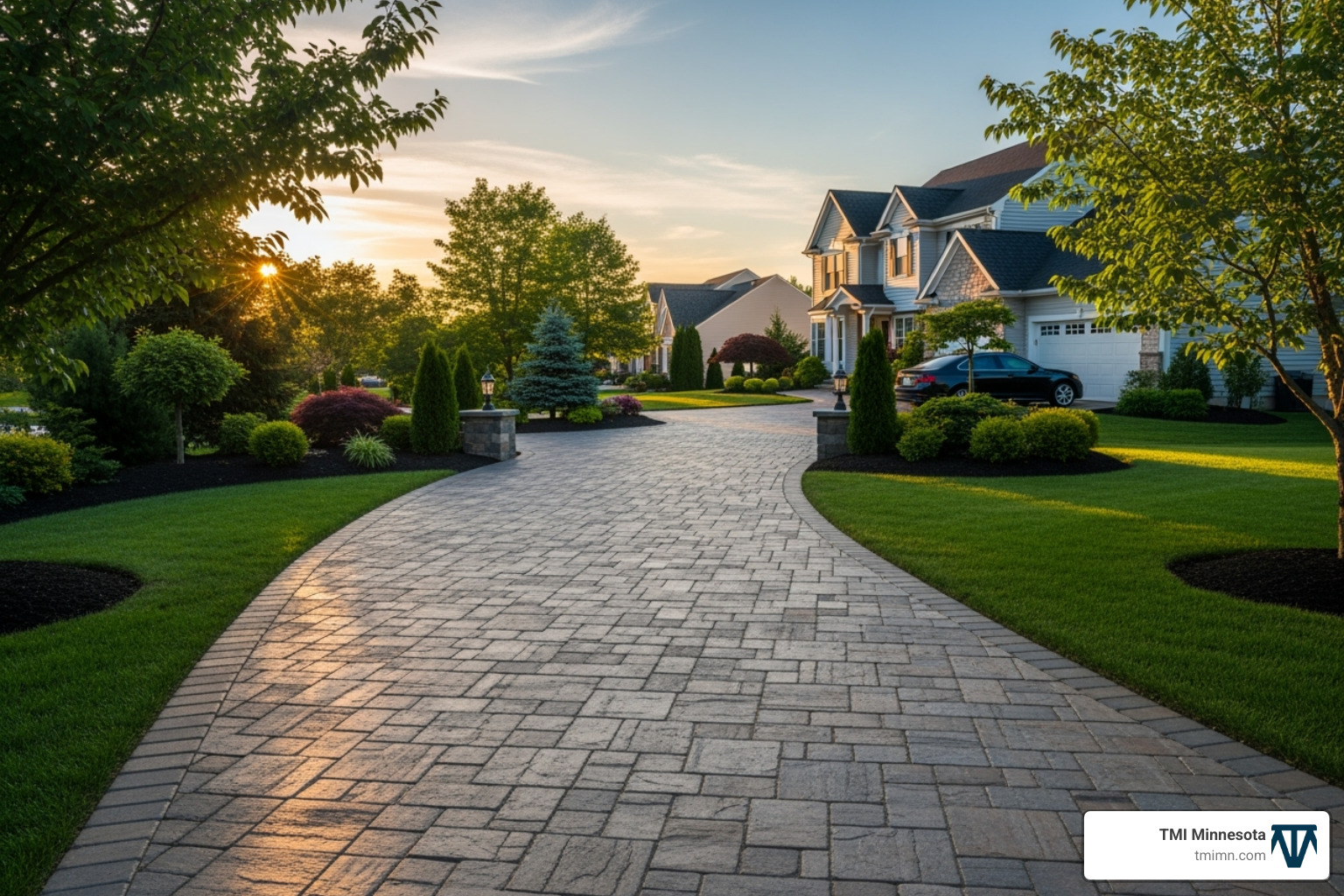
Here’s where things get really fun. Combining different patterns is like being an artist with pavers as your paint. You might use a strong herringbone pattern for your main driveway area, then switch to a simple stretcher bond for the border. This approach lets you have both durability where you need it and visual interest everywhere.
Random course patterns create that natural, organic look that feels like it’s been there forever. We use multiple block sizes laid without a strict repeating pattern – think of it as controlled chaos that somehow looks perfectly balanced. The trick is avoiding those awkward spots where four corners meet (which can weaken the structure) and preventing long straight lines that look too rigid.
This rustic aesthetic works beautifully for garden pathways or informal areas where you want things to feel relaxed and natural. For material ideas that complement these organic styles, explore our Driveway Stone Ideas.
Now, let’s talk about Tegula paving style – and here’s something important to understand: Tegula isn’t actually a pattern, it’s a style of paver. These blocks come with a textured finish and rumbled edges that give them an aged, weathered appearance right out of the box.
The beauty of Tegula blocks lies in their aged appearance. They’re manufactured to look like they’ve been weathered by decades of use, giving you that authentic cobblestone charm without the centuries of waiting. Most Tegula installations use three different block sizes in a staggered arrangement, creating depth and visual richness that makes your driveway look like it belongs in a European village.
This rumbled look adds character that you simply can’t get with perfectly smooth, uniform pavers. It’s ideal for homeowners who love the charm of old-world craftsmanship but want the reliability of modern materials.
Key Design & Installation Considerations
Choosing the perfect block pave patterns is just the beginning of your outdoor change journey. The magic really happens when you consider how block size, color, and professional installation work together to create something truly special. At TMI Minnesota, we’ve learned that the difference between a good paved surface and a great one often lies in these thoughtful details. Our Hardscape Installations focus on getting every element right, from the foundation up to that final finishing touch.
Think of it this way: your chosen pattern is like the melody of a song, but the blocks themselves – their size, shape, and color – are what give it rhythm and soul. Then there’s the installation expertise that brings it all together harmoniously.
How Block Size, Shape, and Color Impact Your Block Pave Patterns
The blocks you choose can completely transform how your pattern looks and feels. It’s fascinating how something as simple as size can change the entire character of your outdoor space.
Block size makes a bigger difference than most people realize. Larger blocks tend to make spaces feel more open and contemporary, while smaller blocks create that detailed, intricate look that many homeowners love. Most paving stone families are designed to work together – what we call “modular” sizing. The popular 2:1 ratio blocks (where length is twice the width) are incredibly versatile workhorses that form the backbone of herringbone, stretcher bond, and basketweave patterns.
Square pavers open up different possibilities entirely. They’re perfect for creating clean, modern stack bond patterns or those eye-catching 45-degree diamond layouts that add real drama to an entrance.
Color combinations are where your personality really shines through. The classic choices – buff, brindle, and charcoal – each bring their own character. Buff offers warm, welcoming tones that complement most home styles. Brindle, with its beautiful mix of red and black tones, adds richness and depth. Charcoal provides that sophisticated, contemporary edge that many modern homes crave.
The real magic happens when you combine colors thoughtfully. Picture a charcoal herringbone driveway framed by a warm buff border, or a subtle blend of brindle and grey creating depth without being overwhelming. We always recommend seeing physical samples in natural light – colors can surprise you, and you want to love what you see every time you come home.
The Finishing Touch: Borders and Edging
If block pave patterns are the main event, then borders and edging are the supporting cast that makes everything shine. These finishing touches define spaces, add visual interest, and give your project that professional, intentional look that separates amateur work from expert craftsmanship.
The soldier course is probably our most popular edging choice, and for good reason. Picture blocks standing at attention along your driveway’s edge – that’s where the name comes from. These blocks run perpendicular to the main pattern, creating a strong visual boundary that also helps contain the field pavers. When done in a contrasting color, a soldier course becomes a beautiful frame that highlights your main pattern.
For something more subtle, pencil line inlays offer delicate definition without overwhelming the design. These single lines of blocks can separate different areas of your patio or add a refined accent that catches the eye without shouting for attention. When you want more impact, stretcher bond inlays create wider decorative strips with their offset pattern, adding complexity and traditional charm.
These aren’t just pretty details – they serve important structural purposes too. Proper edging prevents your pavers from shifting over time, especially during Minnesota’s freeze-thaw cycles. For more creative ways to improve your outdoor borders, check out our Landscape Ideas for Driveway Borders and Concrete Driveway Borders.
Installation Complexity for various block pave patterns
Not all block pave patterns are created equal when it comes to installation complexity. Understanding this helps you plan your project timeline and budget realistically, whether you’re working with professionals or considering a DIY approach.
Pattern stability and interlocking design are the big factors here. Herringbone patterns are structural superstars – once properly installed, they lock together so well that they resist movement beautifully. But achieving those precise angles, especially around curves and edges, requires skill and often means more cutting. This translates to higher paver wastage and longer installation times.
Stretcher bond and basketweave patterns are much more forgiving for installation. Stretcher bond’s straightforward linear nature makes it easier to keep aligned, and the cutting requirements are usually minimal for rectangular areas. Basketweave looks complex but actually installs quite simply, with minimal waste and cutting needed.
Here’s where it gets interesting: non-interlocking patterns like stack bond might seem simple, but they rely entirely on edge restraints and proper base preparation for stability. They’re beautiful for patios and walkways but aren’t the best choice for driveways that see heavy vehicle traffic.
Specialty patterns using multiple block sizes or Tegula-style pavers with their varied dimensions and rumbled edges require more time and expertise. The results are stunning, but installation takes patience to build the right rhythm and ensure consistent appearance.
At TMI Minnesota, we handle all these complexities seamlessly, ensuring your chosen pattern performs beautifully for years to come. If you’re curious about the installation process, our guide on How to Install Hardscape Pavers offers detailed insights into what goes into creating these lasting outdoor spaces.
Frequently Asked Questions about Block Paving
Over the years, we’ve helped countless homeowners in the Twin Cities choose the perfect block pave patterns for their outdoor spaces. Here are the questions that come up most often during our consultations – and the answers that help make the decision easier.
Which block paving pattern is the most durable for a driveway?
When it comes to pure strength and longevity, the herringbone pattern wins hands down. This isn’t just our opinion – it’s backed by decades of real-world performance and engineering principles that make it the gold standard for driveways.
The secret lies in the herringbone’s interlocking design. Picture a jigsaw puzzle where every piece locks perfectly with its neighbors – that’s essentially what happens when we lay pavers in this zigzag formation. Each rectangular block supports the ones around it, creating a unified surface that distributes weight evenly across the entire area.
This weight distribution is crucial when you consider what your driveway endures daily. From your family car to delivery trucks, the herringbone pattern prevents individual pavers from shifting or rotating under pressure. It’s like having chainmail armor protecting your driveway – each link strengthens the whole.
The pattern works especially well for Minnesota’s challenging climate. Our freeze-thaw cycles can wreak havoc on weaker paving systems, but the herringbone’s interlocking strength helps it resist the ground movement that comes with seasonal temperature changes. That’s why we see herringbone driveways that still look fantastic after decades of heavy vehicle traffic.
Can I combine different block paving patterns?
Absolutely! Mixing different block pave patterns is one of our favorite ways to create truly unique outdoor spaces. It’s like being an artist with pavers as your medium – the creative possibilities are endless.
The key is thinking about how different patterns can serve different purposes in your outdoor space. We often design driveways where a herringbone pattern handles the main traffic area for maximum durability, while a stretcher bond border frames the edges for a polished, finished look. This combination gives you both strength where you need it and visual appeal throughout.
Pattern mixing also helps define different zones naturally. Imagine walking from your driveway (in herringbone) onto a pathway (in stretcher bond) that leads to a charming patio (in basketweave). Each area feels distinct but connected, creating a journey through your outdoor space.
We’ve created stunning designs where circular patterns serve as focal points within larger herringbone fields, or where contrasting borders in soldier course patterns frame central areas beautifully. The trick is ensuring all the patterns work together harmoniously rather than competing for attention. When planned thoughtfully, combined patterns create custom designs that reflect your personal style while maintaining the practical benefits each pattern offers.
What is Tegula paving?
Here’s where things get interesting – Tegula isn’t actually a pattern at all! It’s a style of block that creates a completely different aesthetic from standard smooth pavers. Think of it as the difference between a crisp, modern look and something that feels like it has centuries of history.
Tegula blocks are manufactured with a distinctive textured finish and rumbled edges. During production, the blocks are tumbled in large drums, which softens their edges and creates that wonderful aged, weathered appearance. The result looks remarkably like old European cobblestones that have been worn smooth by decades of foot traffic and weather.
What makes Tegula particularly appealing is how it uses multiple block sizes that fit together modularly. Instead of uniform rectangular blocks, you might have three different sizes that create a more organic, random-looking surface when installed. This multi-size approach adds to the rustic, old-world charm that makes Tegula so popular for traditional and period-style homes.
The beauty of Tegula paving is that you get the character and charm of historic stonework with all the benefits of modern concrete pavers. It’s durable, relatively easy to install, and available in various colors. While you can lay Tegula blocks in traditional patterns like herringbone or stretcher bond, they really shine when installed in mixed-size layouts that emphasize their natural, time-worn aesthetic.
Conclusion: Design Your Perfect Driveway
Your journey through block pave patterns brings us to an exciting crossroads – the moment where inspiration meets reality. Whether you’ve fallen in love with the unshakeable strength of herringbone, the clean simplicity of stretcher bond, or the traditional charm of basketweave, you now have the knowledge to make a choice that perfectly balances beauty with functionality.
The pattern you choose today will welcome you home for decades to come. It will weather Minnesota’s harsh winters, support countless family gatherings, and serve as the foundation for memories yet to be made. That’s why we believe this decision deserves careful thought and expert guidance.
At TMI Minnesota, we’ve seen how the right block pave patterns can transform not just a driveway, but an entire home’s character. Our expertise goes beyond simply laying pavers – we’re here to help you steer the exciting balance between your aesthetic dreams and the practical realities of our Minnesota climate. Every project we complete reflects our passion for changing outdoor spaces with unique designs and leading-edge products that truly lift yard living.
Your perfect driveway might feature a robust herringbone pattern for the main traffic areas, complemented by neat stretcher bond borders that frame the space beautifully. Perhaps you’re drawn to mixing patterns – creating visual zones that guide the eye and define different areas of your outdoor space. Maybe Tegula paving’s weathered charm speaks to your home’s traditional character, or circular patterns could create that stunning focal point you’ve always envisioned.
The beauty of working with experienced professionals lies in turning these possibilities into reality. We understand how block size influences perception, how color combinations can complement your home’s exterior, and why proper borders make all the difference between a good driveway and a spectacular one.
Ready to bring your vision to life? Let’s design something extraordinary together. Our team is excited to guide you through every step, from that first conversation about your dreams to the final sweep of joint sand that completes your perfect driveway.
Find what’s possible with our Hardscape Design Services, and don’t forget to explore our concrete driveway ideas for more inspiration.