
Why Block Paving Driveways Are the Smart Choice for Your Home
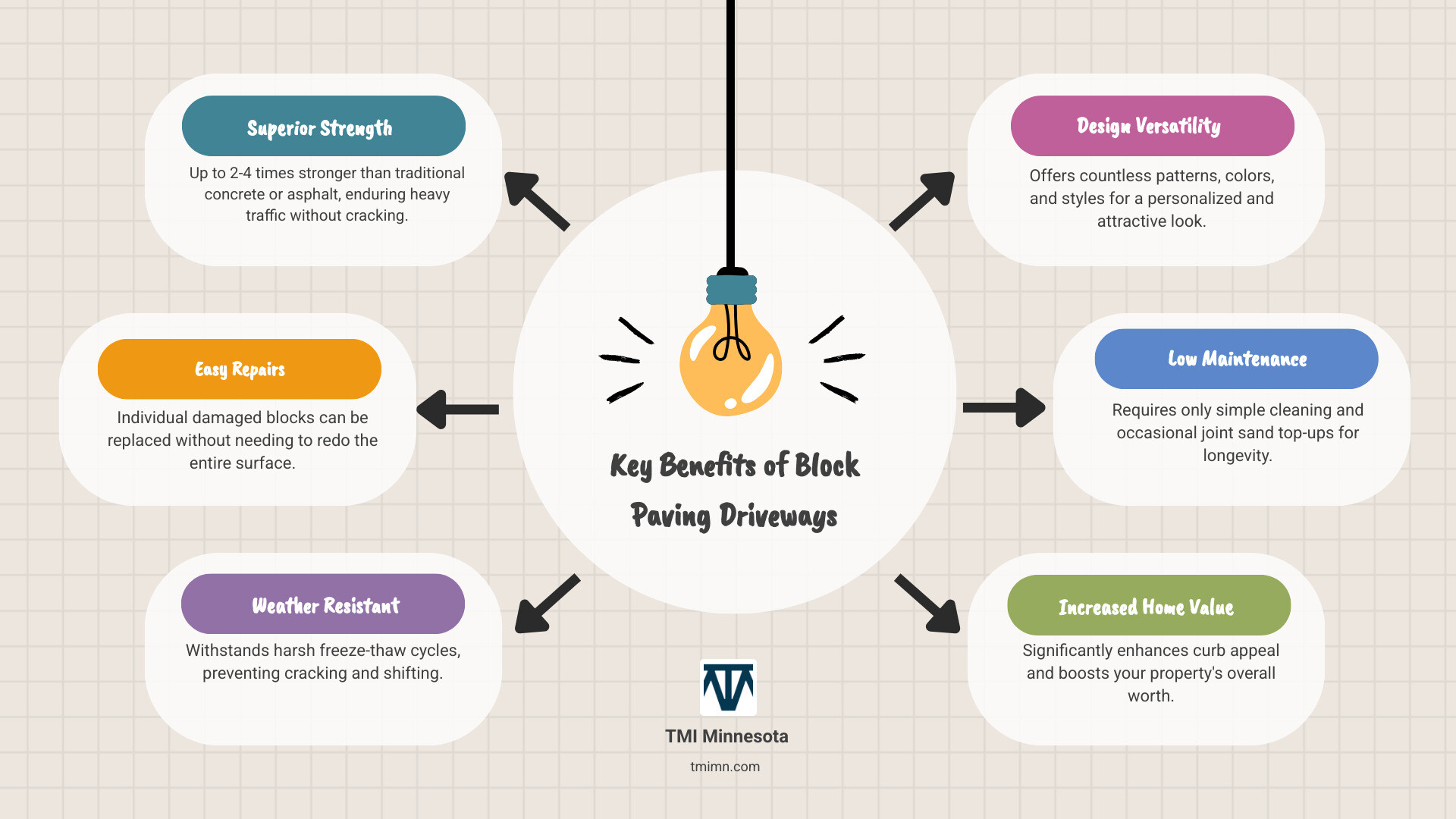
A block paving driveway offers the perfect combination of durability, beauty, and long-term value for your home. Unlike poured concrete that can crack or asphalt that deteriorates quickly, block paving consists of individual interlocking stones that can withstand heavy vehicle traffic for decades.
Key benefits of block paving driveways:
- Exceptional durability – 2-3 times stronger than traditional concrete or asphalt
- Easy repairs – Replace individual damaged blocks without redoing the entire surface
- Weather resistant – Withstands freeze-thaw cycles without cracking
- Design flexibility – Countless patterns, colors, and styles available
- Low maintenance – Simple cleaning and occasional joint sand top-ups
- Increased home value – Improves curb appeal and property worth
Block paving is specifically designed for vehicle overrun and heavy traffic, making it ideal for driveways. The individual blocks distribute weight evenly and allow for natural expansion and contraction with temperature changes.
As Christopher Deanovic, Operations Leader of Task Masters (TMI Minnesota), I’ve overseen countless block paving driveway installations throughout Minnesota. My experience confirms that block paving consistently delivers the best combination of beauty, functionality, and longevity for homeowners seeking a premium driveway solution.
Why Choose Block Paving? Benefits and Comparisons
When you’re looking to upgrade your driveway, a block paving driveway isn’t just another pretty option—it’s a powerhouse of performance that’ll make your neighbors wonder why they settled for ordinary asphalt. The secret lies in the engineering: these aren’t your typical patio pavers. Driveway pavers are specifically manufactured to handle the weight of heavy vehicles, making them significantly tougher and thicker than standard pavers.
Premium block paving driveways offer two to three times the strength of traditional poured concrete or asphalt, with some engineered options pushing that to four times. This incredible durability means your driveway resists cracking and shifting, even during Minnesota’s notorious freeze-thaw cycles.
Beyond the technical specs, there’s something undeniably appealing about the design versatility that block paving offers. Whether you want a classic look that complements your home’s architecture or something bold that makes a statement, the options are virtually endless. Plus, when it comes to maintenance and repairs, block paving makes life refreshingly simple.

| Feature | Block Paving Driveway | Asphalt Driveway | Poured Concrete Driveway | Gravel Driveway |
|---|---|---|---|---|
| Durability | High (Very resilient) | Medium (Cracks over time) | Medium (Prone to cracking) | Low (Shifts, requires replenishment) |
| Repairability | Excellent (Individual block replacement) | Poor (Patching visible, full resurface needed) | Poor (Large sections or full replacement for cracks) | Good (Add more gravel) |
| Design Options | High (Various colors, patterns, textures) | Low (Typically black, limited aesthetic) | Medium (Can be stamped or colored) | Gravel Driveway |
| Maintenance | Low (Sweeping, occasional sanding, cleaning) | Medium (Sealing, crack filling) | Low (Cleaning, but crack repair is difficult) | High (Raking, weeding, replenishment) |
Advantages of Block Pavers
The advantage of a block paving driveway is clear when repairs are needed. If a paver is damaged or you need to access underground utilities, you simply lift and replace individual blocks. This avoids unsightly patches and expensive full replacements, leaving your driveway looking seamless.
This flexibility extends beyond repairs. Unlike poured concrete that fights against natural movement and eventually cracks, block pavers work with the natural expansion and contraction that comes with temperature changes. This is especially valuable here in Minnesota, where freeze-thaw cycles can be brutal on traditional surfaces.
The interlocking design creates a naturally stable and resilient surface. Most block pavers also provide a non-slip surface for better safety during wet or icy conditions.
When properly installed with a solid base, your block paving driveway becomes a true long-term investment. We’re talking about a surface that can genuinely last decades with minimal fuss. This kind of durability makes block paving an essential part of any comprehensive hardscape installation project.
Considerations
While a block paving driveway typically costs more upfront than basic asphalt or concrete, this initial investment pays dividends through lower maintenance costs, exceptional durability, and increased property value over time.
The installation process requires expertise to get right. Proper sub-base preparation, drainage setup, and block laying techniques make the difference between a driveway that lasts decades and one that develops problems early. While DIY is technically possible, professional installation ensures you get the full benefit of your investment.
One maintenance consideration is potential weed growth in the joints if the driveway isn’t properly sealed or maintained. The good news? This is easily prevented with proper jointing sand and occasional maintenance. We always provide guidance on keeping your driveway looking pristine year after year.
Designing Your Perfect Block Paving Driveway
When it comes to creating a block paving driveway that truly stands out, the design possibilities are endless. This is where the magic happens – changing a simple functional surface into a stunning focal point that welcomes guests.
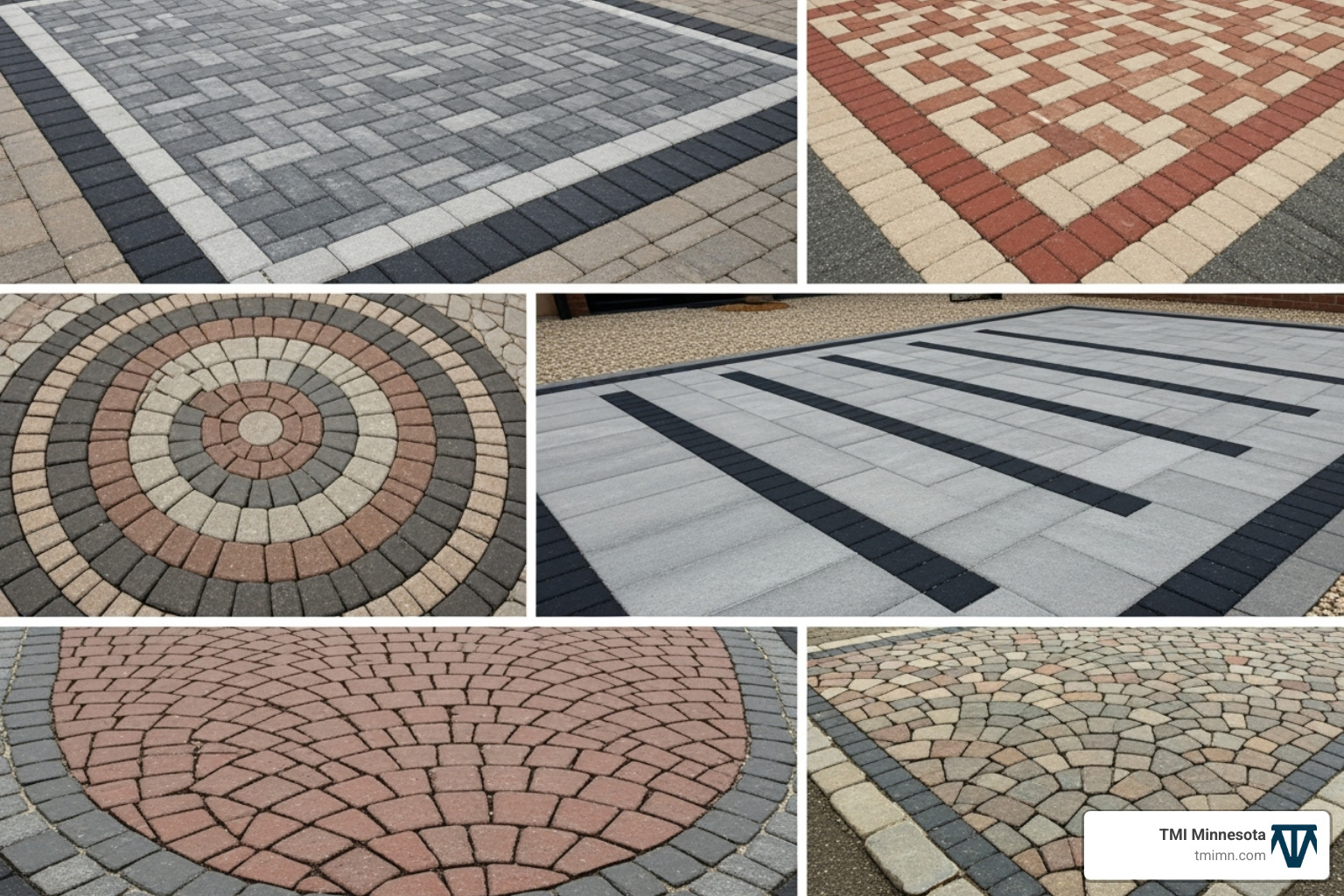
The beauty of block paving lies in its incredible flexibility. Unlike poured concrete or asphalt, you’re not stuck with one look. Every color, pattern, and border choice tells a story about your home’s personality. We love working with homeowners to find their vision and bring it to life. If you’re looking for inspiration, check out our collection of Driveway Designs Pictures to see what’s possible.
Types and Styles of Block Pavers
The world of block pavers offers something for every taste and home style. Concrete blocks are the workhorses of the paving world – reliable, versatile, and available in more colors and textures than you can imagine. They’re manufactured to consistent standards, which means you get reliable strength and quality every time.
If your home has that cozy, lived-in charm, tumbled pavers might be your perfect match. These blocks go through a special tumbling process that softens their edges and gives them a weathered, antique appearance. They look like they’ve been there forever in the best possible way.
For modern homes with clean lines, smooth pavers deliver that sleek, sophisticated look you’re after. They create crisp edges and a polished finish that complements minimalist architecture beautifully.
Permeable pavers are the environmentally conscious choice that’s gaining popularity. These clever blocks are designed with special gaps that let rainwater filter naturally back into the ground instead of running off into storm drains. They help prevent ice buildup, reduce flooding, and some areas even offer tax incentives for choosing this eco-friendly option.
Choosing Colors, Patterns, and Borders
Getting the color right sets the entire mood. We always tell homeowners to think about their home’s existing colors first. Grey shades work beautifully with white or light-colored homes, creating a crisp, modern contrast. If you have a brick home, blended reds and oranges can echo those warm tones perfectly.
Traditional stone homes often look stunning with lighter, blended shades that complement the existing architecture. The key is harmony – your driveway should feel like it belongs.
Pattern choice is where things get really fun. Herringbone is our go-to for heavy-traffic driveways because it’s incredibly strong – those interlocking angles distribute weight beautifully. Stretcher bond offers clean, organized lines that work well with modern homes. Basketweave brings classic charm that never goes out of style.
A pro tip: we always mix blocks from different packs during laying. This prevents color banding and ensures your finished block paving driveway has a perfect, uniform blend.
Contrasting borders are like the frame on a beautiful painting – they define and improve what’s inside. A simple border can make your driveway look more expensive and professionally designed. For classic inspiration, explore our Belgian Block Driveway Designs, or find creative ways to improve the edges with our Landscape Ideas for Driveway Borders.
Integrating with Your Landscape
A truly exceptional block paving driveway doesn’t exist in isolation – it’s part of your home’s complete outdoor story. The best designs flow seamlessly from driveway to walkways to patios, creating a cohesive outdoor living space that feels intentional and welcoming.
We specialize in creating this kind of harmony throughout your property. Your driveway becomes the introduction to a larger outdoor experience that includes your entire landscape design. You can see how this works in our Driveway Landscaping Designs portfolio.
Integrated lighting transforms your driveway from a daytime feature into an evening showpiece. Properly installed paver lights improve safety while highlighting your beautiful design work after dark. It’s amazing how lighting can extend the visual impact of your investment. Learn more about creating this magic with our guide on How to Install Hardscape Lighting.
The secret to a stunning result is understanding how hardscape elements like your block paving work with softscape elements like plantings and lawn areas. This balance creates outdoor spaces that feel both beautiful and natural. Find more about achieving this harmony in our Hardscape and Softscape design philosophy.
The Installation Process: A Step-by-Step Guide
Installing a block paving driveway is like building a foundation for your home’s first impression. It’s a complex process that demands precision, the right tools, and deep knowledge of drainage and sub-base preparation. While experienced DIY enthusiasts can tackle this project, we strongly recommend professional installation to ensure your driveway lasts for decades and meets local building codes. Our team at TMI Minnesota brings years of expertise to every Hardscape Installations project.
Let me walk you through exactly how we approach a block paving installation, so you understand what goes into creating your dream driveway.
Essential Tools & Materials for Your Block Paving Project:
- Tools: Shovels, wheelbarrow, string lines, spirit level, measuring tape, screed rails, rubber mallet, block splitter or diamond-tipped saw, mechanical compactor (wacker plate), broom, safety gear
- Materials: Block pavers (plus 10% extra), MOT Type-1 hardcore, sharp sand, cement, coarse aggregate, kiln-dried sand, edge restraints, drainage channels, geotextile membrane
Step 1: Planning and Preparation
Every successful block paving driveway starts with meticulous planning. This isn’t the exciting part, but it’s absolutely critical for long-term success.
We begin by calculating materials precisely. After measuring your driveway area in square meters, we always add at least 10% extra for cuts, breakages, and those inevitable “oops” moments. Trust me, running out of pavers halfway through installation is nobody’s idea of fun.
Next comes marking out the driveway area using spray paint or string lines. This creates clear boundaries and helps us visualize the final result. Before any digging begins, we use specialized scanning equipment to locate underground utilities like gas lines, electrical cables, and water pipes. Safety always comes first.
Establishing a gradient for drainage is where science meets art. We create a subtle slope that directs water away from your home while maintaining a level appearance. Typically, we aim for an 80:1 gradient, which means about a 72mm drop over a 5.76-meter run. The finished surface must sit at least 150mm below your home’s damp-proof course.
Step 2: Excavation and Sub-Base
This is where the real work begins, and honestly, it’s the most important phase for your driveway’s longevity.
Excavation depth varies depending on soil conditions and your chosen pavers, but we typically dig 200-370mm below the planned finished level. This accommodates our 150-250mm sub-base, a 40mm sharp sand layer, and your paver thickness.
We often lay a geotextile membrane over soft soils like clay. Think of it as a barrier that prevents your carefully prepared sub-base from mixing with unstable ground below.
Laying MOT Type-1 hardcore comes next. This crushed stone aggregate forms the backbone of your driveway’s strength. We spread it in 50mm layers to a minimum depth of 150mm, though heavy-duty driveways might need 250mm.
Compacting the sub-base in layers with a wacker plate is absolutely crucial. We make at least seven passes over each area, creating a rock-solid foundation that won’t shift or settle. This step separates professional installations from amateur attempts.
Step 3: Drainage and Edge Restraints for your block paving driveway
Proper drainage isn’t just important—it’s required by most local regulations, especially here in Minnesota where freeze-thaw cycles can wreak havoc on poorly drained surfaces.
Drainage regulations often require rainwater to stay within your property boundaries rather than flowing into public storm systems. Permeable paving solutions handle this naturally by allowing water to filter through the surface. For non-permeable blocks, we install soak-away systems connected via drainage channels.
Installing drainage channels involves placing heavy-duty channels (rated for about 5 tonnes) at strategic points like garage thresholds or low spots. We set these on a dry mortar mix and connect them to your drainage system, including P-trap gullies to catch debris and prevent odors.
Setting edge restraints in concrete provides the structural integrity your block paving driveway needs. Without proper edge restraints, pavers will gradually spread and create an uneven, unsafe surface. We set concrete kerbs or block kerbs in fresh concrete, then haunch the back with 150-250mm of concrete for maximum stability. This concrete needs at least 24 hours to cure before we continue.
Step 4: Laying the Blocks and Finishing
Finally, the moment you’ve been waiting for—watching your block paving driveway come to life!
Screeding a 40mm sharp sand bed creates the perfect laying surface. We use screed rails and straight edges to achieve mathematical precision. Never use building sand here—sharp sand compacts properly and provides stable support.
Laying blocks from multiple packs ensures uniform color distribution across your driveway. We start from a fixed edge or right angle, placing each block flat and tight against its neighbors. Tapping blocks into place with a rubber mallet ensures proper seating without damage.
Cutting pavers for edges requires skill and the right tools. We use block splitters or mounted saws for precise cuts, avoiding pieces smaller than one-third of the original size since they become unstable.
More on finishing touches reveals the professional secrets that separate good driveways from great ones. After placing all blocks, we thoroughly sweep the entire surface clean.
Sweeping kiln-dried sand into joints locks everything together. This fine sand flows deep into the gaps between blocks, creating friction that prevents movement. We spread it generously, then sweep it across the surface until every joint is filled.
Final compaction brings everything together. We make five passes with the wacker plate from different directions, settling the jointing sand and interlocking the blocks permanently. When we’re finished, your block paving driveway is ready to handle decades of Minnesota weather and heavy vehicle traffic.
Maintenance, Longevity, and Costs
A block paving driveway is a significant investment in your home, and with proper care, it will reward you with decades of beauty and functionality. We believe in providing solutions that stand the test of time, and our Driveway Paving Solutions are designed with exactly that in mind.
Maintaining Your Block Paving Driveway
Here’s the good news about block paving driveway maintenance: it’s surprisingly simple. Unlike asphalt that needs regular sealing or concrete that can develop stubborn cracks, your block paving mostly just needs a little attention now and then.
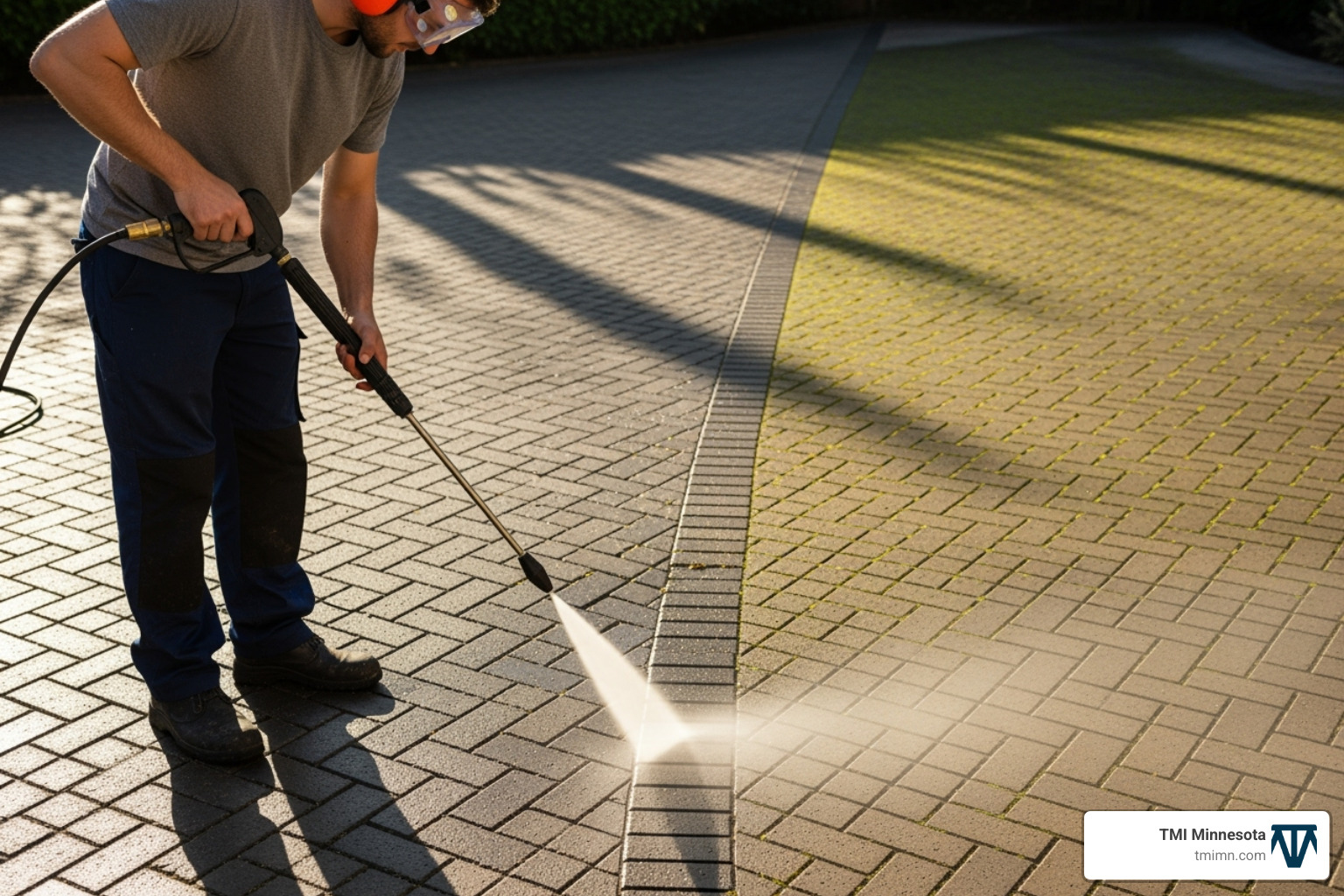
Routine sweeping is your best friend. A quick sweep every week or two removes leaves, dirt, and debris before they have a chance to settle in. This simple habit prevents organic matter from breaking down in the joints, which is what encourages those pesky weeds to take root.
When it comes to occasional washing, a gentle approach works best. A good scrub with a stiff brush and soapy water keeps your blocks looking vibrant. If you prefer using a pressure washer, just dial down the intensity. High-pressure settings can actually blast out the jointing sand that keeps everything locked together—definitely not what we want!
Weed and moss prevention is straightforward too. Despite our careful installation with kiln-dried sand, Minnesota’s growing season can be pretty determined. If you spot weeds or moss starting to appear, just pull them by hand or use a paved-area weed killer. Catching them early makes all the difference.
Every few years, you might notice the jointing sand needs a refresh. Heavy rains, cleaning, and regular traffic can gradually wash some away. Simply sweep more kiln-dried sand into the joints and give it a gentle compaction. This maintains that crucial interlock between blocks that keeps everything stable.
Optional sealing can be a nice finishing touch, though it’s not required. A specialized sealant improves your blocks’ colors, protects against stains, and gives extra protection against weeds. You can choose finishes from matte to a subtle sheen, depending on the look you’re going for.
Longevity and Cost Factors
When we install a block paving driveway with our meticulous sub-base preparation and quality materials, you’re looking at 20+ years of reliable service—often much longer with proper care. That’s what makes this such a smart long-term investment compared to materials that need frequent repairs or complete replacement.
The cost of your block paving driveway depends on several key factors. Driveway size is the obvious one—more square footage means more materials and labor. Paver type makes a big difference too, with premium styles and custom colors naturally costing more than standard options.
Design complexity also affects your investment. Simple patterns and single colors are more budget-friendly, while intricate designs with multiple colors, borders, or custom shapes require more specialized work. The existing ground conditions matter as well—if we need extensive excavation or additional drainage systems, that adds to the project scope.
Professional labor is where you really see the value. Our experienced team ensures quality installation that prevents costly problems down the road. While DIY might seem tempting, the specialized equipment and expertise needed for proper sub-base preparation and drainage really benefit from professional handling.
The return on investment is substantial. A beautiful, durable block paving driveway significantly boosts your home’s curb appeal and market value while providing years of trouble-free use. For homeowners looking to make smart exterior investments, check out our Affordable Driveway Ideas to see how block paving fits into a value-driven approach.
Frequently Asked Questions about Block Paving
When homeowners consider a block paving driveway, they naturally have questions about durability, installation requirements, and regulations. Having overseen countless installations throughout Minnesota, I understand these concerns and want to provide clear, honest answers to help you make an informed decision.
How long does a block paving driveway last?
A professionally installed block paving driveway can last for decades with proper care. The secret lies in two critical factors: a properly compacted sub-base and regular, simple maintenance. When these elements come together, your driveway will consistently outlive many other surface types.
We routinely see well-installed block paving driveways lasting 20 years or more. With diligent care – which really just means occasional sweeping, washing, and topping up joint sand every few years – they can truly last a lifetime. The individual block system is inherently more durable than monolithic surfaces like concrete because it flexes naturally with ground movement and temperature changes, preventing the cracking that eventually destroys other driveway materials.
Can you lay block paving over an existing driveway surface?
This is one question where I have to be direct: laying block paving over an existing surface is not recommended. I know it might seem like a time and money-saving shortcut, but it’s actually a recipe for future headaches.
For maximum longevity and to prevent serious issues like sinking, poor drainage, or uneven settling, the old surface must be fully excavated. This allows us to create a new, properly engineered sub-base that can support the weight of vehicles for decades to come.
Attempting to lay blocks over an unstable or unsuitable existing surface – whether it’s old concrete, asphalt, or even a poorly constructed base – will inevitably lead to problems. The blocks may look fine initially, but without proper foundation support, you’ll likely see shifting, sinking, or drainage issues that compromise both the driveway’s stability and its lifespan.
Do I need planning permission for a new driveway?
Planning permission requirements can feel confusing, but the good news is that most homeowners don’t need special permits for their block paving driveway project. The key factor is usually how you handle water drainage.
You typically won’t need permission if you use permeable paving or ensure rainwater drains naturally into your lawn or a properly constructed soakaway system. This prevents runoff from flowing directly into public storm drains, which is the main concern for most municipalities.
However, regulations do vary by location, and here in the Twin Cities, some areas have specific requirements about drainage systems and impervious surface coverage. We always advise checking with your local authority regarding specific planning permission requirements and drainage regulations before starting any driveway project. It’s a simple phone call that can save you potential compliance issues down the road.
Our team stays current on local regulations and can often help guide you through any permitting requirements as part of our comprehensive installation service.
Conclusion: Lift Your Home with a Lasting First Impression
Your driveway is the very first thing people notice about your home. It sets the tone before anyone even reaches your front door. A block paving driveway doesn’t just provide a place to park—it creates a welcoming entrance that speaks to quality, care, and attention to detail.
Throughout this guide, we’ve explored how block paving delivers on every front that matters to homeowners. The exceptional durability means your investment keeps paying dividends year after year. The design flexibility lets you create something uniquely yours, whether you prefer the timeless appeal of herringbone patterns or the clean lines of contemporary layouts. And the low maintenance requirements mean more time enjoying your outdoor space and less time worrying about repairs.
What really sets block paving apart is how it handles our Minnesota weather. While other driveway materials crack under pressure from freeze-thaw cycles, your block paving driveway flexes and adapts. When individual blocks do need attention, you can replace just those pieces without tearing up the entire surface—something you simply can’t do with concrete or asphalt.
The increased home value that comes with professional block paving installation makes this more than just a home improvement—it’s a smart financial decision. Potential buyers notice quality craftsmanship, and a beautiful driveway creates that crucial positive first impression.
At TMI Minnesota, we’ve transformed countless driveways throughout the Twin Cities, and we understand that every project is unique. Our experience with both hardscape and softscape installations means we see the bigger picture—how your new block paving driveway fits into your entire outdoor living vision. We use leading-edge products and time-tested techniques to ensure your driveway not only looks stunning on day one but continues to impress for decades to come.
The installation process might seem complex, but that’s exactly why professional expertise makes such a difference. From calculating the perfect sub-base depth to ensuring proper drainage and achieving that flawless finish, every detail matters for long-term success.
Ready to create a lasting first impression that you’ll be proud of every time you come home? Contact our landscape design experts to start planning your project. Let’s work together to design and install a block paving driveway that perfectly complements your home and lifts your entire outdoor space.