
Why Block Paving Step Edging Matters for Your Outdoor Space
Block paving step edging is the critical finishing element that defines, secures, and beautifies the transition between levels in your outdoor hardscape. Without it, paver steps can shift over time, creating trip hazards and an unfinished look. The right edging secures pavers, manages water, and adds visual definition.
Here are top step edging ideas to consider:
- Bullnose Coping – Rounded, finished edge for a clean, safe look
- Retaining Wall Blocks – Heavy-duty option designed for stability
- Natural Stone Slabs – Large granite or limestone pieces for a rustic feel
- Concrete Edging – Sleek, modern lines with excellent durability
- Plastic Edge Restraints – Hidden, flexible system for curves
- Decorative Traditional Edging – Ornate details for classic charm
- In-Set Border – Using field pavers in a contrasting pattern
The foundation is everything. A proper base course is essential, as “The finished product is only as good as the foundation upon which it sits.” This is especially true for steps, where edging prevents shifting and improves safety.
Without proper edging, even the most beautifully laid paver steps will shift over time. The right edging solution secures your pavers and creates visual definition that lifts your entire outdoor design.
I’m Christopher Deanovic, Operations Leader at Task Masters in Minnesota. My hands-on experience has taught me that the difference between a good step installation and a great one always comes down to the quality of the edging and foundation work.
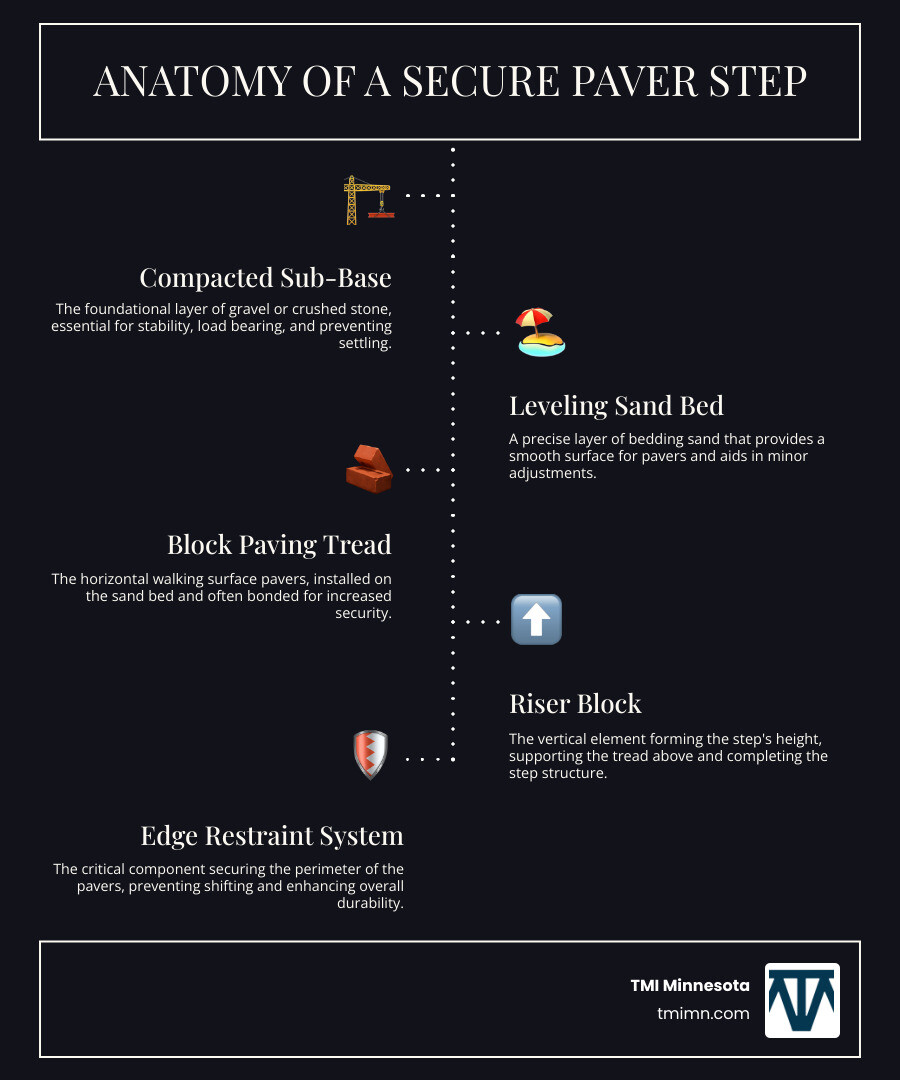
Handy block paving step edging terms:
Why Edging is Crucial for Your Block Paving Steps
Block paving step edging is essential for keeping your outdoor steps functional and beautiful for years to come.
Structural Integrity: Edging acts as a frame, holding interlocking pavers in place and preventing them from spreading apart under foot traffic and weather. As installation experts always emphasize, “pavers require a solid border on all sides.”
Safety: Proper edging locks each paver in position, creating a consistently level surface that prevents trip hazards. This is crucial on stairs, where a single loose paver can cause a fall.
Defining Your Space: Edging creates crisp, clean lines that separate your steps from lawns or garden beds, giving your project a professional, finished look.
Water Drainage: Well-installed edges help manage runoff, preventing erosion around the step’s foundation. In Minnesota’s climate, this is critical to prevent damage from freeze-thaw cycles. Modified concrete edges are specifically designed to handle moisture without crumbling.
Curb Appeal: Quality edging signals craftsmanship and care, enhancing the overall look and value of your property by turning simple steps into an intentional design feature.
For more insights on creating outdoor features that last, check out our comprehensive guide on hardscape installations.
7 Creative Block Paving Step Edging Ideas
Choosing the right edging for your steps depends on your design vision, budget, and functional needs. Here are seven creative ideas to consider.
1. The Classic Bullnose Edge
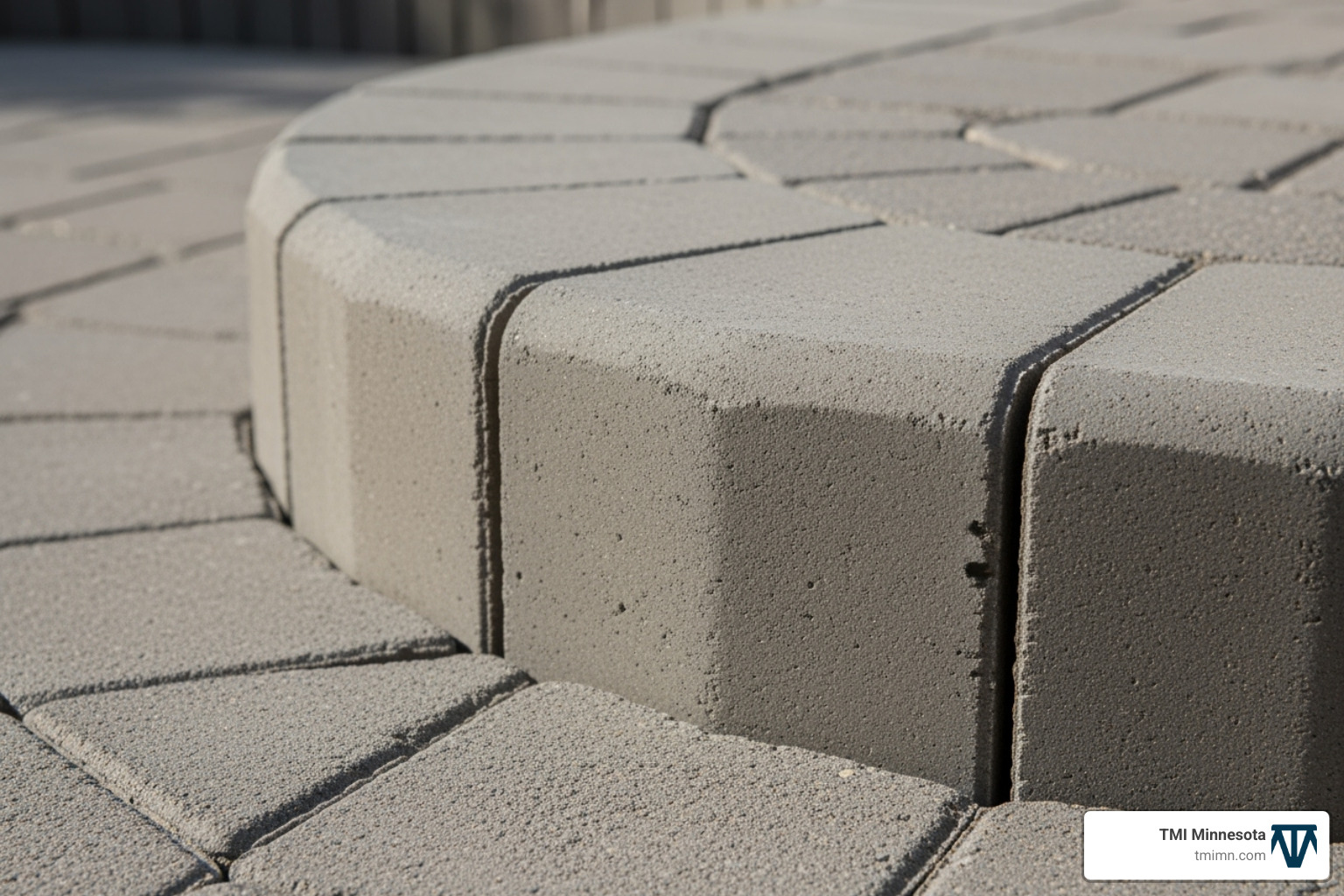
Bullnose pavers feature a rounded, smooth edge that provides a polished look and a key safety feature—no sharp corners. They create visual continuity with other hardscape elements like pool coping. Installation requires mortar or masonry adhesive to secure the units, making them ideal for straight steps or gentle curves. While they cost more than standard pavers, their refined appearance and built-in safety are a major benefit.
2. The Robust Block Step Edge
For maximum stability, dedicated block step units or retaining wall blocks are the best choice. These heavy-duty blocks are engineered to resist movement and are often interlocked with pins or secured with construction adhesive. This creates a solid structure that withstands Minnesota’s freeze-thaw cycles. While heavier and more costly, they offer best durability for high-traffic areas and create a cohesive look with other retaining walls in your landscape. Learn more about the various edging options we work with on our hardscape installations page.
3. The Seamless In-Set Border
This method uses your main field pavers to create the edging, often laid in a “soldier” or “sailor” course. Using a contrasting color creates a striking visual frame that integrates seamlessly with the surrounding patio or walkway. While cost-effective, these pavers still require a hidden restraint system (like a concrete haunch) and must be secured with mortar or adhesive on the risers to prevent movement. For inspiration on how these borders can transform your outdoor spaces, check out our driveway designs pictures.
4. The Natural Stone Slab

For a high-end, rustic look, large slabs of natural stone like granite or limestone make a powerful statement. Each piece is unique, and their immense weight provides natural stability, often eliminating the need for additional edge restraints. Once set on a compacted base with a mortar bed, they are incredibly durable and low-maintenance. However, natural stone is the most expensive option and requires heavy equipment for installation, making it best suited for straight steps.
5. The Modern Concrete Edge
For a clean, contemporary aesthetic, pre-cast or custom-poured concrete edging is ideal. In Minnesota’s climate, we recommend modified concrete or manufactured edgers that are more resilient to freeze-thaw cycles than traditional poured concrete. A robust concrete curb is the gold standard for edge restraint in areas with vehicle traffic. While poured concrete requires skilled installation, it offers design flexibility with custom shapes and colors.
6. The Versatile Plastic Edge Restraint

Made from recycled plastic, these flexible restraints are perfect for creating curved steps and organic designs. They are installed on the gravel base, secured with long spikes, and become virtually invisible once the project is complete. This DIY-friendly and cost-effective option is excellent for pedestrian areas but is not recommended for driveways or areas with heavy traffic.
7. The Decorative Traditional Edge
For classic or period homes, decorative edging like Victorian rope-tops or scalloped designs adds character and charm. These pre-cast concrete units are installed on a concrete bed and mortared into place for stability. They often stand slightly proud of the paving surface, creating a distinct, ornate border. While more expensive and labor-intensive to install, they provide a unique finishing touch for straight or gently curving steps.
Best Practices for a Secure Installation
A beautiful block paving step edging project will only last if it’s built on a solid foundation. Industry standards, like those from the Interlocking Concrete Pavement Institute (ICPI), emphasize that the finished product is only as good as the base upon which it sits. This is doubly true for steps.
Foundation is key. A successful installation starts with proper sub-base preparation. This involves excavating to the correct depth, removing all organic material, and building up a base with compactable fill.
Compaction is critical. We use a plate compactor to compress the base material in layers (no more than four inches at a time) to prevent future settling.
A one-inch bedding sand layer is then spread over the compacted base to allow for fine-tuning paver placement.
For steps, we always use concrete adhesive or mortar to bond pavers, especially on risers and treads. This locks the units together, preventing shifting from foot traffic and freeze-thaw cycles.
For a deeper dive into creating outdoor features that truly last, check out our comprehensive guide on landscape and hardscape installations.
| Material Type | Pros | Cons | Best For |
|---|---|---|---|
| Concrete | Extremely durable, handles heavy traffic, customizable, affordable | Can crack without proper mix, requires skilled installation | High-traffic areas, driveways, modern designs |
| Natural Stone | Best beauty, long-lasting, low maintenance | Most expensive, very heavy, limited to straight steps | Upscale projects, rustic aesthetics, statement steps |
| Plastic | Flexible for curves, hidden, DIY-friendly, cost-effective | Not for heavy traffic, less robust than masonry | Curved steps, pedestrian walkways, budget projects |
Securing Your Block Paving Step Edging
- Concrete Haunching: A wedge of concrete poured behind the edging provides a rigid, immovable barrier.
- Spike-Down Restraints: 10-inch spikes secure plastic edging systems into the compacted base.
- Mortar Beds: Used for heavy units like bullnose coping to create a rigid, continuous structure.
- Construction Adhesive: Bonds riser pavers and tread layers, creating a monolithic unit.
- Gravity and Block Weight: The sheer mass of large stone slabs or retaining wall blocks provides significant natural stability.
Designing for Curves vs. Straight Steps
Straight steps work with most edging materials. For curves, flexible edging like plastic is ideal. Using smaller blocks also helps create a smoother arc. When cutting is necessary, a wet saw provides clean, precise lines. The key is maintaining consistent joints for a professional look.
Common Mistakes to Avoid When Installing Block Paving Step Edging
- Improper Base Preparation: Leads to settling and failure.
- No Edge Restraint: Allows pavers to spread apart over time.
- Poor Drainage Planning: Causes water damage and ice hazards.
- Inconsistent Gaps: Looks unprofessional and weakens the interlock.
- Forgetting Adhesive on Risers: Leads to loose, unsafe step faces.
Introduction
Block paving step edging is the essential finishing touch for your outdoor steps, providing security, definition, and style. Without proper edging, pavers can shift, creating unsafe conditions and an untidy appearance.
Key edging options include:
- Bullnose Coping for a safe, rounded look
- Retaining Wall Blocks for heavy-duty stability
- Natural Stone Slabs for a rustic feel
- Concrete Edging for modern durability
- Plastic Edge Restraints for curves
- Decorative Traditional Edging for classic charm
- In-Set Border for a seamless design
A solid foundation is non-negotiable for a lasting installation. As an experienced hardscape leader at Task Masters in Minnesota, I know that quality edging and base work are the keys to a successful project.
Whether you’re refreshing an existing patio or building new garden steps, understanding your edging options will help you create an outdoor space that’s both beautiful and built to last.
Handy block paving step edging terms:
Why Edging is Crucial for Your Block Paving Steps
When we talk about block paving step edging, we’re not just discussing a decorative trim—we’re talking about the backbone of your outdoor steps. It serves multiple critical functions that ensure the longevity, safety, and aesthetic appeal of your hardscaping.
Structural integrity is where it all starts. Without a strong perimeter holding them in place, pavers will gradually spread outwards. This paver shift leads to instability, gaps, and eventually a complete breakdown of your steps.
Beyond stability, safety is paramount. Loose or shifting pavers create uneven surfaces that become serious trip hazards. Proper block paving step edging ensures that each paver stays precisely where it belongs, providing a consistently level and secure surface.
Edging also plays a vital role in defining space. It creates crisp, clean lines that separate your steps from adjacent lawn or garden beds, giving your outdoor space a polished, professional look.
Effective edging contributes significantly to water drainage. A well-installed edge helps manage water runoff, preventing erosion around the step’s base and directing water away from the structure. This is particularly important in Minnesota, where freeze-thaw cycles can wreak havoc on hardscaping.
Finally, proper block paving step edging significantly improves curb appeal. It’s a detail that signals quality and craftsmanship, lifting the perceived value and attractiveness of your entire property.
For more detailed insights into creating lasting outdoor features, explore our guide on hardscape installations.
7 Creative Block Paving Step Edging Ideas
Let’s explore block paving step edging options. Choosing the right one can make all the difference between steps that just work and steps that wow.
1. The Classic Bullnose Edge
There’s something timeless about a bullnose edge. These pavers feature a beautifully rounded profile that is both safe and visually appealing. They are ideal for creating a cohesive look with other hardscape elements and are secured with mortar or adhesive. While they cost more, their finished look and safety benefits are significant.
2. The Robust Block Step Edge
When stability is your top priority, dedicated block step edging units are the way to go. These heavy-duty workhorses, like retaining wall blocks, are designed to hold pavers in place. The heavier materials bring their own stability by virtue of their weight. Installation involves setting these blocks dry-stacked with pins or bonded with concrete adhesive, creating a solid structure that’s not going anywhere. For more information on the various edging options we use in our projects, check out our hardscape installations page.
3. The Seamless In-Set Border
An in-set border uses your field pavers to create the step edge itself, often in a contrasting color or pattern. This cost-effective approach creates a seamless look but still requires a robust edge restraint working behind the scenes. The front risers also need mortar or adhesive to prevent movement. For visual inspiration on how these borders can transform your outdoor spaces, explore our driveway designs pictures.
4. The Natural Stone Slab
If you want to make a statement, natural stone slabs are your answer. Large, single pieces of granite or limestone form entire step treads. The beauty of natural stone is that every piece has unique patterns and textures. Their weight is their superpower, as they are heavy enough to stay in place without requiring additional reinforcement. This is often your most expensive option and is best suited for straight steps.
5. The Modern Concrete Edge
For clean lines and contemporary style, modern concrete edging delivers. This category includes both custom-poured concrete edges and pre-cast concrete units. We recommend modified concrete options that are more permeable and resilient in our climate. For areas with vehicle traffic, a robust concrete curb is the best form of edge restraint. For innovative concrete edging solutions, explore our hardscape installations services.
6. The Versatile Plastic Edge Restraint
Plastic edge restraints are one of the most practical solutions, especially for curved steps. Their superpower is flexibility. We place the edging directly on the gravel base and secure it with 10-inch spikes. Once installed, it’s virtually invisible. This is also one of the most DIY-friendly and cost-effective options, but it is not ideal for heavy-duty applications.
7. The Decorative Traditional Edge
If your heart beats for classic architecture, decorative traditional edging might be for you. We’re talking Victorian-style rope top edging, scalloped designs, or specialized kerbs with ornate patterns. These are typically pre-cast concrete units that we install on a concrete bedding for stability. The investment is higher than basic edging options, but the result is a strong, defined border that makes a statement.
Best Practices for a Secure Installation
Even beautiful block paving step edging projects can fail if shortcuts are taken during installation. The truth is, the finished product is only as good as the foundation upon which it sits.
Sub-base preparation is where everything begins. We excavate to the proper depth, removing all organic material. For steps, we often go deeper than for a simple patio to ensure extra stability.
Once excavated, we bring in compactable fill, like D-1 gravel. Proper compaction is the difference between steps that last and steps that fail. We compact the base in layers with a plate compactor. After the base is solid, we spread about one inch of clean, sharp bedding sand.
For the pavers themselves, concrete adhesive is critical, especially on step risers and treads. The adhesive bonds each paver unit, creating what’s essentially one solid piece. Similarly, mortar application is essential for edging types like bullnose coping and natural stone slabs.
For more comprehensive guidance, take a look at our insights on landscape and hardscape.
Securing Your Block Paving Step Edging
- Concrete Haunching: Our go-to for many installations. We pour a concrete “haunch” directly behind the edging pavers for a strong, immovable barrier.
- Spike-Down Restraints: We use 10-inch spikes to drive plastic edging directly into the compacted gravel base.
- Mortar Beds: For heavier units like bullnose coping, we create mortar beds beneath them for vertical and lateral stability.
- Construction Adhesive: We use high-quality, exterior-grade adhesive to bond riser blocks to the base and to the tread pavers above them.
- Gravity and Block Weight: The inherent mass of specialized step blocks or large natural stone slabs contributes significantly to their stability.
Designing for Curves vs. Straight Steps
For straight steps, you have the widest range of options. Curved steps require a different approach. Flexible edging options like plastic restraints are ideal. When using pavers for curved steps, we often choose smaller paver units, as they are much easier to lay in an arc.
Common Mistakes to Avoid When Installing Block Paving Step Edging
- Improper Base Preparation: The number one killer of hardscape projects.
- No Edge Restraint: Pavers will shift outwards over time without proper securing.
- Poor Drainage Planning: Steps should always have a slight slope to allow water to run off.
- Inconsistent Gaps: Compromise the entire system by breaking the interlock between pavers.
- Forgetting Adhesive on Risers: An oversight that will cause riser pavers to eventually work loose.
Frequently Asked Questions about Block Paving Step Edging
Here are the answers to some of the most common questions we hear about block paving step edging:
How do you stop block paving from moving on a step?
The key is a three-part strategy:
- A solid, compacted base: This is non-negotiable. Excavate properly and compact aggregate fill in layers.
- A robust edge restraint: Use a concrete haunch, specialized interlocking step blocks, or heavy coping units secured with mortar.
- Construction adhesive: Bond the tread pavers to the riser blocks and the base to create a single, solid structure that resists movement.
Can you use normal pavers for steps?
Yes, but with careful planning. Use a special coping or bullnose paver for the visible front edge to create a finished, safe nosing. Standard pavers used for the main tread and risers must be secured with a proper edge restraint system and bonded with construction adhesive, especially on the vertical riser faces, to prevent them from getting kicked out or shifting.
What is the best edging for curved steps?
For curved steps, you have several excellent options depending on your situation:
- Flexible plastic edge restraints: These are cost-effective, easy to work with, and specifically designed to handle curves. They are hidden once installed.
- Smaller paver units: Using smaller blocks naturally creates smoother curves without requiring as much cutting.
- A hand-troweled concrete haunch: This is more labor-intensive but creates a custom-formed, rigid restraint that follows the exact contour of your curve.
The right choice depends on your curve’s tightness, your desired look, and your budget. For more guidance on creating professional, long-lasting hardscape features, check out our hardscape design services.
Conclusion
When you step back and look at the big picture, block paving step edging is the unsung hero of your outdoor space. It’s the finishing touch that keeps your steps safe, stable, and looking sharp year after year. Whether you’ve fallen for the timeless appeal of bullnose coping, the reliability of specialized step blocks, or the sleek vibe of modern concrete, you have plenty of options to match your vision.
Here’s what we’ve learned from years of working on Minnesota properties: the difference between a good step installation and a great one always comes back to the foundation. Proper sub-base preparation, compaction, and the use of adhesives are what keep your beautiful steps looking great for decades.
Your steps are like a handshake between different levels of your yard. You want that handshake to be firm, confident, and welcoming. Proper edging makes that happen. It prevents dangerous shifts, channels water away, and gives your entire outdoor space a polished, intentional look.
If you’re ready to take your outdoor space to the next level with professional craftsmanship, we’d love to help. At TMI Minnesota, we’re passionate about creating hardscape features that stand the test of time. Check out our expert hardscape design services to see how we can bring your vision to life.
And if you’re looking for more ideas, explore our block paving driveway designs for more inspiration.