
Is Your Canopy Cover Fading, Tearing, or Sagging?
A canopy roof is an overhead structure that provides shade and shelter from weather elements like sun, rain, and snow. If you’re looking for a replacement, here are your best options:
Top Replacement Canopy Roof Materials:
- Metal (Steel/Aluminum) – Lasts 40-70 years, extremely durable, low maintenance
- Fabric (Vinyl/Acrylic/Polyester) – Affordable, easy to replace, lasts 5-15 years
- Polycarbonate Panels – Modern look, UV-resistant, excellent light transmission
When your canopy roof shows signs of wear, it’s not just an eyesore. It becomes less effective at protecting your outdoor space. UV rays break down fabric materials over time, causing them to fade and weaken. Water can pool on sagging covers, creating additional stress and potential leaks. Tears compromise the entire structure’s ability to shield you from the elements.
The good news? Replacing a canopy roof is often more affordable than replacing the entire structure. You can upgrade to better materials, improve functionality, and completely transform the look of your outdoor space. Modern replacement options offer better weather resistance, longer lifespans, and improved aesthetics compared to older covers.
As Christopher Deanovic, I’ve helped countless Minnesota homeowners breathe new life into their outdoor spaces through thoughtful canopy roof replacements and upgrades. My experience with Task Masters has shown me that the right roof material can dramatically extend the life of a structure while enhancing both beauty and function.
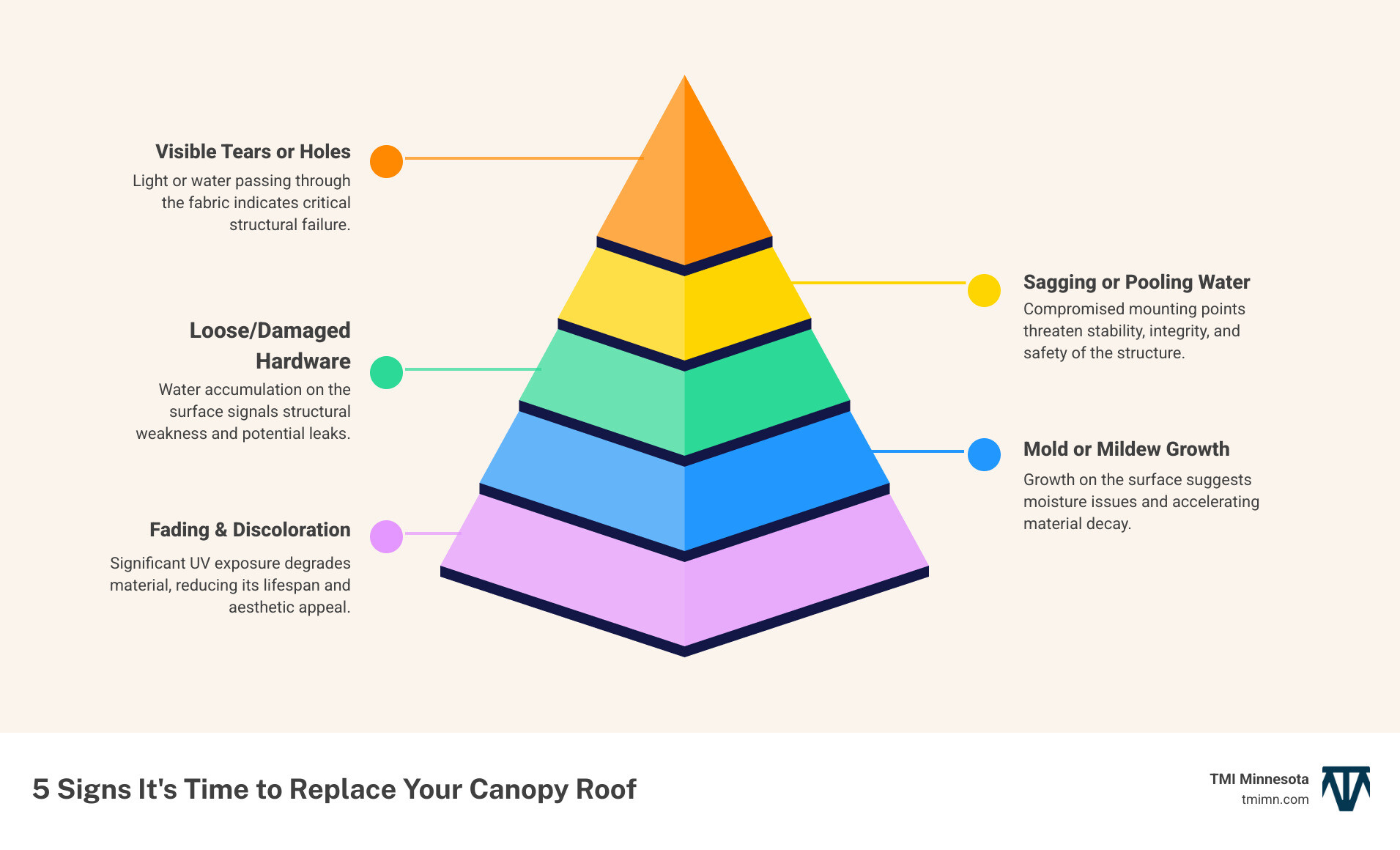
Canopy roof vocab to learn:
Understanding the Basics: Canopy vs. Awning and Core Functions
When we talk about outdoor coverings, the terms “canopy” and “awning” often get used interchangeably, but there’s a key distinction. Understanding this difference is crucial when selecting the perfect replacement for your outdoor space.
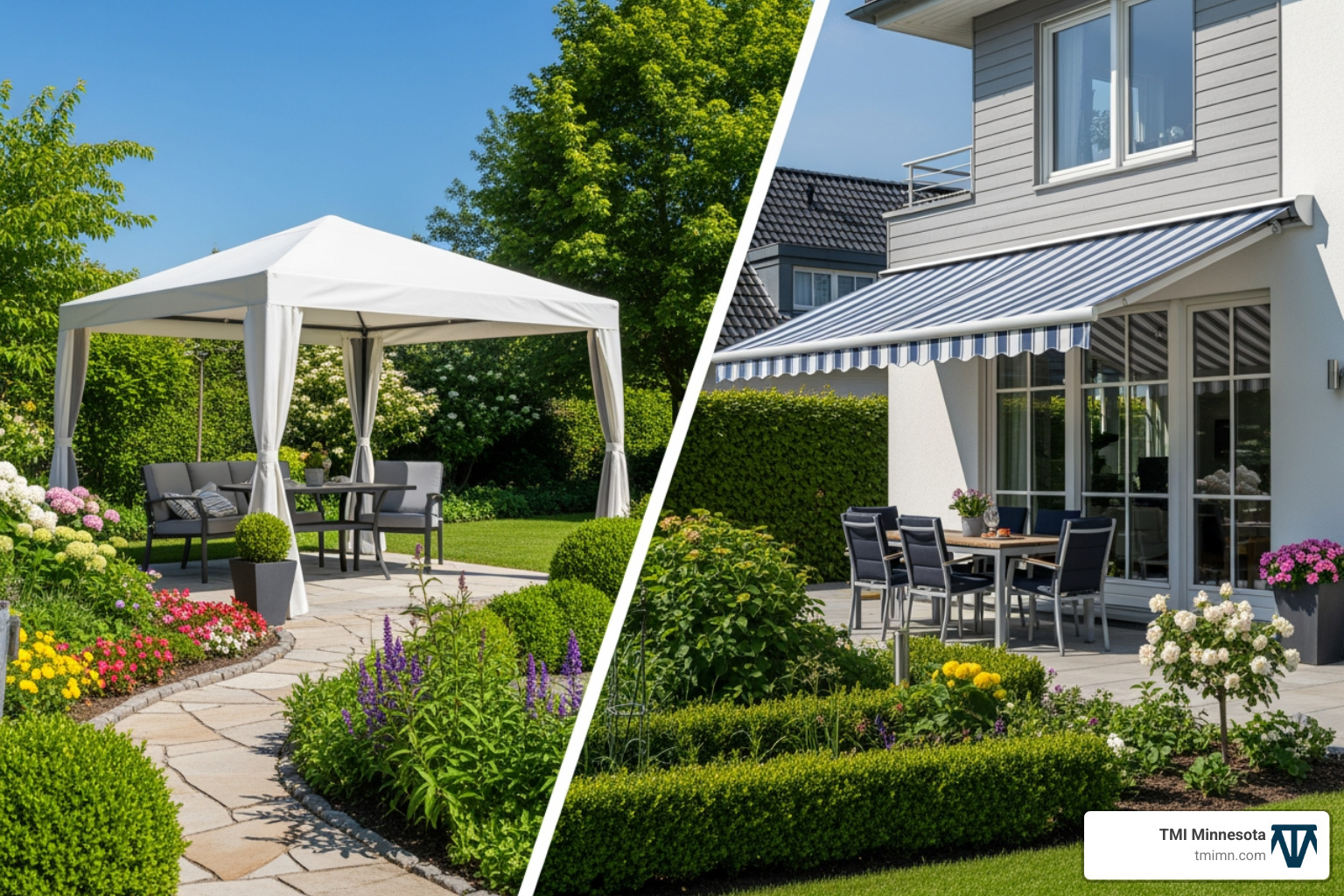
At its heart, a canopy roof is an overhead structure designed to provide shade and shelter. Think of it as a protective roof, often supported by its own framework, that stands over an outdoor area. Its primary functions are quite straightforward:
- Shelter from the elements: A well-designed canopy roof shields us from harsh sun, unexpected rain, hail, and even light snow, making outdoor spaces usable in various weather conditions.
- Shade creation: In the bright Minnesota summers, a canopy roof offers crucial relief from intense UV rays, preventing sunburn and keeping temperatures down.
- Defining outdoor spaces: Canopies can transform an open area into a distinct “room” outdoors, whether it’s a cozy dining nook, a relaxing lounge, or a productive workspace.
- Architectural improvement: Beyond function, a canopy roof adds aesthetic appeal, enhancing the overall look and value of your property. It can complement your home’s design or become a striking focal point.
The word “canopy” itself has an interesting history, tracing back to ancient Greek, referring to a cover to keep insects off. Today, architectural canopies are defined as projections that offer weather protection or decoration. They can be supported by the building they’re attached to, or by ground mounting with stanchions. What is an architectural canopy?)
Now, for the key difference:
- A canopy is typically a standalone structure. This means it has its own support system, often with posts or columns, and doesn’t rely solely on an existing building for structural integrity. Examples include freestanding gazebos, carports, or large patio covers that aren’t directly attached to your home.
- An awning, on the other hand, is generally attached to a building. It extends outwards from a wall or roofline, providing cover directly adjacent to the structure. Think of the fabric covers over windows or doorways that retract.
While both serve to protect and beautify, their structural independence is what sets them apart. When we discuss replacing a canopy roof, we’re usually referring to the covering part of a freestanding structure or a permanent, robust overhead system.
A Guide to the Best Replacement Canopy Roof Materials
Choosing the right material for your replacement canopy roof is like choosing the right coat for Minnesota weather – it needs to be durable, functional, and look good! Each material offers a unique blend of benefits and considerations, making it important to weigh your priorities. This section will act as a roundup of material types, highlighting their suitability as replacements.
Durable Metal Canopy Roof Options
For unparalleled strength and longevity, metal canopy roof systems are often our top recommendation. These aren’t just covers; they’re investments that can last for decades.
Metal canopies, particularly those made from steel or aluminum, are renowned for their durability and longevity. With proper maintenance, they can often last an incredible 40-70 years or even more! This makes them a fantastic long-term solution, especially given the global market for canopies is projected to reach $10.5 billion by 2027, highlighting the growing demand for robust outdoor structures.
- Steel: Commercial-grade steel, often 22 gauge or thicker, provides exceptional resilience against harsh weather, including heavy snow loads and strong winds, which we certainly appreciate here in the Twin Cities. Steel canopies are often faster and simpler to construct than fabric canopies and can even be designed for quick assembly as prefabricated kits.
- Aluminum: Lightweight yet incredibly strong, aluminum is a popular choice for frames and panels. It’s naturally corrosion-resistant, making it ideal for our varied climate, and can be fabricated into a variety of shapes for diverse designs. Aluminum is also highly recyclable, appealing to our desire for sustainable solutions. You can learn more about these versatile structures with More info about Aluminum Pergolas.
Pros of Metal Canopies:
- Longevity: Their long lifespan drastically reduces the need for frequent replacements.
- Weather Resistance: They offer superior protection against sun, rain, snow, and wind.
- Low Maintenance: Metal canopies typically require minimal upkeep, usually just occasional cleaning.
- Durability: They resist tearing, fading, and structural degradation far better than fabric options.
- Energy Efficiency: Some metal canopy designs can contribute to energy savings by providing significant shade.
Cons of Metal Canopies:
- Higher Initial Cost: The upfront investment is generally greater than fabric options.
- Weight: While aluminum is lighter, steel canopies are heavier, potentially requiring more robust support structures.
Metal canopies are ideal for permanent structures where maximum protection and minimal maintenance are priorities. They are perfect for carports, large patio covers, and commercial applications where a robust, long-lasting solution is desired.
Versatile Fabric Covers
Fabric canopy roof replacements offer a flexible, affordable, and often aesthetically pleasing solution, especially for those looking to refresh their outdoor space without a major overhaul.
Fabric canopies, made from materials like vinyl, acrylic, or polyester, can last anywhere from 5 to 15 years, depending on the quality of the material and exposure to elements. While this lifespan is shorter than metal, their affordability and ease of replacement make them a popular choice for many homeowners.
- Vinyl: Known for its excellent waterproofing and durability, vinyl is a heavy-duty option often chosen for larger canopies or areas needing maximum weather protection.
- Acrylic: Offering a more textile-like feel, acrylic fabrics are colorfast, breathable, and resist mildew, making them great for comfortable outdoor living spaces.
- Polyester: Often coated for water resistance, polyester is a versatile and cost-effective fabric that comes in a wide array of colors and patterns. Awning Fabrics Comparison highlights the various benefits of these materials.
Pros of Fabric Canopies:
- Affordability: Generally the most budget-friendly option for a replacement canopy roof.
- Color Variety: An extensive range of colors and patterns allows for easy customization to match your aesthetic.
- Ease of Replacement: Fabric covers are typically lighter and simpler to install, making DIY replacement more feasible.
- Lightweight: Their light nature puts less stress on the supporting frame.
Cons of Fabric Canopies:
- Shorter Lifespan: Requires more frequent replacement compared to metal or polycarbonate.
- Maintenance Needs: May require more regular cleaning to prevent mold, mildew, and staining.
- Vulnerability: More susceptible to tears, punctures, and fading from prolonged UV exposure.
- Weather Limitations: Less effective in extreme weather conditions like heavy snowfall or very strong winds.
Fabric is an excellent choice for those seeking an economical, quick, and visually customizable canopy roof solution for seasonal use or areas with moderate weather exposure.
Modern Polycarbonate Panels
For a contemporary look that balances protection with natural light, polycarbonate panels are a fantastic option for your replacement canopy roof.

Polycarbonate is a thermoplastic polymer known for its incredible strength and transparency. It’s a modern material that has gained popularity for its unique properties in outdoor structures.
Pros of Polycarbonate Panels:
- Light Transmission: These panels allow natural light to filter through, creating a bright and airy space without the harsh glare of direct sunlight. Light transmittance can range from 45-70%, offering diffused light that many architects prefer.
- UV Protection: High-quality polycarbonate panels come with UV-resistant layers that protect both the panels and the area beneath from harmful UV rays, preventing yellowing and deterioration over time.
- Impact Resistance: Polycarbonate is remarkably tough, boasting 250 times more impact resistance than an equivalent thickness of annealed glass. This makes it a safer choice, especially in areas prone to hail or accidental impacts.
- Modern Aesthetic: Its sleek, often translucent appearance lends a contemporary and sophisticated look to any outdoor space.
- Lightweight: Despite its strength, polycarbonate is lightweight, easing installation and reducing the load on supporting structures.
Cons of Polycarbonate Panels:
- Cost: Can be more expensive than fabric options, though often less than full glass systems.
- Scratch Susceptibility: While impact-resistant, the surface can be more prone to scratching than glass.
- Heat Buildup: In very sunny conditions, some heat can still transfer through, though less than direct sun.
Polycarbonate panels are an excellent choice for homeowners in the Twin Cities who want to enjoy natural light while still being protected from the elements. They are perfect for patios, walkways, and even solar canopies, offering a blend of aesthetics and functionality.
Key Design and Selection Considerations
Choosing a replacement canopy roof isn’t just about picking a material; it’s about making smart design decisions that suit your needs, your local climate, and the overall aesthetic of your home. We’ve learned that thoughtful planning leads to the most satisfying outdoor spaces.
Choosing the Right Replacement Canopy Roof Style
The angle and shape of your canopy roof significantly impact its performance, especially here in Minnesota where we experience everything from heavy rain to significant snowfall.
- Flat Roof Canopies (90°): These offer a minimalist look and are great for light shade or simple covers. However, in regions with substantial rainfall or snowfall, a truly flat roof can lead to water pooling. If using a waterproof tarp, it’s wise to cut drainage holes to prevent accumulation. These are best for light protection only, like backyard shade.
- Low Peak Canopies (102°): With a gentle slope, low peak canopies are designed to prevent rainwater from accumulating while maintaining a relatively compact profile. They’re ideal for market stalls or areas where moderate clearance is needed, ensuring water runs off efficiently without being too tall.
- High Peak Canopies (120°): These roofs offer a much steeper pitch, providing maximum clearance and excellent runoff for both rain and snow. High peak canopies are suitable for areas that receive more than a few inches of snow, though the structure must be specifically rated for heavy snow loads. They’re often used for storing RVs or equipment.
- Sloped Roof Canopies (78°): These have a very shallow angle, making them suitable for areas with minimal vertical clearance, such as awnings over doors or windows. However, due to their low slope, they are not recommended for regions with intense rainfall or snowfall, as water accumulation can still be an issue.
When selecting a style, always consider the functionality, durability, and overall look you desire, keeping our local weather patterns in mind.
Matching the Canopy to Its Use
The purpose of your canopy roof will largely dictate the best design and material choice. Whether for residential charm or commercial utility, we tailor solutions to perfectly match your vision.
- Residential Applications: For homes in the Twin Cities, canopy roofs can transform various outdoor spaces:
- Patios: Create a comfortable outdoor living room, shielded from sun and rain.
- Walkways: Provide neat protection from your door to your garage, or through your garden.
- Carports: Protect vehicles from snow, ice, and harsh summer sun, extending their lifespan.
- Outdoor Kitchens: Keep your grill and prep area covered, making outdoor cooking a year-round possibility. Shade Structure Design is key to maximizing these spaces.
- Commercial Uses: Businesses can leverage canopy roofs to improve customer experience and operational efficiency:
- Restaurant Seating: Expand dining capacity outdoors, providing comfortable, weather-protected areas.
- Building Entryways: Offer a welcoming, sheltered entrance for customers and employees, protecting them from the elements.
- Industrial Shelters: Provide cover for equipment, materials, or outdoor workspaces, improving safety and protecting assets.
Here’s a quick comparison of roof styles:
| Roof Style | Weather Performance (Rain/Snow) | Clearance | Common Use Cases |
|---|---|---|---|
| Flat | Minimal runoff; prone to pooling; best for light protection. | Low to moderate. | Backyard shade, garden covers, light-duty applications. |
| Low Peak | Good runoff for rain; moderate snow handling. | Moderate; balances protection with compactness. | Market stalls, sporting events, mild rainy conditions, patios. |
| High Peak | Excellent runoff for rain and snow; maximum protection. | Maximum; allows for taller items. | RV/equipment storage, areas with significant snowfall, large outdoor gatherings. |
Advanced & Sustainable Canopy Solutions
As experts in changing outdoor spaces with leading-edge products, we’re always excited about innovations that bring greater functionality and sustainability to your canopy roof systems.
The Rise of Solar Canopies
The concept of a canopy roof has evolved far beyond simple shade. Today, solar canopies are at the forefront of sustainable outdoor solutions, and their market is expected to grow significantly.
Solar canopies integrate photovoltaic (PV) arrays directly into the roof structure, turning your overhead cover into an energy generator. This offers incredible advantages:
- Energy Generation: Produce clean, renewable energy right on your property, reducing reliance on fossil fuels and lowering electricity bills.
- Sustainable Building: Contribute to a greener environment by adopting sustainable building solutions, a growing trend that aligns with our values at TMI Minnesota.
- EV Charging Stations: Solar canopies over carports can be equipped with EV charging stations, providing convenient, eco-friendly power for electric vehicles.
- Increased Property Value: Adding a solar canopy can significantly boost your property’s appeal and value, showcasing a commitment to modern, sustainable living.
- Government Incentives: Many regions offer incentives or rebates for solar energy installations, making the investment even more attractive.
The global market for canopies is booming, and solar canopies are a shining example of how functionality and environmental responsibility can merge beautifully in your outdoor space.
Smart Louvered Roof Systems
For those who desire ultimate control over their outdoor environment, smart louvered roof systems represent the pinnacle of modern canopy roof technology.
These aren’t your traditional fixed canopy roofs. Instead, they feature adjustable louvers that can be tilted, opened, or closed at the touch of a button, providing dynamic control over sun, shade, and shelter. We specialize in these sophisticated systems, offering solutions like:
- Adjustable Shade and Sun: With motorized louvers, you can precisely control the amount of sunlight entering your space, from full sun to complete shade.
- Weather Sensors: Integrated sensors can automatically detect rain or strong winds, closing the louvers to protect your outdoor area and its furnishings.
- Integrated Lighting: Many systems include built-in LED lighting, extending the usability of your outdoor space well into the evening.
- TMI Minnesota’s Expertise: As specialists in leading-edge products, we pride ourselves on designing and installing these advanced systems. Our Motorized Pergola and Louvered Pergola solutions exemplify how we lift yard living by seamlessly blending technology with outdoor comfort. These systems are perfect for creating electric pergola experiences that adapt to your every need.
These smart systems are a testament to how far canopy roof technology has come, offering unparalleled versatility and comfort for your outdoor haven.
Budget, Installation, and Long-Term Value
Investing in a replacement canopy roof is a decision that impacts your property’s aesthetics, functionality, and value for years to come. Understanding the associated costs, installation process, and long-term benefits is key to making an informed choice.
Estimating Your Replacement Costs
The cost of a replacement canopy roof can vary widely based on material, size, design complexity, and whether you opt for professional installation or a DIY approach.
- Material Costs: As discussed, fabric covers are generally the most affordable upfront, followed by polycarbonate, and then metal (steel/aluminum) being the highest initial investment. However, a metal canopy’s longevity (40-70 years) often makes it more cost-effective over its lifespan compared to fabric (5-15 years) which requires more frequent replacement.
- Professional Installation Fees: While some smaller fabric replacements might be DIY-friendly, larger or more complex structures, especially metal or louvered systems, almost always require professional installation. This ensures structural integrity, adherence to local building codes, and proper functionality. The construction industry in the US saw a total value of $1.7 trillion in 2023, indicating a robust market for quality installation services.
- DIY vs. Professional: Attempting a DIY installation can save on labor costs, but it comes with risks. Improper installation can lead to structural failure, voided warranties, and potential safety hazards. For significant investments like a canopy roof, especially with advanced systems, professional expertise is invaluable.
- Long-Term Value vs. Initial Price: Always consider the long-term value. A higher initial investment in a durable material like metal can save you money and hassle in the long run by reducing maintenance and replacement frequency. A well-chosen and expertly installed canopy roof can also increase your property’s perceived value and usability, making it a worthwhile investment. Curious about general outdoor structure costs? Check out How Much Does a Pergola Cost? for broader insights.
Installation and Maintenance
Proper installation and ongoing maintenance are crucial for maximizing the lifespan and performance of your new canopy roof.
- Permit Requirements: For any significant outdoor structure, especially permanent canopy roofs, check local building codes and permit requirements in the Twin Cities. We can help guide you through this process to ensure your project is compliant.
- Foundation Needs: Larger or heavier canopy roofs, particularly those made of metal or with smart louvered systems, will require robust foundations to ensure stability and safety, especially in areas prone to high winds or heavy snow.
- Cleaning Procedures for Different Materials:
- Fabric: Regular cleaning with mild soap and water can prevent mold, mildew, and staining. Avoid harsh chemicals that can degrade the fabric.
- Metal: Typically requires just occasional washing with soap and water to remove dirt and debris. Inspect for scratches or rust spots annually and touch up as needed.
- Polycarbonate: Clean with non-abrasive cloths and mild detergents to avoid scratching the surface.
- Manufacturer Instructions: Always follow the manufacturer’s specific installation and maintenance guidelines. This ensures your warranty remains valid and your canopy roof performs as intended. For complex installations, a manufacturer’s representative on-site can be invaluable.
Warranty and Service
When selecting a provider for your replacement canopy roof, the warranty and customer service aspects are just as important as the materials themselves.
- Workmanship Warranty: A strong workmanship warranty protects you against any issues arising from the installation itself. We pride ourselves on providing extensive warranties for our work, giving you peace of mind. Some companies even offer some of the longest workmanship warranties in the roofing industry, a testament to their confidence in their quality.
- Material Warranty: Most reputable manufacturers offer warranties on their materials, covering defects or premature degradation. Ensure you understand what’s covered and for how long. For example, a standard fabric replacement roof might come with a 1-year manufacturer’s warranty.
- Importance of Customer Service: A company’s commitment to customer service reflects its overall reliability. You want a team that communicates clearly, addresses concerns promptly, and stands behind its products and services. Legendary customer service means you’ll have a smooth experience from consultation to completion.
- Finding a Reliable Installer: Look for experienced professionals with a proven track record. Ask for references, view their portfolio, and ensure they are licensed and insured. Choosing a local company like TMI Minnesota means we understand the unique challenges and requirements of our climate and community.
Conclusion: Lift Your Outdoor Space with the Perfect Roof
Don’t let a sagging, faded, or torn canopy roof diminish the beauty and functionality of your outdoor living space. A quality replacement is more than just a repair; it’s an investment in your property’s comfort, aesthetics, and long-term value.
We’ve explored the diverse world of canopy roofs, from their fundamental purpose of providing shelter and shade to the exciting possibilities of modern materials and smart technologies. Whether you choose the enduring strength of metal, the versatile appeal of fabric, or the light-filled modernity of polycarbonate, each option offers unique benefits to suit your specific needs and budget.
Remember to consider crucial factors like roof style for optimal weather performance in the Twin Cities, matching the canopy to its intended use, and understanding the full scope of costs, installation, and warranties. With the rise of solar canopies and intelligent louvered systems, your replacement canopy roof can even become a source of energy and dynamic control over your environment.
At TMI Minnesota, we believe your outdoor space should be an extension of your home – a place of beauty, comfort, and functionality. Let us help you transform your outdoor living experience with a modern, reliable, and perfectly designed canopy roof. It’s time to lift your outdoor space with the perfect roof and enjoy the Minnesota seasons to their fullest!
Ready to lift your yard living? Explore advanced Struxure pergola systems and find how we can create your ideal outdoor haven.