
Introduction: Why a Cantilever Umbrella is Your Ultimate Outdoor Upgrade

Here in the Midwest, we cherish our summers. Those long, sun-drenched days are perfect for backyard barbecues, poolside lounging, and enjoying the beautiful outdoor living spaces we’ve created. But the harsh, direct sun can quickly turn a pleasant afternoon into a sweltering retreat indoors. You need a quality shade solution that is as flexible and stylish as your lifestyle. While traditional umbrellas get the job done, they come with a major drawback: a centre pole that gets in the way of conversation, dining, and your view.
Enter the cantilever umbrella. This sophisticated outdoor upgrade offers a approach to shade. By suspending the canopy from a side-post, it provides a large, completely unobstructed area of cool comfort. It’s this combination of neat design, maximum versatility, and superior shade coverage that makes it the ultimate investment for anyone serious about their outdoor living. Let’s explore what sets them apart.

Choosing a Cantilever Umbrella: A Buyer’s Guide for the Midwest

Upper Midwest weather challenges—gusty winds, strong UV radiation due to reflective snow and water, and humid summers—demand a thoughtful approach to selection. We need a shade solution that doesn’t just look good, but is built to last, providing reliable shelter season after season. Our goal is to help you steer the options and make an informed decision that will stand the test of time and weather. For those looking to upgrade their outdoor living spaces, exploring various Deck And Patio Designs can provide inspiration for seamlessly integrating your new umbrella.
Frame & Construction: The Backbone of Durability
When we talk about durability, the frame and construction of a cantilever umbrella are paramount. Think of it as the skeleton that holds everything together against the forces of nature. For challenging outdoor conditions—whether that’s lakeside winds in Minnesota or the intense summer sun—we look for materials and engineering that go beyond the ordinary.
Marine-Grade Materials: This is not just a fancy term; it’s a necessity. Umbrellas exposed to humidity or lake air need components that resist corrosion. We seek out frames made from marine-grade anodised aluminium. Anodising, particularly at a 20-micron thickness, significantly improves durability and resistance to moisture and UV damage. For critical connection points and fittings, look for 316 marine-grade stainless steel. These small but mighty components are what prevent rust from creeping in and compromising the umbrella’s structural integrity over time. The strongest mast is only as good as the bolts holding it together.
Powder-Coated Frames: Beyond aluminium, some high-quality frames are also powder-coated. This finish adds another layer of protection against scratches, chips, and corrosion, ensuring the umbrella maintains its aesthetic appeal while battling the elements. This process also opens up a world of color options, allowing you to match the frame to your outdoor furniture and decor.
Engineering for Strength: A cantilever umbrella is essentially a freestanding sail. This means its design needs to be highly engineered to withstand wind pressure. Top-tier manufacturers continuously refine their designs, producing aluminium arms and masts that can be up to 300 % stronger than previous generations. This robust engineering considers aerodynamics, mast-to-cantilever ratio, and overall weight distribution to ensure stability.
Wind-Tunnel Testing: How do we know an umbrella can truly stand up to a gust? Reputable brands subject their designs to rigorous testing, including wind-tunnel trials. This scientific approach helps validate an umbrella’s wind resistance, ensuring it meets specified performance standards before it even reaches your backyard.
Investing in a cantilever umbrella with superior frame and construction means you’re not just buying shade; you’re investing in peace of mind. For more inspiration on how these robust structures can seamlessly integrate into your outdoor design, explore our Outdoor Living Upgrades.
Functionality & Features: Mastering All-Day Shade
Beyond brute strength, the true magic of a cantilever umbrella lies in its functionality. These aren’t just static shade providers; they are dynamic tools designed to give you precise control over your outdoor comfort.
360-Degree Rotation: With a simple crank handle or foot pedal, you can rotate the canopy a full 360 degrees around the mast. This means you can effortlessly follow the sun’s path throughout the day, ensuring continuous shade over your dining area in the afternoon and your lounge seating in the evening, without having to move the entire heavy base.
Crank Handles: Most quality cantilever umbrellas feature an easy-to-use crank handle mechanism for opening and closing the canopy. Some high-end models, like Shadowspec umbrellas, boast impressive speed, allowing you to put them up and down in as little as 5 seconds. Premium models may even feature gas-strut assisted lifts, making deployment nearly effortless.
Tilt Mechanisms (Side-to-Side, Mast Axis): The ability to tilt the canopy is another crucial feature for optimal shade. Many cantilever umbrellas offer multiple tilt options:
- Mast Axis Tilt: The canopy can tilt along the main pole, allowing you to angle the shade directly against the sun when it’s lower in the sky (e.g., morning or late afternoon).
- Side-to-Side Tilt: Some advanced models include a side-axis winder handle-controlled tilt of up to 45 degrees either side, letting you fine-tune shade against low sun.
These combined tilt capabilities ensure that whether the sun is high overhead or dipping towards the horizon, you can always find your perfect patch of shade.
Size Options: Cantilever umbrellas come in a variety of sizes and shapes to suit different outdoor spaces. Common sizes range from 3.5 m octagonal to larger 4 m models, as well as rectangular options (for example, 3 m × 4 m). When choosing a size, consider the area you want to shade and how the umbrella’s footprint will fit within your existing outdoor layout.
Ease of Use: The best features are those that are intuitive and easy to operate. Look for smooth mechanisms, clear instructions, and a design that makes adjusting your shade a pleasure, not a chore. The convenience of a well-designed cantilever umbrella truly improves your outdoor living experience. For more ideas on how to integrate these functional elements into a stylish outdoor space, explore our Modern Outdoor Patio Design.
Stability is Key: Your Guide to Bases and Installation
We can’t stress this enough: stability is non-negotiable for a cantilever umbrella, especially in regions prone to unpredictable gusts. Without a secure base, even the most beautiful and durable umbrella can become a hazard.
Base Weight Recommendations: The general consensus among experts and manufacturers is that a cantilever umbrella requires a substantial base weight—ideally around 120 kg. This heavy ballast is crucial for preventing the umbrella from tipping over, particularly when the canopy is open and acting as a sail.
Water-Fillable and Paver Bases: Many cantilever umbrellas come with a crossbar base that can be filled with water or sand, or topped with concrete pavers or ballast blocks. If using pavers, you’ll typically need 6–8 blocks, totaling roughly 120 kg, to adequately secure the base. Some bases also come with wheels, making repositioning slightly easier.
Installation Options for Improved Stability: For more permanent and secure installations, especially in high-wind areas, consider:
- In-Ground Anchors: This involves burying a sleeve or anchor in concrete, into which the umbrella mast is then secured. This provides the highest level of stability and a clean, unobtrusive look. Before proceeding, it’s wise to check with local building codes or your homeowner’s association.
- Surface Plates: A heavy-duty metal plate is bolted directly onto a concrete slab or reinforced wooden deck. This offers excellent stability without the need for digging. When bolting down, specific anchor bolts (e.g., Hilti HSA-F M8 × 100 mm) are recommended for concrete.
- Wall-Mounted Alternatives: While not strictly cantilever umbrellas, some wall-mounted options, like the wall mounted Shadowspec Retreat, offer similar benefits of clear floor space by attaching directly to a sturdy wall.
Wind Ratings: Understanding an umbrella’s wind rating is critical. These ratings indicate the maximum wind speed the umbrella can safely withstand when open. Budget options may be rated for winds of around 30 km/h, while premium models are engineered for much higher resistance—up to 60 km/h in some cases. Even with high ratings, it’s always best practice to close your umbrella in very windy or stormy conditions. As a general rule, if you wouldn’t comfortably sit outside in the wind, your umbrella shouldn’t be open either. Closing it when not in use will also dramatically extend its lifespan.
Under the Canopy: A Deep Dive into Fabric Performance
The canopy is the heart of your cantilever umbrella, providing the shade and protection you seek. But not all canopies are created equal. The material, weave, and treatment of the fabric are crucial for its performance, especially under intense summer sunlight. When choosing your umbrella, we pay close attention to the fabric’s ability to offer superior UV protection, resist fading, and maintain its durability over time.
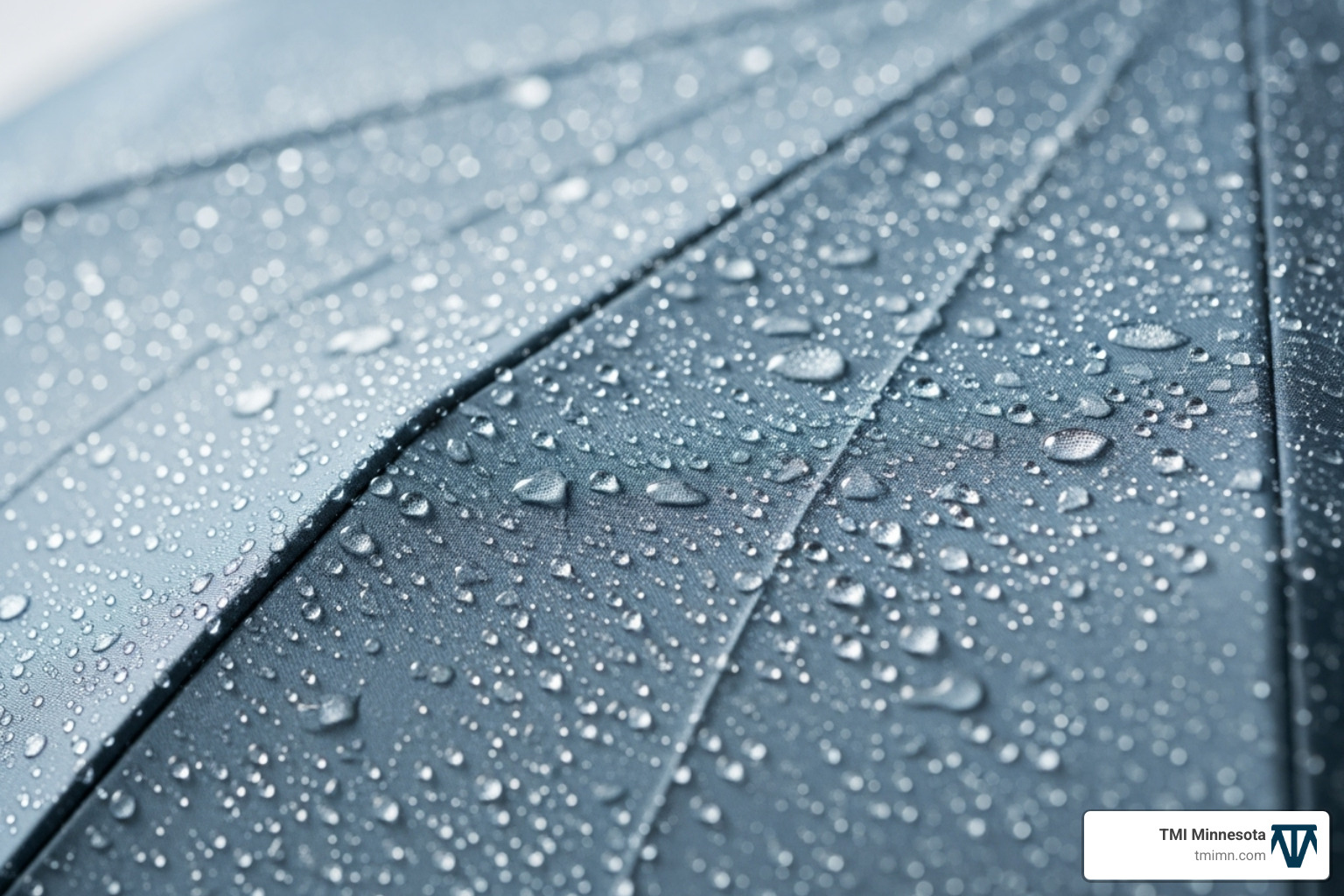
Comparing Canopy Materials: Acrylic vs. Olefin vs. Polyester
Let’s break down the most common canopy fabric types you’ll encounter for a cantilever umbrella:
| Fabric Type | UV Blocking | Fade Resistance Guarantee | Water Repellency | Ideal Use Case |
|---|---|---|---|---|
| Acrylic | 95–100% | 7–10 years | Excellent | Premium residential & commercial |
| Olefin | 90–95% | 3–5 years | Very good | Mid-range residential |
| Polyester | 80–90% | 1–3 years | Good | Budget or occasional use |
Colour, UV Ratings, and What They Mean for Your Shade
Look for a UPF 50+ rating (which blocks 98 %+ of UVR) and UV-rated stitching throughout the canopy. Darker colours typically absorb more light and reduce glare, while lighter tones can make a space feel brighter and reflect more heat, potentially feeling cooler underneath. The choice often comes down to balancing aesthetic preference with functional needs. If you’re seeking inspiration, our design team can show you a palette of more than 100 colour combinations to match your outdoor aesthetic.
Canopy Care and Maintenance
To ensure your canopy lasts for many seasons, proper care is essential. Regular cleaning with a simple solution of mild soap and lukewarm water can prevent dirt, pollen, and mildew from setting in. Gently scrub the fabric with a soft-bristle brush and rinse thoroughly with clean water. For tougher stains, specific fabric cleaners are available, but always test on a small, inconspicuous area first. Most importantly, always allow the canopy to air dry completely before closing the umbrella for storage. This is crucial for preventing mold and mildew growth, a common concern in the humid Minnesota summers, and will keep your investment looking its best year after year.