
Why Commercial Block Paving Is Changing Business Spaces
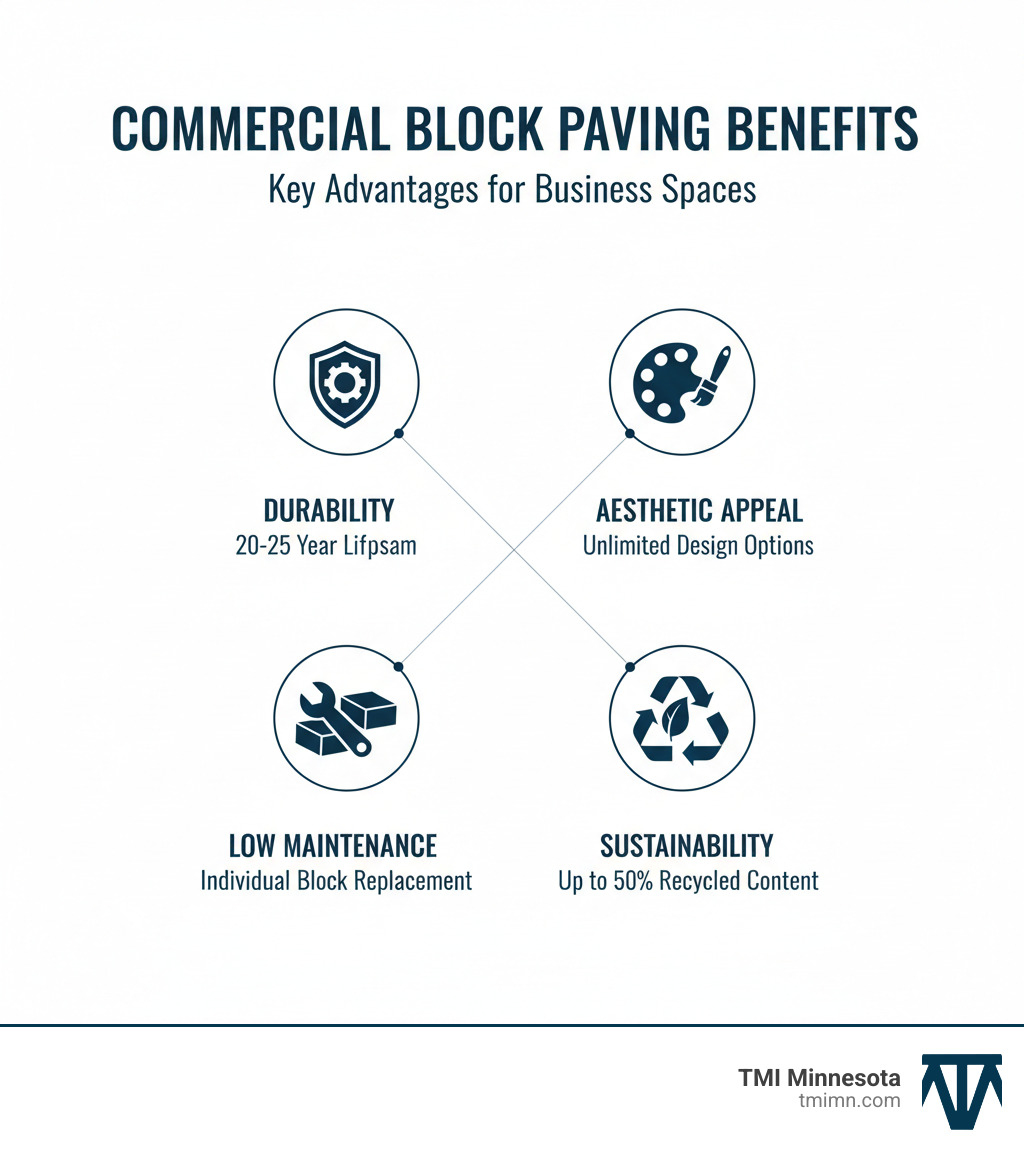
Commercial block paving is a versatile surfacing solution using individual interlocking blocks to create durable, attractive areas for businesses. Here’s what makes it stand out:
- Durability: Lasts 20-25 years with proper maintenance.
- Design Flexibility: Unlimited patterns, colors, and shapes.
- Easy Repairs: Individual blocks can be replaced without resurfacing entire areas.
- Sustainability: Often contains up to 50% recycled materials.
- Applications: Car parks, walkways, patios, loading bays, and public spaces.
Unlike poured concrete or asphalt, commercial block paving combines exceptional durability with unlimited design possibilities. Its interlocking construction manages expansion and contraction, avoiding the cracks that plague other surfaces. If a section gets damaged, you can simply lift and replace individual blocks—no repair scars or lengthy resurfacing projects.
I’m Christopher Deanovic, Operations Leader at Task Masters, where I’ve overseen countless commercial block paving projects throughout Minnesota. My hands-on experience has shown me how the right paving choice can improve both functionality and curb appeal for any commercial property.
The Best Versatility of Commercial Block Paving
What sets commercial block paving apart is that it works beautifully in practically any commercial setting. Whether you’re dealing with heavy truck traffic or creating a peaceful outdoor dining area, block paving adapts to meet your specific needs.
While commercial block paving can cost more upfront than basic asphalt, the long-term numbers tell a different story:
| Feature | Commercial Block Paving | Asphalt | Poured Concrete |
|---|---|---|---|
| Durability | Extremely durable, strong, interlocking system | Moderate, prone to cracking in heat/cold | High, but prone to cracking with movement |
| Lifespan | 20-25+ years with proper maintenance | 10-15 years, needs repaving | 20-30 years, needs resealing |
| Repairability | Easy: individual blocks replaced, no repair scars | Extensive: requires repaving/resurfacing | Difficult: repairs often leave visible patches |
| Design Options | Unlimited: patterns, colors, shapes, sizes | Limited: typically black, some color options | Moderate: can be stamped/colored, fewer patterns |
| Initial Cost | Higher | Lower | Moderate |
The beauty of block paving lies in its incredible repairability. When asphalt cracks, you’re looking at major resurfacing. With concrete, repairs leave ugly patches. But with block paving, you simply lift out the damaged blocks and drop in new ones. No construction crews, no downtime, no repair scars.
Our team at TMI Minnesota has helped countless businesses find how Hardscape Design Services can transform their properties while delivering long-term value.
Primary Applications in Commercial Settings
The versatility of commercial block paving is impressive. In my years with TMI Minnesota, I’ve seen it work magic in many settings.
Car parks: Block paving withstands freeze-thaw cycles that destroy asphalt. The individual blocks prevent large cracks, and you can use different colored blocks for demarcation for parking bays, eliminating the need for repainting lines.
Loading bays: The interlocking system distributes the weight of heavy trucks, and damaged blocks can be replaced individually, keeping the area functional during repairs.
Pedestrianized zones: For shopping plazas and courtyards, block paving offers aesthetic flexibility. Create custom patterns that reflect your brand while handling heavy foot traffic.
Access roads and restaurant patios: Transform utilitarian roads into attractive entrances. For patios, the natural texture provides slip resistance and an inviting atmosphere.
Community spaces and walkways: Block paving provides a durable, safe, and attractive surface for public areas, walkways, and playgrounds.
Enhancing Safety and Accessibility
Safety is about creating spaces where everyone feels confident. Commercial block paving excels at this.

Slip-resistant surfaces: Textured blocks provide excellent grip, even when wet, which is crucial for Minnesota’s weather. This reduces the risk of slips and falls on your property.
Guiding foot traffic and ADA compliance: Use different colors and patterns to direct people, define walkways with contrasting borders, or add tactile paving for visually impaired visitors. Block paving easily integrates ADA features like smooth transitions and warning surfaces, making them look intentional.
Water management: Permeable paving options reduce hazards by allowing water to drain through the surface, preventing standing water and ice.
Barrier integration: The modular nature of block paving allows for the clean, professional integration of bollards or decorative barriers.
These features create commercial spaces that are safer and more accessible for everyone.
Design and Material Possibilities
The design possibilities with commercial block paving are genuinely unlimited. Unlike asphalt or plain concrete, block paving allows you to create outdoor spaces that reflect your brand’s personality, from vibrant, guiding patterns to subtle, sophisticated designs.
A thoughtfully designed entrance or gathering space creates a memorable customer experience. You can explore creative possibilities through our Block Paving Driveway Designs to spark ideas for your commercial space.
Common Materials and Their Properties
The material you choose for your commercial block paving project will shape its look, longevity, and cost. Let me walk you through the main options.
Concrete blocks are our workhorse material. Made from crushed stone, sand, and cement, these blocks are incredibly durable and strong, perfect for any commercial space. They come in a vast range of colors, shapes, and sizes, and many contain up to 50% recycled material, making them an environmentally smart choice.
Clay pavers offer rich, earthy tones and exceptional color retention. They create a classic, timeless look that improves with age and are incredibly durable.
For clients wanting the absolute best, natural stone like granite, sandstone, or basalt delivers a premium aesthetic. It has a higher cost, but its one-of-a-kind beauty and durability make it a worthwhile investment. Our Natural Stone Driveway projects showcase how stunning these materials can be.
Recycled materials are becoming more popular. Beyond recycled content in concrete blocks, some pavers are made entirely from recycled plastics or composites, boosting your project’s environmental credentials.
Exploring Patterns, Colors, and Shapes
This is where we get creative and bring your vision to life. The combination of patterns, colors, and shapes gives us almost endless possibilities.
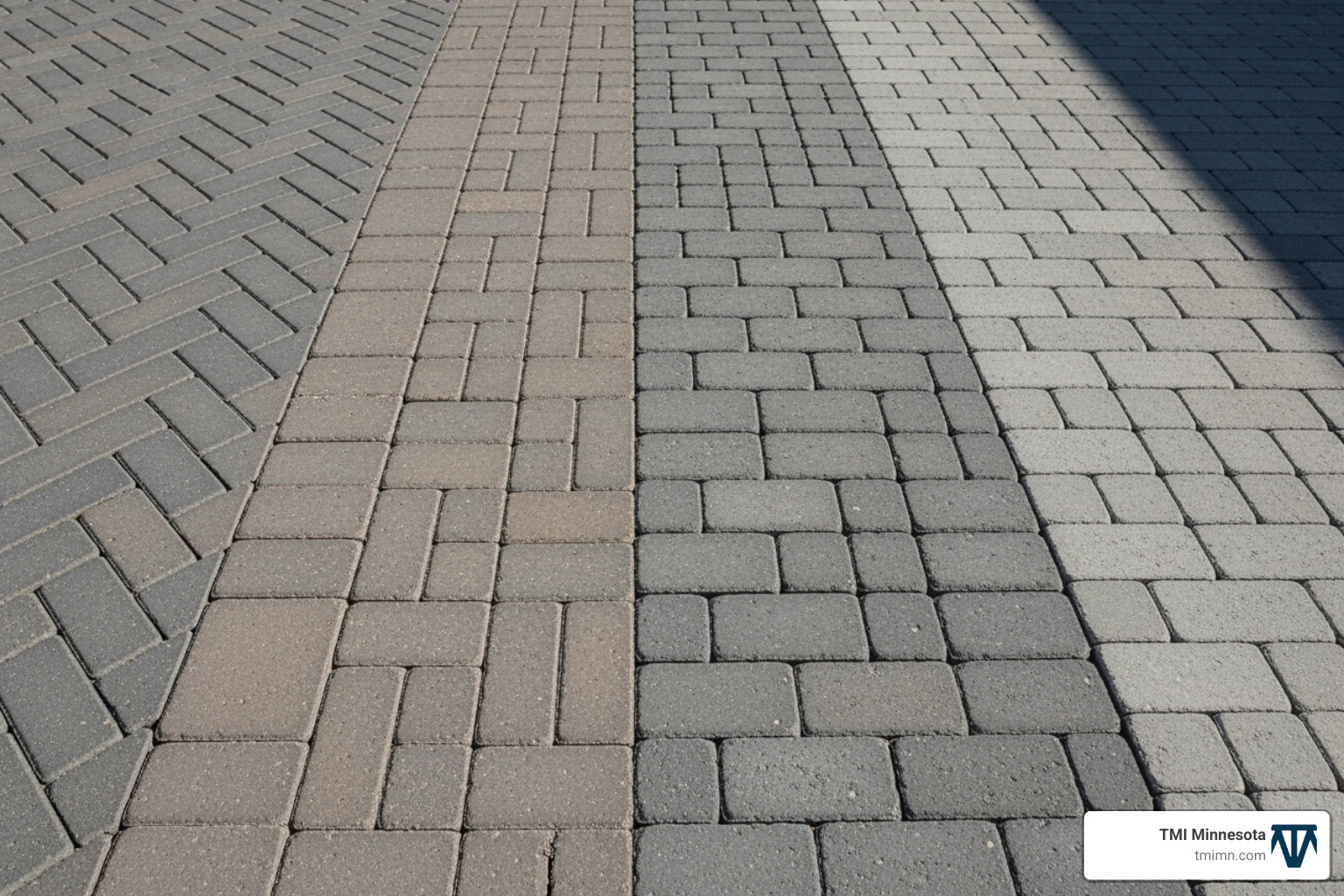
The herringbone pattern is famous for a reason. Its interlocking design is incredibly strong, making it ideal for areas with heavy vehicle traffic.
Basketweave provides a charming, classic look that works well in pedestrian areas. Stretcher bond is simple and linear, perfect for pathways where you want to emphasize flow.
Custom patterns allow for unique designs, even incorporating your logo into the paving to create a stunning focal point.
The color palette is impressive, with options from buffs and grays to blues and greens. You can use a single color for a uniform look or combine colors for borders, accents, or mosaics that align with your brand.
Different shapes and sizes, beyond standard rectangles, add another layer of creativity. Mixing sizes adds visual interest and helps create the right scale for your space.
Border pavers are crucial for a finished, professional look. They define the edges of your paved area and can contrast with the main paving to make the whole design pop.
The ability to mix and match these elements means we can create outdoor spaces that are genuinely artistic. This level of customization is why we suggest exploring Driveway Landscaping Designs to see the full potential for your commercial space.
Sustainable Solutions: Permeable Paving and Environmental Benefits
Sustainability isn’t just a buzzword; it’s a critical consideration for any commercial project. Commercial block paving, particularly its permeable varieties, offers significant environmental benefits, making it a smart choice for businesses committed to eco-friendly practices. We are proud to offer solutions that contribute positively to our local environment in the Twin Cities.
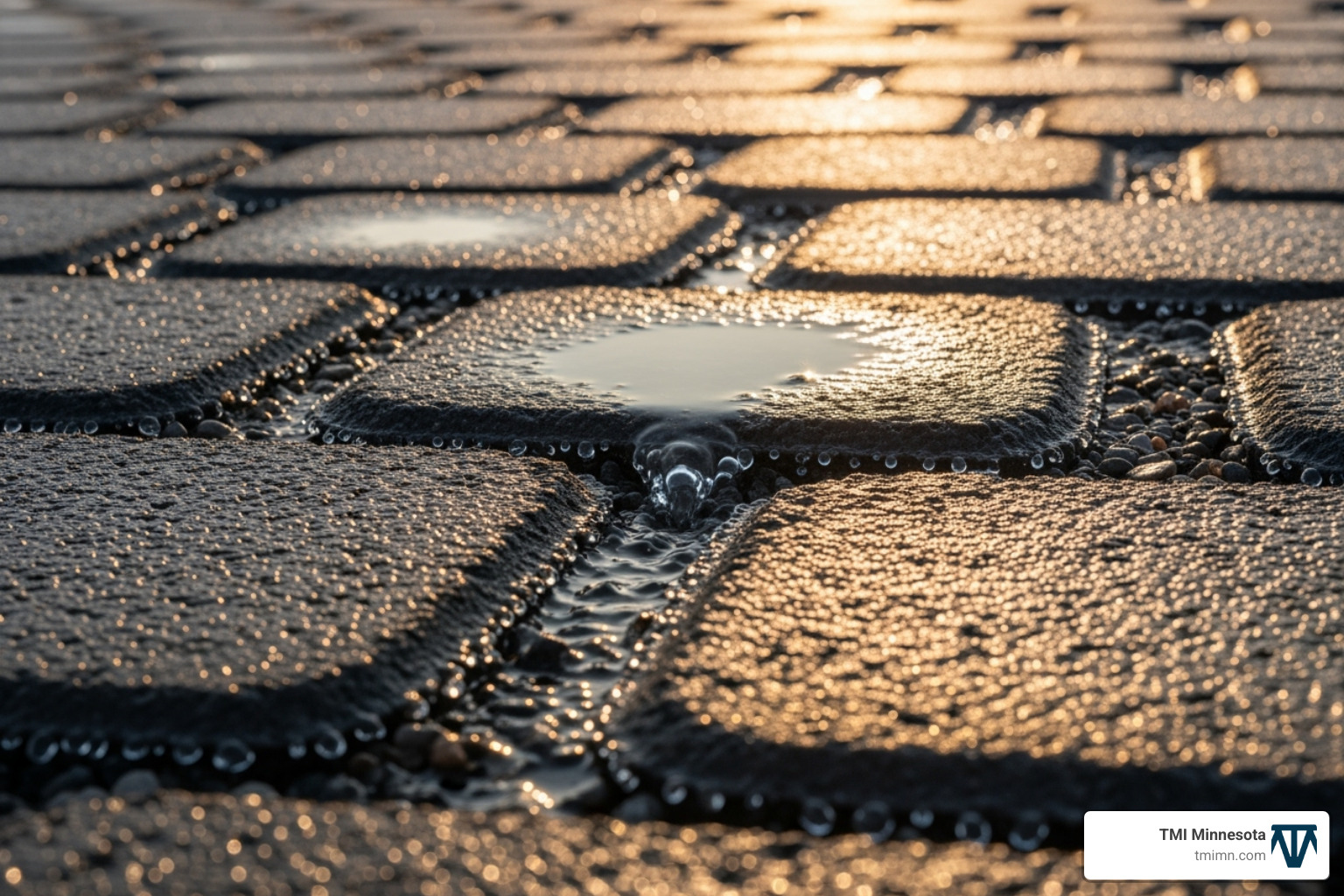
One of the most impactful contributions of block paving is its role in Sustainable Drainage Systems (SuDS). Traditional impervious surfaces like asphalt and concrete channel stormwater directly into drainage systems, often overwhelming them and leading to flooding and pollution. Permeable block paving, however, works with nature to manage water. It’s a key component of effective stormwater management, helping to reduce runoff and even recharge local groundwater supplies, which is essential for our ecosystems. This is a crucial aspect of responsible Landscape and Hardscape planning.
How Permeable Paving Works
The magic of permeable paving lies in its design. Unlike standard block paving where joints are tightly filled with sand, permeable systems are engineered to allow water to pass through.
- Porous Structure: The blocks themselves might be porous, or more commonly, the system relies on wider joints between the blocks.
- Spacing Nibs: Permeable blocks often feature discreet spacing nibs on their sides. These small protrusions ensure that when the blocks are laid, there’s a consistent gap between them.
- Water Infiltration: These gaps, typically filled with 2mm to 5mm joint grit, allow rainwater to seep directly through the surface.
- Sub-base Reservoir: Beneath the blocks, a specially designed sub-base made of crushed aggregate acts as a temporary reservoir. Water collects here and then slowly infiltrates the ground below or is directed to an underground drainage system.
- Reducing Burden on Drainage Systems: By allowing water to infiltrate on-site, permeable paving significantly reduces the volume of stormwater entering municipal drainage systems, lessening the risk of flash floods and pollution.
- Preventing Standing Water: This system effectively eliminates standing water on the surface, making commercial areas safer and more accessible immediately after rainfall.
This innovative approach to water management is why permeable options are often suggested to meet planning permission guidelines, especially for new driveways. You can find More on sustainable options for commercial projects.
Environmental Contributions
Beyond stormwater management, commercial block paving offers several other environmental advantages:
- Using Recycled Content: As mentioned, concrete block paving can contain up to 50% recycled material in its production. This reduces the demand for virgin resources and minimizes waste.
- Reducing Heat Island Effect: Dark, impervious surfaces like asphalt absorb and radiate heat, contributing to the urban heat island effect. Lighter-colored block paving, especially permeable options, can reflect more sunlight, leading to cooler surface temperatures and a more comfortable microclimate around your business.
- LEED Points: Projects utilizing permeable paving and other sustainable hardscaping practices can often contribute to earning LEED (Leadership in Energy and Environmental Design) points, showcasing a business’s commitment to green building standards.
- Lowering Carbon Footprint: By incorporating recycled materials, reducing energy-intensive manufacturing processes, and managing stormwater naturally, block paving can help lower the overall carbon footprint of a commercial development. Some manufacturers are even working towards carbon-neutral production.
- Reusability of Blocks: If a block paved area needs to be reconfigured or removed, the individual blocks can often be salvaged and reused elsewhere, further reducing waste and contributing to a circular economy. This reusability is a significant advantage over materials that are simply broken up and sent to landfills.
Installation and Long-Term Performance
Proper installation is key to open uping the durability and long-term return on investment of commercial block paving. It’s about creating a foundation that will serve your business for decades.
While the initial investment may be higher, the longevity and minimal maintenance often make it the most economical choice over time. We focus on getting every detail right during our Hardscape Installations.
Key Considerations for Installing Commercial Block Paving
Every successful commercial block paving project starts with a detailed site assessment to understand existing conditions, soil type, and drainage patterns.
Traffic load analysis is critical. Whether it’s heavy foot traffic or goods vehicles determines the block thickness and sub-base strength. For heavy traffic, we recommend a sub-base thickness of 200mm for long-term stability.
The ground preparation phase is crucial. We dig down to solid ground, because as we tell our clients, “To get good block paving, the company setting your driveway needs to dig out down to good solid ground.” Cutting corners here leads to sinking later.
Edge restraints are essential concrete, steel, or masonry boundaries that prevent blocks from shifting laterally over time, preserving the integrity of the paving.
We also focus on drainage planning, creating the right slope and incorporating channels to ensure water has a clear path away from your paved areas.
Finally, proper compaction of the sub-base and bedding layer ensures everything stays put, creating dense, even layers that won’t settle under load.
Maintenance, Repair, and Longevity
Commercial block paving is designed for the long haul. With proper installation and basic care, it can last 20-25 years, often outlasting alternatives.
Maintenance is simple. Regular sweeping keeps debris from accumulating, and occasional pressure washing (done carefully) maintains a clean appearance.
Weed prevention is a common concern. Using high-quality kiln-dried sand or resin-based grout for jointing makes a huge difference. Re-sanding the joints every few years keeps weeds at bay and maintains structural integrity.
Sealing your blocks protects against stains, moisture, and UV fading, a small investment that pays dividends in appearance.
The real game-changer is repairs. If a block is damaged, we can lift and replace just the affected blocks. No massive resurfacing, no unsightly patches. The fix blends seamlessly, maintaining a professional look. This is why we explain What is Hardscape Installation? in detail—it helps clients appreciate the long-term value.
Long-Term Costs of Commercial Block Paving
The true value of commercial block paving is clear when you look at the complete picture. The initial installation cost is typically higher than asphalt or concrete, reflecting quality materials and labor.
However, asphalt needs repaving every 10-15 years (up to $2.50/sq ft) plus regular sealcoating. Concrete lots (costing $4-$7 per square foot to install) require resealing every 2-5 years (up to $2 per square foot) and eventual resurfacing.
The repair cost-effectiveness of block paving excels. We can replace individual blocks quickly and affordably, meaning predictable maintenance costs and minimal business disruption.
Most importantly, permeable block paving can cost up to 50% less than concrete to install for commercial applications while offering superior durability and lower maintenance. Factoring in curb appeal, property value, and decades of performance, commercial block paving represents exceptional long-term value.
Frequently Asked Questions about Commercial Paving
Over the years, we’ve helped countless businesses across the Twin Cities make smart decisions about their outdoor spaces. Here are answers to the most common questions.
How long does commercial block paving last?
With proper installation and maintenance, commercial block paving can easily last 20-25 years or more. Its interlocking design gets stronger over time and handles Minnesota’s freeze-thaw cycles better than asphalt or concrete, as the individual blocks can move slightly without cracking the overall surface. This flexibility is why it often outlasts other materials in high-traffic commercial settings.
Is block paving more expensive than asphalt or concrete?
The upfront cost of commercial block paving is typically higher than asphalt or concrete due to materials and labor. However, it’s often more cost-effective over its 20+ year lifespan. Asphalt requires repaving and sealcoating, while concrete needs resealing and resurfacing. With block paving, maintenance is minimal—mostly re-sanding and replacing individual blocks. This means predictable costs and less business disruption. Plus, permeable paver systems can actually cost up to 50% less than concrete for commercial lots.
What maintenance does block paving require?
Commercial block paving maintenance is straightforward. Regular sweeping and a gentle annual pressure wash keep it looking professional. The most important task is re-sanding the joints every few years with kiln-dried sand to keep blocks locked and prevent weeds. Sealing is optional but adds protection against stains. The biggest advantage is repairs: damaged blocks can be lifted and replaced individually, leaving no repair scars and causing minimal disruption to your business.
Conclusion
It’s clear why so many businesses are investing in commercial block paving. It’s more than a surface; it’s a change of your commercial space’s look, feel, and function.
With 20-25 years of durability, easy individual block repairs, and unlimited design possibilities, block paving delivers both beauty and brawn for any application, from patios to loading bays.
Commercial block paving checks every box for modern businesses: sustainability through permeable options and recycled materials, long-term value from low maintenance, and best aesthetic flexibility.
A well-designed block paved area creates a crucial positive first impression. At TMI Minnesota, we understand every property is unique. We take the time to understand your vision and recommend solutions that fit your budget and long-term goals.
Ready to see what commercial block paving can do for your business? Start planning your project with our Block Paving Driveway Designs and let’s create an outdoor space that works as hard as you do.