
Why Decorative Retaining Walls Are More Than Just Functional
A decorative retaining wall does more than hold back soil—it transforms sloped or uneven terrain into beautiful, usable outdoor space. Whether you’re dealing with erosion on a hillside, looking to create level areas for entertaining, or simply want to add visual depth to your landscape, a well-designed retaining wall delivers both structural support and striking aesthetic appeal.
Key Benefits of Decorative Retaining Walls:
- Prevent soil erosion and manage water runoff on sloped properties
- Create usable, level spaces for patios, gardens, or play areas
- Add visual interest through terracing, materials, and integrated features
- Increase property value with improved curb appeal and functionality
- Define outdoor zones like driveways, walkways, and garden beds
- Integrate seamlessly with seating, lighting, and planting areas
The global retaining wall market was valued at $13.5 billion in 2022 and is projected to reach $21.8 billion by 2030, with residential applications accounting for over 50% of demand. Homeowners are increasingly choosing decorative options that combine engineered strength with aesthetic versatility—from natural stone and modular blocks to modern steel and gabion designs.
Gone are the days when retaining walls were purely utilitarian concrete barriers. Today’s options range from rustic stacked stone that blends with wooded settings to sleek geometric blocks that complement contemporary homes. You can incorporate built-in seating, integrate cascading plants, add mood lighting, or create multi-tiered gardens that turn challenging slopes into stunning focal points.
Here at TMI Minnesota, we’ve spent years designing and building decorative retaining walls throughout Minnesota that balance structural integrity with visual impact. Our team specializes in creating custom hardscape solutions that transform outdoor spaces into functional, beautiful environments custom to each homeowner’s unique vision.
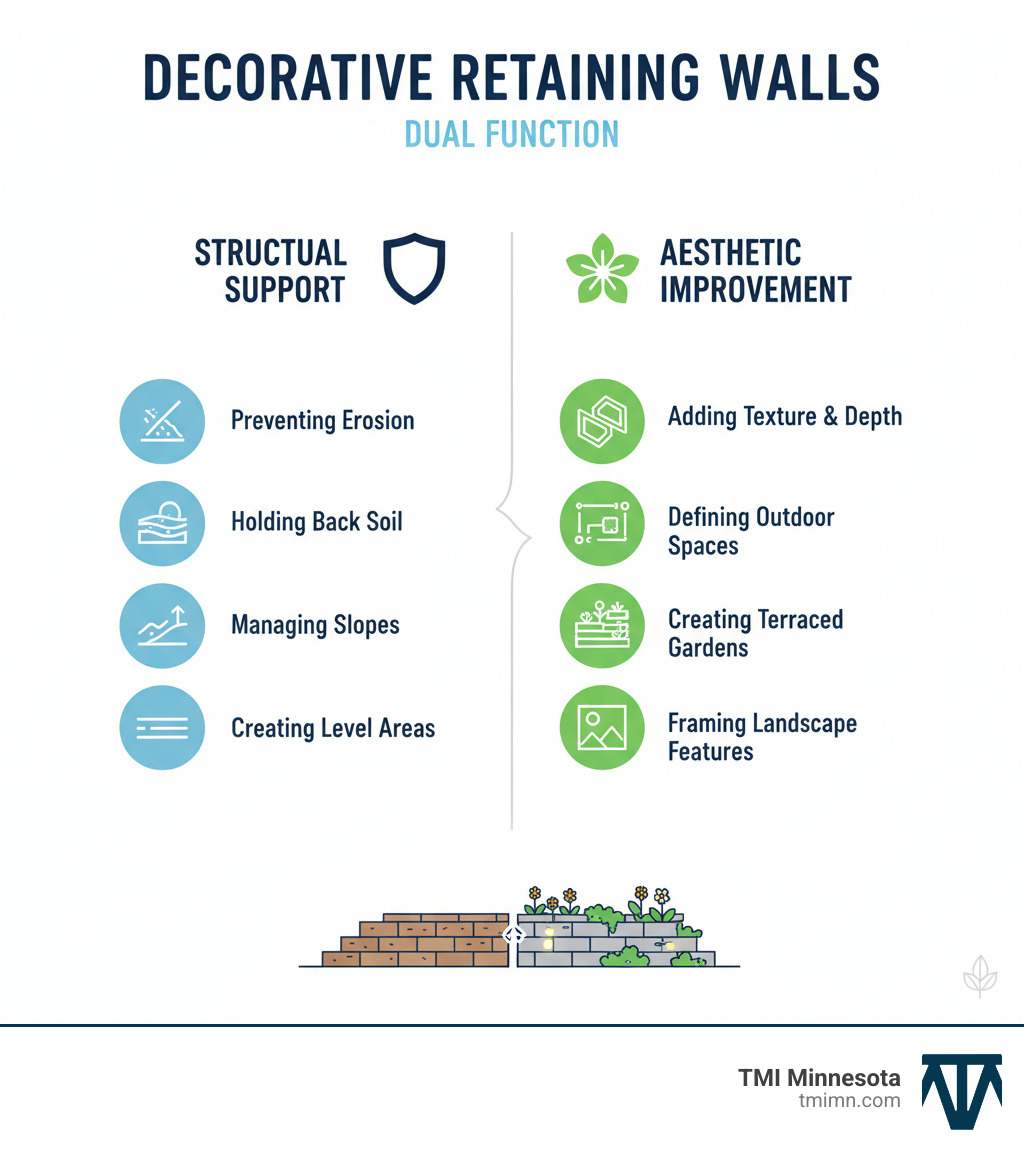
Key terms for decorative retaining wall:
Choosing the Right Materials for Your Wall
The material you choose for your decorative retaining wall shapes everything—from how it looks in your yard to how long it lasts and what you’ll spend. This is one of the most exciting parts of the design process because you get to match your wall to your home’s style, your budget, and the natural character of your Minnesota landscape.
The right material isn’t just about looks. It needs to handle our freeze-thaw cycles, complement your existing hardscape, and deliver the structural support your slope requires. Some materials work beautifully in wooded settings, while others shine in contemporary spaces. Some are budget-friendly and DIY-approachable, while others require professional installation but last generations.
Here’s how the most popular materials compare across the factors that matter most:
| Feature | Natural Stone & Boulders | Concrete & Modular Blocks | Wood (Treated Timber) | Steel (Corten) | Gabion (Wire & Stone) |
|---|---|---|---|---|---|
| Cost | High | Medium | Low-Medium | High | Low-Medium |
| Lifespan | Very Long | Long | Short-Medium | Very Long | Long |
| Maintenance | Low | Low | Medium (treatment) | Low | Low |
| Design Versatility | High (organic shapes) | Very High (colors, textures) | Medium (linear) | Medium (modern) | Medium (industrial) |
| Aesthetics | Rustic, Timeless | Modern, Traditional | Rustic, Natural | Modern, Industrial | Industrial, Natural |
Natural Stone and Boulders
Nothing beats the timeless beauty of natural stone when you want your wall to look like it’s always been part of the landscape. These materials bring an organic, one-of-a-kind quality that’s impossible to replicate—every stone has unique variations in color, texture, and shape that tell a story.
Boulder walls deliver that rugged, rustic appeal that feels right at home in Minnesota’s wooded settings. They provide excellent natural drainage and can actually be more affordable than you’d expect, especially when we source locally. The beauty of boulders is how they create stunning natural shapes and contours that follow the land rather than fight against it.
If you’re drawn to this look, we can help you design a boulder retaining wall that feels like a natural extension of your property. One of our favorite design touches is letting greenery and flowers spill over the top of a stone wall—this cascading effect softens the rugged edges and transforms what might have been an eyesore into a vibrant, living feature that truly improves your curb appeal. You can explore more about the aesthetic appeal of natural stone and how it integrates with Minnesota landscapes.
Concrete and Modular Blocks
If you’re looking for versatility and modern engineering, modular concrete blocks have completely changed what’s possible with retaining walls. These interlocking systems offer incredible strength while giving you nearly unlimited design options—from finishes that look like tumbled stone or stacked slate to sleek, contemporary textures that complement modern homes.
The real advantage of concrete blocks is how they combine landscape beauty with structural support. They’re perfect for managing uneven or sloping ground and handling challenging drainage situations. The consistent sizing creates clean, uniform lines, and many systems are designed to be surprisingly straightforward to install.
But these blocks do much more than just hold back soil. We use them to create built-in planters, outdoor kitchen backdrops, fire pit enclosures, and even integrated seating areas. The variety of colors and textures means we can match virtually any architectural style, whether you’re going for traditional charm or cutting-edge contemporary.
Our hardscape design services can walk you through all the options and help you choose the perfect system for your home. For more information on concrete wall systems, we’re happy to show you what’s possible with today’s leading-edge products.
Wood, Steel, and Gabion
Beyond the mainstream choices, some materials offer distinctive looks that might be exactly what your landscape needs.
Timber walls bring rustic charm and natural warmth, especially in wooded settings where they blend seamlessly with the surroundings. Pressure-treated wood with proper preservative treatment can last many years, making it an affordable option for shorter walls or more informal designs. The key is ensuring proper drainage to prevent rot—something we pay close attention to in Minnesota’s wet seasons.
Corten steel delivers a modern, industrial aesthetic that’s become increasingly popular. This weathering steel develops a beautiful, stable rust-like patina over time that creates striking contrast with greenery. It’s perfect for contemporary homes and minimalist designs, and it often requires less extensive foundation work than heavier materials.
Gabion walls—wire mesh cages filled with stones or gravel—offer an affordable yet visually striking option. The name comes from the Italian word “gabbione,” meaning “big cage.” These walls provide excellent drainage, create unique industrial texture, and can even be shaped into curves. They’re surprisingly DIY-friendly and deliver both quality and affordability in one package.
You can find more affordable retaining wall ideas on our site, including creative ways to use these alternative materials in your landscape design.
Creative Ideas for Your Decorative Retaining Wall
A decorative retaining wall opens up a world of possibilities for your outdoor space. Rather than viewing it as just a functional necessity, think of it as an opportunity to add character, create inviting gathering spots, and transform challenging terrain into your favorite part of the property. Let’s explore some creative ways to make these structures work harder and look better in your Twin Cities landscape.
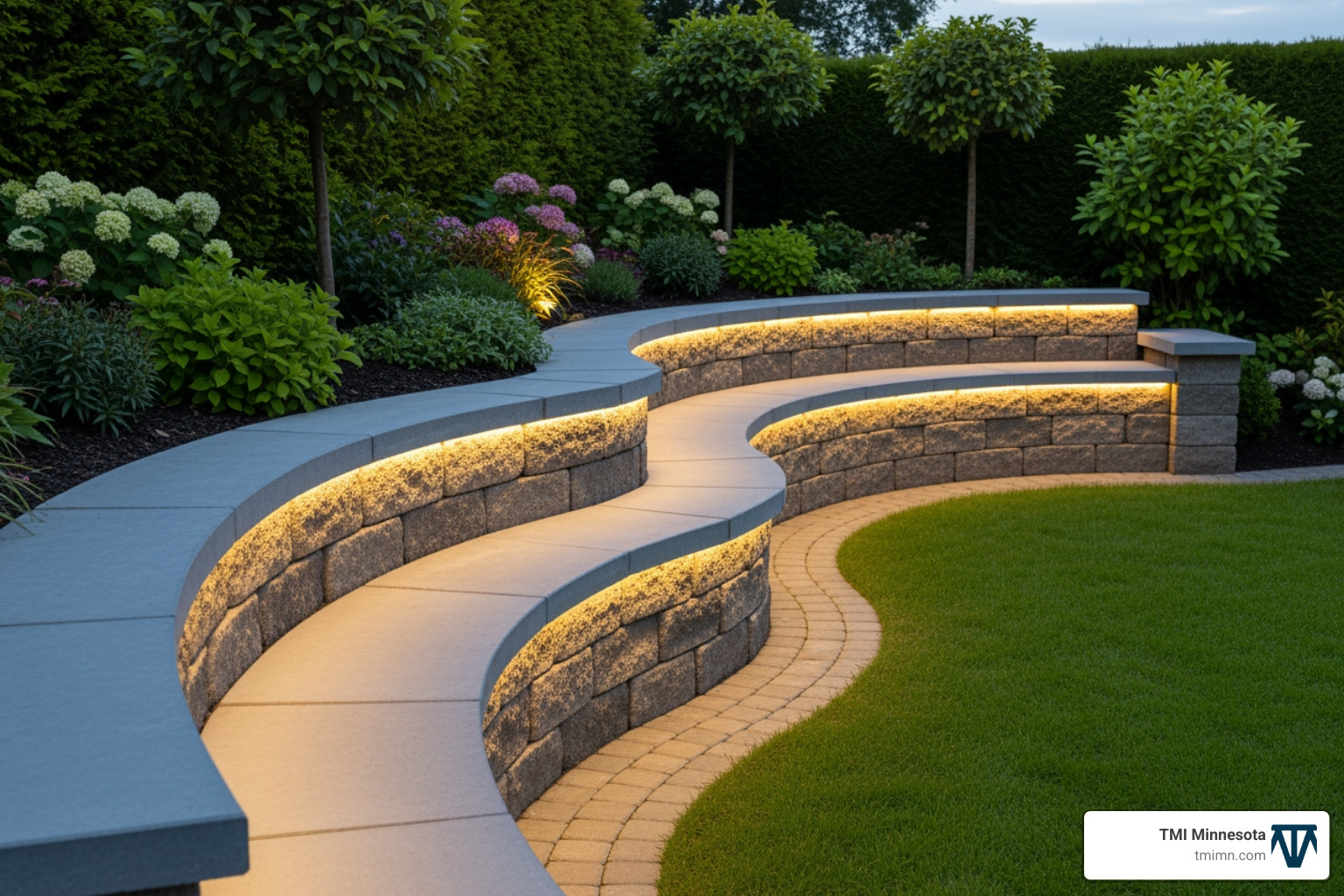
Create Levels and Dimension with Terracing
If you’ve ever tried to mow a steep slope or wished you had more flat space for a garden, multi-tiered retaining walls might be your answer. Instead of building one tall, imposing wall, we can design a series of shorter walls that step down your hillside, creating beautiful terraces at different levels.
This terracing approach does something remarkable—it transforms an unusable slope into multiple usable areas. Each level becomes its own mini-landscape where you can plant flowers, set up seating, or create pathways. The visual effect is stunning, too. Rather than a monotonous incline, you get depth and dimension that makes your yard feel larger and more interesting.
Architect Mauricio Lobeira, cofounder of Ten Plus Three, points out that these multi-level designs create uniformed surfaces out of challenging slopes, integrating your home seamlessly into the natural terrain. Whether you’re working with a gentle grade or a steep hillside, terracing breaks up the landscape in a way that feels both intentional and organic. You can explore more slope garden ideas to see how this strategy might work for your property.
Integrate Functional Outdoor Living Spaces
Here’s where decorative retaining walls get really exciting—when they become part of how you actually live outside. We’re not just holding back soil anymore; we’re creating spaces where you want to spend time.
Picture a stone wall that curves around a fire pit, with the top course designed as built-in seating. Friends gather on warm evenings, leaning back against the stones that still hold the day’s heat. Or imagine an outdoor kitchen with a retaining wall as its backdrop, providing structure for countertops, storage, and even a built-in grill or pizza oven. As landscape designers at Cullman & Kravis have shown, these walls can include refrigeration, lighting, and all the amenities you’d want for outdoor entertaining.
The beauty of this approach is that the wall serves multiple purposes. It manages your slope, defines your patio or gathering area, provides privacy from neighbors, and creates that sense of enclosure that makes outdoor spaces feel like outdoor rooms. We love designing these custom outdoor living areas because they genuinely change how families use their yards. For more inspiration on creating cozy gathering spots, check out our outdoor fire pit ideas.
Frame and Define Your Landscape
Think of a decorative retaining wall as punctuation in your landscape—it can emphasize certain features and create clear sentences out of what might otherwise be a run-on yard.
Along your driveway, a retaining wall does more than hold back soil. It keeps debris from washing onto your pavement during heavy rains and creates a welcoming formal entry that announces you’ve arrived somewhere special. Our driveway landscaping designs often incorporate these walls to add structure and curb appeal right where visitors first see your home.
In garden areas, shorter walls create raised beds that make planting and maintenance easier on your back while adding architectural interest. These liftd gardens become focal points, especially when you choose materials that complement your home’s exterior. Browse our garden border ideas for ways to frame your plantings beautifully.
For properties with elevation changes, a sleek retaining wall can create what landscape architect Amy Hovis describes as an infinity-edge lawn—where your grass seems to extend endlessly into the horizon. This dramatic effect works particularly well with modern homes and can divide your property into distinct zones, perhaps separating a manicured lawn area from a more natural wooded section. If you have a pool on a sloped lot, a well-designed wall can frame it perfectly, turning what could be an awkward grade change into a striking architectural feature.
Incorporate Softscaping and Lighting
The magic happens when we blur the line between the hard structure of your wall and the soft, living elements around it. This is where a decorative retaining wall truly becomes decorative.
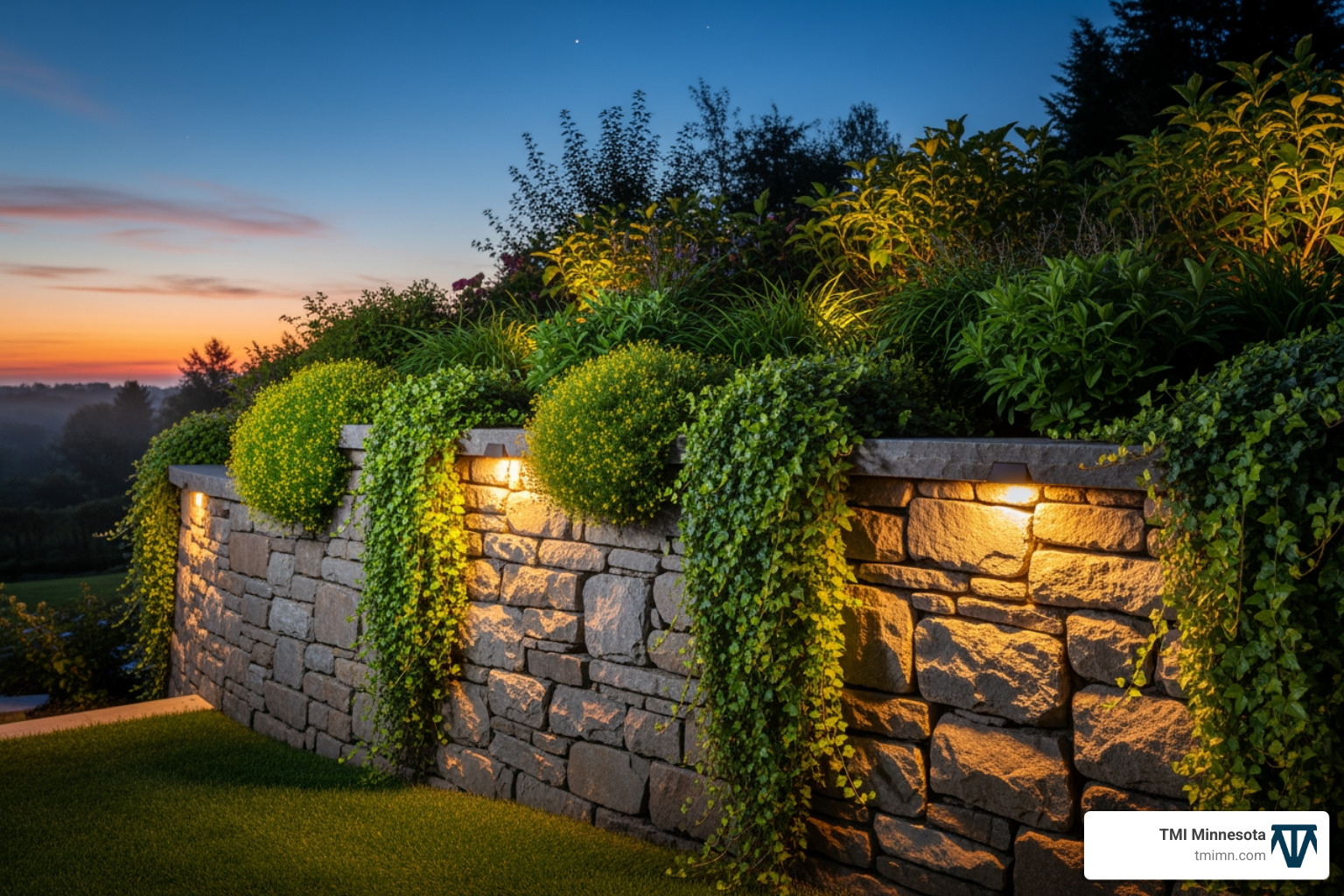
We love designing walls with built-in planting pockets where flowers and greenery can spill over the edges. Imagine hydrangeas cascading down a stone face, or trailing vines softening the geometric lines of modular blocks. Eden Garden Design has shown how letting plants overflow a rock wall adds movement and color while maintaining the wall’s structural purpose. This integration of hardscape and softscape creates landscapes that feel complete rather than constructed.
Then there’s lighting, which transforms everything after sunset. Capstone lights along the top of your wall create a subtle glow that defines pathways and adds safety. Step lights built into the face illuminate each level on a terraced wall. Uplighting from below can highlight the texture of natural stone or create dramatic shadows that emphasize your wall’s shape and materials.
These lighting touches serve dual purposes—they make your outdoor spaces safer and more usable at night while creating that “wow factor” that makes neighbors slow down as they drive past. We work with various landscape lighting ideas to find the right balance between ambiance and function for each project.
Key Considerations for a Lasting Wall
A decorative retaining wall isn’t just about good looks—it’s a significant investment that needs careful planning to ensure it stays strong, safe, and beautiful for decades. Building a wall that can handle Minnesota’s freeze-thaw cycles, heavy spring rains, and shifting soil requires more than just stacking blocks. It demands attention to detail and a deep understanding of what makes these structures work.
I’ve seen too many DIY walls fail within a few years because homeowners skipped critical steps or didn’t realize what forces they were up against. Common mistakes include inadequate drainage, insufficient base preparation, and building too high without proper reinforcement. That’s why professional retaining wall design services can save you time, money, and frustration in the long run.
Drainage is Non-Negotiable
Here’s the truth: drainage is the single most important factor in whether your wall lasts five years or fifty. Without proper drainage, water builds up behind the wall, creating tremendous hydrostatic pressure. Think of it like trying to hold back a small lake with just a few blocks—that’s the kind of force we’re talking about. Eventually, that pressure causes bulging, cracking, or complete failure.
We always incorporate multiple drainage solutions into our designs. A layer of clean, coarse gravel backfill goes directly behind the wall, creating a free-draining zone that prevents water from getting trapped. At the base of this gravel layer, we install a perforated pipe (also called drain tile) that collects water and directs it safely away from the structure—either to daylight or into a storm drain system.
This drainage system is especially crucial for reinforced walls, any gravity wall over four feet tall, or sites with poor natural drainage. Sometimes we’ll also add weep holes—small openings in the wall face that let water escape—though the gravel and pipe system is usually the primary defense.
Proper water drainage doesn’t just prevent failure. It also protects against erosion, controls runoff, and keeps the surrounding landscape healthy. It’s the difference between a wall that settles and shifts every spring and one that stays rock-solid year after year.
Structural Support and Height
The height and purpose of your decorative retaining wall determine what kind of structural support it needs. A two-foot garden border is a completely different animal from a six-foot wall holding back tons of soil on a steep slope.
Every retaining wall starts with a solid foundation. We excavate a trench below the frost line, prepare the sub-base carefully, and create either a compacted gravel base or pour a concrete footing, depending on the wall’s height and the soil conditions. For walls over three feet high in our Minnesota climate, frost footings are often necessary to prevent the wall from shifting when the ground freezes and thaws.
For taller walls or those retaining significant loads, we incorporate geogrid reinforcement. This geosynthetic material gets laid horizontally between courses of blocks and extends back into the soil mass, providing added tensile strength. It essentially anchors the wall to the hillside itself, dramatically increasing stability.
Height restrictions and engineering requirements are something you need to know about before you start planning. In most Twin Cities municipalities, walls over three to four feet high require professional engineering and permits. This isn’t just bureaucratic red tape—it ensures the wall is designed to withstand the specific forces it will encounter and meets safety standards.
There’s also an aesthetic consideration with height. A wall that’s too tall can overpower its surroundings and look out of place in your landscape. Sometimes a series of shorter terraced walls creates a more attractive and stable solution than one towering structure.
Our team’s expertise in hardscape installations means we handle all these technical details for you. We ensure every wall is built to exact specifications, with proper footings, drainage, and reinforcement where needed. The result is a structure that’s not just beautiful, but built to last through everything Minnesota weather can throw at it.
Frequently Asked Questions about Decorative Retaining Walls
We love talking about decorative retaining walls! Over the years, we’ve noticed the same questions coming up time and again. Here are the answers to what homeowners in the Twin Cities area most want to know.
What is the difference between a retaining wall and a freestanding wall?
At first glance, these might seem similar, but they serve very different purposes—and require different construction approaches.
A retaining wall is built to hold back soil and manage the lateral pressure that comes with it. Think of it as a structural workhorse. It creates level areas on sloped sites and needs to be engineered to withstand the constant push of earth and water behind it. Because of this structural load, retaining walls require proper footings to hold them in place and retain soil effectively. You’ll typically only see one finished face—the side that’s visible—while the back side does the heavy lifting of holding back the earth.
A freestanding wall, on the other hand, sits on flat ground and isn’t designed to retain soil at all. These walls are decorative features that help define spaces in your landscape. You might use them to create garden walls, seat walls, or property dividers. Since both sides are visible and there’s no soil pressure to manage, freestanding walls are finished on both sides and don’t require the same level of structural engineering. They add visual interest and help organize your outdoor spaces without the complexity of a true retaining structure.
How high can I build a retaining wall without a permit?
Here’s where things get interesting—and where we always recommend doing your homework. The answer isn’t one-size-fits-all across the Twin Cities area. Each municipality has its own rules, whether you’re in Minneapolis, St. Paul, or one of the surrounding suburbs.
Generally speaking, walls under three to four feet in height often don’t require a permit. But that’s not the whole story. Even a shorter wall might need a permit if it’s supporting a surcharge—that means anything that adds extra weight or pressure on top, like a driveway, patio, or building. The same goes for walls that impound liquids.
The best advice we can give? Check with your local city or county planning department before you start digging. It might seem like an extra step, but it’s worth it. We’ve seen homeowners face costly fines or even have to tear down and rebuild walls because they skipped this step. When you work with professionals who understand local regulations, you can rest easy knowing everything is above board.
What factors affect the cost of a decorative retaining wall?
Let’s talk numbers—or rather, what influences them. The cost of your decorative retaining wall depends on several key factors, and understanding them helps you plan your budget effectively.
The height and length of your wall have the biggest impact on cost. It’s straightforward math: more wall means more materials and more labor. But there’s more to it than that. Taller walls require deeper footings, more extensive drainage systems, and often reinforcement like geogrid. Walls over three feet high typically need frost footings in our Minnesota climate, plus additional reinforcement and drainage planning. Shorter walls are naturally more budget-friendly and simpler to install.
Your material choice plays a huge role too. Wood timbers are typically the most affordable option, while natural stone sits at the higher end due to both material costs and the specialized labor needed for installation. Modular concrete blocks fall in the middle range, with prices varying based on the style and finish you choose. Gabion walls are often one of the most affordable options, offering great visual appeal without breaking the bank.
Don’t overlook site accessibility when planning your budget. If we need to hand-carry materials down a steep slope or can’t get equipment close to the work area, labor costs will increase. Similarly, labor complexity affects the bottom line. Curved walls, integrated seating, multi-tiered systems, or intricate designs require more skilled labor and time than straightforward installations.
Finally, consider whether your project will need engineering and permits. Taller or more complex walls often require a professional engineer’s stamp and official permits, which add to the overall investment. But this isn’t just red tape—it’s about ensuring your wall is safe, structurally sound, and built to last for decades.
We work closely with homeowners to understand their budget and vision, then design a decorative retaining wall that delivers both beauty and value without cutting corners on quality.
Transform Your Landscape with an Expertly Designed Wall
A decorative retaining wall offers an unparalleled opportunity to transform your outdoor living space. It’s about blending essential functionality with stunning design, turning challenges like sloped yards or erosion into aesthetic triumphs that become the centerpiece of your property.
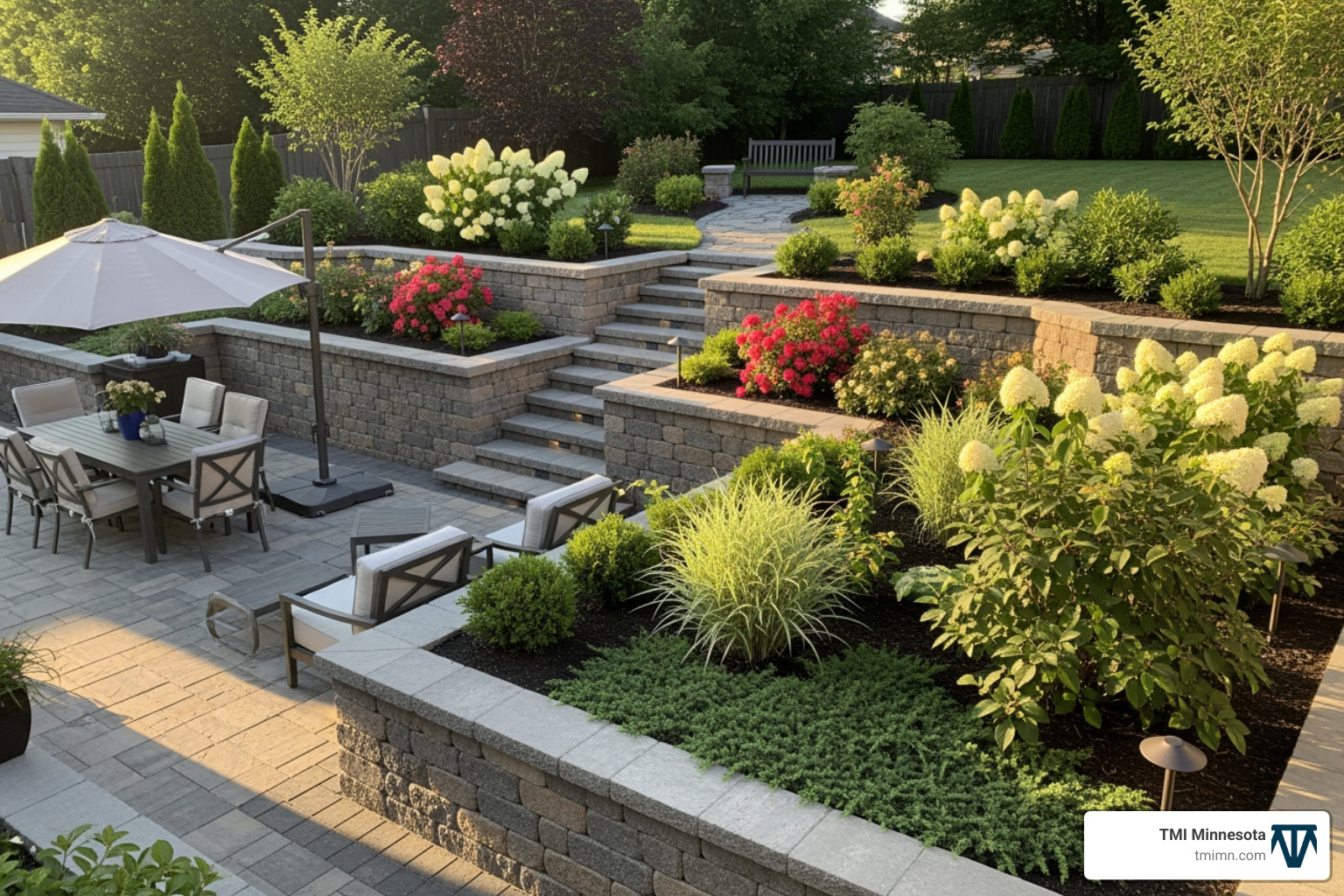
Throughout this guide, we’ve explored how these remarkable structures provide crucial structural support while preventing soil erosion, create beautiful, usable levels where there was once only unusable slope, and define distinct outdoor zones that make your property feel intentional and well-designed. Whether you’re drawn to the timeless beauty of natural stone, the versatility of modular blocks, or the modern edge of steel and gabion, there’s a material and style that will perfectly complement your home.
The design possibilities truly are endless. Picture multi-tiered gardens bursting with color, cascading down your once-problematic hillside. Imagine a cozy wall that doubles as built-in seating around your fire pit, creating an intimate gathering space for family and friends. Envision a sleek edge framing an infinity lawn, or integrated lighting that transforms your wall into a glowing sculpture after dark.
What makes a decorative retaining wall truly successful goes beyond aesthetics. It’s about proper drainage that protects your investment, solid footings that ensure stability through Minnesota’s freeze-thaw cycles, and expert installation that respects local building codes. It’s about understanding that a wall isn’t just a barrier—it’s an opportunity to add dimension, create rooms within your landscape, and increase both the functionality and value of your property.
At TMI Minnesota, we’ve spent years perfecting the art and science of retaining wall design and installation. We don’t just build walls; we transform outdoor spaces with unique designs that reflect your personal style while standing up to our challenging climate. Using leading-edge products and time-tested techniques, we create custom hardscape solutions that lift your yard living experience for decades to come.
Every property has hidden potential waiting to be open uped. Maybe it’s that steep slope you’ve been avoiding, or the erosion problem you’ve been putting off, or simply the desire to create more usable space for your family to enjoy. Whatever your vision, we’re here to make it a reality.
Ready to transform your landscape with an expertly designed wall? Start your landscape design journey with our experts today, and let’s create something extraordinary together. Your dream outdoor space is closer than you think.