
The Challenge of Gardening with Minnesota’s Deer Population
Deer resistant plants MN gardeners rely on can transform your outdoor space from a buffet zone into a thriving landscape. Minnesota’s abundant deer population creates a unique challenge for homeowners who want beautiful gardens without constant plant replacement.
Top deer-resistant plants for Minnesota gardens:
- Perennials: Bee Balm, Coneflower, Salvia, Lavender, Yarrow
- Shrubs: Boxwood, Barberry, Lilac, Spirea, Juniper
- Trees: Birch, Spruce, Pine, Oak, Maple
- Annuals: Marigolds, Snapdragons, Zinnias
- Ground covers: Creeping Phlox, Sedum, Ornamental Grasses
As one frustrated gardener put it: “There’s nothing worse than walking into the garden to find that deer have devoured your favorite plants.” This common experience drives many Minnesota homeowners to seek plants with characteristics deer naturally avoid.
Why deer avoid certain plants:
- Fuzzy or aromatic leaves (like Lamb’s Ear and herbs)
- Tough, bristly textures (ornamental grasses)
- Strong scents (Lavender, Salvia)
- Toxic compounds (Foxglove, Bleeding Heart)
While no plant is completely deer-proof – especially when deer populations are high or food is scarce – strategic plant selection dramatically reduces browsing damage. The key lies in understanding that deer are opportunistic feeders who prefer tender, nutritious plants over those that are difficult to digest or unpalatable.
I’m Christopher Deanovic, Operations Leader at Task Masters, where I’ve helped countless Minnesota homeowners create beautiful landscapes that withstand local wildlife pressures. Through years of designing deer resistant plants MN gardens, I’ve learned which species truly deter browsing and how to combine them for maximum effectiveness.

Deer resistant plants MN vocab to learn:
Understanding Deer Behavior: Why They Eat What They Eat
Deer are opportunistic diners who will sample almost anything when hunger strikes. Understanding their dining decisions is the first step to protecting your deer resistant plants MN garden.
Seasonal changes dramatically affect deer browsing habits. In spring, tender new shoots are a favorite. But come winter, when food sources disappear under snow, even picky deer become less choosy. Desperate deer may even strip bark from young trees to survive harsh Minnesota winters.
The key to successful deer-resistant gardening is understanding what makes plants unpalatable to deer. Four main characteristics send deer looking elsewhere.
Fuzzy or aromatic leaves top the list of deterrents. Plants like Lamb’s Ear with its soft, fuzzy texture and Catmint with its strong scent naturally repel browsing deer. Most herbs fall into this category, which is why they often survive while nearby flowers get devoured.
Thorny or tough textures create another effective barrier. Ornamental grasses contain high silica content that can damage deer teeth, making them a smart choice. The bristly, coarse foliage isn’t worth the effort when easier meals are available.
Strong scents work like nature’s “keep out” signs. Deer have sensitive noses, and pungent aromas from plants like Allium, Lavender, and Salvia signal “not food” to them. These aromatic plants are often the backbone of successful deer-resistant designs.
Toxicity provides the ultimate protection, though it requires safety considerations for families with children and pets. Plants containing compounds that irritate or poison deer—like Foxglove and Bleeding Heart—get sampled once and then avoided.
On the flip side, certain plants act like “deer candy” and should be avoided in high-pressure areas. Hostas are the ultimate deer favorite, along with Tulips, Daylilies, and surprisingly, Roses despite their thorns. Even evergreens like Yews and Arborvitae get heavily browsed, especially during harsh winters.
Even native plants aren’t automatically safe. Black Chokeberry, while adapted to Minnesota, still gets browsed by deer and rabbits. Being native doesn’t guarantee deer resistance.
The relationship between hunger and preference explains why no plant is truly 100% deer-proof. Extreme hunger, high deer populations, or curious young deer can override typical preferences. This is why successful deer-resistant gardening requires layered strategies beyond just plant selection.
For detailed information about specific plants and deer damage patterns, Cornell University provides a complete list of plants and deer damage that serves as an excellent reference for Minnesota gardeners planning their deer-resistant landscapes.
A Comprehensive Guide to Deer Resistant Plants MN
Now that we understand why deer eat what they eat, let’s dive into choosing plants that will thrive in your Minnesota garden without becoming a deer’s next meal. We believe in creating beautiful, resilient landscapes, and selecting the right plants is a cornerstone of that philosophy. Our expertise in softscapes ensures your garden is not only deer-resistant but also aesthetically pleasing.
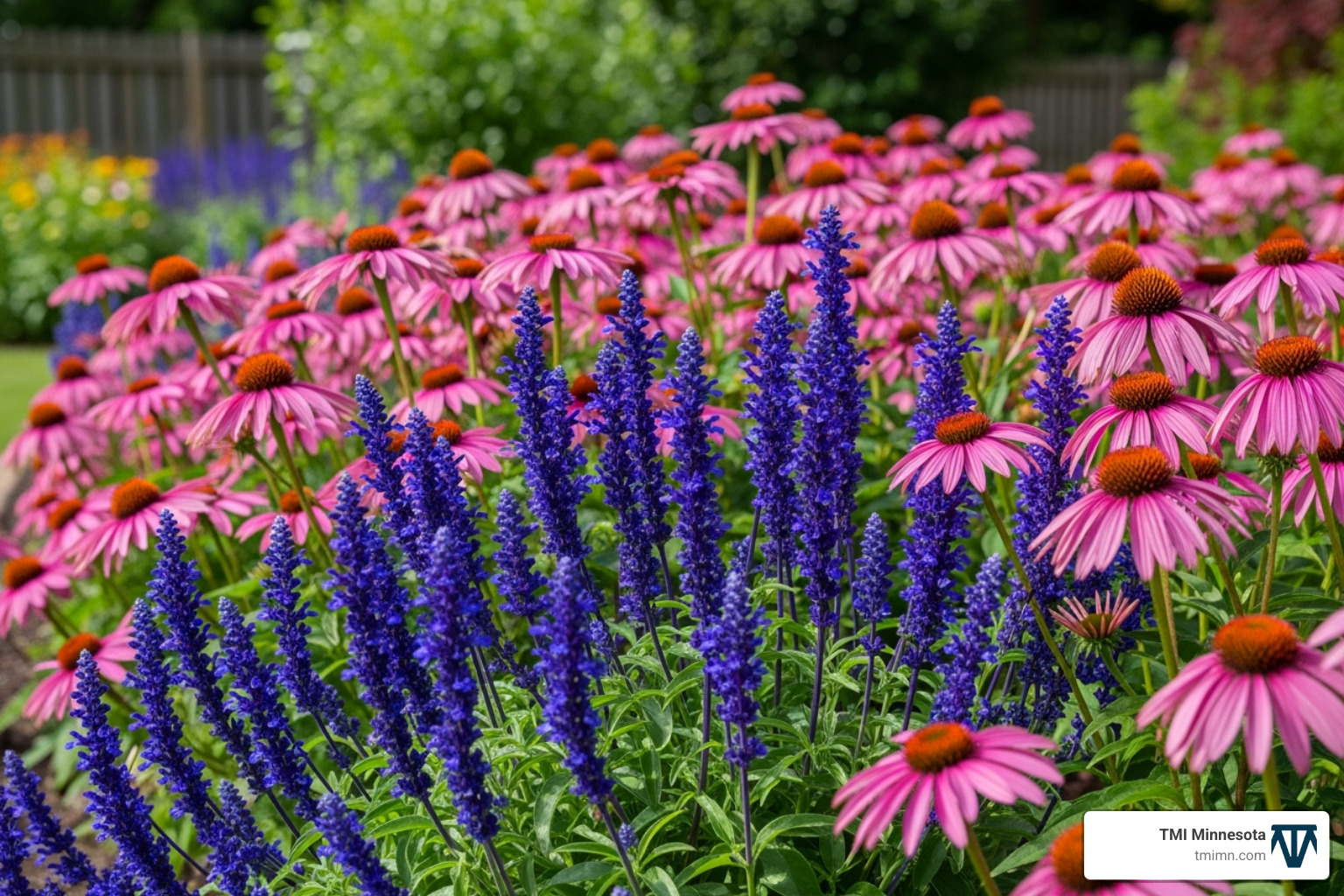
This section provides categorized lists for easy garden planning, helping you visualize how these plants can fit into your landscape design.
Deer-Resistant Perennials for Minnesota Gardens
Perennials are the backbone of any garden, returning year after year. When selecting deer resistant plants MN for your perennial beds, we look for those with characteristics deer dislike.
Here are some of our top picks:
- Bee Balm (Monarda): Deer avoid its minty-scented foliage. It’s a fantastic pollinator magnet. (Zones 4-8)
- Coneflower (Echinacea): A hardy classic with daisy-like blooms. Deer avoid its spiny cones, which also provide winter interest and bird food. (Zones 3-8)
- Salvia: Its fragrant foliage makes Salvia an unpopular choice for deer. Offers a long bloom period in various colors. (Zones 3-8)
- False Indigo (Baptisia): A robust, long-lived perennial. Its tough foliage deters deer. Difficult to transplant due to a deep taproot. (Zones 3-9)
- Peony: A beloved, deer-resistant spring bloomer. Deer find its strong stems and dense foliage unappealing.
- Bleeding Heart (Fern-Leaved Bleeding Heart): Fern-leaved varieties are especially deer-resistant due to their mild toxicity. (Zones 3-9)
- Yarrow (Achillea): Its herbal-scented, finely textured foliage deters deer. Drought-tolerant with long-lasting blooms. (Zones 3-8)
- Lavender: Deer rarely browse the fuzzy, fragrant leaves of lavender. (Zones 5-9)
- Lamb’s Ear: Named for its soft, fuzzy leaves, a texture deer find unappealing. Very drought tolerant.
- Catmint (Nepeta): Deer detest the fuzzy, fragrant foliage of this low-maintenance plant. (Zones 3-8)
- Ornamental Onion (Allium): The strong onion scent is a major deterrent for deer and rabbits. (Zones vary by species)
- Heartleaf Brunnera: Deer avoid the sandpaper-like texture of its beautiful foliage. A great choice for shade gardens.
- Pigsqueak (Bergenia): Resistant to deer due to its tough, leathery leaves. Very adaptable.
- Astilbe: A versatile flowering perennial for shade gardens that deer typically avoid. Requires consistent moisture.
We are passionate about creating stunning outdoor spaces. For more ideas on how to incorporate these and other plants into your yard, explore our insights on flower garden designs.
Top 10 Deer-Resistant Perennials for MN:
- Bee Balm (Monarda) – Minty scent.
- Coneflower (Echinacea) – Spiny texture.
- Salvia – Fragrant foliage.
- False Indigo (Baptisia) – Tough foliage, long-lived.
- Lavender – Fuzzy, fragrant leaves.
- Yarrow (Achillea) – Herbal scent, finely textured.
- Catmint (Nepeta) – Fuzzy, fragrant foliage.
- Ornamental Onion (Allium) – Strong scent.
- Lamb’s Ear – Fuzzy texture.
- Astilbe – Deer and rabbit resistant, versatile.
Hardy Annuals Deer Tend to Avoid
Annuals are perfect for adding splashes of seasonal color and are often naturally unappealing to deer.
- Marigolds: A common choice for deer resistance due to their strong scent, though very hungry rabbits might nibble them.
- Snapdragons: Deer typically avoid their unique shape and slightly bitter taste.
- Zinnias: Known for their bright colors and long blooming season, zinnias are generally left alone by deer.
- Ageratum: Its fuzzy leaves and slightly aromatic scent make it a poor choice for deer.
- Cosmos: Light and airy, cosmos are usually ignored by deer.
- Sweet Alyssum: This low-growing annual with tiny, fragrant flowers is also typically passed over.
- Verbena: Cheerful and long-blooming, verbenas are another good rabbit and deer-resistant annual option.
- Spider Flower (Cleome): Generally avoided by deer due to sticky, pungent foliage.
When planning your annual displays, consider how well these plants can tolerate dry conditions. We can help you with drought-resistant landscaping solutions that incorporate these deer-resistant annuals.
Deer-Resistant Shrubs for Structure and Privacy
Shrubs provide crucial structure and year-round interest. Choosing deer resistant plants MN shrubs is vital for maintaining your garden’s design.

Here are some robust options:
- Boxwood: A classic evergreen rarely browsed by deer. Its dense, aromatic foliage is excellent for hedges and borders.
- Barberry: Known for its thorny branches and vibrant foliage, barberry is a natural deterrent.
- Lilac: The fragrant blooms of lilac are a spring delight, and thankfully, deer tend to avoid these shrubs.
- Spirea: A versatile shrub with delicate flowers and often colorful foliage, spirea is generally deer-resistant.
- Juniper: Many varieties of this evergreen are typically avoided by deer due to their prickly needles and aromatic foliage.
- Forsythia: This cheerful harbinger of spring, with its bright yellow flowers, is another great option that deer typically avoid.
- Smoke Tree (Cotinus coggygria): Its unique “smoky” plumes and often purple foliage make it a striking addition, and deer tend to leave it alone.
- Rhododendron: Many species are deer-resistant due to leathery, sometimes toxic leaves. Prefers acidic, moist soil and dappled shade.
Creating privacy in your yard is a common goal. We specialize in privacy landscaping ideas that can incorporate these deer-resistant shrubs to create beautiful, impenetrable barriers.
Resilient Trees for a Deer-Free Canopy
Trees are long-term investments. Protecting them from deer damage, especially when young, is crucial. Here are some deer resistant plants MN tree options:
- Birch: The papery bark and graceful form of birch trees are generally not appealing to deer.
- Spruce: Most spruce varieties, with their stiff, prickly needles, are a good choice that deer tend to avoid.
- Pine: Similar to spruce, the needles of pine trees deter deer from browsing.
- Hawthorn: A great option that produces beautiful flowers and often thorns, which deer typically stay away from.
- Oak: Generally deer-resistant when mature, but young oaks are susceptible to buck rubbing. In MN, they face challenges like oak wilt.
- Ginkgo (Ginkgo biloba): This ancient tree with its unique fan-shaped leaves is highly deer-resistant.
- Maple (Acer): Many maple varieties, including Sugar Maples, are typically avoided by deer.
Proper planting and care are essential for your trees’ long-term health. We offer comprehensive tree planting services to ensure your new trees get the best start.
Ground Covers, Vines, and Grasses: The Unsung Heroes
These plant types can provide significant deer resistance while adding texture and interest.
- Creeping Phlox: This low-growing, flowering ground cover is a great option that deer typically avoid.
- Sedum: Easy to grow, drought-tolerant, and resistant to deer and rabbits. Comes in various forms.
- Ajuga (Bugleweed): A fast-spreading, deer-resistant ground cover with attractive foliage and blue flower spikes.
- Clematis: A popular vine that deer typically avoid. Bush clematis is also resistant due to its unfavorable taste.
- Virginia Creeper: A vigorous native vine that deer tend to avoid.
- Ornamental Grasses: Deer avoid these grasses due to their tough texture and high silica content. Varieties like Feather Reed Grass and Little Bluestem add movement and texture to your landscape.
Integrating these various plant types is part of creating a cohesive and resilient landscape. Our expertise extends to both hardscape and softscape elements, ensuring every part of your outdoor space works together harmoniously.
Beyond Plants: A Layered Approach to Deer Defense
While selecting deer resistant plants MN is a crucial first step, no single solution is 100% foolproof. A truly hungry deer will eat almost anything, which is why we advocate for a multi-faceted, layered approach. This integrated pest management strategy combines various methods to create a resilient landscape that minimizes deer damage.
We believe in designing outdoor spaces that are beautiful, sustainable, and functional. Learn more about our approach to sustainable landscaping techniques that integrate deer deterrence naturally into your yard’s overall design.
Using Repellents to Protect your Deer resistant plants in MN
Deer repellents are a helpful tool, especially for protecting new or prized plants. They work best as a short-term solution or as part of a long-term strategy.
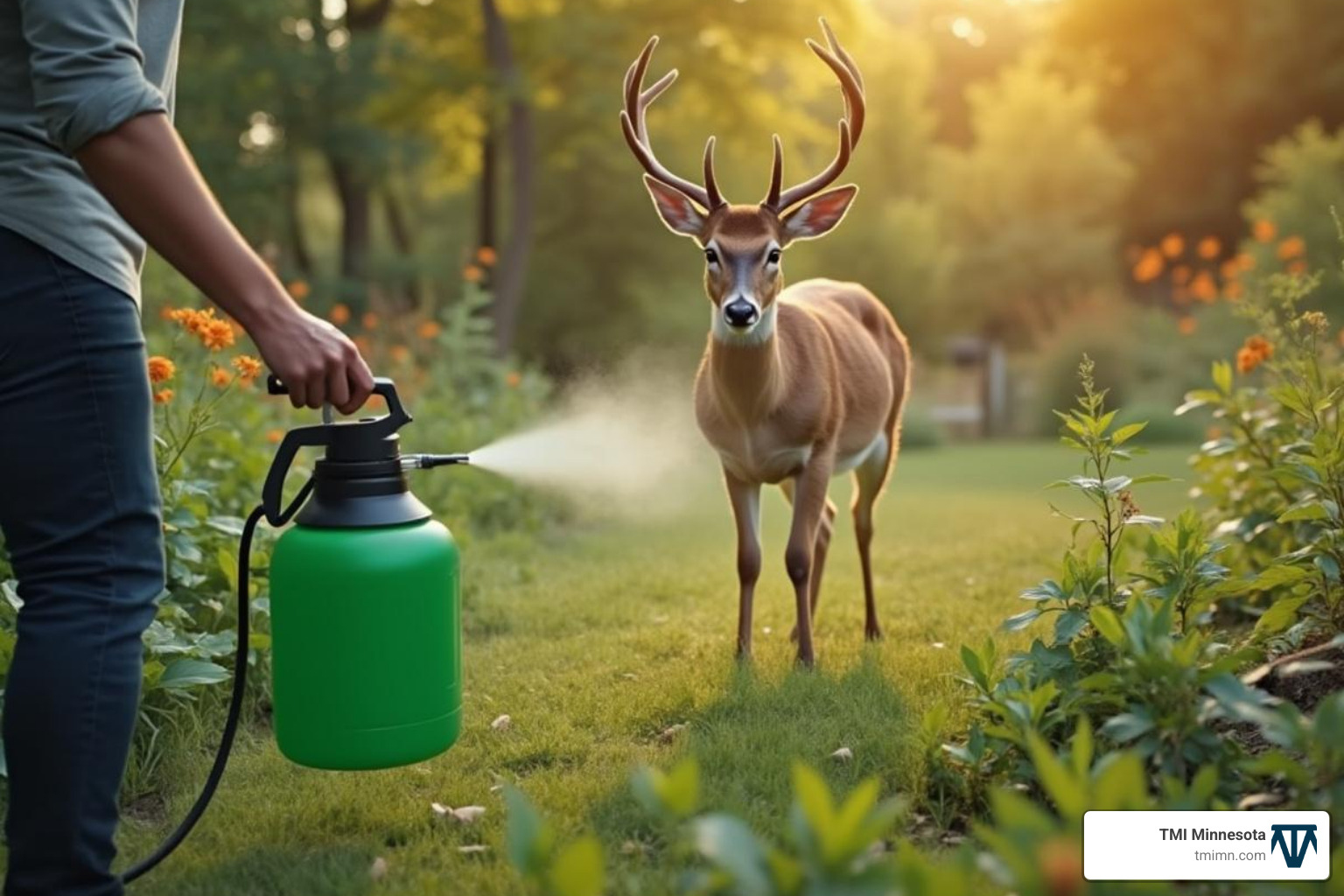
Repellents fall into two main categories:
- Scent-based repellents: These emit odors that deer find offensive, using ingredients like coyote urine, mint, garlic, or peppermint.
- Taste-based repellents: These make the plant taste unpleasant. Active ingredients often include egg solids, urea, or capsaicin. Popular commercial options include Repels All, Liquid Fence, and Plantskydd.
Here’s how to get the most out of your repellents:
- Reapplication is Key: Repellents need regular reapplication, especially after rain or snow. Always follow the product’s instructions.
- Rotate Products: Deer can get used to a particular scent or taste. We recommend rotating different types of repellents to maintain effectiveness.
- Targeted Use: Repellents are excellent for protecting specific plants that are borderline resistant or particularly vulnerable, like new plantings.
Fencing and Barriers: Your Garden’s Last Line of Defense
For ultimate protection, especially for vegetable gardens or highly desirable plants, physical barriers are the most reliable solution.
Deer are agile jumpers, so an effective fence should be 6 to 8 feet high. Anything shorter might be cleared by a determined deer.
There are several types of fences that offer robust protection:
- Woven Wire Fences: These are durable and create a strong physical barrier.
- Electric Fences: Highly effective, especially for larger properties. Some gardeners report decades of success using them.
- Netting: A great temporary solution to protect individual plants or smaller areas.
Don’t forget individual plant protection. For young trees, wrapping their trunks in the fall protects them from deer rubbing, which can be fatal. Tree wraps or cages are very effective.
When installing any barrier, ensure it’s sturdy and well-secured. Interestingly, deer may fear being trapped, so they might not jump a shorter fence if they perceive a risk of being stuck inside.
Fencing doesn’t have to be an eyesore. We can help you integrate effective barriers seamlessly into your landscape design. Explore our ideas for garden border ideas that can also serve as beautiful and effective deer deterrents.
Frequently Asked Questions about Deer-Resistant Gardening in MN
Here are answers to common questions we receive from Minnesota clients about managing deer in their gardens.
Are any plants truly 100% deer-proof?
No plant is completely guaranteed to be deer-proof. While we recommend many Deer resistant plants MN gardeners can use, deer are adaptable and hungry. If food is scarce, the deer population is high, or young deer are exploring, they might browse plants that are typically considered resistant. A hungry deer will eat almost anything, which is why a layered defense combining smart plant choices with other deterrents is key to success.
What are the most reliable deer resistant plants MN gardeners can trust?
Based on our experience in Minnesota, the most reliable plants are those with multiple deterrent qualities. Deer tend to ignore plants with a strong scent, a fuzzy or tough texture, or an unappealing taste. Our top-tier choices include Boxwood for its year-round structure, Lavender for its fragrant and fuzzy leaves, and Allium (Ornamental Onion) for its strong scent. Russian Sage combines aromatic foliage with a woody texture, while Barberry has thorns and tough leaves. Ornamental Grasses are also excellent due to their high silica content and unpalatable texture. These are often the last plants a deer will touch.
Do I still need a fence if I only use deer-resistant plants?
Whether you need a fence depends on the deer pressure in your specific area. If you only see deer occasionally, a landscape filled with deer-resistant plants might be enough. However, if deer are a constant presence or if you’re growing highly desirable plants (like vegetables), a fence is an essential component of your defense. A sturdy fence, 6 to 8 feet tall, is often the ultimate guarantee against deer, especially for protecting a vegetable patch. The most successful approach is multi-faceted, combining smart plant selection with physical barriers when needed.
Conclusion: Creating Your Beautiful, Deer-Resistant Minnesota Landscape
Creating a beautiful outdoor space that thrives alongside Minnesota’s deer population is entirely achievable with a smart plan. The foundation of this plan is choosing the right deer resistant plants MN—those with textures, scents, or properties that deer naturally avoid.
However, even the best plants can be nibbled by a hungry deer. This is where a “layered defense” becomes crucial. Adding deterrents like repellents offers extra protection, while a sturdy fence may be necessary for high-risk areas like a vegetable garden. Combining these strategies gives you the best chance for success.
Here at TMI Minnesota, we specialize in helping homeowners transform their outdoor spaces. We understand the challenge of deer in our state. Our expertise is in designing and installing landscapes that are not only stunning but also resilient enough to handle local wildlife. We use leading-edge products to create a yard you can enjoy without constant frustration.
A vibrant, thriving garden free from deer damage is not a fantasy; it’s an achievable goal. Let us put our expertise to work for you. We can help you plan and create the perfect deer-resistant solution for your home in the Twin Cities area.
Ready to make your garden a deer-free zone of beauty?
Contact us for a landscape design consultation today. Let’s get started on creating the beautiful, thriving, and deer-protected Minnesota landscape you’ve always wanted.