
Why Driveway Design Creates Your Home’s First Impression
When you design driveways and landscaping, you’re crafting the very first chapter of your home’s story. It’s the first thing guests see when they arrive and the last thing they see when they leave. More than just a functional path for your car, your driveway is the backbone of your entire outdoor design, setting the tone for your property’s curb appeal and making a powerful statement about the home that lies beyond.
Think of it as the red carpet to your front door. A cracked, plain slab of asphalt sends a message of neglect, while a gracefully curved paver driveway bordered by lush gardens communicates care, elegance, and attention to detail. This initial perception can significantly influence how your entire property is viewed, impacting both personal pride and financial value.
Quick Driveway Design Essentials:
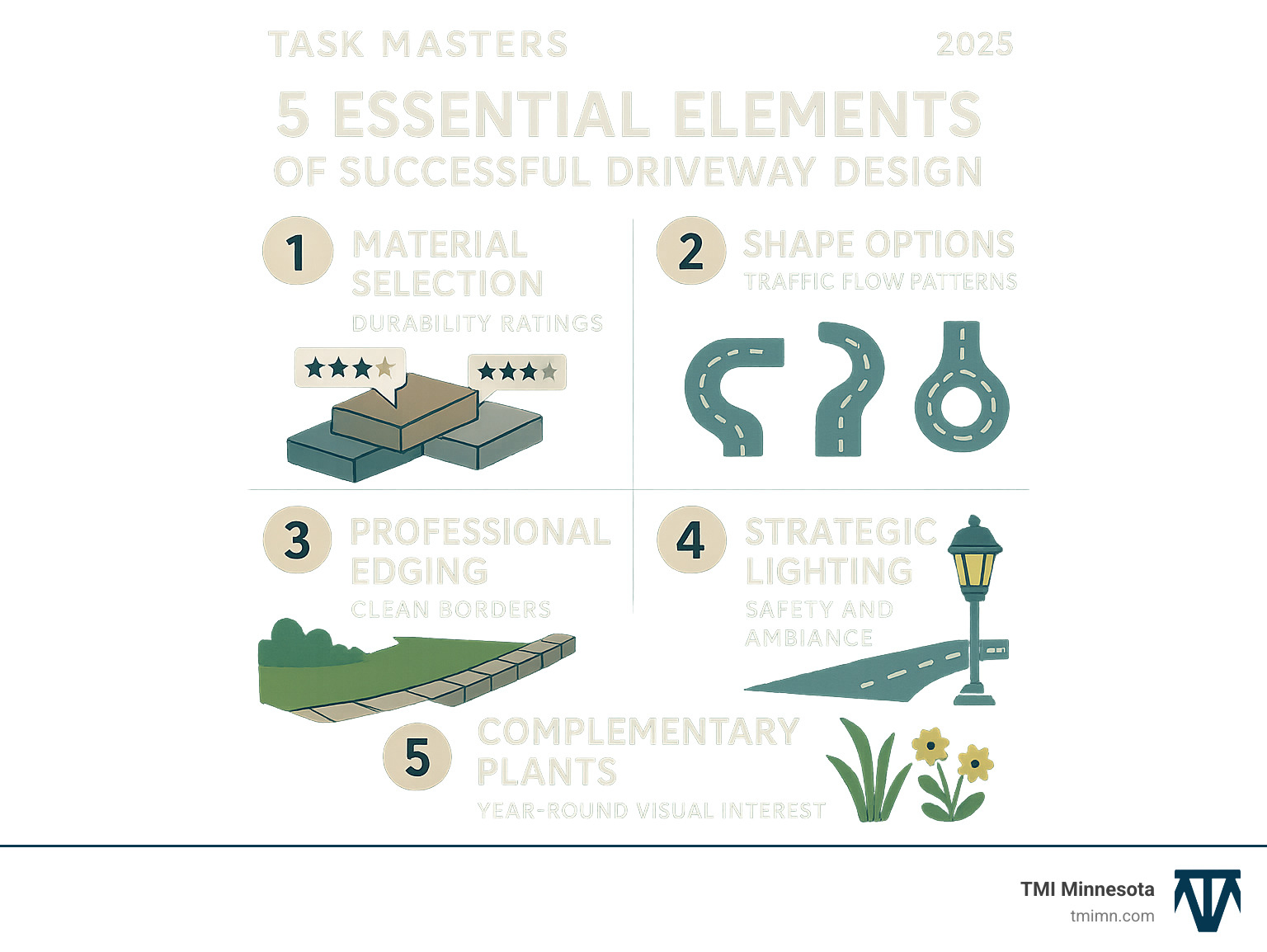
- Material Options: The foundation of your design. Options range from classic concrete (with a 40-year lifespan) and cost-effective asphalt to highly versatile interlocking pavers (the top choice for Minnesota’s climate) and charming, permeable gravel.
- Popular Shapes: The shape guides movement and defines space. A straight driveway is direct and functional, a circular one creates a grand, formal entrance, a curved path offers a softer, more natural flow, and an L-shape provides valuable extra parking.
- Key Elements: These are the finishing touches that lift a driveway from a utility to a design feature. Proper drainage prevents water damage and ice, strategic lighting ensures safety and adds ambiance, border edging creates clean, defined lines, and complementary landscaping integrates the hardscape into the natural environment.
- Climate Considerations: In a place like Minnesota, this is non-negotiable. You must choose freeze-thaw resistant materials and ensure proper installation techniques to prevent heaving, cracking, and premature deterioration.
- Budget Impact: A well-designed driveway is an investment, not an expense. It can increase your property value by as much as 10-20% by dramatically improving its curb appeal.
As landscape designer research shows, “driveways, walkways, and flowerbed shapes are nearly always curvilinear, defined by graceful, flowing lines” that create visual interest and guide visitors naturally to your front door. These flowing lines soften the hard edges of a home and create a more organic, welcoming journey from the street to your entrance.
The most successful driveway designs masterfully balance functionality with aesthetics. This means considering practical needs first: Do you have a steep slope that requires careful grading and a high-traction surface? Do you need extra parking for family gatherings or a boat? Does your driveway need to accommodate a three-point turn? Once these functional requirements are met, you can layer in the aesthetic elements—choosing materials, colors, and landscaping that showcase your home’s architectural style and create a welcoming entrance that improves both daily life and property value.
At TMI Minnesota, we’ve spent years helping Minnesota homeowners design driveways and landscaping that not only survive but thrive in our harsh winters. Our hands-on experience with everything from installing permeable pavers that reduce ice buildup to selecting ornamental grass borders that look stunning even in the snow has taught us that the best driveway designs seamlessly blend practical needs with beautiful, lasting aesthetics.
Choosing the Right Driveway Material
When you design driveways and landscaping, the material you choose becomes the foundation of everything else. It’s like picking the perfect outfit for your home’s entrance—it needs to look great, last through whatever weather Minnesota throws at it, and fit your budget without breaking the bank.
The right driveway material affects more than just appearance. It determines how often you’ll be out there with a repair kit, how well it handles our brutal freeze-thaw cycles, and whether you’ll still love the look in twenty years. That’s why understanding your options is so important. For detailed guidance on all available options, check out our Driveway Paving Solutions. For visual inspiration on how these materials look in real-world settings, you can find many examples online, such as these Stunning Driveway Landscaping Ideas from HGTV.
| Material | Average Cost (per sq ft) | Lifespan (Years) | Maintenance | Pros | Cons |
|---|---|---|---|---|---|
| Concrete | $4-8 | 30-40 | Low to moderate | Durable, long-lasting, customizable with stamping | Can crack in cold climates, salt damage |
| Asphalt | $3-5 | 15-20 | Moderate | Cost-effective, quick installation | Requires regular sealing, limited design options |
| Interlocking Pavers | $10-25 | 25-50 | Low | Flexible in freeze-thaw, easy repairs, design versatility | Higher upfront cost, potential for weeds |
| Gravel | $1-3 | 10-15 | High | Excellent drainage, rustic appeal, budget-friendly | Loose stones, frequent regrading needed |
Durability matters most in our climate. Minnesota winters test every material with temperature swings that can crack concrete and heave asphalt. The freeze-thaw cycle—where water seeps into small cracks, freezes, expands, and then thaws—is relentless. This is why weather resistance becomes your material’s most important feature.
Cost considerations go beyond the initial installation price tag. A cheaper material like asphalt might cost you more in repairs and biannual sealing over its shorter lifespan. A more expensive material like pavers might pay for itself over time with minimal maintenance and a longer life. Think of it as buying shoes—sometimes spending more upfront for a quality pair saves money and hassle in the long run.
Concrete Driveways
Concrete offers impressive durability and longevity, often lasting up to 40 years with proper installation and care. It’s the marathon runner of driveway materials—steady, reliable, and built for the long haul. Its smooth, clean surface provides a modern look that complements many architectural styles.
However, concrete has its challenges in cold climates. Cracking is a significant concern when temperatures drop below freezing repeatedly. Proper installation with a solid base and strategically placed control joints is crucial to manage this, but cracks can still appear. Furthermore, de-icing salt damage can be severe, causing the surface to spall and pit over time. Using a high-quality sealer can help protect against salt, but it’s an ongoing maintenance task.
Stamped concrete options are a game-changer for aesthetics. This technique allows you to imprint patterns and textures that mimic more expensive materials like cobblestone, slate, or brick at a fraction of the cost. Combined with color additives, you can achieve a custom look that is less expensive than natural stone while still delivering a premium appearance.
Interlocking Pavers
Here’s where things get exciting for Minnesota homeowners. Interlocking pavers are like the Swiss Army knife of driveway materials—versatile, incredibly tough, and perfectly suited for our demanding climate.
The flexibility in cold climates is their superpower. Unlike a solid slab of concrete, a paver driveway is a system of individual units. When the ground freezes and thaws, these pavers can move slightly with the earth without breaking. This flexibility drastically reduces the risk of cracking and heaving. If a paver does somehow get damaged or stained, you simply pop it out and replace it—a quick, inexpensive fix that requires no jackhammering.
Design versatility is another major advantage. Pavers come in a vast array of shapes, sizes, colors, and textures, allowing for endless creative possibilities. You can create intricate patterns, beautiful borders, and unique color combinations that make your driveway a true work of art. Easy repairs keep maintenance simple and cost-effective over the long term.
The higher initial cost is the main drawback, but it’s important to view it as a long-term investment. The longevity and low maintenance costs often make pavers a more economical choice over their 50-year lifespan. Potential for weeds between pavers can be almost entirely eliminated with proper installation, which includes a geotextile fabric base and the use of polymeric sand in the joints.
For these reasons, pavers are simply the best choice for Minnesota winters. They have proven their resilience in our harsh climate year after year. For a professional installation that maximizes their benefits, explore our Hardscape Design Services.
Asphalt and Gravel Driveways
Asphalt remains a popular choice primarily because it’s cost-effective and common. The installation is relatively quick, and its dark black color can look sharp and clean when new. It also has some flexibility, which helps it resist cracking better than concrete in some situations.
However, asphalt requires regular sealing, typically every 3-5 years, to protect it from water penetration, oxidation, and chemical spills. Without this maintenance, it will fade to gray and become brittle. The limited customization options mean you’re basically stuck with black—not exactly inspiring for a creative landscape design. It can also get very hot in the summer sun.
Gravel driveways offer a completely different, more casual aesthetic. The rustic appeal works beautifully with country homes, cabins, or properties where you want a natural, informal feel. Good drainage is a major advantage, as water flows right through the stones instead of pooling or running off. It’s also the most budget-friendly option upfront.
The downside is significant: high maintenance. Gravel requires frequent raking to smooth out ruts and bare spots. Loose stones will inevitably migrate onto your lawn, walkways, and get tracked into your house. You’ll also need to add fresh gravel every few years to maintain the proper depth. While gravel stabilization grids can help, it remains the most labor-intensive option.
Each material tells a different story about your home. The key is choosing one that matches both your style and your willingness to maintain it over the years.