
Why Design Landscaping Transforms Your Outdoor Living Experience
Design landscaping is the art and science of creating beautiful, functional outdoor spaces that improve your property’s value and your family’s quality of life. Whether you’re looking to revitalize an outdated yard or create the perfect space for entertaining, a systematic approach turns your vision into reality.
Quick Answer for Design Landscaping:
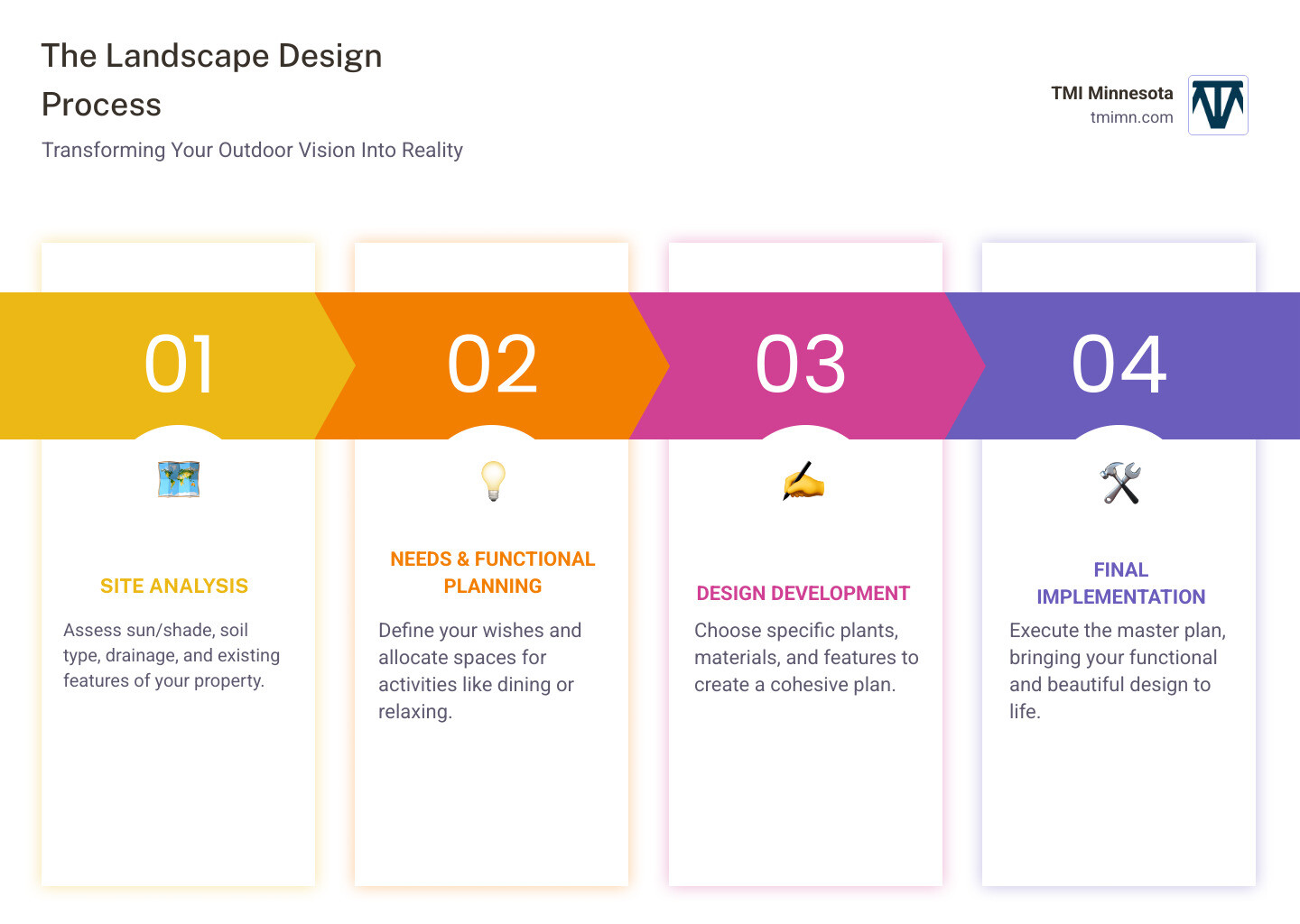
- Site Analysis – Assess sun, shade, soil, and drainage patterns
- Needs Assessment – Define how you want to use your outdoor space
- Functional Planning – Create zones for dining, relaxing, and activities
- Design Development – Choose plants, materials, and features
- Final Implementation – Execute your master plan with professional installation
The process begins with understanding your property’s unique characteristics and your family’s specific needs. Research shows that a well-designed landscape creates a personal oasis where memories are made and can significantly increase perceived home value.
From analyzing your soil type and sun patterns to selecting the perfect plants and hardscape materials, design landscaping requires both creative vision and technical knowledge. Here at TMI Minnesota, we’ve spent years helping homeowners transform their outdoor spaces through thoughtful design landscaping that balances beauty with functionality. Our experience shows that the most successful projects start with a clear understanding of both the site’s potential and the family’s lifestyle needs.
Design landscaping basics:
The Foundation: Understanding Landscape Design Principles & Elements
Think of design landscaping like cooking a gourmet meal. You need the right ingredients (design elements) and a solid recipe (design principles) to create something spectacular. The magic happens when we combine artistic vision with proven design principles. The University of Florida Extension Service highlights that there are ten important things to consider when approaching landscape design, and understanding these fundamentals will save you time, money, and frustration.
The Core Principles of a Cohesive Design
Great landscapes follow time-tested principles that create visual harmony and functional beauty.
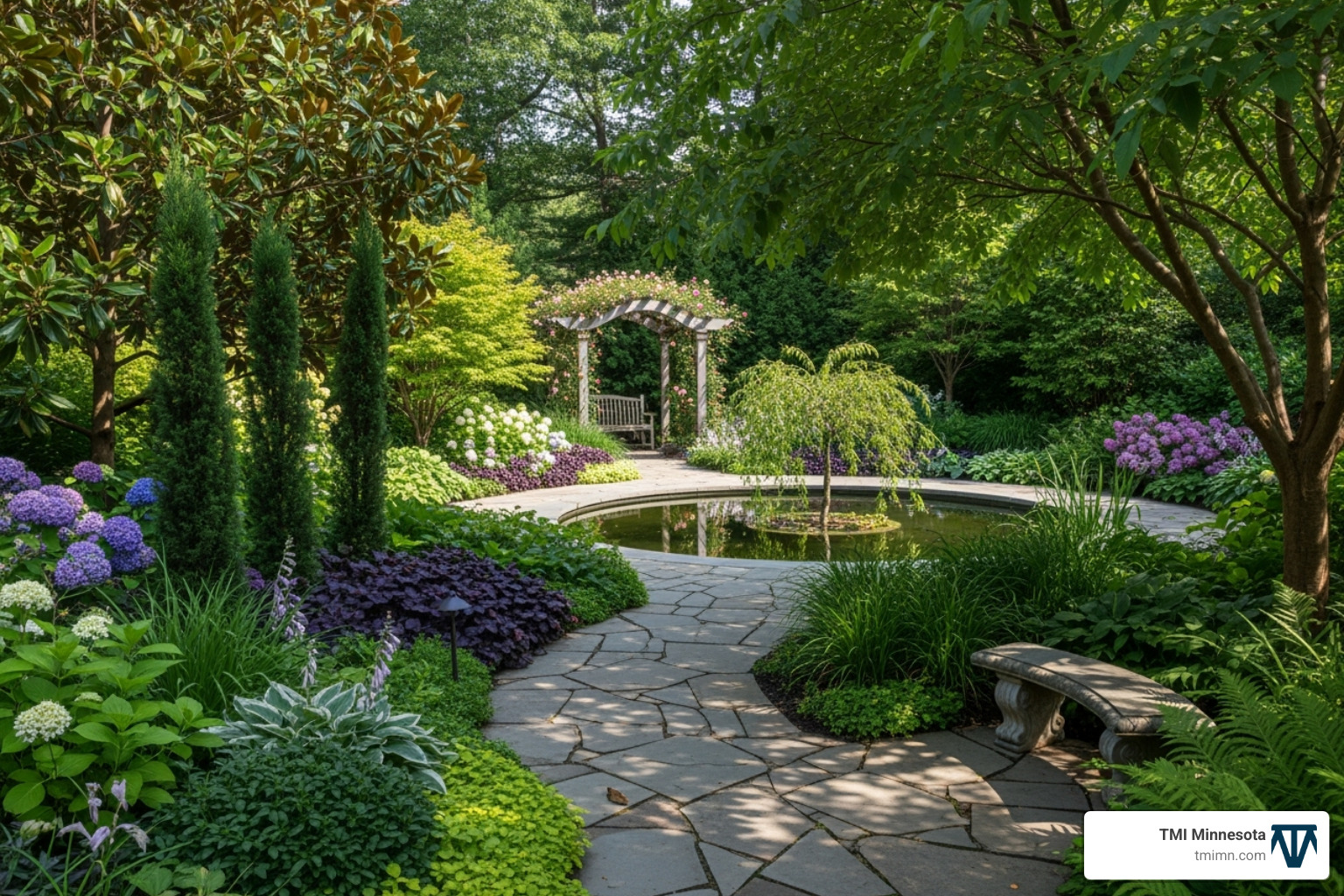
Unity and harmony act as the glue that holds your landscape together. When you step into a well-designed yard, everything feels like it belongs. This is achieved by repeating a stone material or echoing the curved lines of a walkway in your planting beds.
Balance comes in two flavors. Symmetrical balance creates formal elegance, like identical planters flanking a front door. Asymmetrical balance feels more relaxed and natural, such as balancing a large tree on one side with a grouping of smaller shrubs on the other.
Proportion and scale ensure everything feels right-sized for its surroundings. A massive feature might overwhelm a small cottage but look perfect next to a large home. We consider how elements relate to your house, each other, and the people using the space.
Rhythm and repetition create movement and flow, carrying your eye through the space. This might be a series of ornamental grasses lining a walkway or repeating splashes of the same flower color in different garden beds.
Focalization gives your landscape a clear star—a special feature that draws the eye, like a water feature, a beautiful specimen tree, or a fire pit area. Other elements should support, not compete with, your focal point.
The Building Blocks: Key Design Elements
These are the tools in our design landscaping toolkit that bring the principles to life.
Color theory impacts how your landscape feels. Warm colors (reds, oranges) create energy and intimacy, perfect for entertainment areas. Cool colors (blues, greens) have a calming effect and can make small spaces feel larger. Color comes from foliage, bark, and hardscape materials, not just flowers.
Line shapes how people experience your space. Straight lines create formality and order, while curved lines feel more natural and inviting, encouraging exploration.
Form refers to the three-dimensional shapes of plants and structures. Combining different forms—upright, weeping, mounding, and spreading—creates visual interest and structure that looks good in every season.
Texture adds sophistication. Coarse textures (large leaves, rough stone) create bold statements, while fine textures (delicate ferns, smooth river rock) add elegance. The interplay between textures creates depth.
Understanding the difference between hardscape and softscape is crucial. Hardscape includes all non-living elements like patios and walls. Softscape encompasses the living components like trees and shrubs. The most successful landscapes seamlessly blend both. You can dive deeper into this important distinction with more info about hardscape and softscape.
The Blueprint: A Step-by-Step Guide to Planning Your Landscape
Every masterpiece begins with a plan. The most successful design landscaping projects follow a clear roadmap to ensure your vision becomes reality efficiently. Think of it like building a house—you wouldn’t start without blueprints. Having a plan saves time, money, and headaches.

Step 1: Site Inventory and Analysis
Before planning, we must get to know your property. This step is like taking your yard’s vital signs. We measure and note all existing structures, from mature trees to utility boxes, and identify any underground lines. Sun and shade patterns are crucial for plant success, so we map areas of full sun (6+ hours), part sun (3-6 hours), and full shade (less than 3 hours). Your soil type—loamy, clay, or sandy—dictates plant choices. For climate considerations in Minnesota, we consult the USDA Plant Hardiness Zone Map to select plants that can survive our winters. Finally, we evaluate existing vegetation to see what can be incorporated and identify where water collects to address drainage issues upfront.
Step 2: Defining Your Needs and Creating Functional Spaces
This step is all about dreaming up how you want to live in your outdoor space. We start by creating a wish list. How do you dream of using your yard? Do you need a quiet retreat, a play area for kids, or a space for entertaining? Understanding your aesthetic preferences and desired maintenance level helps us design something that fits your life and budget. Next, we define use areas like an outdoor dining room or a cozy relaxation zone. Planning for circulation involves designing pathways that guide movement and improve the experience. We also recognize that front yards, backyards, and side yards serve different purposes—from creating curb appeal out front to ensuring privacy in the back. For more ideas, check out how to Improve your home’s value with Curb Appeal Landscaping.
Step 3: The Practical Steps of Design Landscaping
With our research complete and your dreams defined, it’s time to create the blueprint.
First, we create a base map to scale, an accurate drawing of your property as it exists today. This becomes the master copy for all planning.
Next, using bubble diagrams for space allocation, we sketch rough shapes over the base map to represent different activity areas—a large bubble for a patio, a smaller one for a fire pit. This lets us play with the spatial flow before committing to details.
From there, we develop a conceptual plan, incorporating themes and styles, whether geometric or naturalistic. We outline major hardscape features and general planting areas, considering how plants can provide privacy, noise control, or shade.
Finally, we draw the final master plan. This detailed drawing includes specific plant species, exact materials for hardscapes, lighting plans, and other features. This comprehensive plan ensures every element works together and provides a clear guide for installation.
Finding Your Style and Incorporating Key Features
Now for the exciting part: bringing your landscape to life with personality and purpose. This is where design landscaping transforms from technical planning into creative expression. The key is finding a style that feels authentic to you while complementing your home’s architecture.
Choosing a Landscape Style for Your Home
Your home’s architecture often provides the first clue. The goal is to create a “sense of place” that feels like it belongs with your home and lifestyle.
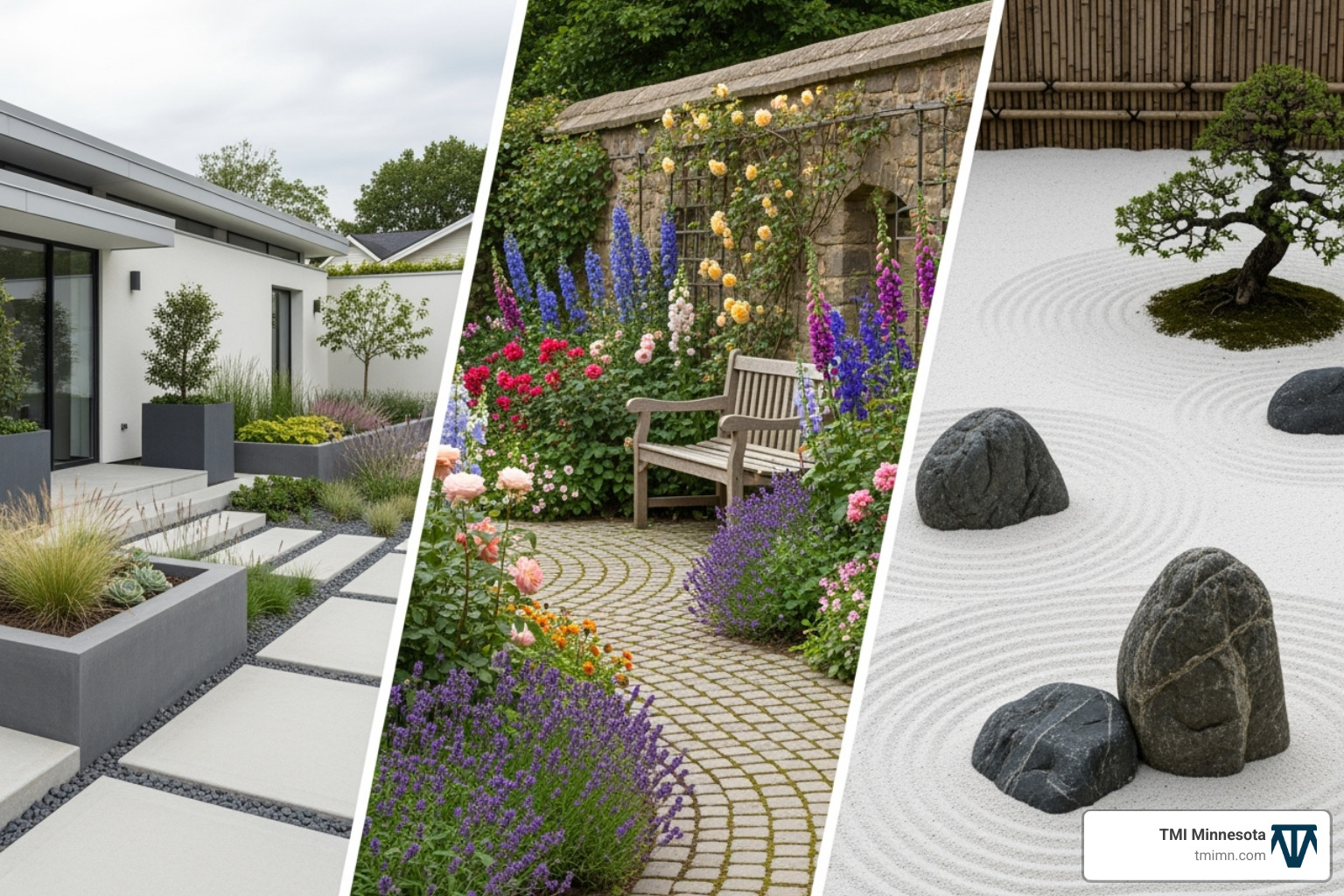
- Modern and Contemporary styles accept simplicity with clean lines, minimalist plantings, and bold architectural forms.
- English Cottage style celebrates romantic abundance with dense plantings of perennials and roses that spill over winding pathways.
- Japanese and Zen Gardens focus on creating peaceful retreats through the careful balance of rocks, raked gravel, moss, and water features.
- Mediterranean style uses drought-tolerant plants like lavender and rosemary paired with warm materials like terracotta and natural stone.
- Tropical landscapes bring vacation vibes home with lush, large-leafed plants and vibrant colors (achieved in Minnesota with strategic annuals and hardy look-alikes).
- Woodland style mimics our region’s natural forest beauty, using native trees, ferns, and shade-loving plants along naturalistic pathways.
Popular Features for Modern Outdoor Living
Today’s yards are outdoor rooms that extend your living space and bring families together.
- Patios and decks form the foundation for outdoor living. We carefully consider placement, size, and materials. For inspiration, see our Inspiration for Backyard Patio Ideas.
- Outdoor kitchens range from simple built-in grills to full kitchens, perfect for families who love to cook and entertain together.
- Fire pits and fireplaces extend your outdoor season into Minnesota’s cooler months, creating natural gathering spots.
- Water features add tranquility and beauty, from simple bubbling fountains to serene ponds. Explore possibilities at Ideas for Backyard Water Features.
- Landscape lighting improves safety and creates drama after sunset, highlighting your landscape’s best features.
- Garden pathways guide movement through your landscape while adding visual interest with materials like natural stone, pavers, or gravel.
Creating a Sustainable and Low-Maintenance Landscape
Beautiful landscapes should work with nature, not against it. We focus on sustainable designs that are good for the environment and your schedule.
- Native plants are heroes of sustainable landscaping. They are adapted to our climate and require less water, fertilizer, and pest control while supporting local wildlife.
- Water-wise design groups plants with similar water needs and uses drought-tolerant varieties to reduce irrigation. Permeable pavers allow rainwater to soak back into the soil.
- Mulching and composting are simple practices with big payoffs. Mulch retains soil moisture and suppresses weeds, while compost provides free, nutrient-rich soil amendments.
Sustainable design gets easier over time, leaving you more time to enjoy your outdoor space. For a deeper dive, explore our guide to Learn about Sustainable Landscaping Techniques.
DIY vs. Professional Design Landscaping: Making the Right Choice
Now for a crucial question: should you tackle this yourself, or bring in the pros? When you DIY, you take on the roles of researcher, designer, and installer. When you hire professionals, you’re investing in experience, expertise, and peace of mind.
Comparing DIY vs. Professional Landscape Design
Let’s break down the two approaches:
| Feature | DIY Landscaping | Professional Landscape Design |
|---|---|---|
| Cost | Lower upfront costs; materials are the biggest expense. | Higher initial investment for design services ($2,000-$8,000+). |
| Time Commitment | Significant time researching, planning, and doing physical work. | Less personal time spent planning; more efficient execution. |
| Expertise & Knowledge | Requires self-education on design, plants, and construction. | Access to formal training and deep knowledge of local conditions. |
| Project Scale & Complexity | Best for smaller, straightforward projects like a single flower bed. | Essential for larger projects, complex layouts, or drainage solutions. |
| Final Result Quality | Can be great, but higher risk of costly mistakes or design missteps. | Generally delivers a more polished, cohesive, and functional design. |
Professional designers see problems before they become expensive mistakes. We spot drainage issues, understand how mature plants will interact, and know which materials will hold up to Minnesota winters.
Budgeting for Your Design Landscaping Project
Most homeowners find success following the 10% rule—budgeting about 10% of their home’s value for a complete landscaping project. For a $300,000 home, that’s around $30,000. This can be broken into phases to spread costs over time.
Professional design fees typically range from $2,000 to $8,000. Think of this as a roadmap that prevents costly detours. To manage costs, start with high-impact hardscaping, choose smaller plants that will grow over time, and select durable materials.
Common Mistakes and How to Avoid Them
Most landscape disasters are avoidable with better planning.
- Poor planning: Jumping in without a cohesive design leads to wasted money. Put a plan on paper first.
- Plant spacing mistakes: Homeowners often plant shrubs too close together. Always research mature plant sizes and give them room to grow.
- Ignoring your site’s natural conditions: Trying to grow sun-loving plants in deep shade is a recipe for failure. Work with your site, not against it.
- Lack of a focal point: Every great design needs something that draws the eye and anchors the space.
- Choosing high-maintenance designs: Be realistic about the time you want to spend on upkeep. Opt for low-maintenance plants if you don’t enjoy weekend gardening.
- Budget underestimation: Projects often cost more than expected. Build in a 15-20% buffer for surprises and factor in ongoing maintenance costs.
The bottom line? Whether you choose DIY or professional design landscaping, success comes from thorough planning and realistic expectations.
Frequently Asked Questions about Landscape Design
When we meet with homeowners about their design landscaping projects, we hear the same thoughtful questions again and again. Here are some straight answers to the most common inquiries.
How much does it cost to get a landscape design?
For a professional landscape design plan, most homeowners invest between $2,000 and $8,000. This covers the process from initial sketches to detailed blueprints that guide installation. For the full project—including design, materials, and labor—a helpful rule of thumb is to budget about 10% of your home’s value. While a basic DIY project might cost around $2,600, a full professional installation averages closer to $8,150, reflecting the value of expertise, quality materials, and labor.
What is the difference between hardscaping and softscaping?
Think of your landscape as a house: you need both structure and furnishings.
Hardscaping is the non-living backbone of your outdoor space. It includes patios, walkways, retaining walls, fire pits, and outdoor kitchens. These elements create structure and define how you use the area.
Softscaping is the living, breathing part of your landscape. This includes trees, shrubs, perennials, lawn, and the soil itself. Softscaping adds color, texture, and seasonal beauty.
The magic of great design landscaping happens when these two are seamlessly blended, creating harmony between permanent structures and living beauty.
How can landscape design increase my property value?
Design landscaping is one of the smartest financial moves a homeowner can make. Well-designed landscaping can boost your home’s perceived value by up to 12%. More importantly, homes with excellent landscaping often sell for 6-7% more than similar properties with poor landscaping.
The return on investment is often high, with many projects recovering 100-200% of their cost at resale. Buyers see a beautifully landscaped property as move-in ready, with outdoor living areas that expand the home’s usable square footage. A well-designed front yard creates a powerful first impression, signaling that the entire property has been well-cared for.
Conclusion
We’ve journeyed from the first spark of an idea to the principles of design landscaping, exploring how thoughtful planning transforms ordinary yards into extraordinary outdoor sanctuaries. Success lies in weaving your personal dreams with your property’s natural character, using core principles like unity, balance, and rhythm.
A systematic plan—from site analysis to a final master plan—is the key to a successful outcome. Whether you’re drawn to a modern, cottage, or woodland style, a clear vision guides every decision. Today’s landscapes often incorporate features like outdoor kitchens, fire pits, and water features, which extend your living space and significantly boost home value.
Choosing between DIY and professional design depends on your project’s complexity and your available time. While smaller projects can be rewarding, comprehensive design landscaping benefits from professional expertise, an investment that pays for itself by avoiding mistakes and maximizing value.
Sustainable practices like using native plants and water-wise techniques create beautiful landscapes that are easier to maintain, giving you more time to simply enjoy your oasis.
For homeowners in the Twin Cities, TMI Minnesota is passionate about creating outdoor spaces that thrive in our distinct seasons. We use leading-edge products and time-tested techniques to bring your vision to life. Your outdoor space should be a place where memories are made. With thoughtful design landscaping, that vision becomes your daily reality.
Ready to transform your outdoor dreams into a stunning reality? Start planning your dream yard with a professional Landscape Design consultation.