
Changing the Functional: Driveway Culvert Landscape Ideas
Changing a functional necessity into a beautiful landscape feature is possible with creative driveway culvert landscape ideas. If you’re looking to lift your property’s entrance and blend practicality with style, here are some top ways to improve your culvert:
- Stacking Stones: Create natural-looking retaining walls.
- Natural Stone: Apply for a streamlined, rustic look.
- Flower Beds: Integrate plants for beauty and to hide the culvert.
- Decorative Caps: Add a finished, sophisticated border.
- River Rock Lining: Improve drainage aesthetics and prevent erosion.
A driveway culvert is a drainage pipe that lets water flow under your driveway. This vital structure prevents flooding, stops erosion, and protects your driveway’s foundation. But a culvert doesn’t have to be a plain pipe; with smart design, it can become a beautiful landscape feature, adding curb appeal and value.
As Christopher Deanovic, Operations Leader at Task Masters, I specialize in changing outdoor spaces. My passion is blending innovative design with meticulous craftsmanship to create functional and stunning environments, especially with driveway culvert landscape ideas.

Driveway culvert landscape ideas word roundup:
- landscaping around driveways
- landscape ideas for driveway borders
- design driveways and landscaping
The Foundation: Why Proper Culvert Design is Non-Negotiable
Before exploring beautiful driveway culvert landscape ideas, ensure your culvert functions correctly. A culvert is like a house’s foundation—not a decorative afterthought, but critical infrastructure. If your driveway crosses a drainage path, which is common in the Twin Cities, a proper culvert is non-negotiable.
Function always comes before form. We love creating stunning outdoor spaces, but beauty without purpose can lead to trouble down the road.
What Your Culvert Actually Does
A culvert’s main job is to channel water and debris underneath your driveway. When this system fails, the consequences can be serious.
A culvert’s primary mission is preventing erosion. Without it, rushing water can wash away the soil supporting your driveway—a common problem for Twin Cities homeowners after heavy rain or spring thaws. This isn’t just an eyesore; it’s a recipe for disaster.
Erosion compromises your driveway’s structural integrity. As the supporting soil disappears, the culvert can shift or collapse, creating dangerous sinkholes and cracks that make your driveway unsafe and unusable.
A well-designed culvert is also your best defense against flood prevention on your property. It channels excess water away from your yard, foundation, and basement, protecting your home from serious water damage.
The Real Cost of Cutting Corners
Proper culvert installation saves you money in the long run. While installation averages $1,000 to $5,000, depending on size and materials, it’s a smart investment compared to the tens of thousands needed for repairing a failed driveway or foundation damage from poor drainage. Foundation work alone can easily exceed $10,000.
When you get your culvert design right from the start, you’re protecting your entire property investment. Once this crucial groundwork is in place, you can move forward with confidence, knowing your beautiful landscape improvements are built to last.
Ready to ensure your driveway has the solid foundation it needs? Check out our driveway paving solutions to see how proper drainage integrates with quality paving for results that look great and perform even better.
Stunning Driveway Culvert Landscape Ideas
Now that we understand the critical importance of a well-functioning culvert, let’s explore how we can transform this essential drainage element into a stunning feature that improves your home’s curb appeal. We believe that even the most practical elements can be opportunities for beauty and design.
Hardscape driveway culvert landscape ideas with stone and block
Hardscaping around your culvert provides both durability and aesthetic appeal, creating a robust framework that can withstand the elements while looking fantastic. In the Minnesota climate, where freeze-thaw cycles can be harsh, choosing the right materials is key.

One of our favorite approaches is using natural stone or block. These materials offer a timeless look and exceptional resilience. Stacking stones around the culvert pipe creates a solid wall that resembles a natural formation, perfect for rustic and charming aesthetics. This method works beautifully for curved driveways or those with medium slopes, where the informal arrangement of stones blends seamlessly with the surrounding landscape. We often integrate a small garden bed directly above these stacked stones, softening the edges and adding a touch of greenery.
If you prefer a more refined, streamlined look, natural stone walls can be mortared together or applied to a concrete base to form a robust culvert wall. This approach ensures greater stability and a more polished finish. Whether you choose rugged fieldstone or neat cut stone, the natural textures and colors of Minnesota’s geological offerings can beautifully complement your home. For inspiration on this material, check out our insights on natural stone driveway designs.
Modern concrete blocks offer incredible versatility and strength. They can be arranged in various patterns and finishes, from simple, clean lines for a contemporary look to more intricate designs. Concrete blocks are often more cost-effective than natural stone and can be designed to create curves or low-height finishes that blend well with different landscape styles.
To truly lift the appearance of any stone or block culvert wall, consider adding decorative wall caps. These caps provide a finished border, protecting the wall from weather and offering a sophisticated touch. They can be made from a contrasting material or color, drawing the eye and adding architectural interest. For those interested in specific block types, Belgium block driveway designs can also inspire robust and attractive culvert surrounds.
When working with stone or block, you have the option of mortared or dry-stack construction. Mortared walls offer superior stability and a more formal appearance, as the mortar holds everything firmly in place. Dry-stack walls, where stones are carefully fitted together without mortar, provide a more organic, natural look and excellent drainage. However, dry-stack walls typically require more skill and careful selection of stones to ensure stability.
When undertaking any hardscaping project, especially involving drainage, we always adhere to professional standards. Organizations like ICPI (Interlocking Concrete Pavement Institute) and NCMA (National Concrete Masonry Association) provide certifications and guidelines that ensure quality and longevity.
Here’s a quick comparison of popular materials for culvert walls:
| Material | Durability | Cost (Relative) | Maintenance |
|---|---|---|---|
| Natural Stone | Excellent; highly resistant to weather and wear. | High | Low; occasional cleaning, re-pointing mortar if used. |
| Concrete Block | Very Good; strong and versatile. | Medium | Low; occasional cleaning, check for cracks. |
| Treated Wood | Moderate; susceptible to rot, insect damage. | Low | High; regular sealing/staining, eventual replacement. |
Softscape Solutions: Integrating Plants and Greenery
Once your culvert’s hardscape foundation is in place, or even if you opt for a simpler structural design, integrating plants and greenery can truly bring your driveway culvert landscape ideas to life. Softscaping softens the hard edges, adds color and texture, and can even help manage moisture naturally.
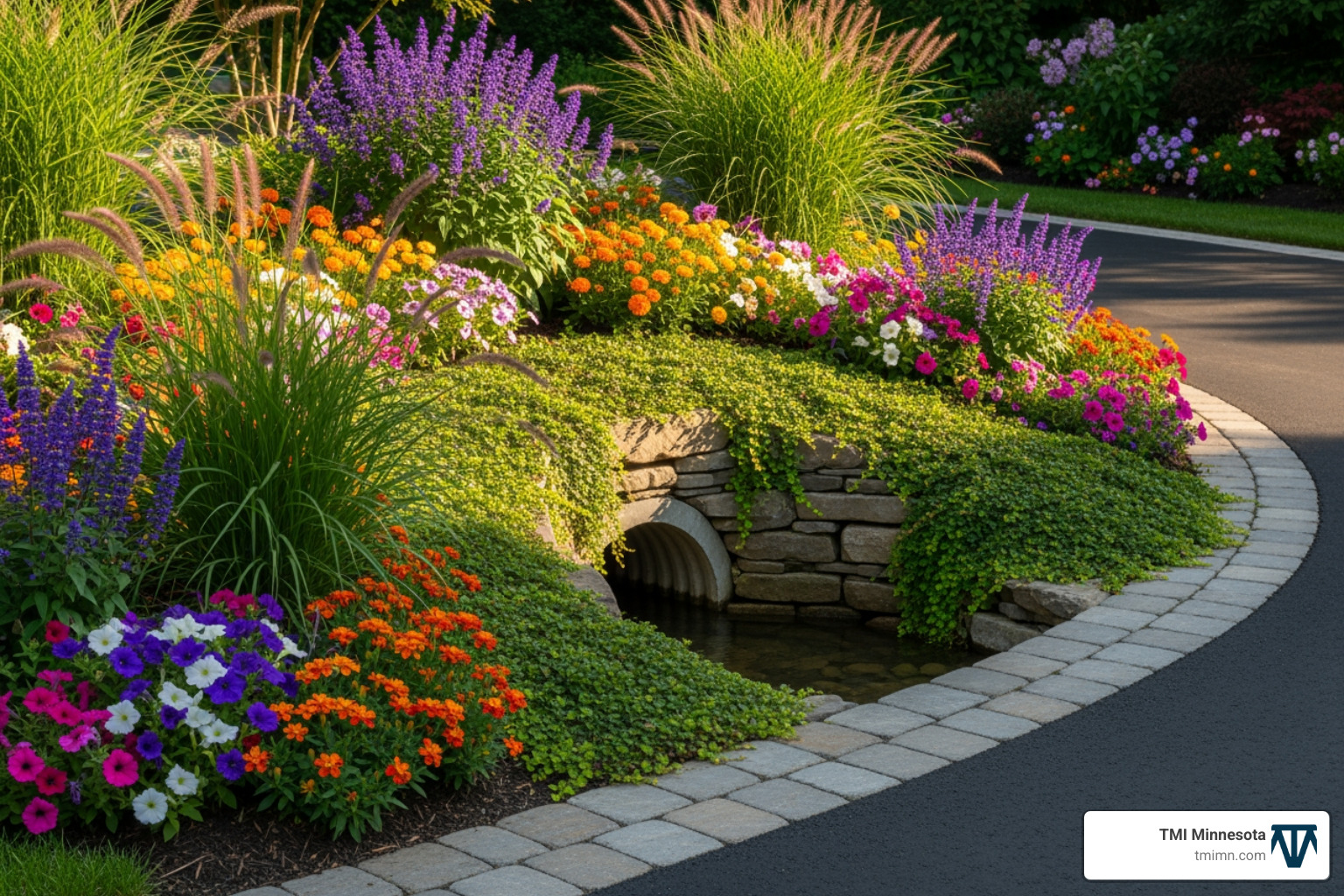
The area around a culvert often experiences more moisture, making it an ideal spot for water-tolerant plants. Think vibrant perennials like irises, daylilies, and ferns that thrive in moist conditions. Ornamental grasses, such as sedges, also do wonderfully and add graceful movement. These plants not only look beautiful but can also help absorb excess water, turning a functional necessity into a living feature.
A mix of perennials and shrubs can provide year-round interest. Evergreens offer structure and color during the colder months, while flowering shrubs and perennials burst with color in spring and summer. Consider native Minnesota plants that are well-adapted to our climate and require less maintenance. Thick-growing shrubs, like certain varieties of boxwood, can also create a charming natural barrier, subtly hiding the culvert while providing long-lasting beauty.
For a modern touch and dynamic visual interest, ornamental grasses are fantastic. They add movement, texture, and can be relatively low-maintenance, often requiring just one trim per year. Their upright form can also add height and a natural feel around your culvert.
If your culvert area allows, building raised flower beds over or alongside the culvert can be a stunning solution. This lifts the planting area, allowing for better drainage for certain plants and making a bold statement. The beds can be filled with a mix of colorful annuals and perennials, creating a focal point that draws the eye.
Don’t underestimate the power of mulch! A generous layer of mulch, such as black mulch, provides excellent color contrast against green foliage and stone. It also helps retain soil moisture, suppress weeds, and regulate soil temperature – all crucial for healthy plants. This simple addition can make your plantings pop while reducing maintenance.
For a low-maintenance solution, consider spreading groundcover plants around the culvert. These plants quickly fill in spaces, preventing weeds and adding a lush, green carpet effect. Just be sure to choose varieties that won’t impede water flow or grow too vigorously into the culvert opening.
When designing your softscape, curvilinear lines can add significant visual interest. Instead of rigid, straight borders, consider graceful, flowing shapes for your flower beds and plant arrangements. This concept can be applied beautifully to the area around your culvert, creating a harmonious and inviting entrance that feels natural rather than forced. For more inspiration on integrating plants and greenery, explore our guide on landscaping around driveways.
Simple yet impactful driveway culvert landscape ideas
You don’t need an elaborate budget or complex designs to make a significant impact on your culvert’s appearance. Sometimes, the simplest driveway culvert landscape ideas are the most effective, changing an eyesore into a neat and tidy feature that welcomes visitors to your home.
One of the easiest and most effective ways to improve a culvert area is to line the drainage ditch with river rock. This not only looks aesthetically pleasing, giving a natural, stream-like appearance, but it also helps prevent erosion and keeps the area tidy. The varying sizes and smooth textures of river rocks create a calming visual effect that feels like it’s always been there.
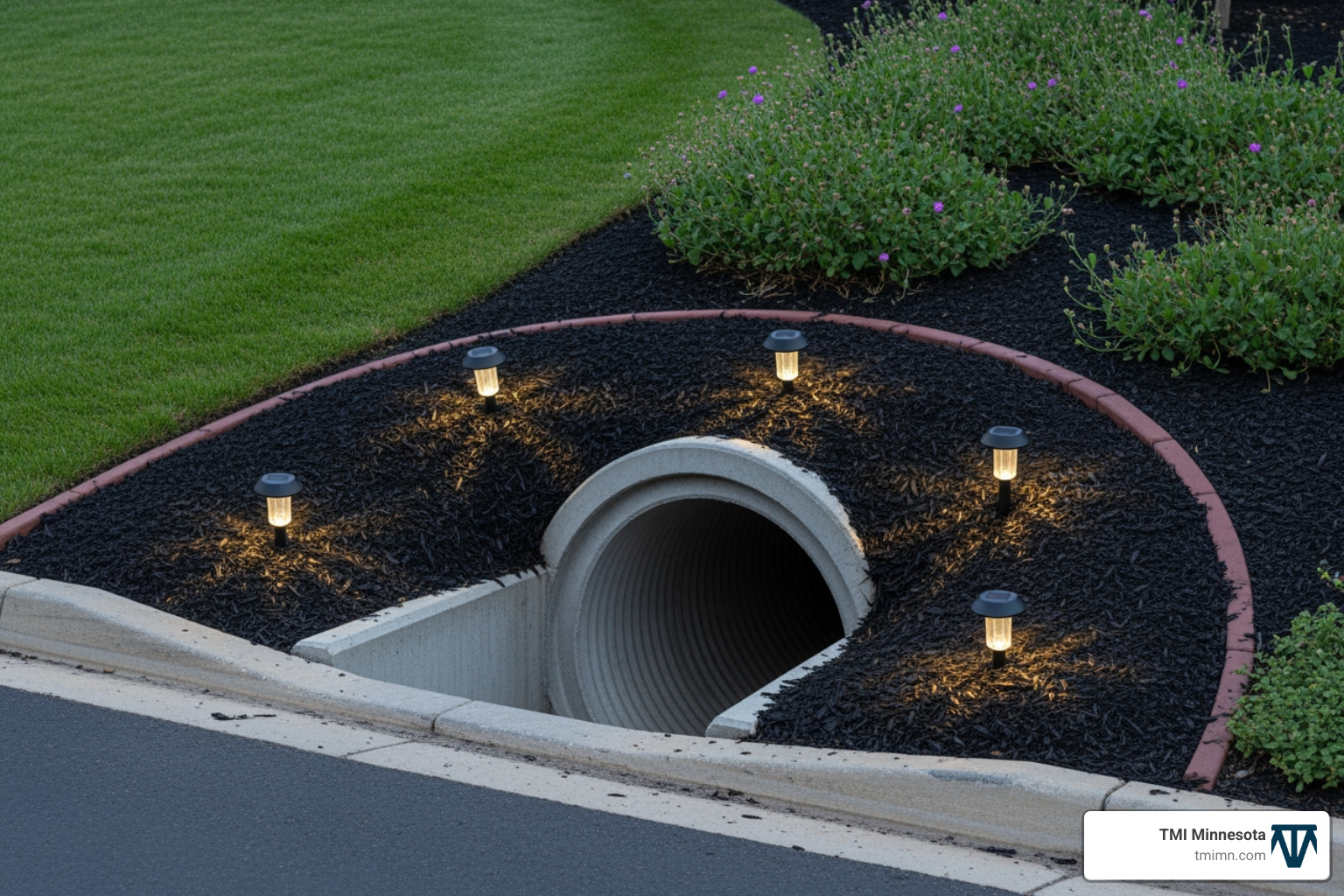
A clean, well-defined mulch border around the culvert opening and its immediate surroundings can instantly lift its look. This creates a neat transition from your driveway to the culvert area, suppressing weeds and providing a uniform backdrop for any minimal plantings. Black mulch, for instance, can offer a striking contrast that makes the entire area feel more intentional and polished.
If natural stone or intricate blockwork isn’t in your plan, a simple concrete collar or a basic concrete wall can define the culvert area effectively. These concrete elements offer a clean, minimalist look, ensuring the area remains tidy and clearly delineated. While poured concrete is strong, it’s worth noting it may crack over time, so proper installation is key. Check out our concrete driveway borders for more ideas on integrating concrete elements.
Incorporating solar-powered lighting along the edges of your culvert area serves multiple purposes. They improve visibility, especially if the culvert is in a sloped or less visible area, enhancing safety for anyone using your driveway after dark. Additionally, the soft glow of the lights adds ambiance and highlights your landscaping efforts, making the culvert a feature rather than an afterthought. It’s amazing how a few strategically placed lights can transform the entire entrance.
For a dramatic yet simple statement, consider planting a carefully chosen specimen tree or shrub near the culvert. This could be a dwarf maple for its striking foliage, or an upright evergreen that provides year-round interest. The key is to select a plant that won’t overwhelm the space or have aggressive roots that could interfere with the culvert pipe. This creates a natural focal point without requiring extensive gardening knowledge or maintenance.
Sometimes, the most impactful change is simply keeping the area tidy. Regularly trimming grass, removing weeds, and clearing debris from the culvert opening ensures that it remains functional and neat. A well-maintained culvert, even without elaborate landscaping, instantly boosts curb appeal. It shows pride in your property and creates a welcoming first impression that visitors will notice immediately.
Planning and Maintaining Your Culvert Masterpiece
Creating a beautiful and functional culvert landscape involves more than just selecting plants and stones. Careful planning and diligent maintenance are crucial for ensuring your investment lasts and continues to perform its vital drainage function, especially in the Twin Cities’ varied weather conditions.
Key Factors to Consider Before You Start
Before you start, let’s cover the essentials for your driveway culvert landscape ideas. A little planning now saves headaches later.
Your budget is a key starting point. Culvert installation averages $1,000 to $5,000, with landscaping as an additional cost. Spending more on quality materials upfront often saves thousands in future repairs.
Understanding your water flow is critical. You need to know how much water your culvert handles during heavy rains and spring thaws, as an undersized culvert will lead to flooding and erosion. We assess water patterns to ensure the culvert is correctly sized.
When sizing the culvert pipe, the diameter and length must match the anticipated water flow and your driveway’s width. Pipes come in different materials—heavy-gauge plastic, corrugated steel, or reinforced concrete—each with its own advantages for Minnesota’s climate. Getting this right is essential for longevity.
Local regulations and permits are also crucial. Before digging, check with your local Twin Cities municipality for specific requirements on culvert size, material, and placement. Skipping this step can lead to fines or having to redo the work.
Finally, regarding DIY versus professional installation, simple landscaping may be a DIY job, but culvert installation requires expertise. Proper grading, sizing, and structural work need specialized equipment. For an integrated solution, our team specializes in design driveways and landscaping, ensuring your culvert performs flawlessly.
Best Practices for Long-Term Maintenance
Even a beautifully designed culvert landscape needs regular care to maintain its beauty and function. Consistent maintenance protects your investment and prevents larger problems.
Regular inspection should be routine, especially after heavy rain or snowmelt. Look inside the culvert pipe for obstructions like sticks, leaves, or sediment that could block water flow.
When you find debris, clear it out promptly. A clogged culvert can lead to water backup and erosion. Keep grass cut low near the opening to prevent debris from accumulating.
Trim any overgrown vegetation that’s creeping too close to the culvert opening. Plants blocking the opening can impede water flow and make inspection difficult.
Keep an eye out for root intrusion from nearby trees. Roots seeking water can infiltrate and damage pipes, causing blockages.
For culverts with hardscaping, inspect the hardscape regularly for cracks or shifting due to Minnesota’s freeze-thaw cycles. Catching small issues early prevents expensive repairs. Our guide on how to remove oil from block paving driveway offers helpful general maintenance tips too.
Frequently Asked Questions about Driveway Culverts
Over the years, we’ve helped countless Twin Cities homeowners transform their culverts from eyesores into landscape features they’re proud of. Along the way, we’ve heard many of the same questions pop up again and again. Let’s tackle the most common ones so you can feel confident moving forward with your own driveway culvert landscape ideas.
What are the best plants for around a wet culvert?
The area around a culvert tends to stay damp, especially after Minnesota’s spring thaws or summer storms. Rather than fighting this natural moisture, we recommend embracing it by choosing plants that actually thrive in these conditions.
Water-loving perennials are your best friends here. Iris varieties, particularly Siberian and Japanese irises, absolutely love wet feet and reward you with stunning blooms. Daylilies are another fantastic choice – they’re tough, colorful, and handle moisture beautifully. Hostas and ferns bring lush greenery and texture to shadier culvert areas, creating a cool, woodland feel.
Ornamental grasses like sedges are particularly well-suited to moist soil around culverts. These graceful plants provide year-round interest, require minimal maintenance, and their root systems can actually help stabilize the soil without causing problems.
If you’re interested in supporting local ecosystems while keeping maintenance low, consider native Minnesota wetland plants. They’re already adapted to our climate and soil conditions, which means they’ll thrive with less fuss.
One important caution: avoid planting deep-rooted trees too close to your culvert pipe. While a beautiful tree can be tempting, aggressive root systems will seek out the moisture inside the pipe. This can lead to blockages, cracked pipes, and expensive repairs down the road. If you want a tree, plant it at least 10 to 15 feet away from the pipe opening.
How much does it cost to landscape a driveway culvert?
This is probably our most frequently asked question, and the honest answer is: it varies widely. Just like any landscaping project, the cost depends on what you’re envisioning, the materials you choose, and whether you’re rolling up your sleeves or hiring professionals.
For simple DIY projects involving river rock lining, mulch borders, and a few carefully chosen plants, you might spend under $500 on materials. This approach can still make a dramatic difference in your culvert’s appearance without breaking the bank.
When you move into professional hardscaping territory – think stacked stone walls, natural stone installations, or concrete block structures – the investment typically ranges from $1,000 to $5,000 or more. This price includes materials, labor, and sometimes design consultation. That the culvert installation itself usually falls within this range, so landscaping represents an additional investment on top of the functional drainage work.
Several factors influence where your project falls in this range. Natural stone generally costs more than concrete blocks or simple river rock. The size of your culvert matters too – larger areas require more materials and labor. Site conditions can also affect pricing; if your property has difficult terrain, poor drainage, or requires extensive grading, expect costs to increase.
Here’s something worth considering: landscaping around a driveway culvert can significantly boost your home’s curb appeal. That welcoming entrance makes a lasting first impression, potentially increasing your property’s appraised value. It’s not just about spending money – it’s about investing in your home’s beauty and value.
Can I build a wall over my culvert myself?
We love a good DIY spirit, but this question requires an honest, safety-first answer. Whether you can tackle this yourself depends on what type of wall you’re planning, your skill level, and what your local building codes allow.
Simple, low dry-stack walls using carefully fitted stones might be within reach for a handy homeowner. The key is ensuring the stones are stable and won’t shift, especially when water is flowing through the culvert. This type of project can be rewarding and save you money if you have the patience and physical ability.
However, taller or mortared retaining walls are a different story entirely. These structures require proper foundations, drainage systems behind the wall, and precise construction techniques. In Minnesota, where our soil expands and contracts with freezing and thawing, improper construction can lead to wall failure. A collapsing retaining wall isn’t just expensive to fix – it can be genuinely dangerous.
Before you do anything, always check with your local building department in the Twin Cities area. This step isn’t optional. Many municipalities have specific codes for retaining walls, especially those near public drainage systems or rights-of-way. You may need permits, inspections, or specific engineering requirements. Skipping this step can result in costly fines and the heartbreak of having to tear down and rebuild your hard work.
When you’re unsure about any aspect of building a culvert wall, consulting with professionals like our team at TMI Minnesota can provide peace of mind. We can assess your specific situation, ensure everything meets code, and help you create something that’s both beautiful and built to last through Minnesota’s challenging weather.
Transform Your Driveway Entrance Today
Your driveway entrance doesn’t have to be just functional—it can be a beautiful welcome to your home. Throughout this guide, we’ve shared driveway culvert landscape ideas that prove even the most practical elements can become stunning landscape features. From the strength and timeless appeal of natural stone walls to the soft beauty of water-loving perennials, there’s a solution for every style and budget.
The real magic happens when functionality meets beauty. A well-designed culvert doesn’t just look good—it protects your property from erosion, prevents flooding, maintains your driveway’s structural integrity, and increases your home’s value. These aren’t just aesthetic improvements; they’re smart investments in your property’s long-term health.
We’ve seen how the right design can transform a simple drainage pipe into a focal point that makes neighbors stop and take notice. Whether you choose the rustic charm of stacked stones, the clean lines of concrete blocks, or the natural elegance of ornamental grasses and flowering perennials, your culvert can reflect your personal style while doing its essential job.
At TMI Minnesota, this is exactly the kind of change we love creating. We specialize in changing outdoor spaces with unique designs that blend innovative thinking with careful craftsmanship. Our expertise in both hardscape and softscape installations means we can bring your vision to life while ensuring every element works perfectly with Minnesota’s demanding climate.
The best part? You don’t have to tackle this alone. Our team understands the local regulations, knows which materials stand up to our freeze-thaw cycles, and can help you avoid costly mistakes. We use leading-edge products to lift your yard living, creating spaces that are as durable as they are beautiful.
Ready to give your driveway entrance the attention it deserves? Explore our driveway landscaping designs for more inspiration and find how we can help you create an entrance that truly makes a statement. Let’s work together to turn that overlooked culvert into something you’ll be proud to show off.