
Why the Right Driveway Makes All the Difference
Driveway paving solutions offer homeowners multiple material options to improve curb appeal and functionality. The most common choices include:
- Asphalt – Cost-effective, quick installation (1-2 days), lasts up to 20 years
- Concrete – Durable and versatile, lasts over 25 years, design options available
- Interlocking Pavers – Premium aesthetics, easy repairs, lifespan up to 40 years
- Permeable Pavers – Eco-friendly, manages stormwater, lasts 25-60 years
Your driveway is the first thing visitors see when they arrive at your home. It sets the tone for your entire property and can significantly impact your home’s value and curb appeal.
The right driveway material depends on your budget, climate, and aesthetic preferences. While asphalt offers affordability and quick installation, concrete provides long-term durability with design flexibility. Interlocking pavers deliver premium looks with easy maintenance, and permeable options support environmental sustainability.
Given the hard winters that driveways face, choosing a material that can withstand freeze-thaw cycles becomes crucial for long-term performance. Regular maintenance – from crack sealing to sealcoating – can extend any driveway’s lifespan significantly.
I’m Christopher Deanovic, Operations Leader at Task Masters, where I’ve helped hundreds of Minnesota homeowners transform their properties with thoughtful hardscape design and expert craftsmanship. My years of experience with driveway paving solutions in our challenging climate have taught me that the right material choice and professional installation make all the difference in creating a lasting first impression.
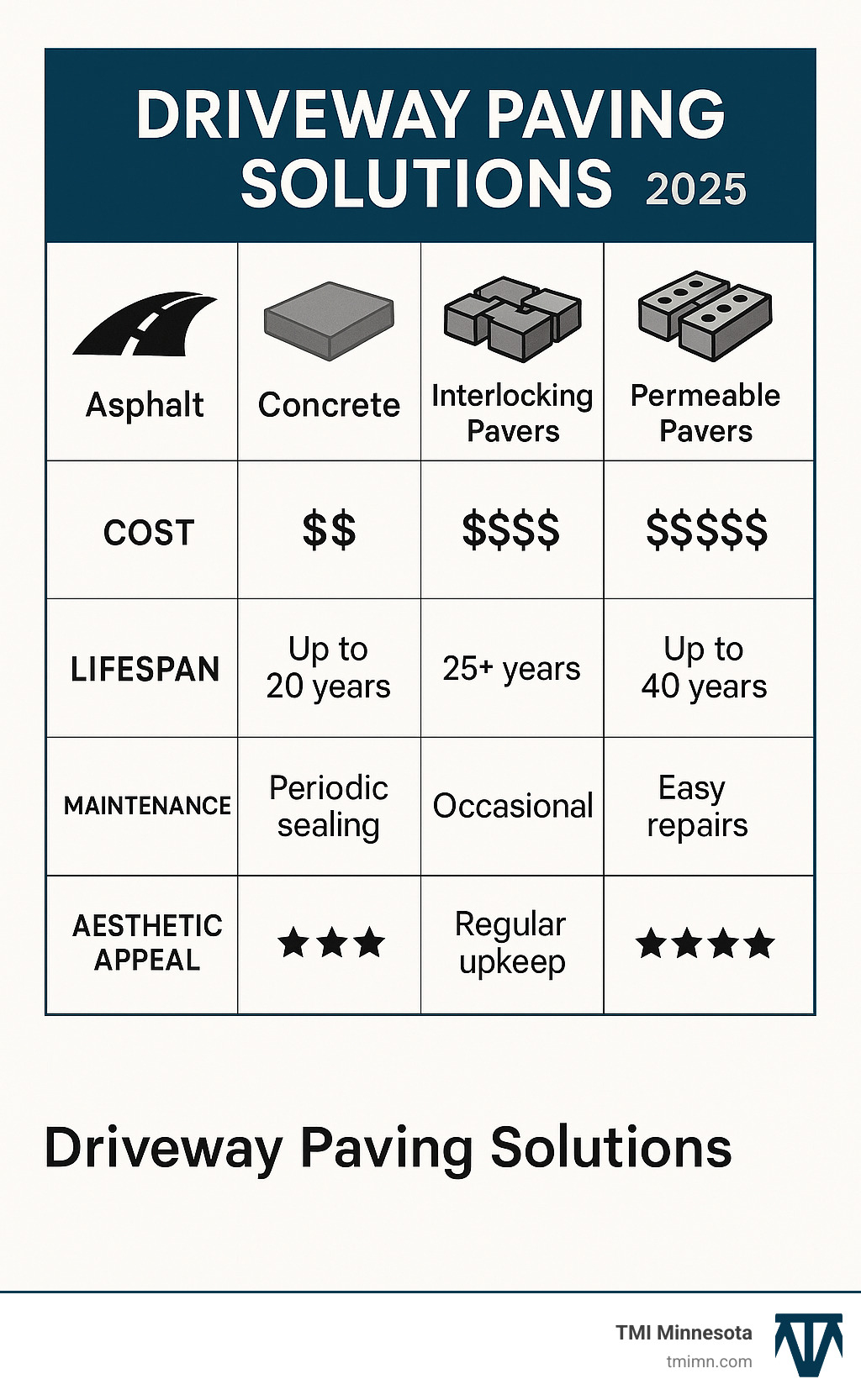
Simple Driveway paving solutions glossary:
Classic Choices: A Look at Asphalt and Concrete
Asphalt Driveways: The Flexible & Cost-Effective Option
When it comes to driveway paving solutions, asphalt has earned its place as America’s favorite for good reason. It’s the practical choice that delivers both value and performance, especially here in Minnesota where our driveways need to handle everything from blazing summer heat to bone-chilling winter freezes.
The biggest advantage of asphalt is its cost-effectiveness. You’ll get a smooth, professional-looking driveway without breaking the bank. Plus, the installation process is remarkably quick – most asphalt driveways are completed in just 1-2 days. That means you won’t be parking on the street for weeks while your driveway gets sorted out.
Asphalt’s flexibility in cold climates makes it particularly smart for our Minnesota winters. Unlike rigid materials that might crack under pressure, asphalt can expand and contract with temperature changes. This flexibility also makes it easier to work with on sloped properties or when you need to accommodate special features.
Here’s something that might surprise you: asphalt is 100% recyclable material. When your driveway eventually needs replacement decades down the road, that old asphalt gets ground up and used again. It’s a win for both your wallet and the environment.
Of course, asphalt isn’t maintenance-free. You’ll need to stay on top of regular maintenance tasks like sealcoating every few years and crack filling when needed. Think of it like changing the oil in your car – a little preventive care goes a long way. With proper maintenance, your asphalt driveway can last up to 20 years.
The classic blacktop appearance gives your home a clean, traditional look that works well with most architectural styles. And after installation, you’ll just need to wait 24-48 hours before driving on it again.
For more details about our comprehensive hardscape installations, we can help you determine if asphalt fits your property’s needs.
Concrete Driveways: The Durable & Versatile Standard
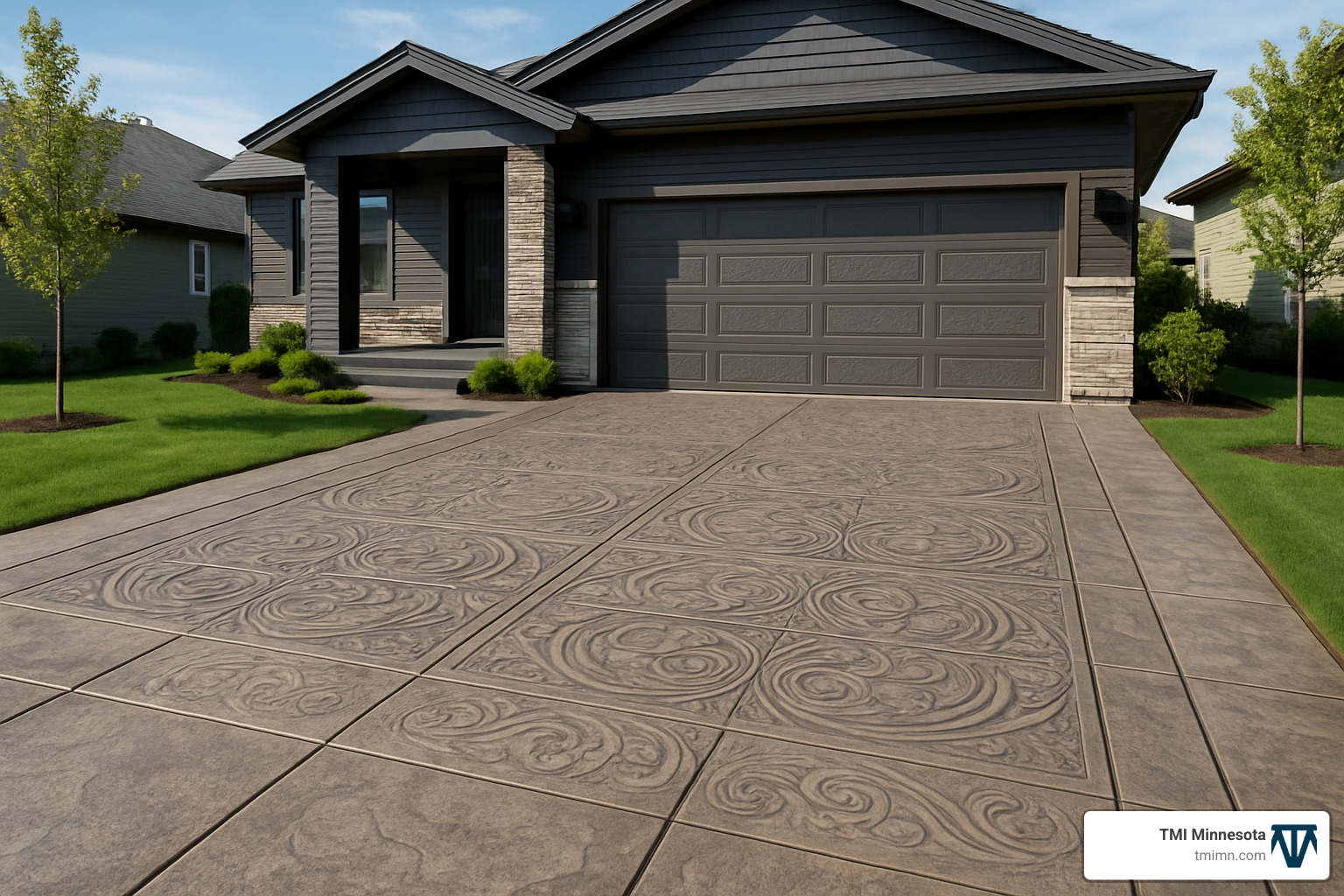
Concrete driveways are the marathon runners of driveway paving solutions – built for the long haul with impressive staying power. When properly installed, concrete driveways regularly last over 25 years, making them a solid investment for homeowners who want to set it and forget it.
The real beauty of concrete lies in its design versatility. While asphalt gives you that classic blacktop look, concrete opens up a world of possibilities. You can choose stamped concrete that mimics brick, stone, or intricate patterns. Colored concrete lets you match or complement your home’s exterior. Even a simple broom finish adds texture and character that plain asphalt can’t match.
Concrete’s durability is hard to beat. It stands up to heavy vehicles, harsh weather, and decades of daily use without breaking a sweat. This makes it particularly appealing for families with multiple cars, RVs, or anyone who needs a driveway that can handle serious weight.
But let’s talk about the elephant in the room – concrete comes with a higher initial cost than asphalt. You’re paying more upfront for that extended lifespan and design flexibility. It’s like buying a quality appliance that costs more initially but saves money over time.
Concrete does have its quirks. There’s potential for cracking over time, especially if the ground shifts or settles. When cracks do appear, concrete repairs can be more challenging and visible than patching asphalt. The repair difficulty means you’ll want to work with experienced professionals who know how to blend repairs seamlessly.
The installation process requires patience too. Concrete needs proper curing time, which means you’ll wait longer before you can use your new driveway compared to asphalt’s quick turnaround.
Despite these considerations, concrete remains a top choice for homeowners who want a driveway that combines longevity with style options that can truly improve their home’s curb appeal.
The Designer’s Choice: Interlocking and Permeable Pavers
Interlocking Pavers: Best Style and Repairability
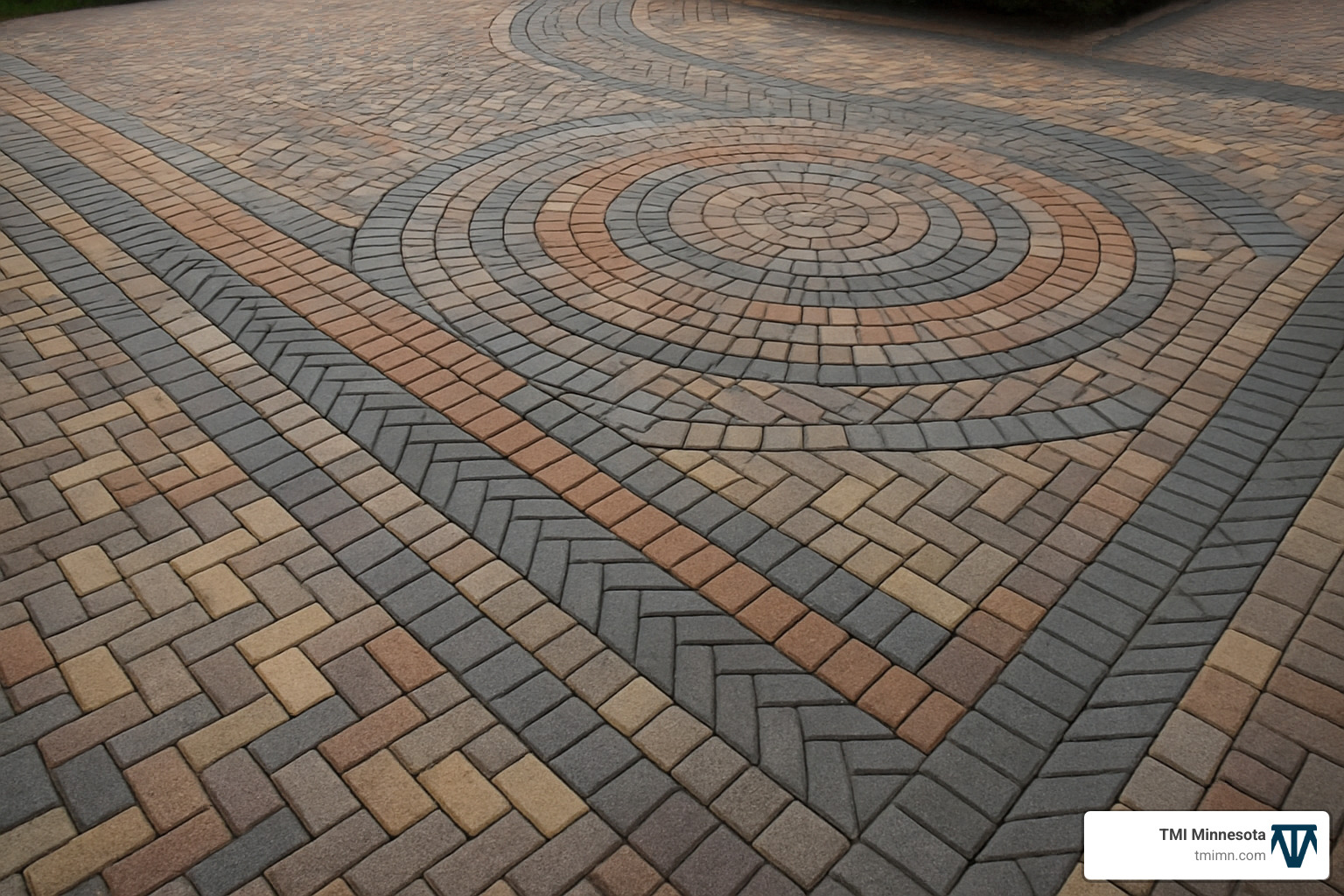
When homeowners want to make a statement with their driveway, interlocking pavers are the clear winner among driveway paving solutions. These premium materials transform an ordinary entrance into something truly special, offering both beauty and impressive durability that can last up to 40 years.
What makes pavers so appealing is their incredible variety of styles and colors. You can choose from classic brick patterns that complement traditional homes, or go bold with contemporary geometric designs that make your property stand out. The design possibilities are practically endless, which means your driveway can be as unique as your home.
But pavers aren’t just about looks. Their high-end aesthetics come with practical benefits that make them worth the investment. If a section gets damaged or stained, you can simply remove and replace individual pavers without redoing the entire surface. This easy repair capability saves both money and hassle down the road.
The non-slip surface of interlocking pavers provides excellent traction, making them safer for walking and driving, especially during Minnesota’s icy winters. Each paver locks into place with its neighbors, creating a stable surface that can handle heavy vehicle traffic without shifting or settling.
The main drawbacks are the higher initial cost compared to asphalt or concrete, and the potential for weeds to grow between the joints if maintenance is neglected. However, proper installation with quality joint sand and occasional resealing can keep weed growth to a minimum.
For detailed guidance on proper installation techniques, check out our comprehensive guide on How To Install Hardscape Pavers.
Permeable Pavers: An Eco-Friendly Driveway Paving Solution
Permeable pavers represent the future of environmentally responsible driveway paving solutions. These innovative systems let you have a beautiful, functional driveway while actually helping the environment – a win-win that more homeowners are finding every year.
The magic happens through stormwater management. Instead of rainwater rushing off your driveway into storm drains, permeable pavers allow it to soak naturally into the ground. This reduced runoff helps prevent flooding and erosion while supporting groundwater recharge – essentially giving back to the earth beneath your property.
Here’s what makes permeable pavers environmentally beneficial:
- Allow natural water filtration and drainage
- Reduce strain on municipal storm systems
- Help prevent basement flooding and water damage
- Support local groundwater supplies
- Often made from recycled, eco-friendly materials
The lifespan of 25-60 years depends on the specific system and how well it’s maintained, but even the lower end of that range beats most traditional paving options. The honeycomb or grid structure distributes weight evenly, making them surprisingly durable despite their porous nature.
Installation involves placing the permeable system and filling it with appropriate stone or aggregate. The result is a surface that looks great, handles vehicle traffic, and quietly manages water runoff without any effort from you.
These systems work particularly well in areas prone to heavy rainfall or properties where drainage has been an ongoing concern. They’re also perfect for homeowners who want to reduce their environmental impact without sacrificing functionality or curb appeal.
To learn more about incorporating permeable solutions into your overall landscape design, explore our Hardscape Design Services.
Comparing Your Top Driveway Paving Solutions
Key Factors to Consider When Choosing a Material
| Material | Initial Cost | Lifespan | Maintenance Needs | Aesthetic Appeal |
|---|---|---|---|---|
| Asphalt | Low | Up to 20 years | High (sealing, crack repair) | Basic |
| Concrete | Medium | 25+ years | Low (occasional cleaning) | Good (design options) |
| Interlocking Pavers | High | Up to 40 years | Medium (joint maintenance) | Excellent |
| Permeable Pavers | High | 25-60 years | Low (periodic cleaning) | Very Good |
Choosing the right driveway paving solutions for your home doesn’t have to feel overwhelming. Think of it like picking the perfect outfit – you want something that fits your style, your budget, and works for your lifestyle.
Your budget is usually the first reality check. Asphalt gives you the biggest bang for your buck upfront, while pavers require a more substantial initial investment. But here’s the thing – sometimes spending more now saves you money later. A driveway that lasts 40 years with minimal fuss might actually cost less than one that needs constant attention.
Minnesota’s weather should definitely influence your choice. Our freeze-thaw cycles can be brutal on driveways. Asphalt’s flexibility makes it naturally forgiving when temperatures swing wildly. Concrete handles cold well but can develop those annoying cracks over time. Interlocking pavers? They’re like the winter boots of driveways – each piece can move slightly without creating visible damage.
Your home’s personality matters too. A charming colonial might love classic brick pavers, while a sleek modern home could shine with smooth concrete finishes. The driveway should feel like it belongs, not like an afterthought.
Don’t forget about how you’ll actually use your driveway. Do you park heavy trucks? Entertain frequently? Have teenagers who treat the driveway like a basketball court? These real-life factors should guide your material choice.
For more insights on material durability, check out What are the best materials for my driveway to ensure it lasts?
Lifespan and Maintenance: What to Expect from Your Driveway Paving Solution
Let’s talk about the reality of living with your driveway choice. Every material has its own personality when it comes to upkeep, and knowing what you’re signing up for helps avoid surprises down the road.
Asphalt is like that friend who needs regular check-ins to stay happy. Sealcoating every 2-3 years keeps it looking fresh, and filling cracks promptly prevents bigger problems. The good news? This maintenance is straightforward and won’t break the bank. Think of it as routine care that keeps your 20-year investment running smoothly.
Concrete is the low-maintenance friend who looks great with minimal effort. Occasional cleaning and joint sealing are usually enough to keep it happy for 25+ years. When problems do arise, though, repairs can be trickier and more expensive. The key is preventing issues with proper drainage and avoiding harsh de-icing chemicals.
Interlocking pavers need some attention but reward you with easy fixes. Refilling joint sand and occasional cleaning prevent weeds from crashing the party. The beauty is that if one paver gets damaged, you can swap it out without touching the rest. It’s like having a driveway with replaceable parts.
Permeable pavers ask for regular cleaning to keep their drainage superpowers working. This means periodic vacuuming or power washing to clear debris from drainage channels. Despite this requirement, they’re generally less demanding than traditional materials once you establish a routine.
The long-term value equation changes when you factor in maintenance costs. A material that seems expensive initially might prove economical when you consider its lifespan and care requirements.
For comprehensive information about integrating your driveway with other landscape elements, visit our Softscaping And Hardscaping services page.
The Driveway Installation Process from Start to Finish
Preparing the Foundation: The Most Critical Step
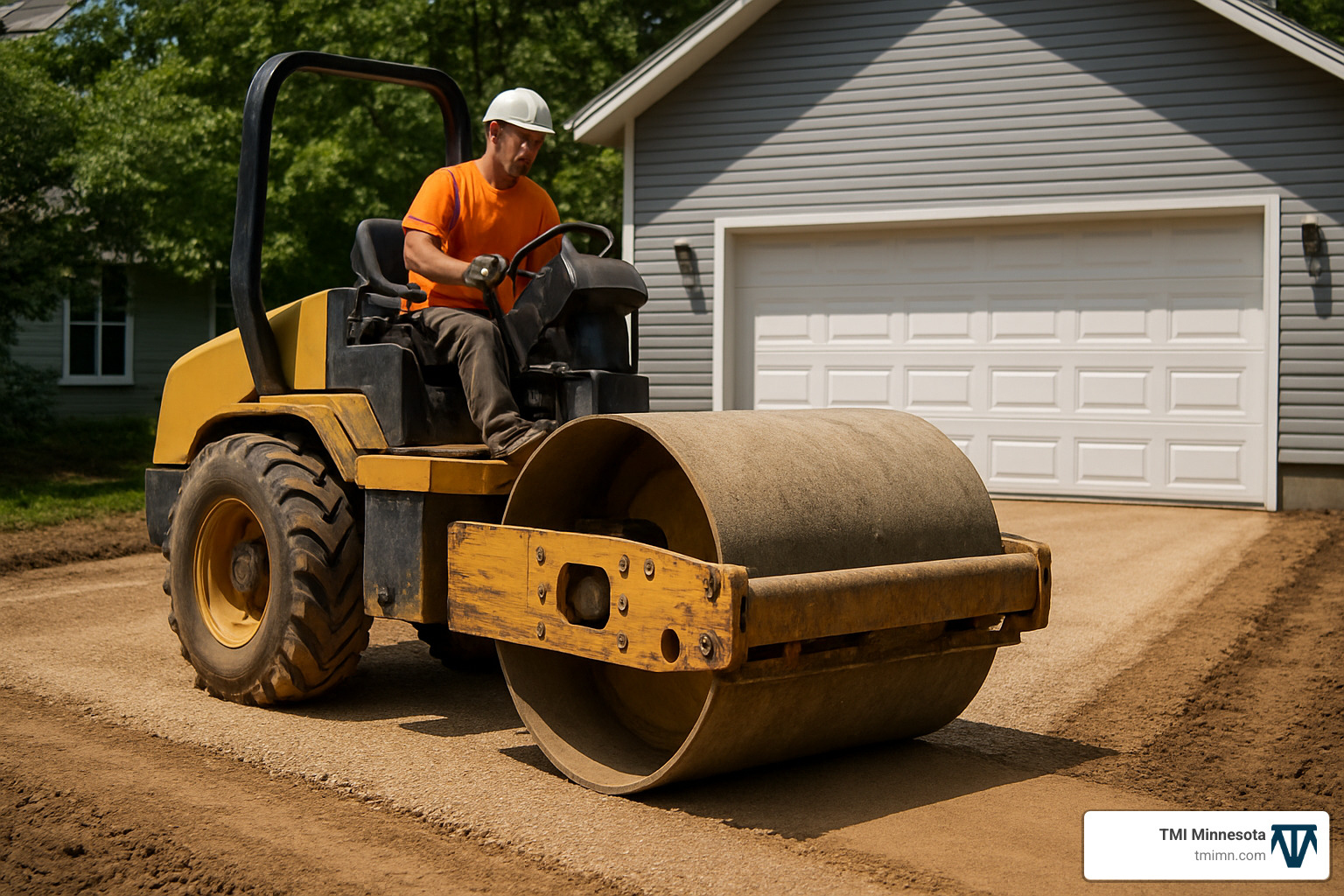
Here’s something most homeowners don’t realize: the foundation preparation makes or breaks your driveway’s success. I’ve seen beautiful surfaces fail within a few years because corners were cut during this crucial phase. No matter which driveway paving solutions you choose, they’re only as good as what’s underneath.
The process starts with excavation, where we carefully remove existing materials and dig to the right depth. This isn’t just about digging a hole – we’re creating the blueprint for your driveway’s future performance. The depth depends on your chosen surface material and what Minnesota’s soil conditions demand.
Grading comes next, and this is where our Minnesota experience really shows. We create the perfect slope to keep water flowing away from your home and prevent those dreaded ice patches. Getting this right means the difference between a driveway that lasts decades and one that develops problems after the first hard winter.
The sub-base installation involves laying down a foundation layer of crushed stone or gravel. Think of this as your driveway’s shock absorber – it provides stability, handles drainage, and creates that uniform surface your final material needs. We adjust the type and depth based on what your specific soil conditions require.
Compaction is our final foundation step, and honestly, it’s where patience pays off. We use heavy equipment to ensure everything is solid and uniform. Rushing this process is like building a house on shifting sand – it might look good initially, but problems will surface later.
Proper drainage planning happens throughout this entire process. In Minnesota’s freeze-thaw climate, water is your driveway’s biggest enemy. We make sure every drop has somewhere to go.
Surface Installation and Curing Timelines
Once the foundation is perfect, the surface installation process varies dramatically depending on your chosen material.
Asphalt installation moves quickly once we start. The hot mix asphalt arrives and gets spread while it’s still warm, then we compact it with heavy rollers. Most residential driveways are completed in a single day, which homeowners love. However, you’ll need to keep vehicles off for 24-48 hours while it cures. In hot weather, this timeline stretches longer.
Concrete pouring requires more patience but delivers incredible results. We mix and pour the concrete, then apply your chosen finish – whether that’s a simple broom texture or an intricate stamped pattern. The concrete curing process takes several days before you can drive on it, and up to a week for full strength. This patience pays off with decades of durability.
Paver laying is the most labor-intensive process, but it’s also the most rewarding to watch. Each paver gets placed according to your chosen pattern, then we sweep sand into the joints and compact everything. The best part? You can use your driveway immediately once we’re finished – no waiting around.
Professional installation makes all the difference, regardless of which material you choose. We’ve seen too many DIY attempts that looked good initially but failed prematurely because proper techniques weren’t followed.
For inspiration on how your new driveway can integrate with other outdoor living features, check out our Custom Outdoor Living Areas to see the complete change possibilities.
Frequently Asked Questions About Driveways
How does a new driveway increase home value?
A beautiful new driveway does more than just look good – it actually puts money back in your pocket. When potential buyers pull up to your home, that first impression sets the tone for everything that follows. A cracked, stained, or deteriorating driveway sends the wrong message before they even step out of their car.
The numbers tell the story clearly. Most driveway paving solutions return between 50-70% of their cost in increased home value. That means a $10,000 driveway investment could add $5,000-$7,000 to your home’s selling price. The exact return depends on your neighborhood, local market conditions, and the material you choose.
But the real magic happens beyond the math. A smooth, well-maintained driveway signals to buyers that you’ve taken care of your property. It suggests quality and attention to detail throughout the home. This psychological impact often translates into faster sales and higher offers.
From a practical standpoint, a new driveway improves safety for your family and guests. No more dodging potholes or worrying about tripping on uneven surfaces. Buyers appreciate these functional benefits because they can picture themselves using the space comfortably.
Premium materials like interlocking pavers can offer even higher returns in upscale neighborhoods, where buyers expect and are willing to pay for quality finishes.
For additional perspectives on this topic, check out Does new driveway increase home value?
Are there driveway options for sloped properties?
Steep driveways might seem challenging, but several driveway paving solutions actually work beautifully on sloped properties. The key is choosing the right material and using proper installation techniques.
Asphalt shines on slopes because of its flexible nature. It can be shaped to follow your property’s natural contours while maintaining proper water drainage. The material’s ability to flex with minor ground movement helps prevent cracking that rigid materials might experience.
Interlocking pavers are another excellent choice for sloped driveways. Each individual paver can adjust slightly to ground movement without creating visible damage. Plus, the textured surface provides excellent traction – crucial for safely navigating slopes during Minnesota’s icy winters.
Traditional loose gravel becomes problematic on slopes steeper than 7% because it tends to wash downhill during heavy rains. However, modern stabilized gravel systems using permeable grids can handle moderate slopes effectively.
Proper drainage becomes even more critical on sloped properties. This might involve installing drainage channels, building retaining walls, or using specialized grading techniques to manage water flow. Without proper drainage, even the best materials will fail prematurely.
For very steep slopes, retaining walls might be necessary to create level areas or prevent erosion. These can be designed as attractive features that complement your driveway rather than just functional necessities.
What is the difference between resurfacing and a new installation?
Understanding when to resurface versus starting fresh can save you thousands of dollars – or prevent costly mistakes down the road.
Resurfacing means applying new material over your existing foundation. For asphalt driveways, this involves adding a fresh layer over the current surface after thorough inspection and minor repairs. Think of it like putting new carpet over good subflooring – you’re refreshing the surface while keeping the solid foundation underneath.
The benefits of resurfacing are appealing: lower cost, faster installation, and less disruption to your landscaping. Your existing drainage systems stay intact, and the project typically takes just a few days rather than weeks.
But resurfacing only works when your foundation is solid. Surface cracks and wear are fine, but if you have drainage problems, foundation settling, or structural issues, resurfacing is like putting a band-aid on a broken bone.
New installation means starting completely over. We remove everything down to the soil, address any drainage issues, install a proper foundation, and build your driveway from scratch. Yes, it costs more upfront, but it also gives you a fresh start with maximum longevity.
The decision often comes down to what’s happening underneath. If your driveway has good bones but looks tired, resurfacing might be perfect. If you’re dealing with drainage problems, major cracks, or want to change materials or layout, new installation is the way to go.
We always do a thorough assessment before recommending either approach, because choosing the wrong option can be an expensive mistake.
Conclusion: Create Your Perfect Welcome Home
After exploring all these driveway paving solutions, you might feel a bit overwhelmed by the choices. That’s completely normal! Each material has its sweet spot, and the “perfect” choice really depends on what matters most to you and your family.
Think about how you actually use your driveway. Do you need something that can handle heavy trucks, or is it mainly for daily commuting? Are you the type who enjoys weekend maintenance projects, or would you rather set it and forget it? Your honest answers to these questions will guide you toward the right material.
Asphalt makes sense if you want reliable performance without breaking the bank. It’s the practical choice that gets the job done well, especially in our Minnesota climate. Concrete steps things up with better longevity and design options, while interlocking pavers are perfect if you want your driveway to be a real showstopper.
Permeable pavers deserve serious consideration if you care about environmental impact. They handle our heavy rains beautifully while helping the planet – a win-win that more homeowners are finding.
Here’s what I’ve learned after years of installing driveways in Minnesota: the installation quality matters more than the material itself. A professionally installed asphalt driveway will outperform a poorly installed paver system every time. The foundation work, proper drainage, and attention to detail during installation determine whether your driveway will look great for decades or start showing problems within a few years.
At TMI Minnesota, we’ve seen how the right driveway transforms not just your property’s appearance, but how you feel coming home each day. There’s something special about pulling into a beautiful, well-crafted driveway that makes you proud of your home.
Your driveway is an investment in your daily life and your property’s future value. Professional installation ensures you get the full benefit of whichever material you choose. We use leading-edge products and proven techniques to create driveways that look stunning and perform reliably through Minnesota’s challenging seasons.
Ready to see what’s possible for your property? View our hardscape project gallery for inspiration and find how the right driveway can create the perfect welcome home experience you’ve been dreaming of.