
Creating Beautiful Gardens That Thrive in Dry Conditions
Drought-resistant landscaping is a water-efficient approach to garden design that uses climate-appropriate plants and smart irrigation to create beautiful outdoor spaces that require minimal water. This sustainable landscaping method can reduce outdoor water use by 30-50% compared to traditional lawns.
What is drought-resistant landscaping?
* Uses plants adapted to survive with minimal supplemental watering
* Incorporates efficient irrigation systems like drip lines
* Uses mulch to retain soil moisture and reduce evaporation
* Groups plants according to water needs (hydrozoning)
* Minimizes or eliminates traditional lawn areas
* Includes permeable hardscaping to allow water infiltration
In many regions, outdoor irrigation accounts for nearly 50% of residential water use, making drought-tolerant landscaping a key strategy for conservation that also saves money on utility bills.
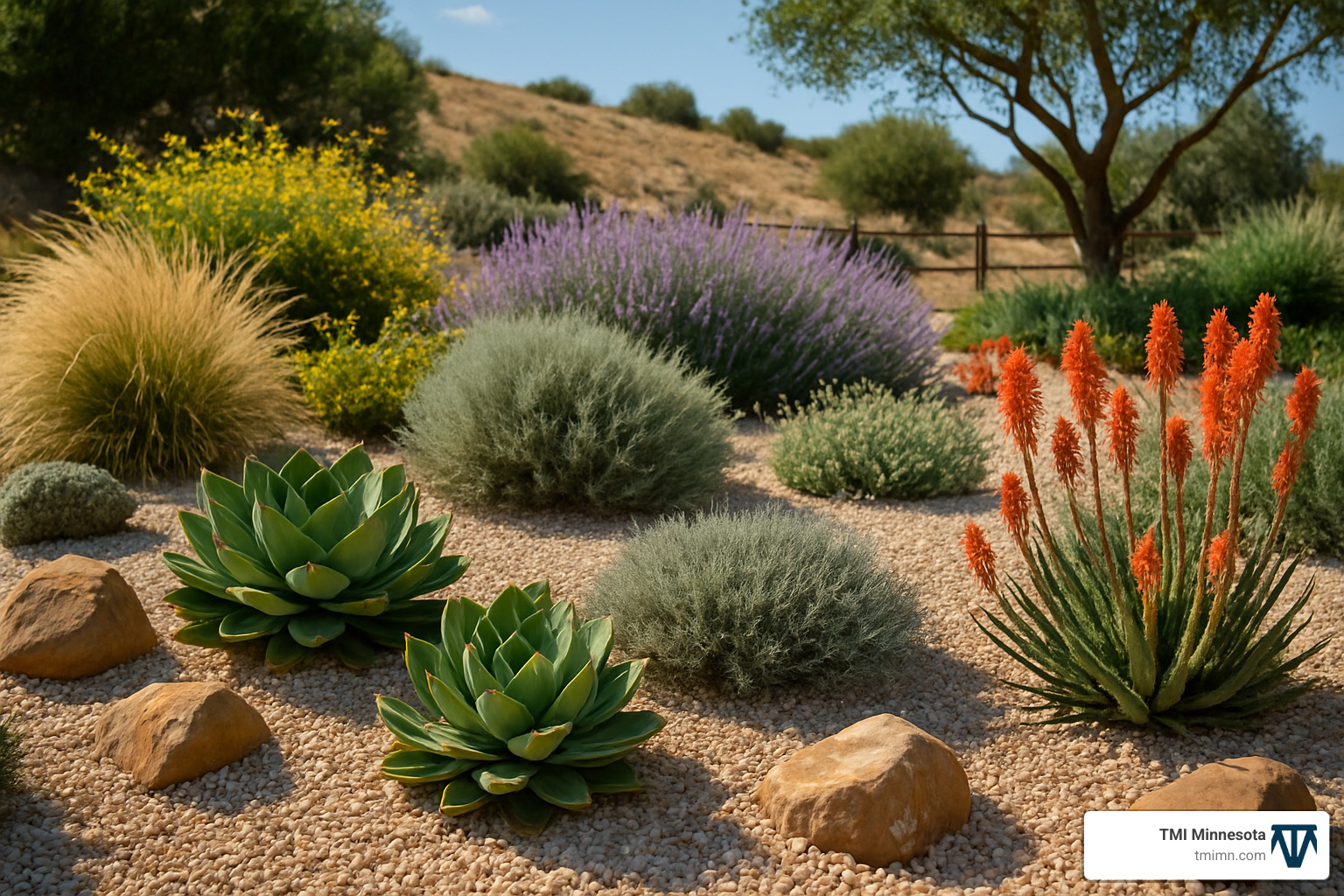
The good news? Water-wise gardens don’t have to look like barren deserts. Today’s drought-resistant landscapes can be lush, colorful, and full of texture while still being environmentally responsible.
As Christopher Deanovic, Operations Leader at Task Masters, I’ve transformed countless Minnesota properties with drought-resistant landscaping designs that balance beauty with practicality, helping homeowners create sustainable outdoor spaces that thrive even during the driest summers.

Easy drought-resistant landscaping word list:
– bespoke garden designs
– outdoor living upgrades
– custom pergola builders
What You’ll Learn
In this comprehensive guide, we’ll walk you through everything you need to know about creating your own water-wise landscape. You’ll find the substantial benefits of drought-resistant landscaping, learn how to select the right plants for Minnesota’s unique climate, master efficient irrigation techniques, find out about available rebates and incentives, and understand how to care for your drought-resistant garden over the long term.
Understanding Drought-Resistant Landscaping
Drought-resistant landscaping isn’t about sacrificing beauty for practicality—it’s about creating stunning outdoor spaces that sip rather than gulp water. Think of it as smart gardening that works with nature instead of against it, giving you a yard that’s both gorgeous and responsible.
“A gorgeous yard doesn’t have to guzzle water to look good,” notes a landscape designer with over 25 years of experience. This perfectly captures what we believe at TMI Minnesota—that you can have breathtaking landscapes without the environmental guilt or high water bills.
When you compare traditional lawns with drought-smart designs, the benefits become crystal clear:
| Traditional Lawn | Drought-Resistant Landscape |
|---|---|
| Requires 1-2 inches of water weekly | Needs minimal irrigation once established |
| High maintenance (mowing, fertilizing, weeding) | 60% less maintenance time |
| Limited biodiversity | Supports pollinators and wildlife |
| Contributes to runoff and erosion | Improves soil health and water infiltration |
| High water bills | 30-50% reduction in water use |
| Uniform appearance | Rich textures and year-round interest |
Drought-Resistant Landscaping vs Xeriscaping: Key Differences
You might hear “xeriscaping” and “drought-resistant landscaping” used as if they’re twins, but they’re more like close cousins. Xeriscaping (pronounced “zeer-i-scaping,” not “zero-scaping”) was born during Colorado’s 1980s drought and follows seven specific principles aimed at eliminating the need for extra watering altogether.
Drought-resistant landscaping takes a slightly gentler approach. It dramatically cuts water needs but might still include some moderate-water-use plants for that extra pop of color or texture. Both methods accept hydrozoning—the smart practice of grouping thirsty plants together and keeping the water-sippers in their own section.
“Xeriscaping originated in arid regions to reduce irrigation,” explains a landscape ecologist. “But the principles can be adapted to any climate, including Minnesota, where we face both summer dry spells and cold winters.”
Native plants are the unsung heroes in water-wise gardens. These local champions have spent centuries adapting to Minnesota’s unique conditions. Our native prairie plants are particularly impressive—they’ve developed root systems that reach deep underground to find moisture that shallow lawn roots can’t touch.
How Much Water Can You Save?
The water savings from drought-resistant landscaping will make both your wallet and the environment happier. According to EPA WaterSense data, the average American home uses about 320 gallons of water daily, with nearly a third going straight to outdoor use. In drier areas, yard irrigation can gulp down half of all residential water.
Switch to a drought-resistant landscape, and you’ll typically enjoy:
- 30-50% reduction in outdoor water use
- A noticeable drop in your water bills, especially during summer
- Lower maintenance costs since you’ll spend less on mowing, fertilizing, and treating your lawn
There’s another cool benefit too. Research published in Science magazine found that traditional lawns actually make urban areas hotter, while diverse native plantings can cool urban environments by as much as 2.5°C (4.5°F). This natural air conditioning further reduces water needs and makes your outdoor living space more comfortable.
“Outdoor water use reduction of 30-50% or more is common with xeriscaping,” confirms a water conservation specialist. “These savings translate directly to lower utility bills and reduced strain on municipal water supplies.”
The beauty of drought-resistant landscaping is that it works with Minnesota’s natural conditions rather than fighting against them. The result? A landscape that’s resilient, beautiful, and kind to both your budget and the planet.
Why Go Drought-Resistant? Home & Planet Benefits

When you choose drought-resistant landscaping for your Twin Cities home, you’re not just creating a beautiful yard – you’re making a smart investment in your property and the planet. I’ve seen how these landscapes transform both spaces and lives.
Your wallet will thank you almost immediately. Those summer water bills that used to make you wince? They’ll shrink by 30-50% as your new landscape thrives on significantly less irrigation. The maintenance savings add up too – imagine spending your weekends enjoying your yard instead of constantly mowing, fertilizing, and treating it with chemicals.
“I used to spend every Saturday pushing my mower,” one of our clients told me recently. “Now I actually have time to sit in my garden with my morning coffee and watch the butterflies.”
Real estate experts have noticed something interesting too – homes with thoughtfully designed drought-resistant landscaping often see property values increase by 10-20%. Buyers increasingly recognize and value sustainable outdoor spaces that offer year-round beauty with minimal upkeep.
The environmental benefits extend far beyond your property line. By reducing water consumption, you’re helping conserve our precious Minnesota watersheds. Your deep-rooted native plants actively fight erosion while creating natural filtration for rainwater. And unlike traditional lawns that contribute to the urban heat island effect, your diverse landscape actually helps cool the surrounding area – something researchers at Colorado State University have confirmed in their studies on xeriscape advantages.
Perhaps the most delightful benefit is watching your yard become a wildlife haven. Drought-resistant landscaping creates critical habitat in our urban areas, supporting native pollinators that are essential for our food systems. The diversity of flowers, textures, and heights creates a much more interesting visual experience than a flat lawn ever could.
“Embracing water-wise plants lifts garden sustainability without sacrificing beauty,” as one horticulturist specializing in native landscapes puts it – and I couldn’t agree more.
Many Twin Cities residents don’t realize they may qualify for rebates or incentives when installing water-efficient landscapes. Local water utilities are increasingly offering financial incentives to homeowners who reduce outdoor water use, making the initial investment even more attractive.
At TMI Minnesota, we love helping homeowners find how drought-resistant landscaping can transform not just their yards, but their entire relationship with outdoor living. When designed thoughtfully, these landscapes don’t just survive – they thrive with minimal intervention, creating spaces that connect us more deeply with Minnesota’s natural beauty while protecting its resources for generations to come.
Step-by-Step Guide to Designing Your Drought-Smart Yard
Creating a drought-resistant landscape doesn’t happen by accident – it requires thoughtful planning and design. At TMI Minnesota, we’ve perfected a process that transforms thirsty yards into water-wise sanctuaries that are both beautiful and practical.
1. Site Analysis
Before digging in, take time to really get to know your property. Walk around at different times of day and observe how the sun moves across your yard. Where does morning light hit? Which areas bake in afternoon heat?
“Understanding your site’s unique characteristics is like getting to know a new friend,” says our lead designer. “Every property tells a story through its soil, sun patterns, and natural water flow.”
Make note of existing drainage patterns – where water pools after rain and where it naturally flows away. Feel your soil between your fingers: is it clay that holds water, sandy soil that drains quickly, or a balanced loam? These microclimates across your yard will guide your plant choices and irrigation needs.
Don’t forget to consider views from inside your home. Those kitchen window vistas and patio sightlines deserve special attention when planning your drought-resistant landscaping.
2. Create a Plan with Hydrozones
Think of hydrozones as neighborhoods for your plants based on their water preferences. This smart grouping strategy ensures you’re not overwatering some plants while underwatering others.
Your yard can incorporate three main hydrozones:
Very Low Water Zone areas become home to drought-adapted native plants that need minimal care once established – perfect for those far corners of your yard that rarely see a hose.
Low Water Zone sections host plants that appreciate occasional drinks during dry spells – ideal for transition areas in your landscape.
Moderate Water Zone spaces are reserved for those special focal points where you might include a few thirstier plants that create visual impact worth the extra attention.

3. Remove or Reduce Lawn Areas
“Lawns are notorious water-guzzlers,” explains our landscape architect. “Replacing even a portion with alternatives can dramatically reduce your water needs.”
Consider which lawn areas you actually use for play or entertainment, and which exist simply because, well, that’s what yards are supposed to have, right? Those unused turf spaces are prime candidates for change.
Replace these areas with water-smart alternatives like native plant gardens that burst with color and life while sipping rather than gulping water. Drought-tolerant groundcovers can create carpets of green that never need mowing. Permeable hardscaping like gravel paths or stone patios offer functional spaces that let rainwater soak into the ground rather than run off.
At TMI Minnesota, our softscaping and hardscaping expertise allows us to create these beautiful, functional spaces that dramatically reduce water needs while enhancing your outdoor living experience.
4. Improve Your Soil
Healthy soil is truly the foundation of a successful drought-resistant landscape. It’s like giving your plants a well-stocked pantry and comfortable home.
For sandy soils that drain too quickly, work in organic matter that acts like a sponge, holding moisture longer for plant roots. If you’re dealing with heavy clay that stays soggy, adding compost improves drainage while still maintaining good moisture levels.
Consider the hidden helpers too – mycorrhizal fungi inoculants form beneficial relationships with plant roots, helping them access more water and nutrients from the soil. A simple soil test can reveal what specific amendments might benefit your particular yard conditions.
Climate-Smart Plant Selection
Choosing the right plants might be the most rewarding part of creating your drought-resistant landscaping. In Minnesota, we need tough plants that handle both summer dry spells and our legendary winters.
Native prairie plants are superstars in Minnesota landscapes. Their deep root systems – sometimes extending 15 feet or more into the soil – allow them to access moisture unavailable to shallow-rooted lawn grasses. Purple Coneflower attracts butterflies with its bold blooms, while the feathery seed heads of Little Bluestem add winter interest and food for birds. Butterfly Weed not only survives drought but provides essential habitat for monarch butterflies.
“Fuck yes natives,” one enthusiastic Minnesota gardener commented in a community forum, capturing the growing passion many feel for indigenous plants. This enthusiasm is well-placed – native plants support local ecosystems while requiring minimal care once established.
Drought-tolerant non-natives can complement these natives beautifully. Russian Sage creates clouds of purple-blue flowers that bees adore, while various Sedum varieties offer year-round interest with succulent foliage and late-season blooms.
Our tree planting services can help you select and establish drought-resistant trees that provide shade for your home and garden. These living umbrellas not only reduce water needs for plants growing beneath them but create habitat for birds and wildlife.
Budget-Friendly Drought-Resistant Landscaping Plant Palette
Building a water-wise landscape doesn’t require emptying your wallet. Many drought-tolerant plants are affordable and spread generously over time, giving you more bang for your buck.
Perennials like Coreopsis ‘Zagreb’ with its bright yellow flowers and the purple spikes of Salvia ‘May Night’ typically cost under $15 yet provide years of color. Blanket Flower (Gaillardia) offers cheerful red and yellow blooms that keep coming even during hot, dry spells.
For large areas, groundcovers offer economical solutions. Creeping thyme creates fragrant carpets that tolerate foot traffic and drought, while various Sedum species form living tapestries that change with the seasons.
Drought-tolerant shrubs provide structure and year-round presence. Potentilla offers sunny yellow flowers throughout summer, while various Juniper species provide evergreen texture and winter interest.
“Many gray or silver-foliaged plants excel under dry conditions and deserve a place in xeriscapes,” notes a garden writer. This silvery foliage isn’t just beautiful – it’s functional, with adaptations like waxy coatings or fine hairs that reduce water loss.
Grouping & Layout for Maximum Efficiency
How you arrange your plants matters as much as which ones you choose. Strategic placement improves both water efficiency and visual appeal.
Think in layers, with tall plants and trees creating a backdrop, medium-height shrubs and perennials filling the middle ground, and groundcovers carpeting the edges. This mimics natural plant communities while creating depth and interest in your garden.
Create beneficial microclimates by using shade trees to cool areas and reduce evaporation. Plant windbreaks to protect delicate plants from drying winds. Group plants that naturally grow together to create communities that support each other.
“Plant densely to shade soil and suppress weeds,” advises our landscape designer. This approach not only reduces water loss through evaporation but also minimizes maintenance needs – a win-win for busy homeowners.
Don’t forget wildlife in your planning. Include nectar plants for pollinators, seed-producing plants for birds, and create habitat corridors connecting different parts of your landscape. A truly sustainable drought-resistant landscape doesn’t just save water – it creates a thriving ecosystem right in your backyard.
Efficient Irrigation, Mulching & Hardscape Strategies
Let’s face it—even the toughest desert plants need a drink when they’re first getting settled. Setting up smart watering systems is like giving your garden training wheels until it can ride solo through our Minnesota summers.
Setting Up a Water-Wise System
Water is precious, and drip irrigation makes every drop count by delivering moisture right where plants need it—at their roots. No more wasteful spraying into the air where water evaporates before touching a leaf!
A good drip system is surprisingly simple. You’ll need a backflow preventer (keeps your drinking water safe), a pressure regulator (no garden hose firehoses here!), a filter (to prevent clogging), main line tubing, and emitters that release water at just the right pace—typically half a gallon to two gallons per hour.

“I tell all my clients that drip is the way to go,” says one of our TMI Minnesota irrigation specialists. “It encourages those roots to grow deep instead of hanging out near the surface waiting for a sprinkler party.”
Today’s irrigation controllers have gotten seriously smart, too. Weather-based models check local conditions and adjust automatically—no more sprinklers running during rainstorms! Soil moisture sensors act like little underground spies, reporting back when plants have had enough to drink. And yes, there’s an app for that—monitor and tweak your system while lounging on the couch.
Our landscape irrigation solutions can set you up with systems so efficient your water meter might get lonely.
Don’t forget about free water from the sky! Rain barrels capture roof runoff that would otherwise race down storm drains. Rain gardens create beautiful dips in the landscape where water can collect and slowly seep into the soil. And for the truly committed, graywater systems can repurpose household water from sinks and washing machines (just check your local codes first).
Mulching Strategies
If drought-resistant landscaping had a secret weapon, it would be mulch. This unsung hero works overtime by keeping moisture in the soil, blocking weedy invaders, moderating soil temperature, adding nutrients, and making everything look tidy. Talk about a multitasker!
For organic options, wood chips and shredded bark make excellent mulches when applied 3-4 inches deep. Pine needles work wonderfully for acid-loving plants, while compost pulls double-duty by improving soil as it breaks down. Even shredded leaves from your fall cleanup can become garden gold.
If you prefer something more permanent, consider decorative gravel, river rocks, decomposed granite, or even tumbled glass for areas that won’t need replanting often.
“The 2-4 inch rule is your friend,” notes our landscape team leader. “Too shallow and weeds peek through; too deep and water can’t reach the soil.” At TMI Minnesota, we suggest refreshing organic mulches yearly—think of it as your garden’s annual spa treatment.
Hardscape That Helps Conserve Water
Smart hardscaping doesn’t just look good—it works with your water conservation goals. Replacing thirsty turf with thoughtfully designed hard surfaces can dramatically cut your water needs.
Permeable surfaces let rain soak in rather than run off. Consider permeable pavers with sand or gravel joints, simple gravel paths, or stepping stones with drought-tough ground covers growing between them. Your soil gets a drink and you get beautiful, functional spaces.
Water-directing features turn occasional heavy rains into opportunities. Gentle swales guide water where you want it, dry creek beds add character while channeling downpours, and strategic berms create planting areas with perfect drainage.
Don’t forget about shade! Pergolas draped with drought-tolerant vines, modern shade sails, or well-placed patios can shelter sensitive plants from intense afternoon sun. Less evaporation means less watering.
“One of my favorite tricks is using porous materials between pavers,” shares our hardscape designer. “It looks great and lets water seep right into the ground instead of becoming runoff.”
At TMI Minnesota, we’ve transformed countless parched yards into water-smart havens that look beautiful year-round. Our team knows exactly how to balance practical irrigation, effective mulching, and smart hardscaping to create outdoor spaces that thrive without wasting a drop.
Maintenance, Incentives & Long-Term Success
Your drought-resistant landscaping might be low-maintenance, but it’s not no-maintenance! The good news is you’ll spend way less time fussing over your water-wise yard than you would with a traditional lawn. Let me walk you through what to expect.
When I first installed native plants in my own yard, I was amazed at how they thrived with minimal attention once established. That first year, though, they needed a bit more TLC to get their roots down deep.
Establishment Period (First 1-3 Years)
Think of the first couple of years as your plants’ childhood—they need more attention now but will grow up to be independent! During this critical time:
Water deeply but infrequently to encourage those roots to stretch downward in search of moisture. This creates drought-resilient plants that won’t panic during dry spells. Keep an eye out for any plants showing stress signs—wilting, yellowing, or crispy edges—and give them a bit of extra attention.
I’ve found that regular weeding during this period pays huge dividends later. Those unwanted visitors compete with your new plants for precious water and nutrients. A fresh layer of mulch (maintaining that 3-4 inch sweet spot) works wonders for suppressing weeds and retaining soil moisture.
Seasonal Maintenance Checklist
Each season brings its own simple maintenance tasks that keep your water-wise landscape looking its best.
Spring is all about renewal. Prune away winter-damaged branches, apply a thin layer of compost to feed your plants naturally, and check that your irrigation system survived the winter intact. It’s also the perfect time to divide any perennials that have gotten too crowded—free plants for you or neighbors!
During summer, keep an eye on soil moisture during particularly hot or dry stretches. Removing spent flowers (deadheading) not only keeps things looking tidy but often encourages more blooms. Summer is also prime weed season, so pluck them before they can set seed and create more work for you.
When fall arrives, it’s decision time for perennial cleanup. Some gardeners cut everything back, while others (myself included) leave seed heads standing for winter interest and bird food. Fall is actually the ideal planting time for many drought-resistant species—the cooler temperatures and typically more regular rainfall help plants establish before winter.
Winter might seem quiet, but it’s the perfect time for planning and learning. Browse catalogs for new drought-resistant varieties to try, and take some time to maintain hardscape features while plants are dormant. An extra layer of mulch can protect sensitive plants from Minnesota’s harsh winter conditions.
Incentives and Rebates
Here’s a delightful bonus—many cities and water districts will actually pay you to create a water-wise landscape!
“I was shocked to receive nearly $2,000 back after converting my front lawn,” shared one Minneapolis homeowner. “The rebate covered about half my materials cost.”
These financial incentives can significantly offset your initial investment:
– Turf removal rebates often range from $1-3 per square foot
– Irrigation efficiency upgrade subsidies
– Discounted or free rain barrels
– Reduced water rates for proven conservation measures
– Free or discounted water-wise plants and mulch
Contact your local water provider or city government to find what programs are available in your area. Many Twin Cities municipalities have acceptd these incentives as a cost-effective way to reduce community water demand.
Common Challenges & How to Fix Them
Even the most thoughtfully designed landscapes face occasional hiccups. Here’s how to handle the most common issues:
When plants struggle during establishment, don’t panic! Provide consistent moisture for those first couple of seasons, gradually reducing frequency to train roots to grow deeper. I’ve seen seemingly hopeless plants bounce back beautifully once their root systems developed.
Weeds can be persistent visitors, especially in new gardens. A proper mulch depth of 3-4 inches works wonders, and addressing interlopers promptly before they spread saves tremendous headaches later. For particularly problematic areas, landscape fabric beneath the mulch provides an extra barrier.
Wildlife damage can be frustrating when deer or rabbits view your new plants as a buffet. Physical barriers around new plantings help until plants mature, and selecting some species known to be less palatable to local wildlife creates a natural defense. As one of our clients noted with a laugh, “The rabbits held a taste test in my yard—they ate everything except the salvias and ornamental grasses!”
Minnesota’s challenging winters can be tough on borderline-hardy species. Selecting plants rated for your USDA hardiness zone (most of Minnesota falls in zones 3-4) is your first defense. Providing winter protection for less hardy varieties and positioning sensitive plants in sheltered spots creates natural protection.
Our residential landscape services include maintenance packages custom to keep your drought-resistant landscape thriving through all seasons and challenges.
Supporting Pollinators & Wildlife
One of my favorite aspects of drought-resistant landscaping is watching the explosion of life it brings to a property.
Create a pollinator paradise by including flowers that bloom in succession from spring through fall. Plant in generous groupings to make nectar sources more visible to hungry bees and butterflies. A shallow water dish with a few landing rocks provides a drink for thirsty insects.
Birds flock to native landscapes that offer food, water, and shelter. Include seed-producing native plants, provide water sources, and incorporate trees and shrubs at varying heights for nesting spots. Leaving some areas with natural leaf litter creates foraging opportunities for ground-feeding birds.
“Jeffrey the squirrel and his hummingbird friends have turned our native garden into their personal playground,” shared one Minnesota homeowner whose yard has become a neighborhood wildlife hotspot.
Scientific research confirms what gardeners observe firsthand—habitat gardens using native plants support significantly more bird and insect species than conventional landscapes. Your yard becomes an ecological stepping stone helping wildlife steer through urban environments. For more information, check out the scientific research on habitat gardens that documents these benefits.
Finding Expert Help & Resources
Creating a successful drought-resistant landscape often benefits from local expertise:
University of Minnesota Extension Master Gardeners offer free consultations and workshops. The Minnesota Native Plant Society hosts regular plant sales and educational events. Your local watershed district may provide free site visits and personalized recommendations. And don’t overlook independent garden centers specializing in native plants—their staff often has practical experience growing these plants in local conditions.
Online, the EPA WaterSense program offers excellent water-efficient landscaping guides. The Minnesota Wildflowers database helps identify native species, while the Lady Bird Johnson Wildflower Center maintains a comprehensive plant database with growing information. For detailed water needs, the Water Use Classification of Landscape Species (WUCOLS) database is invaluable.
At TMI Minnesota, our landscape designers combine technical knowledge with artistic vision to create customized drought-resistant landscapes that balance beauty, functionality, and water conservation. We understand Minnesota’s unique climate challenges and help you create outdoor spaces that thrive with minimal resources while maximizing enjoyment.
Frequently Asked Questions About Drought-Resistant Landscaping
Is drought-resistant landscaping possible in cold climates?
Absolutely! Don’t let our Minnesota winters fool you. While drought-resistant landscaping got its start in the sun-baked Southwest, these smart water-saving principles work beautifully right here in our cooler northern climate.
The secret is choosing plants that can handle both our summer dry spells and our freezing winters. Many of our native prairie plants are perfect candidates—they’ve spent thousands of years adapting to exactly these conditions. Purple coneflower, little bluestem, and prairie dropseed don’t just survive here—they thrive!
“A well-designed drought-tolerant landscape can be implemented anywhere in the US,” confirms a landscape ecologist I recently spoke with. “The specific plant palette will vary by region, but the principles remain the same.” At TMI Minnesota, we’ve helped countless homeowners create stunning drought-resistant gardens that look gorgeous through all four seasons.
How long before plants need no supplemental watering?
Patience pays off with drought-resistant plants. Most need regular watering during their first 1-3 growing seasons while they establish those deep, resilient root systems we’re aiming for. Think of it as an investment period—you’re putting in water now to save much more later.
After this establishment phase, many of these plants can thrive on natural rainfall alone. That said, even the toughest natives might appreciate an occasional deep drink during those extended July dry spells we sometimes experience.
As one experienced horticulturist explained to me, “Nursery-grown drought-resistant plants require significant irrigation for the first two dry seasons to develop deep root systems before irrigation can be phased out.” The good news? Once established, your water bill—and your watering chores—will shrink dramatically.
Are there rebates for removing my lawn?
Your wallet might get a nice bonus for going drought-resistant! Many water utilities and municipalities across the Twin Cities area offer financial incentives for converting traditional thirsty lawns to water-efficient landscapes. These programs typically provide a per-square-foot payment when you replace turf with approved drought-resistant plants or permeable hardscaping.
“Rebates can help offset costs but carry requirements and tax implications,” notes a landscape designer we work with. I’d recommend contacting your local water provider directly to learn about specific programs available in your neighborhood. The paperwork is usually straightforward, and our team at TMI Minnesota can help guide you through the process if needed.
Will a drought-resistant landscape look bare or like a desert?
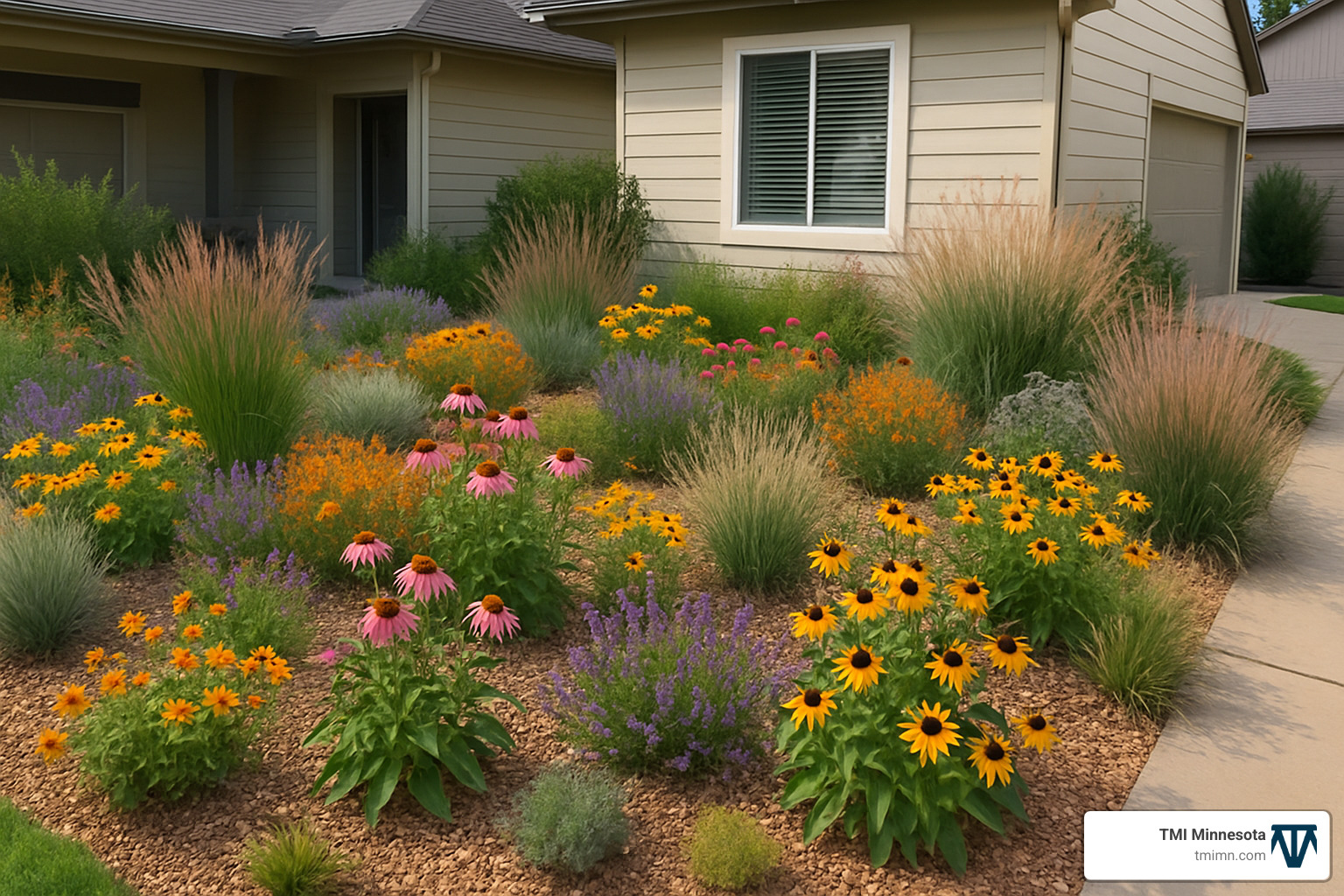
This is probably the biggest misconception I hear! Modern drought-resistant landscaping is anything but barren or desert-like (unless that’s the specific look you’re going for). Today’s water-wise gardens can be lush, colorful, and filled with interesting textures year-round.
With thoughtful design and plant selection, your drought-resistant landscape can actually offer more visual interest than a traditional lawn ever could. Imagine ornamental grasses swaying in the breeze, coneflowers attracting butterflies, and sedums providing pops of color from spring through fall.
As one garden designer with over 20 years of experience told me, “Drought-tolerant landscapes can be both visually stunning and low maintenance. The key is thoughtful plant selection and arrangement.” I couldn’t agree more—and I’ve seen the proof in hundreds of Minnesota yards we’ve transformed.
How much maintenance does a drought-resistant landscape require?
Let’s be honest—nothing outdoors is truly maintenance-free (despite what some may claim!). However, a well-designed drought-resistant landscape requires significantly less time and effort than traditional lawns.
Most of our clients report spending 50-60% less time on yard maintenance after converting to water-wise landscaping. The typical maintenance calendar includes occasional weeding (much less than with lawns), refreshing mulch once a year, some seasonal pruning, checking irrigation components, and dividing perennials every few years to keep them vigorous.
What you won’t be doing: weekly mowing, constant watering, applying chemical fertilizers, or treating lawn diseases. Imagine reclaiming your summer weekends! As one happy client recently told me, “I used to spend every Saturday pushing my mower. Now I actually get to sit in my garden and enjoy it.”
For those times when you do need professional help, our landscape renovation services can keep your drought-resistant landscape looking its best with minimal fuss.
Conclusion
Creating a drought-resistant landscape is one of the most impactful ways to conserve water while enhancing your property’s beauty and ecological value. By following the principles outlined in this guide, you can transform your Twin Cities yard into a sustainable, low-maintenance oasis that thrives even during the driest Minnesota summers.
Drought-resistant landscaping isn’t just about saving water—it’s about creating resilient outdoor spaces that connect us more deeply with nature while requiring fewer resources to maintain. The initial investment in design and installation pays dividends through years of reduced water bills, less maintenance time, and the satisfaction of contributing to environmental conservation.
At TMI Minnesota, we’re passionate about helping Twin Cities homeowners realize the full potential of their outdoor spaces through sustainable, water-wise design. Our landscape renovation services can transform your thirsty, high-maintenance yard into a drought-resistant paradise that’s beautiful in every season.
Ready to accept the beauty and benefits of drought-resistant landscaping? Contact our design experts today to schedule a consultation and take the first step toward a more sustainable, water-efficient outdoor space that you’ll enjoy for years to come.
Learn more about our services and how we can help you create the drought-resistant landscape of your dreams.