
Why Your Minnesota Garden Needs to Be Water-Wise Now
Drought tolerant garden design creates beautiful landscapes that thrive with minimal water. It uses strategic plant selection, efficient irrigation, and smart soil management to cut water use by up to 50% while maintaining year-round appeal.
Key principles of drought tolerant garden design:
- Plan and Design – Group plants by water needs (hydrozoning)
- Improve Soil – Add organic matter and mulch to retain moisture
- Select Appropriate Plants – Choose native and adapted species
- Limit Turf Areas – Replace thirsty lawns with alternatives
- Irrigate Efficiently – Water deeply but infrequently
- Use Mulch – Apply 2-4 inches to reduce evaporation
- Maintain Properly – Prune, weed, and check systems regularly
As a Minnesota homeowner, you know the challenge of a demanding lawn—constant mowing, watering, and high water bills. The EPA estimates that 15-25% of residential water goes to landscaping. Lawns are the #1 irrigated “crop” in the U.S., using more acreage than corn.
The good news is you don’t have to sacrifice beauty for conservation. A well-designed drought-tolerant garden reduces maintenance, creates a stunning year-round space, and can slash outdoor water use by half or more. This lowers utility bills, increases property value, and gives you more time to enjoy your yard.
The benefits extend beyond your water bill. These gardens prevent soil erosion, improve drainage, support local pollinators, and are more resilient to unpredictable weather. They free you from the cycle of fertilizers and weekend chores.
This guide explains the proven principles of water-wise landscaping, from planning to plant selection for Minnesota’s climate.
I’m Christopher Deanovic, Operations Leader at Task Masters (TMI Minnesota). We’ve helped hundreds of homeowners transform thirsty lawns into beautiful, resilient landscapes. Our team combines innovative design with practical water conservation to create low-maintenance outdoor spaces that improve your lifestyle.

Drought tolerant garden design terms at a glance:
The 7 Principles of Drought Tolerant Garden Design
Designing a garden that thrives with minimal water is often called xeriscaping. This method uses drought-tolerant planting to preserve water while creating a lush garden of native plants. A well-designed xeriscape can reduce maintenance by up to 50% compared to a traditional lawn, offering benefits like lower utility bills, increased biodiversity, and improved property value.
The primary strategies for drought tolerant garden design follow seven core principles for creating a resilient and beautiful landscape.

These principles are about smart landscape choices that work with nature. By applying these guidelines, we can create stunning gardens that are both environmentally responsible and a joy to experience. For more information, explore our Xeriscape Garden and other Sustainable Landscaping Techniques.
1. Planning Your Drought Tolerant Garden Design
A water-wise garden begins with a plan. We start with a site analysis of your Twin Cities yard to understand its unique conditions.
- Sun Exposure: We map sun and shade patterns to determine which plants will thrive.
- Soil Type: Knowing if your soil is sandy, clay, or loamy is vital for drainage and water retention.
- Hydrozoning: This is a key strategy where we group plants with similar water needs together. This allows for efficient irrigation, preventing over- or under-watering.
- Hardscape Planning: Existing or new patios, walkways, and walls can define garden spaces and reduce the irrigated area.
A comprehensive plan ensures every decision contributes to water efficiency and beauty. Our landscape designers create functional plans customized to your needs. Learn more about our approach to Landscape Design.
2. Preparing Your Soil and Using Mulch
Healthy soil is the foundation of a successful drought-tolerant garden.
- Soil Testing: We recommend a soil test to understand its composition and nutrient levels. This helps us amend it for the right balance of water retention and drainage. You can find local services in Minnesota or use resources like Texas A&M’s lab as an example of what to look for when you Get your soil tested.
- Amending Soil with Compost: Adding organic matter like compost is a game-changer. It increases water-holding capacity in sandy soils and improves drainage in heavy clay soils.
- Mulch Benefits: A 2-4 inch layer of mulch is your garden’s best friend. It suppresses weeds, retains moisture, moderates soil temperature, and prevents erosion.
- Mulch Types: We prefer organic mulches (bark, wood chips) that enrich the soil as they break down. Inorganic mulches (gravel, rock) also work, especially for plants that prefer dry conditions.
- Application: Apply mulch 2-4 inches deep, keeping it away from plant stems and tree trunks to prevent rot.
Proper soil prep and mulching are fundamental to minimizing water use. This is a key part of our Softscape Services Complete Guide.
3. Plant Selection for Your Drought Tolerant Garden Design
Choosing the right plants is the most exciting part of creating a drought tolerant garden design. In the Twin Cities, we select species that handle our climate while being water-wise.
- Native Plants: We highly recommend Minnesota native plants. They are adapted to our climate, require minimal intervention, and support local wildlife.
- Regional Climate Adaptation: We also look for plants suitable for USDA Hardiness Zones 3-5 that are known to be drought-tolerant.
- Plant Density: We arrange plantings so their mature size covers the soil. This “full coverage” approach shades the ground, keeping it cool and reducing evaporation.
- Mature Plant Size: Considering the mature size of plants prevents overcrowding and ensures a lush look without constant pruning.
- Contrasting Textures and Forms: We mix plants with varied foliage and structures for visual interest, like contrasting soft grasses with spiky yuccas.
- Year-Round Interest: We select plants that offer color, texture, or structure in all seasons, including evergreens or plants with interesting winter seed heads.
You can find native plants for your area through resources like the Lady Bird Johnson Wildflower Center. For more options, see our Xeriscape Garden Plants Complete Guide.
4. Limiting and Replacing Turf Areas
Traditional turfgrass is the biggest water user in most landscapes. Minimizing or replacing it is one of the most impactful steps in a drought tolerant garden design.
- Reducing Lawn Size: Evaluate how much lawn you truly need for play or pets, rather than maintaining vast, unused expanses.
- Turf Alternatives: There are many beautiful, low-maintenance alternatives to traditional turf that save time and money.
- Drought-Tolerant Groundcovers: Plants like creeping thyme or sedum create a lush carpet with far less water.
- Ornamental Grasses: Many ornamental grasses are drought-tolerant and add beautiful texture and movement.
- Permeable Hardscaping: Permeable pavers or gravel for paths and patios allow rainwater to soak into the soil.
- Artificial Turf: For a zero-water, no-mow lawn look, artificial turf is a popular option. Learn about the Artificial Grass Benefits for a low-maintenance solution.
Reducing your lawn’s footprint significantly cuts water use. While Minnesota doesn’t have state mandates like California’s turf replacement programs, it’s a growing trend due to its clear benefits.
5. Irrigating Efficiently
Even a drought-tolerant garden needs some water, especially when new. The key is to irrigate efficiently.
- Drip Irrigation and Soaker Hoses: These systems deliver water directly to the plant’s root zone, minimizing evaporation and runoff. They are the champions of water conservation. Our Landscape Irrigation Solutions can help you set up the perfect system.
- Smart Controllers: These devices use local weather data to adjust watering schedules automatically, saving significant water. Check the EPA WaterSense criteria for high-efficiency standards.
- Watering Deeply and Infrequently: Deep soakings encourage strong, deep root systems, making plants more resilient. This is a golden rule for drought-tolerant plants.
- Morning Watering: The best time to water is early morning to minimize evaporation and reduce disease risk.
By using these techniques, your drought tolerant garden design will thrive with just the right amount of water.
6. Integrating Water Catchment Systems
Using natural rainfall is a smart way to supplement your garden’s water needs and manage stormwater runoff in the Twin Cities.
- Rain Barrels: These simple systems collect rainwater from downspouts. This free, chemical-free water can be used for irrigation.
- Rain Gardens: These are shallow depressions with native, water-loving plants that capture and absorb runoff from roofs and driveways. They recharge groundwater and filter pollutants. Our expertise in Rain Garden Design MN can help you create one. For general principles, see The Oregon Rain Garden Guide.
- Swales and Berms: These subtle landscape features slow and spread stormwater, allowing it to soak into the ground.
The goal is to keep water on your property longer, turning rainfall into a valuable resource for your garden.
7. Maintaining Your Water-Wise Garden
A drought tolerant garden design is low-maintenance, not no-maintenance. Proper care ensures its long-term health.
- Establishment Watering: New plants need consistent watering for their first one to two years to develop deep root systems. We gradually reduce frequency as they mature.
- Weeding: Weeds compete for water and nutrients. Regular weeding is important, though mulch helps significantly.
- Pruning: Appropriate pruning maintains plant shape and health.
- Mowing Height for Turf: If you keep some lawn, mow it taller (2-3 inches) to encourage deeper, more resilient roots.
- Checking Irrigation Systems: Periodically check for leaks or clogs, which can waste hundreds of gallons of water.
Following these practices will keep your water-wise garden vibrant for years. For more tips, see this guide on Landscape Maintenance to Conserve Water.
Bringing Your Vision to Life: Plants and Hardscapes
Creating a drought tolerant garden design in the Twin Cities blends sustainability with stunning aesthetics. Our goal is to craft outdoor spaces that are beautiful, inviting, and reflective of your personal style.
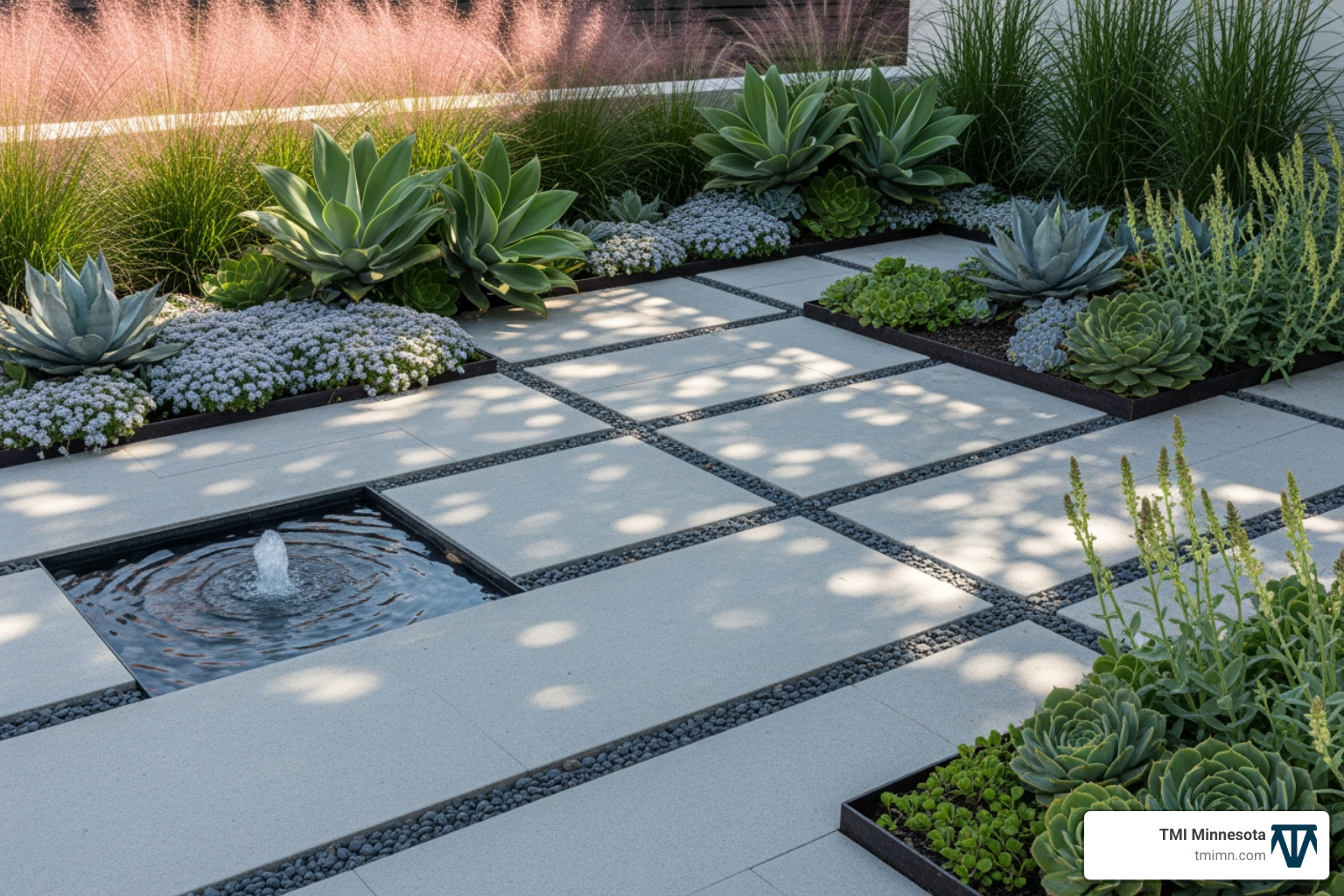
This balance of aesthetics and function is where our expertise shines. We believe a resilient garden should also be a captivating one. By thoughtfully combining plants and hardscaping, we create distinct outdoor rooms and add structure to your yard. For more inspiration, explore our Hardscape Design Services.
Plant Examples for Various Garden Styles
While we always select plants suited to Minnesota’s climate (USDA Zones 3-5), many drought-tolerant types offer great versatility. Remember to choose local cultivars adapted to our region:
- Mediterranean Style: Plants like Lavender, Rosemary, and certain Salvias thrive in sunny, well-drained spots, offering silvery foliage and fragrant blooms.
- Modern Succulent Gardens: Cold-hardy succulents like Hen and Chicks (Sempervivum) or Stonecrops (Sedum) add striking architectural form.
- Native Prairie Style: For a truly resilient Minnesota garden, native plants are unbeatable. Purple Coneflower (Echinacea), Black-Eyed Susan (Rudbeckia), and native grasses create a natural landscape that supports wildlife.
- Cottage Garden Plants: Many traditional favorites like Catmint (Nepeta) and Russian Sage (Perovskia) are surprisingly drought-tolerant once established.
The key is to research specific varieties for the Twin Cities. Our Xeriscape Garden Plants Complete Guide and guide to Minnesota Native Plants offer detailed profiles.
The Role of Hardscaping Elements
Hardscaping provides structure, function, and beauty in a drought tolerant garden design, reducing the need for water.
- Rocks and Boulders: These add texture and can define garden beds or create focal points. Explore Backyard Rock Garden Ideas for inspiration.
- Permeable Paving: For patios and walkways, permeable pavers allow rainwater to filter into the soil, reducing runoff. This is a smart choice for managing stormwater, especially for Permeable Paver Driveways.
- Gravel Paths: Gravel is a low-maintenance, permeable option for pathways and seating areas.
- Patios and Seating Areas: Functional living spaces that require no irrigation can be improved with pergolas for shade.
- Retaining Walls: These can create raised beds with excellent drainage or define different garden zones.
Integrating these elements creates a landscape that is both beautiful and inherently water-wise.
Balancing Beauty and Conservation
One of the biggest misconceptions about drought tolerant garden design is that it must look stark. This is simply not true. A well-designed water-wise garden in the Twin Cities can be incredibly lush, vibrant, and full of life.
- Debunking Myths: We challenge the idea that water conservation means sacrificing beauty. Our most beautiful gardens are often our most water-efficient.
- Creating a Lush Look: The secret is strategic plant selection and density. By choosing adapted plants and grouping them to cover the soil at maturity, we create a rich mix of foliage and flowers.
- Using Color and Texture: Drought-tolerant plants offer an astonishing array of colors and textures, from silvery Artemisia to vibrant Coneflowers. Combining them creates dynamic, interesting landscapes.
- Strategic Placement: Hydrozoning allows us to create lush, colorful sections while maintaining visual harmony and water efficiency.
Balancing conservation with a lush garden is about smart design. We focus on creating Beautiful Garden Landscaping that thrives, saves water, and brings you joy.
Frequently Asked Questions about Drought-Tolerant Gardening
We often hear common questions from homeowners in the Twin Cities about changing their landscapes into water-wise havens. Let’s address some of these.
What makes a plant “drought-tolerant”?
Drought-tolerant plants have evolved special adaptations to survive with minimal water.
- Deep Taproots: Extensive root systems reach deep into the soil to access stored moisture.
- Waxy or Hairy Leaves: These features reduce water loss by reflecting sunlight and trapping humidity.
- Water Storage: Succulents like Sedum have fleshy leaves or stems that store water.
- Small or Narrow Leaves: Less surface area means less water lost to evaporation.
- Dormancy Cycles: Some plants go dormant during dry spells and reappear when moisture returns. We prefer “water conservers” that maintain their appearance.
These adaptations make them perfect for a resilient drought tolerant garden design.
Can a drought-tolerant garden still look lush and green?
Absolutely! The “cactus and gravel” myth is outdated. Modern drought tolerant garden design emphasizes beauty and biodiversity.
- Layering Plants: We use a variety of shrubs, perennials, and groundcovers to create lush layers that fill the space and shade the soil.
- Variety of Textures and Colors: Drought-tolerant plants offer a rich palette of leaf shapes, colors, and bloom times for continuous visual appeal.
- Strategic Plant Choice: We select “water conservers” native to Minnesota that maintain their attractive foliage even during dry periods.
With careful planning and plant selection, your water-wise garden can be as lush as any traditional landscape, without the constant watering.
How much maintenance does a drought-tolerant garden require?
While no garden is “no maintenance,” a drought tolerant garden design significantly reduces work compared to a turf lawn.
- Lower Maintenance: The biggest time-saver is the drastic reduction in watering and mowing.
- Establishment Period: The first year or two requires more attention for watering and weeding to establish strong plants.
- Seasonal Tasks: You’ll still perform routine tasks like occasional weeding, seasonal pruning, and checking your irrigation system.
- Less Fertilizing: Native and adapted plants are more resistant to pests and require less fertilizer.
A drought-tolerant garden trades intensive weekly chores for more mindful, seasonal maintenance.
Create Your Resilient Outdoor Oasis
Embracing drought tolerant garden design is a smart, sustainable choice for Twin Cities homeowners. These landscapes transform properties by offering numerous benefits:
- Significant Water Savings: Reduce outdoor water use by 50% or more and lower utility bills.
- Less Work, More Enjoyment: Spend less time on mowing and watering and more time relaxing in your yard.
- Beautiful, Resilient Results: Create a stunning landscape that thrives through Minnesota’s seasons without looking stark.
- Sustainable Landscaping: Support local biodiversity and pollinators while reducing your carbon footprint.
At TMI Minnesota, we specialize in changing outdoor spaces with unique designs. Our team creates custom drought-tolerant landscapes suited to your home and our local environment. We’ll work with you to design a resilient, beautiful, and low-maintenance garden you’ll love for years.
Ready to start? Explore our Xeriscape Landscaping Ideas and let us help you create the garden of your dreams.