
Why Artificial Grass Landscaping is Changing Modern Outdoor Spaces
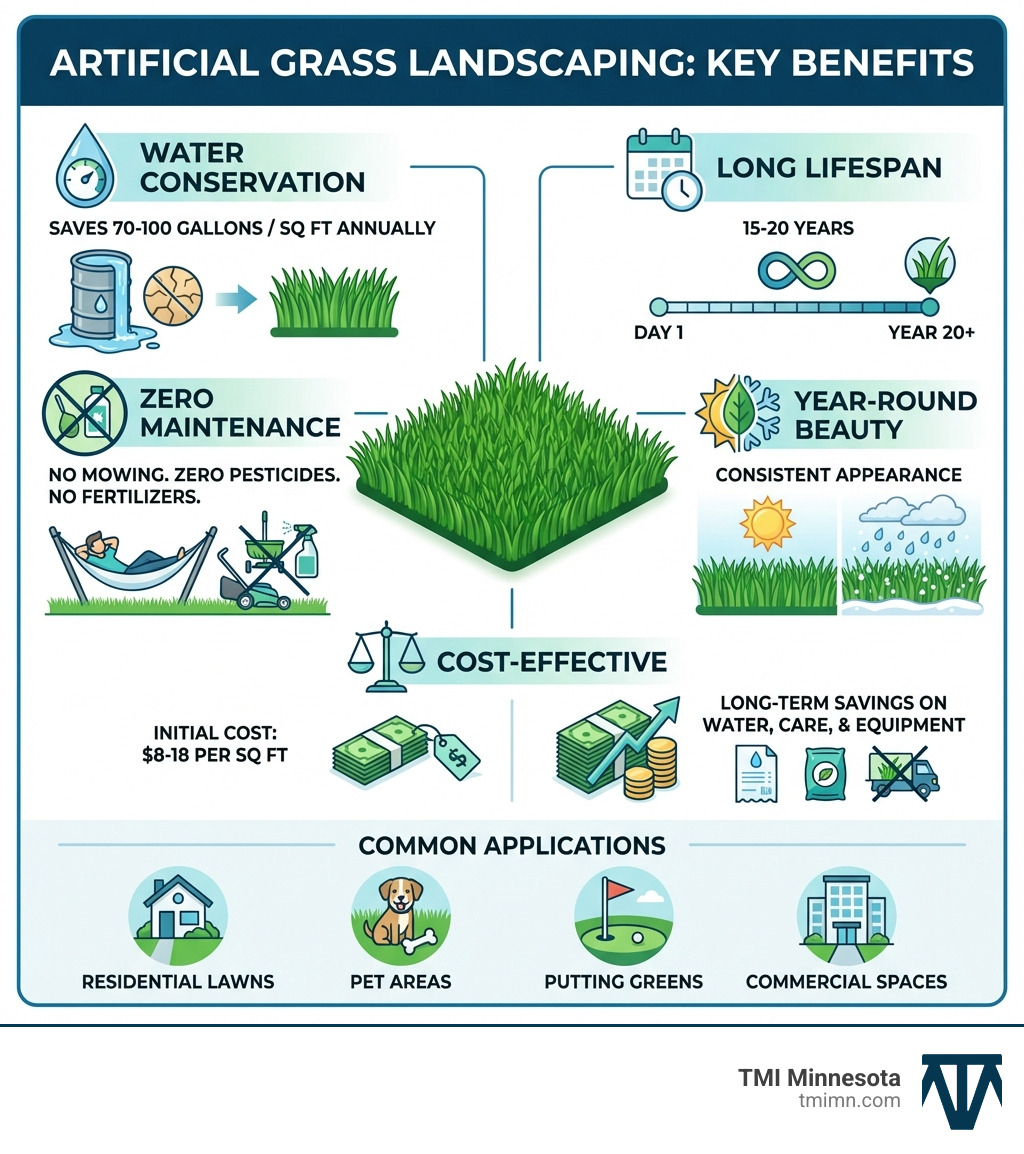
Artificial grass landscaping offers homeowners a durable, low-maintenance alternative to traditional lawns that saves water, eliminates the need for pesticides and fertilizers, and maintains a lush, green appearance year-round. Here’s what you need to know:
Key Benefits:
- Water Conservation – Saves 70-100 gallons of water per square foot annually
- Zero Maintenance – No mowing, fertilizing, or pesticide application required
- Long Lifespan – Quality synthetic turf lasts 15-20 years with proper care
- Year-Round Beauty – Stays green regardless of weather or season
- Cost-Effective – Higher upfront cost offset by long-term savings on water, maintenance, and lawn care equipment
Common Applications:
- Residential front and backyards
- Pet-friendly play areas
- Backyard putting greens
- Pool surrounds and rooftops
- Commercial landscaping
Tired of spending weekends mowing, watering, and fighting to keep your lawn green? You’re not alone. The global artificial grass market reached $4.7 billion in 2022 and continues growing at 7.2% annually as homeowners find the freedom that comes with synthetic turf.
Whether you’re dealing with heavy shade, water restrictions, muddy pet areas, or simply want more time for family gatherings instead of lawn care, artificial grass landscaping provides a practical solution. Modern synthetic turf mimics the look and feel of natural grass while eliminating the constant upkeep that traditional lawns demand.
The investment typically ranges from $8,000 to $18,000 for a 1,000-square-foot installation, but the long-term savings on water bills, fertilizers, pesticides, and lawn equipment quickly add up. More importantly, you gain a consistently beautiful outdoor space that’s ready for use in any weather.
As Christopher Deanovic, Operations Leader at Task Masters with experience in landscape design and outdoor changes, I’ve seen how artificial grass landscaping can revitalize outdoor spaces for families seeking modern, functional designs with minimal maintenance. Throughout this guide, I’ll walk you through everything you need to know to make an informed decision about synthetic turf for your home.
Handy artificial grass landscaping terms:
The Core Benefits of Artificial Grass Landscaping
Imagine a lush, vibrant green lawn all year round, without the endless chores of mowing, fertilizing, or watering. That’s not a dream; it’s the reality of artificial grass landscaping. Our clients in the Twin Cities consistently tell us how much they appreciate the change, not just aesthetically, but in terms of lifestyle and peace of mind.
One of the most compelling benefits of synthetic turf is its incredible contribution to water conservation. Natural grass demands significant irrigation, especially during dry spells. With artificial grass landscaping, you eliminate this need entirely, saving an average of 70-100 gallons of water per square foot per year. This is particularly crucial in areas where water conservation is a priority, allowing us to reduce our environmental footprint while still enjoying beautiful outdoor spaces. For more on the importance of efficient irrigation, you can check out scientific research on irrigation benefits.
Beyond water, the environmental advantages continue. Traditional lawns often require a cocktail of chemical fertilizers and pesticides to stay healthy and ward off pests. Artificial grass landscaping means saying goodbye to these harmful substances, which can seep into our groundwater and harm local ecosystems. This reduction in chemical use contributes to a healthier environment for our families, pets, and local wildlife. It also means no more noisy, polluting gas-powered mowers, leading to cleaner air and quieter weekends.
For those in our community who suffer from allergies, synthetic turf offers an allergen-free alternative. No pollen from grass means fewer sneezes and more enjoyment of your outdoor living area.
The long-term savings associated with artificial grass landscaping are substantial, making it a truly cost-effective solution despite a higher initial investment. Here’s a breakdown of how it stacks up:
- Reduced Water Bills: As mentioned, the elimination of irrigation significantly cuts down on monthly water expenses.
- No More Lawn Care Products: Forget buying fertilizers, weed killers, and pesticides. Your synthetic lawn doesn’t need them.
- Savings on Equipment: Mowers, trimmers, edgers, and their associated fuel and maintenance costs become a thing of the past.
- Less Professional Maintenance: While natural grass might require professional lawn care services, artificial grass landscaping drastically reduces this need.
- Increased Property Value: A consistently pristine, low-maintenance lawn can boost curb appeal and property value.
These benefits combine to create an outdoor space that is not only visually stunning but also practical, sustainable, and enjoyable. For a deeper dive into the advantages, explore our page on Artificial Grass Benefits.
Choosing the Right Materials for Artificial Grass Landscaping
Not all synthetic turf is created equal, and understanding the different materials and characteristics is key to selecting the perfect artificial grass landscaping solution for your home in the Twin Cities. The choice of yarn type, along with factors like pile height, density, and thatch, profoundly impacts the look, feel, and durability of your new lawn.
The three primary yarn types used in artificial grass are polyethylene, nylon, and polypropylene, often blended to achieve specific qualities:
- Polyethylene: This is the most popular choice for residential artificial grass landscaping. Why? Because it strikes a fantastic balance between softness, natural appearance, and durability. Polyethylene yarns are soft to the touch, making them comfortable for bare feet and ideal for family play areas. They hold up well to UV exposure and maintain their vibrant green color.
- Nylon: Known for its exceptional strength and resilience, nylon yarn is incredibly durable. It can withstand extreme temperatures and heavy foot traffic without losing its shape. However, nylon is typically stiffer and less soft than polyethylene, and more expensive. This makes it a prime candidate for high-traffic areas like sports fields or commercial applications where durability is paramount.
- Polypropylene: This material is the most cost-effective of the three. While versatile, polypropylene yarns are generally less durable and can be more susceptible to fading from UV exposure compared to polyethylene or nylon. It’s often used for low-traffic, decorative landscaping where budget is a primary concern, or as a component in blended turf products.
Beyond the yarn material, several other characteristics define the quality and appearance of artificial grass landscaping:
- Pile Height: This refers to the length of the grass blades. A longer pile height (e.g., 1.5 to 2 inches) often gives a more lush, natural, and luxurious look, making it excellent for residential lawns. Shorter pile heights (e.g., under 1 inch) are more durable and ideal for high-traffic areas or putting greens, but may appear less natural.
- Density: This is the number of blades per square inch. High-density turf looks fuller and more realistic, and it tends to be more resilient, capable of standing up to wear and tear. Lower density options are generally more budget-friendly.
- Face Weight: Measured in ounces per square yard, face weight indicates the amount of fiber used in the turf, excluding the backing. A higher face weight generally translates to a denser, more durable, and higher-quality product.
- Thatch Layer: Many modern artificial grasses include a “thatch layer” – a layer of shorter, often brown or tan, synthetic blades nestled beneath the primary green blades. This mimics the natural thatch found in real grass, adding to the realism and providing extra support to help the taller blades stand upright. This is particularly important for achieving a natural look, even in shaded areas where natural grass struggles, as discussed in our Best Turf for Shade guide.
When we design your artificial grass landscaping project, we consider all these factors to ensure the turf we select not only meets your aesthetic desires but also performs optimally for its intended use, creating a truly Modern Artificial Grass solution.
Versatile Applications in Artificial Grass Landscaping
One of the most exciting aspects of artificial grass landscaping is its incredible versatility. While many people first think of a traditional lawn replacement, the applications for synthetic turf extend far beyond the typical backyard. We’ve had the pleasure of changing a myriad of spaces across the Twin Cities, proving that artificial grass can improve almost any outdoor, or even indoor, environment.
For residential properties, the possibilities are endless. Beyond the standard front and backyards, consider using synthetic turf for:
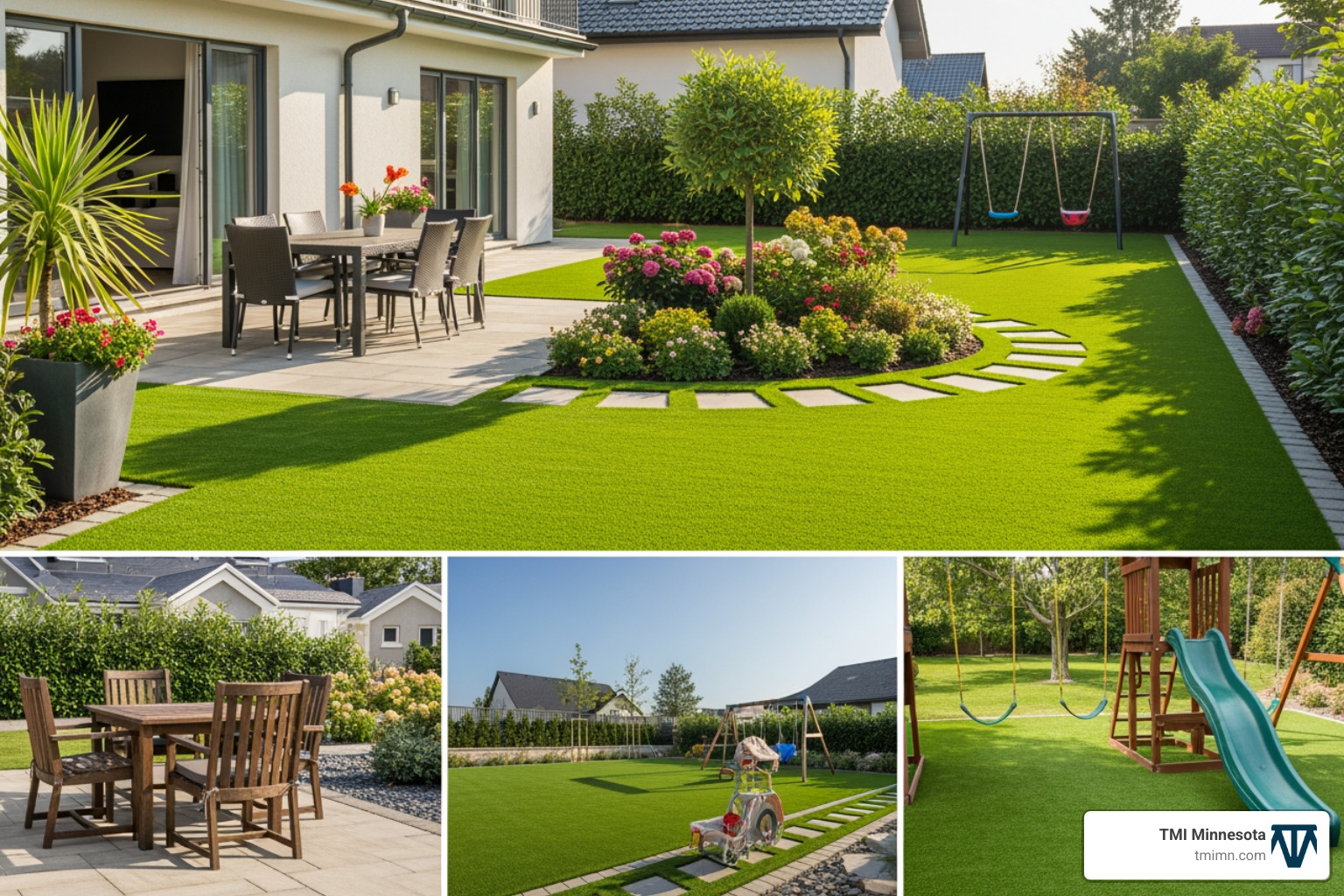
- Front Yard Landscaping: Make a lasting first impression with a perpetually perfect front lawn. Our Front Yard Synthetic Grass options ensure curb appeal year-round without the endless upkeep.
- Backyard Putting Greens: Golf enthusiasts, rejoice! Imagine practicing your short game anytime, right in your own backyard. Artificial grass provides a consistent, true-rolling surface that natural grass simply can’t match. Learn more about creating your personal golf oasis with Home Putting Green Turf.
- Pet-Friendly Zones: If you’re a pet owner, you know the struggle of muddy paws, worn-out patches, and lingering odors. Artificial grass landscaping is a game-changer. It’s durable, resistant to pet stains, and easy to clean. With proper drainage and infill, it effectively manages pet waste and odors, providing a clean, safe, and fun space for your furry friends.
- Play Areas for Kids: Safety is paramount when it comes to children’s play spaces. Artificial grass offers a soft, cushioned surface, significantly reducing the risk of injuries from falls. It’s also mud-free, meaning cleaner kids and fewer laundry loads! Explore our Safe Turf for Kids solutions for peace of mind.
- Pool Surrounds: No more tracking grass clippings into the pool! Synthetic turf around your pool offers a clean, non-slip surface that stays cool and comfortable underfoot.
- Rooftops and Balconies: For urban dwellers or those seeking to maximize every inch of their property, artificial grass can transform otherwise unused rooftop or balcony spaces into vibrant, green retreats. It’s lightweight, easy to install, and creates an instant oasis. Find the possibilities with Artificial Grass for Rooftops.
- Small Yard Landscaping Designs: Don’t let a small space limit your landscaping dreams. Artificial grass landscaping is perfect for maximizing the usability and aesthetic appeal of compact yards. We can incorporate it into clever designs that include vertical gardens, multi-functional seating, and distinct zones to create the illusion of more space. It’s a fantastic way to introduce greenery without overwhelming a small area, making it feel intimate and cozy rather than cramped.
- Hardscape Integration: We specialize in changing outdoor spaces with unique designs, often integrating hardscape elements like pavers and patios with softscape like artificial grass. This creates dynamic, low-maintenance outdoor living areas, as seen in our Synthetic Grass Landscaping Ideas. Whether it’s artificial turf between driveway pavers or block paving with artificial grass, the combinations are limitless.
From residential lawns to commercial properties, the adaptability of artificial grass means we can create beautiful, functional, and durable outdoor spaces for virtually any need.
Professional Installation vs. DIY: What to Expect
Once you’ve decided that artificial grass landscaping is the right choice for your Twin Cities home, the next big question is: should you install it yourself or hire professionals? Both options have their merits, and we’ve seen fantastic results from both, but understanding the commitment involved is crucial.
DIY installation can be a rewarding project for the handy homeowner. It offers the satisfaction of doing it yourself and, undoubtedly, can save on labor costs. Material costs for artificial turf typically range from $4.50 to $7.00 per square foot. If you’re tackling a smaller, straightforward area, and you have the time, tools, and a knack for precision, DIY might be appealing. We offer resources like our Fake Grass DIY guide to help you along.
However, artificial grass landscaping installation is more complex than simply rolling out a carpet. It involves meticulous ground preparation, precise cutting, and secure seaming to ensure a beautiful, long-lasting result. Common challenges include achieving a perfectly level and compacted base, ensuring proper drainage, and seamlessly joining multiple rolls of turf. Uneven ground can lead to puddles, while improper seaming can result in visible lines or lifting edges. Weather-related expansion and contraction also need to be accounted for, which can be tricky for an amateur.
Professional installation, on the other hand, brings expertise, efficiency, and peace of mind. Our team, with deep experience in hardscape and softscape installations, understands the nuances of base preparation, drainage, and turf placement specific to the Twin Cities climate. For a 1,000-square-foot area, the overall cost of artificial grass landscaping installation, including materials and labor, can range from $8,000 to $18,000. Professional setup and labor alone can add $4.00 to $13.00 per square foot to the material cost, making the total average cost around $13.00 per square foot. While this is a higher upfront cost, it often guarantees a flawless finish, optimal drainage, and longevity, backed by warranties. A small to medium-sized lawn installation can typically be completed in a couple of days by professionals.
Here’s a quick comparison to help you decide:
| Feature | DIY Installation | Professional Installation |
|---|---|---|
| Cost | Lower upfront (materials only) | Higher upfront (materials + labor) |
| Time Investment | Significant time required for preparation and install | Minimal time investment from homeowner |
| Skill & Tools | Requires specific tools, precision, and physical labor | Expertise, specialized tools, and experienced crew |
| Quality of Finish | Can vary greatly; prone to errors, visible seams | Consistent, seamless, professional finish |
| Durability/Longevity | May be compromised if not installed correctly | Optimized for maximum durability and lifespan |
| Warranty | Typically only on materials | Often includes installation warranty, plus material warranty |
| Drainage | Risk of issues if not properly engineered | Engineered for optimal drainage |
| Complexity of Design | Best for simple, rectangular areas | Handles complex shapes, slopes, and integrations with ease |
Regardless of the route you choose, the key steps involved in any artificial grass landscaping project remain consistent:
- Ground Preparation: This is arguably the most critical step. It involves clearing the area of existing grass, weeds, and debris, then excavating the soil to a depth of 2.5 to 4 inches.
- Aggregate Layer: A base layer of compacted crushed rock or gravel (typically 2-4 inches deep) is installed to provide stability and, crucially, ensure proper drainage. This layer is carefully leveled and compacted.
- Weed Barrier: A geotextile fabric is laid over the compacted aggregate to prevent weeds from growing through the turf and to help stabilize the base.
- Seaming Techniques: If your area requires multiple rolls of turf, they must be carefully cut, positioned, and seamed together using specialized adhesive and seaming tape to create an invisible transition.
- Trimming and Securing: The turf is cut to fit the exact contours of your space and secured around the perimeter and at seams using landscape anchors or galvanized nails.
- Infill Application: Finally, an infill material (like silica sand or specialized crumb rubber/zeolite for pet areas) is spread over the turf and brushed into the fibers. This helps the blades stand upright, adds weight to the turf, provides cushioning, and aids in drainage.
For a comprehensive guide, explore our Artificial Grass Installation page. While DIY is an option, for the best results and a truly worry-free landscape, entrusting your artificial grass landscaping to our professionals ensures a beautiful and enduring outdoor space.
Maintenance, Safety, and Environmental Sustainability
One of the greatest appeals of artificial grass landscaping is its low maintenance. While it’s not entirely “no maintenance,” it’s certainly a far cry from the weekly chores associated with natural grass. Keeping your synthetic turf looking pristine is surprisingly simple, freeing up your weekends for more enjoyable activities in the Twin Cities.
Maintenance Requirements for Artificial Grass:
- Routine Cleaning: Regularly remove leaves, debris, and pet waste. A leaf blower, rake (plastic or bamboo), or stiff broom works wonders. For a quick refresh, a simple rinse with a garden hose will wash away dust and pollen.
- Brushing: Over time, especially in high-traffic areas, the turf fibers can become matted. Periodically brushing against the grain with a stiff-bristled broom will help the blades stand upright, restoring their lush appearance. Our Artificial Grass Maintenance Complete Guide provides more in-depth tips.
- Pet Waste Management: For pet owners, quick cleanup is key. Pick up solid waste promptly. For urine, simply hose down the affected area to rinse it through the permeable backing. For persistent odors, specialized turf deodorizers or a solution of mild detergent and water can be used, followed by a thorough rinse. Proper drainage is crucial here, and our Artificial Grass Drainage Solutions Guide offers valuable insights.
- Stain Removal: Most spills can be blotted up with a cloth and rinsed with water. For tougher stains, a mild soap and water solution is usually sufficient. Avoid harsh chemicals or acidic cleaners, as they can damage the turf.
Safety Considerations:
- Heat Absorption: It’s true that artificial grass can absorb and retain more heat than natural grass, especially darker varieties in direct sunlight. Temperatures can reach 140 degrees Fahrenheit or more, about 50 degrees hotter than natural grass. However, there are effective ways to mitigate this. Using lighter-colored infill materials, selecting turf with lighter blade colors, and installing an irrigation system or simply hosing down the turf can significantly cool the surface on hot days. We also consider the best turf materials and designs for our Twin Cities climate, ensuring comfort and safety.
- Cushioning and Play Areas: As mentioned, artificial grass landscaping provides a soft, cushioned surface, which is a major safety benefit for children’s play areas, reducing the risk of injuries from falls.
- Non-Toxic and Allergen-Free: High-quality artificial grass is made from non-toxic, lead-free materials, making it safe for both pets and children. It also eliminates grass pollen, offering relief to allergy sufferers.
Environmental Sustainability:
While the production of artificial grass requires resources, its long-term environmental benefits are considerable, especially in the context of water conservation.
- Water Conservation: This is perhaps the most significant environmental advantage. By eliminating the need for irrigation, artificial grass landscaping drastically reduces water consumption, a precious resource in many regions.
- Reduced Chemical Use: No need for fertilizers, pesticides, or herbicides means fewer harmful chemicals entering our soil and water systems.
- No Emissions from Mowing: Replacing a natural lawn with artificial grass means no more gas-powered lawnmowers, reducing air and noise pollution.
- Recycled Materials: Some artificial grass products incorporate recycled materials, further enhancing their sustainability profile.
- Durability and Longevity: With a lifespan of 15-20 years or more, artificial grass avoids the frequent replacement cycles of other landscaping materials, reducing waste.
When choosing artificial grass landscaping, we help you select products that balance aesthetic appeal, functional needs, and environmental responsibility. Our Artificial Grass Buying Guide offers more insights into making informed decisions.
Frequently Asked Questions about Synthetic Turf
We often hear similar questions from homeowners in the Twin Cities considering artificial grass landscaping. Here are some of the most common inquiries, answered with our expert perspective:
How long does artificial grass last?
With proper care and maintenance, high-quality artificial grass landscaping is incredibly durable and can last between 15 to 20 years. Factors that influence its lifespan include the quality of the materials (like UV-resistant polyethylene yarns), the intensity of foot traffic it receives, and the quality of the initial installation. We prioritize using robust, UV-protected turf designed to withstand our Minnesota weather conditions, ensuring your investment stands the test of time.
Is artificial grass safe for pets and children?
Absolutely! Modern artificial grass landscaping is designed with safety in mind. Our products are non-toxic, lead-free, and often incorporate antimicrobial agents to prevent bacterial growth and odors, especially important for pet areas. For children, the soft, cushioned surface provides a safer play environment, significantly reducing the impact of falls compared to hard ground. We can even install additional padding underneath for extra cushioning in dedicated play zones. We believe in creating safe and enjoyable outdoor spaces for everyone, which is why we focus on Safe Turf for Kids solutions.
How does the cost compare to natural grass over time?
This is a fantastic question that gets to the heart of the long-term value of artificial grass landscaping. While the initial investment for artificial grass is higher than planting a natural lawn (material costs typically range from $4.50 to $7.00 per square foot, with professional installation adding $4.00 to $13.00 per square foot for a total of $8,000 to $18,000 for a 1,000-square-foot area), the long-term savings are where it truly shines. When you factor in the elimination of water bills for irrigation, the cost of fertilizers, pesticides, herbicides, lawnmower fuel and maintenance, and potentially professional lawn care services, artificial grass quickly becomes the more economical choice. Over its 15-20 year lifespan, the return on investment (ROI) is significant. Many of our clients find that the savings on water and maintenance alone make up for the initial cost within a few years. For a detailed breakdown, check out our Artificial Lawn Cost guide.
Conclusion
Artificial grass landscaping is more than just a trend; it’s a smart, sustainable, and beautiful solution for modern outdoor spaces in the Twin Cities. From changing tired, high-maintenance lawns into vibrant, evergreen havens to creating specialized zones for pets, play, or putting greens, the versatility and benefits are undeniable. We’ve explored how different materials impact durability and appearance, the intricacies of installation, and the simple maintenance that keeps your turf looking perfect for years.
At TMI Minnesota, we pride ourselves on being experts in changing outdoor spaces with unique designs, leveraging leading-edge products to lift your yard living. We understand the local climate and landscape, ensuring that your artificial grass landscaping project is not only aesthetically pleasing but also perfectly suited to your needs and built to last. We seamlessly integrate hardscape and softscape installations, creating cohesive and functional outdoor environments that you’ll love.
As we look to the future, it’s clear that artificial grass landscaping redefines what’s possible for our outdoor areas, offering a greener, more convenient way to enjoy our homes. We invite you to find how The Future is Green: How Artificial Grass Redefines Modern Outdoor Spaces can benefit you. Ready to start your journey towards a beautiful, low-maintenance landscape? Explore our premier synthetic turf solutions, including Foreverturf, and let us help you create the outdoor living space of your dreams.