
Transform Your Yard into a Delicious Oasis
Edible garden landscape ideas combine beauty with functionality, allowing you to grow food while maintaining an attractive outdoor space. If you’re looking to create your own edible landscape, here are some quick ideas to get started:
- Replace lawn areas with productive fruit trees, berry bushes, and vegetable beds
- Use colorful vegetables like rainbow chard and purple kale as ornamental features
- Create herb borders along walkways for fragrance and easy harvesting
- Install raised beds with attractive materials that complement your home’s architecture
- Plant fruit-bearing shrubs as natural privacy screens and hedges
Changing your yard into an edible landscape doesn’t mean sacrificing beauty for function. In fact, many edible plants offer stunning visual appeal through colorful foliage, interesting textures, and seasonal blooms. The movement toward edible landscaping has gained momentum as homeowners seek sustainable, productive alternatives to traditional lawns and ornamental gardens.
With proper planning, your edible landscape can yield fresh produce while impressing neighbors with its thoughtful design. The key is selecting plants that serve dual purposes—providing food while contributing to your yard’s overall aesthetic.
I’m Christopher Deanovic, Operations Leader at Task Masters, where I’ve helped countless Minnesota homeowners transform their outdoor spaces with thoughtful edible garden landscape ideas that blend seamlessly with existing hardscapes and home architecture.
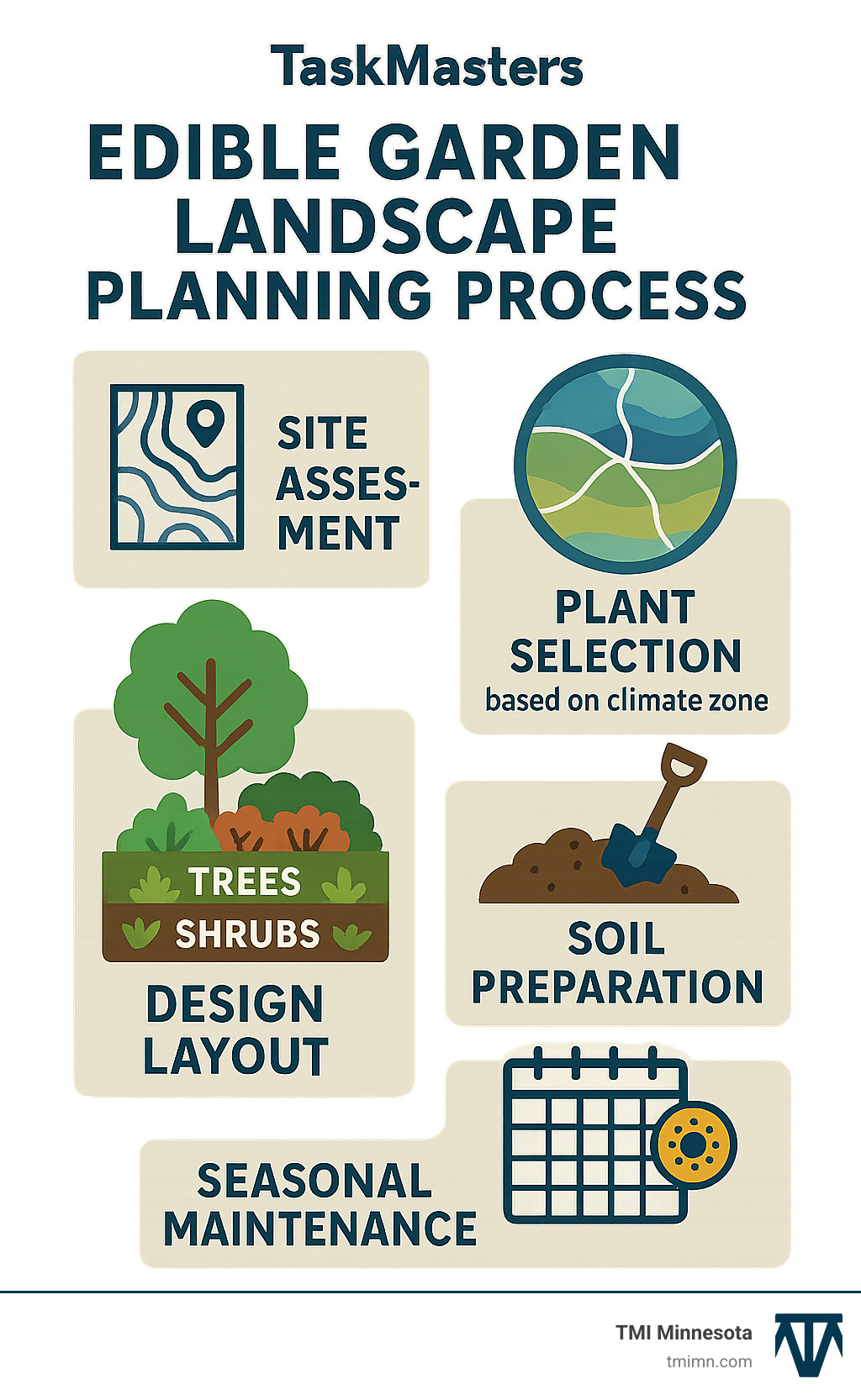
Edible garden landscape ideas word guide:
– Garden lighting installation
– Landscape irrigation solutions
– Outdoor privacy solutions
1. Edible Garden Landscape Ideas: Layered Food Forest Borders
There’s something magical about walking along the edge of your yard and plucking a sun-warmed berry or a fragrant herb. That’s the beauty of creating layered food forest borders—they transform ordinary boundaries into productive, beautiful living ecosystems.
Understanding Guild Planting
Nature doesn’t grow plants in tidy rows, and neither should your edible garden landscape ideas follow conventional gardening rules. Guild planting mimics natural forest ecosystems where plants support each other in harmony.
Think of your border as a community of plants working together. Your tallest elements—dwarf fruit trees like apples or plums—create a protective canopy. Beneath them, berry bushes like blueberries or currants form a shrub layer that adds structure and seasonal fruit. Perennial herbs and vegetables like asparagus and rhubarb fill the middle ground, while strawberries or creeping thyme create a living carpet that suppresses weeds. Don’t forget the vertical space—grape vines or runner beans can climb upward, making use of every inch of growing room.
My neighbor Jane transformed her fence line this way, and now instead of a plain border, she has what she calls her “snack walk” around the perimeter of her yard!

Perennial Power
The secret weapon in these borders? Perennials. Unlike their annual cousins that need replanting every spring, perennial edibles come back year after year with minimal fuss. Their deep roots mine nutrients from far below the soil surface, actually improving your garden over time.
For Minnesota gardens, I’ve seen incredible success with rhubarb plants that return for decades, asparagus beds that produce for 20+ years, and Egyptian walking onions that not only feed you but create their own little onion families each season. These plants offer structure and visual interest throughout the growing seasons, from spring’s first tender leaves to autumn’s fiery colors.
As Brie Arthur, a foodscaping pioneer, wisely puts it: “Think of your yard as a series of productive ecosystems rather than separate ornamental and vegetable areas.” This mindset shift is game-changing—suddenly, every border becomes an opportunity for beauty and harvest.
Mulch Rings and Nutrient Cycling
The unsung hero of any thriving food forest border is what happens at ground level. In natural forests, leaves fall, branches drop, and everything decomposes to feed the next generation of growth. Your edible garden landscape ideas should follow this perfect cycle.
Create mulch rings around your trees and shrubs using wood chips or fallen leaves (2-3 inches deep is perfect). This natural blanket suppresses weeds, retains moisture, and gradually breaks down to feed your soil. Each autumn, instead of raking leaves away, let them decompose in place—they’re free fertilizer!
As garden author Rosalind Creasy finded: “In my edible landscape, I spent 80% of my garden budget on organic materials for soil improvement.” Her investment paid off through healthier plants and bigger harvests—proof that feeding your soil is feeding yourself.
Our Softscape Services team can help you select the perfect plant combinations for your specific site conditions and establish the proper soil foundation for your food forest border. We’ll help you create a boundary that isn’t just beautiful—it’s delicious too!
2. Color-Packed Potager Paths
The French potager garden tradition offers a delightful marriage of beauty and bounty. By designing thoughtful paths lined with colorful vegetables, herbs, and edible flowers, you can create a garden that’s as pleasing to the eye as it is to the palate.
Rainbow Edibles as Landscape Stars
When I first introduced a client to the idea of rainbow Swiss chard as a border plant, they were skeptical. Three months later, those same ruby, gold, and pink stems had become the talk of the neighborhood! These vibrant edibles deserve center stage in your landscape:
Lacinato kale (also called dinosaur kale) offers deep blue-green, pebbled leaves that add dramatic texture to any garden bed, while delivering a surprisingly sweet flavor after our Minnesota frosts touch them. Pair them with the unexpected purple hues of purple cauliflower and cabbage to transform everyday vegetables into genuine garden showstoppers.
I’ve watched countless Twin Cities homeowners find the joy of these colorful edibles. As one client told me: “My neighbors thought I was crazy ripping out my front lawn for vegetables. But once my rainbow chard and purple kale matured, they started asking for garden tours—and recipe ideas!”
Creating Attractive Pathways
The heart of a potager garden lies in its pathways—these aren’t just functional spaces but invitations to explore and engage with your garden. Natural stone walkways create permanent, attractive paths that define different “rooms” within your garden space. For a warmer look, classic brick-lined beds provide clean lines that complement traditional home styles.
Many of our clients at TMI Minnesota have fallen in love with gravel paths softened with creeping thyme or chamomile. These herbs release their fragrance when walked upon, adding another sensory dimension to the garden experience. For a more budget-friendly option, wood chip paths offer an affordable, biodegradable solution that suppresses weeds while gradually building soil as they break down.
Scent Layering and Sensory Experience
A truly memorable potager garden engages all your senses, with particular attention to fragrance. Plant aromatic herbs like rosemary, lavender, and sage along path edges where brushing against them releases their scent. Position these fragrant plants near seating areas or garden entrances where their aromas can be fully appreciated.
Calendula edging brings bright orange and yellow blooms that attract beneficial insects while being entirely edible—their petals add a peppery note to salads or a beautiful garnish to summer dishes. Nasturtiums and borage flowers provide similar dual benefits with their vibrant colors and edible blossoms.
I’ve noticed that gardens incorporating scented plants create stronger emotional connections for their owners. There’s something deeply satisfying about walking through your garden after a summer rain when the herbs release their fragrance into the humid air.
Supporting Pollinators and Beneficial Insects
Scientific research on pollinator strips has shown that clustering flowering plants in groups of three or more of the same species significantly boosts their attractiveness to beneficial insects. This isn’t just good for the environment—it directly improves the yields of your fruiting crops through better pollination.

To support these helpful garden allies, allow herbs like dill, cilantro, and basil to flower occasionally rather than always harvesting them. Plant drifts of bee balm, echinacea, and calendula to create pollinator feeding stations. Most importantly, include early, mid, and late-season bloomers to provide continuous nectar sources throughout the growing season.
By creating these color-packed potager paths with attention to both beauty and biodiversity, you’ll build a garden that nourishes both body and soul—producing abundant harvests while bringing daily joy through its sensory richness. This approach to edible garden landscape ideas transforms the ordinary vegetable garden into an extraordinary outdoor living space.
3. Privacy Berry Hedges & Living Screens
Who says privacy screens can’t be delicious too? One of my favorite edible garden landscape ideas is creating living boundaries that do double-duty – giving you both seclusion and something scrumptious to harvest. Instead of plain old fences or ornamental hedges that just sit there looking pretty, edible hedges and screens actively contribute to your dinner table while beautifying your yard.
Blueberry Hedges: Beautiful Boundaries with Benefits
Blueberry bushes make absolutely wonderful hedges, and here’s why I love recommending them:
– They grow to a perfect privacy height of 4-6 feet (highbush varieties)
– They’re showstoppers all year round with spring flowers, summer berries, and fiery fall color
– Even in winter, their colorful stems add interest to the landscape
– They’re remarkably low-maintenance, needing minimal pruning
As Rosalind Creasy points out in her groundbreaking work on edible landscaping: “A blueberry hedge can yield about 12 pounds of berries annually where there was previously none.” That’s a lot of blueberry pancakes and muffins! For those of us braving Minnesota winters, cold-hardy varieties like ‘Northblue’, ‘Northcountry’, and ‘Patriot’ are your best friends.
When I help clients install blueberry hedges, I always remind them of a few key points: plant bushes 2-4 feet apart depending on the variety, prepare soil with acidic amendments (blueberries love that low pH), mulch with pine needles or wood chips to maintain acidity, and consider mixing varieties for both extended harvest and better cross-pollination.
Espalier Fruit Trees: Space-Saving Screens
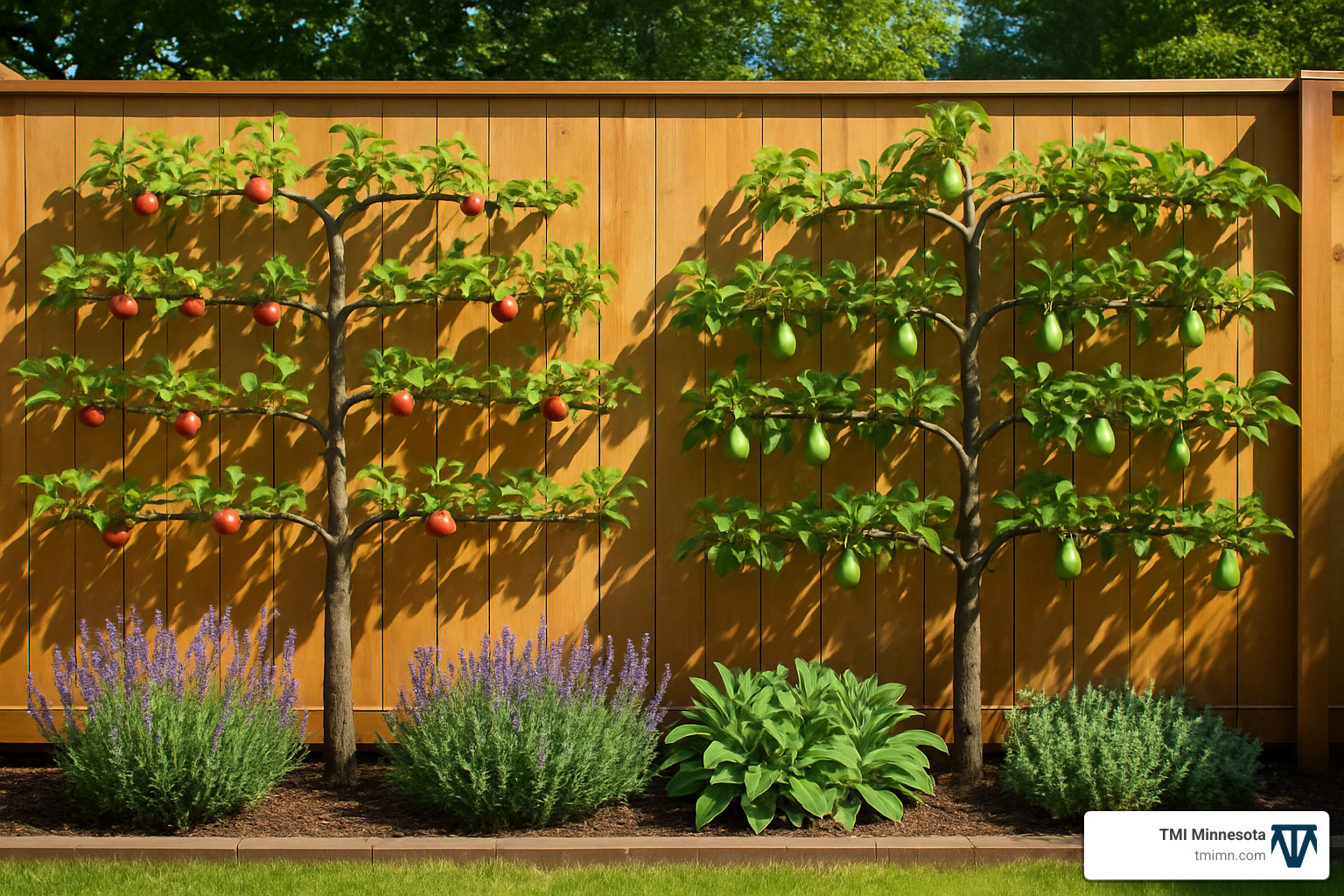
I’m always amazed by espaliered fruit trees – these living sculptures are not only beautiful but incredibly space-efficient. This ancient technique of training trees into flat patterns against walls or fences transforms ordinary fruit trees into extraordinary garden features.
One Minnesota gardener recently told me, “Espalier training has been much easier than expected. My espaliered apple trees produce mind-bendingly sweet fruit while taking up just inches of garden depth.” It’s true – you get all the benefits of a fruit tree without sacrificing your limited garden space.
The patterns can be as simple or intricate as you like. Traditional forms include the cordon (a single horizontal branch with vertical fruiting spurs), candelabra (central trunk with symmetrical horizontal branches), fan (branches radiating from a central point), and the stunning Belgian fence (interwoven diagonal branches creating a living lattice).
Apples and pears are the classics for espalier, but with proper selection of cold-hardy varieties, we’ve had success with cherries, plums, and even the occasional peach here in Minnesota. Through our Tree Planting Services, we can install these living artworks complete with the proper support structures they need.
Currant and Gooseberry Walls
For shorter privacy screens or to replace those boring foundation shrubs, I’m a huge fan of the European tradition of currant and gooseberry hedges. These unsung heroes of the berry world reach a manageable 3-5 feet tall and wide, tolerate partial shade (a rarity among fruits!), and produce buckets of berries perfect for jams, jellies, and snacking.
The best part? Their attractive form and foliage look good year-round, not just during fruiting season. Red, black, and white currants, along with gooseberries, are particularly well-suited to our Minnesota climate. I typically suggest planting them 3-4 feet apart for a continuous hedge, creating a foundation planting that’s both beautiful and bountiful.
Deer-Resistant Herb Borders
If deer are frequent visitors to your yard, aromatic herbs can form protective borders around more vulnerable edibles. Deer generally avoid strongly scented plants, making herbs like lavender, rosemary, various sage varieties, and thyme excellent choices for the perimeter of your edible landscape.
“Perennials like chives, lavender, mint, and oregano can deter deer while adding culinary value to your landscape,” explains permaculture designer Brie Arthur, author of “Edible Landscaping.” I’ve seen this strategy work wonders in rural Minnesota properties where deer pressure is high.
Combining Strategies for Maximum Impact
For truly effective living screens, I often recommend layering multiple edible elements. Think of it as a living privacy wall with taller fruit trees (standard or espaliered) at the back, berry bushes forming the middle layer, perennial herbs creating a fragrant front border, and edible groundcovers like strawberries or creeping thyme carpeting the ground beneath.
This approach creates a dense, productive boundary that not only shields your outdoor living space from prying eyes but provides a continuous harvest from spring through fall. I love watching clients’ faces when they realize those unused boundary areas of their yard can become some of the most valuable and productive parts of their landscape.
At TMI Minnesota, we’ve transformed many ordinary property lines into extraordinary edible borders that keep on giving, season after season. It’s one of the most satisfying changes we help our clients achieve.
4. Sculptural Raised Beds & Hardscape Accents
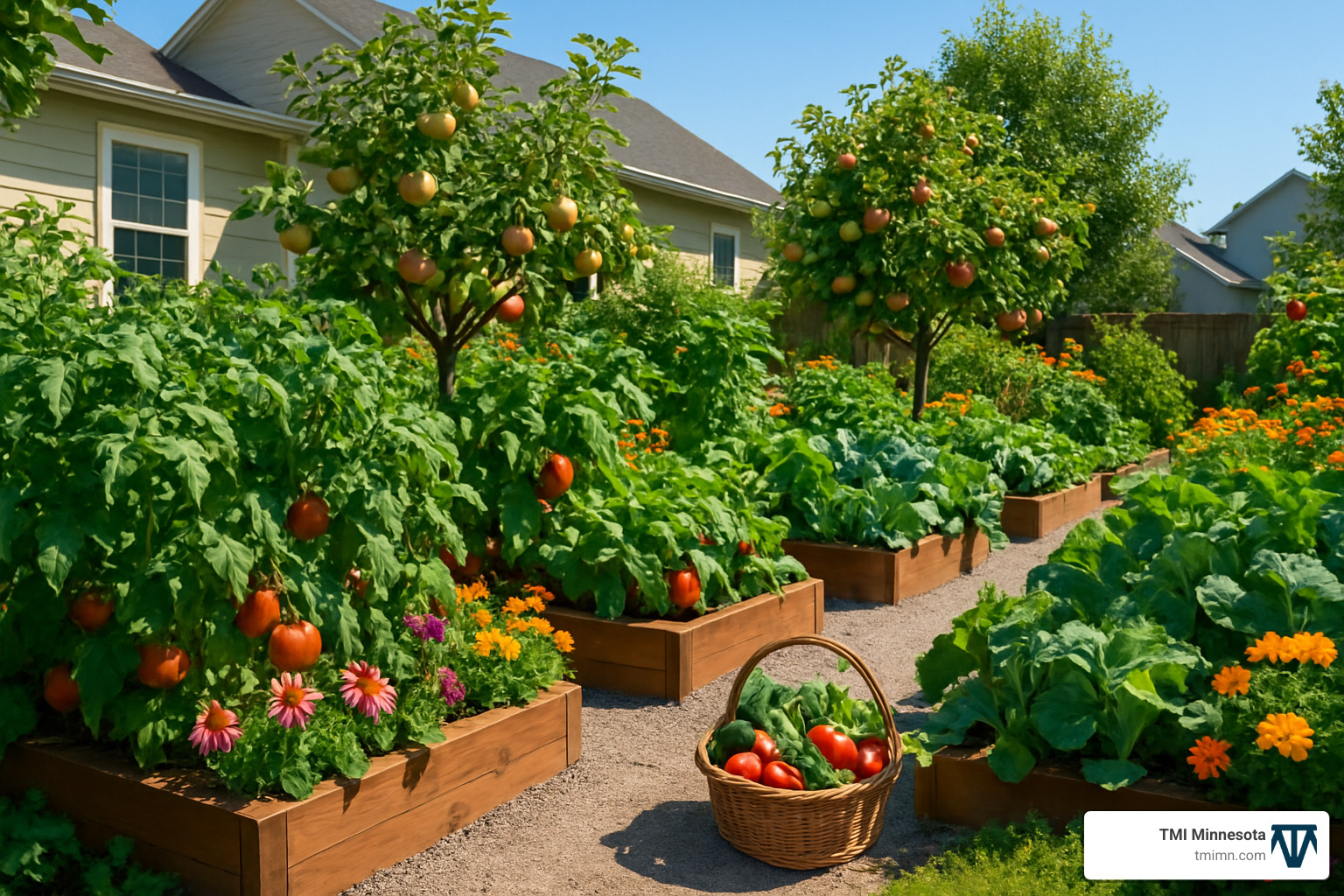
Raised beds are the unsung heroes of edible landscapes. They’re not just practical growing spaces—they can be stunning design elements that lift your entire yard. When thoughtfully created, these functional features become sculptural additions that make your garden both beautiful and bountiful.
Contemporary Materials for Modern Aesthetics
Gone are the days of plain wooden boxes! Today’s raised beds offer exciting design possibilities:
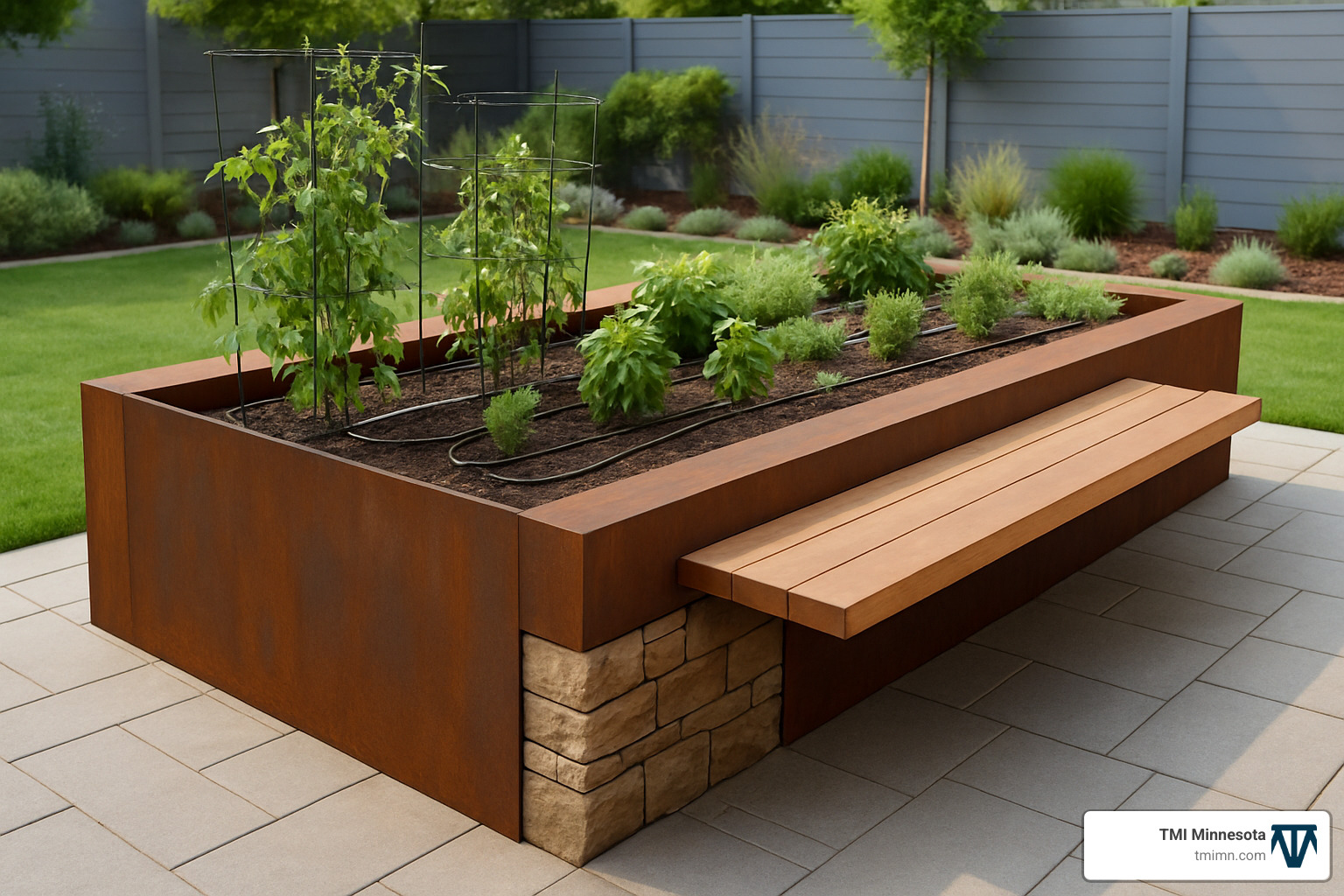
Corten steel beds have become a favorite in Minnesota gardens, and I can see why. They develop this gorgeous rust patina that looks amazing against green foliage while complementing modern home architecture. I’ve watched clients fall in love with the clean lines and warm color that make these beds true focal points.
Gabion walls (those wire cages filled with stones) create textural interest while doubling as casual seating spots. They’re perfect for contemporary landscapes and allow for excellent drainage.
Concrete block might sound boring, but it’s amazingly versatile and budget-friendly. We’ve helped homeowners stack, stagger, and arrange blocks in patterns that complement their home’s style while creating durable beds that withstand our harsh Minnesota winters.
Stone veneer applied over block walls creates raised beds with timeless appeal. These look particularly nice in traditional landscapes where you want the edible garden to blend seamlessly with existing hardscapes.
“The materials you choose should have a conversation with your home’s architecture,” I always tell clients. “In the Twin Cities, we need materials that can handle our freeze-thaw cycles while making your garden distinctly yours.”
Keyhole Gardens: Function Meets Form
I’m particularly fond of keyhole gardens—these unique circular raised beds have a notch cut into one side, creating easy access to all plants. The real magic happens in the center, where a compost column acts as both fertilizer source and irrigation system.
At 3-4 feet tall, these gardens minimize bending and create a striking visual element in your landscape. While they were originally designed for arid regions, we’ve adapted them beautifully for Minnesota gardens. Their distinctive circular shape creates wonderful contrast when placed among traditional rectangular beds.
Seat-Height Walls and Accessibility
One of my favorite design tricks is building raised beds at 18-24 inches tall. This thoughtful height creates:
Casual seating throughout your garden (perfect for taking a break while harvesting)
Less bending and stooping during planting and weeding
Better accessibility for gardeners with mobility challenges
Warmer soil temperatures that extend your growing season
For comfort, we often cap these walls with smooth stone or wood that’s pleasant to sit on. Strategically placing these seat-height walls creates natural gathering spots throughout your edible landscape—perfect for Minnesota’s precious outdoor months.
Soil Building for Long-Term Success
The true magic of raised beds happens beneath the surface. Quality soil creates the foundation for successful edible garden landscape ideas:
I always recommend filling new beds with a mix of 75% quality topsoil and 25% compost. This balance provides structure while feeding your plants. Adding mineral amendments based on soil tests helps address any specific deficiencies in your garden.
Annual top-dressing with 1-2 inches of compost keeps your soil healthy year after year. And remember—avoid stepping on bed soil! One of the biggest advantages of raised beds is preventing soil compaction.
As garden author Joe Gardener wisely notes: “In my landscape, I spent 80% of my garden budget on organic materials for soil improvement. The investment pays dividends through healthier plants and higher yields.” I couldn’t agree more—soil is where garden success begins.
Integrated Irrigation Solutions
Minnesota summers can be unpredictable, so efficient watering systems are essential for thriving edible landscapes:
Drip irrigation has been a game-changer for my clients. These systems deliver water directly to plant roots with minimal waste—perfect for our increasingly hot summers.
Ollas (buried clay pots) provide slow-release underground irrigation that many of my clients love for their simplicity and effectiveness.
Wicking beds create self-watering systems that draw moisture from a reservoir, reducing watering frequency dramatically.
Rainwater harvesting systems capture free water from the sky, reducing dependence on municipal supplies and connecting your garden to natural cycles.
Our Backyard Oasis Designs incorporate these water-wise technologies to ensure your edible landscape thrives even during dry spells.
Comparing Annual vs. Perennial Care in Raised Beds
| Aspect | Annual Vegetables | Perennial Edibles |
|---|---|---|
| Soil Preparation | Yearly tilling or turning | Minimal disturbance after establishment |
| Planting Effort | Annual replanting required | One-time planting with occasional division |
| Water Needs | Generally higher and more consistent | Often lower once established |
| Fertilization | Regular feeding throughout season | Annual top-dressing usually sufficient |
| Winter Preparation | Complete cleanup in fall | Simple cutback of dead foliage |
| Design Impact | Seasonal gaps in winter/early spring | Year-round structure and presence |
| Yield Timeline | Full production in first year | Increasing yields over 3-5 years |
By combining beautiful raised beds with appropriate plant selections and smart watering systems, you create garden spaces that are as stunning as they are productive. These hardscape elements provide the framework that transforms your edible garden landscape ideas from merely functional to truly extraordinary—something we take pride in helping our Minnesota clients achieve every day.
5. Vertical Veggie Walls & Trellis Art
When garden space is at a premium in Twin Cities neighborhoods, looking up can be the perfect solution. Vertical gardening transforms ordinary walls, fences, and unused vertical surfaces into living, edible masterpieces that produce food while delighting the eye.
Vine Crops as Living Tapestries
The right climbing edibles can transform plain surfaces into lush, productive displays. I’ve seen countless Minnesota gardens come alive with the vibrant textures and colors of edible vines.
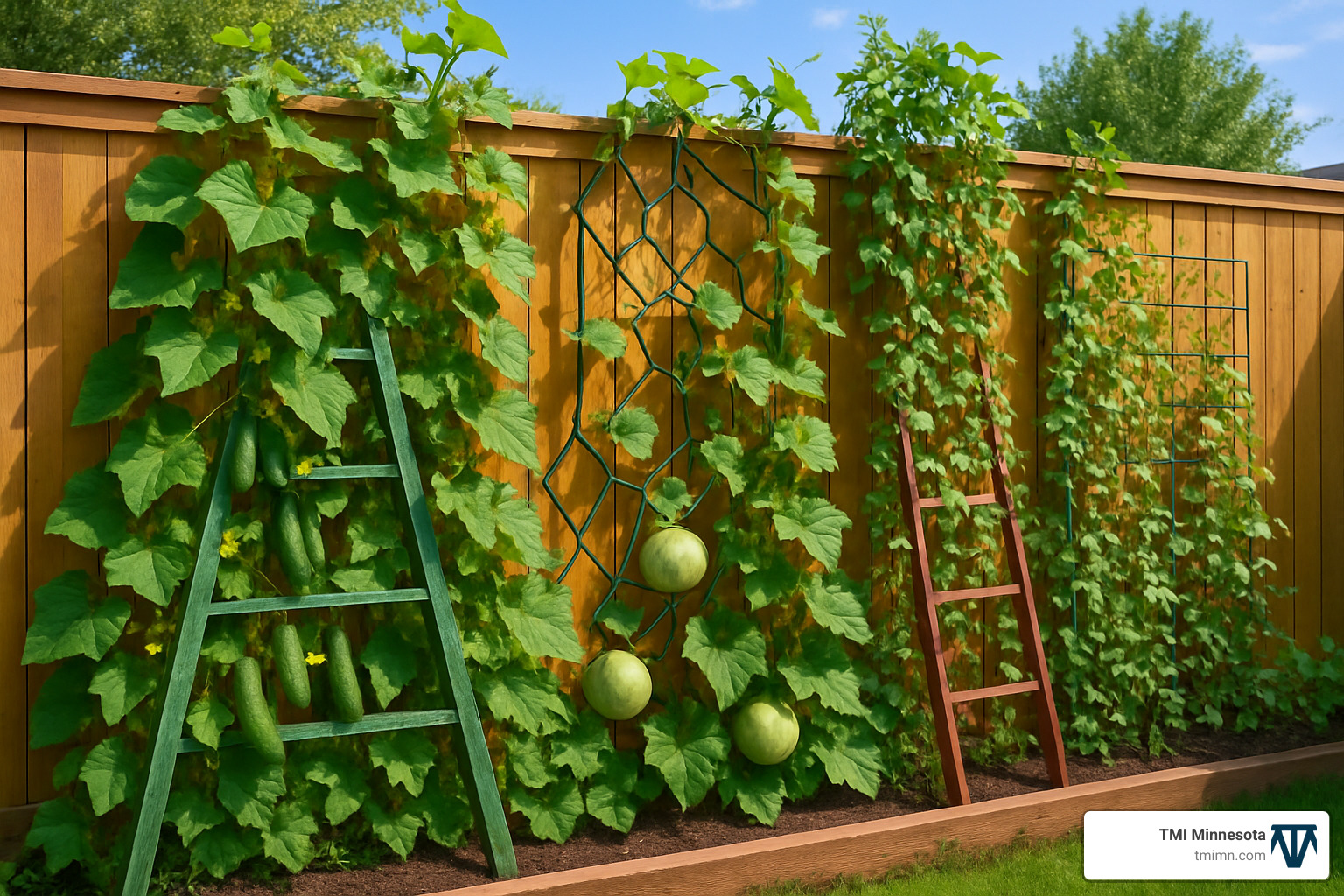
Cucumbers create a quick-growing screen with their bright yellow star-shaped flowers and dangling fruits. Their tendrils naturally grab onto supports, making them perfect beginner vertical crops. Pole beans offer even more visual interest, with varieties sporting green, purple, yellow, or speckled pods that hang like ornaments against the foliage.
The delicate tendrils and sweet flowers of peas create a more refined vertical display, perfect for visible areas near patios or entrances. For the adventurous gardener, even small melons like the Minnesota Midget cantaloupe (developed right here for our northern climate) can climb with proper support.
“Last summer, I trained Sugar Baby watermelons up my pergola,” shares Bloomington resident Marla Jenkins. “Visitors couldn’t believe their eyes when they spotted watermelons hanging overhead! I supported each fruit with a small mesh bag as it grew, creating what my grandkids called ‘fruit lanterns’ above our dining area.”
Creative Trellis Designs
The framework supporting your vertical garden can be as artistic as the plants themselves. At TMI Minnesota, we’ve helped homeowners create stunning structures that stand as garden focal points even in winter.
Living willow structures bring a touch of whimsy, with woven willow whips that actually root and grow into the soil, creating dynamic, evolving supports. For those who love upcycling, repurposed materials like vintage ladders, old bed frames, or bicycle wheels can become conversation-starting trellises with character and history.
For modern landscapes, we often design geometric panels with clean lines and distinctive patterns that complement contemporary architecture. These custom-built wooden or metal frames create strong visual impact while supporting productive vines.
One of our most requested designs combines function with drama: cattle panel arches. These inexpensive but incredibly sturdy galvanized panels can be bent into walkway tunnels that support heavy crops while creating magical passageways through the garden. Imagine walking beneath a canopy of ripening grapes or sweet peas—a multisensory experience that transforms an ordinary pathway into something extraordinary.
Espalier Apples: Living Architecture
The ancient art of espalier deserves special attention for its ability to transform fruit trees into living sculptures. While we touched on espalier in the privacy screen section, the artistic potential goes much deeper.
Horizontal cordons create clean, architectural lines perfect for property boundaries or along driveways. The Belgian fence pattern, with diagonal branches woven together in a living lattice, makes a stunning backdrop for patios or garden rooms. For formal gardens, the candelabra form brings symmetry and elegance, while the palmette verrier fan shape creates a focal point worthy of a garden centerpiece.
“Many people assume espalier is difficult, but it’s really just thoughtful pruning over time,” explains Christopher Deanovic from TMI Minnesota. “We start with dwarf rootstock apples like ‘Honeycrisp’ or ‘Zestar!’—both Minnesota-developed varieties—and train them gradually. The results are both beautiful and incredibly productive, often yielding more fruit per square foot than standard trees.”
Grape Pergolas: Productive Shade Structures
Nothing transforms an outdoor space quite like a grape-covered pergola. These living roofs create inviting outdoor rooms while producing bountiful harvests.
Cold-hardy varieties like ‘Frontenac’, ‘Marquette’, and ‘St. Croix’ (all developed at the University of Minnesota) thrive in our climate while providing the perfect amount of dappled shade during summer months. As the seasons progress, grape pergolas offer changing interest—from the bright green of spring growth to the heavy clusters of summer fruit and finally the fiery colors of fall foliage.
“Our grape pergola has become the heart of our outdoor living space,” shares St. Paul homeowner Diane Kerrigan. “We gather under it for family meals from spring through fall, and I love how it connects us to the rhythm of the seasons. Plus, my grandkids have developed a new appreciation for fresh fruit after helping harvest ‘their’ grapes each year.”
Micro-Plots: Maximizing Small Spaces
Even the smallest spaces can become productive with micro-plot techniques. Tower gardens stack plants vertically, allowing apartment dwellers to grow strawberries, lettuce, and herbs in minimal floor space. Gutter gardens mounted on walls or fences create linear growing spaces perfect for greens and herbs, while pocket planters turn blank walls into productive tapestries.
For decks and patios, tiered planters create multiple growing levels in the footprint of a single container. These systems are particularly effective for herbs, strawberries, and leafy greens—crops that don’t need deep soil but benefit from good air circulation.
Our Softscaping and Hardscaping services include designing custom vertical solutions custom to your specific space constraints and aesthetic preferences. For those who want to dive deeper into edible landscaping principles, this course guides you through creating an edible garden you love.
Living Fences: Functional Boundaries
Perhaps the ultimate expression of vertical edible garden landscape ideas is the living fence—boundaries created entirely from productive plants.
Raspberry and blackberry hedgerows (especially thornless varieties) create productive barriers that define spaces while providing berries for months. Connected espaliered fruit trees form continuous fruiting walls that offer both privacy and abundant harvests.
For seasonal screens, nothing beats a row of towering sunflowers, which provide seeds for humans and wildlife alike. Children especially love bean teepees arranged in rows to create magical hideaways that later yield handfuls of fresh beans.
These living fences embody the core principle of edible landscaping: making every element in your yard serve multiple functions—defining space, producing food, creating habitat, and adding beauty—all while expressing your unique personality and connecting you more deeply to your outdoor environment.
Frequently Asked Questions about Edible Garden Landscape Ideas
Must-Have Tools for “Edible garden landscape ideas”
After years of helping Twin Cities gardeners transform their yards, I’ve found that having the right tools makes all the difference when creating your edible landscape. These aren’t just nice-to-haves—they’re genuine game-changers that will save your back, your time, and your plants!
Quality bypass pruners quickly become an extension of your hand in an edible garden. I recommend keeping two pairs: one for your herbaceous plants and another for woody stems. Look for models with replaceable parts that you can sharpen yourself—your future self will thank you when you’re still using the same trusty pruners ten years from now.
The humble soil knife might be the most versatile tool you’ll own. Part trowel, part knife, part weeder, and even part measuring device, this multi-tasker slices through tough roots with its serrated edge while the smooth side gently lifts root vegetables without damage. I’ve seen seasoned gardeners almost get misty-eyed talking about their favorite soil knife!
When Rosalind Creasy, the godmother of edible landscaping, shared that she uses rolling plant dollies to “reposition heavy pots into sunlit locations,” I immediately added them to my essential list. These simple platforms with wheels save your back while allowing you to chase the sun with heavy containers throughout our Minnesota growing season.
A good compost fork with closely spaced tines makes turning your compost pile feel less like a workout and more like a satisfying garden ritual. Since healthy soil forms the foundation of every successful edible landscape, investing in quality composting tools pays delicious dividends for years.
Beautiful, functional harvest baskets transform picking produce from a chore into a pleasure. I love designs that allow for rinsing right in the basket—perfect for those sun-warmed cherry tomatoes you can’t resist eating straight from the vine!
For maintaining fruit trees and berry bushes, a folding pruning saw provides clean cuts that heal quickly without damaging surrounding branches. And finally, a long-handled weeder helps maintain your landscape’s beautiful appearance without requiring you to crawl through beds on hands and knees.
Color & Texture Tips for “Edible garden landscape ideas”
Creating a visually stunning edible landscape isn’t just about growing food—it’s about crafting a space that delights the eye while filling your plate. The secret? Thoughtful combinations of colors and textures that create visual interest throughout the seasons.
Foliage contrast provides the foundation of your design. Try pairing the bold, dramatic leaves of rhubarb with the delicate, feathery fronds of dill or fennel. The smooth, waxy surface of cabbage creates a beautiful textural counterpoint to the deeply crinkled leaves of dinosaur kale nearby. As designer Brie Arthur wisely notes, “When selecting edible plants, consider their form first—just as you would ornamentals. The size, shape, and texture of leaves creates the foundation of your design.”
Planning for bloom sequencing ensures your garden offers continuous visual interest. Early spring might showcase the delicate white blossoms of apple trees and the purple pom-poms of chive flowers, while late spring brings strawberry and blueberry blooms. Summer explodes with bright yellow squash blossoms and the star-shaped blue flowers of borage, while fall ushers in the cone-shaped blooms of echinacea and the dramatic height of sunflowers.
I love using color echoing to create harmony across different garden areas. The deep purple stems of rhubarb can visually connect to purple-flowered chives and the rich burgundy leaves of ‘Dark Opal’ basil, creating a cohesive thread that ties your landscape together even when plants are separated by distance.
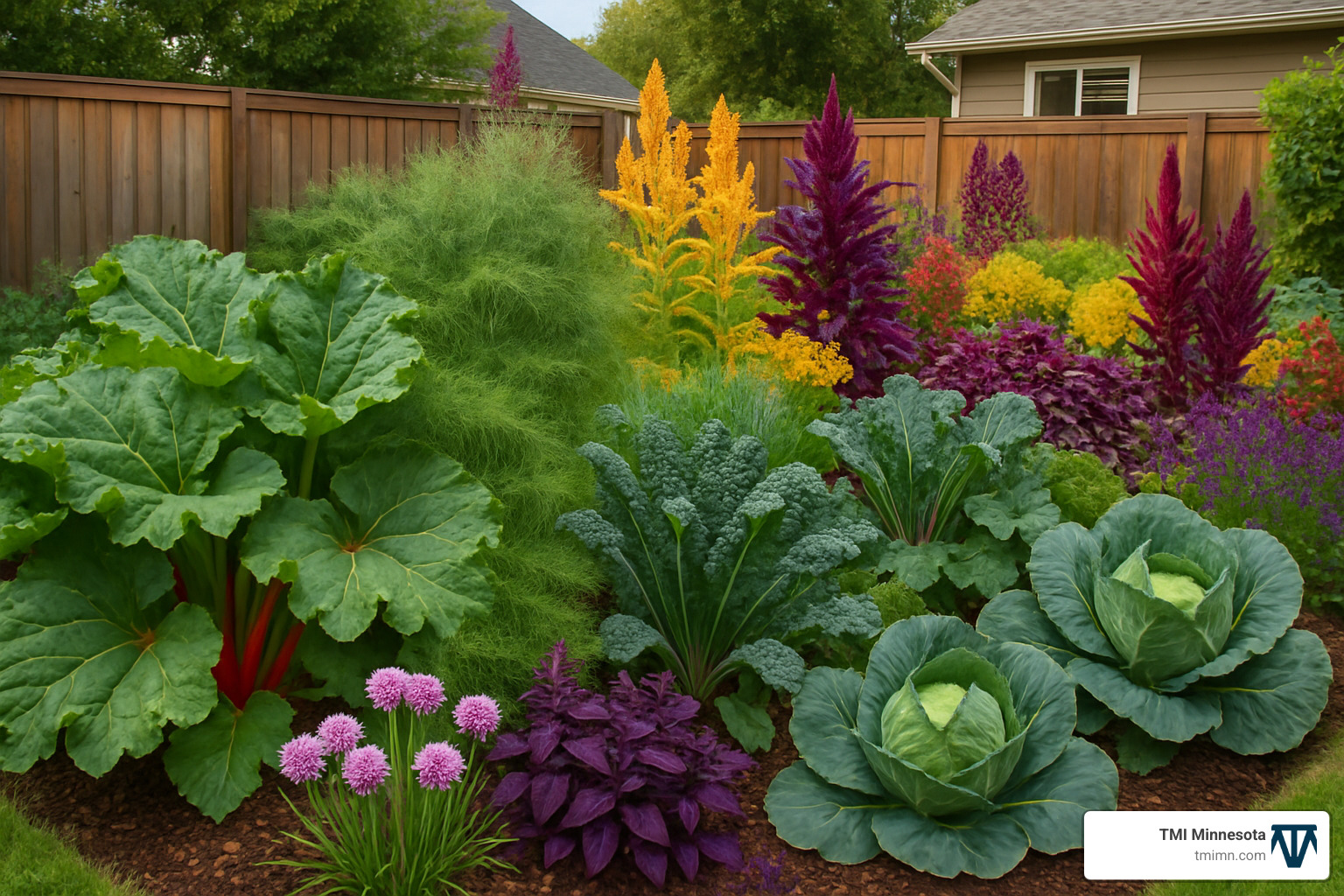
Don’t overlook ornamental grains in your edible landscape planning. These often-forgotten edibles provide dramatic height, captivating movement in the breeze, and unique textures unlike anything else in your garden. Amaranth’s dramatic plumes in burgundy or gold, quinoa’s colorful seedheads ranging from golden to hot pink, and ornamental millet varieties offer stunning vertical elements while attracting birds and providing nutritious harvests.
Thoughtful seasonal color planning ensures your landscape remains beautiful year-round. Spring might feature purple-tipped garlic shoots emerging among fruit trees, summer brings herb flowers near pathways where their fragrance can be appreciated, fall showcases the fiery foliage of blueberry bushes, and winter reveals the architectural red stems of raspberry canes against the snow.
By weaving together these elements of color and texture throughout your edible garden landscape, you’ll create a space that nourishes both body and soul—a garden that neighbors slow down to admire and that you’ll find yourself gazing at from your kitchen window, planning both dinner and your next planting project.
Conclusion
Creating an edible garden landscape transforms your outdoor space into something truly extraordinary—a place of beauty that nourishes both body and soul. As we’ve explored throughout this article, the possibilities are endless, from layered food forests and colorful potager gardens to productive privacy screens and vertical growing systems.
The key to success lies in thoughtful planning and design. By considering your site’s unique characteristics, selecting plants that serve multiple functions, and integrating hardscape elements that complement your home’s architecture, you can create an edible landscape that delights the senses while providing abundant harvests.
Seasonal Considerations
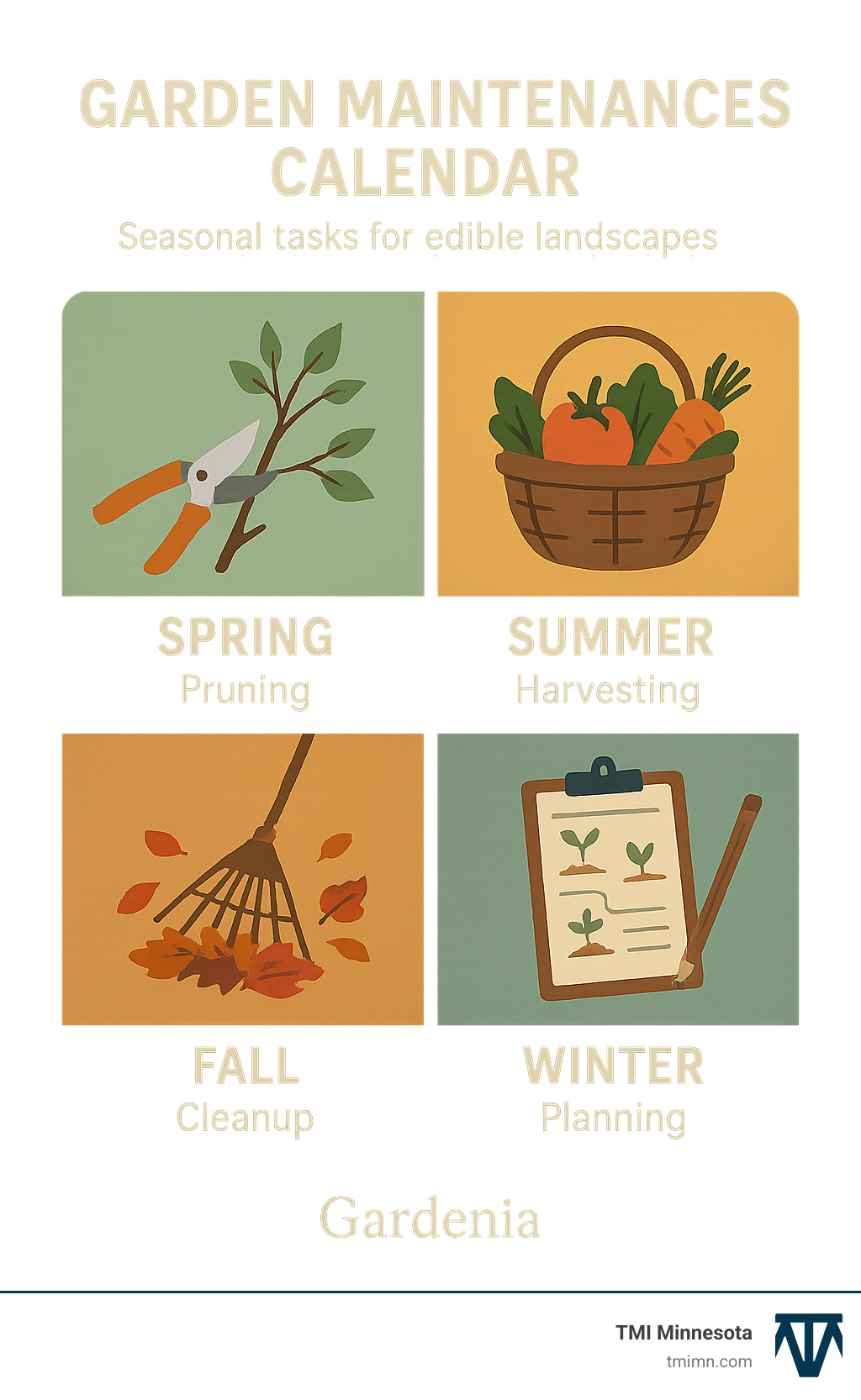
An edible landscape evolves throughout the year:
- Spring: Focus on pruning, soil building, and planting both perennials and early-season crops
- Summer: Maintain regular harvesting to keep plants productive and attractive
- Fall: Plant garlic and spring bulbs, add compost, and establish new perennials
- Winter: Plan next season’s additions and prune dormant fruit trees
This seasonal rhythm connects you more deeply to your landscape and the natural cycles that sustain it.
Making Your Edible Landscape Accessible
An important consideration often overlooked is accessibility. Design your edible landscape to be enjoyable for everyone:
- Create wide, stable paths for easy navigation
- Install raised beds at comfortable heights to reduce bending
- Place frequently harvested items like herbs near entrances
- Include seating areas throughout the garden for rest and contemplation
As one client told us after we installed an accessible edible landscape: “For the first time in years, I can garden without pain. Having my herbs and vegetables at waist height has been life-changing.”
Community Connections
Perhaps one of the most rewarding aspects of edible landscaping is its ability to build community. Abundant harvests naturally lead to sharing, and beautiful, productive gardens invite conversation and connection.
Consider installing a “community harvest basket” near your front yard with a sign inviting neighbors to help themselves to excess produce. Many of our clients report that their edible landscapes have strengthened neighborhood bonds and inspired others to grow food too.
TMI Minnesota’s Approach to Edible Landscapes
At TMI Minnesota, we bring our expertise in both Softscaping and Hardscaping to create edible landscapes that are beautiful, productive, and perfectly suited to the Twin Cities climate. We understand the unique challenges of our region, from harsh winters to humid summers, and select plants and materials that will thrive under these conditions.
Our design process begins with listening to your goals and assessing your site’s specific characteristics. We then create a customized plan that integrates edible plants with existing landscape features, ensuring a cohesive look that improves your property’s value while providing the joy of homegrown food.
Whether you’re looking to transform your entire yard or simply add edible elements to your existing landscape, we have the expertise to bring your vision to life. Our installation teams are skilled in both the horticultural requirements of edible plants and the construction techniques needed for supporting hardscape elements.
For inspiration and examples of our work, explore our hardscape gallery to see how we’ve helped other Twin Cities homeowners create outdoor spaces that are as productive as they are beautiful.
The journey to creating your own edible landscape begins with a single step—perhaps a herb-lined pathway, a blueberry hedge, or a raised bed of colorful vegetables. Whatever your starting point, edible garden landscape ideas offer the rare opportunity to create spaces that nourish all the senses while connecting you more deeply to the natural world and your community.