
Reimagining Your Outdoor Space: The Power of Eco-Friendly Gardens
Environmentally friendly gardens are sustainable outdoor spaces that work with nature rather than against it. They feature native plants, conserve resources, and support local wildlife while reducing maintenance needs.
- Core elements: Native plants, water conservation, chemical-free care
- Main benefits: Supports wildlife, reduces water use, eliminates pollution, improves soil health
- Key difference from traditional lawns: Creates habitat instead of ecological deserts, eliminates chemical runoff, reduces carbon emissions
With over 40 million acres of turfgrass covering the United States and the average lawn consuming 21,600 gallons of water per season, the shift toward environmentally friendly gardens represents a crucial opportunity for positive environmental impact.
The movement toward sustainable gardening isn’t just environmentally responsible—it’s economically sensible too. By reducing water consumption, eliminating chemical inputs, and decreasing maintenance requirements, eco-friendly gardens save both time and money while creating spaces of remarkable beauty and biodiversity.
I’m Christopher Deanovic, Operations Leader at Task Masters, where I’ve helped countless Minnesota homeowners transform their conventional landscapes into thriving environmentally friendly gardens that balance aesthetic appeal with ecological function.

Simple guide to environmentally friendly gardens terms:
– drought-resistant landscaping
– bespoke garden designs
– backyard water features
Environmentally Friendly Gardens 101: Definition & Benefits
When I talk with homeowners about environmentally friendly gardens, I love seeing that moment of realization in their eyes. These aren’t just pretty spaces—they’re living ecosystems that work with nature instead of against it. At their heart, these gardens accept sustainability by conserving resources, boosting biodiversity, capturing carbon, and improving our mental health.
What makes a garden “environmentally friendly”?
Picture your garden as a partner in nature, not something you’re constantly fighting to control. That’s the essence of eco-friendly gardening. When I design these spaces for Twin Cities residents, I focus on three simple principles:
- Organic methods instead of synthetic chemicals that disrupt the delicate web of soil life
- Low-input designs that thrive with minimal resources and less weekend maintenance time
- Closed-loop systems where your garden essentially takes care of itself
Why they matter for people, planet & wildlife
The impact of your garden choices extends far beyond your property line. When you choose an environmentally friendly garden, you’re making a difference by:
- Eliminating chemical runoff into local lakes and rivers
- Filtering air pollutants while reducing emissions from gas-powered equipment
- Creating a living soil community that stores carbon and improves fertility
- Providing vital habitat for struggling pollinators in our region
How eco-gardens outshine conventional lawns
Traditional lawns are essentially ecological deserts. When we compare them to environmentally friendly gardens, the differences are striking:
| Feature | Traditional Lawn | Eco-Friendly Garden |
|---|---|---|
| Water usage | 21,600+ gallons per season | 50-70% less water needed |
| Wildlife value | Ecological desert | Supports dozens of species |
| Maintenance | Weekly mowing, regular fertilizing | Seasonal maintenance only |
| Carbon footprint | High (mower emissions exceed cars) | Carbon-negative (sequesters CO₂) |
| Runoff | Contributes to water pollution | Absorbs and filters water |
| Cost | $6.4 billion spent annually on products | Lower long-term costs |
As one client told me after we completed her native garden, “I used to have a yard. Now I have an ecosystem.”
Designing with Nature: Principles & Plant Selection
Creating an environmentally friendly garden starts with thoughtful design that works with your specific site conditions rather than against them.
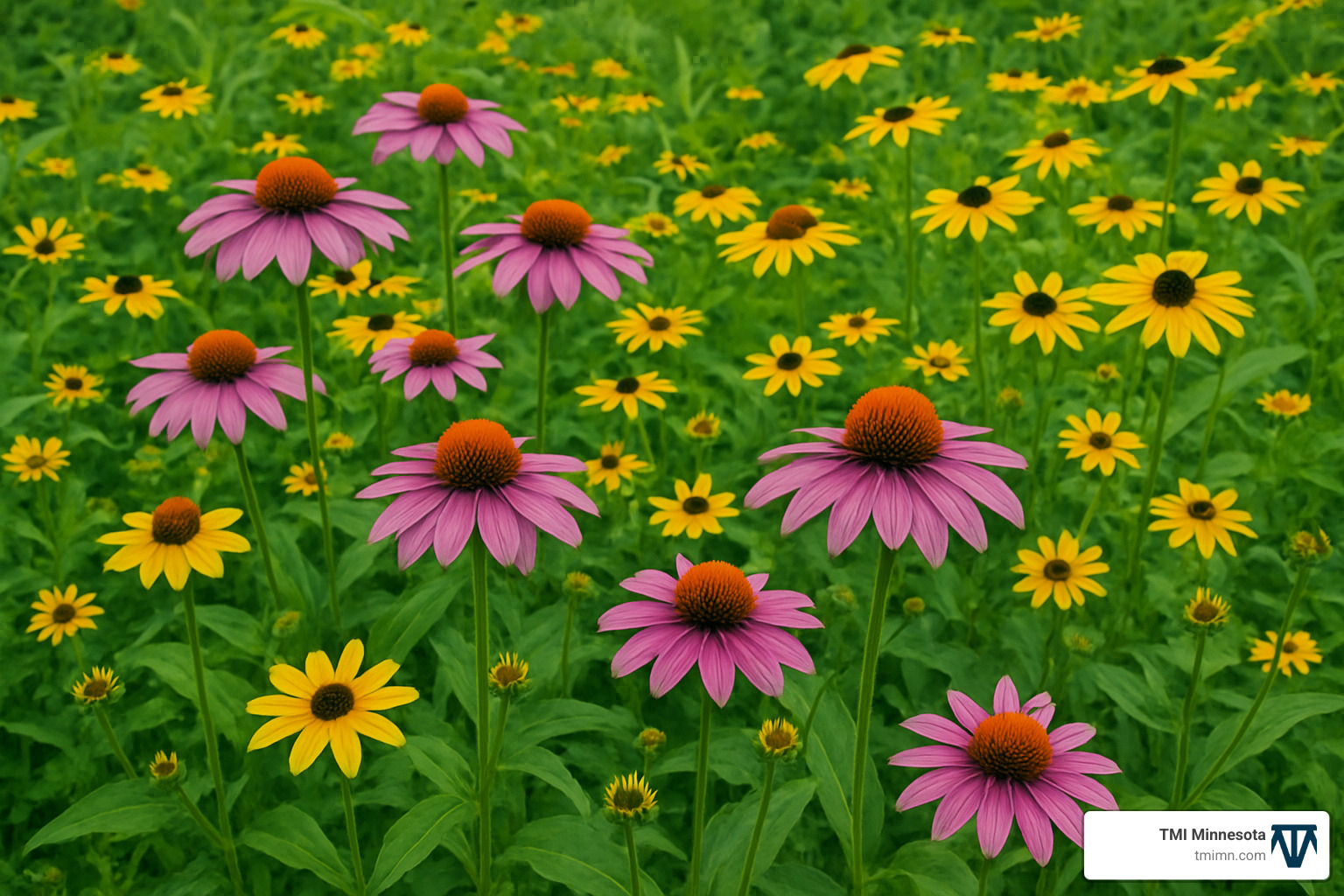
Choose Native & Resilient Plants (core of environmentally friendly gardens)
Native plants are truly the heart of any sustainable garden. These botanical locals have evolved alongside Minnesota’s weather extremes, soils, and wildlife, making them perfectly suited for your yard without extra fuss.
When I work with Twin Cities homeowners, I emphasize the magic of deep root systems that native prairie plants develop. These underground networks survive our brutal droughts while improving your soil structure year after year. Plus, our local wildlife recognizes these plants as food sources.
Some reliable performers include purple coneflower and blazing star for sunny spots, along with serviceberry and elderberry for beautiful native shrubs. For majestic trees, consider bur oak or river birch that stand strong through Minnesota weather.
Want more options? Check out Possibility Place Nursery’s Plant Finder for inspiration.
Plan for Year-Round Interest & Wildlife Food
A successful environmentally friendly garden doesn’t disappear after summer. Think of your garden as a four-season show with different stars throughout the year:
- Spring brings early bloomers like bloodroot peeking through the last snow
- Summer delivers waves of colorful prairie flowers
- Autumn showcases asters, goldenrod, and berry-producing shrubs
- Winter features seed heads and ornamental grasses catching snow
This succession isn’t just pretty—it’s purposeful, providing crucial shelter and food sources for wildlife year-round.
Permaculture & Edible Layers
Why not let your environmentally friendly garden feed both wildlife and your family? Permaculture creates productive ecosystems that mimic natural forests but with plants chosen for human use too.
Imagine your yard as a food forest with productive layers: tall fruit trees creating dappled shade for smaller berry bushes, while perennial vegetables and herbs fill the ground layer.
For Minnesota beginners, start with these bulletproof edible perennials: asparagus, rhubarb, serviceberry trees, raspberries, and Egyptian walking onions.
Use Design “Cues of Care” to Keep it Attractive
Environmentally friendly gardens don’t have to look wild! The secret lies in what landscape architect Joan Nassauer calls “cues of care”—design touches that signal your wild garden is intentional.
A clean, defined edge around a prairie garden works wonders for neighbor relations. A neat stone border or mowed path creates a frame that says, “This wildness is on purpose!” Other effective signals include artistic touches like a well-placed bird bath, a winding gravel path, or a small bench.
Conserving Water the Smart Way
Water is precious, and in environmentally friendly gardens, we treat it that way. As Minnesota’s climate becomes more unpredictable, smart water management isn’t just environmentally responsible, it’s practical gardening sense.
Harvest & Store Rainwater
Mother Nature provides free irrigation—we just need to catch it! Here in the Twin Cities, your roof is a valuable water collection surface:
“A typical 1,000 square foot roof can collect about 600 gallons from just one inch of rainfall,” I often tell my clients.
You have several options for capturing this bounty:
- Rain barrels offer the simplest starting point—just place them under downspouts
- Cisterns provide larger-scale storage
- Rain gardens and bioswales capture runoff while creating beautiful planted areas
Many clients have dramatically reduced their water bills after installing these systems. You can find quality rain barrels and composters here to get started.
Install Efficient Irrigation Systems
When your garden needs supplemental water, how you deliver it makes all the difference. Traditional sprinklers can waste up to half your water through evaporation and runoff.
Drip irrigation is the gold standard, with 90% efficiency compared to sprinklers’ 50-70%. These systems deliver water slowly, directly to plant roots. Soaker hoses offer a simpler alternative that still provides efficient root-zone watering.
For vegetable gardens and container plantings, consider a raised bed gardens drip irrigation kit. Our team at TMI Minnesota specializes in designing landscape irrigation solutions custom to your property’s specific needs.
Timing matters too—watering deeply but infrequently in early morning encourages deeper root growth and reduces evaporation.
Plant & Mulch for Drought Resistance
The smartest water conservation happens before you ever turn on a faucet—by selecting plants that thrive with minimal irrigation once established.
“The right plant in the right place rarely needs babying,” as I like to tell clients. Our native prairie plants developed extraordinary root systems precisely to survive periodic drought.
You can adapt xeriscaping principles to our Minnesota climate by:
- Grouping plants with similar water needs so thirsty plants don’t force you to overwater drought-tolerant neighbors
- Applying 2-3 inches of organic mulch to reduce evaporation while suppressing weeds
- Creating gravel gardens with specially adapted plants for challenging hot, dry areas
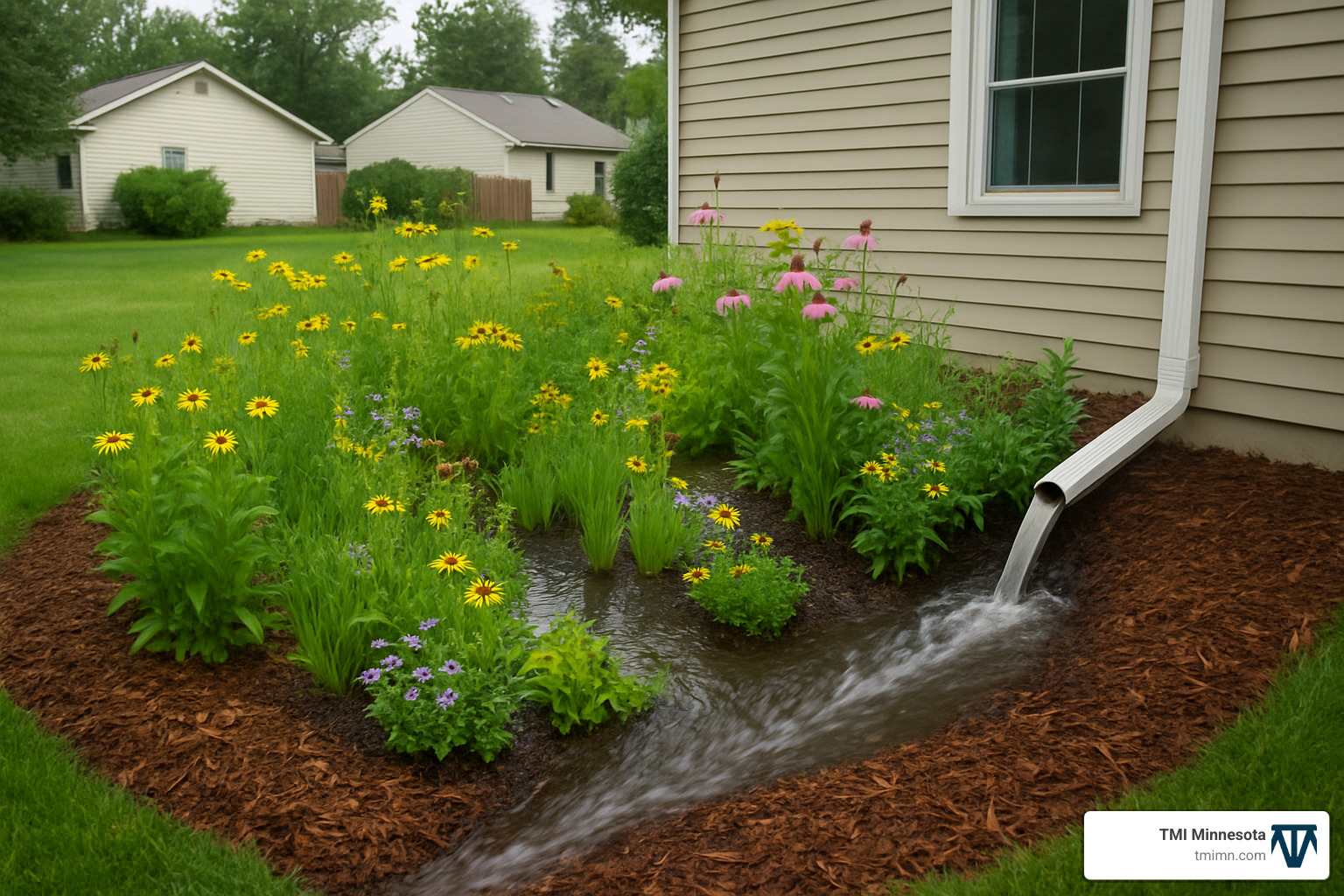
Our drought resistant landscaping services can transform your thirsty landscape into a resilient garden that thrives through Minnesota’s dry spells while dramatically reducing water consumption.
Soil Health, Composting & Chemical-Free Care
The secret to thriving environmentally friendly gardens isn’t what you see above ground—it’s the living world beneath your feet. While conventional landscapes depend on synthetic chemicals, sustainable gardens nurture a vibrant soil ecosystem that practically takes care of itself.
Build Living Soil With Compost & Mulch
Did you know a single teaspoon of healthy garden soil contains more microorganisms than there are people on Earth? These tiny workers are the unsung heroes of your garden, forming an underground community that transforms waste into nutrition, creates soil structure, forms partnerships with plant roots, and locks carbon deep in the soil.
Nurturing this underground workforce is simple:
– Add homemade compost regularly
– Apply a 2-3 inch blanket of organic mulch each year
– Minimize digging and tilling that disrupts soil life
– Keep soil covered with plants or mulch
Here’s a little secret: simply returning grass clippings to your lawn can provide up to 25% of its fertilizer needs! Meanwhile, those fall leaves you might be bagging up? They’re garden gold for building soil and creating cozy winter homes for beneficial insects.
Go Chemical-Free: Natural Fertilisers & Pest Control
Your environmentally friendly garden doesn’t need synthetic chemicals to thrive—nature provides everything plants need when we work with its systems.
For natural fertilizing, your kitchen and yard already produce what plants crave:
– Compost provides balanced nutrition for almost everything you grow
– Compost tea delivers liquid fertilizer while suppressing disease
– Nettle or comfrey tea offers high-nitrogen boosts for hungry plants
– Coffee grounds can acidify soil slightly while adding nitrogen
When pests arrive, sustainable gardens rely on balance rather than warfare:
– Welcome beneficial insects by providing habitat and food sources
– Plant pest-repelling companions like marigolds, nasturtiums, and alliums
– Use physical barriers like row covers when needed
– Keep organic solutions like neem oil on hand for serious outbreaks
For science-backed approaches, check out this research on organic pest methods from South Dakota State University.
Weed & Feed the Eco Way
Weed management in environmentally friendly gardens focuses on working smarter, not harder:
- Sheet mulching smothers existing weeds by laying cardboard or newspaper under mulch
- Hand pulling is most effective after rain when soil is soft
- Flame weeding works wonders on young weeds in pathways and patios
- Dense planting fills garden spaces with desirable plants that outcompete weeds
For lawn areas, natural weed control starts with mowing higher (3-4 inches), overseeding regularly, applying corn gluten meal as a natural pre-emergent herbicide, and accepting some clover and low-growing “weeds” as beneficial additions.
Wildlife Support, Lawn Alternatives & Biodiversity Boosters
A truly environmentally friendly garden does more than simply avoid harm—it actively supports local wildlife while enhancing biodiversity in your yard.
Transform Lawns into Micro-Prairies
With turfgrass being the largest irrigated crop in the country, changing even a small portion of your lawn creates remarkable environmental benefits.
Start with no-mow zones—simply designate areas that you’ll mow just once or twice a year, allowing native plants to flower and set seed.
For a more intentional approach, consider native sedge lawns. These Carex species give you that grass-like appearance but develop much deeper, more beneficial root systems.
Many Twin Cities clients love low-grow native mixes that need minimal mowing. These specialized seed blends stay naturally short while providing far more ecological value than conventional turf.
For the most impact, install prairie gardens with plugs or seed mixes of native grasses and wildflowers. We can help you create defined beds with mowed paths between them for a tidy appearance.
Our softscape services specialize in designing and installing these lawn alternatives while maintaining an aesthetic that works beautifully in your neighborhood.
Create Habitats for Insects, Birds & Bats in Environmentally Friendly Gardens
Small habitat features make an outsized difference for wildlife:
- Pollinator houses provide crucial nesting sites for native bees
- Log walls become apartment complexes for beneficial insects
- Water sources provide a critical resource, especially during dry spells
- Brush piles create shelter for birds and small mammals
- Night gardens with evening-scented flowers support moths and night pollinators
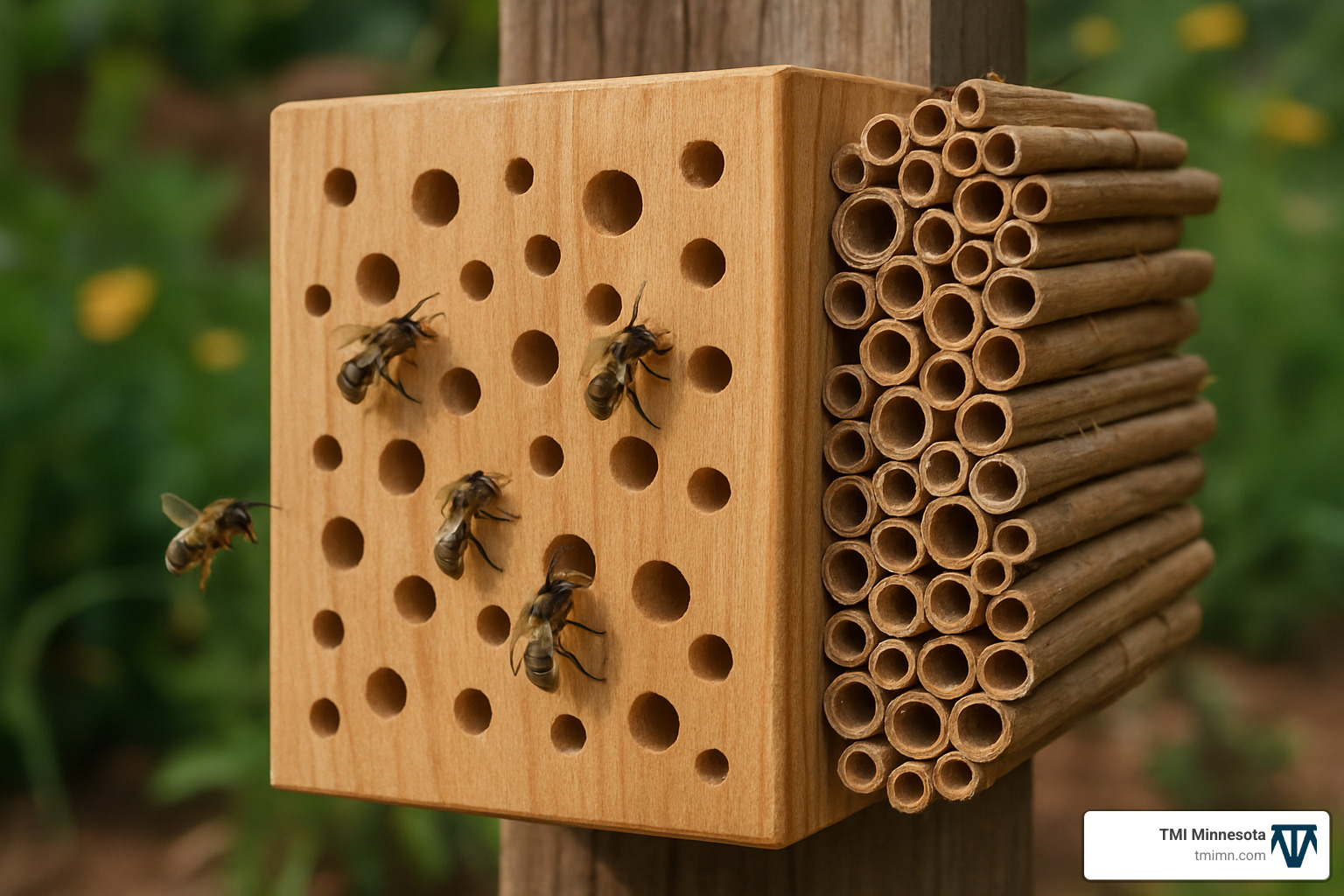
Here’s a simple tip: leave your fall garden cleanup until spring. Those seed heads and hollow stems provide crucial winter habitat and food for birds and overwintering insects.
Plant Living Hedges & Trees for Shelter
Native trees and shrubs create the backbone of wildlife habitat in your environmentally friendly garden:
- Layered hedgerows that mix trees, shrubs, and perennials offer maximum habitat value
- Berry producers like serviceberry, elderberry, and viburnum feed birds and other wildlife
- Windbreaks create sheltered microclimates that benefit both wildlife and your energy bills
- Host plants support butterfly and moth caterpillars—a single chickadee pair needs 6,000-9,000 caterpillars to raise one clutch of young!
Our tree planting services can help select and properly install native trees that will thrive in your specific site conditions while maximizing wildlife benefits.
Scaling Up or Down: From Balconies to Community Gardens
You don’t need a sprawling yard to create an environmentally friendly garden. The beauty of sustainable gardening is that it works at any scale—whether you have just a tiny balcony or you’re coordinating a neighborhood-wide project.
Container & Vertical Eco-Gardens
Living in an apartment or condo doesn’t mean you can’t join the eco-gardening movement. Some of our most creative clients have transformed small spaces into thriving mini-ecosystems.
“My balcony used to be just a place to store my bike,” shares Maria, one of our Minneapolis clients. “Now it’s a pollinator pit-stop with containers of native wildflowers that bring butterflies right to my third-floor apartment.”
Small-space gardening can be remarkably effective when you think vertically:
– Mount wall planters for herbs and compact natives
– Install a trellis for climbing vines that provide habitat and shade
– Use hanging baskets as pollinator magnets with trailing native plants
For watering, a small bucket under a downspout or a compact rain barrel can capture enough water for container plants. And don’t forget that composting is possible even in tiny spaces with a small worm bin under the kitchen sink.
Community, Donation & Shared Gardens
When we garden together, the impact multiplies. Community gardens transform not just landscapes but also neighborhoods and relationships.
Environmentally friendly gardens become powerful community builders when neighbors share knowledge, tools, and harvest. Community plots offer apartment dwellers access to soil while creating social connections. Donation gardens combine environmental stewardship with social justice by addressing food insecurity with fresh, local vegetables.
Faith communities have become unexpected leaders in this movement, with many Twin Cities churches and temples converting portions of their grounds to prairie gardens or food-producing landscapes.
Future-Proofing Against Climate Change
Minnesota’s climate is changing rapidly, with wetter springs, more intense summer storms, and longer periods of drought. Smart gardeners are adapting their environmentally friendly gardens to handle these new realities.
Climate-resilient gardens need built-in flexibility to manage both drought and deluge. This is why we’re installing more rain gardens and bioswales for our clients, creating landscapes that can capture intense rainfall while including deep-rooted plants that can weather dry periods.

“Think of diversity as your garden insurance policy,” I often tell our clients. By planting a wide variety of native species, you ensure that something will thrive regardless of what the weather brings.
Frequently Asked Questions about Environmentally Friendly Gardens
How do I start an environmentally friendly garden if I only have a small yard?
“The best gardens come in small packages,” as we often tell our Twin Cities clients. Even tiny spaces can become powerful habitat zones with the right approach.
Start by focusing on high-impact changes rather than overwhelming yourself with a complete yard overhaul. Transform just one existing garden bed with native plants like purple coneflower or wild bergamot. Many clients find success by creating 3-4 foot borders of native plants around their lawn perimeters.
Don’t have much ground space? Group containers of native plants near your doors and patio. Adding a single rain barrel can dramatically reduce your water usage, while a mini-habitat garden of just 10×10 feet can support dozens of butterfly and bee species.
What are the best organic alternatives to synthetic fertilisers and pesticides?
Nature provides everything your environmentally friendly garden needs without synthetic chemicals. For nourishing plants, nothing beats good old-fashioned compost—we call it “garden gold” for good reason.
Worm castings offer another powerful option, packed with beneficial microorganisms that boost plant immunity. Many clients enjoy making compost tea by steeping finished compost in water, creating a gentle liquid fertilizer perfect for seedlings and container plants.
When pests appear, a healthy garden manages most problems naturally. Beneficial insects like ladybugs and lacewings control pest populations without intervention. For more persistent issues, neem oil provides effective control while remaining gentle on beneficial insects.
Are eco-friendly gardens more expensive to maintain than traditional landscapes?
While environmentally friendly gardens typically require more investment upfront, they deliver significant savings over time—both financially and in terms of your weekend hours.
The initial costs include quality native plants, soil amendments, and perhaps hardscape elements like defined pathways or borders. Rain barrels or efficient irrigation systems might add to your startup expenses.
However, our clients typically report 50-70% reductions in water usage, completely eliminated fertilizer and pesticide costs, and dramatically reduced mowing expenses. Native plants, once established, rarely need replacement—unlike annual flowers many homeowners replant each season.
Most Twin Cities customers find their environmentally friendly gardens pay for themselves within 3-5 years through reduced maintenance costs. Meanwhile, these living landscapes increase in beauty and habitat value each season as plants mature and ecological relationships deepen.
Conclusion
Creating an environmentally friendly garden isn’t just a landscaping choice—it’s a meaningful step that ripples outward, benefiting your neighborhood, local wildlife, and our shared planet. When we work alongside nature rather than fighting against it, our yards transform from thirsty, chemical-dependent spaces into vibrant ecosystems that practically take care of themselves.
I’ve seen this change countless times with our Twin Cities clients. There’s something magical about watching a homeowner’s face light up when they spot their first monarch butterfly or native bee visiting flowers they planted. These moments connect us to something larger than ourselves.
At TMI Minnesota, we love helping homeowners make this journey, whether you’re starting with a small corner of your yard or reimagining your entire landscape. Our team brings both the technical knowledge and the creative vision to create sustainable outdoor spaces that reflect your personal style while supporting our local ecology.
The beauty of environmentally friendly gardens is how they evolve and improve with time. Unlike conventional landscapes that often decline without constant inputs, ecological gardens mature gracefully, developing deeper roots, stronger plant communities, and richer wildlife connections each passing season.
Ready to plant some sustainability in your own yard? We’d love to help you create an outdoor space that gives back more than it takes. Our landscape renovation services can transform your property into a thriving ecosystem that requires less water, fewer chemicals, and less of your precious weekend time.
Even small changes make a difference. That patch of native flowers by your front door might be the critical food source for a monarch butterfly on its incredible migration journey. The rain barrel collecting water from your garage roof might mean your garden stays lush during summer dry spells without tapping into municipal water.
Every choice matters. Start where you are, with what you have, and watch as your garden becomes part of the solution—a small but mighty contributor to a healthier, more connected community landscape.