
Why Feng Shui Garden Designs Create the Perfect Outdoor Sanctuary
Feng shui garden designs offer a time-tested approach to creating outdoor spaces that promote peace, balance, and positive energy flow. This ancient Chinese practice, which translates to “wind and water,” focuses on harmonizing your environment to improve well-being and create a true sanctuary in your backyard.
Key principles for feng shui garden designs include:
- Balance the five elements – Wood, Fire, Earth, Metal, and Water
- Create curved pathways instead of straight lines to promote gentle energy flow
- Use the Bagua map to plan different zones for health, wealth, and relationships
- Incorporate natural materials like stone, bamboo, and flowing water
- Maintain clutter-free spaces with healthy, thriving plants
- Position seating in commanding positions with clear views
As landscape designer Felder Rushing notes, “Too many good gardeners feel unfulfilled in their landscapes, for one simple reason: A lack of good feng shui.” Your garden serves as an extension of your home’s energy system, making it crucial to apply these principles outdoors as well as indoors.
The beauty of feng shui lies in its practical approach to design. Even if you’re skeptical about energy flow, these principles naturally lead to visually pleasing gardens with good balance, comfortable seating areas, and thoughtful plant placement.
I’m Christopher Deanovic, and through my work leading Task Masters’ landscape design projects throughout Minnesota, I’ve seen how feng shui garden designs transform ordinary outdoor spaces into tranquil retreats that families truly enjoy. My experience with both hardscaping and softscaping allows me to seamlessly integrate these ancient principles with modern Minnesota landscaping needs.

Key Feng shui garden designs vocabulary:
Core Principles for Harmonious Feng Shui Garden Designs
Creating a peaceful outdoor sanctuary starts with understanding how energy flows through your space. In feng shui garden designs, we focus on encouraging positive Chi (life energy) to move freely while minimizing negative energy that can leave you feeling unsettled or drained.
The beauty of these principles lies in their practical nature. Even if you’re new to feng shui, these guidelines naturally create more comfortable, visually appealing spaces that feel right the moment you step into them.
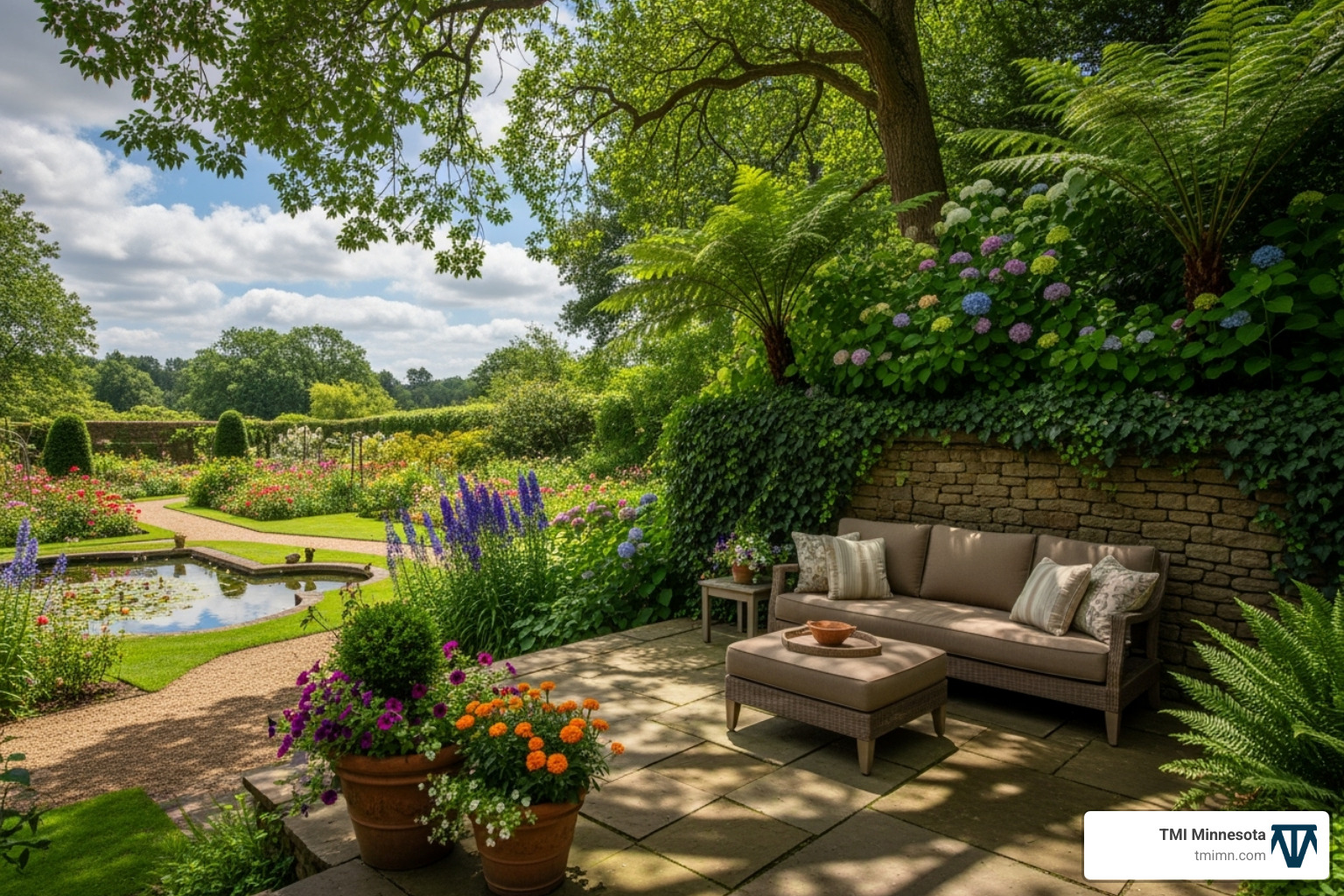
The Command Position and Gentle Flow
Think about the most relaxing gardens you’ve ever visited. Chances are, they had winding paths that invited you to explore, rather than straight walkways that rushed you from point A to point B. This instinctive preference aligns perfectly with feng shui principles.
Curved pathways are essential in feng shui garden designs because they encourage gentle energy flow. Straight lines create what’s called “Sha Chi” – aggressive, negative energy that moves too quickly through your space. Instead, we design meandering paths that feel natural and inviting, like following a gentle stream.
When planning your seating areas, consider the command position. This means placing chairs and benches where you can sit with your back to something solid (like a wall or hedge) while maintaining unobstructed views of your garden. This positioning naturally makes you feel more secure and relaxed.
Round tables work wonderfully in outdoor dining areas because they allow energy to flow smoothly around them. Sharp corners can create small pockets of stagnant energy, while circular shapes keep things moving harmoniously.
For garden entrances, especially those connecting your home to the outdoors, avoid placing them directly in line with your back door. Instead, consider how you might relocate the entrance so it is off center and curved to create a more welcoming flow. You’ll find more inspiration in our guide to garden pathway ideas.
Balancing Yin and Yang
Every successful garden needs both yin and yang qualities to feel complete. Think of yin as the soft, restful elements – shade, flowing water, curved shapes, and lush plantings. Yang represents the active, energizing aspects – sunlight, hard surfaces, angular shapes, and bright colors.
In Minnesota’s climate, we often see gardens that lean too heavily toward one side. A patio with lots of concrete and stone (yang) feels harsh without soft planting to balance it out. Conversely, a garden with only plants and no defined spaces can feel chaotic and overwhelming.
The key is creating harmony between these opposites. Pair your stone retaining wall with cascading plants that soften its edges. Balance bright, sunny flower beds with shaded seating areas where you can rest and cool down.
Light and shadow play crucial roles too. A garden that’s either too bright or too dark throughout the day misses opportunities for balance. Strategic lighting can add gentle yang energy to evening spaces, while pergolas or trees provide restful yin shade during hot afternoons.
Our approach to softscaping and hardscaping naturally incorporates this balance, ensuring your outdoor space feels both dynamic and peaceful.
The Importance of Decluttering and Maintenance
Here’s where feng shui gets refreshingly practical. A cluttered, poorly maintained garden creates blocked Chi – stagnant energy that can actually drain your vitality rather than restore it.
Removing dead plants might seem obvious, but it’s amazing how often we overlook that brown patch of grass or forget about the wilted flowers in the corner. These areas of decay send signals of stagnation that affect the entire space’s energy.
Fixing broken items is equally important. That cracked planter or wobbly garden gate might seem minor, but these small problems accumulate and create an underlying sense of neglect. When everything in your garden is in good repair, you naturally feel more at peace.
Keep your walkways unobstructed and your garden borders clear. This isn’t just about aesthetics – it’s about allowing energy (and people) to move freely through your space. A tidy garden invites you to spend time outdoors, while a messy one often gets ignored.
Regular maintenance becomes much easier when you view it as tending to your space’s energy rather than just another chore. That weekly deadheading session becomes a peaceful ritual that keeps positive energy flowing throughout your outdoor sanctuary.
If your garden needs a complete refresh to achieve this harmonious state, our landscape renovation services can help you create the clean, balanced foundation that makes ongoing maintenance a joy rather than a burden.
Using the Five Elements for Balance
Think of the five elements—Wood, Fire, Earth, Metal, and Water—as the building blocks of feng shui garden designs. Each element carries its own unique energy, and when they work together harmoniously, they create a balanced outdoor space that feels naturally peaceful and energizing.
These elements don’t just sit quietly next to each other. They interact in fascinating ways through what’s called the “productive cycle” and “destructive cycle.” For example, Wood feeds Fire (like logs in a fireplace), Fire creates Earth (through ash), and Water nourishes Wood (helping plants grow). Understanding these relationships helps us create gardens that feel balanced rather than chaotic.
The key isn’t to have equal amounts of each element, but to ensure none dominates completely. A garden with only hard stone surfaces might feel cold and unwelcoming, while one with only soft plants might lack structure and focus.
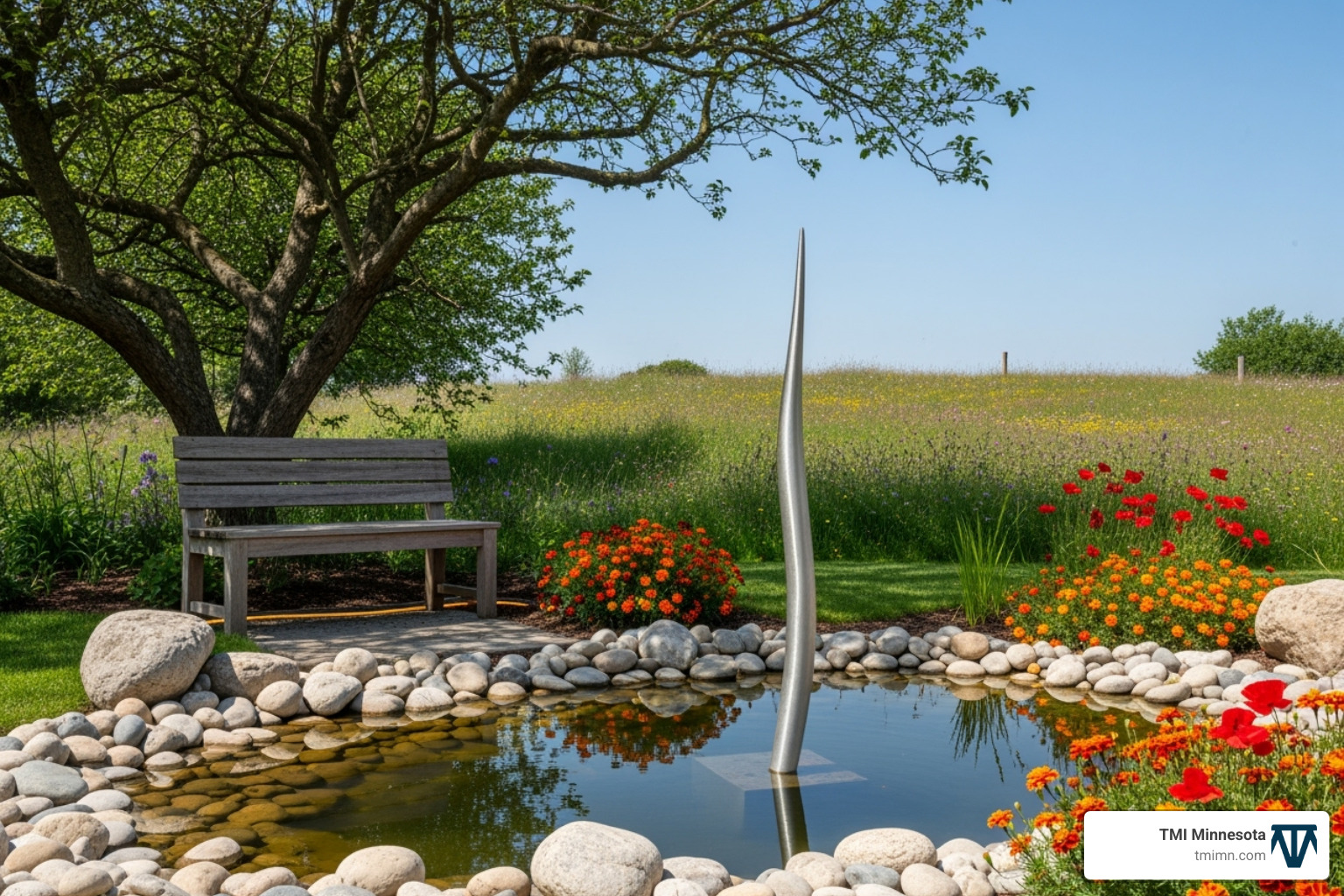
Wood: Growth and Vitality
The Wood element brings life and growth to your garden. It represents new beginnings, flexibility, and that wonderful feeling of spring when everything starts growing again. You’ll recognize Wood energy in the tall, columnar shapes that reach toward the sky.
Trees are the most obvious Wood element, especially majestic ones like ginkgo trees, which symbolize peace and hope in Feng Shui. But Wood also appears in wooden benches, pergolas, timber decking, and tall plants that create vertical interest. The colors green and brown naturally represent this element.
For the best energy flow, place Wood elements in the East and Southeast portions of your garden. These directions improve health, longevity, and prosperity. You can also add Wood to the South, but avoid overwhelming the Northeast and Southwest areas with too much Wood energy.
When we help clients with tree planting services, we consider not just the practical aspects like soil conditions and mature size, but also how each tree will contribute to the overall energy balance of their space.
Fire: Passion and Energy
Fire brings warmth, excitement, and social energy to your outdoor space. This element represents passion, change, and recognition—perfect for areas where you gather with family and friends.
Outdoor lighting, fire pits, and grills are natural Fire elements that extend your garden’s usability into the evening hours. Even vibrant flowers in red, orange, pink, and purple can activate Fire energy. Look for pointed or triangular shapes when choosing Fire features, as these shapes naturally channel this dynamic energy.
The South sector is Fire’s home base, where it supports fame and recognition. You can also place Fire elements in the Southwest for relationship energy or the Northeast for self-love. Just remember that Fire needs to be balanced—too much can feel overwhelming, while too little might leave your space feeling cold and uninviting.
Our modern outdoor fireplace designs create beautiful focal points that bring people together while adding that essential Fire element to your feng shui garden designs.
Earth: Stability and Grounding
Earth provides the foundation that makes everything else possible. This element represents stability, nourishment, and that grounded feeling we all crave in our busy lives.
Rocks, boulders, and stone pathways are classic Earth features, along with pottery (especially terra cotta) and stone sculptures. Square or rectangular shapes embody Earth energy, creating a sense of permanence and reliability. Even Zen gardens with their carefully raked pebbles channel Earth’s peaceful, meditative qualities.
The colors yellow, sandy, and earthy tones represent Earth beautifully. Think of cheerful sunflowers, black-eyed susans, or yellow pottery that catches the morning light. These elements feel especially at home in the Northeast and Southwest sectors, where they promote educational growth and stable relationships.
Earth elements can also work well in the West and Northwest areas. The key is creating that sense of solid foundation that supports all the other elements in your garden.
Through our hardscape design services, we help clients integrate Earth elements that provide both practical function and energetic balance, creating outdoor spaces that feel both beautiful and grounded.
Metal: Clarity and Precision
Metal brings clarity, organization, and precision to your garden design. This element represents clear communication and that satisfying feeling when everything has its proper place.
Metal furniture, wind chimes, and sculptures are obvious Metal elements, but don’t overlook white flowers and stepping stones. Spherical or circular shapes naturally embody Metal energy, creating a sense of completeness and harmony.
The colors white, gray, gold, and silver represent Metal beautifully. White flowers like day-lilies symbolize happiness and gratitude, while irises represent wisdom and valor. These plantings work especially well when combined with metal garden features.
West and Northwest areas are Metal’s strongest positions, where this element fosters creativity and attracts helpful people. Metal also works well in the North, where it supports career energy. The key is using Metal elements to add structure and clarity without making your garden feel cold or sterile.
We can help you select and integrate metal elements that complement your overall design, adding modern elegance while maintaining that essential connection to nature.
Water: Abundance and Flow
Water represents abundance, wisdom, and the constant flow of positive energy. This element brings a sense of calm and prosperity that makes any garden feel more complete.
Ponds, fountains, and birdbaths are natural Water features, along with any reflective surfaces that catch and play with light. Wavy or irregular shapes embody Water’s flowing nature, while blue, black, and dark tones represent its visual essence.
The key with Water placement is direction. Position water features in the North, East, or Southeast corners for the best energy flow. Most importantly, ensure any water flows toward your home, not away from it—this symbolizes wealth and positive energy coming to you rather than leaving.
Moving water works especially well because it replicates the natural flow of Chi energy. Even a simple birdbath with a small fountain can activate this powerful element in smaller spaces.
A thoughtfully designed water feature often becomes the focal point of feng shui garden designs. If you’re considering adding this element, explore our backyard pond installation options to find how Water can transform your outdoor sanctuary.
Using the Bagua Map to Plan Your Garden
The Bagua map serves as your compass for creating truly purposeful feng shui garden designs. Think of it as an energy blueprint that divides any space into nine meaningful sections, each one connected to a different aspect of your life. While most people know about using Bagua maps indoors, applying this ancient tool to your garden opens up incredible possibilities for enhancing your outdoor sanctuary.
Getting started is simpler than you might think. First, find the center point of your home and surrounding yard. From there, imagine drawing eight evenly spaced lines radiating outward like spokes on a wheel, creating eight sections plus that central ninth area. The beauty of the Bagua map lies in its flexibility – you can orient it based on your home’s main entrance or your garden’s primary entry point.
Your home’s main entrance typically aligns with the Career or Life Path sector, which corresponds to the North direction in traditional Feng Shui. However, don’t worry if your garden doesn’t face perfectly north – the Bagua map adapts to work with any orientation. What matters most is creating intentional spaces that support positive energy flow throughout your outdoor living area.
For help determining your home’s exact direction, A great resource for finding your home’s direction provides detailed guidance that makes this process straightforward.
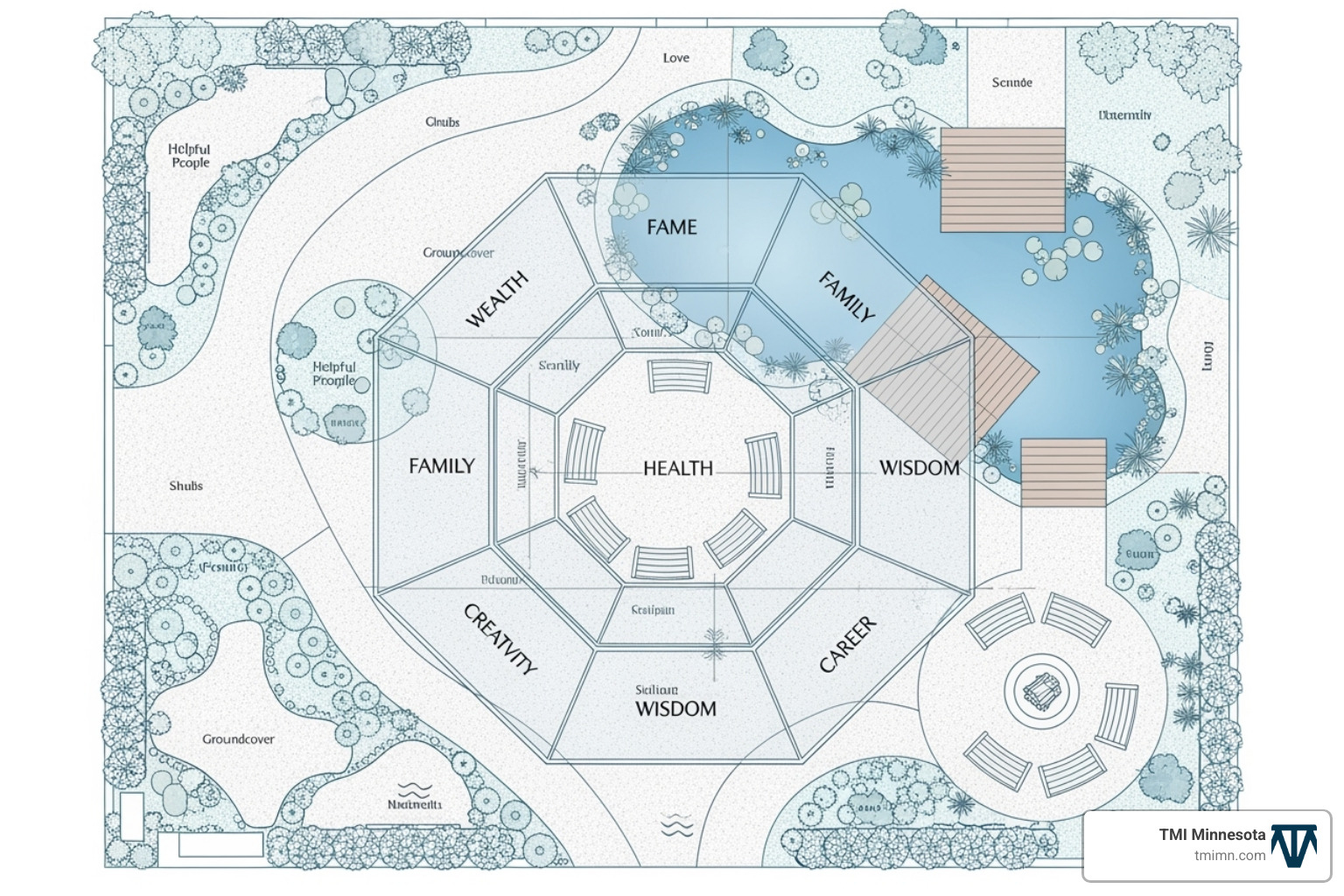
A Practical Guide to Garden Bagua Zones
Once you’ve mapped out your garden’s Bagua zones, the real fun begins. Each sector offers unique opportunities to improve specific areas of your life through thoughtful plant choices, color schemes, and garden features.
| Life Aspect | Element | Colors | Garden Ideas |
|---|---|---|---|
| Wealth & Prosperity | Wood | Purple, Red, Gold | Thriving plants, water feature, lush foliage |
| Fame & Recognition | Fire | Red, Orange, Pink | Bright flowers, outdoor lighting, fire features |
| Love & Relationships | Earth | Pink, Red, White | Paired plantings, romantic seating, soft curves |
| Creativity & Children | Metal | White, Gray, Pastels | Playful elements, circular shapes, wind chimes |
| Helpful People & Travel | Metal | White, Gray, Black | Metal sculptures, guest seating, welcoming paths |
| Career & Life Path | Water | Blue, Black | Water features, flowing shapes, reflective surfaces |
| Knowledge & Self-Cultivation | Earth | Blue, Green, Black | Quiet reading nooks, study gardens, meditation spaces |
| Family & Health | Wood | Green, Brown | Healthy trees, herb gardens, morning light areas |
| Center (Health) | Earth | Yellow, Brown | Central gathering space, stable elements, grounding features |
The Wealth & Prosperity corner (Southeast) thrives with abundant plantings and moving water elements. This area loves the Wood element, so consider adding a beautiful tree or lush garden bed here. Purple and gold accents through flowers or decorative elements can amplify this zone’s energy.
Your Love & Relationships area (Southwest) benefits from paired plantings – think two matching planters or a couple of trees planted together. Soft, romantic colors like pink and white work beautifully here, along with comfortable seating where couples can enjoy quiet moments together.
The Career & Life Path sector (North) is perfect for water features that flow toward your home, symbolizing opportunities coming your way. A small fountain or pond in this area can significantly boost your professional prospects while adding tranquil sounds to your garden.
Choosing Plants and Colors for Your Feng Shui Garden Designs
Plant selection plays a crucial role in successful feng shui garden designs. Bamboo represents flexibility and growth, making it excellent for the East (Family) or Southeast (Wealth) areas. Peonies symbolize honor and wealth, perfect for relationship or prosperity zones. Jade plants attract money energy and work wonderfully in wealth corners.
Dogwood trees bring protective energy and stunning seasonal interest. Their rounded form and soft flowers embody gentle, nurturing energy that works well in family or relationship areas.
Avoid plants with sharp, spiky leaves like cactus or yucca in areas where you want to encourage gentle, flowing energy. Instead, choose plants with rounded leaves and soft textures that promote harmony and peace.
Color coordination amplifies each zone’s energy. Purple and gold flowers in your wealth corner, red and pink blooms in relationship areas, and white and metallic accents in creativity zones all support the Bagua map’s intentions.
Working with our More info about softscape services can help you select the perfect plants and color combinations to bring your Bagua-inspired garden vision to life. The right plant choices, placed with intention, transform your outdoor space into a powerful tool for positive life improvement.