
Finding the Art of Flower Garden Designs
Creating beautiful and functional flower garden designs can truly transform any outdoor space. Whether you’re a seasoned gardener or just starting out, designing a vibrant flower garden adds beauty to your home. It also boosts curb appeal and brings joy.
So, what are the different types of flower garden designs?
- Cottage Garden: A romantic, overflowing style with informal plantings and a mix of flowers.
- Wildflower Garden: Natural, low-maintenance, and perfect for attracting local wildlife and pollinators.
- Formal Garden: Features structured, geometric layouts with neat hedges and symmetrical planting.
- Pollinator Garden: Designed specifically to attract bees, butterflies, and hummingbirds with nectar-rich plants.
- Container Garden: Ideal for small spaces like patios or balconies, using pots and planters.
- Raised Bed Garden: Offers better soil control and drainage, making gardening easier and more accessible.
- Sensory Garden: Engages all five senses through fragrant blooms, varied textures, and rustling grasses.
Gardening is more than just planting. It’s about crafting an outdoor environment that reflects your taste and improves your life. It’s a journey where you connect with nature, one bloom at a time.
I’m Christopher Deanovic, Operations Leader at TMI Minnesota. My passion for flower garden designs and changing outdoor spaces guides our work in creating beautiful, practical landscapes. This guide aims to simplify the process, helping you achieve your dream garden.
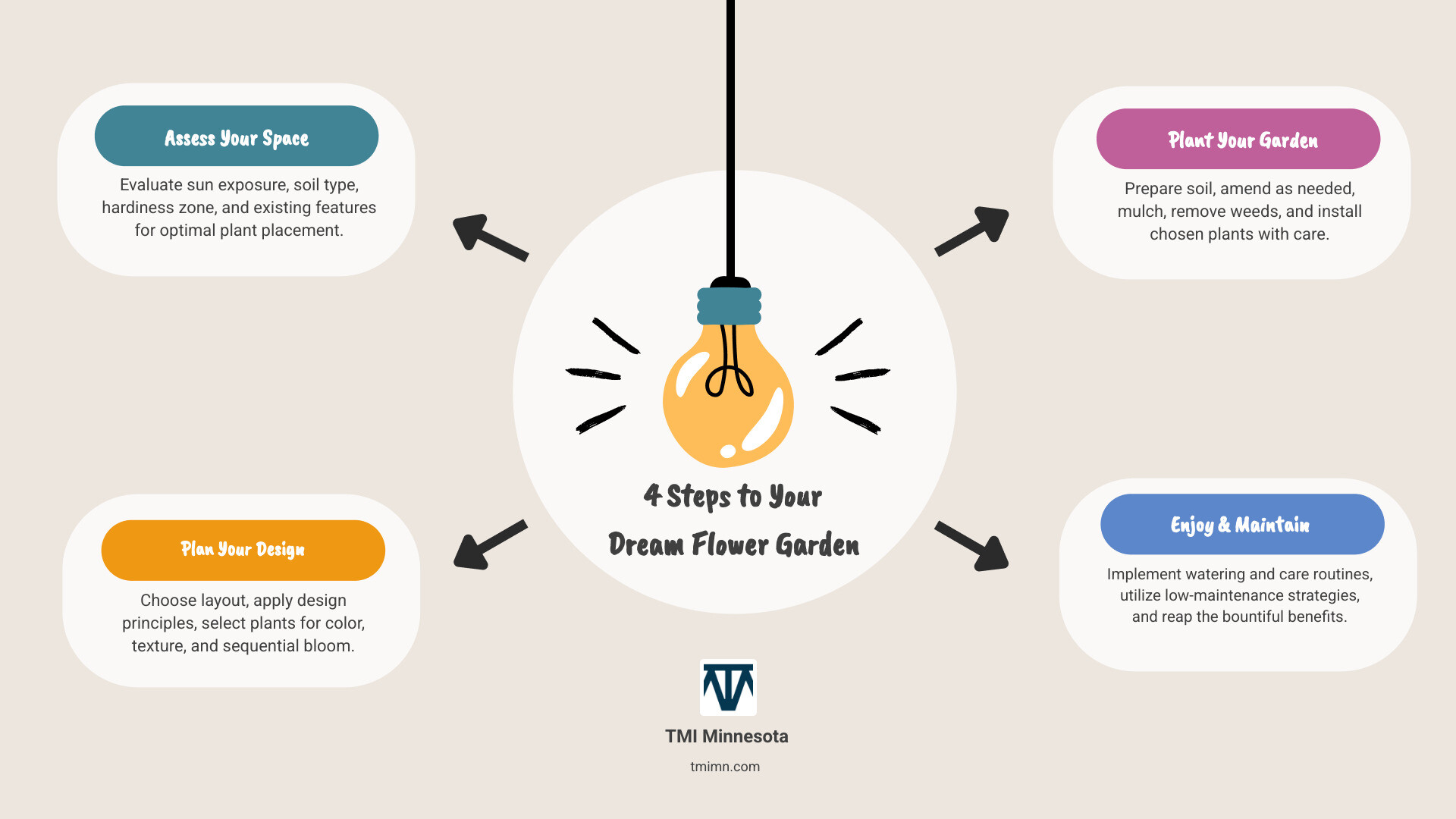
Flower garden designs terms at a glance:
Getting Started: Principles of Beautiful Flower Garden Designs
Starting a new garden can feel overwhelming, but a thoughtful approach turns vision into reality. The first step in creating stunning flower garden designs is understanding your space. We begin by assessing crucial factors like sun exposure (full sun, partial shade, or full shade), soil type (clay, loam, sand), and your hardiness zone. For our clients in the Twin Cities, this means selecting plants that can handle our seasonal temperatures. Our Softscape Designer services always start with this assessment to lay the groundwork for success.
Once we understand your space, we move to the artistic side of design. These principles lift a plant collection into a cohesive, beautiful garden:
- Color Theory: Use warm reds and yellows for energy or cool blues and purples for a soothing retreat.
- Texture and Form: Mix soft grasses with bold leaves to add depth and visual interest.
- Scale and Proportion: Ensure plants and structures fit the size of your space.
- Repetition: Repeat plants, colors, or shapes to create rhythm and guide the eye.
- Layering Plants by Height: Place taller plants in back, mid-height in the middle, and low-growing plants in front for a dynamic display.
Choosing the Right Plants for Your Garden
Selecting the right plants brings your garden to life. We blend annuals and perennials for continuous beauty.
| Feature | Annuals | Perennials |
|---|---|---|
| Lifespan | Complete life cycle in one growing season | Return year after year for multiple seasons |
| Cost | Generally lower upfront per plant | Higher upfront cost per plant |
| Maintenance | Require replanting yearly, continuous bloom | Planted once, return annually, may need dividing |
| Bloom | Often bloom continuously from spring to frost | Bloom for specific periods, varying by species |
We recommend including both. Annuals provide instant, season-long color, while perennials form the enduring backbone of your flower garden designs.
We are also passionate about integrating native plants. They are adapted to our climate, requiring less water and maintenance. They also attract crucial pollinators, boosting biodiversity. This is vital, especially as monarch butterfly populations have dropped by 90% since the early 1990s. For even lower maintenance, drought-tolerant plants like Sedum and Russian Sage are perfect for sustainable landscapes. Explore more with our Xeriscape Landscaping Ideas.
To ensure seasonal vibrancy, we select plants with varied bloom times and consider their specific care needs, like sun, soil, and water requirements.
Preparing Your Garden Bed
A beautiful garden starts with a healthy foundation. First, a soil test helps us understand your soil’s makeup so we can amend it precisely with compost or other organic matter for strong growth.
Next, we tackle weed removal, clearing the area thoroughly before planting. Once prepped, a 2-3 inch layer of mulch helps retain moisture, suppress weeds, and regulate soil temperature. Finally, edging gives your flower garden designs a neat, finished look and prevents grass from creeping into your beds. Find more inspiration with our Garden Border Ideas.
A Style for Every Space: Popular Flower Garden Ideas
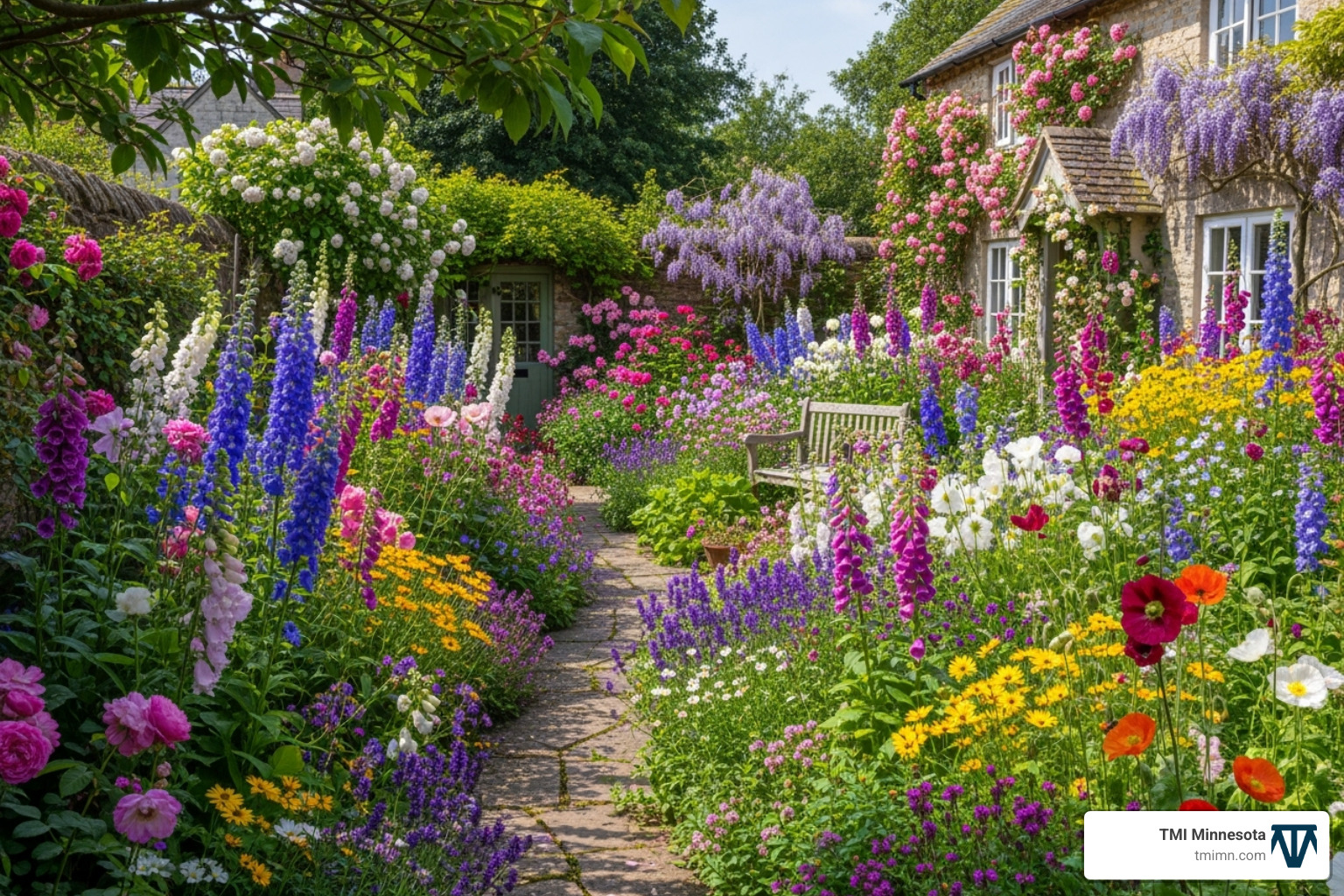
Every garden has a unique personality, and finding the right style for your space is part of the fun. Your garden should be an extension of your home and reflect your personal taste. For inspiration, browse our Landscape Gallery or observe gardens in your community. Don’t be afraid to mix elements from different styles to create something uniquely yours.
Exploring Different Flower Garden Designs
Let’s explore popular flower garden designs to inspire your project:
- Cottage Garden: A romantic and abundant style with informal plantings and a mix of colors, textures, and fragrances. Classic plants include roses, delphiniums, and foxgloves.
- Wildflower Garden: Features low-maintenance native species that are perfect for local wildlife and pollinators. Once established, they require little care.
- Formal Garden: Known for structured, geometric layouts, neat boxwood hedges, and symmetrical planting, creating a sophisticated feel.
- Contemporary Garden: Features clean lines, striking ornamental grasses, bold foliage, and a restrained color palette. Learn more in our guide to Contemporary Garden Styles.
- Container Garden: A versatile solution for small spaces like patios and balconies. Using pots and planters gives you great soil control and flexibility. See our ideas for Landscape Design for Small Yards.
- Raised Bed Garden: Practical and beautiful, these offer better drainage, perfect soil control, and easier access, reducing physical strain.
Themed and Functional Garden Concepts
We can also design gardens with specific themes or functions:
- Pollinator & Butterfly Garden: We choose nectar-rich plants like bee balm and coneflowers to attract bees, butterflies, and hummingbirds, boosting the local ecosystem. Learn about our Environmentally Friendly Gardens.
- Cutting Garden: Designed with flowers that are great for bouquets, such as zinnias and dahlias. Regular harvesting encourages more blooms.
- Edible Flower Garden: Blends beauty with culinary delight. Varieties like nasturtiums and pansies add color and flavor to salads and desserts. See our Edible Garden Landscape Ideas.
- Herb Garden: Mixes culinary, medicinal, and ornamental herbs like lavender and rosemary. They add unique textures, aromas, and can even deter pests. Explore our Herb Garden Design Ideas.
Beyond the Blooms: Structures and Low-Maintenance Strategies
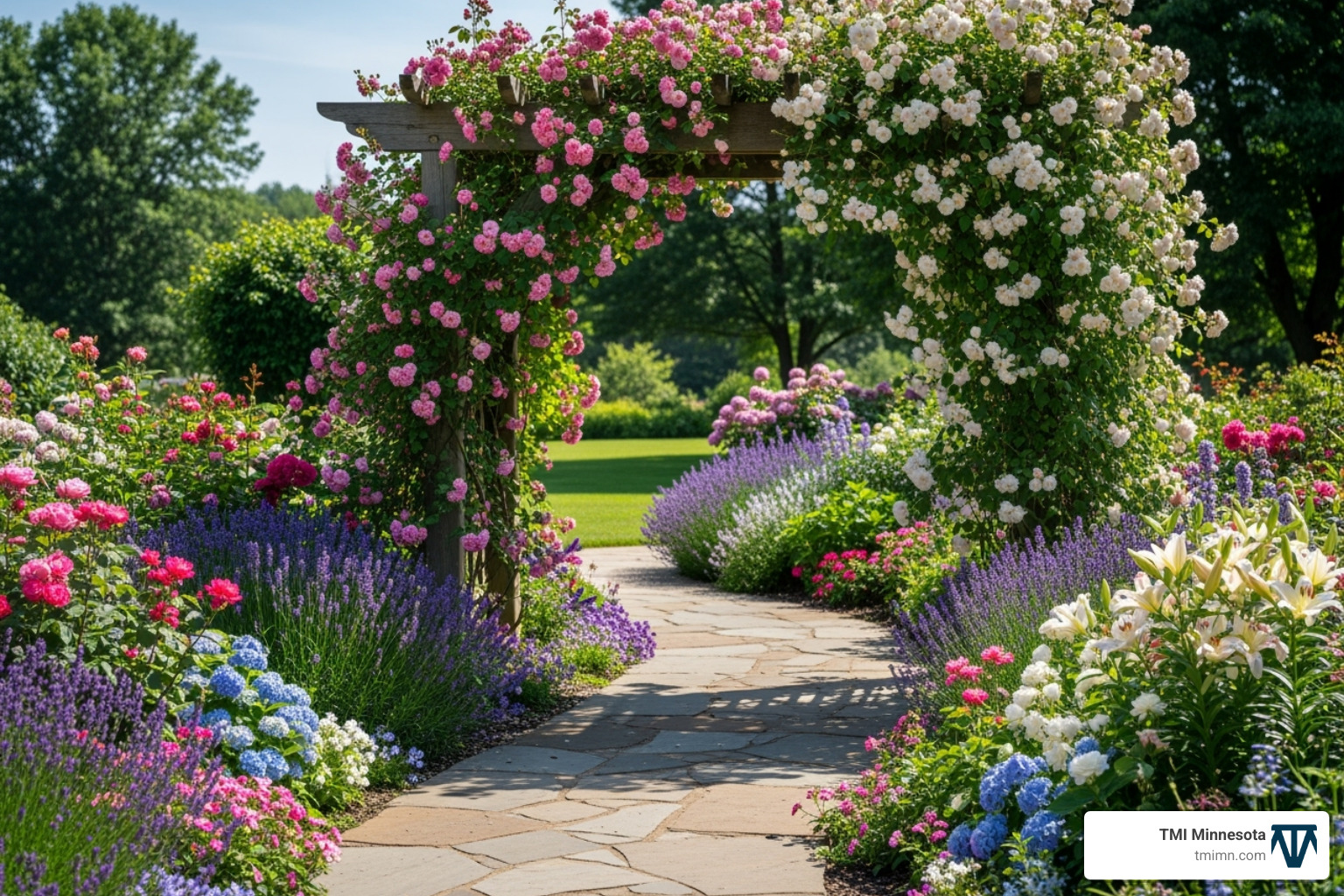
While blooms are the stars, structures and features provide year-round interest and lift your flower garden designs. Hardscaping is integral to the landscape, creating flow and defining spaces. Our expertise in Softscaping and Hardscaping allows us to seamlessly integrate these elements, which act as focal points and add vertical interest.
Incorporating Structures and Features
Consider weaving these structures into your garden:
- Garden Paths: A well-designed path of flagstone, gravel, or pavers invites exploration and provides access for maintenance. Find more ideas with our Garden Pathway Ideas.
- Pergolas and Trellises: These add height and support climbing plants like roses or clematis. A pergola can create a shaded seating area, while a trellis can turn a plain wall into a living work of art.
- Raised Beds: These offer excellent soil control and drainage. They are also versatile for various designs, including on slopes, where they can help manage water runoff. See our Slope Garden Ideas for more on uneven terrain.
- Water Features: The sound of a simple bird bath or an elaborate fountain adds a serene ambiance. We can use Landscape Lighting Ideas to highlight these features at night.
Creating Low-Maintenance Flower Garden Designs
We prioritize low-maintenance strategies so you can enjoy your garden more.
- Drought-Tolerant Plants: Selecting plants like Sedum and Russian Sage drastically reduces watering needs once they are established.
- Native Planting: Choosing plants indigenous to your region means they are already adapted to the local climate, requiring less fuss.
- Ground Covers and Living Mulch: Planting low-growing ground covers like creeping thyme suppresses weeds, retains moisture, and prevents erosion.
- Smart Watering: Drip irrigation systems deliver water directly to plant roots, minimizing evaporation and ensuring efficient hydration. Our Softscapes team can help implement these systems.
These strategies create stunning flower garden designs that require less effort, giving you more time to relax and enjoy your outdoor oasis.
The Bountiful Benefits of a Flower Garden

A well-designed flower garden offers benefits beyond just pretty blooms. It’s a gift to you, your home, and the local ecosystem. We’ve seen how these spaces can transform lives.
Enhancing Your Health and Home
Stepping into your garden can be a magical way to de-stress. Gardening offers significant health benefits, including physical activity and stress reduction. The gentle exercise of digging, planting, and weeding can even reduce the risk of heart attacks and strokes.
Beyond personal wellness, a beautiful flower garden dramatically increases your home’s curb appeal. Professional landscaping can boost property value by 10-20%, making it a smart investment. Your garden becomes a personal retreat, a sanctuary right outside your door. Learn more about creating a Backyard Oasis Designs.
Supporting Local Wildlife
Your flower garden designs can be environmental heroes.
- Attracting pollinators like bees, butterflies, and hummingbirds is vital for our food system. Planting nectar-rich flowers provides them with a crucial food source.
- Your garden also becomes a habitat for beneficial insects like ladybugs, which act as natural pest control. This reduces the need for chemicals and creates a healthier environment.
We are passionate about this positive environmental impact. Every garden can make a difference in supporting local biodiversity. Our environmentally friendly approach integrates these principles into every design, creating a garden that brings you joy while helping the planet.
Frequently Asked Questions about Flower Gardens
It’s natural to have questions when starting a gardening journey. Here are answers to some common ones.
What are the easiest flowers for a beginner to grow?
For those worried about a “black thumb,” some flowers are practically foolproof. For annuals, try Sunflowers, Marigolds, and Zinnias. They are forgiving and offer a big impact with minimal fuss. Marigolds even help deter pests. For perennials that return each year, Coneflowers and Daylilies are incredibly hardy choices. These plants are resilient and provide vibrant color, making them perfect confidence-builders for new gardeners.
How do I keep my flower garden colorful all season?
The secret is planning for sequential blooming. Select a mix of plants with different bloom times to ensure there’s always something putting on a show.
- Spring: Start with bulbs like tulips and daffodils.
- Early Summer: Transition to perennials like peonies and irises.
- Mid-Summer: Rely on steady bloomers like coneflowers and black-eyed Susans.
- Fall: Finish with asters and sedum for beautiful autumn color.
By layering these bloom times in your flower garden designs, you’ll have continuous color.
Can I mix vegetables and flowers in the same garden bed?
Absolutely! This practice, known as companion planting, is both practical and beautiful. Flowers attract pollinators, which means better harvests for your vegetables. Marigolds are famous for repelling nematodes and other pests. Incorporating flowering herbs like basil and oregano also helps deter pests while providing fresh ingredients. This creates a thriving, efficient ecosystem where you get both vegetables and blooms from the same space.
Bring Your Dream Garden to Life
A garden is more than just pretty flowers; it’s a place for self-expression, connecting with nature, and the joy of watching life bloom. The benefits are immense, from boosting your home’s value and your well-being to supporting local wildlife.
At TMI Minnesota, we believe every garden has a unique story, and we’re here to help you write it. We love turning outdoor dreams into stunning realities. Whether you envision a romantic cottage garden, a sleek contemporary space, or a buzzing pollinator haven, a well-designed flower garden design can transform your property into a personal oasis.
Our team specializes in bespoke garden designs, using leading-edge products and a deep understanding of hardscape and softscape elements to lift your yard living experience.
If you’re ready to stop dreaming and start digging, our team of softscaping contractors is eager to help. We’ll blend our expertise with your vision to craft a landscape that brings you joy for years to come.
Ready to make a change? Contact us today to start planning your landscape change!