
Why Front Yard Gardens Transform Your Home’s First Impression
Front yard gardens are the key to creating stunning curb appeal. These thoughtfully designed spaces combine plants, hardscaping, and functional layouts to turn your front yard into an inviting entrance that boosts your home’s value.
Quick Planning Guide for Front Yard Gardens:
- Assess your space – sunlight, soil type, and existing features
- Choose your style – cottage, modern, native, or edible gardens
- Plan functionality – walkways, seating areas, and maintenance access
- Select plants – mix perennials, shrubs, and trees for year-round interest
- Consider maintenance – choose low-care options that fit your lifestyle
- Set your budget – expect $2,000-$10,000 for most projects
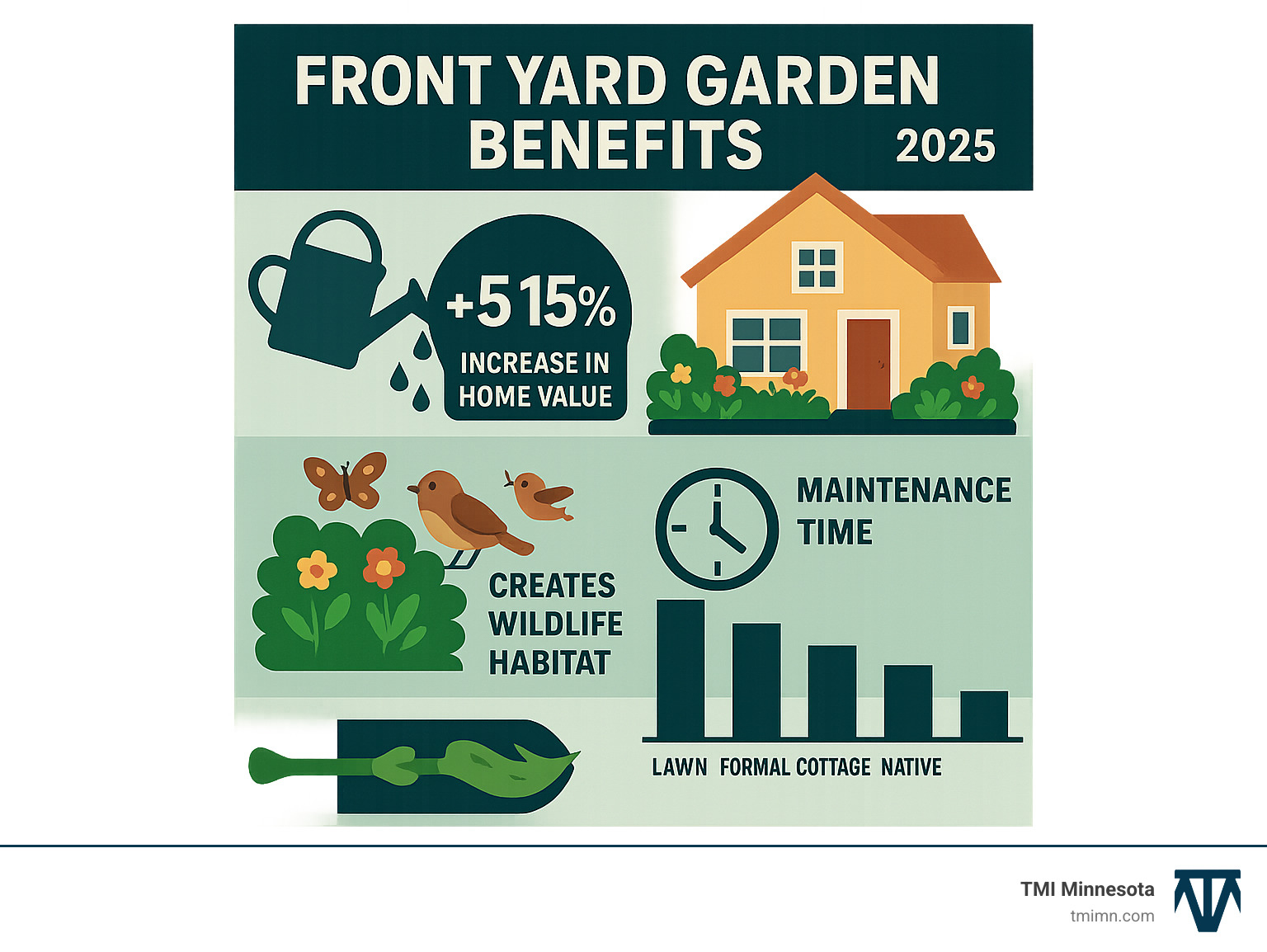
As one landscape architect noted, “Front yard gardens can change neighborhoods.” Research backs this up: properly designed front yard landscaping can increase your home’s value by 5-15% while creating a space you’ll love.
The benefits go beyond beauty. Front yard gardens can lower water bills, support local wildlife like birds and butterflies, and provide fresh herbs or vegetables right outside your door.
At TMI Minnesota, we’ve spent years helping Minnesota homeowners transform their outdoor spaces. Our experience with front yard gardens has shown us how the right combination of plants, hardscaping, and lighting can completely change how a home feels—for both the people living there and everyone who passes by.
The Power of a Great First Impression: Why Invest in Your Front Yard?
Your front yard tells a story before anyone rings the doorbell. Investing in front yard gardens creates a space that welcomes friends, impresses neighbors, and makes you smile every time you come home. The benefits go beyond aesthetics; a thoughtfully designed front yard becomes a personal oasis that also supports the local environment.
Boost Your Home’s Value and Curb Appeal
With 99% of realtors agreeing that curb appeal matters when selling a home, a beautiful front yard is a smart investment. Even if you’re not moving, it improves the entire neighborhood.
Professional landscaping can boost your home’s value by 5-15%. This investment provides a significant return while offering daily enjoyment. A well-cared-for front yard signals that your home is loved, making it a standout on the street. Our team at TMI Minnesota creates Beautiful Garden Landscaping that helps Minnesota homes achieve this.
Create an Eco-Friendly Oasis
Front yard gardens are not just beautiful; they’re beneficial for our local environment. Choosing native plants means working with nature. These plants are adapted to Minnesota’s soil and weather, requiring less watering, fertilizing, and maintenance.
Your yard can become a habitat for local wildlife, attracting birds for seeds and nesting spots, while butterflies and bees visit for nectar. Our Native Plant Landscaping approach proves that sustainable can be stunning. In fact, drought-resistant gardens can cut your water usage by up to 50%. Our Drought-Resistant Landscaping solutions deliver gorgeous, eco-friendly yards, saving you money on monthly water bills and giving you more time to enjoy your garden.
Planning Your Dream Front Yard Gardens
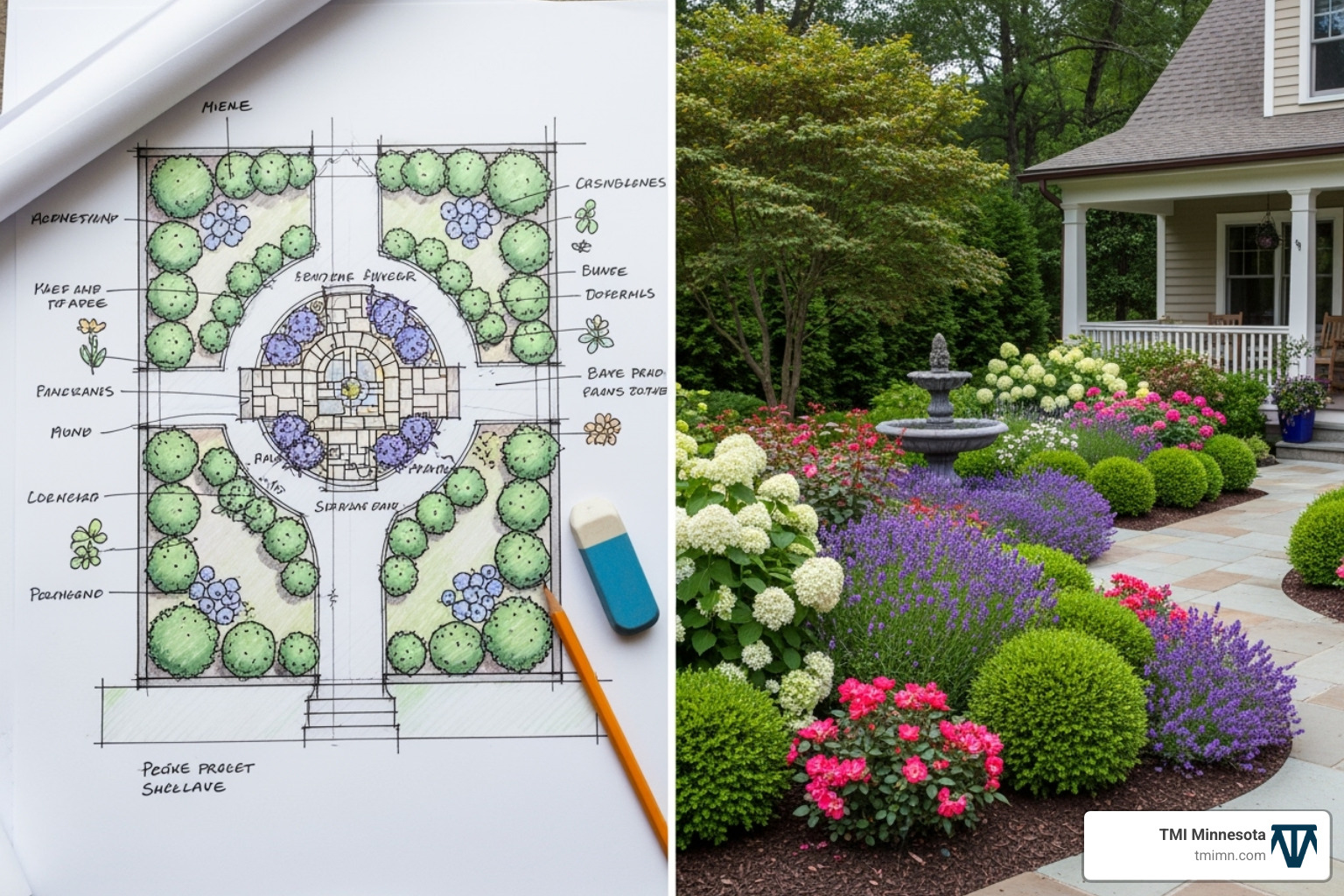
Creating your dream front yard gardens starts with a solid plan. A thorough site assessment is the first step. This involves mapping sunlight patterns, identifying your soil type (e.g., sandy vs. clay), and noting existing features. Your front yard also needs to be functional, whether you envision a cozy seating area or a safe play space for kids. Our Landscape Design approach creates functional zones that make every square foot count, from a welcoming entrance to private relaxation spots.
Balancing Hardscaping and Softscaping
Think of hardscaping as the permanent structure of your garden and softscaping as the living, colorful performance. Hardscape elements include pathways, retaining walls, fences, and patios. A well-designed path does more than connect two points; it guides the eye and showcases your garden. Our Garden Pathway Ideas can transform a simple walk into a journey.
Softscaping brings the life and color. Trees provide vertical drama, shrubs create year-round structure, and flowers add seasonal surprises. The magic happens when these elements work together. A stone wall is softened by cascading plants, and a formal path becomes more welcoming when lined with colorful perennials. Understanding What is Softscaping is key to changing rigid structures into inviting spaces. Our expertise in Softscaping and Hardscaping ensures every element works in harmony.
Lighting, Entrances, and Safety
Your front yard needs to be safe and inviting after dark. A clear, well-lit path to your front door is essential for security and preventing trips. Thoughtful landscape lighting also transforms your garden into an evening showpiece, turning a favorite tree into a sculpture or creating a welcoming ribbon of light. Our Landscape Lighting Ideas show how to improve both beauty and safety.
Safety considerations also include clearly defined, slip-resistant steps—crucial in Minnesota’s climate. Pathways should be wide enough for comfortable passage, and prominent house numbers are a practical detail that helps visitors, delivery drivers, and emergency services find you easily. For more inspiration, explore these 10 Ideas for the Front of Your House.
Finding Your Style: Garden Designs and Plant Selection
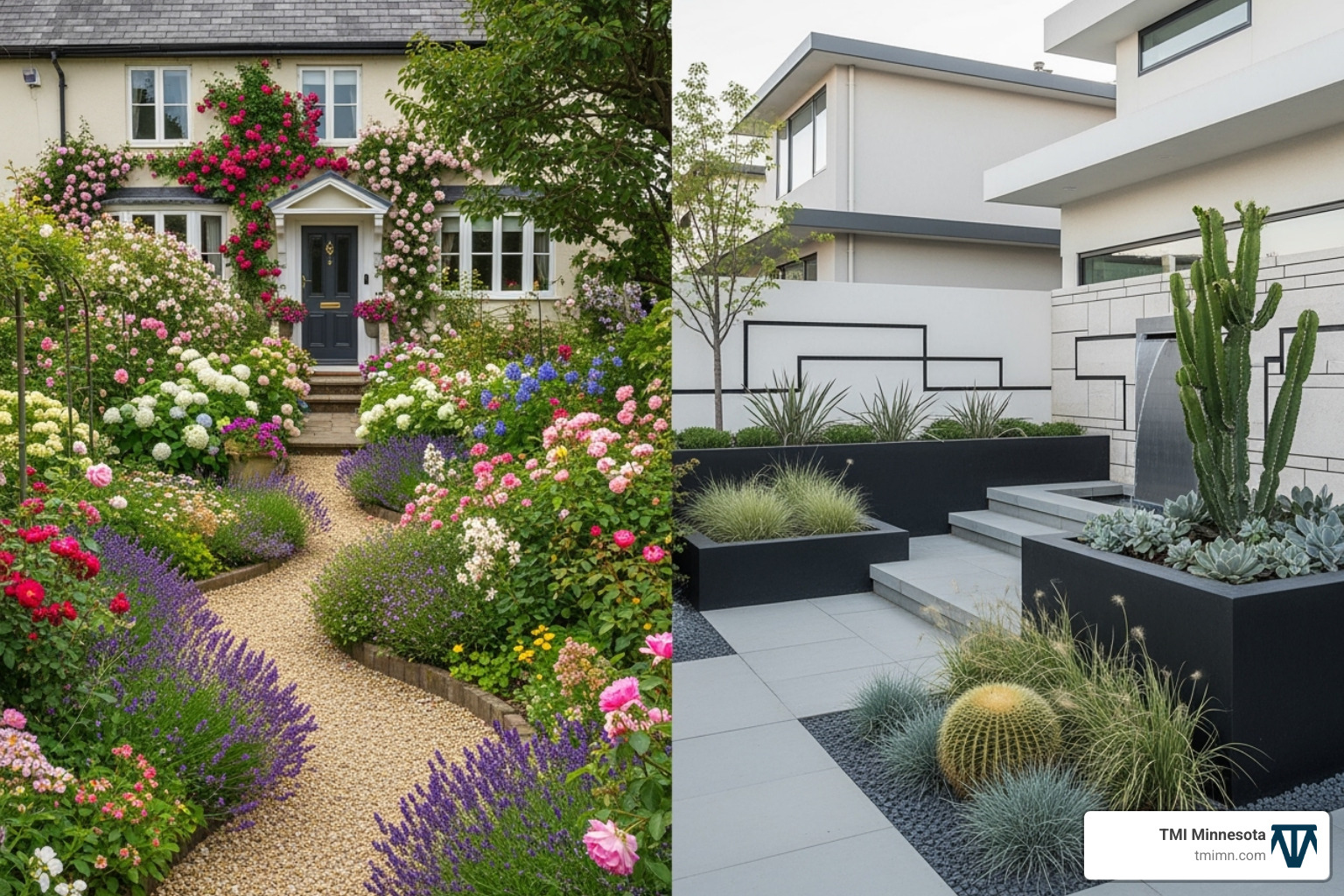
Your front yard gardens should complement your home’s architecture and your personal lifestyle. Whether you love spending weekends gardening or prefer a space that takes care of itself, there’s a style for you.
| Garden Style | Maintenance Level | Typical Plants | Best-Suited Home Architecture |
|---|---|---|---|
| Cottage | Medium to High | Roses, lavender, delphiniums, foxgloves, informal mix of perennials and annuals, climbing vines. | Charming, traditional, Cape Cod, Victorian, cozy homes. |
| Modern Minimalist | Low to Medium | Sculptural plants, ornamental grasses, succulents, evergreens with clean lines, limited color palette. | Contemporary, mid-century modern, minimalist architecture. |
| Native/Meadow | Low | Indigenous grasses, wildflowers, coneflowers, milkweed, plants adapted to local climate. | Naturalistic, eco-conscious, rustic, farmhouse, Arts & Crafts. |
| Edible (Foodscaping) | Medium to High | Herbs, vegetables (tomatoes, peppers), berry bushes, dwarf fruit trees, often in raised beds or integrated. | Any, but particularly suited to homes where functionality is key. |
| Zen | Low | Raked gravel, carefully placed rocks, dwarf conifers, moss, bamboo, minimal water features. | Asian-inspired, modern, tranquil, contemplative spaces. |
Popular Styles for Front Yard Gardens
- Cottage Style: A romantic, informal style celebrating abundance with overflowing flower beds, climbing roses, and fragrant lavender.
- Modern Minimalist: Uses clean lines, sculptural plants, and restrained color palettes to create sophisticated, low-clutter spaces.
- Formal Gardens: Feature symmetrical layouts, manicured hedges (like boxwood), and structured pathways for a look of timeless elegance.
- Naturalistic Meadow: Transforms a lawn into a low-maintenance landscape of native grasses and wildflowers that supports the local ecosystem.
- Edible Gardens (Foodscaping): Integrates vegetables, herbs, and fruit into the landscape, proving that gardens can be both beautiful and delicious.
- Zen Gardens: Create peaceful, contemplative retreats using a minimal palette of rocks, gravel, and carefully chosen plants.
Choosing the Best Plants for Your Climate and Style
Plant selection is critical for success. In the Twin Cities, we need plants tough enough for our Zone 4a/4b winters. Pay close attention to sun versus shade requirements by observing your yard throughout the day. A successful garden often mixes perennials (which return each year), annuals (for seasonal color), trees (for height), shrubs (for year-round structure), and groundcovers (to fill gaps and prevent weeds). Ornamental grasses are excellent low-maintenance choices that add texture and movement. Always check for invasive plants in your area before planting. Our team’s expertise in Softscape Design ensures you get plants that will thrive.
Creative Ideas for Small or Challenging Spaces
Small front yard gardens can be incredibly charming. When space is limited, think vertically. Vertical gardening uses walls and fences for planters and climbing vines. Container gardening offers flexibility to move plants and change seasonal displays. For sloped areas, terraced beds or groundcovers can solve erosion problems beautifully. A dry creek bed can manage drainage while adding unique character. Don’t neglect the area around your driveway; Driveway Landscaping Designs can soften harsh pavement and integrate it into your garden. Our expertise in Landscape Design for Small Yards helps maximize every square foot.
Practical Matters: Budget, Maintenance, and Regulations
Successful front yard gardens require solid planning around budget, upkeep, and local rules. Addressing these details upfront ensures you can enjoy your new space without stress. A beautiful garden doesn’t require a fortune; the key is smart planning.
Budgeting for Your Project
Most front yard gardens cost between $2,000 and $10,000. A basic project with new beds, plants, and mulch might be around $3,000, while adding hardscaping like stone paths will increase the cost. To manage expenses, consider phasing your project over time. Start with a garden bed this year and add lighting next year.
DIY tasks like planting annuals and spreading mulch can save money. Reserve your budget for professional expertise on complex jobs like grading or intricate planting design. Other cost-saving tips include starting plants from seed, dividing perennials as they grow, and repurposing materials like old bricks for edging. For a beautiful, zero-maintenance lawn alternative, Front Yard Synthetic Grass is a practical option with long-term savings on water and upkeep.
Essential Maintenance for Front Yard Gardens
Choose a design that matches your lifestyle. If you prefer relaxing over weeding, select native plants and ornamental grasses. Key maintenance tasks include:
- Watering: New plants need consistent moisture for the first year. After that, drought-tolerant choices and drip irrigation systems reduce watering time and cost.
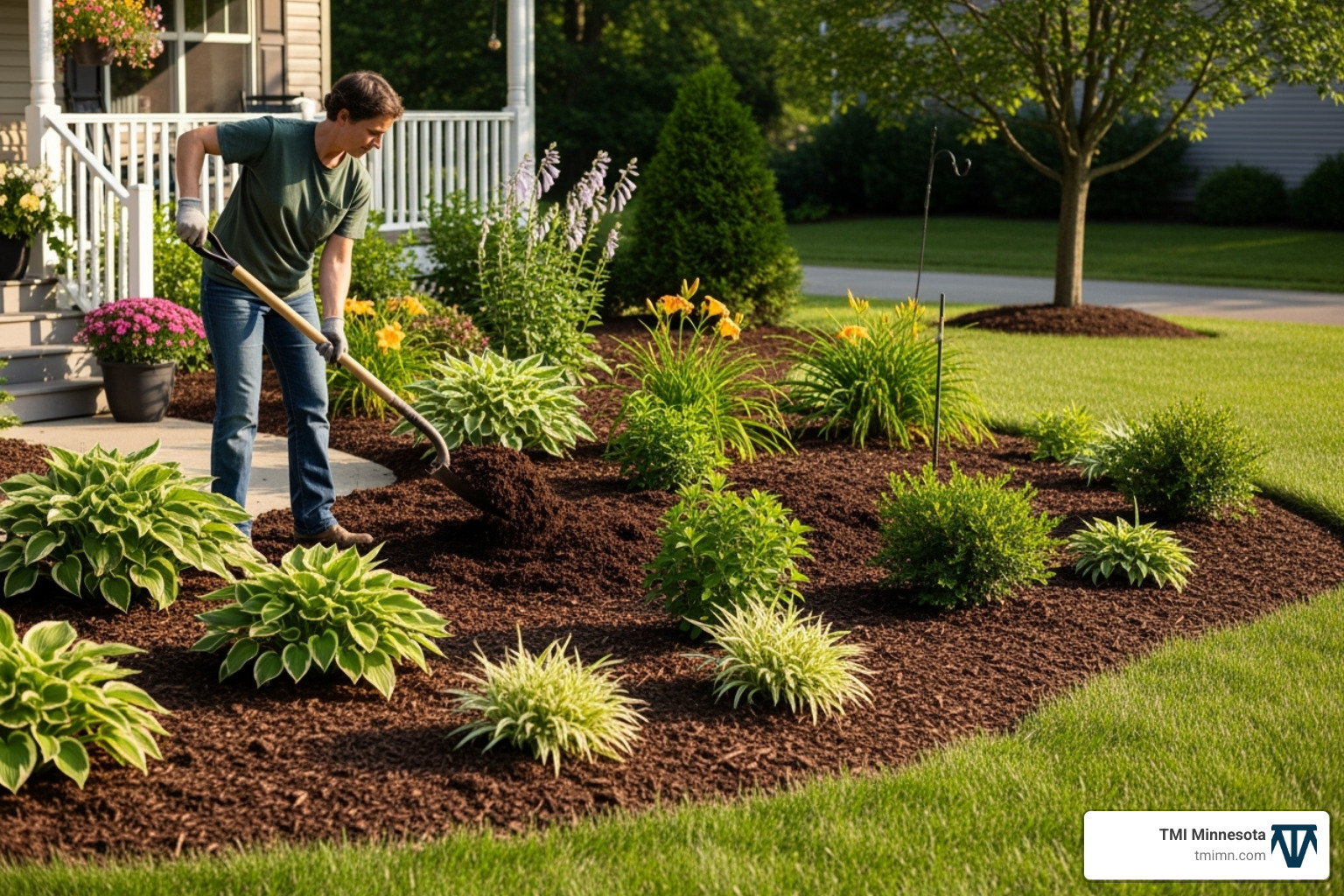
- Mulching: A 2-3 inch layer of mulch suppresses weeds, retains moisture, and gives a polished look. Refresh it each spring.
- Seasonal Cleanup: A spring cleanup removes winter debris, while a fall cleanup prepares the garden for winter. Leaving some plants standing provides winter interest and food for birds.
- Pruning and Fertilizing: These needs vary by plant. Native plants require little, while some flowers appreciate regular feeding.
Our Low-Maintenance Front Yards designs focus on plants that thrive with minimal attention.
Finally, check local regulations. HOA rules may specify plant types or fence heights, and city ordinances often address sight lines, drainage, and utility access. A quick check beforehand prevents future headaches.
Frequently Asked Questions about Front Yard Gardens
We get many questions from homeowners excited to transform their front yard gardens. Here are answers to the three most common ones.
How can I make my front yard look good on a budget?
You don’t need a massive budget for a beautiful front yard garden. Focus on high-impact, low-cost changes:
- Add fresh mulch. It instantly makes garden beds look neat, polished, and professional.
- Create crisp bed edges. Use a spade to define a clean line between your lawn and garden beds for a sharp, designed look.
- Invest in perennials that multiply. Plants like hostas, daylilies, and coneflowers can be divided after a few years, giving you free plants to expand your garden.
- Use container gardens. A few well-placed pots with colorful annuals can instantly transform an entrance or patio.
- Keep it tidy. Regular mowing, weeding, and sweeping walkways make any landscape look well-maintained.
What are the best low-maintenance plants for a front yard?
For a gorgeous garden without constant work, choose plants that thrive on their own once established. Top choices for low-maintenance front yard gardens include:
- Native Plants: Species like Little Bluestem grass and Purple Coneflower are adapted to Minnesota’s climate, requiring minimal water and care.
- Hardy Shrubs: Boxwood and many hydrangea varieties provide year-round structure and only need occasional pruning.
- Long-Blooming Perennials: Coneflower and Black-Eyed Susan provide color for months and return stronger each year.
- Ornamental Grasses: These add texture and movement and typically only need to be cut back once in late winter or early spring.
- Drought-Tolerant Succulents: Many varieties thrive in our climate in containers or well-draining garden spots, offering unique shapes with almost no care.
How do I start a front yard garden if I have a lawn?
Converting a lawn into a garden can feel overwhelming, but it’s manageable. The key is to start small. Choose one area, like around your entrance, to focus on first.
Our favorite no-dig method is sheet mulching. Lay cardboard directly over the grass to smother it, then layer organic materials like compost and leaves on top. This process kills the lawn and builds rich soil at the same time. You can plant directly into the top layer. This approach allows you to gradually expand your garden beds over time. For large areas, professional lawn removal and bed preparation can provide a clean slate and ensure your new plants have the best start.
Transform Your Front Yard into a Lasting Impression
Your outdoor space has the power to transform your relationship with your home. A well-designed front yard garden welcomes guests, increases your home’s value by 5-15%, and provides daily joy. It becomes a haven for wildlife, a water-saving oasis, and a source of personal satisfaction.
A well-planned front yard is an investment in the life you want to live. It’s where neighbors stop to chat, where you can watch butterflies visit flowers, and where you can enjoy a quiet moment of beauty.
At TMI Minnesota, we understand that every homeowner’s vision is unique. Whether you dream of a charming cottage garden or the clean lines of modern minimalism, we’re passionate about helping Twin Cities homeowners bring their outdoor dreams to life. Our expertise in hardscape and softscape design allows us to handle every aspect of your project, using proven techniques to create spaces that thrive in our Minnesota climate.
Ready to create your own lasting impression? Explore xeriscape landscaping ideas to save water and effort and let’s start planning the front yard you’ve always imagined!