
Why Water-Wise Landscaping Matters for Minnesota Homeowners
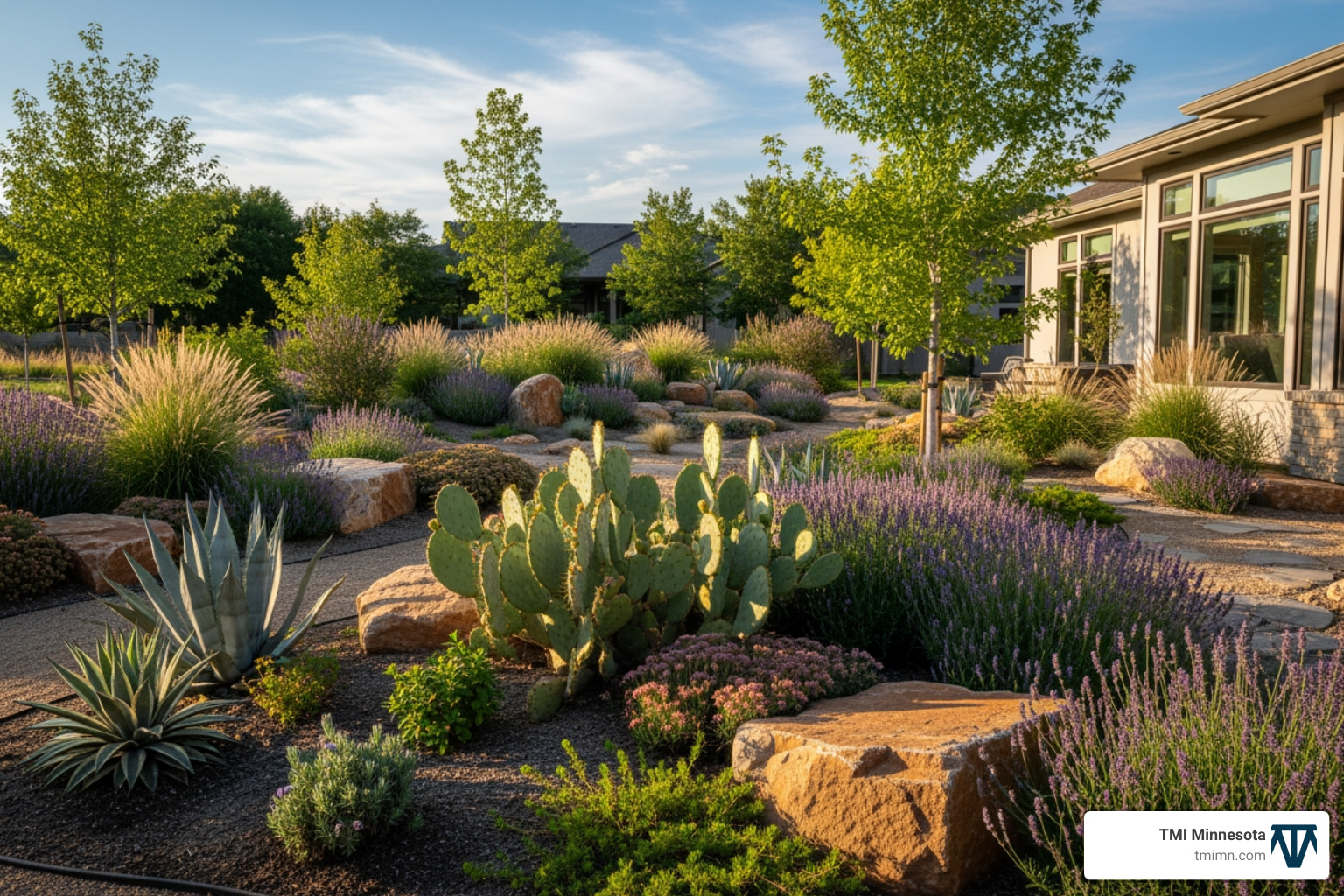
What is xeriscaping? It’s a landscaping approach that reduces or eliminates the need for supplemental watering by using drought-tolerant plants, efficient irrigation, and smart design principles. The term combines the Greek word “xeros” (meaning dry) with “landscaping” to create beautiful, low-maintenance outdoor spaces that conserve water.
Quick Answer:
- Definition: Landscaping method that minimizes water use through strategic plant selection and design
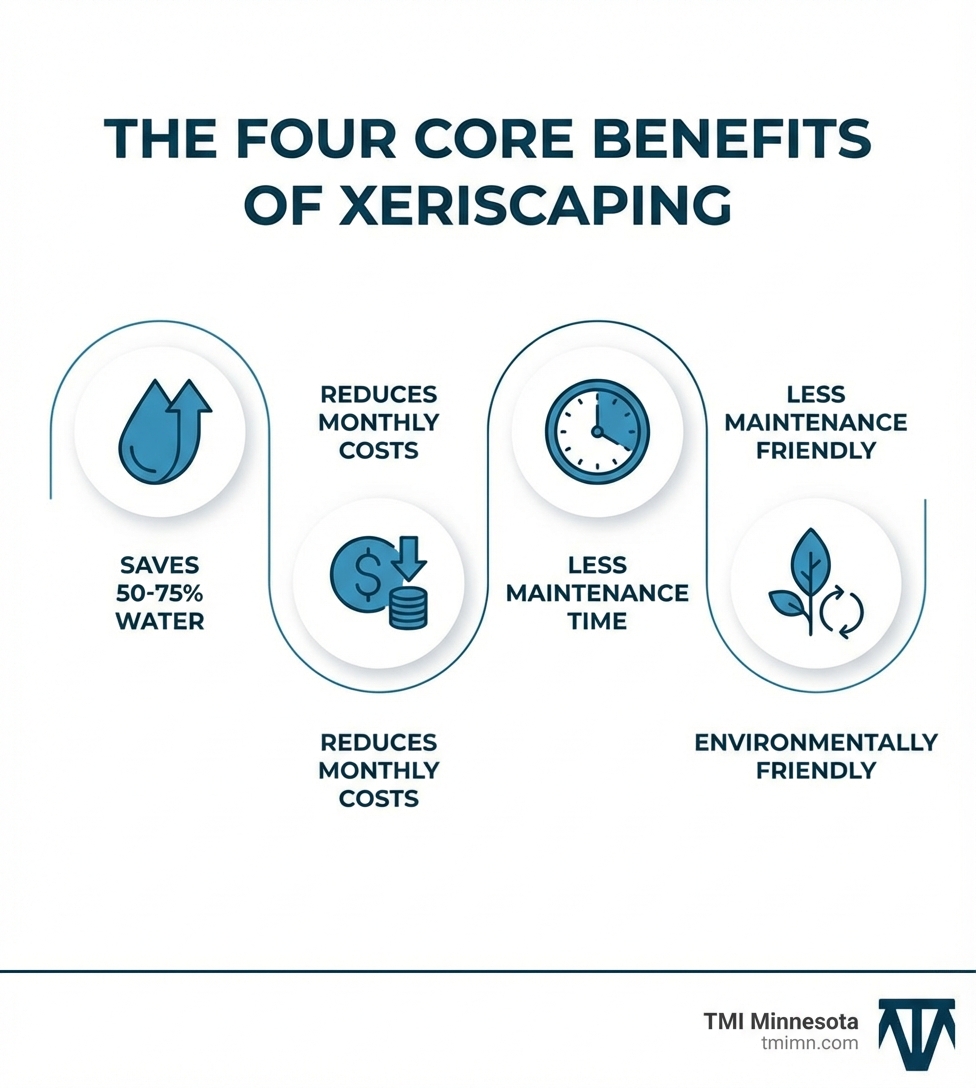
- Key Benefit: Can reduce outdoor water consumption by 50-75%
- Core Principles: Seven main practices including planning, soil improvement, and efficient irrigation
- Common Myth: It’s NOT just rocks and cacti—xeriscaping creates lush, colorful gardens
- Origin: Coined by Denver Water Department in 1981 during drought conditions
Let’s face it—many Minnesota homeowners struggle with the same challenge. You want a beautiful outdoor space for family gatherings, but traditional lawns demand constant watering, mowing, and maintenance. Meanwhile, landscape irrigation consumes an estimated nine billion gallons of freshwater per day across the United States, about a third of all household water use.
Xeriscaping offers a smarter solution. It’s not about creating a barren desert landscape. Instead, it’s about choosing plants adapted to your local climate, improving your soil, and designing outdoor spaces that thrive with minimal intervention. The result? A vibrant, diverse garden that practically takes care of itself while cutting your water bills and weekend chore list.
The benefits are tangible:
- Lower outdoor water use by 30-50% or more
- Reduce maintenance time and costs by up to 55%
- Create year-round visual interest with native plants
- Support local pollinators and wildlife
- Increase your home’s curb appeal
I’m Christopher Deanovic, Operations Leader at TMI Minnesota, and I’ve helped countless Minnesota homeowners transform their outdoor spaces using sustainable design principles. Through my years of experience understanding what is xeriscaping and implementing water-wise landscapes, I’ve seen how these techniques create stunning results while respecting our environment.
Glossary for what is xeriscaping:
What is Xeriscaping and Why Does It Matter?
At its heart, what is xeriscaping? It’s a method of landscaping designed to reduce or eliminate the need for irrigation. The term itself is a blend of the Greek word “xeros,” meaning dry, and “landscaping.” This innovative approach was first coined by the Denver Water Department in 1981 in response to severe drought conditions, seeking an alternative to the traditional, water-intensive grass yards. Their goal was to describe an alternative to grass yards that allowed for aesthetically pleasing and eco-friendly landscaping with minimal water use.
The importance of xeriscaping has grown exponentially, especially as we face increasing concerns about water scarcity. Landscape irrigation consumes an estimated nine billion gallons of freshwater per day in the U.S., accounting for about a third of all household water use. In some arid states, this figure can soar, with 75% of households’ potable water used just for watering residential and urban lawns. This unsustainable demand on our freshwater resources highlights why water-wise landscaping isn’t just a trend, but a necessity.
When we talk about what is xeriscaping, it’s crucial to differentiate it from “zeroscaping.” While both aim for minimal irrigation, zeroscaping often refers to landscapes with very few or no plants, relying heavily on rocks and gravel, which can sometimes lead to a barren or stark appearance. Xeriscaping, on the other hand, is about creating vibrant, diverse, and lush gardens using plants adapted to local conditions, reducing water needs without sacrificing beauty. It emphasizes sustainable choices and thoughtful design, making it a truly sustainable landscaping technique that benefits both your home and the environment.
The 7 Principles of Water-Wise Landscaping
Understanding what is xeriscaping involves grasping its seven core principles. These aren’t rigid rules, but rather a systematic approach that guides us in creating beautiful, water-efficient landscapes that thrive in our Minnesota climate. By following these principles, we ensure long-term success and enjoyment of our outdoor spaces.
1. Planning and Design
The first and most crucial step in any xeriscaping project is thorough planning and design. This involves assessing your yard’s unique characteristics and your family’s needs. We start by mapping out “hydrozones”—areas with similar water requirements. This helps us group plants effectively, ensuring that high-water-need plants are separated from low-water-need plants. We also consider factors like sun and shade patterns throughout the day and year, as well as existing soil types. Do you need play areas for children? A cozy patio for entertaining? These user needs are integrated into the design, allowing us to create functional and beautiful spaces that inherently conserve water. For a truly custom approach, our landscape design experts can help you craft a plan that works for your unique Minnesota property.
2. Soil Improvement
Healthy soil is the foundation of a successful xeriscape. We know that well-aerated soil rich in organic matter retains water significantly better than sandy or compacted soils. For our Minnesota landscapes, this often means amending existing soil with nutrient-rich compost and other organic materials like leaf mold. This improves the soil’s structure, improves its water retention capacity, and promotes better aeration for strong root growth. Before we even begin planting, we recommend a soil test to understand its current composition and determine the best amendments. This proactive step helps plants establish more easily and reduces their long-term water needs.
3. Appropriate Plant Selection
This principle is at the heart of what is xeriscaping. It’s about choosing plants that are naturally adapted to our local climate conditions, primarily those that are drought-tolerant. For Minnesota, this means focusing on Minnesota native plants whenever possible. Native species have evolved to thrive with the region’s natural rainfall and soil, requiring less supplemental irrigation once established. We also look for other drought-tolerant plants that can handle our seasonal dry spells. The key is to group plants with similar water needs together in your hydrozones, allowing for efficient watering practices. This approach not only conserves water but also creates a landscape that feels naturally harmonious with our environment.
4. Practical Turf Areas
One of the biggest misconceptions about what is xeriscaping is that it means eliminating all grass. Not true! It’s about being practical and intentional with turf. We encourage limiting the size of traditional lawns to only those areas that will be actively used, such as play spaces or focal points. For other areas, we can explore drought-tolerant grass alternatives or even replace turf with groundcovers, mulched beds, or hardscaping. If a lawn is desired for high-traffic zones, we recommend selecting water-efficient turfgrasses that are better suited to our climate and require less water. Alternatively, modern artificial turf landscaping offers a completely water-free and low-maintenance solution for those seeking a green lawn aesthetic without the upkeep.
5. Efficient Irrigation
Even drought-tolerant plants sometimes need a little help, especially during establishment or extended dry periods. The key is to irrigate efficiently. This means using systems that deliver water directly to the plant roots, minimizing waste from evaporation and runoff. We often recommend drip irrigation systems or soaker hoses for planting beds, as they are incredibly water-wise, saving 50% to 90% of water compared to traditional sprinklers. Smart controllers, which adjust watering schedules based on weather and soil moisture, can further optimize water use. When we do water, we aim for deep, infrequent cycles to encourage strong, deep root growth. And a little tip: watering in the morning reduces evaporation and helps prevent fungal diseases. Our garden irrigation systems are designed with efficiency in mind.
6. Use of Mulches
Mulch is like a cozy blanket for your soil, and it’s an absolute must in xeriscaping. Applying a layer of mulch over bare soil provides numerous benefits: it drastically reduces water loss due to evaporation, suppresses weed growth (reducing competition for water), and moderates soil temperature. For Minnesota, organic mulches like bark, wood chips, or shredded leaves are excellent choices as they decompose over time, adding valuable organic matter to the soil. Inorganic mulches like gravel or rock can also be effective, especially in specific design elements, but we ensure they are used appropriately to avoid issues like heat retention that could stress plants.
7. Appropriate Maintenance
While xeriscapes are often referred to as “low-maintenance,” they are not “no-maintenance.” They require appropriate care to thrive, though typically far less than traditional landscapes. This includes proper pruning to maintain plant health and shape, minimal fertilizing (as excessive fertilizer promotes lush growth that requires more water), and integrated pest management to keep plants healthy without harsh chemicals. Regular weeding, especially during the establishment phase, is also important to prevent competition for precious water. The goal is to nurture a healthy ecosystem that requires less intervention over time, giving you more time to enjoy your beautiful outdoor space.
The Tangible Benefits of a Xeriscape Garden
Beyond simply understanding what is xeriscaping, appreciate the profound impact it can have. For homeowners in the Twin Cities, adopting this approach offers a wealth of benefits that extend from your wallet to the local ecosystem. We’re talking about significant water savings, reduced household costs, a positive environmental impact, improved aesthetics, and a dramatically reduced workload for you.
Save Water, Save Money
This is where the rubber meets the road for many homeowners. Xeriscaping can reduce outdoor water consumption by 50% to 75% or even more compared to traditional lawn landscapes. Imagine what that means for your monthly utility bills! Less water usage directly translates to lower costs, putting money back in your pocket. Beyond just water, a xeriscape reduces the need for chemical fertilizers and pesticides, further cutting down on your expenses and environmental footprint. In some regions, local water utilities even offer rebates or incentives for homeowners who convert to water-wise landscaping, making the initial investment even more attractive. While Minnesota might not experience the same intense droughts as the Southwest, water conservation remains a smart and responsible choice for our communities and future.
Reduce Maintenance, Reclaim Your Weekends
Are you tired of spending your precious weekend hours mowing, watering, and battling weeds? Xeriscaping is your answer! Our clients consistently tell us that one of the biggest perks is the dramatic reduction in maintenance. With drought-tolerant plants and smart design, you’ll experience:
- Less Mowing: Significantly reduced or eliminated turf areas mean fewer hours pushing a mower.
- Less Watering: Once established, xeriscapes require minimal supplemental water, freeing up your time and often eliminating the need for complex sprinkler systems.
- Fewer Chemicals: Native and well-adapted plants are more resistant to local pests and diseases, reducing the need for harsh pesticides and fertilizers.
- Less Yard Waste: A more natural landscape often means less pruning and clippings to dispose of.
This translates to more time for family, hobbies, or simply relaxing in your beautiful, low-effort yard. For those who want to virtually eliminate turf maintenance, our artificial grass maintenance complete guide shows how modern solutions can offer a perpetually green, chore-free lawn.
Boost Your Home’s Curb Appeal
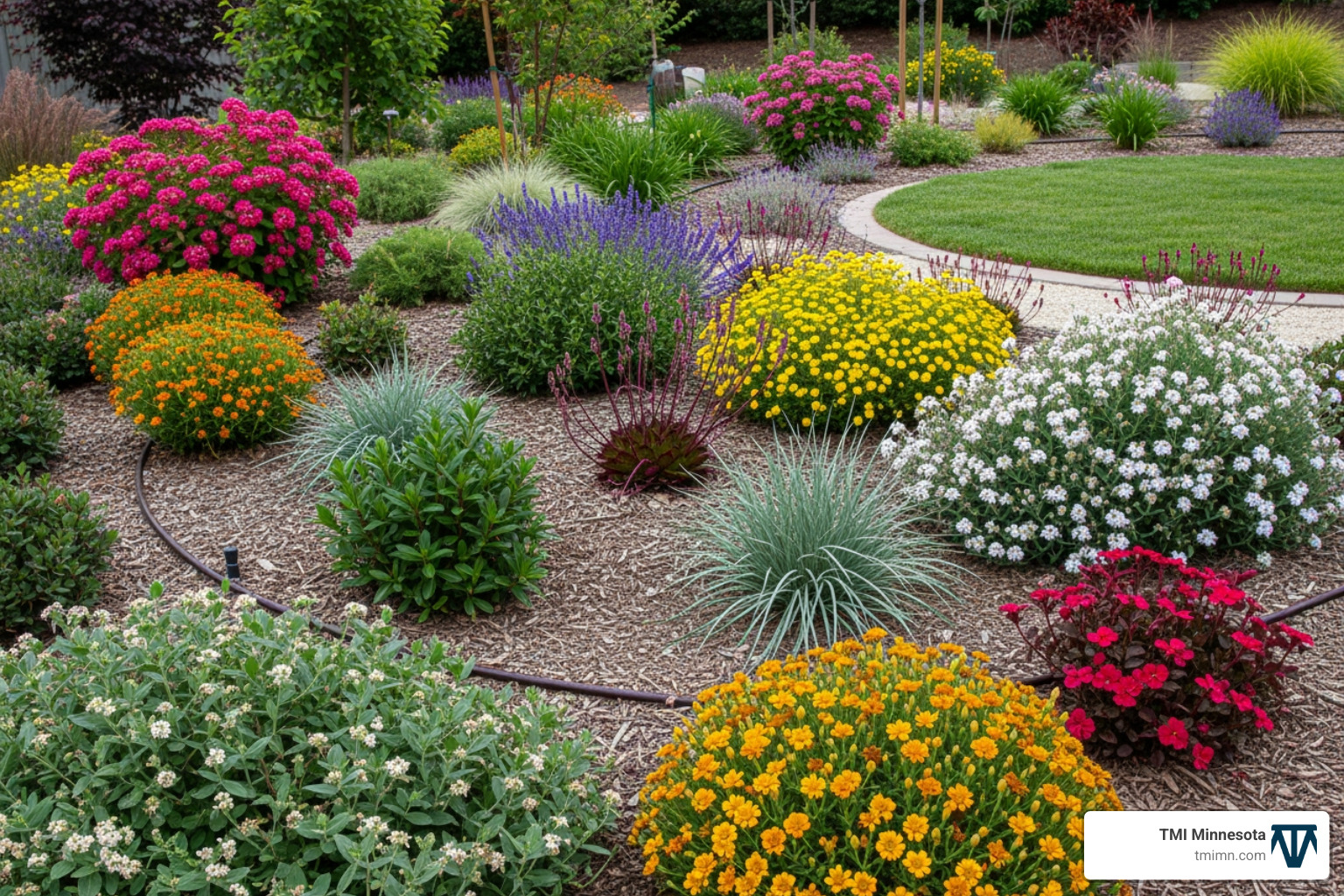
The idea that xeriscaping results in a barren, unappealing landscape is a common misconception, and we’re here to debunk it! A beautifully designed xeriscape can significantly boost your home’s curb appeal, offering year-round visual interest with diverse textures, colors, and forms. Just look at this example:
A drought-tolerant front yard doesn’t have to sacrifice visual appeal. Photo courtesy of waterwiseyards.org
Far from being just rocks and cacti, a well-planned xeriscape incorporates a rich mix of plants, hardscaping elements, and thoughtful design. We can create stunning gardens that are lush, vibrant, and full of life, attracting admiring glances from neighbors and visitors alike. Our approach to beautiful garden landscaping focuses on creating outdoor spaces that are not only sustainable but also deeply satisfying to behold.
Create a Healthy, Eco-Friendly Habitat
Beyond the immediate benefits to your home and schedule, xeriscaping plays a vital role in fostering a healthier environment right in your backyard. By choosing native and drought-tolerant plants, we’re not just saving water; we’re also:
- Supporting Pollinators: Many native plants are crucial food sources and habitats for local wildlife, including bees, butterflies, and hummingbirds. Creating a pollinator-friendly garden helps reverse declining insect populations.
- Reducing Chemical Runoff: Less reliance on fertilizers and pesticides means less harmful chemicals washing into our local waterways, protecting our lakes and rivers in Minnesota.
- Less Air Pollution: By reducing the need for gas-powered mowers and other lawn equipment, we contribute to cleaner air. Did you know that gas-powered mowers and leaf blowers emit 242 million tons of pollutants a year?
- Enhancing Biodiversity: A diverse xeriscape creates a richer ecosystem, providing shelter and food for a wider range of species than a monoculture lawn ever could.
Xeriscaping allows us to create environmentally friendly gardens that are beautiful, functional, and contribute positively to our planet.
Getting Started with Your Own Xeriscape Project
The idea of changing your yard can feel daunting, but breaking it down into manageable steps makes the process enjoyable and rewarding. Whether you’re considering a DIY approach or seeking professional help, understanding the journey is key.
Your First Steps to Understanding What Xeriscaping Is in Practice
Ready to dive into what is xeriscaping for your own home? Here’s how we recommend starting:
- Start Small: You don’t have to overhaul your entire yard at once. Begin with a small section, perhaps a front garden bed or a problematic area that struggles with water. This allows you to learn and gain confidence.
- Assess Your Yard: Take stock of your current landscape. Observe sun exposure throughout the day, identify wet and dry spots, and note existing plants. This assessment will inform your design choices.
- Remove Turf: If you’re replacing a thirsty lawn, turf removal is often the first big step. Techniques like sheet mulching (layering cardboard, compost, and mulch) can be an eco-friendly way to smother grass and improve soil over time.
- Create a Plan: This is where the fun begins! Sketch out your ideas, considering hydrozones, pathways, and plant groupings. Think about color, texture, and year-round interest. Don’t hesitate to consult with our residential landscape services to help you craft a professional and effective plan.
Choosing the Right Plants for Your Climate
For our Minnesota climate, selecting the right plants is paramount. We focus on species that can handle our hot summers and cold winters with minimal supplemental water. Here’s a list of popular drought-tolerant plants that thrive in the Twin Cities region:
- Coneflower (Echinacea): A classic prairie flower, excellent for pollinators and comes in various colors.
- Sedum (Stonecrop): Succulent leaves store water, making them incredibly hardy and low-maintenance. Many varieties offer late-season bloom.
- Yarrow (Achillea): Feathery foliage and flat-topped flower clusters make this a resilient and attractive choice.
- Lavender (Lavandula): Fragrant and beautiful, many varieties perform well in sunny, well-drained spots.
- Russian Sage (Perovskia atriplicifolia): A silvery-leaved perennial with airy purple flowers, known for its extreme drought tolerance.
- Ornamental Grasses (e.g., Little Bluestem, Prairie Dropseed): Provide texture, movement, and year-round interest with minimal water.
- Penstemon (Beardstongue): Beautiful tubular flowers that attract hummingbirds and are well-adapted to drier conditions.
- Pasque Flower (Pulsatilla nuttalliana): One of Minnesota’s earliest bloomers, highly drought-tolerant once established.
- Leadplant (Amorpha canescens): A native shrub with silvery foliage and purple flower spikes, excellent for dry sites.
Beyond this list, explore a variety of succulents, perennials, and shrubs that are labeled as drought-tolerant at your local nurseries. Our xeriscape garden plants complete guide offers even more inspiration and specific recommendations for our region.
Incorporating Hardscaping and Mulch
Hardscaping elements are crucial for defining spaces, creating visual interest, and providing functionality in a xeriscape. Think about:
- Pathways: Define circulation and guide visitors through your garden.
- Patios: Create inviting outdoor living areas that don’t require watering.
- Retaining Walls: Manage slopes and create planting terraces, often built with permeable materials.
- Rock Gardens: Integrate boulders and various sizes of rocks to mimic natural landscapes and provide structure.
- Decomposed Granite: A popular permeable surface for patios and pathways that allows water to infiltrate the soil.
These non-living elements complement the plant palette, adding texture and form while further reducing the need for water-intensive plantings. Combine these with appropriate mulches, both organic and inorganic, to complete your water-wise design. Explore how we integrate hardscape and softscape to create cohesive and sustainable outdoor environments.
Frequently Asked Questions about Xeriscaping
We often hear similar questions from homeowners curious about what is xeriscaping. Let’s address some common misconceptions and clarify key points to help you feel more confident about this sustainable landscaping choice.
What is the difference between xeriscaping and “zeroscaping”?
This is a really important distinction! As we mentioned earlier, “zeroscaping” typically implies a landscape with little to no plant material, often dominated by rocks, gravel, and perhaps a few isolated cacti. While it certainly saves water, it can sometimes appear stark or barren.
Xeriscaping, however, is about “dry-scaping” with living plants that are naturally water-wise. It emphasizes thoughtful design, plant selection, and efficient irrigation to create beautiful, diverse, and often lush gardens that thrive with minimal supplemental water. We aim for vibrant color, varied textures, and habitats for wildlife, not just an expanse of gravel. It’s about smart planting, not no planting!
Does xeriscaping mean I can’t have any lawn?
Absolutely not! This is another significant misconception. While xeriscaping aims to reduce the overall area of water-intensive turfgrass, it doesn’t mean you have to eliminate your lawn entirely. Instead, it encourages us to be more intentional about where and how we use turf.
We can keep smaller, functional grass areas for play or as a soft transition to other landscape elements. The key is to choose appropriate turfgrasses that are more drought-tolerant for our Minnesota climate, or consider native grass alternatives to lawns that require significantly less water and maintenance. It’s about right-sizing your lawn and making smart choices, not going completely grass-free unless that’s your preference.
Is xeriscaping expensive to install?
The initial investment for a xeriscape can sometimes be comparable to, or even slightly higher than, a traditional landscape, especially if you’re removing existing turf and installing new hardscaping or an efficient irrigation system. However, it’s crucial to look at the long-term picture.
Xeriscaping drastically lowers annual maintenance costs by roughly 55% and can cut your outdoor water use by 50-75% or more. These savings accumulate rapidly over time, quickly offsetting any upfront costs. Plus, reduced spending on fertilizers, pesticides, and gas for mowing adds to your savings. Many cities and utilities also offer rebates or incentives for converting to water-wise landscaping, which can further reduce your initial outlay. When you factor in the long-term cost savings and the environmental benefits, xeriscaping proves to be a wise and economically sound investment for your home.
Conclusion: Accept a Smarter, More Sustainable Landscape
Understanding what is xeriscaping opens up a world of possibilities for homeowners. It’s more than just a landscaping trend; it’s a commitment to a smarter, more sustainable way of living that benefits both your household and our precious Minnesota environment. We’ve seen that xeriscaping is not about deprivation or stark, dry landscapes. Instead, it’s about creating stunning, vibrant, and diverse outdoor spaces that celebrate the beauty of nature while being incredibly efficient with our resources.
The benefits are clear: significant water and cost savings, drastically reduced maintenance, improved curb appeal, and the creation of healthy, eco-friendly habitats that support local wildlife. This adaptable approach can be custom to any design style, from modern and minimalist to rustic and natural, ensuring your landscape reflects your personal taste while being environmentally responsible.
At TMI Minnesota, our landscape design experts are passionate about helping you create a stunning, water-wise landscape that reflects your personal style while respecting our environment. We believe your outdoor space should be a source of joy, relaxation, and pride, not a constant chore or a drain on resources.
Ready to explore beautiful, water-saving designs that will thrive in the Twin Cities? Check out our Xeriscape Landscaping Ideas for inspiration and let’s start planning your sustainable oasis today!