
Why Permeable Paving Matters for Minnesota Homeowners
Turf block pavers are concrete or plastic grid systems with open cells that allow grass to grow through while providing a stable surface for vehicles and foot traffic. These permeable pavers reduce stormwater runoff, prevent soil erosion, and create an eco-friendly alternative to traditional asphalt or concrete driveways.
Quick Overview:
- What they are: Lattice-style pavers with 40% open space for grass or gravel infill
- Primary use: Driveways, parking areas, fire lanes, and erosion control
- Cost: $4-6 per square foot (vs. $3-4 for asphalt)
- Lifespan: 10-15 years for residential use
- Key benefit: Allows rainwater to infiltrate soil instead of creating runoff
Joni Mitchell wasn’t kidding when she said you could wreck paradise with a parking lot. A traditional asphalt driveway absorbs heat, contributes to water pollution through runoff, and replaces living soil with an impermeable barrier. Turf block pavers offer a different approach—one that combines the structural strength needed for vehicles with the environmental benefits of a living landscape.
These grid-style pavers work by distributing vehicle weight across a concrete or plastic lattice while allowing grass roots to stabilize the soil beneath. The open cells create a surface that’s 40% permeable, letting rainwater filter back into the ground rather than flowing into storm drains. This design addresses a major environmental concern: stormwater runoff is one of the leading sources of water pollution in urban and suburban areas.
For homeowners looking to modernize their outdoor spaces without sacrificing functionality, turf block pavers provide a practical middle ground. They’re strong enough to support cars and trucks—up to 5,000 pounds per square inch—while maintaining the aesthetic appeal of a green lawn. The result is a driveway or parking area that stays cooler in summer, reduces your property’s environmental impact, and creates a more visually appealing entrance to your home.
I’m Christopher Deanovic, and through my work leading landscape and hardscape projects across Minnesota, I’ve seen how turf block pavers transform both the functionality and appearance of residential properties. From managing drainage issues on sloped driveways to creating fire access lanes that blend seamlessly with surrounding lawns, these permeable systems consistently deliver results that satisfy both practical needs and environmental goals.
Turf block pavers terms you need:
Understanding Turf Block Pavers and How They Work
At their core, turf block pavers (often referred to as Turfstone or grass block pavers) are an ingenious solution for harmonizing green spaces with vehicular traffic areas. Unlike traditional pavers that create a solid, impenetrable surface, these units feature a unique lattice or “waffle” design. This design typically provides a 40% open space percentage, which is the “magic number” that allows for both grass growth and efficient water infiltration.
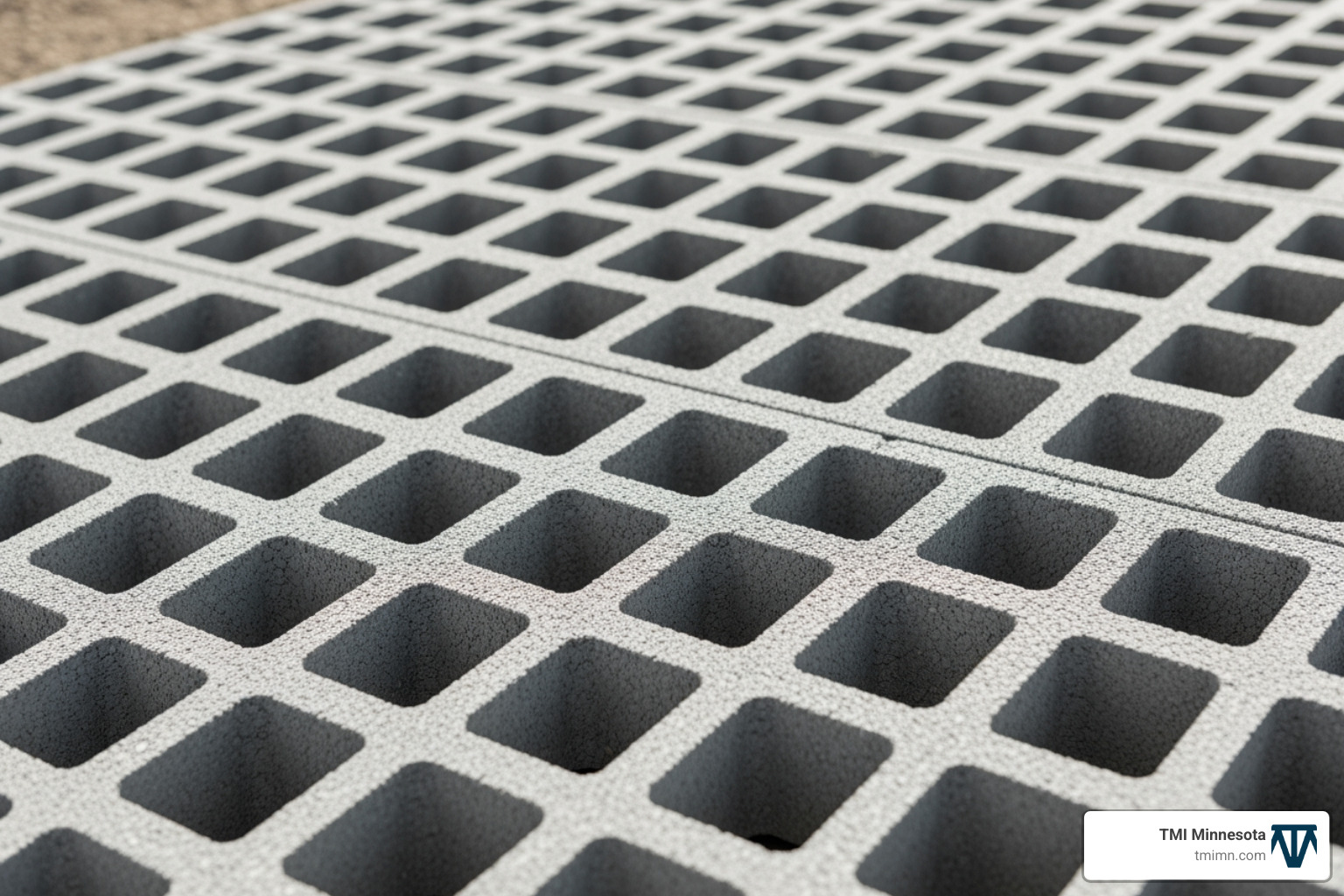
When we install these in the Twin Cities, we are essentially creating a reinforced lawn. The concrete or plastic ribs of the paver take the brunt of the vehicle’s weight, preventing the soil within the cells from becoming compacted. This is crucial because compacted soil kills grass roots and stops water from soaking in. By protecting the root zone, the pavers allow the grass to thrive even when a car is parked on top of it.
These systems are engineered to meet strict industry standards, such as ASTM C1319. This ensures they provide excellent erosion control and soil stabilization, even on slopes or in low-flow channels. Whether you are looking for a permeable paver driveway or a stable surface for an RV, understanding the materials is the first step.
Material Varieties: Concrete vs. Plastic
When choosing turf block pavers, we generally look at two primary materials: high-quality concrete and recycled plastic.
- Concrete Grid Pavers: These are the heavy hitters of the industry. Typically 3.125 to 4 inches thick, they are exceptionally strong, often capable of supporting up to 5,000 pounds per square inch (PSI). They are the preferred choice for main driveways, fire lanes, and areas with heavy vehicle traffic. Their weight (around 58 lbs per unit) keeps them firmly in place once installed.
- Plastic Grid Pavers: Often made from recycled high-density polyethylene (HDPE), these are lighter and easier to handle. They are excellent for overflow parking, garden paths, or areas where you want the “grid” to be virtually invisible once the grass grows in. Some plastic systems feature interlocking connectors that allow them to be cut and shaped around curves or trees easily.
Standard Sizes and Specifications
Efficiency in design starts with the numbers. A single standard concrete turf block paver piece typically covers approximately 2.56 to 2.6 square feet. In the landscaping world, they are often sold in “cubes” or pallets. A standard cube of 80mm (roughly 3 1/8 inches) thick pavers usually covers about 94 to 116 square feet and weighs approximately 2,200 to 2,600 lbs.
While “Natural Grey” is the industry standard color—offering a neutral, modern look that complements most Minnesota homes—some specialized manufacturers offer colors ranging from charcoal to tan. For most residential applications in the Twin Cities, the 80mm thickness is the gold standard, though 100mm (4-inch) options are available for heavy-duty commercial or municipal use.
The Primary Benefits of Choosing turf block pavers
Why choose turf block pavers over a standard slab of concrete? The benefits extend far beyond just “looking pretty.” These systems are functional powerhouses that solve several common property issues simultaneously.
Environmental Impact and Sustainability
The most significant advantage is stormwater management. In many parts of the Twin Cities, local regulations are becoming stricter regarding “impervious surface” limits—the amount of your property covered by materials that don’t absorb water. Because turf block pavers are 40% permeable, they often help homeowners stay within these legal limits while still having a functional driveway.
By allowing rainwater to return directly to the soil, these pavers:
- Recharge Groundwater: Instead of sending rain into the sewer, it filters back into local aquifers.
- Filter Pollutants: The soil and grass act as a natural filter, trapping oils and heavy metals from vehicles before they reach the water table.
- Cool the Air: Unlike asphalt, which creates an “urban heat island,” the grass in these pavers undergoes transpiration, which naturally cools the surrounding air. This can make your driveway significantly cooler than a neighbor’s asphalt drive on a July afternoon.
For more information on the science behind these systems, you can explore permeable paving benefits.
Durability and Lifespan of turf block pavers
A common question we hear is: “Will these actually last?” The answer depends on the application. In a typical residential setting, turf block pavers generally have a lifespan of 10 to 15 years. They are designed to support H20 loading, which is the standard for heavy vehicle passage, including emergency fire trucks.
However, it is important to note that for high-traffic commercial driveways, the lifespan may drop to around 5 years because the constant “turning” of heavy tires can eventually wear down the concrete ribs or stress the grass. For the average Minnesota homeowner, though, they provide a durable, long-term solution that preserves the soil structure and prevents the ruts and mudholes often seen in unpaved parking areas.
Common Applications and Limitations
Where do turf block pavers shine brightest? Their versatility makes them a favorite for creative landscape designs.
Ideal Use Cases for Grid Systems
- Residential Driveways: Especially “ribbon driveways” where two tracks of pavers are laid with a grass strip in the middle.
- Overflow Parking: Perfect for that spot where you park the boat, RV, or guest cars but don’t want a massive slab of concrete taking up your yard.
- Erosion Control: We often use these on slopes, embankments, or ditch linings. The grid locks into the earth, while the grass roots weave through the holes to “anchor” the soil in place.
- Fire Lanes and Emergency Access: Many commercial buildings use these to provide a stable path for fire trucks that looks like a standard lawn to the casual observer.
- Golf Cart and Bike Paths: They provide a smooth enough ride for wheels while maintaining a park-like aesthetic.
For those planning a full project, our guide to paver driveway installation offers deeper insights into the process.
Where to Avoid Using Grass Blocks
Despite their benefits, turf block pavers aren’t a “magic bullet” for every surface. We usually advise against them for:
- Main Entertaining Patios: Tufts of grass don’t make a good surface for lounging. As landscape architects often point out, a chair won’t sit level on a grid of grass, and high heels will sink right into the soil.
- Wheelchair Accessibility: The uneven nature of grass-filled cells makes them difficult for wheelchairs or walkers to navigate safely.
- Heavy Commercial Transit: Areas with constant semi-truck traffic will likely see the pavers shift or the grass die off from lack of sunlight and excessive heat from engines.
For a deeper dive into these considerations, check out everything you need to know about grass block pavers.
Step-by-Step Installation and Maintenance
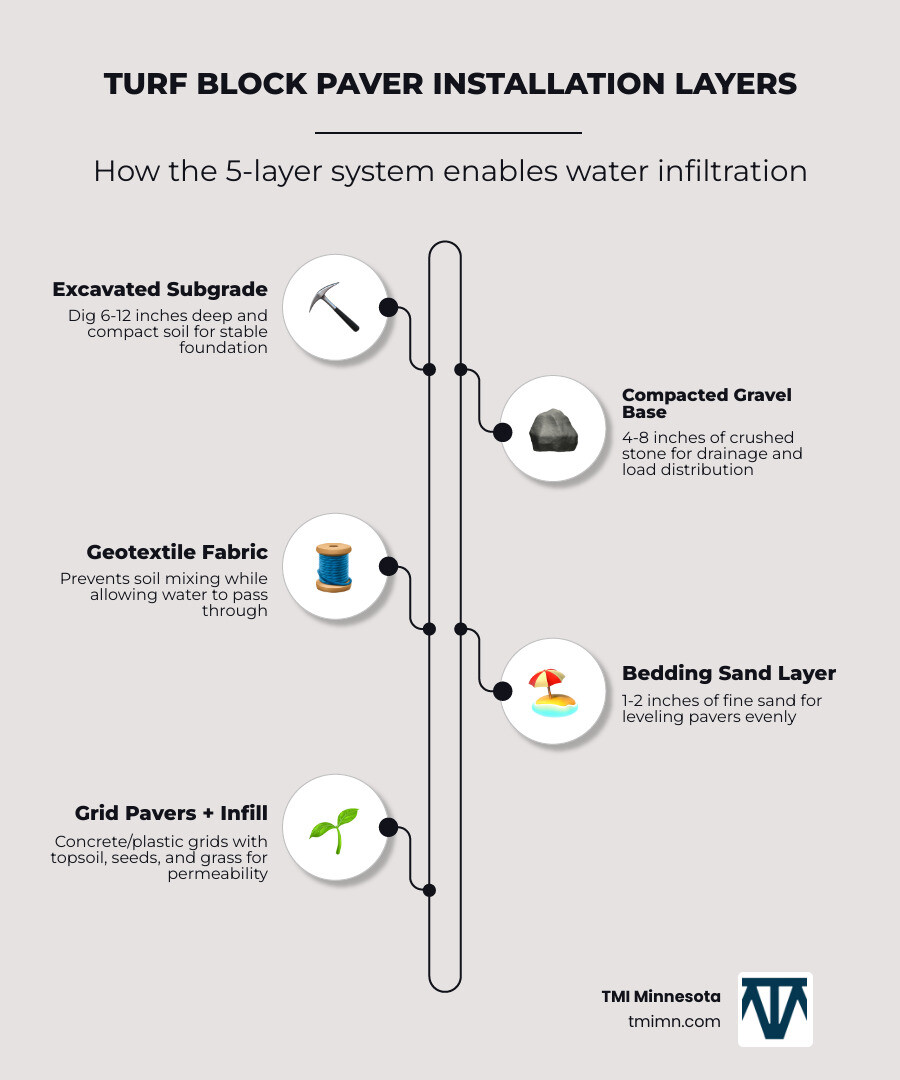
Installing turf block pavers is a bit like making a lasagna—it’s all about the layers. Proper installation is the difference between a driveway that lasts 15 years and one that sinks after the first spring thaw.
- Excavation: We typically dig down to accommodate the paver height (about 3 inches) plus a 4-inch gravel base and a 1-inch sand bedding layer.
- Subgrade Compaction: The “floor” of the pit must be compacted firmly to prevent settling.
- Geotextile Fabric: We lay down landscaping fabric to prevent the gravel base from migrating into the soil below.
- Gravel Base: A layer of crushed stone is added and compacted. This provides the structural strength and the “reservoir” for stormwater.
- Bedding Sand: A thin layer of sand is screeded flat to give the pavers a level surface to sit on.
- Laying the Pavers: The units are placed, often in a stack bond or running bond pattern.
- Vibration: A plate vibrator is used to “set” the pavers into the sand.
Once set, the voids are filled with either decorative stone or a mix of topsoil and seed. Some homeowners even opt for artificial turf with pavers to get the green look without the mowing!
Selecting the Right Infill for turf block pavers
If you go the natural route, choosing the right grass is vital. You need a “tough” variety that can handle occasional tire traffic and the heat reflected off the concrete.
- Drought-Tolerant Varieties: In Minnesota, we often recommend hardy mixes like Tall Fescue or specialized drought-tolerant blends.
- Alternative Groundcovers: In low-traffic areas, flowering thyme or clover can add a beautiful, low-maintenance touch.
- Artificial Options: Using artificial turf between driveway pavers is a growing trend in the Twin Cities because it stays green year-round and never needs water or fertilizer.
Long-Term Care and Upkeep
Maintaining a turf block paver system is relatively simple, but it does require a few specific steps:
- Mowing: Set your mower blade a bit higher. You want the grass to be lush, but you don’t want to scalp it against the concrete edges.
- Snow Removal: This is the big one for Minnesota. These pavers are snow-plow safe if they are installed level. We recommend using a plow with a rubber edge or keeping the blower height slightly elevated to avoid catching the edges of the blocks.
- Refilling: Over time, the soil in the cells may settle. Every few years, you might need to top off the voids with a bit of fresh soil and seed.
Cost Comparison: Turf Block vs. Traditional Paving
Let’s talk numbers. Turf block pavers are a premium product, and the price reflects that.
| Feature | Turf Block Pavers | Asphalt | Poured Concrete |
|---|---|---|---|
| Cost per Sq. Ft. | $4 – $6 | $3 – $4 | $3 – $4 |
| Lifespan (Res.) | 10 – 15 Years | 20 Years | 25+ Years |
| Permeability | 40% (High) | 0% (None) | 0% (None) |
| Maintenance | Mowing/Seeding | Sealing | Occasional Cracking |
While the initial cost of grass block pavers can be nearly twice that of asphalt, the long-term ROI comes in the form of environmental compliance and property value. In areas with high “stormwater fees” or strict impervious surface limits, turf block pavers can actually save you money by avoiding the need for expensive drainage systems or city fines. For more on standard pricing, see our block paving driveway ultimate guide.
Frequently Asked Questions about Turf Block Pavers
Can you drive and park on grass block pavers?
Absolutely. They are engineered specifically for this. The concrete lattice supports the weight of the vehicle (up to 5,000 PSI), protecting the grass roots from being crushed. However, if a car is parked in the exact same spot for weeks at a time, the grass may yellow from lack of sunlight.
How do you mow grass that grows inside pavers?
You mow it just like a regular lawn! The only difference is that you should keep your mower deck slightly higher (around 3 inches) to ensure you aren’t hitting the concrete ribs of the pavers.
Do turf block pavers get hot in the sun?
Actually, they stay much cooler than traditional pavement. The “breathable” nature of the lattice and the transpiration from the grass within the cells help dissipate heat. While the concrete parts will get warm, the overall surface temperature is significantly lower than a solid black asphalt drive.
Conclusion
At TMI Minnesota, we believe that your driveway shouldn’t just be a place to park your car—it should be a functional part of your home’s ecosystem. Turf block pavers represent the perfect marriage of engineering and nature, offering a sustainable, durable, and visually stunning alternative to the status quo.
Whether you are looking to solve a drainage problem, meet local green building codes, or simply want a driveway that looks like a lush meadow, we are here to help. Our team specializes in transforming Twin Cities outdoor spaces with leading-edge products that elevate yard living.
Ready to trade your cracked asphalt for a living landscape? Transform your yard with artificial turf and pavers and discover the permeable solution you’ve been missing.