
Why Your Outdoor Space Needs the Right Shade
Garden shade structures transform ordinary backyards into comfortable, functional outdoor living spaces where you can relax and entertain without harsh sun exposure. Whether you’re looking to create a cozy dining area, protect your family from UV rays, or add value to your home, the right shade solution makes all the difference.
Quick Guide to Garden Shade Structure Options:
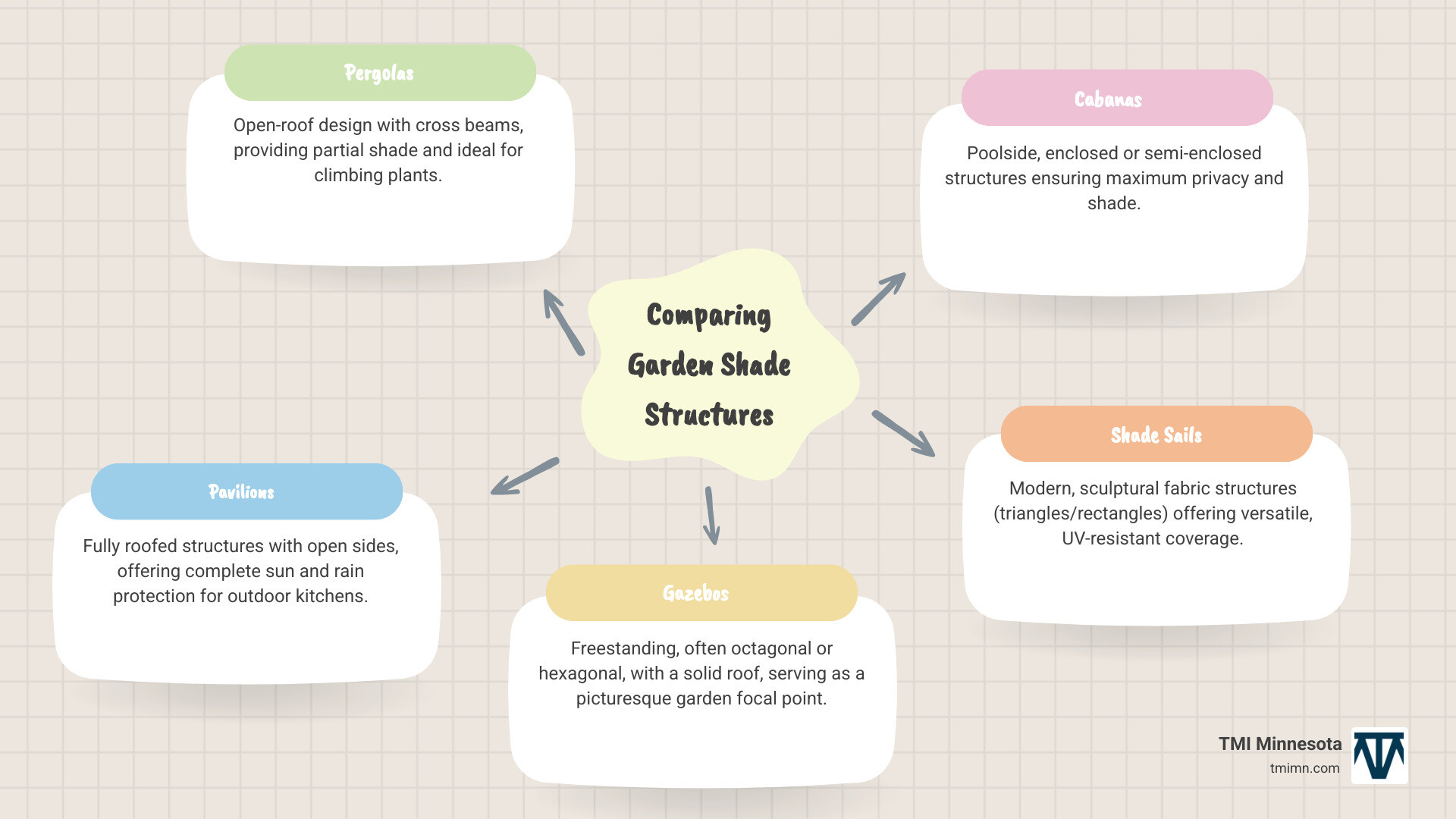
- Pergolas – Open-roof structures with cross beams that provide partial shade and support for climbing plants
- Pavilions – Fully roofed structures offering complete protection from sun and rain, ideal for outdoor kitchens
- Gazebos – Freestanding octagonal or hexagonal structures that serve as picturesque garden focal points
- Cabanas – Enclosed or semi-enclosed poolside structures providing maximum privacy
- Shade Sails – Modern fabric structures in triangular or rectangular shapes for flexible coverage
- Awnings – Retractable fabric covers that extend from your home or mount on cables
- Living Canopies – Natural shade created by training vines and plants over arbours or trellises
A professionally designed landscape with the right shade structure can boost your home’s value by 10-20% while creating a comfortable retreat from harmful UV rays.
Shade structures also define outdoor rooms, extend your living space, and allow you to use your patio or deck more throughout the year. They protect you from the elements while adding architectural interest to your landscape.
Choosing the right structure depends on your budget, available space, desired level of protection, and how the design complements your home’s architecture. Some homeowners prefer the classic elegance of a wooden pergola, while others opt for the modern simplicity of shade sails or the complete coverage of a pavilion.
The good news? There’s a shade solution for every yard, budget, and style. From DIY-friendly shade sails to custom-built pavilions, the options are more diverse than ever.
Our team at TMI Minnesota has spent years helping homeowners transform their outdoor spaces with thoughtfully designed garden shade structures that blend beauty with functionality. Whether it’s a classic cedar pergola or a contemporary louvered system, the right shade structure creates an outdoor environment that truly improves how you live.
Important garden shade structures terms:
The Main Event: Comparing Permanent Shade Structures
Permanent garden shade structures are transformative additions that define areas, provide significant protection, and become integral parts of your backyard’s architecture. Let’s dig into the most common types.
| Shade Structure | Level of Shade | Typical Cost | Weather Protection | Best Use Case |
|---|---|---|---|---|
| Pergola | Partial | Medium | Limited | Defining spaces, climbing plants, filtered sun |
| Pavilion | Full | High | Excellent | Large gatherings, outdoor kitchens, dining |
| Gazebo | Full | High | Excellent | Garden focal point, intimate seating, insect protection |
| Cabana | Maximum | High | Excellent | Poolside privacy, changing area, luxurious retreat |
Pergolas: The Versatile Classic
Pergolas are recognizable and versatile garden shade structures with open sides and a roof of cross beams. They offer a balance of sunlight and shade, filtering the sun to create a dappled light effect that’s perfect for relaxing.
Pros:
- Versatile: Can be freestanding or attached to your home to extend your living space.
- Aesthetic Appeal: Their open design provides an airy feel and defines outdoor rooms or walkways.
- Ideal for Plants: Pergolas are fantastic for supporting climbing plants like wisteria or grapevines, which can create a beautiful living shade canopy.
- Customizable: Easily customized with fabric canopies or lighting for additional shade or ambiance.
Cons:
- Partial Shade Only: By design, they don’t offer full sun protection.
- Limited Weather Protection: They offer minimal protection from rain unless additional coverings are added.
Pergolas are often used to define a seating area, create a shaded pathway, or frame a hot tub, changing a simple patio into an outdoor dining room.
Pavilions: The Ultimate Outdoor Room
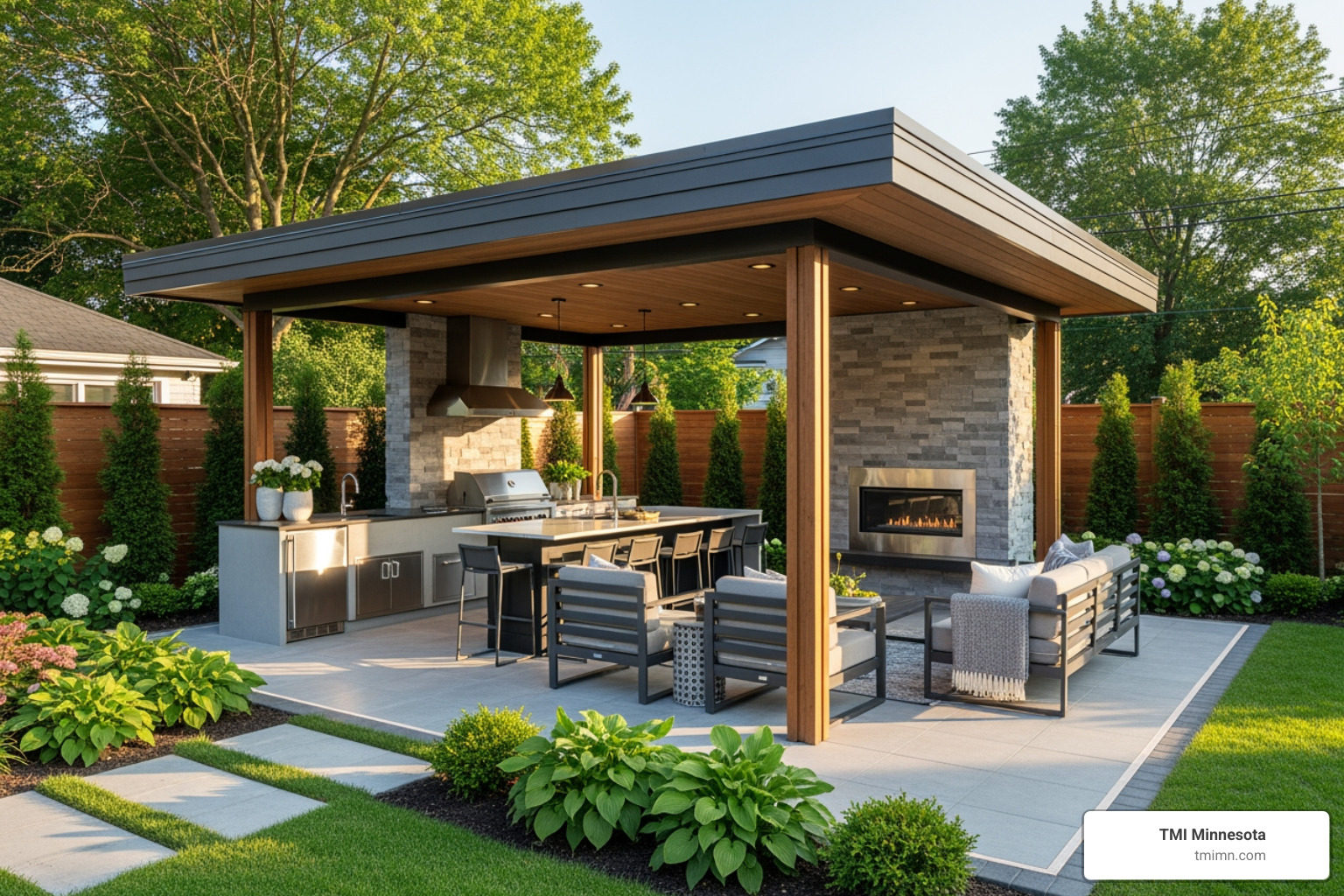
For substantial shade and protection, pavilions are an excellent choice. These are large, open-sided structures with a solid roof, creating a sheltered “outdoor room” for various activities.
Pros:
- Full Protection: Their solid roof offers excellent protection from sun and rain, making them usable in more of Minnesota’s seasons.
- Spacious: Ideal for hosting large gatherings, outdoor dining, or a dedicated outdoor kitchen.
- Flexible Placement: Typically freestanding, they can be placed anywhere in your yard to create a destination space.
- Customization Potential: Can be equipped with fireplaces, outdoor kitchens, and advanced lighting or sound systems.
Cons:
- Higher Cost: Generally more expensive than pergolas due to their solid construction.
- Requires Space: Their size means they require a significant amount of backyard space.
A custom pavilion from TMI Minnesota can be designed with a wood ceiling and stone fireplace, creating a luxurious outdoor living room that becomes the heart of your backyard.
Gazebos: The Picturesque Retreat
Gazebos are charming, often octagonal, freestanding garden shade structures with a solid roof. They are known for their picturesque aesthetic, often serving as a beautiful focal point in gardens.
Pros:
- Aesthetic Appeal: They add a classic, neat touch to any landscape.
- Complete Shade: The solid roof provides full protection from the sun.
- Focal Point: Their distinct shape makes them a natural centerpiece for your backyard.
- Insect Protection: Many gazebos can be screened, offering protection from mosquitos, a plus for summer evenings in the Twin Cities.
Cons:
- Limited Size: Typically smaller than pavilions, making them less suitable for large gatherings.
- Less Versatile: Their traditional design might not suit all modern home styles.
We often recommend gazebos for homeowners looking to create a serene reading nook or a romantic spot for conversation.
Cabanas: The Private Escape
Cabanas are semi-enclosed or fully enclosed garden shade structures designed for privacy and maximum shade, often found by pools. They evoke a resort-like ambiance, offering a secluded retreat.
Pros:
- Maximum Privacy: Walls or curtains provide excellent privacy for changing or relaxing.
- Superior Shade: Designed for ultimate sun protection, they offer a cool haven on hot days.
- Luxurious Feel: They add a touch of sophistication, especially when paired with comfortable loungers.
- Versatile Use: Can serve as a changing room, private lounge, or even a small outdoor office.
Cons:
- Poolside Focus: Their design and function are most naturally suited for poolside areas.
- Higher Cost: Often more intricate in design, leading to a higher price point.
If you have a pool and dream of a private, shaded sanctuary, a cabana is an ideal choice. We can design a custom cabana that complements your pool area and lifts your outdoor living experience.
Lighter Touches: Flexible and Creative Shade Solutions
Not every backyard needs a grand, permanent structure. Sometimes, a lighter, more flexible approach to garden shade structures is the perfect fit. These creative solutions offer style, sun protection, and are often more budget-friendly.
Shade Sails: Modern & Sculptural
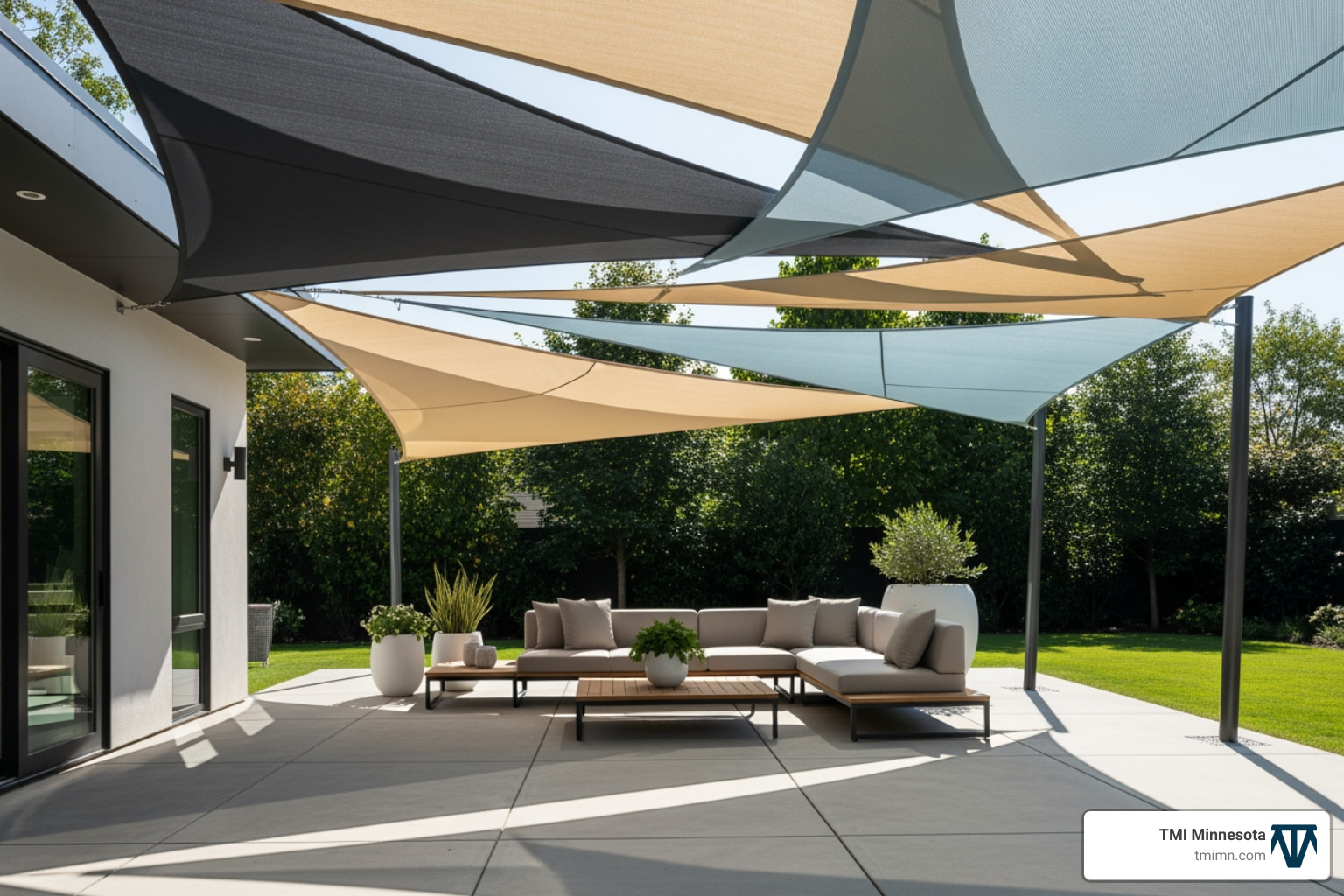
Shade sails are stylish, modern garden shade structures made from UV-resistant fabric stretched between anchor points. Available in shapes like triangles and rectangles, they can be overlapped to create dynamic, sculptural designs.
Pros:
- Modern Aesthetic: Their sleek, minimalist design adds a contemporary flair to any outdoor space.
- Versatile Installation: Can be mounted to existing structures or freestanding posts, making them highly adaptable.
- Adjustable Shade: Multiple sails can be layered for increased coverage or to provide shade at different times of the day.
- DIY-Friendly: Many shade sail kits are available for homeowners to install themselves. Consider this DIY shade sail installation guide.
- Affordable: Generally more budget-friendly than permanent structures.
Cons:
- Partial Protection: They don’t offer complete rain protection.
- Wind Considerations: Require strong anchor points and proper tensioning to withstand wind.
- Seasonal Removal: Often recommended to be taken down during winter to prolong their lifespan.
Shade sails are perfect for shading smaller patios, balconies, or creating a focal point over a dining set.
Fabric Canopies & Awnings
Fabric canopies and awnings offer flexible and often retractable shade. These garden shade structures use weather-resistant fabrics and can be attached to your home, mounted on cables, or integrated into existing pergolas.
Pros:
- Retractable Options: Many can be extended or retracted as needed, giving you control over sun exposure.
- DIY-Friendly: Some fabric canopy systems are simple enough for a DIY installation.
- Cost-Effective: A more affordable way to add significant shade compared to a solid roof structure.
- Color and Pattern Variety: Outdoor fabrics come in a vast array of colors and patterns for personalization.
- Pergola Improvement: A fabric canopy can significantly improve a pergola’s shade capabilities.
Cons:
- Less Durable than Permanent Structures: Fabrics can fade and may require replacement after several years of exposure to the Twin Cities elements.
- Wind Vulnerability: Retractable systems must be closed during high winds to prevent damage.
- Cleaning: Fabrics may require periodic cleaning to maintain their appearance.
We’ve helped homeowners integrate retractable fabric canopies into their pergolas, offering adjustable shade that adapts to the day’s sun. Lighter-colored fabrics reflect more sun, helping to keep your patio cooler.
Living Canopies & Arbours
For a softer, natural aesthetic, living canopies and arbours use climbing plants to create shade that blends seamlessly with your garden. These garden shade structures are a charming, organic solution.
Pros:
- Natural Beauty: Creates a lush feel that integrates beautifully with the landscape.
- Environmental Benefits: Plants help cool the air and attract pollinators.
- Seasonal Variation: Deciduous vines provide dense shade in summer and allow sun through in winter, perfect for Minnesota’s climate.
- Fragrance: Many climbing plants offer beautiful blooms and delightful scents.
Cons:
- Time to Grow: Establishing a dense living canopy takes time and patience.
- Maintenance: Requires regular pruning, training, and care for the plants.
- Arbours Offer Minimal Shade: Arbours themselves provide little shade until plants are fully established.
- Potential for Pests: Plants can sometimes attract insects.
Popular Climbing Plants for Living Canopies:
- Wisteria: Known for its stunning flower clusters and vigorous growth.
- Clematis: Offers a wide variety of flower colors and sizes.
- Climbing Roses: A classic choice for beauty and fragrance.
- Grapevines: Provide both shade and delicious fruit.
Arbours are smaller structures, often arched, used as entryways or garden accents. They are perfect for supporting climbing plants and framing a beautiful view.
Designing Your Oasis: How to Choose the Right Structure
Choosing the perfect garden shade structure for your Twin Cities home means balancing functionality, space, budget, climate, and style. We can help you steer these factors to find the ideal solution.
Assess Your Needs and Space
Before diving into options, ask yourself these crucial questions:
- Purpose and Functionality: What is the primary use? Entertaining large groups, family dinners, quiet relaxation, or an outdoor kitchen? A pavilion is ideal for a kitchen, while a pergola suits a relaxed seating area.
- Space Availability: How much space do you have? Consider the structure’s footprint and the clearance needed around it. A large pavilion might overwhelm a small yard, whereas shade sails can adapt to compact spaces.
- Sun Path Analysis: Where does the sun hit your yard throughout the day? This helps determine the best placement for maximum shade.
- Integration with Home Architecture: How will the structure flow with your home and landscape? An attached pergola can seamlessly extend your indoor living space.
Key Factors for Choosing garden shade structures
Here are the critical elements to consider when designing garden shade structures:
- Budget: Costs vary based on structure type, materials, size, and installation (professional vs. DIY). Remember to factor in potential permits, which are often required for permanent structures in the Twin Cities.
- Affordable: Shade sails and DIY fabric canopies.
- Mid-Range: Wood pergola kits.
- Higher-End: Custom-built pavilions, gazebos, and cabanas with integrated features.
- Climate and Weather Protection: In Minnesota, we experience all four seasons dramatically.
- Sun: Pavilions and gazebos offer complete sun blockage, while pergolas provide filtered light.
- Rain: Solid-roof structures (pavilions, gazebos) offer excellent rain protection. Pergolas and shade sails offer minimal protection.
- Wind: Permanent, solid-roof structures are most stable. Shade sails require robust anchoring, and retractable awnings should be closed during storms.
- Maintenance Requirements: Different materials require varying levels of upkeep. Wood needs periodic sealing, fabrics may need cleaning, and metal/vinyl are generally low-maintenance.
- Overall Aesthetic: The structure should complement your home’s architectural style and existing landscaping.
How different garden shade structures impact aesthetics
The aesthetic impact of your chosen garden shade structure is profound. It can become a focal point or blend into the landscape.
- Matching Your Home’s Style: A rustic wood pergola might suit a farmhouse-style home, while sleek aluminum or modern shade sails could complement a contemporary residence. We strive to match the structure to your home’s architecture for a cohesive look.
- Creating a Focal Point: A beautifully designed gazebo or a grand pavilion can serve as a stunning centerpiece in a larger garden.
- Enhancing Garden Design: Arbours with climbing roses improve a cottage garden, while a modern pergola can frame a minimalist landscape. Even the shadows cast by a structure can be an aesthetic element, like those from decorative metal panels with unique shadows.
Built to Last: Popular Materials for Garden Shade Structures
The material you choose for your garden shade structure is critical, impacting its look, durability, and maintenance requirements. Let’s explore the most popular options for the Twin Cities.
Wood: Natural and Timeless
Wood is a classic choice for garden shade structures, offering timeless, natural beauty.
Types:
- Cedar & Redwood: Highly prized for natural resistance to rot, decay, and insects. They weather gracefully to a silvery-grey if left unstained.
- Pine & Hemlock: More economical options that require pressure-treating or regular sealing to protect against Minnesota’s climate.
Pros:
- Aesthetic: Warm, natural, and can be stained or painted to match any exterior.
- Versatile: Can be cut and shaped into various designs.
- Strong: Provides excellent structural integrity.
Cons:
- Maintenance: Requires periodic sealing or staining to protect against moisture and UV damage.
- Cost: Quality hardwoods like cedar and redwood are more expensive upfront.
- Vulnerability: Untreated wood can be susceptible to pests and decay.
Metal: Sleek and Durable
Metal garden shade structures offer a sleek, modern aesthetic and exceptional durability.
Types:
- Aluminum: Lightweight, rust-resistant, and requires very little maintenance. Often powder-coated for color.
- Steel: Very strong and durable, used for larger structures. Requires a finish like galvanizing or powder-coating to prevent rust.
Pros:
- Durability: Highly resistant to rot, insects, and decay.
- Low Maintenance: Generally only requires occasional cleaning.
- Modern Aesthetic: Offers clean lines and a contemporary look.
- Integrated Features: Can accommodate built-in lighting, fans, and gutter systems.
Cons:
- Heat Absorption: Darker metals can absorb and radiate heat.
- Cost: Can be more expensive than wood, especially for custom designs.
Vinyl & Composites: Low-Maintenance Champions
If low maintenance is your top priority, vinyl and composite materials are excellent choices for garden shade structures.
Types:
- Vinyl: A durable plastic impervious to rot, insects, and moisture.
- Composite: A blend of wood fibers and plastic, offering the look of wood with improved durability.
Pros:
- Rot and Insect Resistant: Impervious to moisture, rot, and insects.
- Extremely Low Maintenance: Requires no painting or staining, just simple cleaning.
- Durability: Designed to withstand harsh weather without deteriorating.
- Color Retention: Colors are often UV-stabilized to resist fading.
Cons:
- Aesthetic: Can have a less natural appearance than real wood.
- Cost: Often more expensive upfront than natural wood.
- Repair: Damage can be challenging to repair; sections may need replacement.
Fabric: Flexible and Colorful
Fabric is a versatile material used in shade sails, retractable canopies, and awnings.
Types:
- UV-Resistant Canvas/Acrylic: Durable, colorfast fabrics designed to block UV rays.
- High-Density Polyethylene (HDPE): Commonly used for shade sails; it’s breathable and resists mildew.
- Polyester/Polypropylene: Often used for retractable awnings, treated for weather resistance.
Pros:
- Flexibility: Can be easily installed, moved, or retracted.
- Color and Pattern Variety: Offers endless design possibilities.
- Affordable: Often the most budget-friendly option.
- Breathable: Many fabrics allow hot air to escape, keeping the area cooler.
Cons:
- Durability: Less durable than rigid materials; can tear or fade over time with exposure to Minnesota’s sun and snow.
- Maintenance: Requires periodic cleaning and may develop mildew.
- Replacement: Fabrics will eventually need to be replaced.
Frequently Asked Questions about Garden Shade Structures
We often get asked similar questions about garden shade structures as homeowners explore their options. Here are some of the most common ones we address:
What are the main benefits of adding a shade structure?
The main benefits of adding a garden shade structure are:
- Extends Outdoor Living Space: Creates a comfortable “outdoor room” for relaxing, dining, or entertaining.
- Protects from UV Rays: Significantly reduces exposure to the sun’s harmful rays, making your yard safer and more enjoyable.
- Increases Property Value: A professional installation as part of a well-landscaped yard can boost home value by 10-20%.
- Creates Comfort: Provides a cool retreat from summer heat and can extend your outdoor season into cooler months.
- Defines Yard Zones: Helps create distinct areas for dining, lounging, or an outdoor kitchen, giving your landscape an organized feel.
How much do backyard shade structures typically cost?
The cost of garden shade structures varies widely. Key factors include:
- Type and Size: Simple shade sails are most affordable (a few hundred to a couple of thousand dollars), while large, custom pavilions can exceed $20,000.
- Materials: High-quality woods like cedar, aluminum, and composites are more expensive than treated pine or standard fabrics.
- Installation: Professional installation adds to the cost but ensures quality and code compliance. DIY saves on labor but requires skill.
- Features: Integrated kitchens, fireplaces, and lighting will increase the total investment.
As a guide, a pre-fabricated pergola kit might cost $1,000-$5,000. Custom-built structures with high-end materials in the Twin Cities market could range from $10,000 to $50,000+, depending on the scale.
Are these structures a DIY project or do I need a professional?
This depends on the project’s complexity and your skill level.
DIY-Friendly Options:
- Shade sail kits, simple arbours, and some fabric canopy systems are manageable for many homeowners.
Professional Installation Recommended:
- Large, permanent structures like pavilions, gazebos, and custom pergolas require professional contractors. This is crucial for structural integrity, safety, and adhering to local Twin Cities building codes, which often require permits.
- For a custom design with integrated features like kitchens or complex lighting, a professional landscape designer and builder like us at TMI Minnesota is essential to ensure your structure is safe, compliant, and beautifully executed.
Transform Your Backyard into a Shaded Sanctuary
Choosing the right garden shade structure is about creating a beautiful, functional extension of your home where you can enjoy the outdoors in comfort and style. By considering your needs, climate, and aesthetic, you can select an option that provides blissful moments for years to come. TMI Minnesota specializes in creating these custom outdoor environments.
Ready to lift your yard living? Explore our portfolio of stunning outdoor structures and get inspired for your project.