
The True Cost of Creating Outdoor Beauty
Hardscape installation cost typically ranges from $5 to $25 per square foot, with most projects totaling between $5,000 and $18,000. Here’s a quick breakdown of what you can expect to pay:
| Project Type | Average Cost Range |
|---|---|
| Patio Installation | $10-50 per sq ft ($2,000-$10,000 total) |
| Walkway Installation | $35-60 per sq ft ($1,750-$3,000 total) |
| Retaining Wall | $3,200-$9,000 total |
| Deck Construction | $30-60 per sq ft ($4,500-$18,000 total) |
| Outdoor Kitchen | $6,000-$100,000 total |
When homeowners dream of changing their outdoor spaces, they often picture the end result: a beautiful patio where family gathers for summer barbecues, an neat stone walkway winding through lush gardens, or perhaps a cozy fire pit area for evening relaxation. What they don’t always envision is the investment required to bring these dreams to life.
Understanding the full scope of hardscape installation cost before starting your project can prevent budget surprises and help you make informed decisions about materials, design complexity, and whether to DIY or hire professionals.
I’m Christopher Deanovic, Operations Leader at Task Masters, and I’ve guided countless Minnesota homeowners through the process of budgeting for hardscape installations, helping them steer the variables that influence hardscape installation cost while ensuring their outdoor visions become reality.

Hardscape installation cost terminology:
– Retaining wall design services
– Landscape irrigation solutions
– Custom built outdoor kitchens
1. Hardscaping 101: Project Types & Terminology
Ever wondered what exactly goes into those gorgeous outdoor spaces you see in magazines? Let’s break down the building blocks of outdoor beauty before we dive into dollars and cents.
Hardscaping is simply the non-living part of your landscape—all those sturdy, permanent elements that create the backbone of your outdoor living space. Think of it as the “hardware” to your garden’s “software.”
When I meet with homeowners, I often explain that patios are like outdoor living rooms where families gather for everything from morning coffee to evening s’mores. Walkways serve as the hallways of your yard, guiding visitors and creating flow. Retaining walls aren’t just practical solutions for sloped yards—they’re opportunities to add seating and visual interest while keeping your soil where it belongs.
Many Minnesota families dream of decks that extend their living space into the fresh air, while others envision outdoor kitchens that eliminate those endless trips between grill and refrigerator. Pergolas add architectural interest and filtered shade, creating natural “ceilings” in your outdoor rooms.
Nothing beats gathering around a fire pit on cool Minnesota evenings, while water features add a sense of tranquility with their gentle sounds. For those seeking eco-friendly alternatives to traditional driveways, gravel drives offer permeability that’s both practical and attractive.
Understanding the difference between hardscaping and the living elements (plants, grass, trees) helps you create a balanced outdoor space. More info about softscaping vs hardscaping
Living vs. Functional Hardscape Elements
Your hardscape elements generally serve two main purposes in your yard:
First, they create living spaces where people actually spend time. These include comfortable seating areas where you’ll relax with a book, circulation paths that guide movement through your property, and spaces designed specifically for dining or entertaining.
Second, they solve practical problems. These functional elements include drainage solutions that prevent water from pooling where you don’t want it, lighting that extends your outdoor enjoyment into evening hours, and privacy features that shield you from neighboring views.
The hardscape installation cost will vary dramatically based on which elements you choose and how elaborate you make them. A simple paver patio might be relatively affordable, while a multi-level outdoor kitchen with built-in appliances represents a significant investment.
The key is finding the right balance between beauty and function—creating spaces that not only look stunning but actually improve how you live outdoors. At TMI Minnesota, we’ve found that the most successful projects address both the aesthetic desires and practical needs of our clients.
2. Hardscape Installation Cost Breakdown
When planning your outdoor oasis, understanding where your money goes helps you make smarter decisions. Let’s break down what actually makes up your hardscape installation cost so you can budget with confidence:
| Material Type | Cost Per Square Foot | Durability | Maintenance |
|---|---|---|---|
| Concrete | $6-10 | 25-50 years | Low |
| Stamped Concrete | $12-18 | 25-50 years | Medium |
| Concrete Pavers | $10-25 | 50+ years | Low-Medium |
| Brick Pavers | $5-25 | 25+ years | Medium |
| Natural Stone | $15-50 | Lifetime | Low-Medium |
| Pressure-Treated Wood | $10-25 | 15-20 years | High |
| Composite Decking | $20-50 | 25-30 years | Very Low |
| Gravel | $1-5 | 5-10 years* | Medium |
*Requires periodic replenishment
Your total hardscape installation cost isn’t just about materials though. Think of it like an iceberg – materials are just the visible part. Below the surface, you’ll find several other essential expenses:
Labor typically accounts for 40-60% of your total project cost, with skilled professionals charging between $50-100 per hour. This might seem steep until you watch a crew perfectly level a patio on a sloped yard – then you’ll understand why good labor is worth every penny!
Design fees add another 5-15% if you’re working with a professional designer. While this might feel like an optional expense, a good designer can actually save you money by avoiding costly mistakes and maximizing your space.
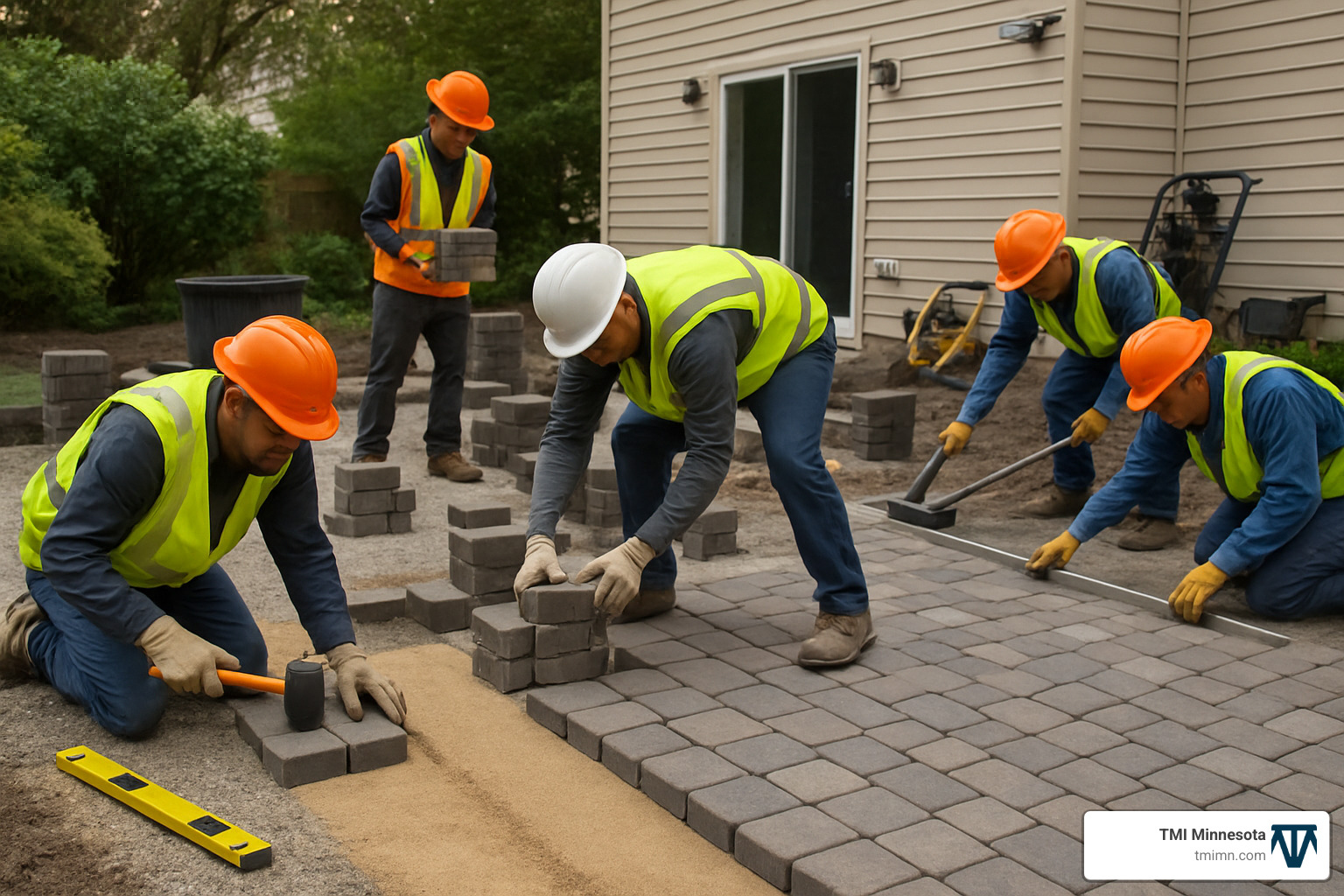
Don’t forget about permits ($200-300 for most residential projects), demolition costs ($2-6 per square foot to remove existing structures), and site preparation ($0.20-2 per square foot for grading and soil work). These unglamorous but necessary expenses ensure your beautiful new hardscape will stand the test of time.
Your geographic location significantly impacts costs too – labor rates in Minnesota differ from those in Texas or California. And always budget a 10-15% contingency for those “surprise” moments that seem to happen in every project. Trust me, you’ll thank yourself later!
National Averages for Hardscape Installation Cost
Looking at 2025 figures, most homeowners spend between $5-$25 per square foot on hardscaping projects. Total project costs typically range from $5,000-$18,000, with the national average hovering around $9,000.
Professional installation labor rates generally fall between $50-$100 per hour, while material delivery (like landscape rock) can add another $275-$506 per ton to your total.
These are just averages – your actual costs may vary based on your specific location, project complexity, and material choices. For a more custom estimate that considers your unique project details, check out this in-depth cost calculator.
Material Choices & Their Impact on Hardscape Installation Cost
The materials you select will dramatically influence your final hardscape installation cost. Let’s explore your options:
Concrete offers the most bang for your buck at $6-10 per square foot. It’s like the reliable sedan of hardscaping – not flashy but dependable and affordable. Upgrade to stamped or stained concrete ($12-18 per square foot) and you’ll add some personality without breaking the bank.
Brick pavers ($5-25 per square foot) bring timeless charm and excellent durability. They hold their color beautifully over decades and can be arranged in countless patterns from herringbone to basketweave.
Natural stone is the luxury option at $15-50 per square foot. Materials like bluestone, limestone, and granite offer best beauty and can literally last generations. Think of natural stone as an heirloom you’re adding to your property.
For decks and overhead structures, pressure-treated wood ($10-25 per square foot installed) provides a natural look at a reasonable price, though you’ll need to budget for regular maintenance. Composite decking costs more upfront ($20-50 per square foot) but virtually eliminates maintenance headaches – no staining, sealing, or splinters!
Gravel remains the budget champion at just $1-5 per square foot, making it perfect for pathways and driveways. It offers excellent drainage but will need occasional replenishing.
Don’t overlook recycled materials like reclaimed brick or stone. These can reduce your costs while adding unique character and sustainability to your project. Plus, there’s something special about incorporating materials with history into your new space.
If you’re considering a DIY approach to save on labor costs, our guide on How to Install Hardscape Pavers provides helpful step-by-step instructions.
3. Six Factors That Make or Break Your Budget
When planning your outdoor change, understanding what drives costs beyond just materials and basic labor can save you from budget shock. Let’s explore the six key factors that can significantly impact your hardscape installation cost – knowing these ahead of time might just save your project!
Site access challenges can quickly inflate your budget. If that beautiful backyard spot is tucked behind a narrow gate or down a steep hill, large equipment might not be able to reach it. This means more manual labor, more time, and inevitably, higher costs. I’ve seen projects where limited access alone added 15-20% to the final bill!
Grading and drainage might not be the exciting part of your patio dreams, but they’re absolutely essential. Proper water management prevents future headaches like cracking, settling, or flooding. For sloped yards, the extra earthwork adds significant costs – typically $1,000-$5,000 for comprehensive drainage solutions.
Project size works in interesting ways with your budget. While larger projects cost more overall (no surprise there!), they often benefit from economies of scale. That fancy paver you love might cost less per square foot when ordered in larger quantities, and setup costs get spread across more area.
Design complexity is where many homeowners unexpectedly add to their budgets. Those beautiful curved edges and intricate patterns you saved on Pinterest? Each one requires more cuts, creates more waste, and demands more skilled labor time. Simple geometric designs will always be more budget-friendly than complex layouts with multiple materials or levels.
Regional labor rates vary significantly across the country. Here in Minnesota, our skilled hardscape installers command different rates than those in other regions. Local market conditions, availability of qualified contractors, and seasonal demand all influence what you’ll pay for professional installation.
Seasonality matters tremendously in our Minnesota climate. Schedule your project during shoulder seasons (late fall or early spring), and you might secure better rates as contractors look to fill their schedules. Try to book during the peak summer rush, and you’ll likely pay premium prices – if you can find an available contractor at all!
Hidden & Add-On Expenses to Watch
Beyond these major factors, several “surprise” expenses catch many homeowners off guard. Permits and inspections typically add $200-$300 for standard residential projects. Don’t skip these – unpermitted work can cause headaches when selling your home!
Soil removal costs about $1.50 per square foot for haul-away. That might not sound like much until you calculate the volume from your 400-square-foot patio project! Similarly, if you have existing irrigation systems, budget $750-$1,500 to reroute those sprinkler lines around your new hardscape.
Many homeowners decide to add lighting once they see their beautiful new space taking shape. Plan ahead with a budget of $2,000-$4,000 for basic landscape lighting to avoid this afterthought expense. And don’t forget sealing and finishing treatments ($2-$10 per square foot) that protect your investment.
Finally, hardscapes aren’t completely maintenance-free. Budget 5-10% of your initial hardscape installation cost for annual maintenance to keep everything looking fresh and functioning properly.
For those who love data, the Bureau of Labor Statistics offers detailed information on construction and landscaping labor costs through their Scientific research on construction labor costs.
4. Real-World Scenarios: From DIY to Dream Oasis
Let’s get real about what your hardscape project might actually cost. After helping hundreds of Minnesota homeowners transform their outdoor spaces, I’ve found concrete examples make budget planning much easier.
Basic DIY Paver Patio (200 sq ft)
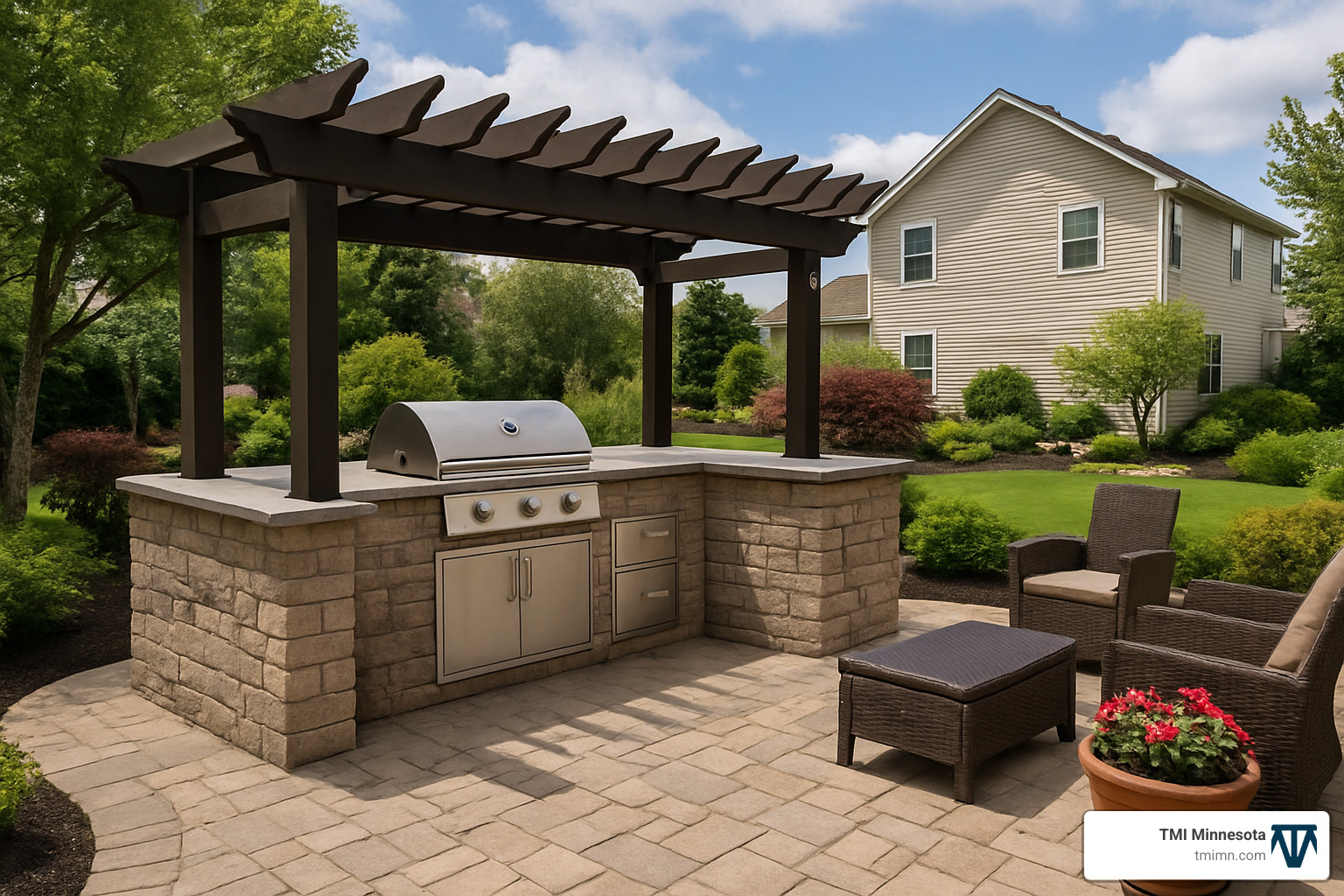
Picture this: a cozy weekend gathering spot that you built with your own two hands. For a simple 200 square foot paver patio, expect to spend $2,000-$3,000 on materials, plus $300-$500 for equipment rentals (think plate compactor and masonry saw). The sweat equity? That’s on you! Total DIY investment runs $2,300-$3,500, while hiring professionals for the same project would cost $3,000-$6,000.
Professional Stone Patio (400 sq ft)
Now imagine a more substantial entertaining space with natural stone. For a professionally installed 400 square foot patio, materials alone will run $2,800-$7,000 (those gorgeous stones aren’t cheap!). Add $3,600-$6,800 for skilled labor and $600-$800 for proper site preparation. Your total investment? Between $7,000-$14,600 for a space that will last generations.
Outdoor Kitchen with Patio (500 sq ft)
Ready for the ultimate backyard upgrade? A complete outdoor kitchen transforms how you live outside. The 500 square foot patio base starts at $7,500-$12,500, while durable countertops add another $3,000-$7,000. Quality built-in appliances range from $5,000-$15,000, and don’t forget utilities (gas, electric, water) at $2,500-$5,000. Top it off with an overhead structure ($7,000-$10,500) to enjoy your space rain or shine. Hardscape installation cost for this dream space: $25,000-$50,000.
Tiered Retaining Wall System
For sloped yards, retaining walls create usable space while adding visual interest. A small wall (30 linear feet, 3 feet high) runs $3,200-$4,500. Medium walls (40 linear feet, 4 feet high) cost $5,000-$7,000, while larger structures (50 linear feet, 6 feet high) range from $7,500-$9,000.
Composite Deck (300 sq ft)
A modern deck offers liftd outdoor living. For 300 square feet of low-maintenance composite decking, budget $6,000-$9,000 for materials, $3,000-$9,000 for labor, and $1,500-$3,000 for railings and stairs. Total investment: $10,500-$21,000 (about $35-$70 per square foot).
DIY vs. Pro: Time, Tools, and Risk
That DIY discount looks tempting, but consider the full picture before grabbing your shovel:
Equipment needs can quickly eat into savings. Professional-grade tools cost $1,000-$3,000 to purchase outright, or $75-$300 daily to rent. Professionals spread these costs across multiple projects.
Skill level matters tremendously. I’ve seen many DIY projects that ended up costing more after professionals were called in to fix mistakes. Proper base preparation and material handling techniques take years to master.
Warranties provide peace of mind. Professional installations typically include 1-5 year workmanship guarantees, while DIY projects have none. Some material warranties are even voided by improper installation.
Timeline reality is often overlooked. That “weekend project” typically stretches to 2-3 weekends for DIYers, while professionals might complete it in just 1-3 days. Minnesota’s unpredictable weather can further complicate DIY timelines.
Resale value considerations are important too. Professional installations typically yield 40-100% ROI, while DIY quality can impact future home valuation. Future buyers (and their inspectors) notice the difference.
For larger or more complex projects, our Landscape Renovation Services provide the expertise needed while ensuring lasting quality.
Timeline Expectations & Project Planning
One question I hear constantly is, “How long will this take?” Here’s what to expect:
Small Projects (200 sq ft or less) move relatively quickly. Professional crews typically complete installation in 1-3 days, while DIY installations usually take 1-2 weekends of dedicated work. The design phase adds another 1-2 weeks before breaking ground.
Medium Projects (200-500 sq ft) require more time. Professional installation takes 2-7 days depending on complexity, while DIY installation stretches across 3-4 weekends. The design phase extends to 2-4 weeks to ensure every detail is right.
Complex Projects (500+ sq ft or multiple elements) demand patience. Professional installation ranges from 1-4 weeks, while DIY installation might take 1-3 months of part-time work. The design phase can span 4-8 weeks to coordinate all elements properly.
Here in Minnesota, we always build in weather buffer days. Our seasons can surprise even the most experienced contractors! For spring installations, I recommend booking 2-3 months in advance to secure your spot in our schedule before the rush begins.
5. Money-Saving Tips & ROI Boosters
Let’s face it – creating your dream outdoor space isn’t cheap. But I’ve helped hundreds of Minnesota homeowners find smart ways to manage their hardscape installation cost without cutting corners on quality. The good news? There are plenty of legitimate strategies to stretch your dollar further.
When it comes to materials, thinking strategically can lead to significant savings. Buying in bulk often open ups volume discounts that individual purchases don’t qualify for. I’ve seen homeowners save 15-20% just by coordinating with neighbors on material orders! Don’t overlook “seconds” or overstock materials either – these often have minor cosmetic imperfections but perform identically at 10-30% less cost.
Timing your project can be another budget-friendly move. Minnesota’s seasonal nature works in your favor here. Scheduling your installation during fall or early spring (our industry’s “shoulder seasons”) can often save you 10-15% compared to peak summer rates when contractors are busiest. Plus, booking in advance lets you lock in current material prices before the inevitable annual increases.
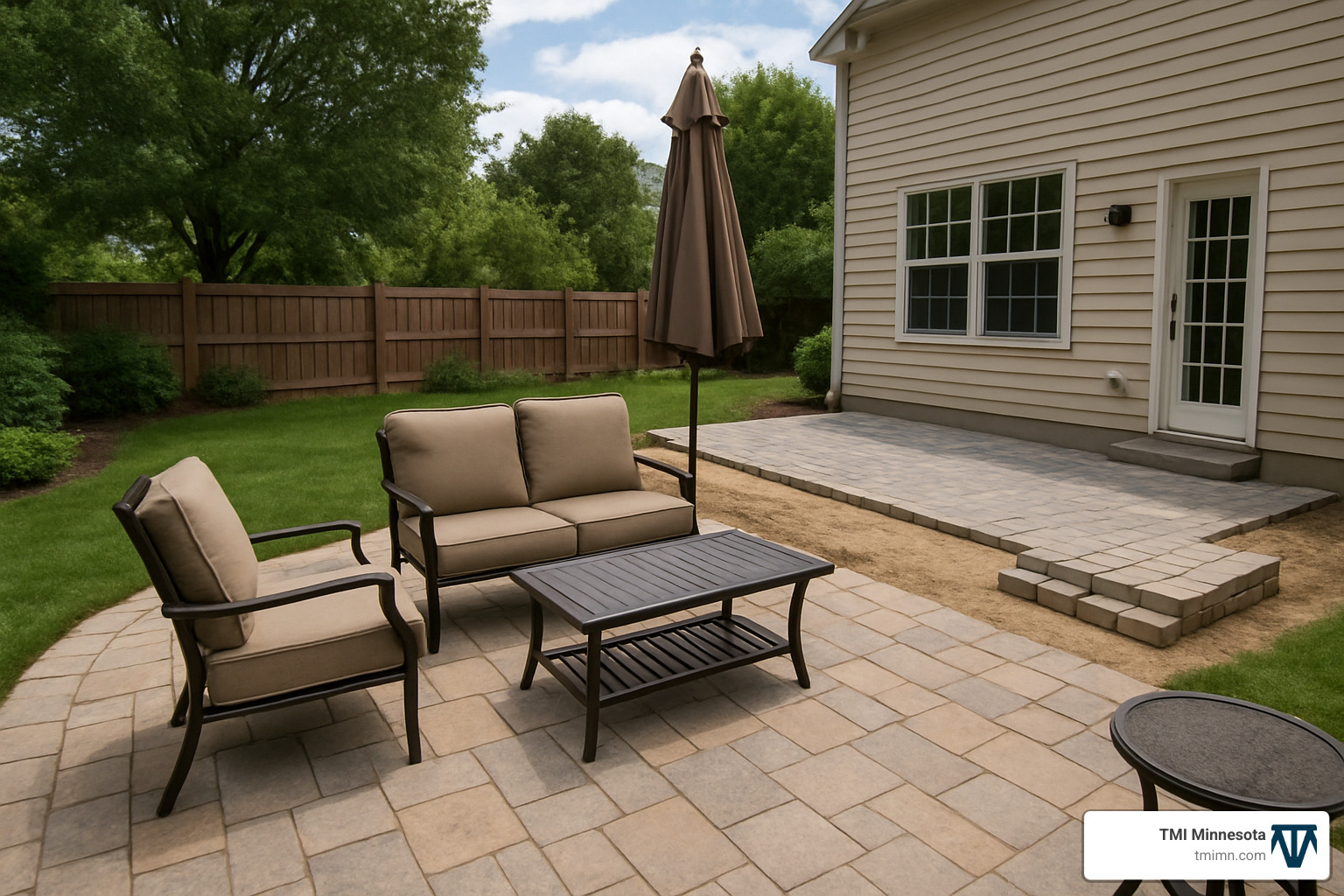
One approach I particularly love recommending is phased building. There’s no rule saying you must complete your entire hardscape vision in one season! Starting with a well-designed patio this year and adding the outdoor kitchen or fire pit next year spreads costs while giving you time to enjoy each phase along the way. The photo above shows exactly how this approach can work beautifully.
Smart material mixing is another trick of the trade. Use premium materials in high-visibility focal points (like a natural stone border) while using more budget-friendly options in larger areas. This creates visual impact where it matters most while keeping overall hardscape installation cost manageable.
The long-term value of quality hardscaping shouldn’t be overlooked either. Research consistently shows that thoughtfully designed outdoor living spaces increase property values by 8-12% and deliver a 40-100% return on investment at resale time. That’s not just recouping costs – it’s making your money work harder for you! For more detailed information on cost considerations, the Comprehensive cost guide provides valuable insights.
Don’t forget that maintenance plays a huge role in preserving your investment. Regular sealing of pavers, proper winter care, and prompt repairs to minor issues prevent costly problems down the road. Think of it as protecting your hardscape investment the same way regular oil changes protect your car.
Choosing & Vetting a Contractor
Finding the right contractor might be the single most important decision affecting both your hardscape installation cost and your satisfaction with the finished project. Let me share what to look for:
First, verify the basics: valid state licensure and proper insurance coverage are non-negotiable. An uninsured contractor might offer a lower bid, but you’ll be personally liable if anything goes wrong – a risk that’s simply not worth taking.
Experience matters tremendously in hardscaping. Ask specifically about projects similar to yours – a contractor who primarily builds decks might not have the specialized knowledge needed for complex stone patios or retaining walls. Professional certifications from organizations like ICPI (Interlocking Concrete Pavement Institute) or NCMA (National Concrete Masonry Association) indicate specialized training and commitment to industry standards.
When collecting estimates (and yes, you should get at least three), look beyond the bottom-line number. A detailed, written estimate should break down materials, labor, permits, and site preparation separately. Vague allowances or unspecified costs are red flags that often lead to surprise charges later.
Past work speaks volumes about what you can expect. Ask to see a portfolio of completed projects, but don’t stop there – request references from homeowners whose projects were completed 2-3 years ago. This gives you insight into how the work holds up through Minnesota’s challenging seasons. If possible, visit actual installations in person to assess craftsmanship firsthand.
Communication style matters too. Does the contractor respond promptly to your inquiries? Do they explain technical concepts clearly? The contractor who takes time to educate you during the estimate process will likely bring that same attentiveness to your project.
For Twin Cities homeowners looking for expert guidance through the entire process, from initial concept to final installation, our Hardscape Design Services provide comprehensive support that ensures your vision becomes reality while respecting your budget constraints.
Frequently Asked Questions About Hardscape Costs
What influences labor pricing the most?
Labor typically accounts for 40-60% of total hardscape installation cost, and three main factors influence pricing:
When you’re budgeting for your hardscape project, understanding labor costs is crucial. The skill level required significantly impacts what you’ll pay—basic installations like simple patios or walkways typically run $40-$60 per hour, while more complex work involving intricate patterns or multiple levels jumps to $60-$85 per hour. For specialized projects like outdoor kitchens or water features, expect to pay $75-$100+ hourly for the expertise required.
Where you live matters too. Here in the Twin Cities, our labor rates tend to run slightly higher than the national average. Plus, our seasonal demand (everyone wants their project done before summer!) affects both availability and pricing. The local availability of materials also impacts how efficiently crews can work.
The complexity of your design plays a huge role as well. Those beautiful curved designs you’ve pinned on Pinterest? They require more precise cuts and careful installation. Any elevation changes in your yard mean additional structural considerations, and custom features demand specialized knowledge that comes at a premium.
How much should I budget for annual maintenance?
Proper maintenance preserves both appearance and structural integrity:
Think of your hardscape like a car—regular maintenance keeps it looking great and functioning properly for years to come. I generally recommend my clients budget about 5-10% of their initial hardscape installation cost for annual maintenance.
What does this maintenance include? Professional power washing typically costs $100-$400 depending on the size and complexity of your hardscape. Sealing, which you’ll want to do every 2-3 years, runs about $0.50-$3 per square foot and protects your investment from staining and weather damage.
For paver installations, plan on replenishing joint sand occasionally at $0.25-$0.75 per square foot. This simple step prevents weed growth and keeps your pavers locked in place. And don’t forget to set aside a small fund for occasional minor repairs—addressing small issues promptly prevents them from becoming major problems.
The peace of mind that comes from proper maintenance is worth every penny, and it significantly extends the life of your outdoor living space.
Does hardscaping really raise home value?
Yes, quality hardscaping consistently delivers strong returns:
I’ve seen this with many of our clients—well-designed hardscaping absolutely boosts your home’s value. First impressions matter tremendously in real estate, and beautiful hardscaping creates instant curb appeal that drives buyer interest and perceived value.
Today’s homebuyers increasingly view outdoor spaces as extensions of the home’s living area. A thoughtfully designed patio, outdoor kitchen, or fire pit area isn’t just an amenity—it’s additional “square footage” for entertaining and relaxation.
In terms of actual numbers, quality hardscape projects typically deliver a 40-100% return on investment at resale. Well-executed outdoor living spaces can increase overall property values by 8-12%, making hardscape installation cost a smart investment rather than just an expense.
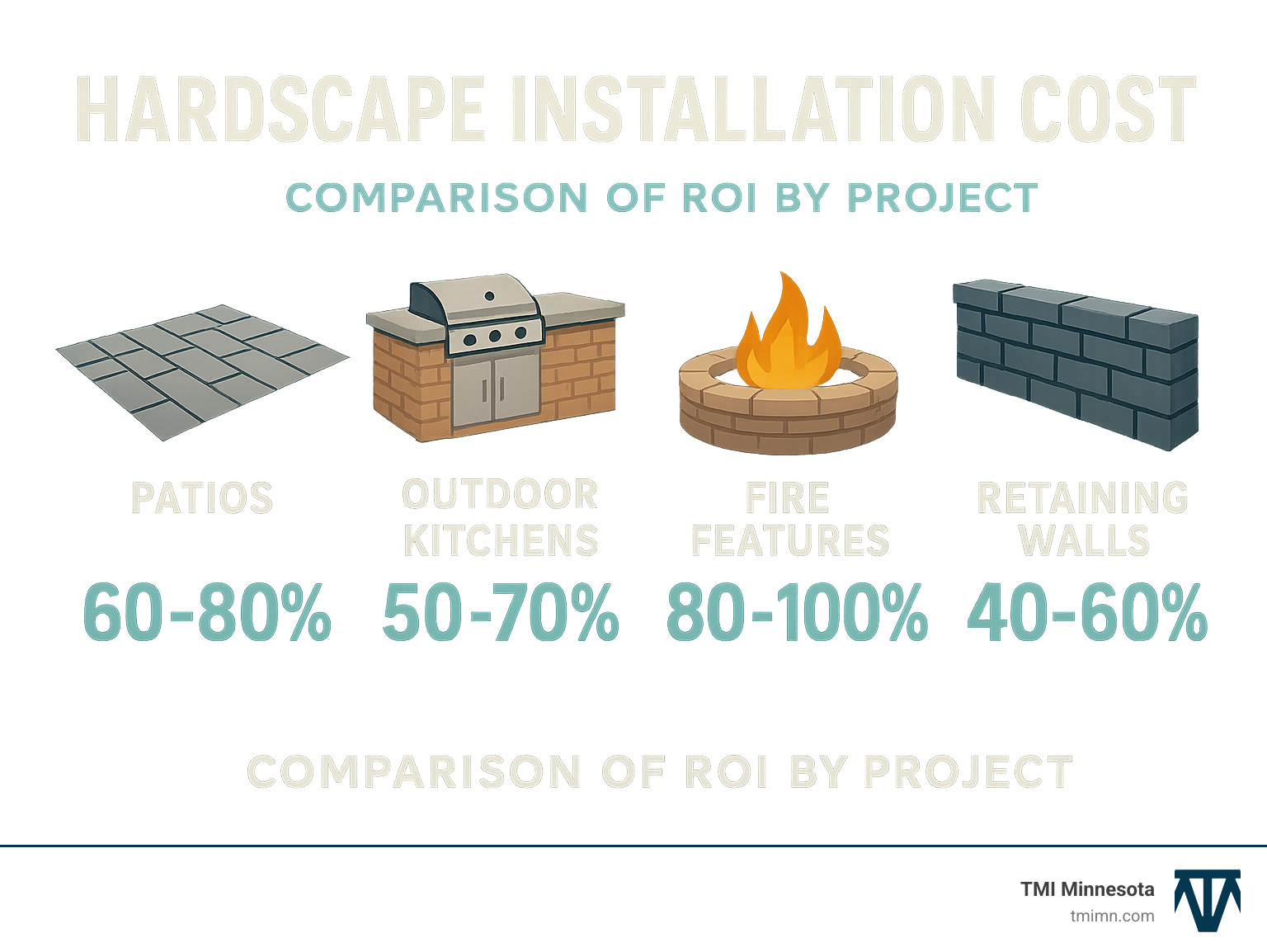
The highest returns typically come from projects that balance quality, functionality, and aesthetic appeal without over-improving for your neighborhood. Homes with thoughtfully designed outdoor living spaces not only command higher prices but also tend to sell faster than comparable properties without these features.
The key to maximizing your return is creating spaces that potential buyers can envision themselves using and enjoying. That’s why we always recommend focusing on both beauty and function when planning your hardscape investment.
Conclusion
Planning your hardscape project with a clear understanding of costs isn’t just about staying on budget—it’s about creating outdoor spaces that truly improve your everyday life. While hardscape installation cost varies based on countless factors, the investment consistently delivers returns in both daily enjoyment and long-term property value.
I’ve worked with countless Twin Cities homeowners who initially felt overwhelmed by the prospect of budgeting for their outdoor dreams. What I’ve found is that the most successful projects always begin with realistic expectations and thoughtful planning.
For your own hardscape journey, I recommend these proven approaches:
Start with an honest budget based on the insights we’ve shared. In Minnesota, our unique climate considerations might require specific materials and installation techniques that affect overall costs.
Quality matters most where structural integrity is concerned—never compromise on proper drainage, base preparation, or material durability. These invisible elements ultimately determine whether your patio lasts 5 years or 25 years.
Consider phasing complex projects if your dream outdoor space exceeds your current budget. A thoughtfully designed master plan can be implemented over several seasons, allowing you to spread costs while still working toward a cohesive final result.
Partner with experienced professionals who understand Minnesota’s freeze-thaw cycles and can recommend appropriate materials and installation methods. The right contractor becomes a valuable advisor in balancing immediate costs against long-term value.
Successful hardscaping blends beauty with function, creating spaces that not only look stunning but actually improve how you live in and enjoy your home. The best designs consider how you’ll use the space throughout our distinct Minnesota seasons.
At TMI Minnesota, we believe in transparent pricing and helping our clients make informed decisions about their outdoor investments. We’ve seen how well-executed hardscaping transforms not just properties, but lifestyles—creating spaces where memories are made for years to come.
For inspiration and ideas that might spark your own outdoor vision, browse our Hardscape Gallery to see how other Twin Cities homeowners have transformed their yards into personal retreats.
By understanding what drives hardscape installation cost, you can approach your project with confidence, knowing you’re making wise investments in your home’s outdoor living potential—and creating spaces where your life happens beautifully.