
Why Your Yard’s Drainage Problems Won’t Fix Themselves
Hardscape installation for drainage and erosion control solves critical water management issues by directing runoff away from your home, stabilizing soil, and preventing costly foundation damage. Here’s what you need to know:
Quick Solutions at a Glance:
- Proper Grading – Establish a 5% slope away from your foundation to prevent water intrusion
- Retaining Walls – Stabilize slopes steeper than 3:1 and create terraced planting areas
- Permeable Pavers – Allow water infiltration while reducing surface runoff by up to 80%
- French Drains – Intercept subsurface water and redirect it away from problem areas
- Catch Basins & Channel Drains – Collect and manage surface water before it causes damage
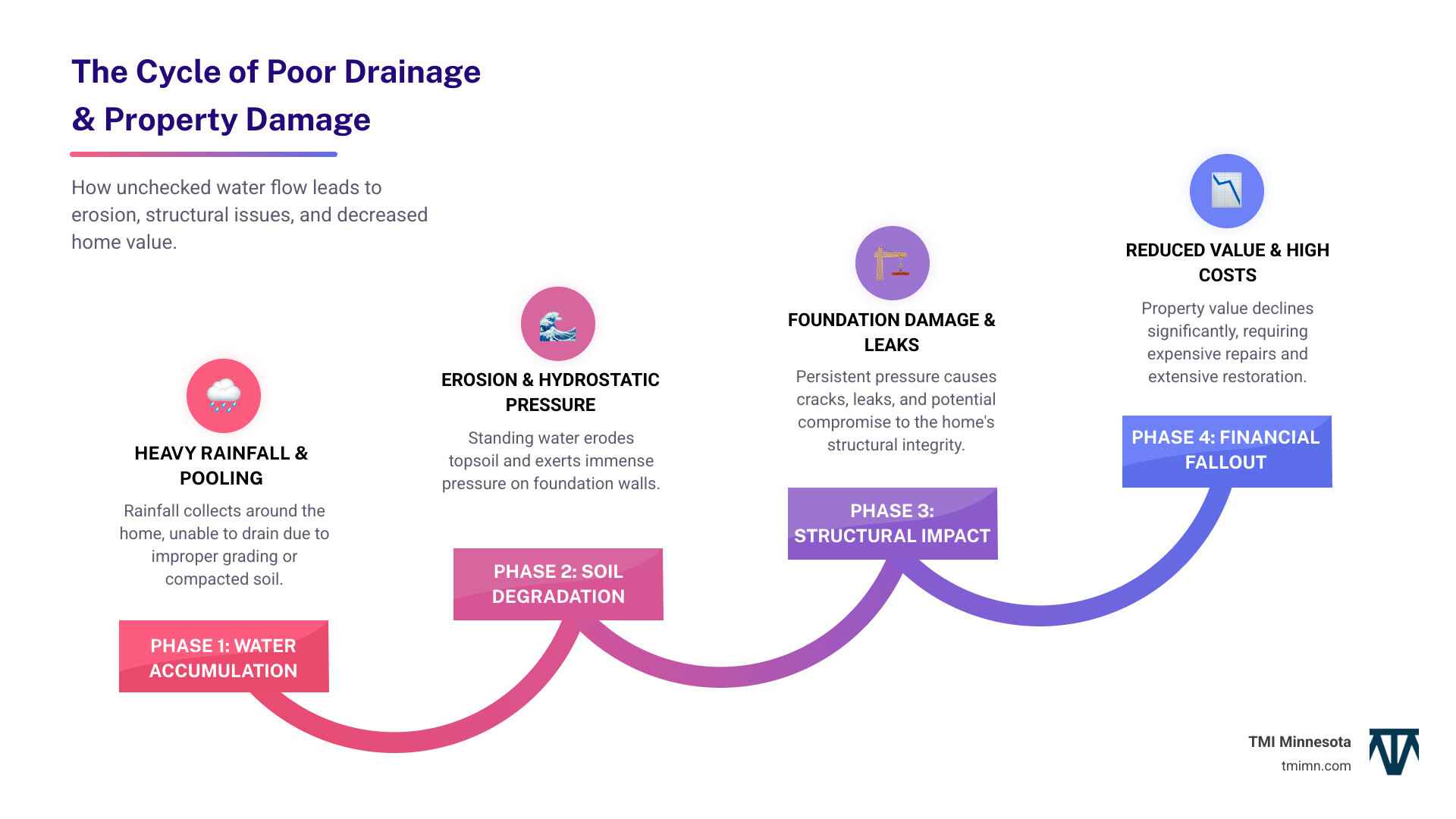
Soggy yards aren’t just an eyesore. They’re a warning sign.
When water pools around your foundation, it creates hydrostatic pressure that can crack basement walls and lead to thousands of dollars in repairs. According to industry data, nearly a third of the nation’s topsoil has been lost over the last century and a half, with improper drainage being a major contributor to residential soil erosion.
The good news? You can stop the damage before it starts.
The right combination of hardscaping elements—retaining walls, drainage systems, and permeable surfaces—works together to manage water flow, prevent soil loss, and protect your home’s structural integrity. These aren’t just functional fixes. When designed properly, they transform problem areas into beautiful, usable outdoor spaces that increase your property value.
But here’s the challenge: Not all drainage solutions work for every yard. Clay soil behaves differently than sandy soil. A gentle slope requires different treatment than a steep hillside. And a quick fix today can become an expensive failure tomorrow if it’s not engineered correctly.
At TMI Minnesota, we’ve spent years helping Minnesota homeowners solve complex drainage and erosion challenges through expert hardscape installation for drainage and erosion control. We’ve seen how the right approach protects foundations, preserves landscapes, and creates outdoor spaces families actually want to use.
This guide will walk you through everything you need to know—from identifying your specific drainage problems to choosing the right hardscape solutions and understanding when to call in a professional.
For additional background on how runoff, infiltration, and erosion interact in residential landscapes, you can also review this overview of stormwater management.
Quick hardscape installation for drainage and erosion control definitions:
Understanding Your Yard’s Drainage and Erosion Problems
Before you can fix a problem, you need to understand what you’re up against. Your yard’s drainage and erosion issues often leave tell-tale signs.
Signs and Symptoms of Poor Drainage
Have you noticed standing water long after a rain shower or perpetually damp spots? These are critical indicators of underlying drainage problems. Look for these primary signs:
- Bare soil patches and exposed tree roots: Areas where grass struggles to grow and topsoil has washed away.
- Muddy puddles: Standing water that lingers for hours or days after rainfall.
- Gushing downspouts: Downspouts discharging large volumes of water near your foundation, creating erosion channels.
- Foundation water stains: Discoloration or cracks on foundation walls, indicating water intrusion.
- Musty basement smells: A clear sign of moisture buildup that can lead to mold and mildew.
- Uneven terrain or soggy yards: Obvious signs of soil movement and poor drainage that lead to unusable outdoor spaces.
Primary Causes of Water Issues
Several factors contribute to drainage and erosion problems in the Twin Cities:
- Heavy rainfall and poor soil type: Minnesota’s common clay soils compact easily, leading to poor water absorption and increased runoff.
- Soil compaction: Foot traffic or heavy equipment can compact soil, reducing its ability to absorb water and forcing it to run off.
- Improper grading: If your yard slopes towards your home’s foundation instead of away, water will naturally collect there.
- Human activity: Construction and landscaping changes can disturb natural drainage patterns.
- Misdirected downspouts: Downspouts that dump water too close to the foundation will cause it to pool and seep into your basement.
- Hidden sources: Underground springs or water flowing through utility trenches can direct water toward your home.
How to Assess Your Yard’s Needs
Understanding your yard’s specific needs is the first step toward effective hardscape installation for drainage and erosion control. Here’s a simple approach:
- Observe water flow after rain: After a heavy rain, watch where the water goes. Note where it pools, flows, or heads toward your foundation. This helps identify low spots and problem areas.
- Perform an infiltration test: Dig a small hole (about 12 inches deep), fill it with water, and time how long it takes to drain. Slow drainage indicates compacted or clay-rich soil.
- Check soil type: Dig a small sample. Does it feel sticky (clay) or crumble easily (sandy)? This helps determine the best strategies for improving drainage.
- Measure slope: Use stakes, a string level, and a tape measure to determine your yard’s gradient. This reveals how water moves and where grading adjustments are needed. Any slope steeper than a 3:1 ratio will likely need additional support.
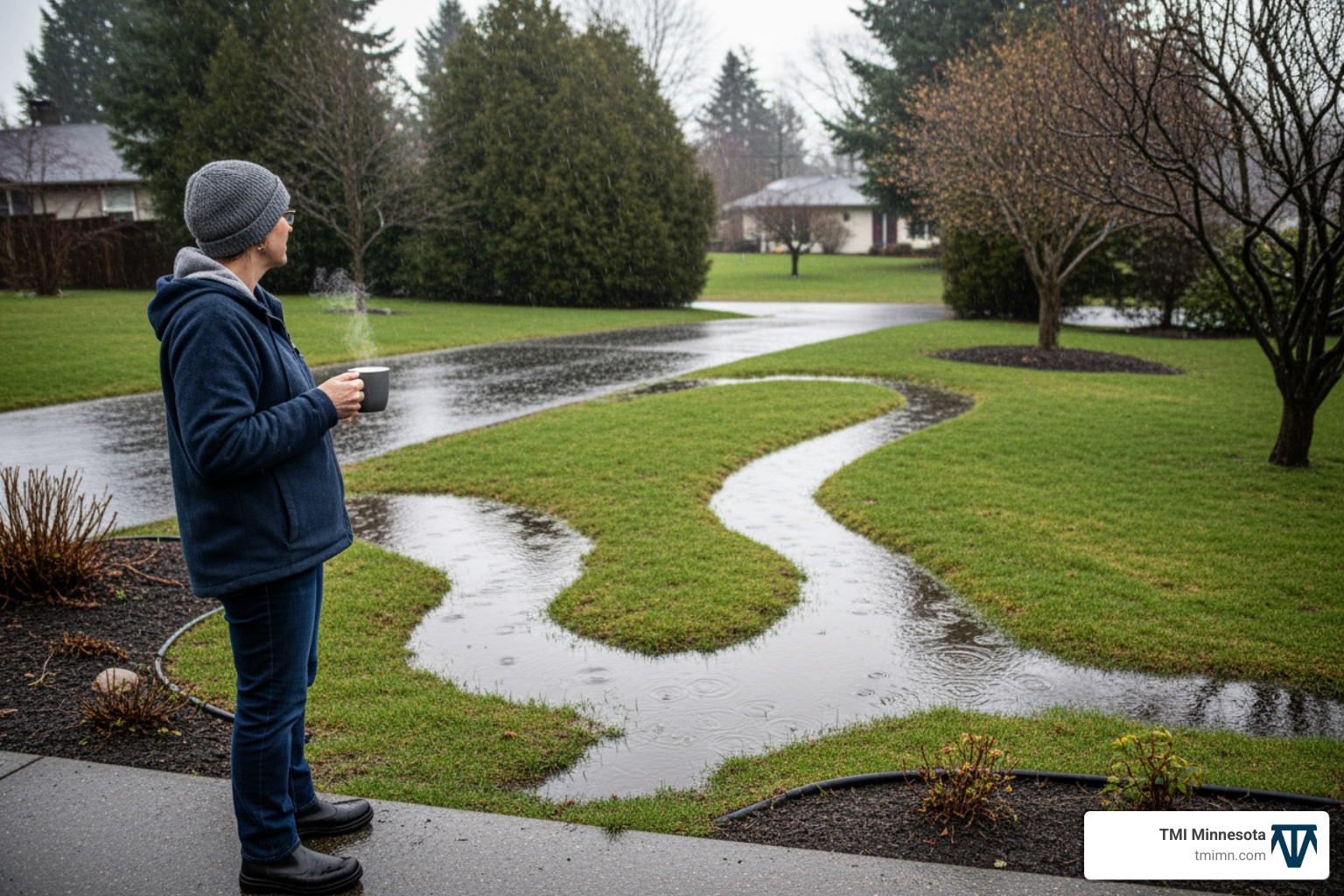
By carefully assessing these factors, you can pinpoint the root causes of your drainage and erosion issues and design a targeted, effective solution.
Key Hardscape Installation for Drainage and Erosion Control
Now that we understand the problems, let’s explore the powerful hardscape solutions used to create dry, stable, and beautiful yards in the Twin Cities.
The Role of Proper Grading and Sloping
Proper grading is the foundation of any effective drainage strategy. It involves shaping the land to direct water away from your home and prevent pooling.
- Positive Slope: The soil around your foundation must slope away from the house. A minimum 5% grade is crucial to prevent water intrusion. For hard surfaces like patios, a grade of 1/4 inch per foot is recommended.
- Swales and Berms: A swale is a gentle, broad ditch designed to guide surface runoff. A berm is a raised area of land used to steer water flow, creating a barrier or channel.
- Diverting Water: The goal of grading is to eliminate flat spots by creating subtle slopes and contours, ensuring rainwater flows efficiently off your property.
- Lawn Aeration: This complementary technique breaks up compacted soil, allowing air, water, and nutrients to penetrate more deeply and reducing runoff.
How Retaining Walls Prevent Soil Erosion
Retaining walls are crucial structural elements for hardscape installation for drainage and erosion control, especially on sloped properties.
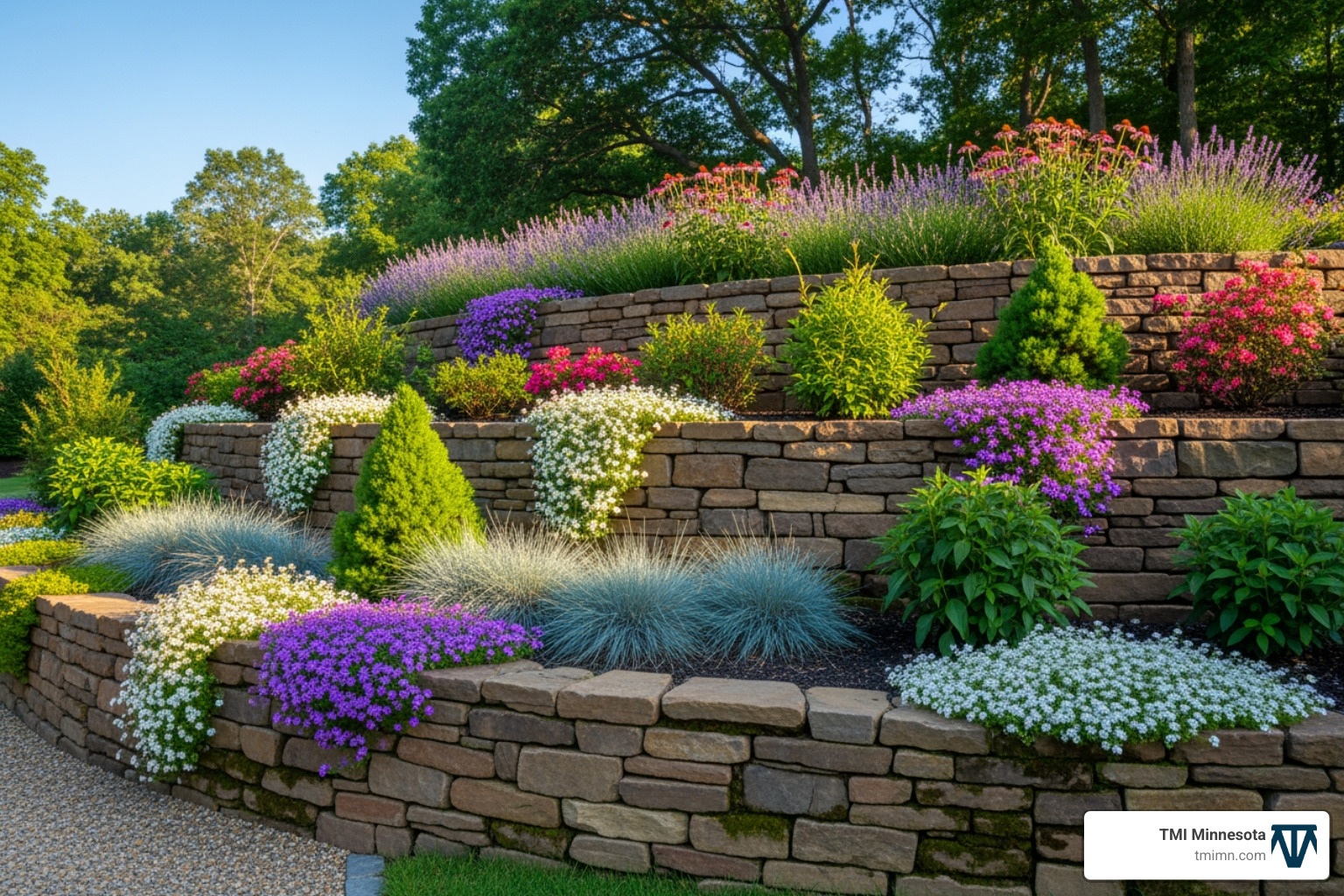
- Stabilizing Slopes and Terracing: On steep inclines (greater than a 3:1 ratio), retaining walls prevent soil from washing away. They can divide a slope into level, usable terraces for planting or recreation.
- Managing Water Flow: A well-designed retaining wall channels runoff to designated drainage points, preventing erosion.
- Hydrostatic Pressure Relief: To prevent wall failure from water buildup, drainage systems are installed behind the wall. This includes perforated drain pipes to collect water and weep holes to allow it to escape. Proper water management is critical for longevity and may involve swales, specialized drains, and ensuring pipes have at least a 1% gradient.
- Geogrid Reinforcement: For taller walls, a strong polymer mesh called geogrid is embedded in the soil behind the wall to reinforce the soil mass and increase stability.
The Benefits of Permeable Pavers for Water Management
Unlike traditional concrete or asphalt, permeable pavers offer an effective solution for hardscape installation for drainage and erosion control.
- How They Work: These pavers have small gaps between them, filled with aggregate. This allows rainwater to filter through to a gravel base below instead of running off the surface.
- Applications: Permeable pavers can be used for patios, walkways, and driveways, turning these surfaces into active stormwater management systems.
- Benefits: By allowing water to infiltrate the ground, permeable pavers reduce surface runoff, lessen the burden on storm drains, prevent flooding, and replenish groundwater.
- Installation: The system relies on a deep gravel base beneath the pavers. A geotextile fabric is often used to separate the gravel from the native soil, maintaining permeability and structural integrity.
Advanced Drainage Systems and Sustainable Solutions
For complex water challenges, specialized drainage systems and sustainable practices are often necessary.
Choosing the Right Hardscape Installation for Drainage and Erosion Control
Selecting the right system depends on whether you’re dealing with surface water, subsurface water, or downspout runoff.
| Drainage Solution | Application | Typical Cost (Approx.) | Installation Time (Approx.) | Maintenance Notes |
|---|---|---|---|---|
| French Drain | Subsurface water, soggy areas, diverting water from foundations | $20-100 per linear foot | 1-3 days | Clear debris, check outlets, ensure proper gradient. |
| Catch Basin | Collecting surface water from hardscapes, lawns | $200-500 per basin | 1-2 days | Clear grates of debris, remove sediment from sump. |
| Channel Drain | Intercepting surface water along long, narrow areas (e.g., driveways, patio edges) | $30-70 per linear foot | 1-2 days | Clear grates of debris, flush channels. |
| Downspout Drainage | Directing roof runoff away from foundation | $10-30 per linear foot | 0.5-1 day | Ensure pipes are clear, outlets are functional. |
- French Drains: A French drain is a perforated pipe in a gravel-filled trench that collects and diverts groundwater. It’s ideal for soggy yards and relieving pressure on foundations. Pipes require a minimum 1/8 inch per foot gradient for proper flow.
- Catch Basins: These are boxes with grated openings that collect surface runoff from lawns and hardscapes, routing it into an underground pipe system.
- Channel Drains: These long, narrow grates sit flush with surfaces like driveways or patios to intercept sheet flow and direct it into a drainage system.
- Downspout Drainage: Solid PVC pipes are connected to downspouts and buried with a slight slope to carry roof runoff far away from the house foundation.
Sustainable Water Management Solutions
Responsible hardscape installation for drainage and erosion control accepts practices that work with nature.
- Rain Gardens: These are landscaped depressions with native plants designed to capture and slowly absorb stormwater runoff, filtering it and recharging groundwater.
- Dry Wells: A dry well is an underground, gravel-filled pit that temporarily stores excess water from downspouts, allowing it to slowly soak into the soil.
- Bioswales: A bioswale is a vegetated channel that slows, filters, and infiltrates stormwater, improving water quality more effectively than a simple swale.
- Native Plants: The deep root systems of native plants are excellent for anchoring soil on slopes, reducing erosion, and improving soil structure.
- Infiltration Trenches: These are gravel-filled trenches that capture stormwater and allow it to infiltrate into the ground, improving water quality.
Combining Hardscaping and Landscaping for Slopes
On sloped properties, the most effective solutions blend hardscaping and softscaping.
- Terraced Gardens: Retaining walls create flat tiers on steep slopes, changing them into beautiful, functional gardens that slow water flow and prevent soil loss.
- Strategic Planting and Mulching: Using deep-rooted native plants and applying mulch on slopes helps bind the soil, reduce rainfall impact, and absorb moisture.
- Pathways: Designing pathways to follow the land’s natural contours helps manage water flow and prevent erosion.
Professional Installation and Long-Term Benefits
While some minor drainage issues can be tackled by a determined homeowner, complex problems require professional hardscape installation for drainage and erosion control.
Critical Installation and Design Considerations
The success of any drainage system hinges on meticulous planning and installation. Key considerations include:
- Site Assessment and Soil Testing: Understanding your specific soil type and land topography is paramount for a successful design.
- Proper Base Preparation: A stable, well-compacted base is critical for pavers, retaining walls, and drainage trenches to prevent settling.
- Correct Pipe Gradient: All drainage pipes must have a continuous downward slope (minimum 1/8 inch per foot) to ensure water flows efficiently.
- Geotextile Fabric Use: This fabric is used to separate soil from gravel in drainage systems, preventing clogs while allowing water to pass through.
- Foundation Drainage Best Practices: We adhere to rigorous standards, like those in the Unified Facilities Guide Specifications (UFGS 33 46 13), for selecting materials, proper bedding, and careful backfilling to protect your home.
Maintenance for Your Hardscape Installation for Drainage and Erosion Control
Regular maintenance ensures the longevity and effectiveness of your drainage solutions:
- Routine Checks: After heavy rains, inspect your yard for any new pooling or erosion.
- Clearing Debris: Regularly clean grates on catch basins and channel drains to prevent blockages.
- Inspecting Outlets: Ensure the discharge points of your drainage pipes are clear and allow water to flow freely.
- Upkeep: Weed bioswales and rain gardens, and replenish mulch or gravel as needed to maintain functionality.
Long-Term Benefits of a Professional Solution
Investing in a professional solution is a strategic investment in your home and lifestyle.
- Protecting Your Foundation: By diverting water, you eliminate the risk of basement flooding and costly structural damage.
- Increasing Property Value: A well-drained, erosion-free yard improves curb appeal and is a significant selling point.
- Creating Usable Outdoor Space: Effective drainage transforms soggy, unusable areas into functional spaces for entertaining or relaxing.
- Preventing Topsoil Loss: Erosion control measures keep your precious topsoil in place, maintaining a healthy landscape.
- Peace of Mind: Knowing your home is protected from water damage allows you to relax and enjoy your yard, regardless of the weather.
Frequently Asked Questions about Drainage and Erosion Control
We often hear similar questions from homeowners in the Twin Cities. Here are some of the most common, with our expert answers:
How steep is too steep to landscape without a retaining wall?
A good rule of thumb for landscaping without structural support is a slope no steeper than 3:1 (three feet of horizontal run for every one foot of vertical rise). Anything steeper than this ratio will likely need additional support, such as a retaining wall, terracing, or other reinforced stabilization techniques to prevent erosion and ensure long-term stability.
What is the difference between a swale and a bioswale?
A swale is a simple, gently sloped, broad ditch or channel designed primarily to convey water from one area to another. It’s an effective way to redirect surface runoff. A bioswale, on the other hand, is a more sophisticated system. It’s also a graded channel, but it incorporates vegetation, a special soil mix, and sometimes a compost layer. The purpose of a bioswale is not just to move water, but also to slow it down, filter pollutants, and encourage it to infiltrate into the ground, making it a more environmentally friendly and effective solution for water quality management.
When should I call a professional for drainage issues?
You should consider calling a professional for hardscape installation for drainage and erosion control if:
- You notice signs of foundation damage (cracks, bowing walls, persistent basement leaks).
- You have large-scale erosion that is significantly altering your landscape.
- Your property has steep slopes that are difficult to manage.
- DIY solutions have failed to resolve the problem, or you’re tired of temporary fixes.
- You’re dealing with complex issues like underground springs or water flow from utility trenches.
- You need a comprehensive solution that integrates drainage with aesthetic hardscaping and landscaping.
Complex issues require expert assessment and engineering to ensure a permanent, effective, and compliant solution.
Transform Your Yard into a Stable and Stunning Oasis
Protecting your home from the damaging effects of water is one of the smartest long-term investments you can make. With expert hardscape installation for drainage and erosion control, we can transform your problem areas into functional, beautiful, and resilient outdoor spaces. From robust retaining walls that stabilize slopes to permeable pavers that manage stormwater gracefully, our team at TMI Minnesota uses leading-edge products and design techniques to ensure your yard stays dry and stunning, even through the toughest Minnesota weather.
Let us help you achieve the peace of mind that comes with a perfectly managed yard. For inspiration on how to integrate these solutions beautifully, explore our hardscape gallery.