
Why Fresh Herbs Transform Your Outdoor Living Space
Herb garden design ideas can completely transform your outdoor space into a functional, beautiful area that serves your family’s needs while adding incredible value to your home. Whether you’re working with a small balcony, a sunny windowsill, or a full backyard, the right herb garden design delivers fresh flavors, natural beauty, and a rewarding gardening experience.
Top Herb Garden Design Ideas for Every Space:
- Raised Beds: 2×6 foot cedar beds provide 12 square feet of growing space
- Container Gardens: Terra cotta pots, wine crates, and window boxes for mobility
- Vertical Walls: Gutter planters and pallet systems maximize small spaces
- Herb Spirals: Stone or gabion spirals create multiple microclimates
- Border Plantings: Mix herbs with flowers for pest control and pollinator support
- Indoor Gardens: Windowsill setups need 4-6 hours of sun or grow lights
Most herbs thrive in shallow containers (6+ inches deep) and need well-draining soil. Mediterranean herbs like rosemary and lavender prefer full sun, while mints and parsley tolerate partial shade. Space herbs 12-18 inches apart for healthy growth and easy harvesting.
As Christopher Deanovic, Operations Leader of Task Masters, I’ve helped Minnesota homeowners create stunning outdoor spaces that blend beauty with functionality for over a decade. My experience designing custom landscapes has shown me how herb garden design ideas can lift any outdoor living area into a space your family will love using.
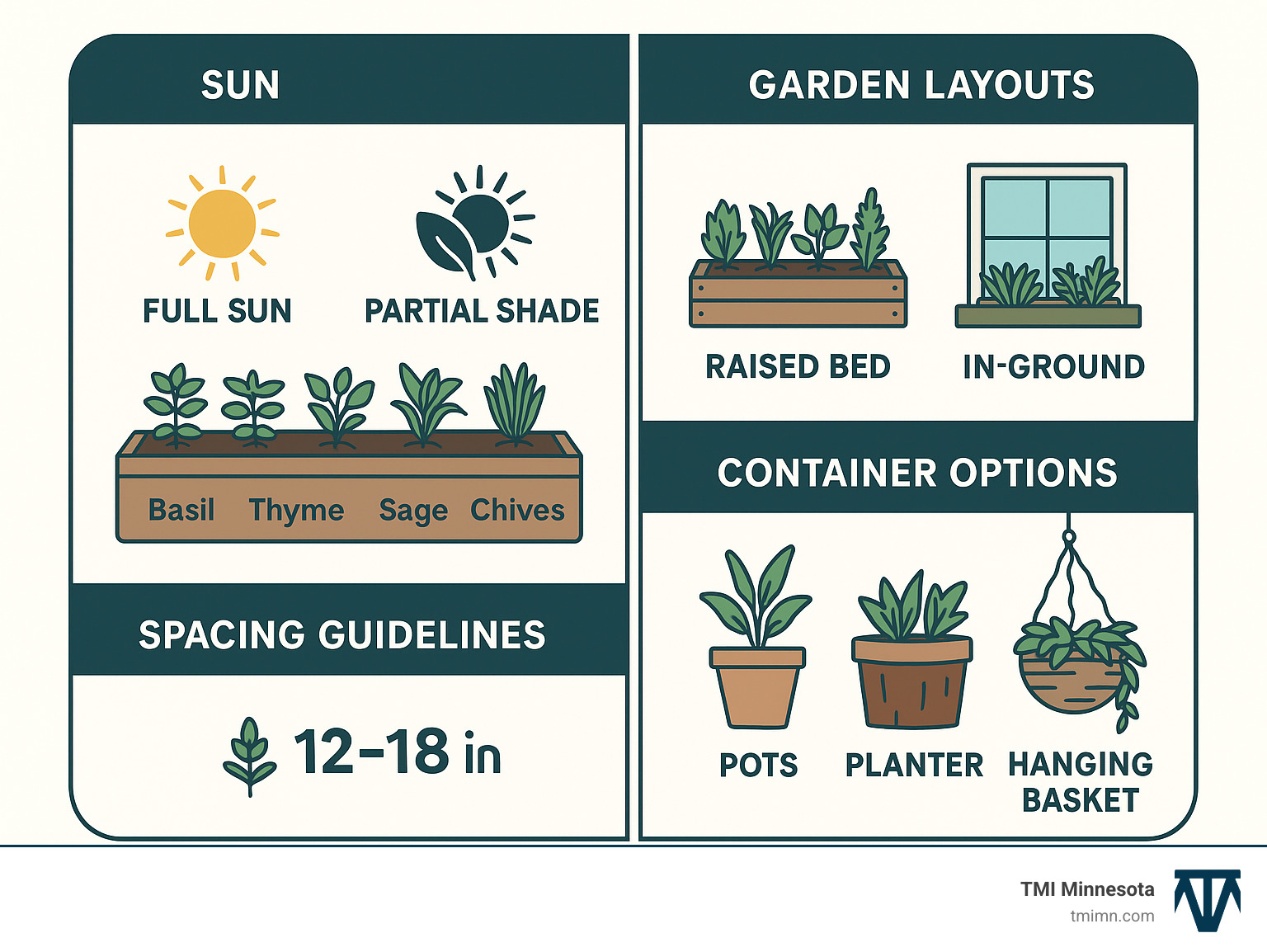
Quick look at herb garden design ideas:
Why Grow & What to Grow First
Growing your own herbs offers incredible benefits that go far beyond just saving money at the grocery store. Fresh herbs provide a flavor boost that dried herbs simply can’t match, and having them steps away from your kitchen door means you’ll actually use them in your cooking. Plus, many herbs are powerhouses for supporting pollinators and beneficial insects in your garden ecosystem.
We’ve found that herbs are among the easiest plants for beginning gardeners to master. They’re forgiving, grow quickly, and most varieties thrive in containers if you don’t have garden space. The key is starting with proven winners that practically grow themselves.
For scientific research on companion planting, herbs offer some of the best natural pest control options. Basil planted near tomatoes attracts pollinators, while garlic deters many common garden pests.
Health & Culinary Perks
Beyond their incredible flavors, herbs pack serious nutritional benefits. Many contain high levels of antioxidants, vitamins, and minerals that support immune function. Basil and other herbs in the mint family are rich sources of vitamins A, C, and K, plus essential minerals.
The aromatherapy benefits are real too. Lavender naturally reduces stress, while rosemary can improve focus and memory. Simply brushing against these plants as you tend your garden provides natural wellness benefits throughout the growing season.
10 Foolproof Starter Herbs
Based on our experience helping Minnesota gardeners succeed, these herbs are virtually impossible to kill and provide quick, satisfying harvests:
- Basil – Heat-loving annual that thrives in containers and provides continuous harvest
- Mint – Vigorous perennial that should be contained to prevent spreading
- Chives – Hardy perennial that returns year after year and tolerates cold
- Parsley – Biennial that provides fresh greens and tolerates partial shade
- Oregano – Drought-tolerant perennial that thrives on neglect
- Thyme – Low-growing perennial perfect for borders and containers
- Sage – Attractive perennial subshrub with silvery foliage
- Rosemary – Evergreen perennial that can overwinter indoors in Minnesota
- Cilantro – Fast-growing annual that can be succession planted every 2-3 weeks
- Dill – Self-seeding annual that attracts beneficial insects
Site, Soil & Smart Grouping Essentials
Success with herbs starts with understanding their basic needs. Most culinary herbs originated in Mediterranean climates, which means they prefer well-draining soil, plenty of sunlight, and don’t need rich, heavily fertilized conditions like vegetables do.
We recommend the “103 soil blend” for container herbs: equal parts topsoil, compost, and coarse sand, topped with earthworm castings. This mixture provides excellent drainage while maintaining enough organic matter to support healthy growth.
For more comprehensive landscape planning, check out our Softscape Services where we help design complete outdoor living spaces that incorporate edible elements seamlessly.
Picking the Perfect Spot Indoors vs. Outdoors
Outdoor Locations:
- Choose spots with 4-6 hours of direct sunlight daily
- Ensure good air circulation to prevent fungal issues
- Consider proximity to your kitchen for convenient harvesting
- Protect from harsh winds that can damage tender herbs
Indoor Locations:
- South-facing windows provide the best natural light
- Supplement with grow lights providing 14-16 hours of illumination
- Maintain temperatures between 65-75°F for optimal growth
- Use humidity trays to increase moisture around plants
Building the Right Soil & Drainage
The biggest mistake we see with herb gardens is using regular potting soil that retains too much moisture. Herbs need soil that drains quickly but doesn’t dry out completely.
Our Recommended Soil Mix:
- 1/3 quality topsoil
- 1/3 compost
- 1/3 coarse sand or perlite
- Top with 1 inch of earthworm castings
This blend mimics the well-draining conditions herbs prefer in their native habitats. For containers, ensure drainage holes every 3-4 inches and use a weed barrier cloth to prevent soil loss.
Arranging Herbs by Needs
Smart grouping saves time and ensures each herb gets what it needs to thrive. We organize herbs into three main categories:
Mediterranean Herbs (Dry, Full Sun):
- Rosemary, thyme, oregano, sage, lavender
- Need excellent drainage and full sun
- Water deeply but infrequently
Moderate Moisture Herbs:
- Chives, coriander, lemon balm
- Tolerate some shade
- Need consistent but not soggy soil
Moisture-Loving Herbs:
- Parsley, mint, watercress
- Prefer consistent moisture
- Tolerate partial shade
| Sun-Loving Herbs | Shade-Tolerant Herbs |
|---|---|
| Rosemary | Mint |
| Thyme | Parsley |
| Oregano | Chives |
| Sage | Lemon Balm |
| Lavender | Cilantro |
| Fennel | Dill |
Inspiring Herb Garden Design Ideas for Every Space
The beauty of herb garden design ideas is their incredible versatility. Whether you’re working with a sprawling backyard or a tiny apartment balcony, there’s a design approach that will work for your space and lifestyle.
We’ve installed everything from formal knot gardens to quirky vertical walls, and each design brings its own character to the outdoor space. The key is choosing a style that matches both your aesthetic preferences and your practical needs.
For broader landscape integration, explore our Edible Garden Landscape Ideas to see how herbs can be woven into your overall outdoor design.
Classic Raised Beds & Formal Knot Patterns
Raised beds remain one of our most popular herb garden design ideas because they offer excellent drainage, soil control, and easier maintenance. A standard 2×6 foot cedar bed provides 12 square feet of growing space – enough for a diverse collection of culinary herbs.
Formal Design Elements:
- Symmetrical bed layouts with central focal points
- Walkways between beds for easy access
- Low-growing herbs like thyme for border edges
- Taller herbs like rosemary or bay as centerpieces
The classic knot garden pattern, inspired by medieval monastery gardens, uses compact herbs like boxwood basil, English thyme, and creeping rosemary to create intricate geometric patterns. These designs work especially well in formal landscapes where structure and symmetry are important.
Container & Windowsill Gardens
Container gardening offers the ultimate flexibility for herb garden design ideas. You can move plants to follow the sun, bring tender herbs indoors for winter, and experiment with different arrangements throughout the season.
Container Options:
- Terra cotta pots provide excellent drainage and breathability
- Wine crates create rustic, modular systems
- Window boxes maximize limited space
- Hanging baskets add vertical interest
We recommend containers at least 6 inches deep for most herbs, though 12 inches is ideal for herbs with deeper root systems. Always ensure proper drainage holes and use saucers to protect surfaces from water damage.
Vertical & Hanging Herb Walls

Vertical growing systems are game-changers for small spaces. We’ve built everything from simple gutter planters to elaborate living walls, and they never fail to impress visitors while maximizing growing space.
Popular Vertical Systems:
- Gutter Planters: Paint gutters and mount horizontally with drainage holes
- Pallet Gardens: Create pockets in wooden pallets for individual herbs
- Shoe Organizers: Canvas organizers work great for small potted herbs
- Gabion Walls: Wire baskets filled with stones create permanent structures
The key to successful vertical gardens is ensuring adequate drainage and preventing water from cascading onto lower plants. We often install drip irrigation systems to maintain consistent moisture without oversaturating.
Eye-Catching Herb Spiral
The herb spiral is one of our favorite herb garden design ideas because it creates multiple microclimates within a small footprint. Based on permaculture principles, these spirals maximize growing space while providing different moisture and sun conditions for various herbs.
Design Specifications:
- Typical diameter: 6-8 feet
- Height: 2-3 feet at the center
- Materials: Stone, brick, or gabion baskets
- Drainage layer: 50cm at center tapering to 10cm at edges
Mediterranean herbs like rosemary and thyme thrive at the sunny, well-drained top, while moisture-loving herbs like parsley and mint flourish at the shadier, moister base. For detailed construction guidance, check out this scientific research on herb-spirals.
Creative Borders & Companion Plant Blends
Integrating herbs into existing flower beds creates beautiful, functional borders that serve multiple purposes. Lavender makes an excellent border plant that deters rabbits and deer while attracting pollinators. Marigolds planted among herbs provide natural pest control.
Effective Companion Combinations:
- Basil with tomatoes (attracts pollinators)
- Chives around roses (prevents black spot)
- Garlic throughout beds (deters many pests)
- Cosmos and herbs (supports beneficial insects)
For more inspiration on creating stunning garden edges, visit our Garden Border Ideas page.
Seasonal Care, Sustainability & Troubleshooting
Successful herb gardening requires understanding the seasonal rhythms of your plants. We’ve developed a simple maintenance schedule that keeps herbs productive throughout the growing season while building soil health for future years.
The “Feed on Friday” approach uses weekly liquid seaweed fertilizer to maintain consistent nutrition without over-fertilizing. This gentle feeding schedule supports steady growth without encouraging excessive leaf production at the expense of flavor.
For comprehensive sustainable gardening practices, explore our Environmentally Friendly Gardens services.
Year-Round Maintenance Calendar
Spring (March-May):
- Start seeds indoors 6-8 weeks before last frost
- Prepare beds with compost and organic matter
- Plant cool-season herbs like chives and parsley
- Begin succession planting of cilantro
Summer (June-August):
- Plant warm-season herbs after soil warms
- Pinch flowers to maintain leaf production
- Harvest regularly to encourage new growth
- Provide consistent watering during heat waves
Fall (September-November):
- Harvest and dry herbs for winter storage
- Collect seeds from self-seeding varieties
- Mulch perennial herbs for winter protection
- Bring tender herbs indoors
Winter (December-February):
- Maintain indoor herb gardens under grow lights
- Plan next year’s garden layout
- Order seeds and start planning
- Prune dormant perennial herbs
Sustainable Upgrades & Water-Wise Ideas
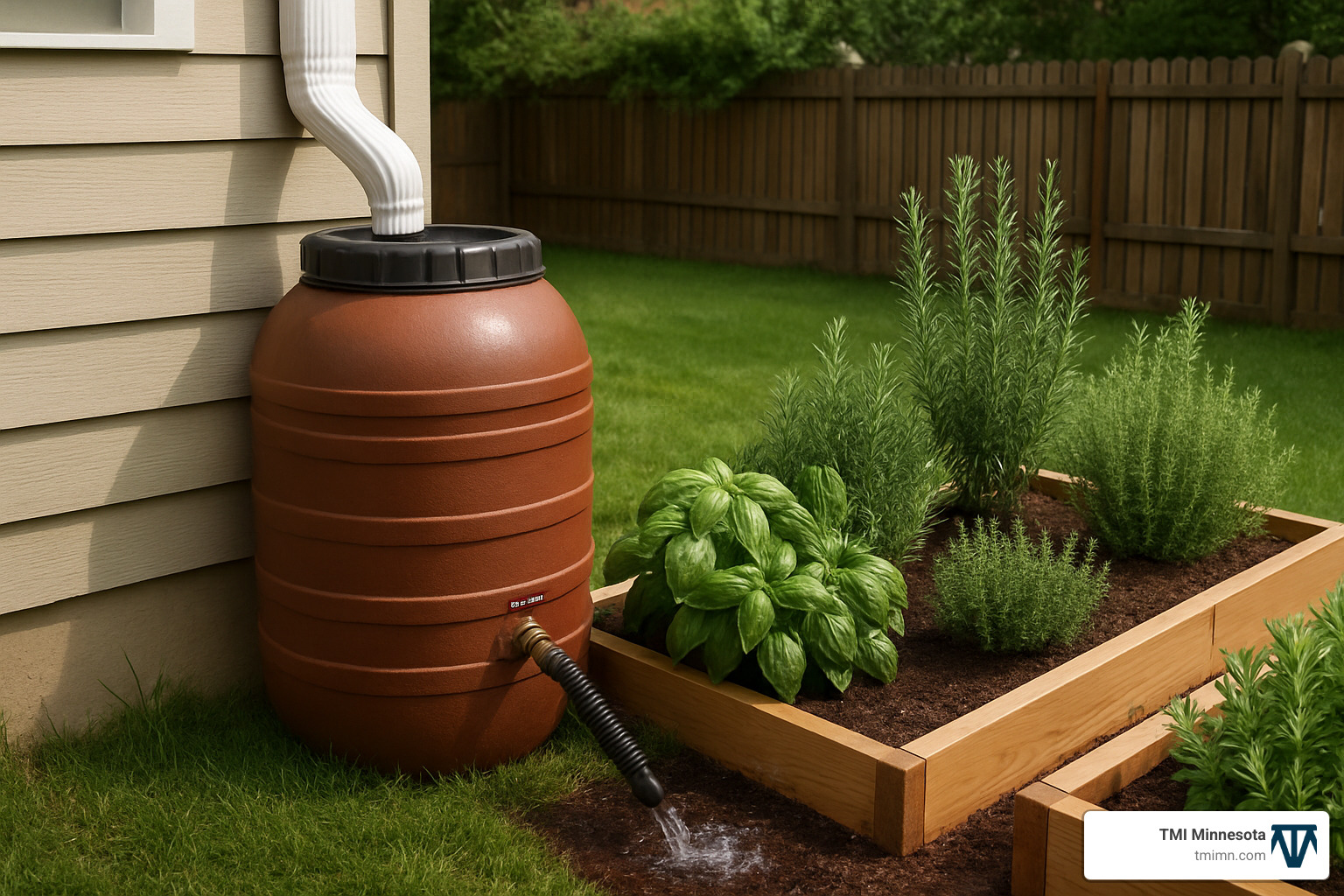
Water conservation is increasingly important in Minnesota, and herbs are naturally suited to water-wise gardening. Many Mediterranean herbs actually develop better flavor when grown under slight water stress.
Water-Saving Strategies:
- Xeriscaping: Use drought-tolerant herbs like lavender, rosemary, and sage
- Rain Barrels: Collect roof runoff for irrigation
- Mulching: Maintain 2-3 inches of organic mulch around plants
- Drip Irrigation: Deliver water directly to root zones
Sustainable Practices:
- Compost herb trimmings and kitchen scraps
- Save seeds from open-pollinated varieties
- Reuse containers and materials when possible
- Choose native herbs that support local wildlife
Common Mistakes & How to Avoid Them
After years of troubleshooting herb gardens, we’ve identified the most common problems and their solutions:
Overwatering: More herbs die from too much water than too little. Allow soil to dry between waterings and ensure excellent drainage.
Wrong Soil: Regular potting soil retains too much moisture. Use our recommended 103 blend for container herbs.
Overcrowding: Herbs need air circulation to prevent fungal diseases. Space plants 12-18 inches apart.
Ignoring Sun Requirements: Mediterranean herbs need full sun to develop proper flavor and prevent stretching.
Letting Mint Loose: Always contain mint in pots or use root barriers to prevent it from taking over your garden.
Frequently Asked Questions about Herb Garden Design
How close can I plant different herbs together?
We recommend spacing herbs 12-18 inches apart to allow for mature growth and proper air circulation. This spacing prevents overcrowding while making harvesting and maintenance easier. In containers, you can plant slightly closer together, but ensure each plant has enough soil volume to support its root system.
Which herbs grow best indoors with limited light?
Mint, parsley, chives, and cilantro are the most tolerant of lower light conditions. They can thrive in bright, indirect light or with 12-14 hours under grow lights. Avoid Mediterranean herbs like rosemary and thyme indoors unless you can provide very bright light or supplemental LED growing lights.
How do I keep potted herbs alive through winter?
In Minnesota’s harsh winters, most herbs need to come indoors or be treated as annuals. Bring containers into a sunny window or under grow lights. Reduce watering frequency and stop fertilizing. Hardy perennials like chives and thyme can survive outdoors in containers if moved to a protected location and mulched heavily.
Conclusion
The right herb garden design ideas can transform any outdoor space into a productive, beautiful area that serves your family’s needs while adding value to your home. Whether you choose raised beds, containers, vertical systems, or herb spirals, the key is starting with a design that matches your space, lifestyle, and aesthetic preferences.
We’ve found that successful herb gardens combine practical growing conditions with thoughtful design elements. By understanding each herb’s needs and grouping them appropriately, you can create a garden that’s both beautiful and bountiful.
Herb gardening is a journey, not a destination. Start small, learn what works in your specific conditions, and expand gradually. With proper planning and care, your herb garden will provide fresh flavors, natural beauty, and gardening satisfaction for years to come.
Ready to create your own stunning herb garden? Our team at TMI Minnesota specializes in designing custom outdoor spaces that blend functionality with beauty. From initial design through installation and maintenance, we’re here to help you create the outdoor living space you’ve always dreamed of.
For personalized design consultation and professional installation, explore our bespoke garden designs to see how we can transform your outdoor space into something truly special.