
Why Quick Action Saves Your Block Paving Investment
How to remove oil from block paving driveway starts with understanding that time is your biggest enemy. Oil stains on block paving can quickly become a permanent blemish, affecting both safety and property value.
Quick Answer: 4-Step Oil Removal Process
- Blot – Don’t rub; absorb excess oil with rags or paper towels.
- Absorb – Cover with kitty litter, baking soda, or sawdust for 20+ minutes.
- Scrub – Apply dish soap or degreaser and scrub with a stiff brush.
- Rinse – Wash thoroughly with warm water; repeat if needed.
The porous nature of block paving means oil seeps deep into the material. Vinegar’s 5% acetic acid content makes it a powerful cleaning agent for breaking down grease, while a pressure washer (using 400-1,000 PSI) can make stubborn stains bulge out of the pavers.
Why oil stains matter:
- Create slip hazards, especially when wet
- Reduce property value and curb appeal
- Can break down the paver surface over time
- Become harder to remove the longer they sit
As experts at TMI Minnesota, we’ve helped countless homeowners restore their driveways. Our experience with how to remove oil from block paving driveway has shown that the right approach at the right time makes all the difference in preserving your investment.

First Response: How to Tackle Fresh Oil Spills Immediately
If you spot a fresh oil spill on your block paving, don’t panic. How to remove oil from block paving driveway starts with quick action. Fresh spills are your best-case scenario. The porous nature of block paving means oil soaks in quickly, so you have a small window to act before the stain sets.
Your first move should always be to blot, never rub. Use old rags, paper towels, or newspaper to gently press down on the spill. Rubbing only spreads the problem and pushes oil deeper into the paver pores.
Once you’ve soaked up the surface oil, use an absorbent material to draw out the rest.
Using Absorbent Powders to Lift Fresh Oil
Absorbent materials draw liquid out of pavers through capillary action. Kitty litter is a classic choice, as its clay granules absorb liquids fast. Baking soda is both an absorbent and a gentle abrasive. Sawdust and cornstarch are also great options.
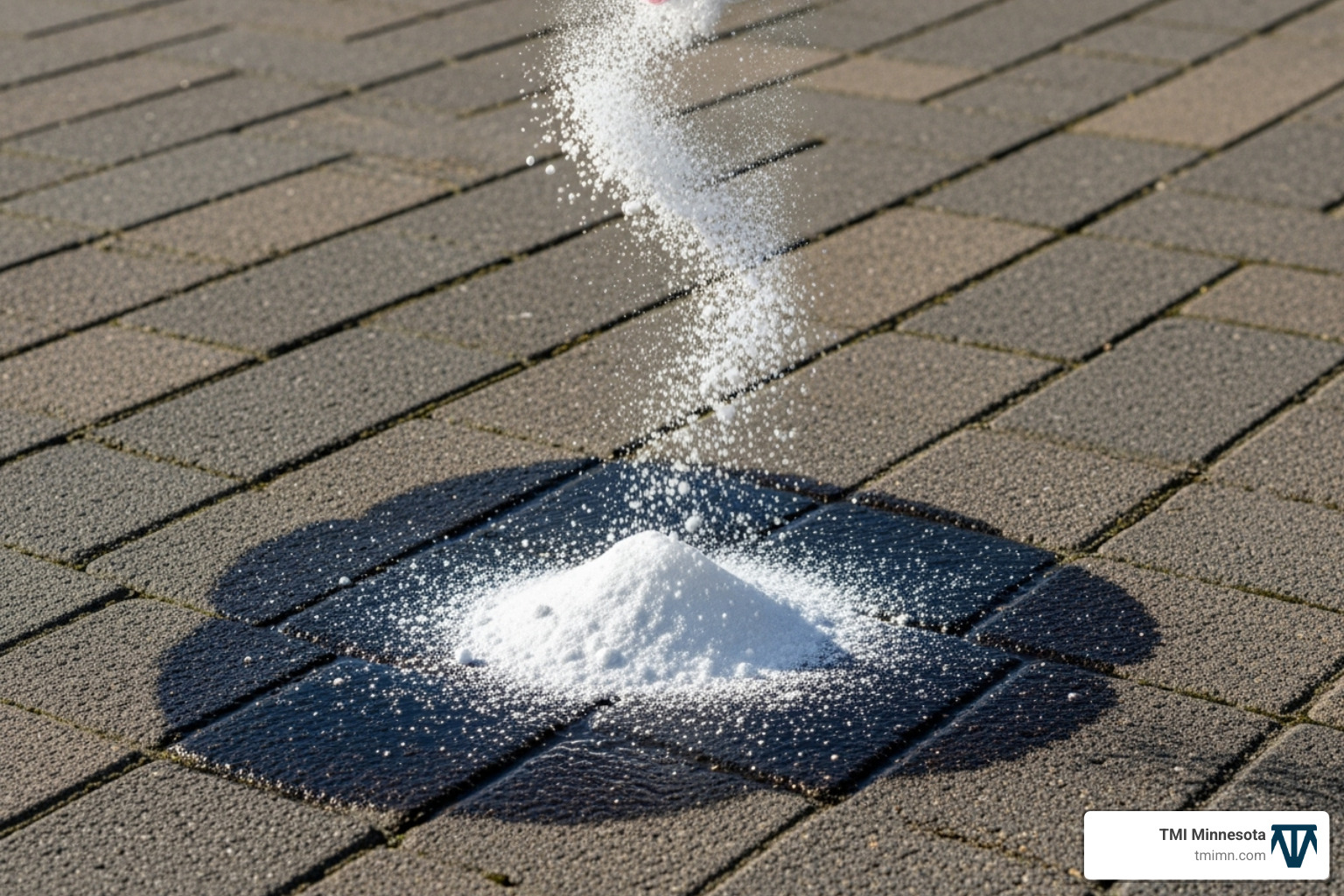
Cover the stain completely with a generous layer of your chosen powder. Let the material sit for at least 20 minutes; several hours or overnight is even better for larger spills.
A longer dwell time gives the powder more opportunity to pull oil from deep within the paver. You’ll often see the powder change color as it works. After the waiting period, simply sweep up the powder and dispose of it properly.
This initial absorption step is crucial for preventing deep penetration and is the difference between a quick cleanup and a permanent stain. Getting this step right is key to maintaining your Hardscape Installations and keeping your driveway looking its best.
A Homeowner’s Guide on How to Remove Oil from Block Paving Driveway
After absorbing the excess spill, you can tackle the remaining stain with common household items. How to remove oil from block paving driveway often just requires a bit of elbow grease. The secret is to break down the oil before lifting it away.
You’ll need a stiff-bristled brush (avoid metal, which scratches pavers) and warm water for rinsing. Warm water is crucial as it helps dissolve the oil; cold water can cause it to solidify.
The Dish Soap & Degreaser Method
Liquid dish soap has powerful degreasing properties that work well on driveways. It’s designed to break down fats and oils.
First, sweep the area. Then, apply dish soap directly and generously onto the stain. Let it sit for about 30 minutes (or up to an hour for tough stains) to allow the cleaning agents to penetrate the oil.
Next, scrub vigorously with your stiff brush in circular motions. You should see the soap foam up and lift the oil. Finally, rinse with hot water until all soap and oil residue is gone. You may need to repeat the process for older or deeper stains.
Creating a Baking Soda Paste for Stubborn Spots
If dish soap isn’t enough, try a baking soda paste. This household staple is mildly abrasive, allowing it to gently scrub while absorbing remaining oil.
Mix baking soda with enough warm water to create a thick paste. Apply this paste directly to the stain, covering it generously. Let the paste dry completely, which can take several hours. As it dries, the baking soda draws oil out of the paver pores.
Once dry, scrub gently with your brush to break up the paste, then rinse away all residue with warm water. This method is effective on the diverse materials used in our Driveway Paving Solutions.
The Power of Vinegar for Lighter Stains
For lighter stains, white vinegar is an eco-friendly option. Cleaning pavers with vinegar is effective because its 5% acetic acid content helps break down grease.
Create a 1:1 vinegar-to-water ratio solution and spray it directly onto the stain, soaking the area. Let it sit for about an hour to allow the acid to dissolve the oil.
Afterward, scrub the area thoroughly and rinse with warm water.
Caution: Avoid using vinegar on sensitive stone types like natural sandstone or limestone, as it can cause etching. Always test on a small, hidden area first.
Advanced Cleaning Solutions for Old, Set-in Stains
Old, deep-set stains require more work, as they have settled into the porous material. However, with the right approach, even stubborn stains can be dramatically improved. For these jobs, household remedies are often not powerful enough, which is where commercial cleaners come in. These products are formulated to break down petroleum-based stains bonded with pavers.
Before using any commercial product, test it on a small, inconspicuous area first to check for discoloration. Always wear protective gear, including gloves and eye protection, and ensure good ventilation when working with stronger chemicals.
How to Remove Oil from Block Paving Driveway with a Poultice
A poultice acts like a magnet for oil stains. These Chemical poultice cleaners work by drawing out oil from deep within the paver’s pores.
Mix the poultice powder with its recommended solvent to create a thick paste application. Spread this generously over the stained area. As the poultice dries to a powder over 8 to 24 hours, it actively pulls oil from the paver. Once completely dry, sweep away the residue and rinse the area clean. This detailed care is part of what makes Landscape and Hardscape projects so rewarding.
Using Commercial Degreasers
Commercial degreasers are professional-grade cleaners formulated for driveways. They are designed to emulsify tough petroleum stains that have bonded with pavers.
To use one, apply it generously to the stain and allow it to penetrate for the recommended time, typically 10 to 30 minutes. This gives the chemicals time to break down the oil. Next, scrub with a brush in vigorous, circular motions. Finally, rinse thoroughly with warm water. Commercial degreasers are more consistent than household items for older stains, and while multiple treatments may be needed, the gradual improvement is often worth the effort.
The Role of Pressure Washing in Oil Stain Removal
For stubborn stains that resist scrubbing, a pressure washer can be a powerful tool, using water pressure 30-80 times stronger than a garden hose.
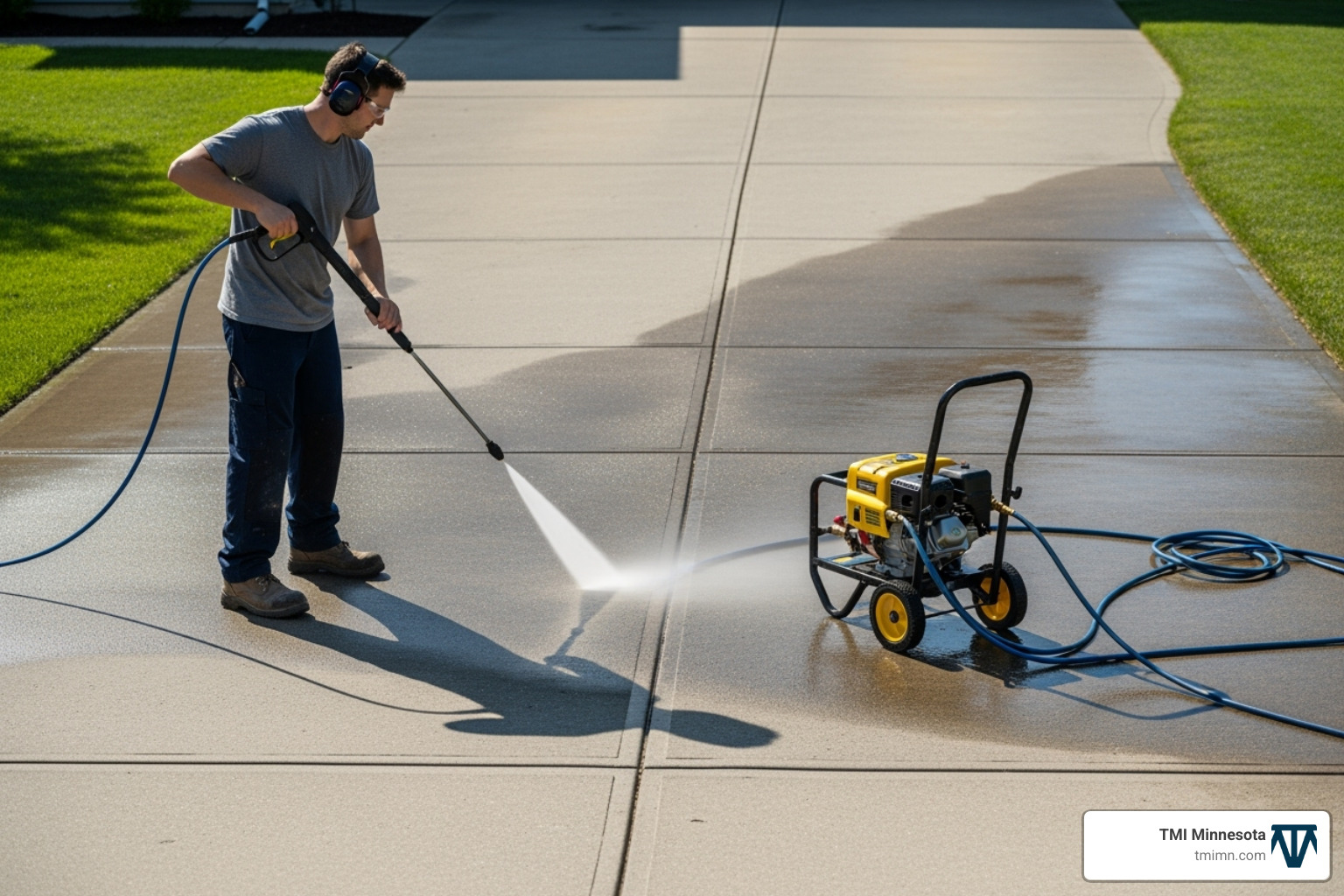
Crucially, pressure washing should be your finishing move, not your opening act. Blasting a fresh oil spill with high-pressure water will only push the oil deeper into the porous pavers and spread the stain.
Instead, use a pressure washer after applying a degreaser or cleaning solution. Once the chemicals have broken down the oil, the pressure washer can efficiently blast away the loosened grime and residue, giving your how to remove oil from block paving driveway project a professional finish. It’s especially effective for large or deep-set stains.
Best Practices for Pressure Washing Pavers
Using a pressure washer incorrectly can etch pavers or blast out the jointing sand that keeps your driveway stable. Follow these best practices to avoid damage.
Use the right setup. Use moderate pressure between 400-1000 PSI and a fan-tip nozzle (25 or 40-degree) to avoid concentrating the force on one spot.
Maintain a safe distance. Start 12-24 inches from the surface and move closer only if needed, but never closer than 6 inches.
Work from the outside in. Begin at the edges of the stain and work inward to contain the oil. Use smooth, sweeping motions.
Re-sand the joints. Pressure washing will remove some of the essential sand between your pavers. Once the driveway is dry, apply fresh polymeric sand to restore its structural integrity.
| Method | Best For | Pros | Cons |
|---|---|---|---|
| Pressure Washing | Final rinse after chemical treatment, large areas | Very fast, efficient for large jobs | Can damage pavers if done incorrectly, requires re-sanding |
| Manual Scrubbing | Initial oil breakdown, spot treatment | Gentle on pavers, precise control | Requires more time and physical effort |
Pressure washing is a fantastic tool when used correctly as part of a broader strategy. It’s particularly valuable for maintaining pavers after you learn How to Install Hardscape Pavers. It’s the grand finale of your stain removal process.
Prevention and Long-Term Driveway Care
Preventing future oil stains is much easier than removing them. A little preventative effort now saves hours of scrubbing later. The key is to create a barrier between potential spills and your pavers.
Vehicle maintenance is crucial. Fix small leaks promptly to prevent them from becoming major stains. For cars that occasionally leak, use drip trays (plastic or metal pans) to catch drips before they hit the pavers. A large piece of cardboard can also work in a pinch.
The most effective preventative step is sealing your pavers. This creates a protective barrier that makes cleanup much easier, causing oil to bead on the surface rather than soaking in.
How to Prevent Future Oil Stains
Sweep regularly. A quick weekly sweep removes debris and helps you spot fresh spills before they set.
Clean spills immediately. Keep absorbent materials like kitty litter or baking soda handy in your garage so you can act the moment a spill happens.
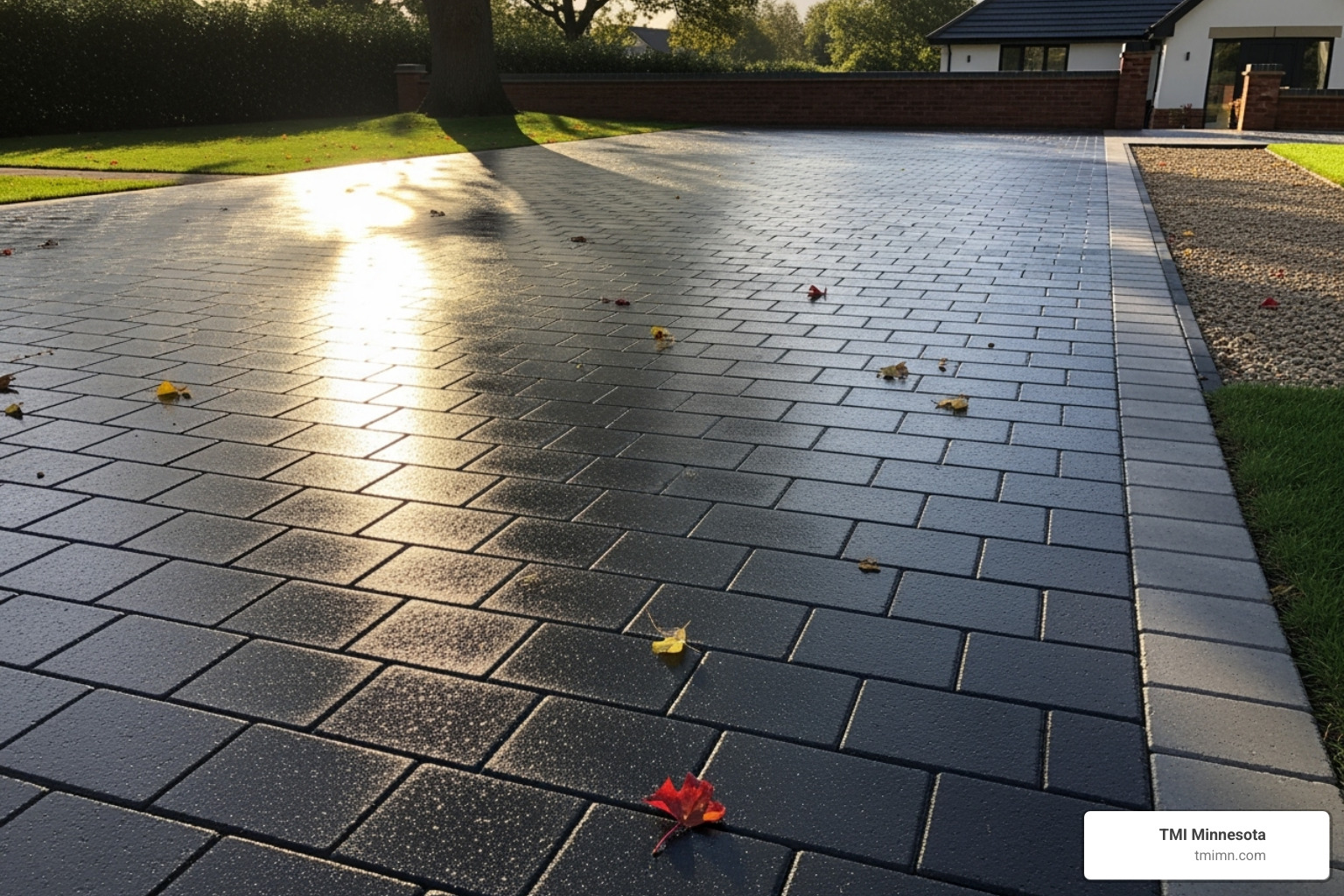
Apply a quality sealant. A sealed surface resists oil penetration and improves the natural colors of your pavers. Most sealants last 2-3 years, making them a smart investment in your home’s curb appeal.
Combining these prevention strategies with the how to remove oil from block paving driveway techniques we’ve covered will set you up for long-term success. Prevention preserves your investment in beautiful outdoor living spaces. Check out our Driveway Designs Pictures to see how proper maintenance keeps these stunning installations looking their best.
Frequently Asked Questions about Oil Stain Removal
Here are answers to some of the most common questions we hear from Minnesota homeowners about oil stains.
Can very old oil stains be completely removed?
Completely removing very old, deeply set oil stains is challenging because the porous pavers absorb oil over time. While 100% removal isn’t always possible, significant improvement absolutely is. With patience, multiple treatments using commercial degreasers, poultices, and careful pressure washing can yield dramatic results. The goal is to make the stain barely noticeable.
Will cleaning methods damage my block paving?
This is a valid concern, as improper cleaning can cause damage. The main risks are high-pressure washing, which can etch pavers or remove jointing sand, and harsh chemicals, which can cause discoloration. Metal brushes will also scratch pavers.
The golden rule is to always test any cleaning method on a small, hidden area first. This simple step can prevent unnecessary damage.
How long does it take to remove an oil stain?
The time required depends on the method and the stain’s age.
- Fresh spills with absorbents: This requires 20 minutes to several hours of passive absorption time.
- Scrubbing methods: These take 30-60 minutes of active work per round, and stubborn stains often need multiple rounds.
- Commercial degreasers: The active time is similar to scrubbing, but they are more powerful.
- Poultices: These require 8-24 hours of dwell time to work.
The faster you act on a fresh spill, the less time you’ll spend fighting it later.
Restore Your Driveway’s Beauty
Your block paving driveway is the first impression of your home, and oil stains can detract from its curb appeal. The good news is that learning how to remove oil from block paving driveway is achievable with the right approach and patience.
We’ve covered everything from emergency spill response to tackling stubborn, old stains. The key takeaway is simple: time is your ally with fresh spills, but persistence pays off with old stains. Whether using household items or commercial cleaners, there is a solution for your situation.
Quick action saves your investment, but even old stains can be dramatically improved. However, prevention beats cleanup every time. A quality sealant, regular sweeping, and drip trays can save you hours of future scrubbing.
At TMI Minnesota, our expertise in hardscape solutions means we know how to install beautiful block paving and keep it looking its best. We are passionate about creating outdoor spaces that improve your home’s beauty and your family’s enjoyment.
Sometimes, professional help makes all the difference. If you’re dealing with stubborn stains or considering a driveway refresh, our team has the experience and tools to get the job done right.
Ready to give your driveway the attention it deserves? Contact Us to discuss restoring your paving or explore our stunning Block Paving Driveway Designs for a complete change. Don’t let oil stains define your home’s first impression.