
Why Interlocking Paver Driveways Are the Smart Choice for Minnesota Homeowners
Interlocking paver driveways are individual concrete, brick, or stone units that fit together without mortar to create a flexible, durable surface. Unlike traditional poured concrete, these systems use sand-filled joints that allow the pavers to move slightly with ground shifts while maintaining their structural integrity.
Key features of interlocking paver systems:
- Individual units – Each paver can be replaced independently if damaged
- Sand-locked joints – No mortar required, allowing natural movement
- Flexible system – Adapts to freeze-thaw cycles without cracking
- Load-bearing capacity – Supports heavy vehicles while lasting 30-40+ years
- Immediate use – Can be driven on right after installation
The main difference from traditional concrete driveways is that pavers distribute weight across multiple units rather than relying on a single slab. This prevents the large cracks that plague solid concrete surfaces, especially in Minnesota’s harsh climate.
When you think about grand entrances, you typically imagine a front doorway. Creating a warm welcome, however, doesn’t have to involve just one element of your home. A well-designed paver driveway can transform your property’s first impression while providing decades of reliable performance.
I’m Christopher Deanovic, Operations Leader at TMI Minnesota, where I’ve guided countless Minnesota homeowners through the process of creating beautiful, lasting interlocking paver driveways. My hands-on experience with Minnesota’s unique climate challenges has shown me why these flexible paving systems consistently outperform traditional concrete in our freeze-thaw environment.
The Best Benefits of an Interlocking Paver Driveway
When you’re considering a new driveway, you want something that looks amazing and performs even better. Interlocking paver driveways deliver exactly that combination, offering benefits that make them the smart choice for Minnesota homeowners.
Unrivaled Durability and Strength
Here’s what makes interlocking paver driveways so tough: they’re designed to move with your home’s foundation rather than fight against it. While traditional concrete cracks under pressure from ground shifts and freeze-thaw cycles, pavers actually flex and adapt.
This flexibility is a game-changer in Minnesota’s climate. When temperatures swing from summer heat to winter freezing, the sand-filled joints between pavers allow the entire system to expand and contract naturally. No stress fractures, no ugly cracks spreading across your driveway.
The numbers speak for themselves. A properly installed paver driveway can last 30 to 40 years or more – significantly longer than traditional concrete or asphalt alternatives. Their high load-bearing capacity means they’ll handle everything from your daily commute to heavy delivery trucks without breaking a sweat.
Some paver systems are engineered to be four times stronger than conventional poured concrete. That’s the kind of durability that gives you peace of mind, whether you’re dealing with Minnesota’s harsh winters or just the everyday wear and tear of family life.
Low-Maintenance Living
Let’s be honest – nobody wants to spend their weekends babying their driveway. Interlocking paver driveways are refreshingly low-maintenance, especially compared to other driveway materials.
The real beauty shows when something does go wrong. If a paver gets damaged, you don’t need to tear up half your driveway or live with an ugly patch. You simply lift out the problem paver and drop in a replacement. It’s that straightforward.

For regular upkeep, a simple sweep and rinse with the garden hose handles most cleaning needs. Tougher stains? A power washer takes care of them easily. Most pavers come pre-sealed, so you won’t need immediate resealing after installation, though optional sealing can boost their appearance and protection over time.
This stain resistance and easy cleaning process means your driveway keeps looking great without constant attention. No major resurfacing projects, no expensive repairs – just simple maintenance that fits into your regular home care routine.
To learn more about how we transform outdoor spaces, explore our More info about Hardscape Installation.
Unparalleled Aesthetic and Design Freedom
This is where interlocking paver driveways really shine. While concrete gives you one look – gray and flat – pavers open up a world of design possibilities that can make your neighbors stop and stare (in a good way).
You’ll find pavers in countless colors, shapes, and sizes. Want the classic charm of cobblestone? There’s a paver for that. Prefer the timeless look of natural stone? Covered. Love the traditional feel of brick? Absolutely available.
Popular paver patterns that create stunning driveways include:
- Herringbone for strength and classic appeal
- Basket weave for traditional charm
- Running bond for clean, modern lines
- Circular patterns for dramatic focal points
The real magic happens when you add borders and accents. Contrasting colors and textures can tie your driveway design to your home’s architecture, creating that perfect flow from street to front door. This design flexibility dramatically increases your curb appeal and creates a lasting first impression.
For more inspiration on how we can transform your home’s exterior, be sure to Explore our Driveway Landscaping Designs.
Eco-Friendly Paving Solutions
Interlocking paver driveways offer environmental benefits that concrete simply can’t match. Permeable paver options allow rainwater to naturally soak into the ground instead of rushing off into storm drains.
This natural infiltration helps with groundwater recharge, keeping our local water supplies healthy. It also dramatically reduces stormwater runoff, which means less flooding and less strain on municipal drainage systems.
Here’s the really cool part: the layered base system actually traps pollutants before they can reach groundwater. Oils, heavy metals, and other contaminants get filtered out naturally as water passes through the paver system.
These environmental benefits are so significant that permeable pavers can qualify for LEED credits, making them a smart choice for environmentally conscious homeowners. You get a beautiful driveway that also helps protect Minnesota’s natural resources – it’s a win-win situation.
Understanding the Investment: Paver Driveway Costs
Let’s talk honestly about money. We know cost is often the first concern homeowners have about interlocking paver driveways. Yes, they require a bigger upfront investment than asphalt or traditional concrete. But here’s what we’ve learned from years of helping Minnesota families: when you look at the complete picture, pavers often make the most financial sense.
Think of it like buying a quality winter coat. You could grab a cheap jacket that needs replacing every few years, or invest in one that keeps you warm for decades. Interlocking paver driveways are the quality winter coat of the driveway world.
Average Installation Costs
You can expect to invest between $20 to $25 per square foot for a professionally installed paver driveway. This includes both materials and skilled labor. We won’t sugarcoat it – this makes pavers the highest initial cost among common driveway options.
But here’s where it gets interesting. When we break down the real costs over time, the picture changes dramatically:
| Driveway Type | Initial Cost (per sq ft) | Typical Lifespan | Lifetime Maintenance Cost |
|---|---|---|---|
| Interlocking Pavers | $20 – $25 | 30-40+ years | Low |
| Traditional Concrete | $5 – $15 | 20-30 years | Moderate to High |
| Asphalt | $2 – $5 | 15-20 years | Moderate to High |
What this table shows is the power of thinking long-term. While you pay more upfront for pavers, you’re essentially buying decades of peace of mind. No major resurfacing projects. No dealing with large cracks that make your driveway look tired. Just simple, occasional maintenance that keeps your entrance looking fantastic year after year.
Key Factors That Influence Price
Several factors determine your final investment, and understanding them helps you make informed decisions about your project.
Project size and complexity naturally affects your total cost. A larger driveway needs more materials and labor time. If you’re dreaming of intricate patterns, beautiful borders, or neat curves, expect to invest more for the additional craftsmanship these details require.
Paver material choice creates the biggest price variation. Standard concrete pavers offer excellent value and durability. Premium concrete options with special finishes or colors cost more. Natural stone pavers like granite or limestone represent the luxury end of the spectrum, delivering best beauty at a higher price point.
Site accessibility can impact your costs significantly. If our crews and delivery trucks can easily reach your project area, installation runs smoothly. Properties with tight access or challenging terrain may require additional labor, which affects your final price.
Geographic location influences both material and labor costs. Here in Minnesota, we work with trusted local suppliers and experienced crews to keep pricing competitive while ensuring quality workmanship.
Required excavation depth depends on your soil conditions and the stability we need to achieve. Some properties need minimal excavation, while others require deeper digging to create the perfect foundation. The deeper we go, the more material and labor your project requires.
We believe in finding the sweet spot between your vision and your budget. Every property is unique, and we’d love to give you a detailed estimate custom to your specific situation. Find how we can transform your entrance by exploring our Driveway Paving Solutions.
The Blueprint for a Lasting Driveway: The Installation Process
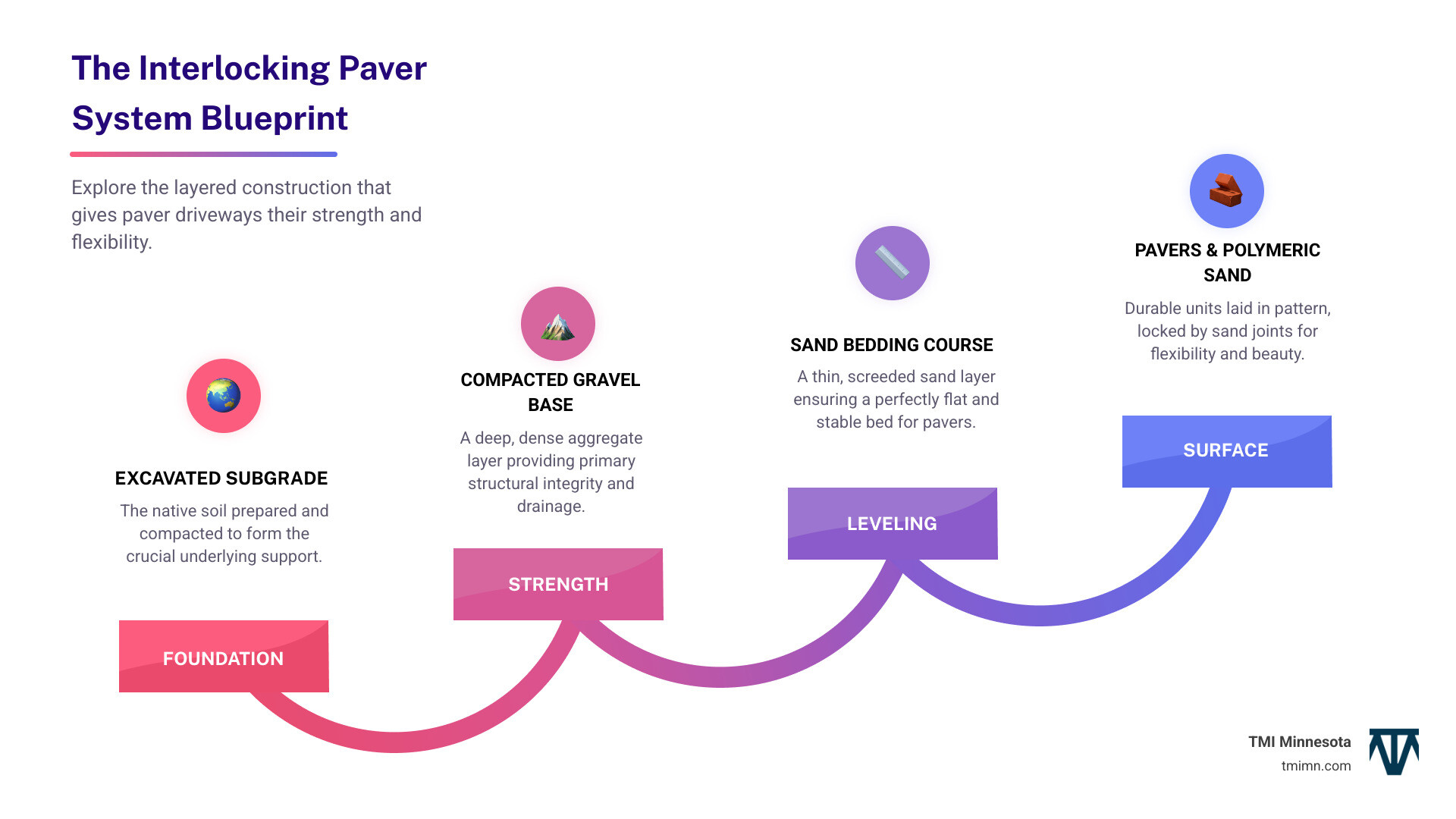
Building a durable and beautiful interlocking paver driveway is like constructing a masterpiece from the ground up. Every layer matters, and there’s no room for shortcuts. Here’s how professional installation creates the foundation for decades of reliable performance in Minnesota’s demanding climate.

Step 1: Excavation and Base Preparation
The secret to a lasting paver driveway isn’t what you see on top—it’s what lies beneath. We start by carefully assessing your subsoil to understand how water moves through your specific site. This tells us exactly how deep we need to dig and what type of base will work best for your property.
Before any digging begins, we always call for utility locates. Nobody wants to hit a gas line while creating their dream driveway! Once the site is clear, we determine the excavation depth based on your soil conditions and the expected load your driveway will carry.
The excavation extends about 6 to 8 inches beyond where your pavers will sit. This extra space is crucial for installing edge restraints that keep everything locked in place. After removing all the soil, we compact the subgrade using heavy equipment to create a rock-solid foundation.
In areas with challenging soil conditions, we often install geotextile fabric directly on the compacted subgrade. Think of it as a barrier that prevents your base materials from mixing with the soil below, maintaining the integrity of your foundation for years to come.
Understanding your soil type is critical to this process. You can learn how to assess subsoil type to better understand what we’re looking for during this phase.
Step 2: Laying the Gravel Base and Bedding Sand
With a solid subgrade in place, we build the engine room of your driveway—the aggregate base layers. We spread gravel in carefully measured lifts, typically using ASTM D 2940 specified road base gravel that meets strict quality standards.
Each layer gets thoroughly compacted with heavy plate compactors before the next layer goes down. This isn’t a rushed process. Proper compaction creates the dense, load-bearing foundation that prevents settling and keeps your driveway level for decades.
For permeable systems, we use specialized aggregates like ¾” clear stone that allow water to flow through while maintaining structural strength. The base depth and material choice depend entirely on your specific site conditions and intended use.
Once the base is perfectly compacted, we install the bedding sand layer. This 1-inch thick layer of washed concrete sand gets screeded to create an absolutely level surface. We’re talking precision here—every paver needs to sit evenly to prevent wobbling or uneven wear.
During this step, we establish the proper slope for drainage to direct water away from your home. We avoid materials like limestone screenings or mason’s sand because they don’t drain well and can cause problems down the road.
The attention to detail during this phase directly impacts how your driveway performs over its lifetime. For more detailed information about these crucial installation steps, you can learn more about how to install hardscape pavers.
Step 3: Placing Pavers, Edge Restraints, and Jointing Sand
This is where the magic happens! We carefully lay pavers in your chosen pattern, pulling from multiple bundles to ensure even color distribution. Nobody wants a driveway that looks like a patchwork quilt because all the light-colored pavers ended up in one spot.
For edges and intricate design elements, we cut pavers to fit perfectly using specialized diamond-blade saws. Safety is our top priority during cutting operations—we follow strict OSHA requirements for dust control and wear proper protective equipment.
Once all pavers are in place, we install edge restraints around the entire perimeter. These can be plastic, concrete, or mortar-based systems that lock your pavers in place and prevent them from creeping outward over time.
The next step involves compacting the entire paver surface using a plate compactor fitted with a protective rubber pad. This process serves double duty: it eliminates small height differences between pavers and firmly seats each unit into the bedding sand below.
Finally, we sweep polymeric sand into all the joints between pavers. This isn’t ordinary sand—it contains special additives that activate with water to create a flexible, durable bond. The polymeric sand prevents erosion, stops weeds from growing up through joints, and keeps insects from making homes in your driveway.
We sweep the polymeric sand until it sits about 1/8 inch below the paver surface, then activate it with a gentle water mist. This final activation locks everything together, creating a unified surface that can handle whatever Minnesota weather throws at it.
The result? A beautiful, durable interlocking paver driveway that’s ready for immediate use—no waiting for concrete to cure or worrying about premature wear.
Potential Challenges and Climate Considerations
While interlocking paver driveways offer incredible advantages, we believe in giving you the complete picture. Yes, there are some challenges to consider, but here’s the good news: with proper installation and basic maintenance, these issues are easily managed. Let’s talk about what you might encounter and how we handle it.
Managing Weeds and Paver Movement
“Will weeds grow between my pavers?” This is one of the most common questions we hear. The honest answer is that weeds can appear, especially if the polymeric sand between joints wears away over time or wasn’t installed properly in the first place.
But don’t worry – this isn’t the nightmare scenario some people imagine. High-quality polymeric sand, properly installed, creates a barrier that significantly reduces weed growth. When we install your driveway, we make sure this sand is swept deep into every joint and properly activated with water. This creates a flexible bond that keeps weeds out while still allowing your pavers to move naturally with the ground.
If you do spot the occasional weed popping up years later, it’s an easy fix. A simple annual sweep of fresh polymeric sand or spot treatment takes care of any persistent growth. Think of it as basic yard maintenance – no different from pulling weeds in your garden beds.
Paver movement is another concern we address head-on. If the base isn’t prepared correctly or edge restraints aren’t installed properly, pavers can shift over time. This is exactly why professional installation matters so much. Our careful attention to proper base compaction and edge restraint installation prevents these issues from the start.
Even in Minnesota’s extreme freeze-thaw cycles, you might see minor heaving in small areas. But here’s where pavers shine: unlike concrete slabs that crack dramatically, any movement in interlocking paver driveways stays localized. A few pavers might lift slightly, but the rest of your driveway remains perfectly intact.
Performance of Interlocking Paver Driveways in Minnesota’s Climate
Living in Minnesota means dealing with some serious weather extremes. The fantastic news is that interlocking paver driveways are practically designed for our climate challenges.
Our freeze-thaw cycles that destroy traditional concrete? Pavers handle them beautifully. Because each unit can move independently in its sand bed, the entire system flexes with ground movement. While solid concrete cracks under this stress, your paver driveway adapts and keeps looking great.
Snow removal is where we get the most questions. Yes, you can plow, blow, or shovel snow off your pavers without damage. Some homeowners notice that shovel edges or snowblower blades occasionally catch on paver joints, making clearing slightly different than on smooth concrete. It’s not difficult – just requires a slightly different technique.
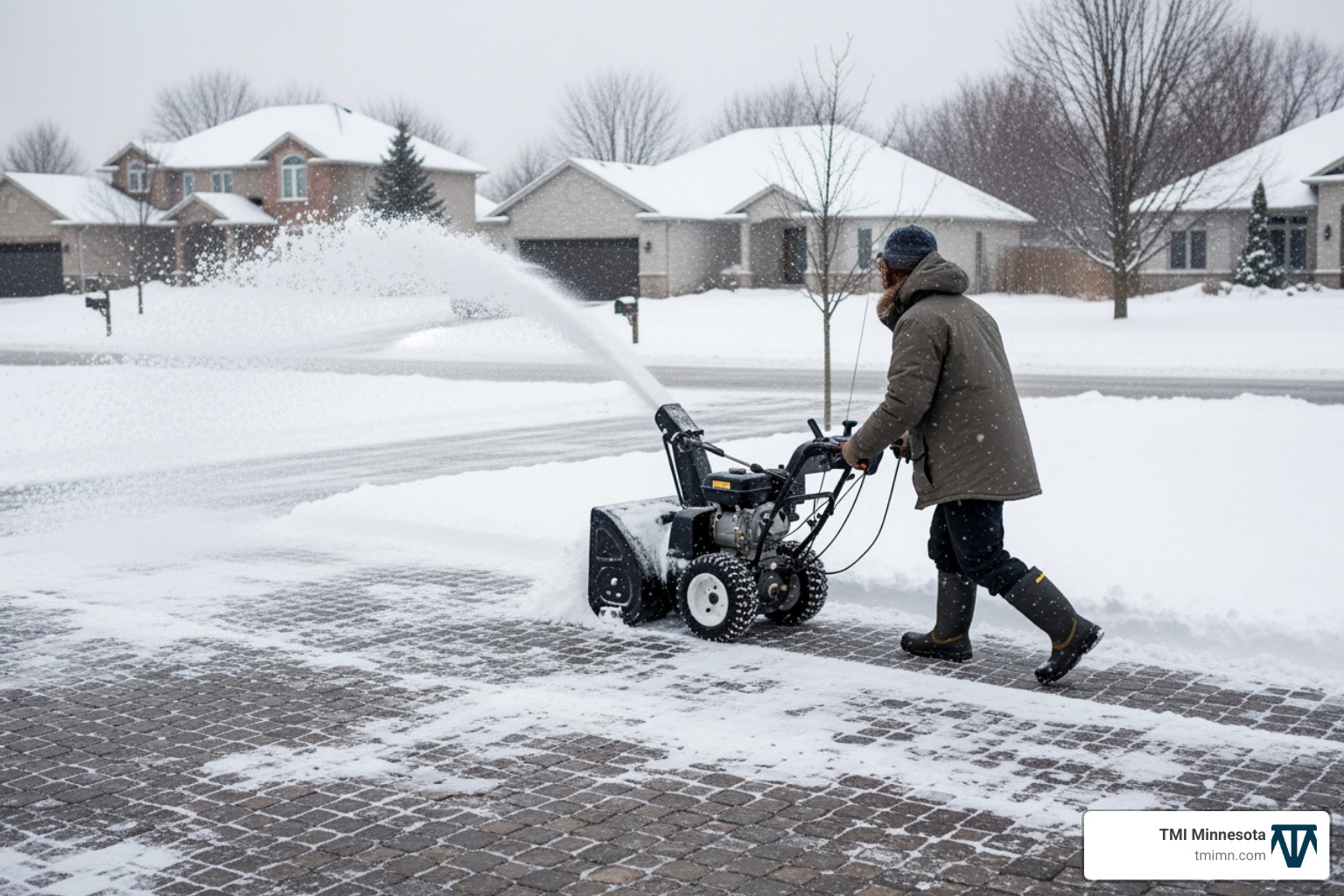
Most of our clients find this minor adjustment worthwhile for the durability and beauty they get in return. For those wanting ultimate winter convenience, heating elements can even be installed beneath permeable pavers to automatically melt snow and ice. Read a discussion on shoveling snow from pavers to hear different perspectives on winter maintenance.
Summer heat brings its own challenges to driveways, but pavers handle Minnesota summers with ease. Unlike asphalt that can soften and deform, or concrete that expands and contracts dramatically, pavers maintain their shape and integrity. They stay cool underfoot and don’t develop the heat-related damage we see in other materials.
The bottom line? Minnesota’s climate is tough on everything, but interlocking paver driveways are built to thrive here. That’s why we’re so confident in recommending them to our neighbors.
Frequently Asked Questions about Interlocking Paver Driveways
After working with hundreds of Minnesota homeowners, I’ve noticed that certain questions come up again and again. Let me address the most common concerns we hear about interlocking paver driveways – because I believe you deserve honest, straightforward answers before making such an important investment in your home.
How long do interlocking paver driveways last compared to traditional concrete?
This question gets to the heart of why we’re so passionate about pavers. Interlocking paver driveways consistently outlast traditional concrete by a significant margin. While a typical concrete driveway shows serious signs of wear after 20 to 30 years, a properly installed paver system can serve your family for 30 to 40 years or even longer.
The secret lies in how these systems handle stress. Traditional concrete is essentially one massive slab that fights against ground movement. When Minnesota’s freeze-thaw cycles cause the earth to shift, concrete cracks – and once it starts, those cracks only get worse. Pavers, on the other hand, work with the ground movement, flexing and adjusting without breaking.
Of course, installation quality plays a huge role in longevity. A paver driveway installed with proper base preparation and attention to detail will far outlast one that cuts corners. The same goes for maintenance – though thankfully, paver maintenance is much simpler than concrete upkeep.
Can you drive on a new paver driveway right away?
Here’s one of my favorite things to tell homeowners: you can use your new paver driveway immediately. No waiting around, no tiptoeing across wet concrete, no rearranging your life for weeks while your driveway cures.
The moment we finish the final compaction and activate the polymeric sand in the joints, your driveway is ready for action. You can park your car, have deliveries made, or let the kids ride their bikes – whatever your normal routine demands.
Compare this to concrete, which needs days or even weeks to cure properly before it can handle vehicle weight. With pavers, the disruption to your daily life is minimal. We often joke that the hardest part of getting a new paver driveway is deciding which pattern you like best!
Are interlocking paver driveways difficult to repair?
This might be the biggest misconception about pavers. People sometimes worry that having individual units means more things can go wrong. In reality, it’s exactly the opposite – the modular design makes repairs incredibly simple.
Let’s say a delivery truck drops something heavy and chips a paver, or a stubborn stain won’t come out of one section. With concrete, you’re looking at cutting out a large chunk of driveway, patching it, and hoping the repair blends in (spoiler alert: it usually doesn’t). With pavers, we simply lift out the damaged unit and pop in a replacement. The repair is invisible, and it costs a fraction of what you’d spend on concrete patching.
Even if settling causes a small section to dip slightly, we can lift those pavers, add base material, and reset them. Try doing that with a concrete slab! The spot repair capability of pavers means small problems stay small problems, instead of turning into major resurfacing projects.
For more detailed answers about paver driveways and what to expect, I encourage you to check out additional resources at Find more answers to your questions.
Transform Your Entrance with a Lasting Impression
After diving deep into interlocking paver driveways, we hope you can see why they’re such a smart choice for Minnesota homeowners. These aren’t just driveways – they’re investments in your home’s future that combine unrivaled durability with stunning aesthetic appeal and refreshingly low maintenance requirements.
Think about it: while your neighbors might be dealing with cracked concrete or patching asphalt every few years, you’ll be enjoying a beautiful entrance that looks as good as the day it was installed. The long-term value proposition speaks for itself – an upfront investment that pays dividends for decades through minimal upkeep and lasting performance.
At TMI Minnesota, we’ve seen how the right driveway can completely transform a home’s curb appeal. Our expertise in both hardscape and softscape installations means we understand exactly how to create stunning and durable driveways that work beautifully with Minnesota’s challenging climate. We use leading-edge products to lift your yard living, ensuring every project meets our high standards for both beauty and longevity.
Your driveway is more than just a place to park your car – it’s the first thing guests notice when they visit, and it sets the tone for your entire property. With interlocking paver driveways, you’re choosing a solution that welcomes visitors with elegance while giving you peace of mind about durability and maintenance.
Ready to create an entrance that makes a lasting impression? We’d love to help you explore the possibilities and bring your vision to life. Get inspired by our driveway landscaping designs and find how we can transform your home’s entrance into something truly special.