
Maximizing Your Small Yard’s Potential
When it comes to landscape design for small yards, I’ve seen how a compact space can transform into something truly magical. It’s not about how much space you have—it’s about what you do with it.
Think of your small yard as a blank canvas brimming with potential. The secret lies in smart planning and a dash of creativity. Instead of viewing your compact outdoor area as a limitation, accept it as an opportunity to create something intimate and personally meaningful.
Multi-functional elements are your best friends in small spaces. That beautiful cedar bench where you sip morning coffee? It can lift up to store garden tools or outdoor cushions. The charming side table that holds your lemonade can unfold to become extra seating when friends visit.
Going vertical is another game-changer. When horizontal space is limited, look up! Trellises adorned with flowering vines, wall-mounted herb planters, and hanging baskets filled with trailing petunias add visual interest while keeping your precious ground space free for other uses.
Creating distinct outdoor rooms might sound counterintuitive in a small yard, but defining separate areas for dining, relaxing, and play actually makes your space feel larger and more purposeful. A simple change in flooring material or a strategically placed container garden can delineate these zones beautifully.
Plant selection matters tremendously in compact gardens. Appropriately-sized plants like dwarf varieties and columnar trees provide structure and beauty without overwhelming your space. Cute little Japanese maple might grow to dominate your entire yard in a few years if you choose the wrong variety!
Visual clutter can make small spaces feel chaotic, so limiting your color palette to two or three complementary hues plus green creates a cohesive, peaceful atmosphere. This simple designer trick makes a tremendous difference in how spacious your yard feels.
Using diagonal layouts for pathways and planting beds is another clever optical illusion. The longest line in a rectangle is the diagonal—by guiding the eye along this extended sight line, you create a sense of expanded space and movement.
“Small garden landscapes are incredibly detail-oriented. Whether the garden is gracing a condominium, a tiny bungalow, or a rooftop, there is no room for sloppy design or incompleteness.”
Did you know that well-designed small yards can yield up to a 150% return on investment when selling a home? But the real value comes in the daily joy of having your own outdoor sanctuary, regardless of its size.
The key is thinking in square inches rather than square feet. Every element should earn its place by serving a purpose—often multiple purposes—while contributing to your yard’s overall beauty and function.
I’m Christopher Deanovic, Operations Leader at Task Masters, and I’ve helped countless Minnesota homeowners transform their postage-stamp yards into outdoor living spaces they absolutely love. Through thoughtful landscape design for small yards, we create spaces that maximize enjoyment while minimizing maintenance—because your outdoor time should be spent relaxing, not constantly working.

Want to explore more specialized aspects of landscape design for small yards? Check out our resources on creative outdoor play spaces, outdoor dining space design, and outdoor lighting installations to get inspired for your own small-space change.
Blueprint for Success: Landscape Design for Small Yards
Creating a beautiful small yard begins with thoughtful planning. Just as you wouldn’t build a house without blueprints, your yard deserves the same careful consideration. At TMI Minnesota, we believe that small yards can deliver big impact with the right design approach.

The American Society of Landscape Architects reports that 94% of real estate agents suggest that landscaping improvements, including small yard makeovers, significantly increase home value and curb appeal. This isn’t just a statistic to us – we’ve seen how a well-designed small space transforms both property value and daily living.
When approaching landscape design for small yards, start with a scaled drawing of your space. This helps you visualize how different elements will fit together and ensures proper proportions. Trust me, in small spaces, every inch counts!
“People often assume they cannot do very much design-wise for their backyard when they are limited in size. In reality, you can usually fit all the elements into a small yard that you can in a big yard. You just might be more limited on size and you may need to prioritize multi-function spaces.” – Lillian Robison, Landscape Designer
Our approach to Softscaping and Hardscaping balances structure with greenery, creating spaces that feel both organized and alive. For personalized guidance, our Backyard Design Consultation service can help you identify the best solutions for your unique space.
List Your Priorities First
Before picking up a shovel or ordering plants, take time to think about what matters most to your family. I love what Dean Shibuya shared about his 600-square-foot San Francisco backyard change: “Before, people didn’t know we had a backyard, because we never showed it to anyone. Now we pull everyone out there to see it.”
What do you want from your outdoor space? Maybe you dream of family activities like reading or gardening. Perhaps entertaining needs top your list – how many friends do you typically host? If you have children, what play areas would they enjoy most? Don’t forget about your pets – does Fido need room to run? And while enjoyment comes first, considering return on investment helps prioritize features that add the most value to your property.
By ranking these priorities, you’ll make smarter decisions when space forces trade-offs. If entertaining ranks higher than gardening, you might allocate more space to seating and less to planting beds. Your yard should reflect what matters most to you.
Functional Layout Tips for Landscape Design for Small Yards
The layout of your small yard dramatically affects how spacious it feels and how well it functions. With some clever planning, even the tiniest yard can feel like an outdoor oasis.
One of my favorite techniques for landscape design for small yards is setting patios and pathways on a diagonal axis. This simple adjustment creates the illusion of greater depth and width. William Morrow, who transformed a yard under 1,700 square feet, suggests: “Make the walls go away by painting fences high-gloss black to disguise boundaries.” Such a simple trick with dramatic results!
| Feature | Straight Layout | Diagonal Layout |
|---|---|---|
| Visual Impact | Can feel confined | Creates illusion of more space |
| Usable Space | Standard | Appears larger |
| Flow | Predictable | Dynamic |
| Maintenance | Straightforward | Same difficulty |
| Design Interest | Basic | Improved |
Beyond the diagonal trick, I’ve found several layout strategies that work wonders in small spaces. Primary pathways should be at least 3 feet wide for comfortable passage – nobody likes squeezing through narrow walkways! Using permeable pavers prevents flooding while adding texture.
Clever designers use borrowed views by framing distant trees or architectural elements to extend perceived space beyond your property line. Placing focal points at the furthest point from entry draws the eye through the space, making it feel larger. And don’t waste those corners! Push features like fire pits or water features into corner utilization to maximize central space.
Rebecca Sams, who transformed a narrow Oregon lot, shares wisdom I’ve found true in countless projects: “Consistency of materials is key to uniting a small space.” This principle helps create a cohesive feel even when incorporating multiple functional zones – something especially important when every square foot needs to work hard for you.
Planting & Vertical Magic
When horizontal space is limited, the savvy gardener looks up! Vertical gardening is a game-changer in landscape design for small yards, effectively doubling or even tripling your planting area without consuming precious ground space.
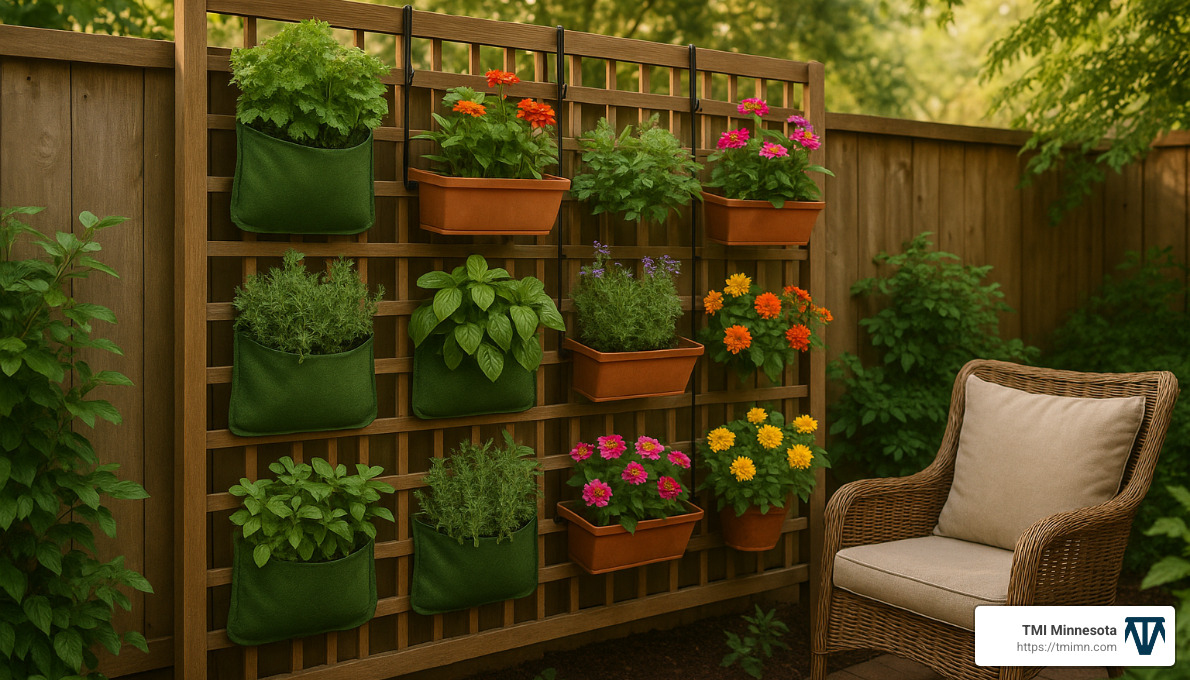
I’ve seen countless homeowners’ faces light up when they find the magic of going vertical. According to landscape design experts, vertical gardening can increase planting space by up to 30% in small yards. But it’s not just about squeezing in more plants – these upward elements add visual height that makes compact spaces feel larger and more dynamic.
At TMI Minnesota, our Tree Planting Services specialize in selecting perfect specimens for small yards. We focus on varieties that provide maximum impact with minimal footprint. As Jeff Lorenz, founder of Refugia, often says: “Using fastigiate trees for height is an effective way to add a vertical element to the yard and also attract wildlife.” These narrow-growing beauties create drama without hogging precious square footage.
Vertical Gardening Essentials for Landscape Design for Small Yards
Implementing vertical elements in your landscape design for small yards requires a bit of thoughtful planning, but the payoff is absolutely worth it.
First, consider your support structures carefully. Trellises should complement your home’s architecture – we often recommend metal or cedar options for their beauty and longevity. They’re not just functional; they’re architectural elements that frame your outdoor space.
Wall planters and grow bags offer instant gratification for vertical gardening beginners. Rebecca Sears, Chief Gardening Guru for Ferry-Morse, perfectly captures their appeal: “Vertical gardening is a great way to beautify a small space by growing plants on an existing wall or fence or by adding a trellis.” I love how these ready-made solutions transform blank walls into living tapestries.
For the bold homeowner, a structured living wall system creates jaw-dropping impact. Just remember to consider the practical aspects – good airflow between plants prevents moisture-related diseases, and you’ll want to confirm your structure can support the added weight, especially when soil is wet after watering.
Pergolas deserve special mention as vertical elements. As Joe Raboine from Belgard notes, “A pergola is a great option if you want to add some cover to your space, as well as a beautiful backdrop.” I’ve seen these structures completely transform small yards, especially when draped with fragrant wisteria or productive grape vines.
The benefits of vertical gardening go beyond aesthetics. Scientific research on vertical gardens confirms they cool buildings, improve air quality, and improve psychological well-being – particularly valuable benefits in tight urban spaces where every square foot counts.
Compact Plant All-Stars
Selecting the right plants might be the most critical aspect of successful landscape design for small yards. The wrong choices can quickly overwhelm your space, while the right ones create year-round interest without constant maintenance.
Let me share some of our clients’ favorites that have proven themselves time and again in Minnesota’s small yards. Dwarf conifers like the Dwarf Alberta Spruce maintain a perfect conical shape with minimal pruning, while Blue Star Juniper offers stunning blue foliage that catches the eye year-round. The Dwarf Mugo Pine stays under 3 feet tall for decades – perfect for long-term planning.
When you need height without width, fastigiate trees are your best friends. Sky Pencil Holly creates narrow privacy screens that won’t encroach on patios. Slender Hinoki Cypress offers neat form with minimal width, and Swedish Columnar Aspen provides that satisfying height while keeping its footprint trim.
Don’t overlook the power of groundcovers in small spaces. Creeping Thyme releases wonderful fragrance when stepped upon and handles foot traffic like a champ. Golden Sedum ‘Angelina’ thrives in poor soil where other plants fail, and Sweet Woodruff brings delicate white spring flowers to shady corners.
For wildlife appeal and sustainable beauty, incorporate native perennials like Butterfly Weed, which attracts pollinators with minimal care. Prairie Dropseed grass forms neat clumps with golden fall color, and native Columbine gently self-seeds to maintain its presence without becoming invasive.
Many of our clients are surprised to learn they can grow edibles in their tiny yards too. Compact ‘Top Hat’ blueberries thrive in containers, columnar apple trees produce full-sized fruit on narrow vertical branches, and alpine strawberries offer intense flavor even in partially shaded spots.
Alexandra Correia from Longwood Gardens offers advice I share with all our clients: “When selecting plants for small spaces, consider their mature size and growth habit. Plants that maintain their shape with minimal pruning reduce maintenance and prevent overcrowding.” This simple wisdom prevents the all-too-common problem of plants that quickly outgrow their welcome.
By thinking vertically and choosing plants strategically, even the smallest yard can become a lush, layered paradise that feels spacious and brings joy throughout the seasons. The vertical dimension truly is where the magic happens in small space design.
Live, Play, Store: Family-Friendly & Sustainable Features
Creating a small yard that works for the whole family while remaining environmentally responsible is a balancing act. The good news? With thoughtful landscape design for small yards, these goals can complement rather than compete with each other.
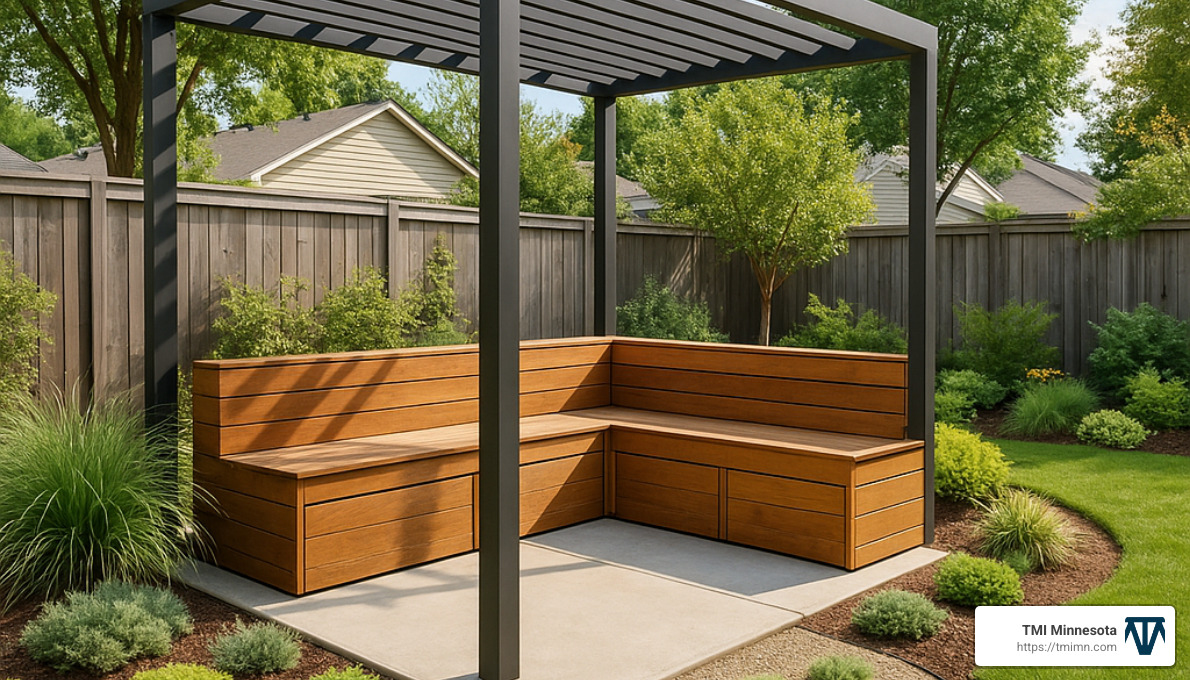
Did you know that more than 60% of homeowners with small yards report that adding features like patios, decks, or pergolas significantly increased how much they actually use their outdoor spaces? It makes sense – these hardscape elements provide structure and function while reducing maintenance demands.
At TMI Minnesota, our Outdoor Living Upgrades focus on creating spaces that serve multiple purposes while minimizing environmental impact. We’ve found that incorporating water-wise plants, xeriscaping techniques, and permeable hardscape materials creates yards that are both beautiful and sustainable – without sacrificing the fun factor.
Multi-Purpose Seating & Entertaining
In small yards, every element should work overtime. Nowhere is this more important than with seating and entertaining areas.
Built-in benches with storage compartments underneath are small-space heroes. They provide comfortable seating while hiding away cushions, toys, or gardening tools. As designer William Morrow wisely notes: “Iron furniture is a good choice for small gardens because visually it is light and airy.”
When we design multi-functional spaces, we think about how elements can serve different purposes. A retaining wall built at approximately 17 inches high becomes perfect seating when topped with cushions. Foldable bistro sets can be hung on walls when not in use. Fire pit tables warm your guests while providing a surface for drinks and snacks.
For Minnesota homeowners who want to extend their outdoor seasons (and we know how precious those warm months are!), we often recommend gas fire tables. They provide warmth and ambiance while doubling as coffee tables. As Mike Montgomery explains: “Fire pits function as a great focal point in a backyard space and extend the backyard enjoyment into the evening hours and even into the cooler days of fall.”
Karen Chapman, an experienced garden designer, asks a question we pose to all our clients: “Entertaining outdoors always seems so much more relaxed, both for the hosts and the guests, but how many people do you need to accommodate?” Your honest answer helps determine the right scale for your entertaining area.
Kid & Pet Zones That Grow With You
Family-friendly yards should evolve as children grow, changing from toddler play spaces to teen hangouts without major renovations.
Jacqueline Koch captured our philosophy perfectly when she said of her small urban garden: “I wanted a garden for people, as much as plants.” This guides our approach to creating spaces that serve all family members, including the four-legged ones.
One of our favorite solutions is the convertible sandbox-deck – a sandbox with a hinged lid that becomes a play deck when closed. When the kids outgrow the sandbox, the entire structure becomes a platform for outdoor lounging or entertaining.
Synthetic turf areas have come a long way from the artificial-looking products of years past. Today’s options provide durable surfaces that withstand heavy use without turning into mud pits, even with energetic dogs or children. They stay green year-round with virtually no maintenance.
Shade sails do double duty by providing UV protection over play areas while adding visual interest and a touch of resort-style flair to your yard. They’re affordable, easy to install, and can be taken down during winter months.
One creative solution we implemented for a Twin Cities family involved installing a mini bocce court that doubles as a buffet station for outdoor dinners. This multi-purpose approach ensures spaces remain relevant as family needs change through the years.
Light It Right & Think Green
Thoughtful lighting extends the usability of your yard well into the evening hours while smart environmental choices reduce maintenance and resource consumption.
Nearly 70% of small yard landscaping projects now include some form of built-in seating or multi-use furniture to maximize space. When these elements are paired with strategic lighting and sustainable practices, small yards become both functional and responsible.
We’ve found that layered LED lighting creates the most welcoming atmosphere. Combine path lights for safety, uplighting to highlight special features, and string lights for ambiance – all on timers to conserve energy. As industry expert Joe Raboine advises: “Choose warm-toned, low-lumen lights on timers for layered, functional illumination.” This approach creates a welcoming atmosphere while minimizing light pollution.
A small compost corner can turn kitchen scraps into garden gold without taking up much space. Drip irrigation delivers water exactly where plants need it, reducing consumption by up to 50% compared to traditional sprinklers. Rain barrels capture roof runoff for garden use during dry periods – a win-win for your plants and your water bill.
Switching to drought-tolerant plants in small yards not only reduces water usage but also cuts down on maintenance time. When combined with permeable paving that allows rainwater to soak in rather than run off, these choices create yards that are both beautiful and environmentally responsible. Your neighbors might even be inspired to follow your lead!
At TMI Minnesota, we believe small yards deserve the same thoughtful planning as large estates – perhaps even more so, since every square foot needs to work harder. The result? Outdoor spaces that bring joy to your family while respecting our Minnesota environment.
Frequently Asked Questions about Landscape Design for Small Yards
How do I create privacy without making the yard feel smaller?
The privacy puzzle is one we solve almost daily for our clients. You want seclusion without building what feels like a fortress around your tiny paradise.
It might sound counterintuitive, but defining your boundaries can actually expand your sense of space. As landscape designer Lillian Robison explains: “Installing a fence actually makes your yard feel bigger because you feel ownership over the space.” The trick is in how you create that privacy.
For landscape design for small yards, we recommend strategic screening that maintains openness. Fastigiate trees like Sky Pencil Holly give you height without width—perfect for narrow spaces where every inch counts. Their vertical growth creates privacy without the bulkiness of traditional privacy trees.
Lattice panels offer another smart solution, providing filtered views rather than solid barriers. They let light and breeze flow through while obscuring direct sightlines. Many of our Twin Cities clients pair these with climbing vines for a living privacy screen that changes with the seasons.
Here’s a designer secret that works wonders: paint your fences high-gloss black. As William Morrow puts it, this helps you “make the walls go away” because dark colors visually recede, creating the illusion of expanded space beyond the boundary.
While waiting for your living screens to mature, temporary panels can bridge the gap. These transitional solutions give you immediate privacy without committing to permanent structures that might feel confining.
What plants give four-season interest in limited space?
In Minnesota, this question is particularly important. With our dramatic seasonal changes, you need plants that put on different shows throughout the year rather than one-hit wonders that leave you with nothing to look at for months.
The secret to year-round interest in landscape design for small yards is choosing plants that offer multiple features—spring flowers, summer texture, fall color, and winter structure.
Start with an evergreen backbone using dwarf varieties like Hinoki Cypress or compact Blue Spruce. These provide consistent structure and color even under snow. Add ‘Green Velvet’ Boxwood for formal touches that maintain their shape year-round without constant pruning.
Layer in flowering shrubs that keep performing after the blooms fade. Dwarf Korean Lilac delivers fragrant spring flowers with a neat habit that doesn’t overwhelm small spaces. ‘Little Lime’ Hydrangea offers summer flowers that dry in place, providing winter interest when other plants have gone dormant.
For winter drama, include plants with distinctive bark or structure. Red-Twig Dogwood ‘Arctic Fire’ gives you brilliant red stems that pop against winter snow, while staying compact enough for tight spaces. Paperbark Maple offers exfoliating cinnamon bark that looks even better with a dusting of frost.
Rebecca Sams offers a smart design tip: “Restrict each garden room’s color palette to create distinct environments.” This approach helps small spaces feel intentional rather than chaotic—especially important when every plant is visible from every vantage point.
Can I keep a lawn or should I switch to alternatives?
The American love affair with lawns is being reconsidered, especially in small yards where every square foot is precious. As William Morrow bluntly puts it: “I don’t find lawns practical in a small urban garden.”
When we discuss landscape design for small yards with clients, we often suggest rethinking how much lawn you truly need. If your kids need play space or you enjoy lounging on grass, consider a mini-turf area—a small, well-defined lawn space that serves a specific purpose rather than defaulting to grass everywhere.
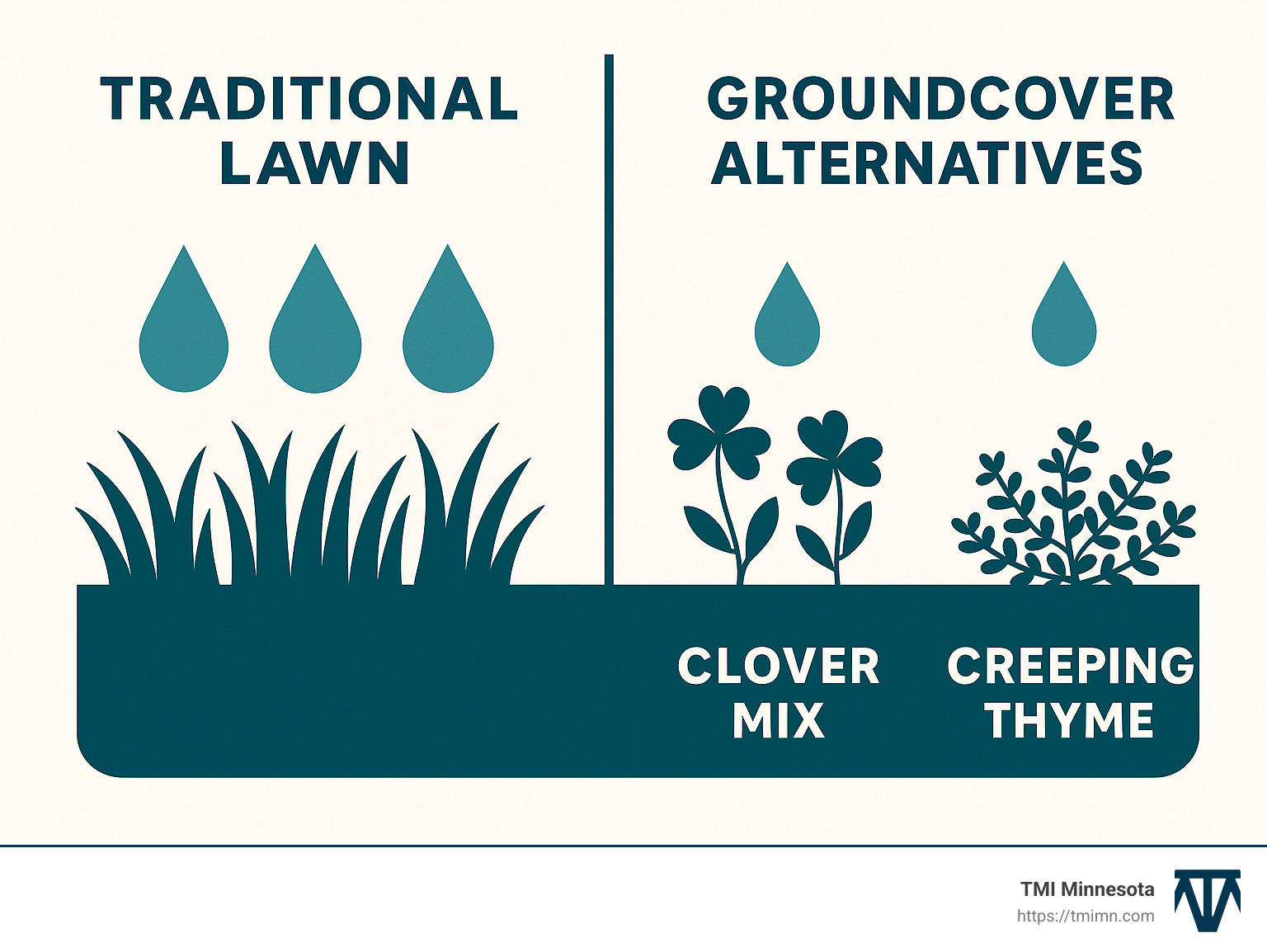
For those ready to move beyond traditional turf, microclover blends offer a more resilient alternative that stays green longer with less water and fertilizer. Creeping thyme creates a fragrant carpet that handles light foot traffic while attracting pollinators. No-mow fescue forms a soft, flowing meadow that needs cutting just once a year—perfect for small spaces where dragging out the mower feels like overkill.
Many of our Twin Cities clients have acceptd ForeverTurf, our synthetic option that provides a consistently perfect lawn with zero maintenance. It’s particularly valuable in shady spots where real grass struggles or for families with dogs who create worn paths and muddy spots in natural lawns.
For more information about our synthetic turf options, check out More info about ForeverTurf family surfaces. These surfaces give you the look and feel of grass without the mowing, watering, and fertilizing—freeing up your weekends for actually enjoying your yard rather than maintaining it.
Conclusion
Landscape design for small yards isn’t about limitations—it’s about possibilities. When you think about it, small spaces actually offer some unique advantages. They’re more intimate, less expensive to transform, and force us to be truly intentional about every element we include.
With thoughtful planning and a bit of creativity, even the tiniest outdoor space can become a family haven that adds joy to your daily life while expressing your personal style. I’ve seen postage-stamp yards become the most-used “rooms” in a home once they’re properly designed.
Future-proofing your design ensures your yard evolves alongside your family. Rather than trying to do everything at once, consider a phased approach that lets you spread costs over time while maintaining a cohesive vision. For instance, start with the foundational elements like a patio and paths, then gradually add plantings as your budget allows. This approach gives you time to live with the space and really understand how you use it before making every decision.
Budget-conscious homeowners should prioritize structural elements that make the biggest impact. A well-designed patio or strategic privacy screening will transform your space more dramatically than decorative accessories, which can always be added later. In small spaces, quality truly matters more than quantity—investing in fewer, better items often creates a more sophisticated, impactful result.
At TMI Minnesota, we’ve become specialists in changing compact Twin Cities yards into functional, beautiful outdoor living spaces. Our approach blends practical solutions with creative vision, creating yards that feel surprisingly spacious despite their modest dimensions. We’ve seen how proper landscape design for small yards can dramatically improve a family’s quality of life.
As landscape designer Rebecca Sams wisely notes: “Big changes can take less time, effort and money and have greater impact in a small space.” This perfectly captures the exciting potential of small yard landscaping—with thoughtful design, your compact outdoor space can deliver outsized enjoyment for years to come.
Your small yard isn’t just a patch of land—it’s an opportunity to create an outdoor sanctuary that perfectly suits your lifestyle. That pocket-sized plot can become the outdoor room you never knew you needed, but soon won’t want to live without. And when you’re ready to create that space, we’d love to help bring your vision to life.