
Why Your Front Yard Is Your Home’s Most Important Investment
Landscape front yard design is the most impactful way to boost your home’s curb appeal. As the first thing visitors see, it’s your best opportunity to make a welcoming statement before anyone reaches the front door.
Quick Front Yard Landscaping Essentials:
- Primary goals: Improve curb appeal, increase home value by 7-14%, create a welcoming environment
- Key elements: Balance softscaping (plants) with hardscaping (pathways, walls)
- Design principles: Emphasis, balance, proportion, contrast, repetition, movement
- Planning basics: Assess your space, set a budget, match your home’s architectural style
- Popular styles: Cottage gardens, modern minimalist, xeriscaping, maximalist designs
As one homeowner shared: “My front yard garden has been a hit. Neighbors and visitors alike have commented on the beauty.” This shows what’s possible when you move beyond a basic lawn and apply thoughtful design.
Research confirms that homes with strong curb appeal see their sale price boosted by 7-14%. Beyond the financial benefits, a well-designed front yard creates a crucial first impression and sets the tone for your entire property.
I’m Christopher Deanovic, Operations Leader at Task Masters. I’ve spent years helping Minnesota homeowners transform their landscape front yard spaces with innovative designs and practical functionality that improve lifestyles.

Step 1: Planning and Designing Your Dream Yard
A perfect landscape front yard begins with a solid plan that balances functionality, aesthetics, and your budget. Whether you dream of a cottage garden or a sleek modern design, smart planning ensures your vision becomes a reality.
Planning Your Landscape Front Yard Design
Start by evaluating your space. Walk your yard at different times to see where the sun hits and if there are soggy or dry spots. Assessing light and soil conditions is key. Note whether your soil is clay (holds moisture) or sandy (drains fast), and choose plants that match your sun exposure.
Next, define your goals. Do you want a low-maintenance design, a space to attract pollinators, or simply to wow the neighbors? Then, gather inspiration from magazines, Pinterest, or local yards that catch your eye.
Your home’s architectural style should guide your choices. A Victorian house suits romantic, layered plantings, while a contemporary home shines with clean lines and structural plants. Working with your home’s style creates a more cohesive look.
Create a basic sketch to map out existing features like trees and walkways, then add your new ideas. This simple step helps prevent costly mistakes. Finally, consider scale and proportion. Research the mature size of plants to avoid having a small shrub grow into a giant that blocks your windows. You can learn more about site analysis in this helpful Water Wise Landscape Design: Steps (PDF).
Understanding Design Principles
Great landscape front yard design uses a few key principles to create a space that feels “right.”
- Balance: Creates harmony. Symmetrical balance offers a formal look with mirrored plantings on either side of a walkway. Asymmetrical balance feels more natural, balancing a large tree on one side with a group of smaller plants on the other.
- Focal Points: Give the eye a place to rest, such as a specimen tree, a unique container, or a colorful front door. Choose one main star per view to avoid a cluttered look.
- Color and Texture: Add personality. Cool colors (blues, purples) are calming, while warm colors (reds, oranges) create energy. Mixing textures, like soft grasses with structured evergreens, adds year-round interest.
- Repetition: Unifies the design. Repeating a plant, color, or stone type creates a sense of cohesion.
- Movement and Negative Space: Guide the eye through the landscape with curved lines or pathways. Empty space gives your design room to breathe and shine.
The Principles of Water Wise Landscape Design (PDF) offers deeper insights. Thoughtful planning now sets the stage for stunning Curb Appeal Landscaping you’ll love for years.
Step 2: Essential Elements for Your Landscape Front Yard
A stunning landscape front yard requires a balance of softscaping (plants) and hardscaping (structural elements). When these components work in harmony, they transform your outdoor space.

Softscaping: Bringing Your Yard to Life with Plants
Plants are the living, breathing heart of your front yard, providing color and texture that changes with the seasons.
- Create year-round beauty by mixing evergreens for winter structure with deciduous plants that offer spring blooms, summer flowers, and fall color.
- Layer plants to create depth. Use tall trees as a canopy, medium shrubs for structure, and low-growing perennials and groundcovers at the base.
- Use foundation plantings to soften the transition from your house to the ground. Choose plants that won’t overgrow their space and block windows.
- Choose native plants to save time and money. They are adapted to Minnesota’s climate, requiring less water and care while supporting local wildlife.
- Try container gardening for flexibility. Pots near the front door can showcase seasonal color, while larger planters can define a space or add height.
Our team at TMI Minnesota specializes in Softscaping Contractors and can help you find the perfect plants for your vision.
Hardscaping: Building the Bones of Your Design
Hardscaping provides the permanent structure that holds your landscape design together.
- Pathways and walkways guide visitors and create a first impression. Brick offers timeless charm, concrete is customizable, natural stone adds organic beauty, and gravel is a durable, budget-friendly option.
- Seating areas, like a small patio or a bench, turn your front yard into a usable space for relaxing and connecting with neighbors.
- Retaining walls and raised beds are practical and add visual interest. Walls can terrace slopes to create usable planting areas, while raised beds make gardening easier.
- Rocks and water features add natural drama. Boulders can serve as focal points, while small fountains provide soothing sounds and attract birds.
Our Hardscape Installations use leading-edge products for lasting beauty. We also create stunning Garden Pathway Ideas to complement your home.
Step 3: Popular Styles and Sustainable Solutions
Choosing a style for your landscape front yard is a form of personal expression. The key is finding an approach that suits your personality, lifestyle, and home’s architecture.

Finding Your Style: From Cottage to Contemporary
Your style choice should feel authentic while complementing your home.
- Cottage gardens have an informal, romantic charm, with abundant flowers spilling over pathways and a mix of colors and textures.
- Modern and minimalist designs celebrate simplicity with clean geometric lines, curated plant palettes, and plenty of open space for a calm, organized feel.
- Maximalist and meadow styles accept abundance. Maximalist designs layer bold colors and dense plantings, while meadow gardens use native grasses and wildflowers for a naturalistic look that supports wildlife.
Match the landscape to your home’s architecture. A Victorian house suits formal elements, while a mid-century modern home shines with minimalist plantings. Our team excels at creating Beautiful Garden Landscaping that feels both cohesive and uniquely yours.
Creating a Low-Maintenance Landscape Front Yard
A stunning landscape front yard doesn’t have to mean constant work. Smart design choices lead to years of easy enjoyment.
Xeriscaping is a water-wise approach that uses plants adapted to our local climate, reducing the need for watering and maintenance. These yards can be vibrant and beautiful, contrary to the “rocks and cacti” stereotype. A key technique is hydrozoning: grouping plants by their water needs. Find plant ideas in this guide to Xeriscaping with Perennial and Annual Flowers.
Lawn alternatives like native ground covers, ornamental grasses, or wildflower meadows eliminate mowing and provide habitat for pollinators.
Mulching is a simple way to improve garden health. A four-inch layer of natural wood chips suppresses weeds, retains moisture, and enriches the soil. Avoid plastic weed barriers, which harm soil health; use cardboard under mulch instead. For more ideas, check out these mulch alternatives instead.
These low-maintenance principles work even in small spaces. Our Landscape Design for Small Yards proves that sustainable design can be stylish and impactful.
Step 4: Finishing Touches and Common Pitfalls
The right finishing touches lift your landscape front yard from nice to stunning. These details complete the look and add function.
Enhancing Ambiance, Privacy, and Security
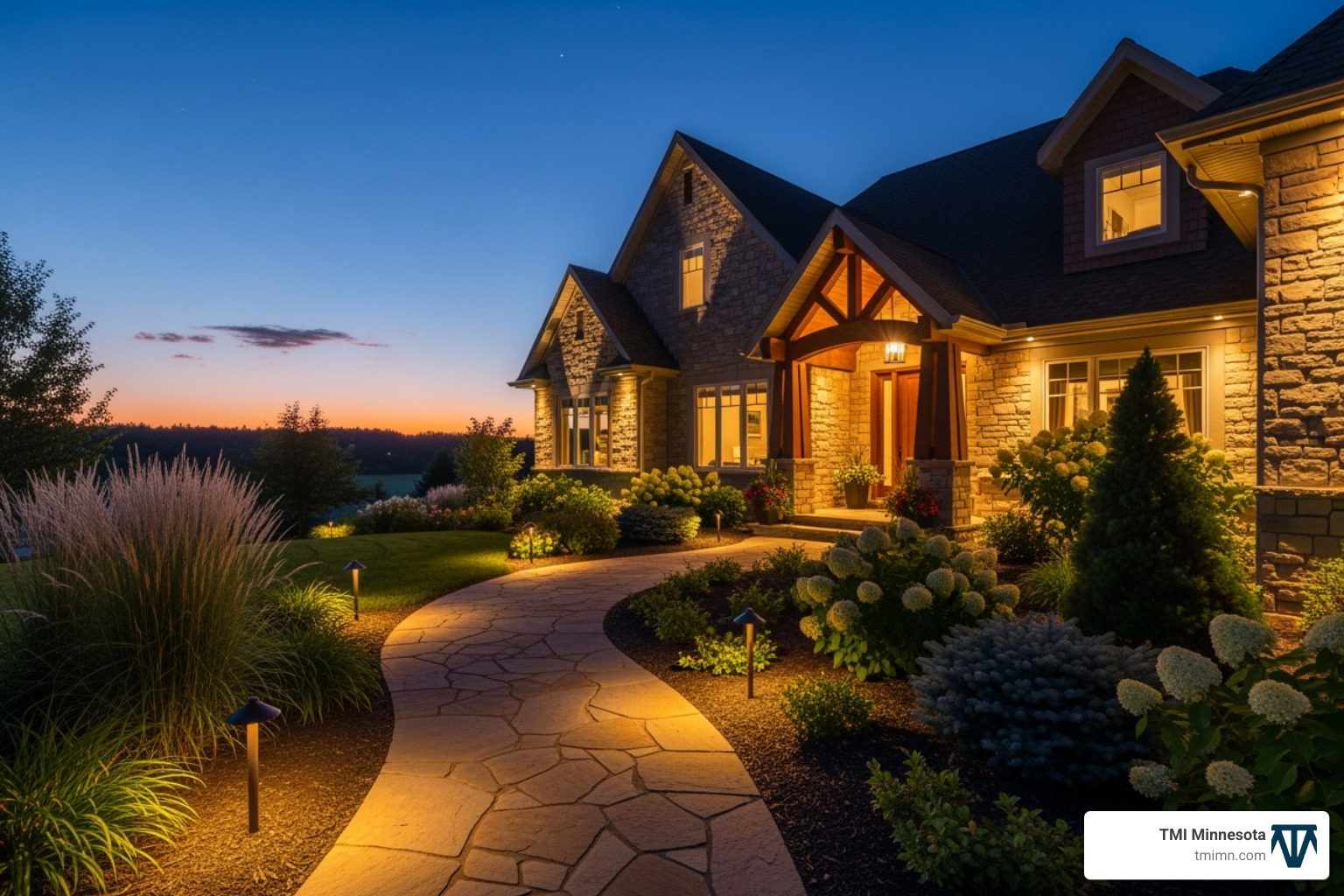
Strategic landscape lighting extends your yard’s beauty into the evening while improving safety. Use a layered approach: path lights for safe navigation, accent lights to showcase plants, and architectural lighting to highlight your home. Modern, energy-efficient LEDs make this easy. Our team can help you with Landscape Lighting Ideas.
Creating privacy requires balance. You want enclosure without feeling unwelcoming. Living screens of evergreen shrubs or ornamental trees work well. For quicker solutions, install attractive screening panels or trellises with fast-growing vines.
Safety considerations are crucial. Ensure pathways are at least three to four feet wide, use slip-resistant materials, and light any stairs. Also, make sure you are displaying house numbers clearly so your home is easy to find for guests and emergency services.
Common Mistakes to Avoid
Avoid these common pitfalls to ensure your project is a success.
- Poor scale and forgetting mature plant sizes: A small shrub can grow into a monster that blocks a window. Always plan for the plant’s mature size and give it adequate space. Patience is key; a sparsely planted garden will fill in over time.
- Inadequate drainage: Poor drainage can create a swamp. Assess how water moves on your property and amend soil or install drainage solutions like French drains or rain gardens if needed.
- Overcrowding plants: Plants need air circulation to prevent disease and competition for resources. Space them according to their mature spread.
- Using plastic weed barriers: These barriers harm soil by blocking water and nutrients. Use a thick layer of natural mulch over cardboard for effective, soil-friendly weed control. Find more ideas in these mulch alternatives instead.
Most mistakes come from rushing the planning phase. Taking your time upfront saves money and frustration later.
Frequently Asked Questions about Front Yard Landscaping
Here are answers to common questions about landscape front yard projects.
How can I landscape my front yard on a budget?
A beautiful front yard doesn’t require a massive investment.
- Start small: Focus on one high-impact area, like the entrance.
- DIY where possible: Preparing beds, mulching, and planting can save a lot on labor costs.
- Use cost-effective materials: Gravel for paths and natural mulch for beds are affordable and effective.
- Choose native plants: They are adapted to Minnesota’s climate, saving you money on water and maintenance.
- Phase your project: Spread costs over several seasons by tackling one part of the plan at a time.
How do I choose the right plants for my front yard?
The key is matching plants to your site and style.
- Assess your conditions: Note your climate zone, soil type (clay, sandy, etc.), and sun exposure (full sun, shade).
- Match plants to your lifestyle: Choose low-maintenance native and drought-tolerant plants if you’re busy, or a wider variety if you enjoy gardening.
- Group plants by water needs: This practice, called hydrozoning, makes watering more efficient and helps plants thrive.
For more inspiration on creating cohesive outdoor spaces, explore our Home Exterior Makeover services.
How can I create a front yard that has year-round interest?
The key is to think beyond summer flowers and plan for all four seasons.
- Mix evergreen and deciduous plants: Evergreens provide winter structure and color, while deciduous plants offer seasonal changes with flowers, fall color, and interesting branch structures.
- Stagger bloom times: Choose a variety of plants that flower at different times, from early spring bulbs to fall-blooming asters.
- Incorporate other features: Look for plants with interesting bark (birch, red-twig dogwood), colorful berries (winterberry), or unique structural forms (ornamental grasses) to provide winter appeal.
A thoughtful mix of these elements creates a landscape that evolves and offers beauty throughout the year.
Conclusion: Transform Your Vision into Reality
You now have the foundational knowledge to create your dream landscape front yard. We’ve covered everything from initial planning and design principles to selecting plants and hardscape materials. Whether you prefer a charming cottage garden or modern minimalism, you have the tools to make informed decisions and avoid common pitfalls.
A well-designed front yard offers more than just aesthetics; it can boost your home’s value by 7-14%, improve curb appeal, and create a welcoming space that reflects your personality.
You don’t have to do it all at once. Start with a solid plan and a realistic budget. Phasing your project is a smart approach that makes the process manageable.
At TMI Minnesota, we help homeowners transform their outdoor spaces with unique designs. Our expertise in hardscape installations and softscape elements ensures we can guide you through every step, using leading-edge products built for our Twin Cities climate.
Your dream landscape front yard is within reach. The knowledge you’ve gained, combined with professional expertise, is the recipe for success. Ready to take the next step? Explore xeriscape landscaping ideas and see how sustainable design can transform your home’s first impression.