
Why Landscaping Design Transforms Your Outdoor Living Experience
Landscaping design is the art and science of creating functional, beautiful outdoor spaces that improve your property’s value and your family’s lifestyle. Whether you’re planning a complete backyard makeover or refreshing your front yard’s curb appeal, understanding the design process helps you make informed decisions and avoid costly mistakes.
Key Elements of Successful Landscaping Design:
- Site Analysis – Understanding your property’s soil, drainage, sun patterns, and microclimates
- Design Principles – Applying unity, balance, proportion, and focal points for visual appeal
- Plant Selection – Choosing species suited to your climate zone and maintenance preferences
- Hardscape Integration – Incorporating patios, walkways, retaining walls, and water features
- Seasonal Planning – Ensuring year-round interest and sustainable maintenance
A well-executed landscaping design can increase your property value by 10-15% while creating outdoor spaces perfect for family gatherings, relaxation, and entertaining. The process typically involves site inventory, conceptual planning, detailed blueprints, and phased installation.
I’m Christopher Deanovic, Operations Leader at Task Masters, where I’ve spent years helping Minnesota homeowners transform their outdoor spaces through thoughtful landscaping design. My hands-on approach combines innovative design with practical craftsmanship to create landscapes that truly improve lifestyles.
Quick look at landscaping design:
– Garden border ideas
– Landscape lighting ideas
– Slope garden ideas
Landscaping Design 101: What It Is & Why It Matters
Landscaping design is the thoughtful process of arranging your yard’s features—both living and non-living—to create spaces that serve your family’s needs while looking stunning. Great design balances function with beauty, creating outdoor rooms where kids can play safely, you can host gatherings, and you actually want to spend time.
Hardscape elements include patios, walkways, retaining walls, fire pits, and water features—the permanent structure that looks good year-round. Softscape elements bring life through trees, shrubs, flowers, and grass, providing seasonal changes and natural beauty.
Different types serve different goals: Residential landscaping focuses on lifestyle and property value, Commercial landscapes emphasize professional appearance, and Sustainable design incorporates native plants and water conservation.
The American Society of Landscape Architects found that well-designed landscapes can provide 100-200% recovery of costs when selling. Clemson University research shows excellent landscaping increases home selling prices by 6-7%. Understanding your climate zone is crucial—plants that thrive in Minnesota’s conditions require less maintenance and look better long-term.
The Big Benefits of Landscaping Design
Beyond impressive property value boosts, thoughtful design transforms how you live outdoors. Well-designed landscapes create defined spaces for different activities while providing privacy and reducing noise.
Energy savings are substantial. Strategically placed shade trees can slash cooling costs by 15-35%, while evergreen windbreaks reduce winter heating costs. Environmental benefits include supporting local wildlife, improving air quality, and reducing stormwater runoff.
Most importantly, landscaping supports health and wellness. Gardens provide proven stress relief, encourage physical activity, and offer the psychological benefits of connecting with nature right in your backyard.
Planning & Principles: Laying the Groundwork for Great Landscaping Design
Great landscaping design starts with understanding your property and following proven design principles. Before selecting plants, we need comprehensive site analysis.
Site inventory examines soil conditions, drainage patterns, sun exposure, and existing features. Your yard likely has several microclimates—sunny spots against south walls stay warmer than shaded areas under trees. Wind patterns matter for outdoor dining areas.
Design principles create intentional, beautiful landscapes. Unity connects different areas through repeated materials or plant textures. Balance uses visual weight—a large tree balanced by grouped smaller trees or substantial hardscape. Proportion ensures appropriate scale, while rhythm creates flow through repeated elements.
Every landscape needs focal points—specimen trees, water features, or carefully placed benches that anchor spaces. Transitions bridge different outdoor rooms through gradual slopes or curved pathways.
Core Elements to Master
Plants work in layers: canopy trees for shade and structure, understory trees for seasonal interest, shrubs for privacy, perennials for color, and ground covers that tie everything together.
Water features bring life through birdbaths, ponds, or fountains, creating focal points and masking traffic noise. Stone and hardscape provide year-round structure, while structures like pergolas add vertical interest and weather protection.
Lighting transforms landscapes after dark, highlighting features and ensuring safe navigation. Color and texture maintain interest through seasonal waves of color and contrasting plant forms.
For comprehensive hardscape solutions, explore our Hardscape Design Services.
Trending Styles & Inspiration
Modern minimalist landscapes use clean lines, limited plant palettes, and architectural hardscaping. Cottage style creates abundant, informal gardens with mixed perennials and meandering paths. Xeriscape uses drought-tolerant plants for water conservation.
Zen gardens bring Asian principles for peaceful, contemplative spaces. Pollinator habitats support declining bee and butterfly populations with native flowering plants. Outdoor rooms treat landscapes as home extensions with fully equipped kitchens and comfortable seating.

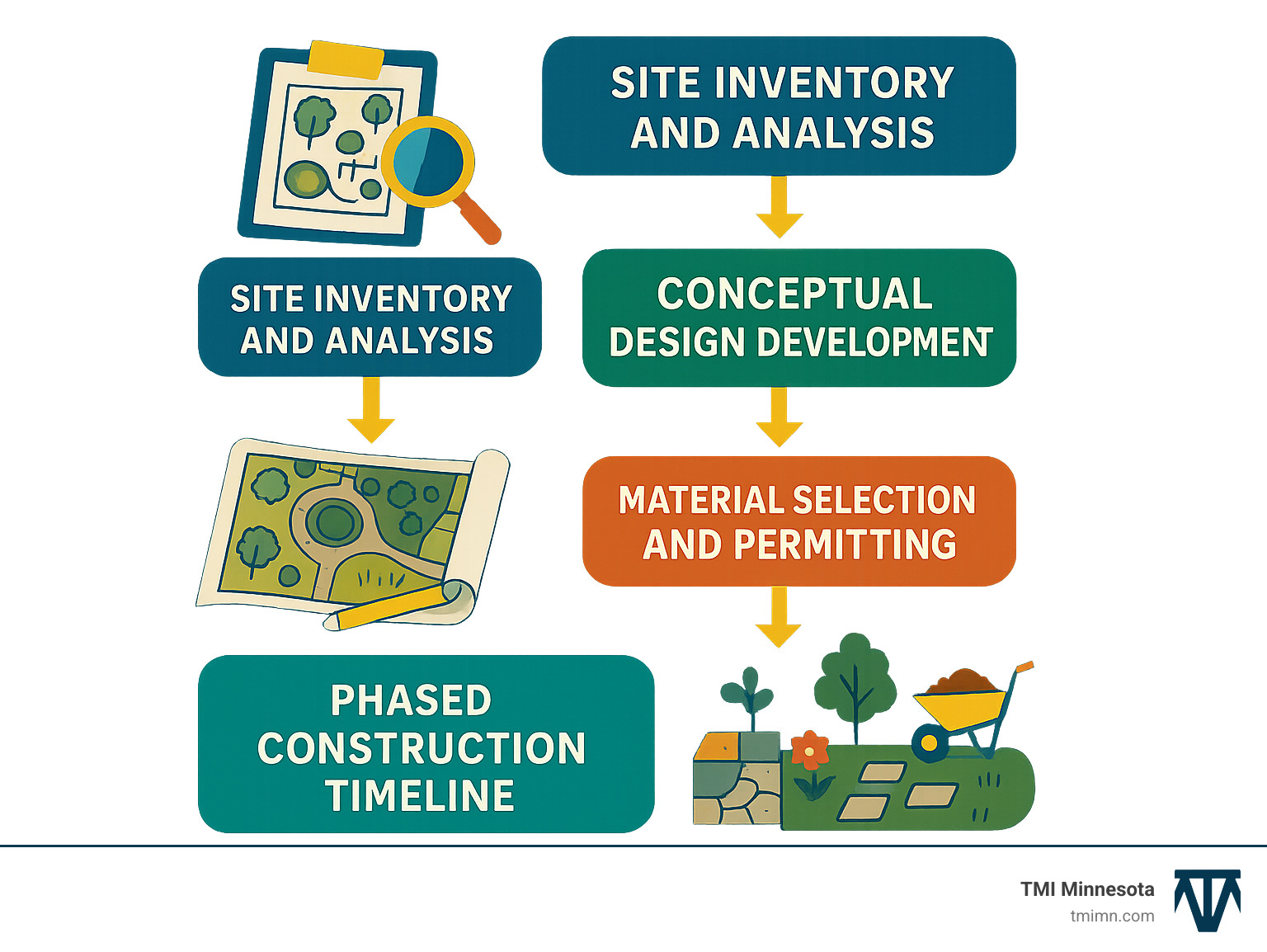
From Vision to Blueprint: The Landscaping Design Process
Successful landscaping design follows a proven five-step process from initial ideas to installation roadmap.
Step 1: Site Inventory and Analysis documents what you’re working with—measuring property, photographing views, mapping utilities, and assessing soil conditions, drainage, and sun exposure.
Step 2: Needs Assessment explores how you want to live outdoors. Do you need entertaining space, quiet retreats, or play areas? We discuss maintenance tolerance and budget parameters honestly.
Step 3: Functional Diagrams use bubble diagrams showing public spaces, private retreats, and service zones—the bones of your design.
Step 4: Conceptual Design Plans bring bubbles to life with specific plant locations, hardscape features, and circulation patterns, typically developing multiple options for comparison.
Step 5: Master Plan and Implementation finalizes everything with detailed specifications, material lists, and phasing recommendations.

The process typically takes 4-8 weeks depending on complexity, with larger projects often benefiting from phased installation.
DIY Apps & Digital Tools for Landscaping Design
Planner 5D offers exceptional free design capabilities with 4,000+ objects, 2D plans, and 3D renderings. iScape uses mobile-focused design with augmented reality—point your phone at your yard and digitally place elements.
Home Outside bridges DIY tools and professional software with plant databases and regional information. Landscaper’s Companion focuses on plant selection with detailed growing requirements.
For detailed information, visit Scientific research on digital visualization.
Professional Support vs. Do-It-Yourself
| Aspect | DIY Approach | Professional Design |
|---|---|---|
| Initial Cost | $0-500 | $2,000-8,000 |
| Time Investment | 20-50 hours | 5-10 hours |
| Design Quality | Variable | Consistent |
| Plant Knowledge | Self-taught | Expert selection |
| Warranty | None | 1-2 years |
DIY works best for straightforward projects with gardening experience and time for research. Professional design makes sense for complex projects involving grading, drainage, or significant investments.
For expert guidance, consider our Backyard Design Consultation services.
Hiring the Right Landscape Designer
Portfolio review should show completed projects similar to your style and budget. Communication style is crucial—designers should listen carefully and explain concepts clearly. Written contracts protect both parties with documented scope, timeline, and budget.
Local references provide insights from recent clients about experience and quality. Design process should follow systematic steps with proper site analysis.
For comprehensive services, explore our Landscape Renovation Services.
Sustainable & Year-Round Strategies for Landscaping Design
Creating landscaping design that works with nature makes sense for both budget and environment. Native plants are your secret weapon—these indigenous species naturally resist local pests, handle temperature swings, and support local wildlife while requiring minimal maintenance.
Drought tolerance matters even in Minnesota’s wet climate. Rain gardens capture runoff while creating beauty, and permeable pavers allow natural water infiltration. Smart irrigation systems with weather-based controllers can reduce water use by 30%.
Composting transforms yard waste into valuable soil amendments. Creating wildlife habitat through plants providing nectar, berries, and shelter brings landscapes to life with birds and beneficial insects.
For detailed guidance, visit our Sustainable Landscaping Techniques page.
Seasonal Maintenance Calendar
Spring (March-May): Remove winter protection, prune summer-flowering shrubs, apply pre-emergent herbicides, and divide overgrown perennials.
Summer (June-August): Monitor irrigation during hot periods, deadhead spent flowers, prune spring-flowering shrubs after blooming, and maintain mulch levels.
Fall (September-November): Best planting season for trees and shrubs, continue watering until ground freezes, rake and compost leaves, protect tender plants.
Winter (December-February): Plan next year’s improvements, protect plants from salt spray and snow loads, prune dormant trees (except maples and birches).

Low-maintenance landscaping works with natural conditions rather than fighting them. Choose plants suited to your specific soil and light, group plants with similar needs, and use organic mulches that suppress weeds while improving soil.
Frequently Asked Questions about Landscaping Design
How much does professional landscaping design cost?
Professional landscaping design services range from $2,000 to $8,000, with consultations typically $100 to $250. Costs depend on property size, complexity, designer experience, and detail level. Most homeowners spend around 10% of home value on landscaping, recovering most investment through increased property value.
Which tools help homeowners create their own landscaping design?
iScape leads mobile apps with augmented reality features. Home Outside offers professional-grade mobile tools, while Planner 5D provides free desktop capabilities with extensive libraries. Traditional graph paper and measuring tools remain valuable for accurate documentation.
How do I choose plants and materials for my climate zone?
Minnesota ranges from Zone 3a to Zone 4b. Choose plants rated for one zone colder for insurance. Consider mature size, sun/shade requirements, soil preferences, and water needs. Focus on native plants like purple coneflower and little bluestem grass for exceptional performance. The University of Minnesota Extension and local nurseries provide excellent regional guidance.
Conclusion
Changing your vision into reality through thoughtful landscaping design is one of the most rewarding investments you can make. From understanding design principles to selecting climate-appropriate plants, each element works together to create outdoor spaces that truly improve your lifestyle.
Whether you choose DIY approaches with digital tools or work with professional designers, success starts with clear vision and understanding your property’s potential. At TMI Minnesota, we’ve helped countless families fall in love with their yards through well-planned landscape changes.
Your landscape continues evolving long after installation—plants mature, needs change, and seasonal rhythms bring new findies. That’s what makes landscaping design so rewarding: it’s never finished, just constantly becoming more beautiful.
Ready to start your outdoor change? Find how our comprehensive approach can bring your vision to life with our Backyard Change Services.