
Why Minnesota Native Plants Are the Smart Choice for Your Landscape
Minnesota native plants are species that grew in the region before European settlement. Here’s what makes them ideal for your yard:
- Over 2,000 native species available, including wildflowers, grasses, shrubs, and trees
- Already adapted to Minnesota’s climate and soil—no special amendments needed
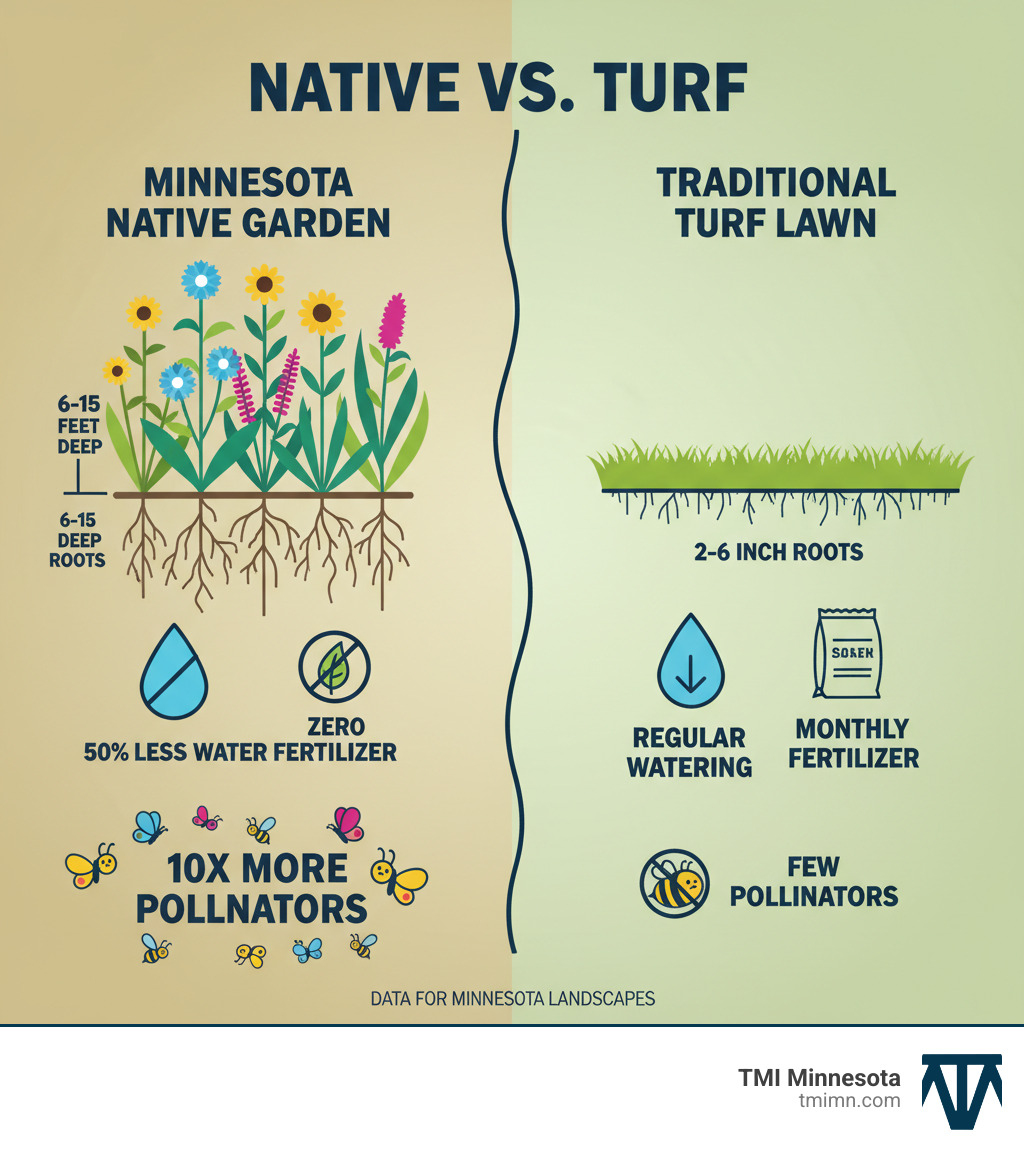
- Deep root systems (up to 15 feet) prevent erosion and improve water absorption
- Require minimal maintenance once established—less watering, no fertilizer, and reduced mowing
- Support local wildlife by providing essential food and habitat
- Cost-effective long-term due to reduced maintenance needs
Native plants are defined as species present in Minnesota’s biomes when European settlers first arrived. Having evolved here for thousands of years, they are perfectly adapted to our climate and soil. Unlike a traditional turf lawn—which is a green desert demanding endless water, fertilizer, and mowing—native plant gardens thrive with minimal care while supporting dozens of bird, butterfly, and pollinator species.
As Christopher Deanovic, Operations Leader at Task Masters, I’ve helped many Minnesota homeowners transform their yards using Minnesota native plants that deliver both beauty and ecological benefits. My team specializes in creating functional, low-maintenance landscapes that work with our state’s natural environment.
Minnesota native plants vocab to learn:
Why Go Native? The Powerful Benefits for Your Yard and Minnesota’s Ecosystem
Choosing Minnesota native plants turns your yard into a living ecosystem that supports everything from tiny bees to monarch butterflies. These plants are the foundation of our state’s natural heritage, forming deep relationships with the wildlife that depends on them.
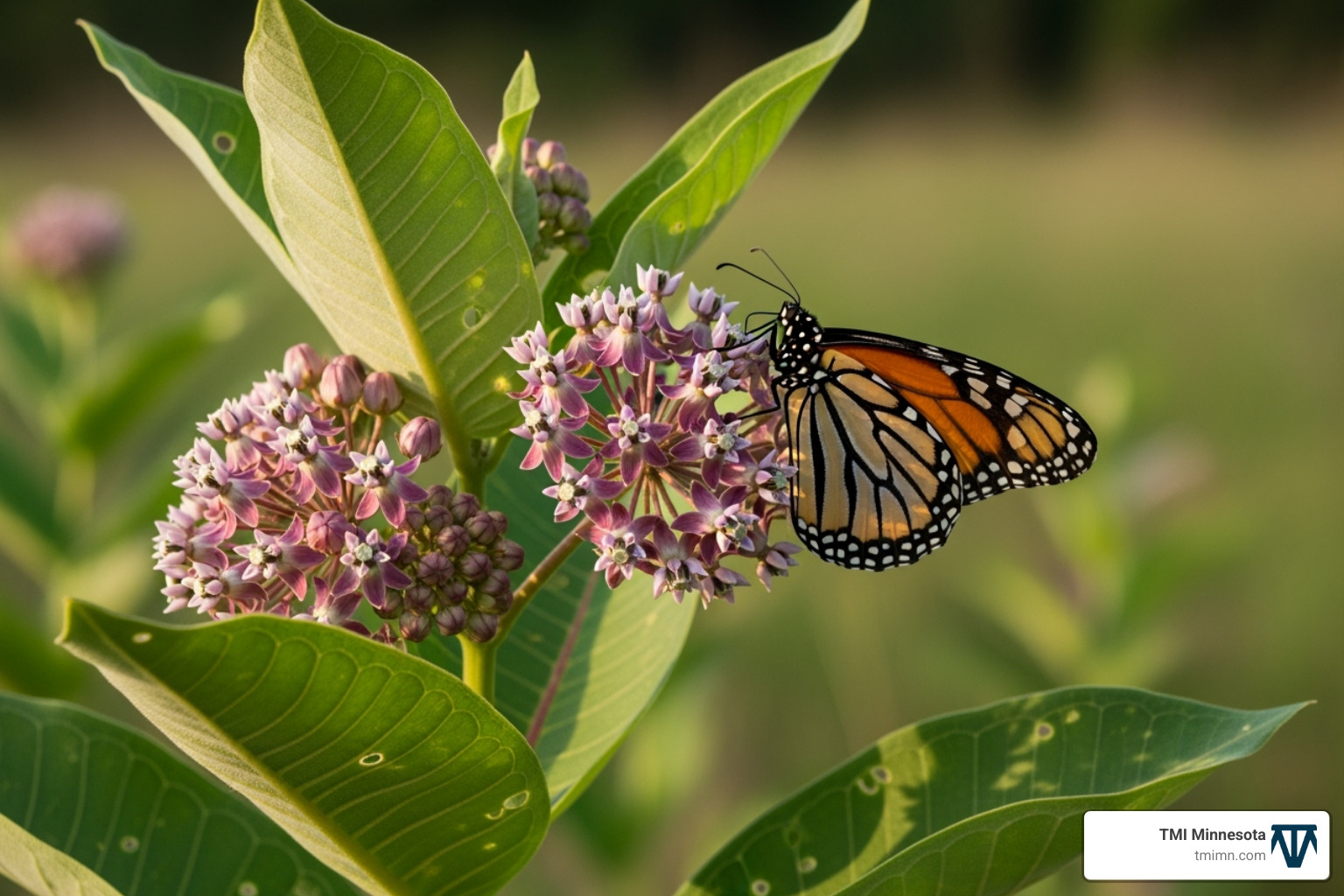
For example, the monarch butterfly needs milkweed to survive; its caterpillars won’t eat anything else. When we replace native plants with exotic ornamentals, we remove essential food sources for countless species that call Minnesota home.
Minnesota native plants provide nectar for bees, seeds for songbirds, and host plants for butterfly larvae. They create habitat for beneficial insects that keep pests in check naturally. Every native plant you add is like opening a restaurant in a food desert for local wildlife.
For homeowners, the benefits are clear: less time and money spent on yard work. Once established, native plants are self-sufficient. They handle our hot summers and droughts without weekly watering and thrive in Minnesota soil without fertilizer. They also have natural defenses against pests.
Compared to a traditional lawn that demands constant attention, the choice is simple. You’ll spend less time on yard work and more time enjoying your outdoor space, with cost savings that add up over the years. Our team combines beauty with practicality, creating Environmentally Friendly Gardens that thrive with minimal input as part of our commitment to Sustainable Landscaping Techniques.
Improving Water Quality and Soil Health
Beneath the surface, native plants perform incredible work. While typical lawn grass roots are only a few inches deep, native prairie plant roots can plunge six to fifteen feet into the soil.
This massive root network transforms how water moves through your property. Instead of running off a conventional lawn and carrying pollutants into storm drains, rainwater is absorbed and filtered naturally by the deep roots, replenishing groundwater.
These roots also grip the soil like rebar, preventing erosion on slopes. They create channels for earthworms and other organisms, improving soil structure and fertility year after year. This isn’t just good for your yard; it’s good for all of Minnesota, leading to less stormwater runoff and cleaner lakes and streams.
To maximize these benefits, consider a rain garden. These shallow depressions filled with native plants are designed to capture runoff from roofs and driveways. We’ve installed dozens across the Twin Cities, and they are incredibly effective at managing stormwater beautifully. Learn more with our Rain Garden Design MN services.
Native vs. Exotic Plants
Understanding the difference between native and exotic species is key. Minnesota native plants evolved here and are perfectly in sync with our climate and wildlife.
Exotic plants come from other regions or continents. While many are harmless ornamentals, some become invasive. Without the natural checks and balances of their native habitats, invasive species like buckthorn and purple loosestrife spread aggressively. They crowd out native plants, disrupt ecosystems, and reduce biodiversity, harming the wildlife that depends on native plant communities.
| Feature | Minnesota Native Plants | Exotic/Non-Native Plants (especially invasives) |
|---|---|---|
| Maintenance | Low; adapted to local conditions | Varies; often high (watering, fertilizing, pest control) |
| Water Needs | Low once established; drought-tolerant | Varies; often high, especially during dry spells |
| Fertilizer | Rarely needed; thrive on natural soil nutrients | Often required for optimal growth and flowering |
| Wildlife Value | High; essential food and habitat for local pollinators, birds, and insects | Low to none for local wildlife; may even be harmful or outcompete native food sources |
| Ecosystem Risk | Supports local ecosystems; no risk of invasiveness | Some can become invasive, displacing natives and disrupting ecosystems |
When you stick with Minnesota native plants, you’re not just avoiding problems; you’re actively contributing to ecosystem health. You provide essential resources for local wildlife, preserve genetic diversity, and connect your property to the natural heritage of our state. That’s the kind of beautiful, beneficial landscaping we’re passionate about at TMI Minnesota.
Popular Minnesota Native Plants for Your Garden
Choosing the right Minnesota native plants starts with knowing your yard’s conditions: sun exposure, soil type, and moisture levels. With over 1,800 native species cataloged on Minnesota Wildflowers, there’s a perfect plant for every spot, from blazing sun to deep shade.
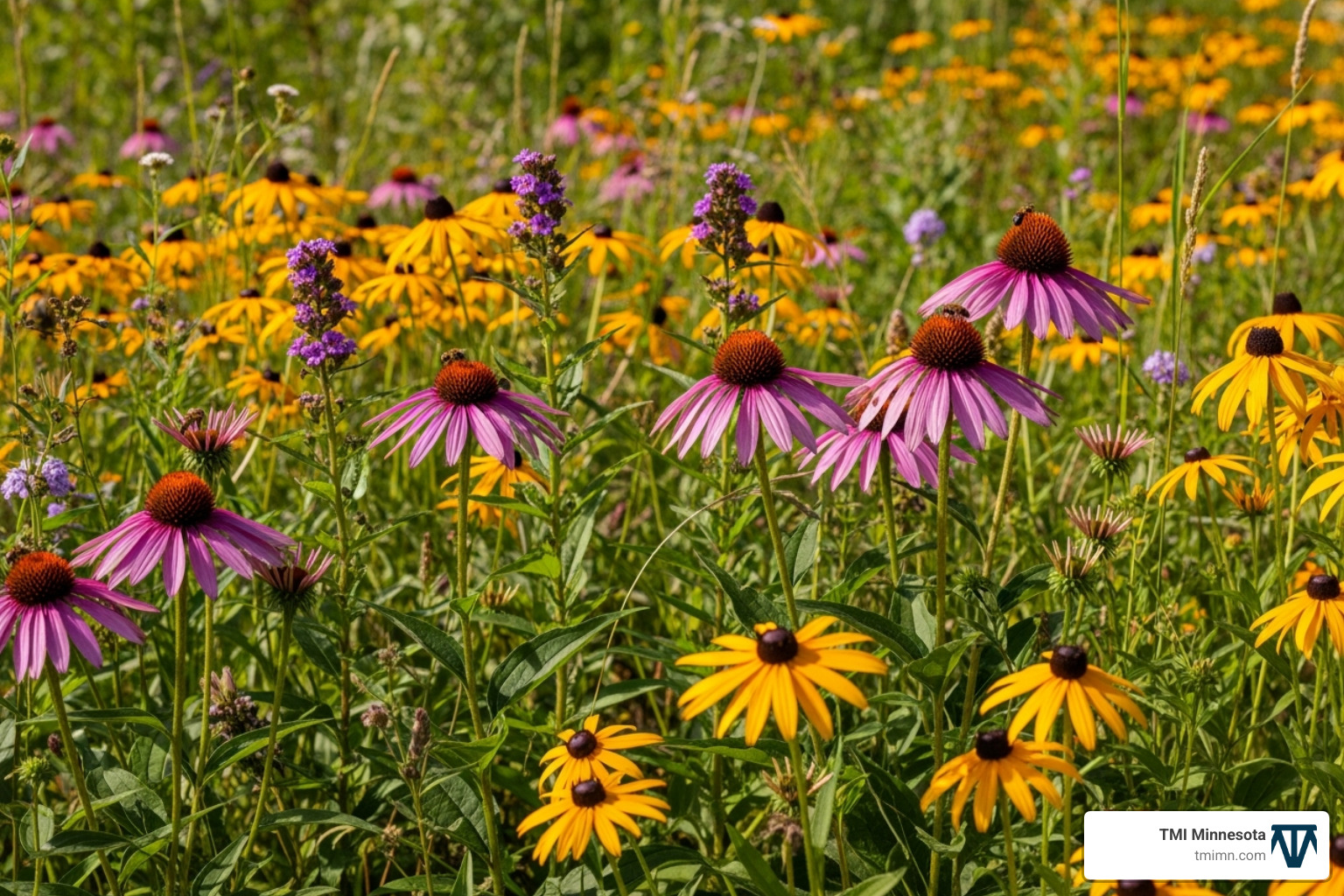
Here are some of our favorites that look stunning, support wildlife, and require minimal maintenance.
Sun-Loving Prairie Flowers
Sunny spots are prime real estate for prairie flowers that bloom for months and attract pollinators.
- Purple Coneflower (Echinacea purpurea): A superstar of native gardens, its distinctive purple petals bloom from spring through fall. It’s tough, handles various soils, and is a pollinator magnet.
- Black-eyed Susan (Rudbeckia hirta): Brings sunshine with cheerful yellow petals. This adaptable plant blooms prolifically from spring to fall and fills in gaps nicely.
- Butterfly Weed (Asclepias tuberosa): Essential for monarchs, its vibrant orange flowers are the sole food for their caterpillars. Plant it in full sun and well-drained soil.
- Blazing Star (Liatris): Adds vertical drama with tall purple spikes that butterflies find irresistible. Many prairie natives are also excellent Deer Resistant Plants MN.
Shade-Tolerant Woodland Plants
Shady yards can be enchanting with Minnesota’s woodland natives, which evolved under the forest canopy.
- Wild Geranium (Geranium maculatum): Kicks off spring with delicate pink to purple blooms for early pollinators. It’s adaptable and its foliage stays attractive all season.
- Jacob’s Ladder (Polemonium reptans): Offers charming blue, bell-shaped spring flowers and unique ladder-like foliage. It prefers moist, rich soil in partial to full shade.
- Wild Ginger (Asarum canadense): An unbeatable groundcover for deep shade, its glossy, heart-shaped leaves form a dense, weed-suppressing carpet.
- Large-flowered Bellwort (Uvularia grandiflora): Adds woodland magic with dangling yellow, bell-shaped spring flowers. It slowly forms attractive colonies in moist shade.
The University of Minnesota Extension offers an excellent Gardening in the shade guide from UMN for more details.
Native Grasses and Shrubs
Native grasses and shrubs provide the structure and year-round interest for your landscape.
- Little Bluestem (Schizachyrium scoparium): A low-maintenance grass that turns a glowing copper-red in fall, holding its color through winter. It’s drought-tolerant and loves full sun.
- Prairie Dropseed (Sporobolus heterolepis): Forms fine-textured mounds that move beautifully in the breeze and release a pleasant, cilantro-like fragrance in late summer.
- American Hazelnut (Corylus americana): A multi-tasking shrub with spring catkins, summer nuts, and vibrant fall color. It adapts to sun or part shade.
- Red Osier Dogwood (Cornus sericea): Provides stunning winter interest with bright red stems that glow against snow. It thrives in moist soils and is great for rain gardens.
These foundational plants offer tremendous ecological value. Learn more from the Benefits of Native Grasses from UMN resource.
Creating Your Native Landscape: A Step-by-Step Guide
Ready to transform your yard? As specialists in Landscape Installation Twin Cities, we know the right approach makes all the difference.
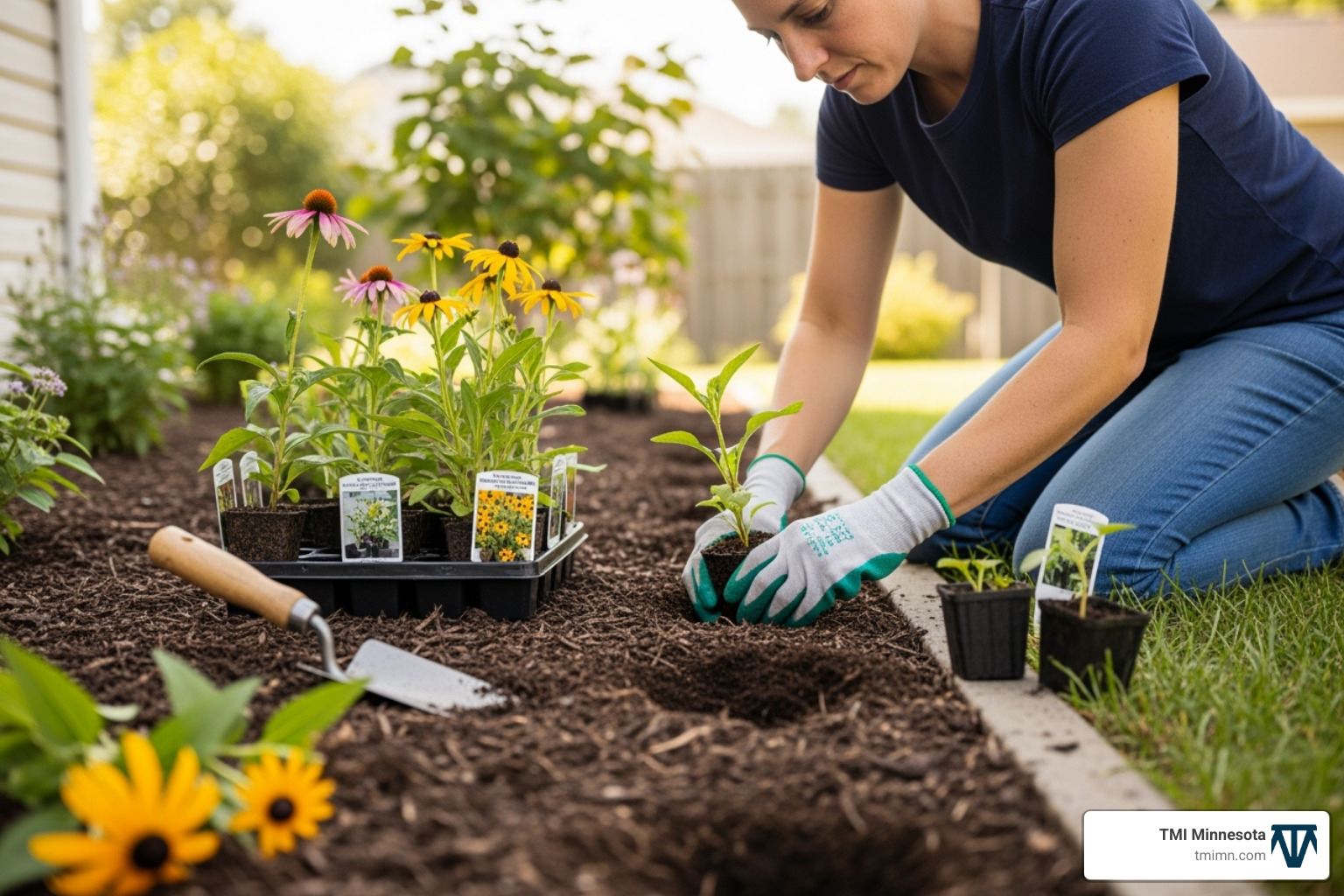
The journey begins with a site assessment. We analyze your sun exposure, soil, and water flow to determine which Minnesota native plants will thrive naturally in your space.
Next is removing existing turf and weeds. You can smother grass with cardboard and mulch (sheet mulching), use solarization, or remove it manually. The goal is to eliminate competition for your new plants.
Sourcing your plants is a critical step. We recommend plants and seeds of local genetic origin, as they are specifically adapted to Minnesota’s conditions. A local plant is better equipped to handle our unique weather. Look for reputable local nurseries and never dig plants from the wild.
For planting, the goal is good root-to-soil contact. New natives need initial watering and care to get established. Once they are, they’ll practically take care of themselves.
Long-term management is simple. It involves some weeding in the first couple of years and occasional mowing or controlled burns for prairie plantings to mimic natural processes. No more weekly mowing or fertilizing.
Choosing the Right Minnesota native plants for Your Yard
To choose the perfect plants, start by understanding your biome—the natural plant community that historically grew in your area (prairie, forest, etc.).
Visiting local parks and natural areas like Minnehaha Falls or Fort Snelling State Park is a great way to see what thrives naturally. Notice which plants grow together and in what conditions. Our diverse Minnesota Landscapes offer endless inspiration.
For deeper research, the Minnesota Wildflowers plant database is an invaluable resource with information on over 1,800 species.
Dealing with Invasive Species
Invasive species are non-native plants that spread aggressively, threatening native communities by crowding them out and disrupting the ecosystem.
Identifying common invasives is your first line of defense. Look for troublemakers like buckthorn, purple loosestrife, garlic mustard, or honeysuckle, which form dense stands that choke out native plants.
Control and removal methods vary by species. Small seedlings can be hand-pulled, while larger plants may need to be cut and treated with herbicide. Persistent removal is often necessary to exhaust the seed bank.
Most importantly, don’t plant exotic species that can escape cultivation, like burning bush or barberry. By choosing Minnesota native plants, you become part of the solution. When we remove invasives, we always replant with appropriate natives to restore the area.
Frequently Asked Questions about Minnesota Native Plants
We talk to homeowners every day who are curious about native landscaping. Let’s address the most common questions.
Are native plant gardens messy and unkempt?
This is the biggest misconception. A thoughtfully designed native landscape is anything but messy. The secret is in the design: using clear borders and paths creates an organized feel, while grouping plants in drifts or clusters provides a cohesive, natural look. Planning for seasonal interest with a variety of plants ensures your garden is beautiful year-round, from spring blooms to winter structure. The result is a dynamic, living landscape that looks intentional and beautiful.
How long does it take for a native garden to get established?
Patience is key. We use the “sleep, creep, leap” concept to set expectations.
- Year 1 (Sleep): Above ground, not much seems to be happening. Below ground, plants are establishing deep root systems—the foundation for future growth.
- Year 2 (Creep): You’ll see more foliage as plants spread. Some initial blooms may appear as the garden starts to fill in.
- Year 3+ (Leap): The landscape leaps into its full glory. Plants are lush, bloom profusely, and showcase their mature beauty.
As the Minnesota DNR notes, it can take a few years for native plantings to look their best. Once established, however, you’ll have a resilient, low-maintenance landscape for decades.
Where can I find reliable information and purchase Minnesota native plants?
Minnesota has excellent resources for native plant gardening. Here are some of our go-to sources:
- University of Minnesota Extension: Their Native Plants section offers science-backed guides on plant selection and care.
- Minnesota Department of Natural Resources (DNR): A treasure trove of information with detailed plant profiles to help you understand local species.
- Local Soil and Water Conservation Districts: Often offer workshops, resources, and native plant sales specific to your region.
- Reputable Local Nurseries: When purchasing plants, look for nurseries specializing in natives. Ask about genetic origin to ensure you’re getting plants grown from local Minnesota seeds, which are best adapted to our climate.
- Online Databases: The Minnesota Wildflowers plant database is an invaluable tool for researching over 1,800 species before you buy.
At TMI Minnesota, we work with trusted, local-origin suppliers and can connect you with the right sources for your project.
Accept Natural Beauty with Native Landscaping
When you choose Minnesota native plants, you create a space that is not just beautiful, but actively healing. Each plant becomes part of a living system that supports butterflies, birds, and bees, turning your yard into a haven for nature.
These plants have deep root systems that prevent erosion and filter water, and they support biodiversity without demanding constant attention. Imagine weekends free from mowing, watering, and fertilizing. Native landscaping gives you that freedom, saving you time and money while looking stunning through every season.
At TMI Minnesota, we’ve seen how transformative native landscaping can be. We specialize in creating outdoor spaces that blend beauty with purpose, using thoughtful design to craft landscapes that truly lift your yard living. Our experience with both hardscape and softscape installations allows us to integrate Minnesota native plants into cohesive, intentional designs that are uniquely yours.
Your yard has incredible potential. Native plants offer a path forward that is both practical and inspiring, allowing you to enjoy a landscape that changes with the seasons, attracts wildlife, and contributes to Minnesota’s ecosystem.
Ready to create something extraordinary? Start planning your eco-friendly landscape with our xeriscape ideas and find how beautiful your outdoor space can become. Let’s work together to transform your yard into a thriving native landscape.