
The Timeless Appeal of Natural Stone
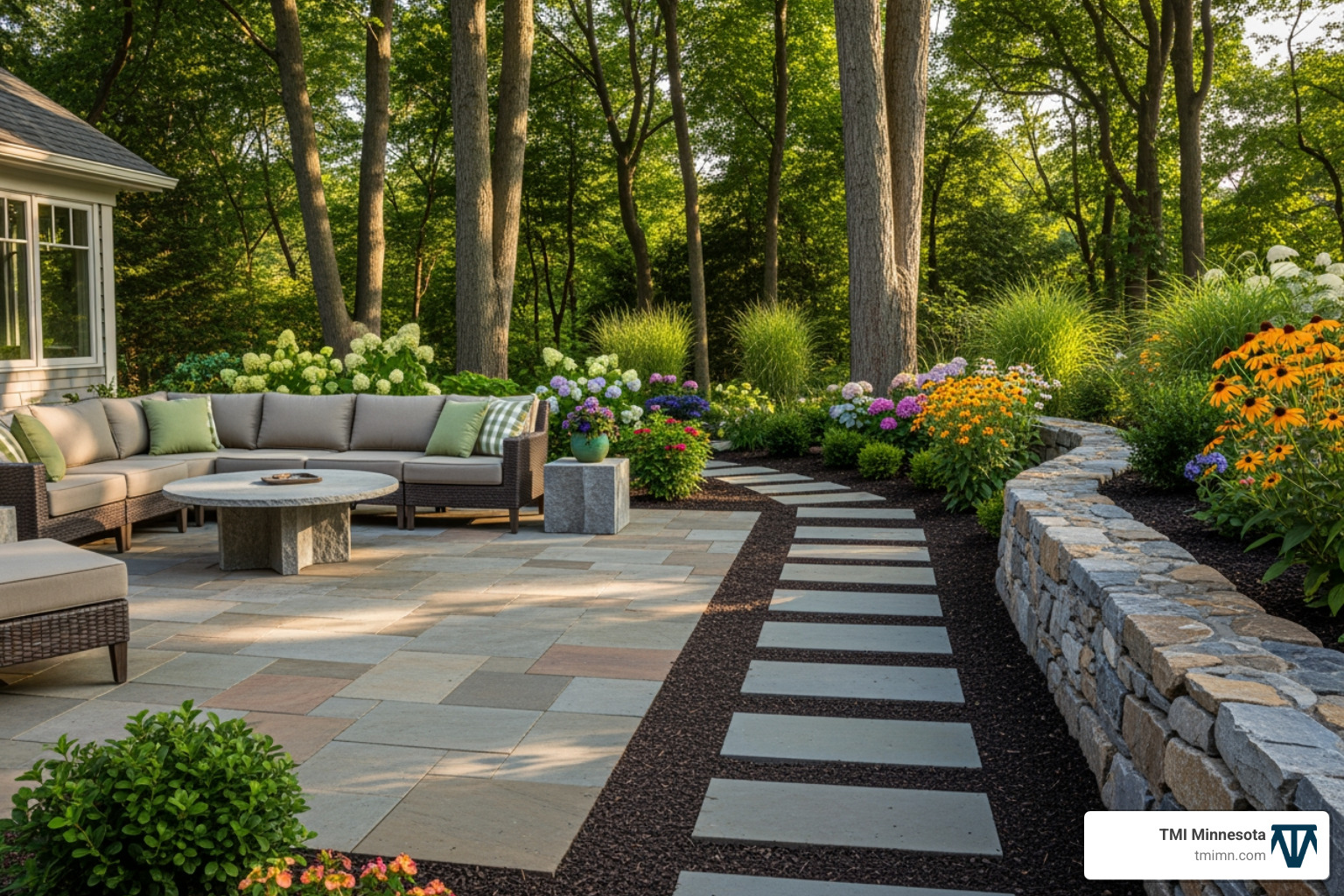
Natural stone hardscapes are the permanent, structural elements in your outdoor space made from quarried stone—like patios, walkways, retaining walls, and fire pits. They combine the durability of materials like granite, limestone, and slate with unique, organic beauty that man-made alternatives simply can’t replicate.
Quick Overview: What You Need to Know
- Materials: Granite, limestone, travertine, slate, marble, sandstone, quartzite
- Products: Pavers, flagstone, wall blocks, veneer, steps, pool coping
- Benefits: Exceptional durability (often lasting decades), low maintenance, increased property value, sustainability
- Best For: Patios, walkways, pool decks, outdoor kitchens, retaining walls, fire pits
When planning your outdoor space, you’ll encounter two main categories: hardscape (permanent structures like stone patios and walls) and softscape (living elements like plants and grass). Natural stone hardscapes serve as the backbone of outdoor living spaces, creating functional areas for dining, entertaining, and relaxation.
The appeal goes beyond aesthetics. Natural stone offers best durability—many types can withstand freeze-thaw cycles, heavy foot traffic, and decades of use without significant wear. Unlike concrete pavers that can fade or crack, natural stone often improves with age, developing a weathered patina that adds character.
The global natural stone market was valued at $47.9 billion in 2022 and is projected to reach $75.8 billion by 2030, reflecting growing demand for these timeless materials. Homeowners increasingly recognize that while natural stone may cost more upfront, it’s a smart long-term investment that improves property value while requiring minimal maintenance compared to alternatives.
As Christopher Deanovic, Operations Leader at TMI Minnesota, I’ve spent years helping Minnesota homeowners transform their properties with expertly crafted natural stone hardscapes that balance beauty, functionality, and lasting value. My hands-on approach ensures every natural stone hardscapes project—from custom patios to retaining walls—reflects both the natural beauty of our region and the unique needs of each client.
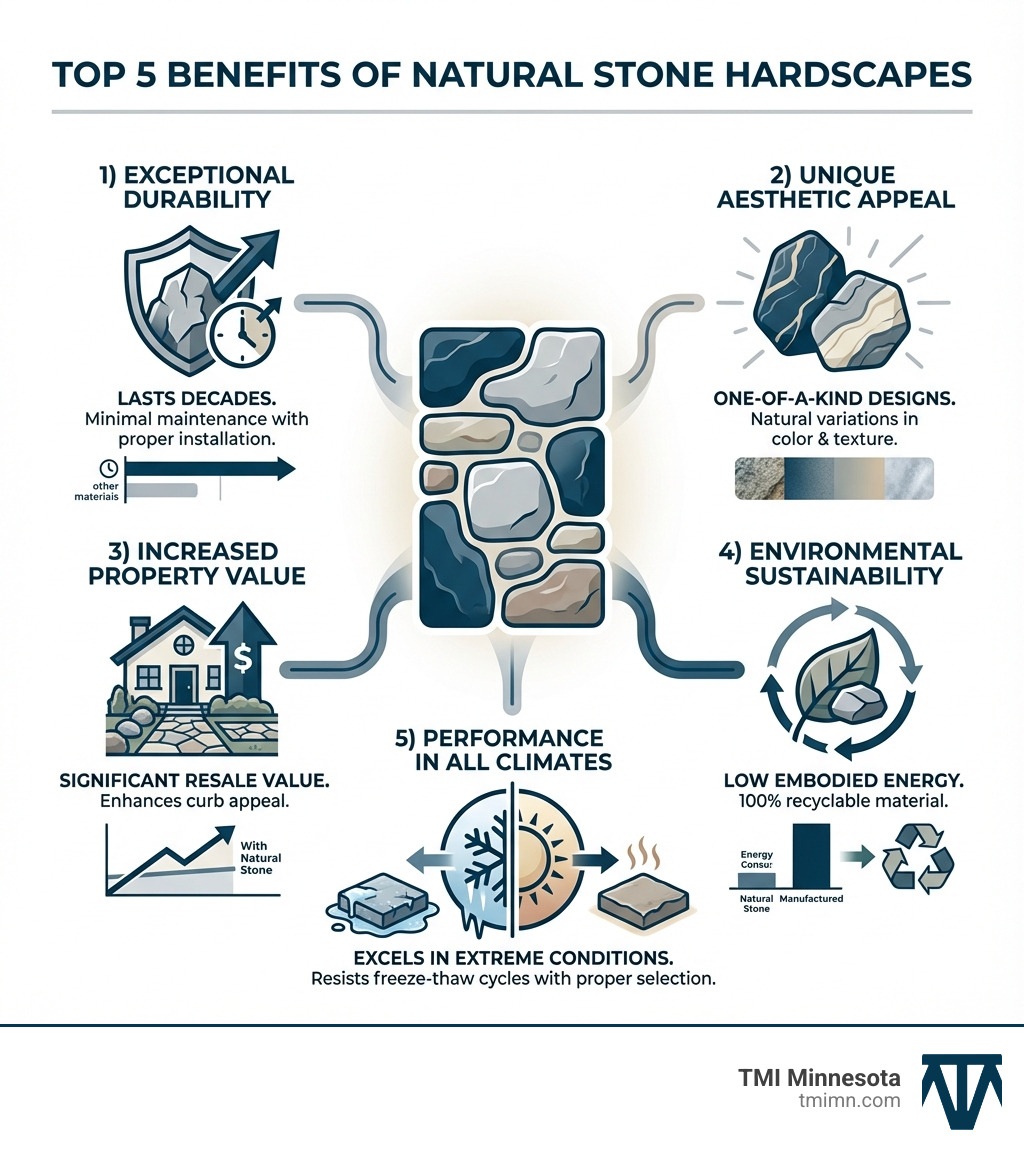
Simple guide to Natural stone hardscapes:
What Are Natural Stone Hardscapes & What Are The Benefits?
Natural stone hardscapes are the non-living, permeable or impermeable elements of your landscape design that are crafted from quarried stone. Think of them as the bones of your outdoor living spaces – the patios, walkways, retaining walls, and other structural features that provide definition, function, and enduring beauty. Unlike softscapes (plants, grass, soil), hardscapes are permanent or semi-permanent, designed to withstand the elements and heavy use.
The benefits of incorporating natural stone into your outdoor design are truly extensive, making it a favorite for homeowners in the Twin Cities and beyond.
Increased Property Value: Investing in natural stone hardscapes is a surefire way to boost your home’s curb appeal and overall value. Quality hardscaping is a highly sought-after feature that signals luxury and longevity, often providing an excellent return on investment. The hardscape market itself is expected to grow by $10.53 billion during 2024-2028, showing the strong demand for these types of improvements.
Aesthetic Appeal: The inherent beauty of natural stone is best. Each piece is unique, offering variations in color, pattern, and texture that create a one-of-a-kind look. From rugged, rustic charm to sleek, modern elegance, there’s a natural stone to complement any architectural style or design vision. It adds a sophisticated touch that manufactured materials often struggle to replicate, allowing your outdoor space to truly stand out.
Durability and Longevity: This is where natural stone truly shines. These materials have literally stood the test of time, enduring centuries in some of the world’s most iconic structures. For your home, this translates to hardscapes that can last for decades with proper installation and maintenance. Natural stone pavers are particularly known for their durability and longevity. Many natural stones perform exceptionally well in our challenging Minnesota freeze-thaw cycles, resisting cracking and degradation that often plague lesser materials.
Sustainability: In an age where environmental impact is a key consideration, natural stone offers a compelling sustainable choice. It’s a naturally occurring material, requiring minimal processing compared to man-made alternatives. This translates to a low embodied energy – meaning less energy is consumed in its creation. Furthermore, natural stone is 100% recyclable, making it an environmentally friendly option for your landscape.
Common Materials Used for Natural Stone Hardscapes
The beauty of natural stone hardscapes lies in the incredible variety of materials Mother Earth provides. Each type offers distinct characteristics in terms of color, texture, and performance, allowing for endless design possibilities.
- Granite: A highly durable and dense igneous rock, granite is an excellent choice for high-traffic areas like driveways and patios. It’s incredibly resistant to scratches, heat, and our Minnesota freeze-thaw cycles. It comes in a wide range of colors, from light grays and pinks to deep blacks, often with a speckled appearance.
- Limestone: A sedimentary rock, limestone offers a softer, more earthy aesthetic. It’s frequently used for pavers, steps, and wall caps. While generally durable, some varieties can be more porous and may require sealing to prevent staining, especially in our climate. Indiana Limestone, for example, is favored for its light texture and insulation properties.
- Travertine: A form of limestone, travertine is popular for patios and pool decks due to its beautiful, often porous, texture and natural slip-resistance. It’s also heat-dissipating, making it comfortable underfoot on hot summer days. Travertine comes in warm tones like beige, tan, and gray.
- Slate: A fine-grained metamorphic rock, slate is known for its distinctive layered texture and often dark, earthy colors including grays, greens, and purples. It’s very durable and slip-resistant, making it ideal for walkways and patios.
- Marble: Revered for its luxurious appearance, marble is a metamorphic rock that features neat veining and a wide array of colors. While stunning, it can be more susceptible to etching from acids and may require more diligent maintenance, especially for outdoor kitchen countertops or high-traffic areas. However, for accents or less-trafficked patios, it offers timeless elegance.
- Sandstone: A sedimentary rock composed of sand-sized minerals, sandstone provides a natural, rustic look. It’s durable and available in various colors, from reds and browns to grays and buffs. Calibrated Flagstone, made from Sandstone & Limestone, is processed to a consistent thickness for easier installation.
- Quartzite: This metamorphic rock is incredibly hard and dense, offering exceptional durability and resistance to weathering, making it an excellent choice for our region. Quartzite often has a sparkly, crystalline appearance and is available in a range of colors, often mimicking granite or marble.
Natural Stone vs. Man-Made Pavers
When considering hardscaping materials, the choice often comes down to natural stone hardscapes versus man-made options like concrete pavers. While concrete pavers have their place, natural stone offers distinct advantages, especially for long-term value and aesthetic appeal.
Here’s a comparison to help you understand the differences:
| Feature | Natural Stone Hardscapes | Concrete Pavers |
|---|---|---|
| Durability | Extremely durable; lasts for decades, often centuries. Resists cracking and fading. | Durable, but can crack, chip, and degrade over time, especially in freeze-thaw. |
| Aesthetic Uniqueness | Each piece is unique in color, pattern, and texture; develops a beautiful patina. | Uniform appearance; colors can look flat; lacks natural variations. |
| Long-term Cost | Higher initial cost, but lower long-term cost due to longevity and minimal replacement. | Lower initial cost, but higher long-term cost due to repair/replacement needs. |
| Maintenance | Generally low maintenance; requires occasional cleaning and sealing (depending on stone). | Can require more frequent cleaning, sealing, and potential for efflorescence. |
| UV Resistance | Excellent UV resistance; colors are natural and do not fade from sun exposure. | Can fade significantly over time due to UV exposure, altering original color. |
| Color Fade | Colors are inherent to the stone and do not fade. | Pigmented colors can fade over time, leading to a duller appearance. |
While man-made materials try to mimic the look of natural stone, they often fall short in capturing the depth, character, and enduring performance that only natural stone can provide.
Exploring Your Options: Stone Types, Products, and Applications
The versatility of natural stone hardscapes means there’s a product and application for nearly every outdoor design need. From creating cozy gathering spots to managing challenging slopes, natural stone offers beautiful and functional solutions.
Types of Natural Stone Hardscape Products
When we talk about natural stone hardscapes, we’re referring to a range of products, each designed for specific uses:
- Pavers: These are cut or quarried pieces of stone, typically uniform in thickness, used for creating solid surfaces like patios, walkways, and driveways. They can be laid in various patterns and come in materials like granite, travertine, limestone, and quartzite.
- Flagstone: Characterized by its irregular, flat shapes, flagstone provides a natural, organic look. It’s often used for pathways, patios, and stepping stones, with materials like slate, sandstone, and bluestone being common choices.
- Veneers: Thin slices of natural stone applied to vertical surfaces like building facades, outdoor kitchen islands, or retaining walls. Veneers add the beauty of stone without the structural weight of full-size blocks.
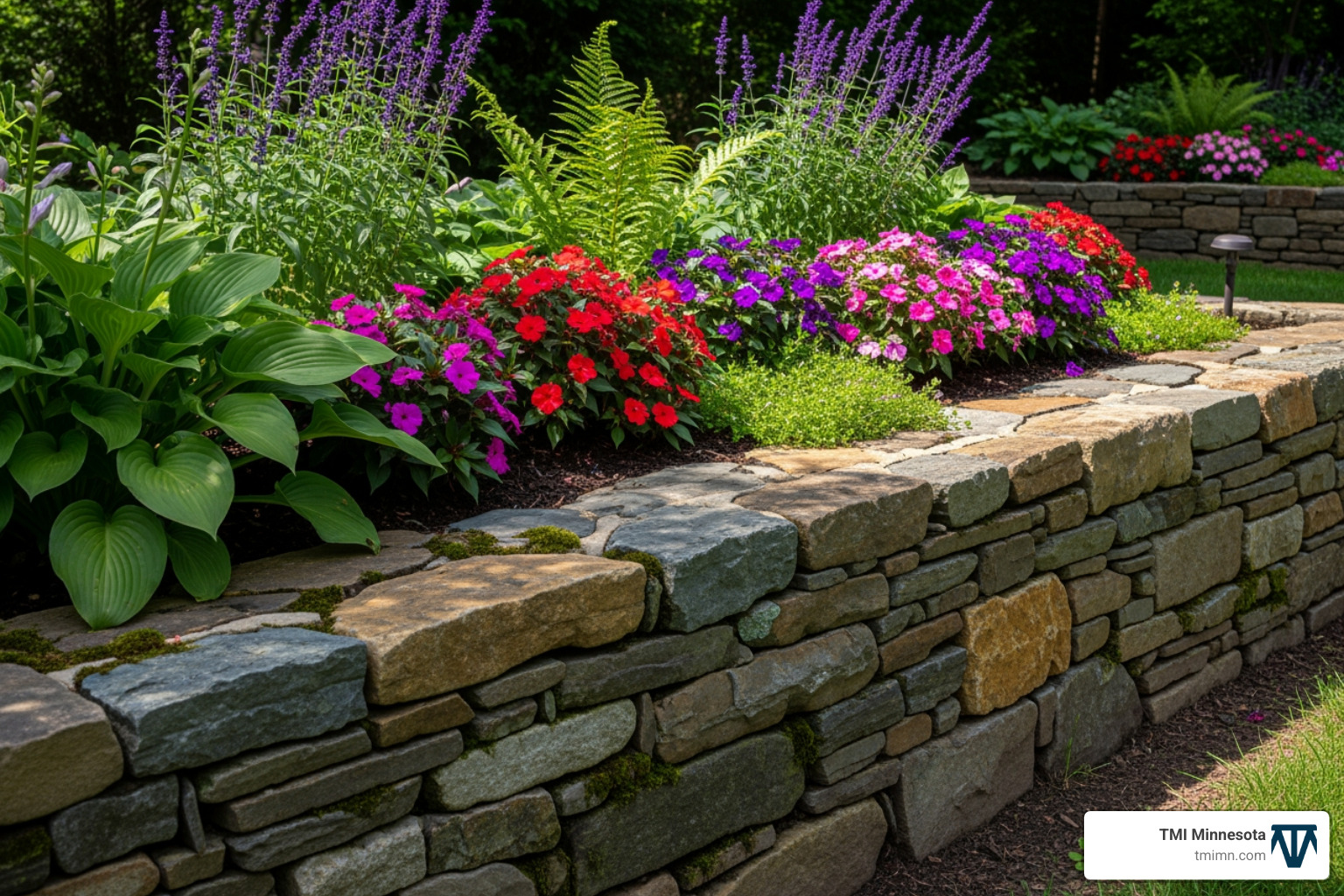
- Wall Blocks: Larger, often irregularly shaped stones used for constructing sturdy retaining walls, garden borders, or freestanding decorative walls. Our team in the Twin Cities frequently uses natural stone walls to manage slopes and define spaces.
- Coping and Caps: These are finished pieces of stone used to cap walls, pool edges (pool coping), or steps. They provide a clean, finished look and protect the underlying structure from weather damage. Travertine coping is a popular choice for pool surrounds.
- Steps and Treads: Solid pieces of stone used to create durable and attractive outdoor steps. They can be custom cut to fit any design and provide a substantial, long-lasting entry or transition point.
- Boulders: Large, natural stones used as decorative accents, focal points, or to create natural-looking retaining walls and rock gardens. They add a sense of permanence and rugged beauty to the landscape.
- Edging: Smaller stones or cut pieces used to define garden beds, pathways, or the perimeter of patios, providing a crisp, clean line between different landscape elements.
Popular Design Trends and Applications
Natural stone hardscapes are at the forefront of modern outdoor living design, blending functionality with timeless beauty. Here are some popular ways we’re seeing natural stone transform outdoor spaces:
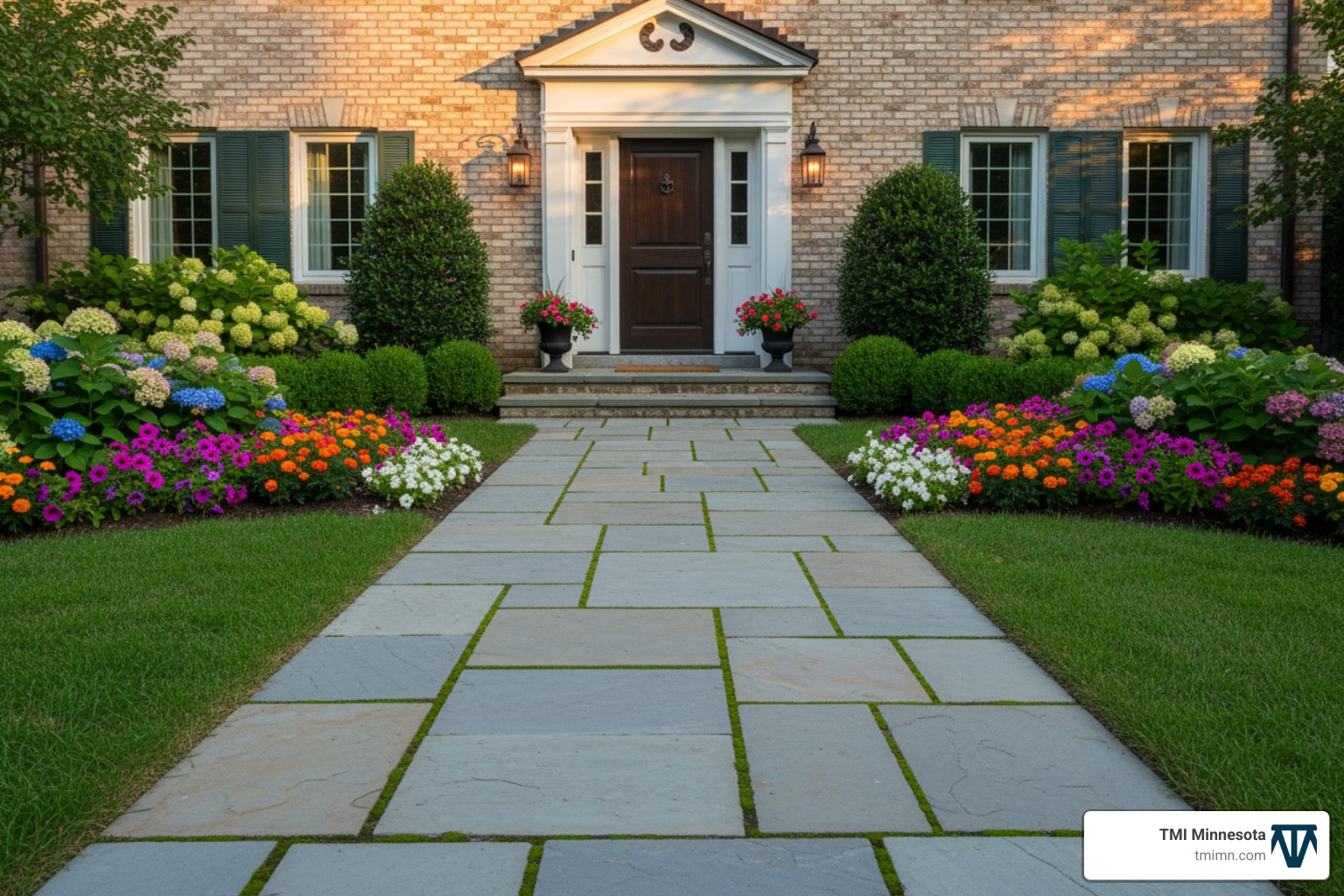
- Patios: The classic application, natural stone patios create inviting outdoor rooms for dining, entertaining, and relaxation. From formal layouts with precisely cut pavers to rustic designs with irregular flagstone, the possibilities are endless.
- Walkways: Stone pathways guide visitors through your landscape, adding charm and definition. Large, flat stepping stones or intricately patterned pavers can lift a simple stroll into a journey.
- Pool Decks: Natural stone hardscapes, especially travertine pavers, are a top choice for pool decks in the Twin Cities. Their natural slip-resistance, heat-dissipating properties, and beautiful aesthetics make them perfect for safe and stylish poolside enjoyment.
- Outdoor Kitchens: Lift your outdoor culinary experience with natural stone countertops and veneers for your outdoor kitchen. Granite and quartzite are particularly durable and stain-resistant options for these high-use areas.
- Fire Pits and Fireplaces: A natural stone fire pit or fireplace creates a warm, inviting focal point, perfect for gathering with family and friends on cool Minnesota evenings. Stacked stone designs offer a rustic yet sophisticated look.
- Water Features: From bubbling stone spheres to tiered fountains and natural pond surrounds, stone adds an organic touch to water features, enhancing tranquility and visual appeal.
- Retaining Walls: Essential for managing sloped properties, natural stone retaining walls are both functional and beautiful, adding texture and defining different levels in your landscape.
- Rock Gardens and Xeriscaping: For a low-maintenance, water-wise landscape, natural stone is integral to rock gardens, paired with drought-tolerant plants.
For more inspiration, explore these 10 Stunning Natural Stone Landscaping Ideas to Elevate Your Outdoor Space.
Planning and Designing Your Natural Stone Hardscapes
Starting on a natural stone hardscapes project is an exciting endeavor! Like any significant home improvement, careful planning and thoughtful design are crucial for a successful outcome. Our team at TMI Minnesota believes in a collaborative approach, ensuring your vision is brought to life with precision and expertise.
Key Design Considerations
Before we even touch a stone, we consider several vital factors to ensure your natural stone hardscapes are beautiful, functional, and durable for our Twin Cities environment:
- Budgeting: It’s important to have a realistic understanding of costs. While natural stone has a higher initial investment than some alternatives, remember its long-term value. We can help you explore options that fit your budget, potentially phasing in elements over time.
- Site Analysis: We conduct a thorough assessment of your property, including existing topography, soil conditions, sun exposure, and drainage patterns. This is especially critical in Minnesota to ensure proper water management and foundation stability for our freeze-thaw cycles.
- Drainage: This cannot be overstated, especially for our climate. Proper grading and drainage systems are paramount to prevent standing water, moss, and mold, protecting both your hardscape and your home’s foundation. We plan for solutions like channels, drains, and appropriate slopes.
- Functionality: How do you envision using your outdoor space? Will it be for large gatherings, quiet relaxation, or a play area? Understanding your lifestyle helps us design hardscapes that meet your practical needs, whether it’s a spacious patio for entertaining or a serene walkway for daily strolls.
- Style and Aesthetics: We work to ensure your natural stone hardscapes complement your home’s architecture and your personal taste. Natural stone offers a wide variety of colors, patterns, and textures, allowing for unique designs that reflect your individuality.
- Color and Texture: The choice of stone significantly impacts the overall feel. Smooth, light-colored stones create a modern, airy look, while rugged, darker tones lend a more traditional or rustic charm. We consider how these elements will blend with your existing landscape and home.
- Scale and Proportion: The size and arrangement of hardscape elements should be proportionate to your home and yard. An oversized patio can overwhelm a small yard, just as a tiny walkway can get lost in a sprawling landscape. We aim for balance and harmony.
Design Tips for a Cohesive Look
Achieving a harmonious and inviting outdoor space with natural stone hardscapes involves more than just selecting beautiful materials. It’s about thoughtful integration and a keen eye for detail.
- Creating Focal Points: Every great design needs a star! Identify a focal point for your yard, such as a stunning natural stone fire pit, a captivating water feature, or a beautifully crafted outdoor kitchen. Then, design your hardscapes to draw the eye towards it.
- Planning for Lighting: Integrated landscape lighting transforms your hardscapes from day to night, enhancing safety, usability, and ambiance. We plan for lighting during the initial layout, incorporating fixtures into retaining walls, steps, and pathways to illuminate key features and ensure safe navigation.
- Mixing Materials: While natural stone is magnificent, combining it with other materials can add depth and interest. For example, a natural stone patio can be bordered by pea gravel for a rustic touch, or integrated with wood elements for warmth. However, limit the variety to one or two complementary types to avoid an overwhelming look.
- Balancing Hardscape with Softscape: The most beautiful outdoor spaces achieve a perfect balance between the permanent structures of hardscape and the living elements of softscape. Use plants, trees, and gardens to soften stone edges, add color, and create a lush, inviting environment. For more detailed guidance, check out our Hardscape Buying Guide.
Built to Last: Installation and Care
The longevity and beauty of your natural stone hardscapes depend as much on expert installation as on the quality of the stone itself. While some DIY projects are feasible, the complexity of stone hardscaping, especially for larger installations like patios and retaining walls, often warrants professional expertise. Our team specializes in precise, durable installations that stand up to Minnesota’s unique climate challenges.
Best Practices for Installation
A solid foundation is the secret to enduring natural stone hardscapes. We adhere to rigorous best practices to ensure your investment lasts:
- Site Excavation: The process begins with careful excavation to the correct depth, accommodating the base layers and stone thickness. This ensures the finished surface will be at the appropriate level, typically at least 150mm (two brick courses) below the damp course when near a house.
- Compacted Hardcore Base: For heavy domestic use, less stable ground, or car driveways, a minimum of 100mm of compacted hardcore (like M.O.T. Type 1 or approved Granular Sub Base) is essential. This provides a stable, free-draining foundation, crucial for preventing frost heave in our region.
- Bedding Course: A 30-40mm layer of Zone 2 concreting sand forms the bedding course. It’s spread loosely, compacted with a vibrating plate compactor, and then screeded to the exact required level with a slight fall (a gradient of 1:40 is usually sufficient) for drainage.
- Priming Slurry: This is a critical step for natural stone hardscapes. A priming slurry is applied to the back of each natural stone paving flag just before it’s laid. This creates a strong bond between the stone and the mortar bed, preventing future movement and staining.
- Full Mortar Bed: We always lay each paving flag individually on a full, slightly wet mortar bed (typically 1 part cement to 5 parts building sand). This ensures complete support under the entire stone, preventing voids that can lead to water pooling, subsidence, fracturing, and even insect infestation.
- Avoiding the ‘5-Spot’ Method: We strongly advise against the “5-spot” method (where only five dollops of mortar are placed under the stone). This method leaves large voids, making the stone prone to rocking, instability, and premature failure, particularly in freeze-thaw environments.
For more in-depth technical guidance, the Resource Library offers valuable information for professionals.
Maintenance for Natural Stone Hardscapes
One of the great advantages of natural stone hardscapes is their relatively low maintenance. However, a little care goes a long way in keeping them looking their best for decades to come.
- Routine Cleaning: Simply sweep regularly to remove debris. For a deeper clean, a gentle wash with water and a neutral pH cleaner (never acidic or harsh chemicals) and a stiff brush can remove dirt and grime.
- Sealing: Depending on the type of stone and its application, sealing may be recommended. Porous stones like some limestones and sandstones benefit from a quality penetrating sealer to resist stains and moisture absorption, especially important in our climate.
- Stain Removal: Address spills promptly. Different types of stains (oil, rust, organic) require specific poultices or cleaners. Always test in an inconspicuous area first.
- Weed and Moss Prevention: Proper jointing and regular cleaning can deter weeds and moss. For permeable hardscapes or those with wider joints, polymeric sand can help inhibit growth.
- Freeze-Thaw Cycle Considerations: While many natural stones perform well in Minnesota’s winters, proper drainage during installation is key. Avoid de-icing salts containing sodium chloride or calcium chloride, as these can damage some stone types. Opt for sand or magnesium chloride if de-icing is necessary.
Frequently Asked Questions about Natural Stone
We often hear similar questions from homeowners in the Twin Cities considering natural stone hardscapes. Here are some of the most common inquiries, with our expert answers:
Is natural stone slippery for pool decks?
Not all natural stone is created equal when it comes to slip-resistance. Travertine pavers, for instance, are a popular choice for pool decks precisely because of their natural slip-resistance, even when wet. Their slightly porous, textured surface provides good grip. Other textured surfaces, like flamed granite or tumbled marble, can also offer excellent traction. It’s crucial to select a stone with an appropriate finish and slip-resistance rating for wet areas to ensure safety. We always guide our clients to the best options for their specific needs.
How does natural stone hold up in freeze-thaw climates?
This is a critical question for us in Minnesota! Many natural stones hold up exceptionally well in freeze-thaw climates, often outperforming man-made materials. Dense stones like granite, quartzite, and basalt are highly resistant to the expansion and contraction caused by freezing and thawing cycles. The key lies in proper material selection and, most importantly, correct installation. A well-prepared sub-base, excellent drainage, and a full mortar bed (as opposed to partial support) are vital to prevent water from accumulating under the stone and causing frost heave. Stones with low absorption rates are naturally more resilient to water damage during these cycles.
Is natural stone more expensive than concrete pavers?
Initially, yes, natural stone hardscapes typically have a higher upfront cost than concrete pavers. However, this is where the “long-term value” conversation becomes essential. Natural stone’s exceptional longevity means it doesn’t need to be replaced as often, if ever. Concrete pavers can fade, crack, and require more frequent maintenance or replacement over their lifespan, which can make them more expensive in the long run. The durability, timeless aesthetic, and increased home value that natural stone brings often make it the most cost-effective choice over several decades. Think of it as an enduring investment rather than a mere expense.
Conclusion: Create Your Enduring Outdoor Oasis
Natural stone hardscapes offer an unparalleled combination of beauty, durability, and value, making them a premier choice for enhancing any outdoor space in the Twin Cities. From the timeless elegance of a granite patio to the rustic charm of a flagstone walkway, these natural materials provide a foundation for outdoor living that is both aesthetically pleasing and built to last.
We believe in creating enduring outdoor oases that reflect your style and stand up to the elements for generations. With our expertise in design and installation, we can transform your vision into a reality, using the finest natural stone to craft spaces that you and your family will cherish.
Ready to explore the possibilities for your home? View our hardscape gallery for inspiration. Let’s work together to create something truly special.