
Why Patio Furniture Arrangements Transform Your Outdoor Living Experience
Patio furniture arrangements determine whether your outdoor space becomes a welcoming retreat or an awkward afterthought. The right layout creates natural conversation zones, improves traffic flow, and maximizes every square foot—while poor arrangements leave guests feeling cramped or isolated.
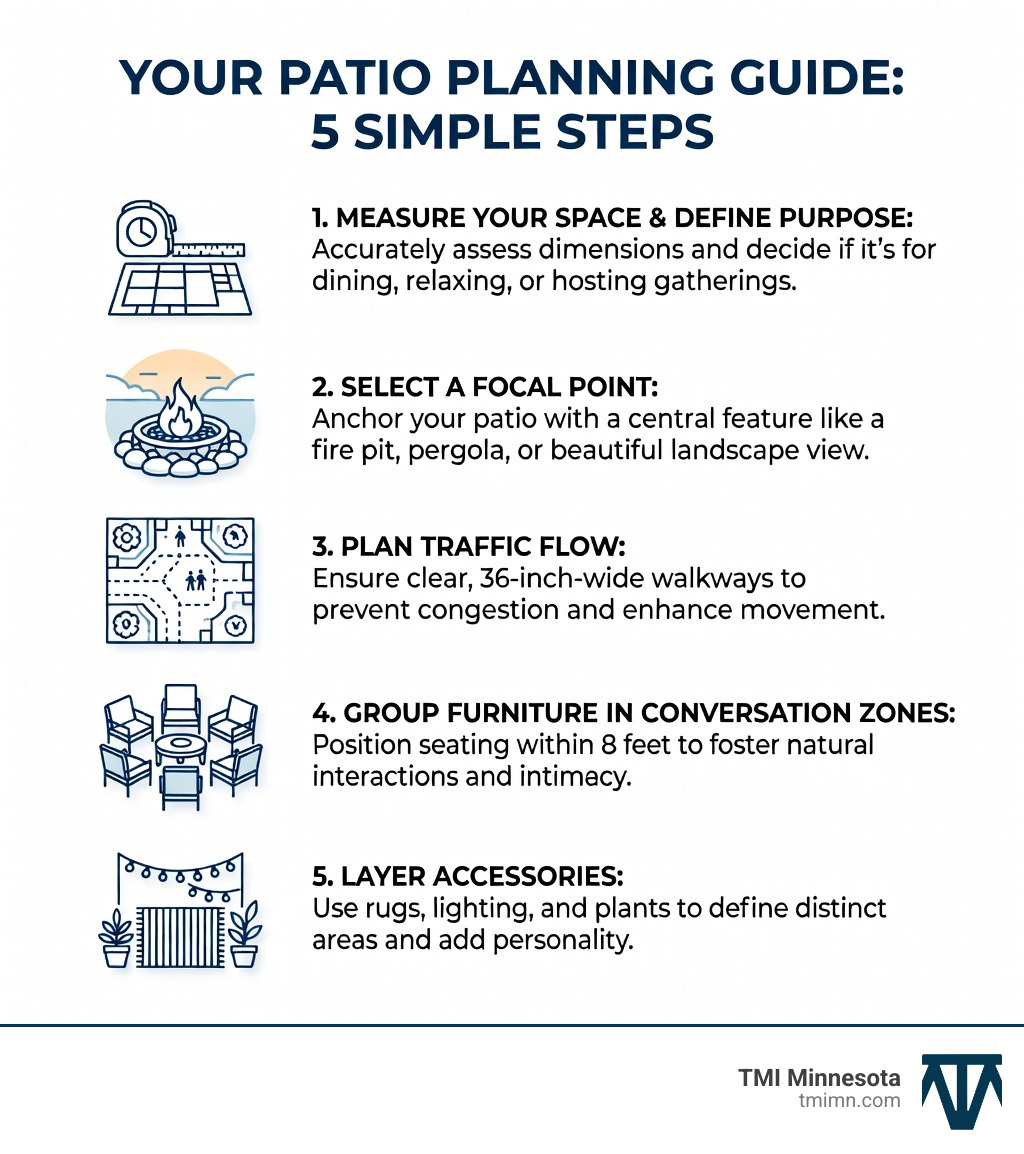
Quick Guide to Effective Patio Furniture Arrangements:
- Assess your space – Measure square footage and identify focal points before moving furniture
- Plan for flow – Leave 36-48 inches for walkways and 24-36 inches between furniture pieces
- Create conversation zones – Group seating in U-shapes or L-shapes within 8 feet of each other
- Define separate areas – Use rugs, plants, and lighting to distinguish dining from lounging spaces
- Choose multi-functional pieces – Select modular sectionals, benches, and folding furniture for flexibility
- Balance style and comfort – Layer weatherproof cushions, throws, and accessories for inviting ambiance
According to industry research, 52% of homeowners report feeling happier after completing outdoor design projects that prioritize comfort and functionality. The difference between a patio that sits empty and one that draws people outside often comes down to thoughtful furniture placement.
Small patios benefit from space-saving techniques like corner arrangements and vertical gardens. Larger decks can be divided into distinct zones—a dining area near the kitchen, a conversation pit around a fire feature, and a quiet reading nook. The key is matching your layout to how you actually use the space, not just filling it with furniture.
Weather-resistant materials matter, but arrangement matters more. A well-planned layout protects furniture from harsh elements, ensures proper drainage, and makes maintenance easier. It also adapts to different occasions—from intimate family dinners to larger gatherings.
I’m Christopher Deanovic, Operations Leader at TMI Minnesota, where I’ve spent years designing functional outdoor environments that enhance how families live and entertain. Through countless patio furniture arrangements for Minnesota homeowners, I’ve learned that the best layouts balance visual appeal with practical flow, creating spaces people actually want to use.
Patio furniture arrangements terms to know:
Assessing Your Space for Optimal Patio Furniture Arrangements
Before you drag that heavy wrought-iron table across your pavers, we need to talk about strategy. In the Twin Cities, our outdoor season is precious. We don’t want to waste a single weekend staring at a layout that doesn’t work. Assessing your space is the first step toward a hassle-free hosting experience.
Start by grabbing a tape measure. You need to know your exact square footage. A common mistake we see is homeowners choosing furniture that is far too large for their actual footprint, leading to a cramped “storage unit” vibe. When we provide patio design services, we always start with a scaled sketch. You can do this at home with graph paper. Map out where the doors are, where the grill sits, and where the sun hits at 6:00 PM.
Consider the primary purpose of your yard. Are you looking for backyard patio ideas that cater to large Sunday barbecues, or is this a private sanctuary for morning coffee? Your lifestyle dictates the floor plan. If you entertain often, you’ll want a layout that prioritizes open space in the center. If you’re a bookworm, you might tuck a chaise lounge into a secluded corner.
Defining Traffic Flow and Accessibility
Think of yourself as a “traffic conductor.” Nothing kills a party mood faster than having to say “excuse me” every time you need to reach the cooler. For high-traffic areas, we recommend leaving 30 to 48 inches of clearance. This ensures two people can pass each other without a collision. For lower-traffic areas, like the space between a chair and a side table, 24 inches is usually sufficient.
Accessibility is another critical factor. If you have guests who use wheelchairs or walkers, following ADA accessibility guidelines for outdoor spaces isn’t just a good idea—it’s essential for inclusive hosting. This means maintaining clear pathways at least 36 inches wide and providing a 60-inch by 60-inch turning radius. Ensure there is ample knee clearance under dining tables (typically 27 inches high and 30 inches wide) so everyone can sit comfortably at the table.
Selecting a Central Focal Point
Every great room has a focal point, and your patio is no different. Without one, furniture tends to look like it’s “floating” aimlessly. In Minnesota, a fire pit is the ultimate focal point. It anchors the space and extends our patio season into those chilly October nights.
If a fire feature isn’t your style, consider a scenic view of your garden, a water feature, or even a stunning architectural element like a pergola. When we work on landscaping driveways and patios, we often use the home’s existing architecture to guide the furniture’s orientation. The goal is to point your “best seats” toward the most interesting thing in the yard.
Creative Layouts for Lounge and Conversation Zones
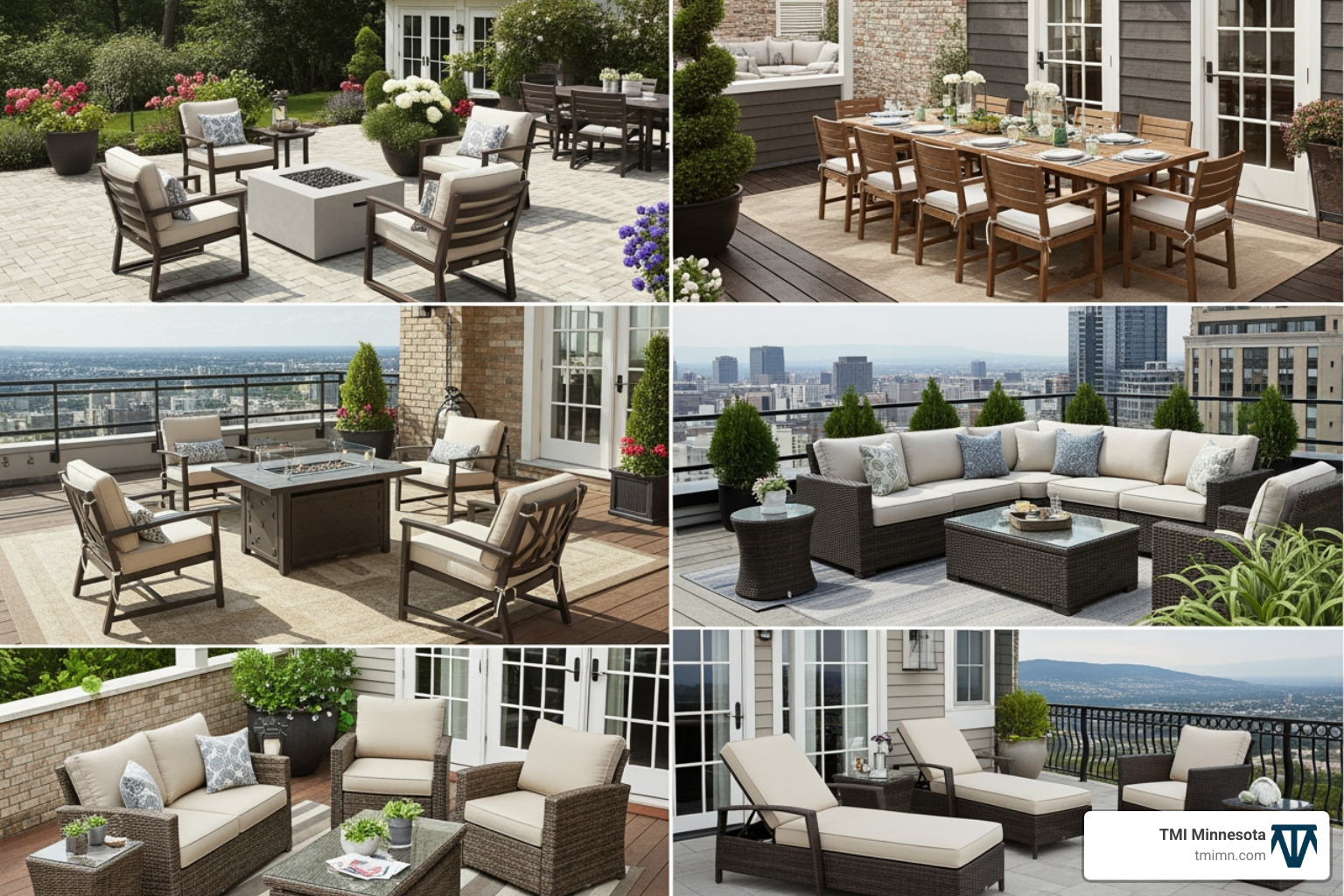
The goal of a lounge area is intimacy. You want your guests to feel connected, not like they’re shouting across a canyon. This is where patio furniture arrangements like U-shaped or L-shaped configurations shine.
A U-shaped arrangement, often created with a sectional and two flanking chairs, creates a “conversation pit” feel. The “8-foot rule” is a great design standard here: keep the primary seating pieces within 8 feet of each other. This distance is close enough for easy chatting but far enough apart that people don’t feel like they’re in each other’s personal space.
For outdoor seating areas, we often suggest placing the longest piece of furniture (like a sofa) against the longest wall or the edge of the patio to anchor the zone. This opens up the center for a coffee table or a fire bowl, which serves as a shared surface for drinks and snacks.
Modular Patio Furniture Arrangements for Flexibility
If you love to change things up, modular furniture is your best friend. Modular sectionals consist of individual “blocks” that you can rearrange like Tetris pieces. One day it’s a long sofa for a movie night; the next, it’s four separate chairs for a cocktail party.
| Feature | Modular Sectionals | Fixed Sofas |
|---|---|---|
| Flexibility | High (can be L-shape, U-shape, or separate) | Low (one static shape) |
| Small Space Fit | Excellent (can tuck into corners) | Moderate (requires specific dimensions) |
| Hosting Utility | High (add/remove pieces as needed) | Standard |
| Maintenance | Easier to move for cleaning | Can be heavy and difficult to move |
Using multi-functional pieces like ottomans can further maximize your modern outdoor patio design. An ottoman can be a footrest, an extra seat for a surprise guest, or—with the addition of a tray—a sturdy side table.
The Rule of Odd Numbers in Design
Here is a pro tip from the design world: things arranged in odd numbers are more appealing to the human eye. When planning your patio furniture arrangements, think in groups of three, five, or seven.
A three-piece set (two chairs and a small table) feels balanced and complete. A five-piece cluster (four chairs around a fire pit) creates a sense of movement and visual dynamism. This “asymmetrical balance” prevents the space from feeling too stiff or formal. It creates a curated, lived-in vibe that makes guests feel instantly at home.
Designing the Ultimate Outdoor Dining Oasis
Outdoor dining is the heart of summer hosting. To create a seamless experience, your outdoor dining space design should prioritize function. First, consider the shape of your table. Round tables are fantastic for small patios because they eliminate sharp corners and facilitate “everyone-included” conversations. Rectangular tables, however, are better for larger groups and fit well along linear patio edges.
Proximity to the kitchen is vital. You don’t want to hike across the yard every time you forget the mustard. If your dining area is far from the house, consider adding a rolling bar cart or a small outdoor prep station to keep essentials nearby.
To truly elevate the space, we often recommend a patio-pergola. A pergola provides a “ceiling” for your outdoor room, making the dining area feel like a defined, intentional space rather than just a table sitting on a slab.
Sizing Rugs for Dining Patio Furniture Arrangements
Rugs are the “secret sauce” of zoning. They anchor the furniture and add a layer of soft texture to hard pavers. However, sizing is where most people trip up.
The “Rug Rule” for dining: Always choose a rug that is 2 to 4 feet wider than your table on all sides. Why? Because when a guest pulls their chair out to sit down, you want all four legs of the chair to stay on the rug. A chair that’s half-on, half-off is wobbly and annoying. Layering textures—perhaps a flat-weave jute rug under a more colorful patterned rug—can add depth to your beyond the patio: creative ideas for outdoor dining.
Small Space Dining Solutions
Don’t let a small footprint stop you from hosting. For compact areas, look for furniture with “narrow profiles.” This means chairs with slim arms (or no arms at all) and tables with pedestal bases rather than four bulky legs.
Benches are a genius small-space hack. A bench can seat three people in the same footprint that two chairs would occupy. Plus, you can often tuck a bench completely under the table when it’s not in use, opening up the floor for traffic. If you’re looking for more tips, our ultimate elegant patio guide covers how to choose materials that look high-end without overwhelming a small space. Stackable or folding chairs are also excellent “just-in-case” seating that can be stored in a garage or shed until the party starts.
Using Decor to Define and Enhance Patio Zones
Once the big pieces are in place, it’s time to use decor to “zone” your patio. Zoning is the act of creating “rooms” without walls. You can use a change in patio-paver-installation patterns to signal a transition from a dining area to a lounge area, or you can use softer elements like color palettes.
We love using weather-resistant fabrics to tie a space together. Choose a consistent color theme—maybe navy and cream for a classic look, or terra cotta and sage for something more modern—and carry it through your rugs, pillows, and umbrellas. This creates a cohesive “resort” feel that looks professionally designed.
Lighting and Ambiance
Lighting is the difference between a patio that closes at dusk and one that stays open all night. We recommend a “layered” approach to lighting. Start with task lighting near the grill or dining table so you can see what you’re eating. Then, add ambient lighting for mood.
- String Lights: Hang them in a “zigzag” pattern over the main seating area for a festive, café-like vibe.
- Solar Lanterns: Place these along the perimeter of your patio to define the edges and prevent guests from tripping.
- LED Candles: Use these on coffee and dining tables for a flicker of “fire” without the worry of wind or wax.
For advanced planning, tools like Outdoor lighting and room planning can help you visualize how light will throw shadows across your furniture.
Natural Dividers and Greenery
Plants are the ultimate “soft” walls. Tall plants in large pots can act as functional dividers, separating the “busy” grill area from the “relaxed” lounge area. Potted ferns or ornamental grasses provide privacy and a lush, tropical feel, even in the heart of the Twin Cities.
Vertical gardens are perfect for small patios or balconies where floor space is a premium. They draw the eye upward, making the space feel larger. When we integrate landscaping driveways and patios, we always look for ways to blend the “hard” pavers with “soft” greenery to create a balanced, inviting environment.
Common Mistakes to Avoid When Arranging Furniture
We’ve seen it all, and most “bad” patios suffer from the same few mistakes. Avoid these, and you’re already ahead of the game:
- The “Waiting Room” Effect: Pushing all your furniture against the railings or walls. This leaves a big, awkward empty space in the middle and makes conversation difficult. Pull the furniture toward the center!
- Blocking Entrances: Never place a large chair or table directly in front of the sliding glass door. It creates a physical and visual bottleneck.
- Scale Mismatch: Putting tiny furniture on a massive deck, or a giant sectional on a tiny balcony. Measure twice, buy once.
- Ignoring the Weather: In Minnesota, we get wind and rain. If your furniture is too lightweight, it’ll end up in your neighbor’s yard after a thunderstorm. If you don’t plan for drainage, you’ll have puddles under your dining table.
- Overcrowding: If you can’t walk through the space without shimmying sideways, you have too much furniture. Check your deck-and-patio-designs to ensure you’ve left enough “breathing room.”
Frequently Asked Questions about Patio Layouts
How much space should I leave between patio furniture pieces?
For comfortable movement, leave at least 18 to 24 inches between individual pieces like chairs and coffee tables. This allows for legroom and easy access to your drink. For major walkways, aim for 36 inches to ensure guests can move through the space without disruption.
What is the best patio furniture arrangement for a small space?
The “corner tuck” is king for small spaces. Use an L-shaped sectional or a loveseat tucked into a corner to maximize the perimeter and leave the center open. Use “leggy” furniture (pieces with thin, visible legs) to create the illusion of more floor space.
How do I arrange furniture around a fire pit?
The “circle of warmth” is the most effective layout. Arrange four to six chairs in a circular pattern around the pit, leaving about 24 inches between the edge of the fire pit and the front of the chairs. This provides enough heat for comfort but enough distance for safety.
Conclusion
Creating the perfect patio furniture arrangements doesn’t have to be a hassle. By focusing on traffic flow, selecting a strong focal point, and using modular pieces to stay flexible, you can transform your yard into a high-functioning extension of your home.
At TMI Minnesota, we specialize in these transformations. From expert hardscape installations to lush softscape design, we use leading-edge products to elevate yard living for families across the Twin Cities. Whether you’re starting with a blank slate or looking to refresh an existing space, we’re here to help you host your next gathering with total confidence.
Ready to see what’s possible for your outdoor space? View our Hardscape Gallery for more inspiration and real-world examples of stunning Minnesota patios.