
Why Combine Pavers and Artificial Grass?
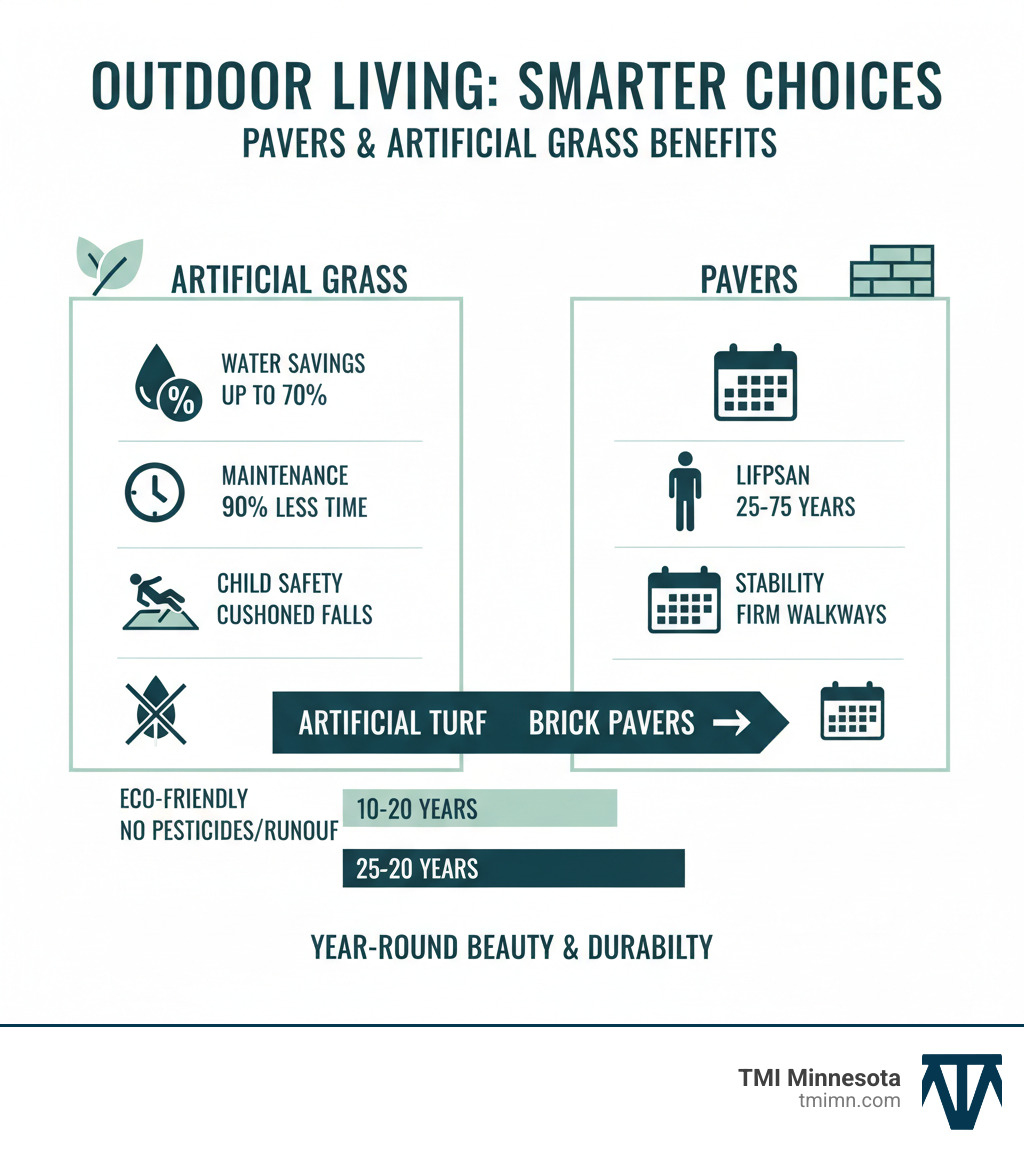
Pavers and fake grass create a perfect balance between neat hardscaping and lush greenery, minus the maintenance headaches. This combination offers year-round beauty, eliminates muddy patches, saves on water bills, and boosts your home’s curb appeal.
Key Benefits of Pavers and Fake Grass:
- Low maintenance – No mowing, watering, or fertilizing required
- Water savings – Artificial grass can save up to 70% on outdoor water usage
- Durability – Fake grass lasts 10-20 years, pavers last 25-75+ years
- Safety – Soft turf cushions falls while pavers provide stable walking surfaces
- Eco-friendly – No pesticides, herbicides, or chemical runoff
- Year-round appeal – Always green and pristine regardless of weather
This approach solves common frustrations like dead grass, muddy walkways, and weeds growing between paver joints. As one satisfied homeowner shared: “The grid pattern gave our very monochromatic backyard the pop of both color and pattern that it needed. It makes such a big impact!”
As experts in outdoor changes, our team at TMI Minnesota has guided countless homeowners through successful pavers and fake grass installations. Our hands-on experience with visual contrast and modern materials ensures every project delivers both beauty and long-lasting functionality, turning ordinary patios into stunning outdoor living spaces.
Combining pavers and fake grass creates a durable, beautiful space with effortless upkeep, allowing you to reclaim your weekends from lawn care. Artificial turf eliminates the need for constant mowing, watering, and fertilizing. This saves time and significantly reduces water bills, as artificial grass can allow up to 52 litres of water to drain through its perforated backing per square metre, per minute, without needing irrigation.
Beyond the practical benefits, the visual appeal is undeniable. The combination of hard and soft surfaces creates a dynamic, inviting atmosphere. For families, the safety aspect is a huge plus. Artificial grass provides a soft, cushioned surface for children and pets, reducing the risk of injuries compared to hard paving. This makes it a perfect choice for creating a Safe Turf for Kids environment.
Furthermore, this blend of hardscaping and softscaping contributes positively to the environment. By eliminating the need for pesticides and herbicides, we reduce chemical runoff, making our yards more eco-friendly. It also means no more muddy footprints tracked into the house. For those interested in the broader impact of combining different landscape elements, exploring Softscaping and Hardscaping can offer further insights into creating harmonious outdoor designs.
Design Inspiration for Pavers and Fake Grass
This versatile duo allows for stunning visual contrasts and functional spaces that reflect any personal style, from sleek modern lines to a more organic feel.
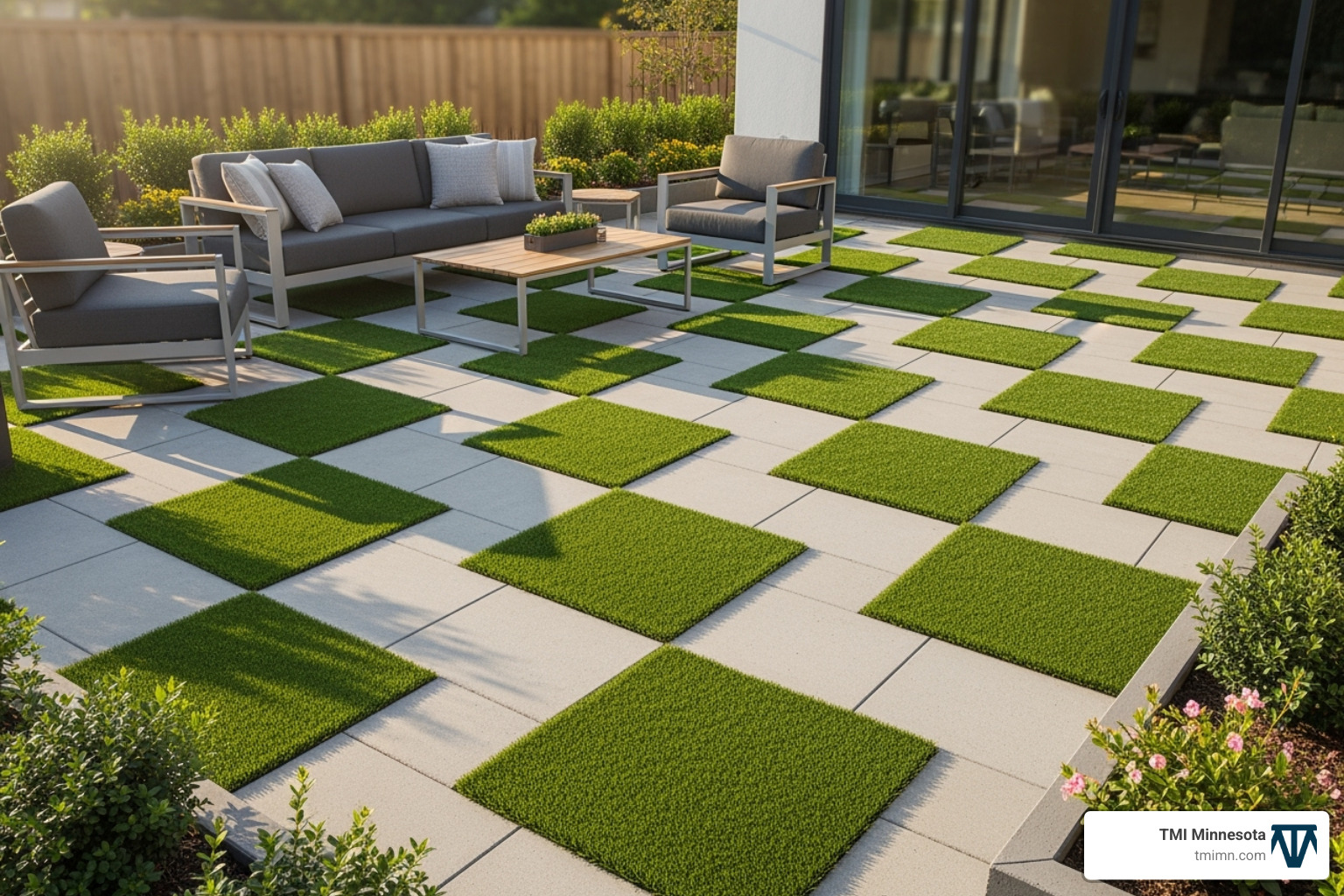
One of the most popular designs is the checkerboard pattern. Alternating square paver slabs with squares of lush artificial turf creates a sophisticated and playful patio or walkway, which is particularly striking in larger backyards.
For a neat touch, create a lattice design. This involves using pavers to form a criss-cross pattern, with diamond or square-shaped sections of artificial turf filling the gaps for a bespoke look.
Modern walkways can be transformed by integrating strips of artificial turf between pavers. This creates a dynamic pathway that guides visitors through your garden with visual flair.
Incorporate driveway ribbons of artificial turf to lift curb appeal. Verdant stripes of artificial grass running alongside or between concrete or stone pavers add a touch of green luxury to your home’s entrance. Find more ideas in our Driveway Designs Pictures gallery.
Pool decks can be transformed into a summer sanctuary. Surrounding your pool with stylish pavers and then extending the lushness with synthetic grass creates an inviting area for relaxation. We recommend extending pavers about two to four feet past the pool’s edge, with artificial turf beyond.
Break free from traditional square patios by designing circular patios or creating a unique fire pit accent. A circular paver patio with a central fire pit, bordered by a ring of artificial turf, creates a cozy gathering spot. You can even use pavers to create curved pathways through your backyard, with artificial grass filling the spaces in between.
Installing a backyard putting green with artificial grass is a dream for golf enthusiasts. Using a high-quality nylon or polypropylene synthetic grass with silica sand infill, you can create a perfect practice area. For more inspiration, check out our guide on Front Yard Synthetic Grass.
Durability and Lifespan: A Smart Investment
Combining pavers and fake grass offers exceptional durability and a long lifespan, making it a smart investment. While the initial outlay might seem significant, the long-term savings and return on investment are compelling.
Let’s look at the numbers:
| Material | Average Lifespan |
|---|---|
| Artificial Turf | 10-20 years |
| Brick Pavers | 25-75 years |
| Concrete Pavers | 25-50 years |
| Travertine Pavers | 100+ years |
| Natural Stone | Virtually forever |
Our research shows that while fake grass typically lasts 10-20 years, pavers boast an even longer life. Brick pavers can last 25-75 years, concrete pavers 25-50 years, and travertine over 100 years. This means you’re creating a landscape that stands the test of time.
The return on investment (ROI) for fake grass installation is surprisingly quick, often seen in as little as three to five years. This is due to significant long-term savings on water bills and maintenance costs. While the upfront Hardscape Installation Cost can vary, the reduced ongoing expenses quickly make up for it. You’re not just building a beautiful patio; you’re making a financially sound decision.
Your Step-by-Step Guide to Installing Pavers and Fake Grass
Installing pavers and fake grass is a satisfying DIY project. With the right approach and a bit of patience, you can achieve a professional-looking outdoor space that will impress the neighbors.
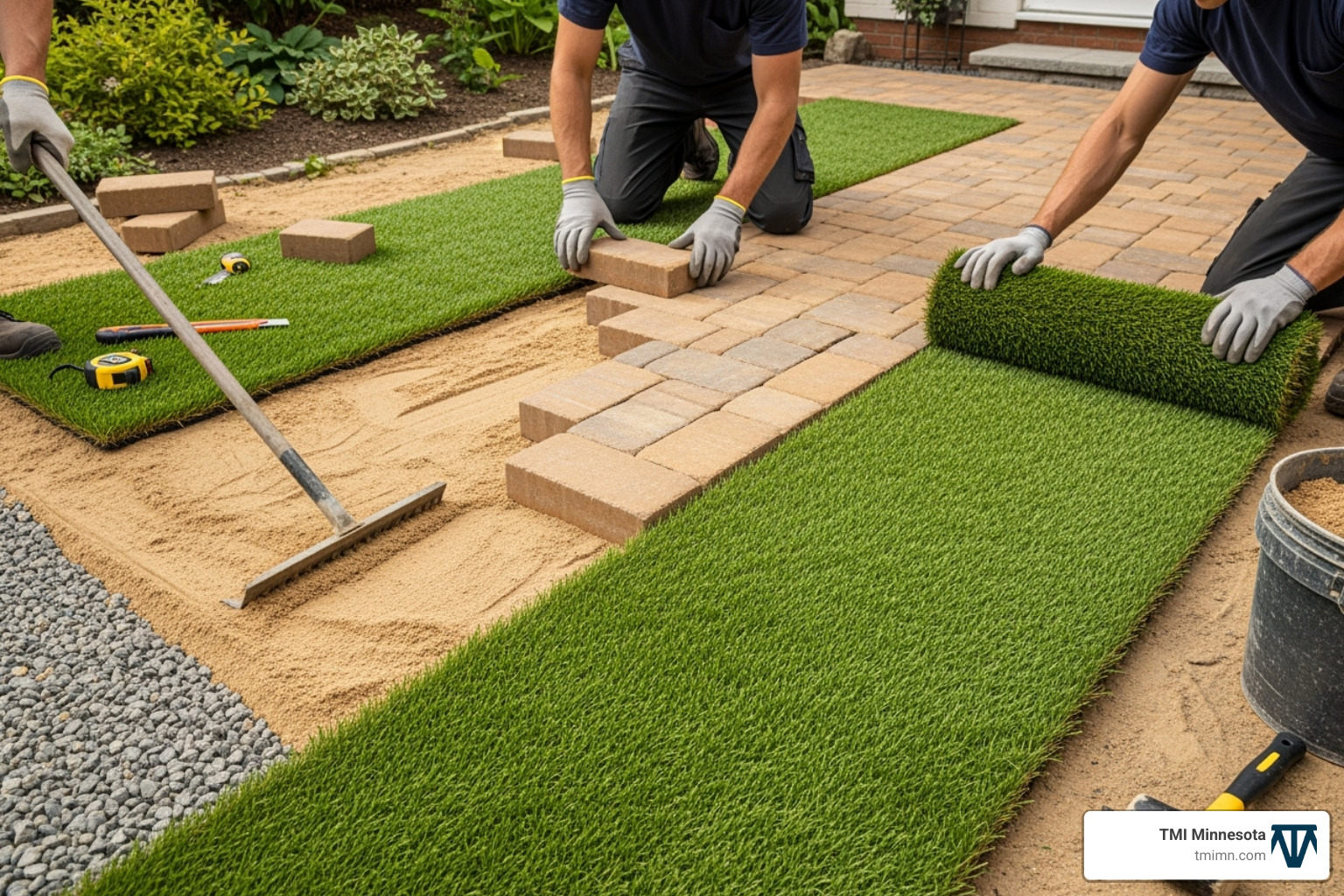
This project requires careful planning and execution. Rushing or skipping steps can lead to a backyard disaster rather than a design magazine feature. We’ll walk you through everything from ground preparation to the final finishing touches.
Step 1: Planning and Preparation
This planning phase is crucial for success and helps avoid costly mistakes. First is your site assessment. Observe your space: How much sun does it get? Where does water flow? Is it a high-traffic area? These details influence material choices and your drainage plan.
Next, measure the area accurately to order the right amount of materials and avoid extra trips to the store. Measure twice, order once.
Then, create a design sketch. A simple drawing helps visualize the final result, showing where pavers and turf strips will go and how the pattern will flow. If you need design help, our Hardscape Design Services team can bring your vision to life.
For tools and materials, you’ll need a measuring tape, shovel, wheelbarrow, rake, tamper tool (plate compactor or hand tamper), level, a sharp utility knife, and safety gear like gloves and safety glasses.
Material-wise, you’ll need paver base (crushed rock), your chosen pavers, quality artificial turf, turf infill (like silica sand), landscape fabric, and turf nails or adhesive. For joining turf pieces, you’ll need seaming tape and glue, plus a stiff bristle broom for finishing.
Step 2: Excavation and Base Installation
This step builds the foundation for a beautiful, low-maintenance outdoor space. Excavation depth is typically 6 inches for paver areas and 3 inches for artificial grass sections to accommodate the sub-base and materials.
Your sub-base layer is critical for stability and drainage. Use a quality material like Class Two Road Base or decomposed granite, spreading it evenly across the excavated area to a consistent depth.
Compaction is a vital step that prevents settling. You must compact the sub-base to at least 80% density using a plate compactor for large areas or a hand tamper for narrow strips. This tedious step ensures your installation looks perfect for years.
Drainage considerations are very important. Quality fake grass is designed to drain up to 52 liters of water per square meter per minute. Your sub-base must handle this flow. If working over existing concrete, you may need to create drainage channels or drill holes to prevent water from pooling.
Finally, level the surface. Ensure everything is smooth and consistent, with a gentle slope away from your house to prevent water issues and trip hazards. For more detailed guidance, check our guide on How to Install Hardscape Pavers. You can also see a DIY project in action for real-world inspiration.
Step 3: Laying Pavers and Installing the Turf
With a solid base prepared, you can begin placing pavers according to your design sketch. Use 2x4s as temporary spacers to maintain consistent gaps.
The key to a stunning design is thoughtful spacing for turf. Most designs work well with 2-4 inch gaps between pavers for the artificial grass strips, creating a striking visual contrast. Secure the perimeter with paver edging to prevent shifting.
Now for the artificial turf. Unroll it and let it relax in the sun for about an hour to expand and become easier to work with. Before cutting, ensure all grass blades face the same direction for a natural look.
Cutting turf strips requires a sharp utility knife. Cut pieces to size, leaving an extra inch or two for trimming. For curved designs, create a paper template first to reduce waste.
Securing turf edges prevents movement. Over soil or gravel, use non-galvanized turf nails. Place 5-inch nails every 16 inches along edges and every 12 inches down the center of wider strips. Add 3.5-inch nails every 4 inches along edges for extra security. Drive them about three-quarters of the way down to avoid creating dips.
If your design requires seaming turf, use specialized seam tape and adhesive. Careful alignment is crucial, as a rushed seam will be visible. For specific guidance, visit our Foreverturf Installation page. You can also get more DIY tips from other homeowners.
Step 4: Applying Infill and Finishing Touches
These final steps will give your installation a stunning, professional finish. Choosing infill is important. Silica sand is the traditional choice. For pets, consider Envirofill to help control odors. Avoid rubber infill, as it can get hot and doesn’t age well.
Spreading infill evenly requires a gentle touch. Apply it slowly by hand or with a spreader for consistent coverage without trapping grass fibers.
Once the infill is down, it’s time for brushing the turf fibers. Use a stiff-bristled broom or power broom to work the infill down while helping the fibers stand tall. Cross-brush the turf to eliminate any artificial sheen and create a lush, natural appearance.
Your final cleanup is the last step. Remove excess infill from your pavers, sweep away debris, and give everything a gentle rinse with a hose. This removes dust and reveals the full beauty of your new space.
Step back and admire your work. You’ve created a low-maintenance, beautiful outdoor space that will look amazing for years. For more information about our premium turf options, explore our Foreverturf collection.
Long-Term Care and Considerations
Now that you’ve created a stunning space with pavers and fake grass, let’s cover the simple long-term care to keep it looking its best.
Maintaining Your Pavers and Fake Grass Mosaic
The beauty of this combination is its low maintenance compared to traditional lawns. Forget mowing, edging, and fighting weeds.
Routine brushing with a stiff-bristled broom every few weeks keeps the artificial turf looking vibrant by fluffing up the fibers. For larger areas, a power broom makes this task even easier.
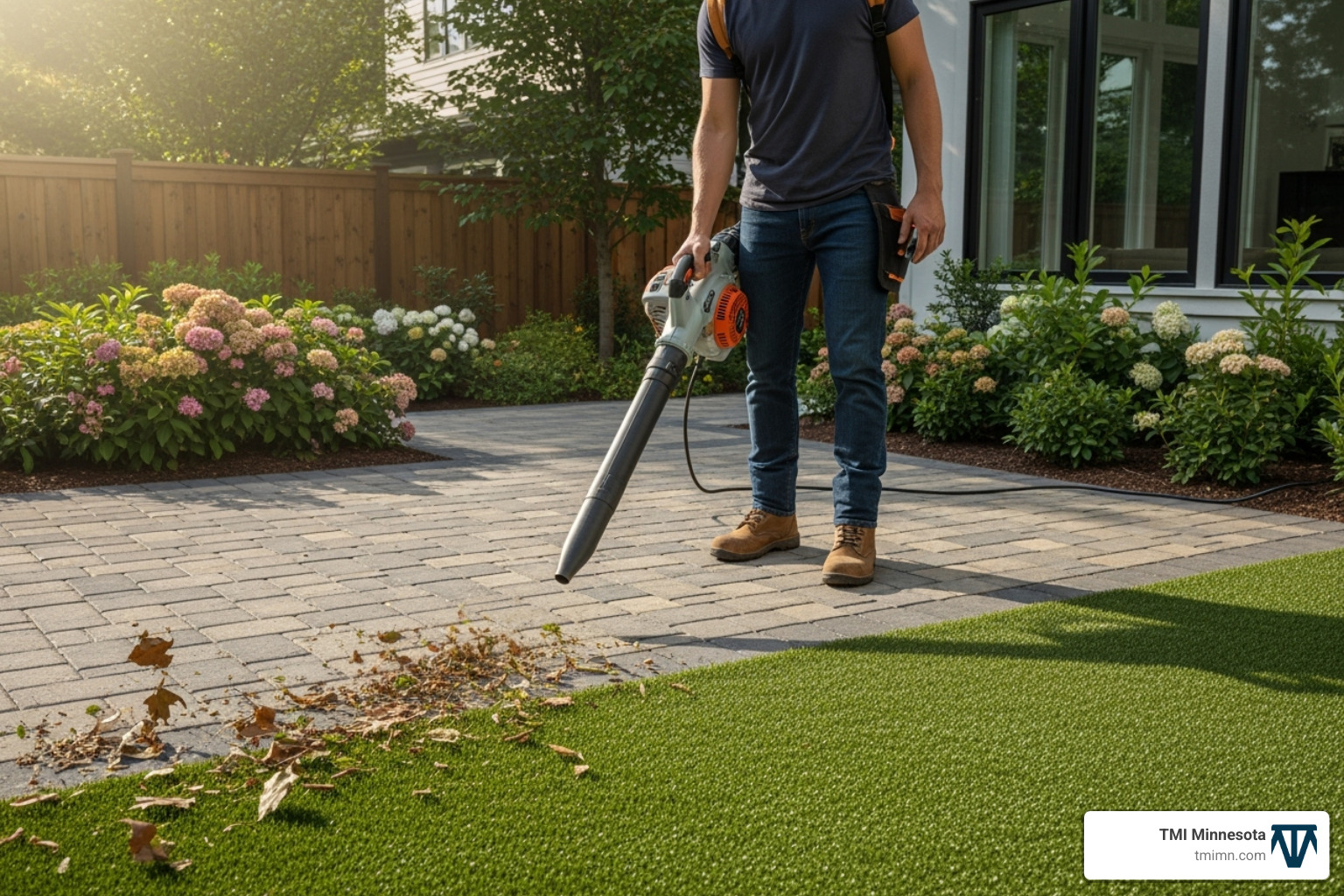
For general cleaning, rinsing with a hose washes away dust and pollen from both the turf and pavers. A leaf blower is a secret weapon for quick, effortless cleanups on the pavers.
For spot cleaning stains, address spills quickly. A 1:1 solution of white vinegar and water works for pet accidents, while mild soap and water handles most food spills.
Removing debris like leaves and twigs prevents moss or algae growth, especially in damp areas. A quick sweep or blast with a leaf blower keeps everything pristine.
Over time, you may need to top up infill that settles or washes away. This simple process keeps the turf fibers supported and looking lush.
For homeowners dealing with oil stains on their paver sections, our guide on How to Remove Oil from Block Paving Driveway provides proven techniques.
Choosing the Best Turf and Pavers
Selecting the right turf and pavers is key to the final result. There are fantastic options for different needs and budgets.
When exploring turf types, each material has its own benefits. Polyethylene turf is incredibly soft, making it perfect for play or seating areas. Nylon turf is extremely durable and handles heavy foot traffic well. Polypropylene turf is a budget-friendly option for decorative spaces with less traffic.
The pile height of your artificial grass affects both appearance and performance. For high-traffic areas, shorter pile heights (1.25 to 2.5 inches) resist matting. Lighter traffic areas can handle a slightly longer pile for a more lush look.
Our paver materials offer a world of design possibilities. Concrete pavers are versatile and budget-friendly. Brick pavers bring timeless charm and warmth. Natural stone like travertine or granite adds a touch of luxury and can last a lifetime.
Coordinate the color and texture of your turf and pavers to complement your home’s overall style. Smooth concrete with vibrant turf creates a striking modern contrast, while rough-hewn stone with emerald grass delivers dramatic visual impact. The goal is a cohesive, inviting outdoor sanctuary.
For homeowners seeking inspiration, our Artificial Turf Landscaping guide explores creative ways to use synthetic grass in various outdoor settings.
Frequently Asked Questions about Pavers and Turf
I get these questions all the time from homeowners considering pavers and fake grass for their outdoor spaces. Let me share the answers that will help you make the best decisions for your project.
How do you ensure proper drainage between pavers and artificial grass?
Getting drainage right is absolutely critical – it’s what separates a beautiful, long-lasting installation from a soggy mess that causes headaches later. The secret lies in building a properly installed sub-base of compacted crushed rock or gravel mix.
Think of this base layer as the foundation that does all the heavy lifting. When we use materials like Class Two Road Base or decomposed granite and compact them properly, we create a permeable layer that works like a dream. Water flows through the artificial turf’s perforated backing, then continues down through this rock base and away from the surface.
For existing concrete bases, the game changes slightly. We’ll need to grade the surface with a gentle slope away from your house, or sometimes drill strategic drainage holes to give water an escape route. Trust me, taking these extra steps now prevents standing water issues that can lead to unpleasant odors or moss growth down the road.
Can you install artificial grass over existing pavers?
Absolutely! This is actually a fantastic way to refresh an existing patio without starting from scratch. However, there are a few important steps we need to take to ensure success.
First, your existing paver surface needs to be completely level and stable. Any wobbles or dips will telegraph right through the turf, creating an uneven appearance that nobody wants. We’ll also need to verify that adequate drainage exists – if water pools on your current pavers, we’ll address that before installing the turf.
Here’s the game-changer: we strongly recommend installing a shock-absorbing underlay between the existing pavers and the artificial turf. This cushioning layer serves multiple purposes – it smooths out minor imperfections, provides additional drainage, and prevents the paver joint pattern from eventually showing through your beautiful new turf surface.
What type of artificial turf is best for high-traffic areas?
For walkways, entertaining spaces, or anywhere your family spends lots of time, choosing the right turf makes all the difference in how it looks and performs over the years.
Go with turf that has a shorter pile height and high density. Shorter blades resist matting from constant foot traffic, while higher density means more fibers packed into each square inch – essentially giving you a more resilient surface that bounces back beautifully.
Material-wise, turf made from nylon or a durable polyethylene blend is your best bet for high-traffic situations. Nylon is incredibly strong and has amazing recovery properties, while quality polyethylene offers the perfect balance of comfort underfoot and long-term durability. These materials are specifically engineered to handle whatever your family throws at them while keeping that fresh, pristine appearance year after year.
Create Your Dream Outdoor Oasis
Combining pavers and fake grass is a rewarding project that delivers a stunning, high-end finish. It perfectly balances the solid structure of hardscaping with the lush, evergreen appeal of a perfect lawn.
This combination solves many challenges: no more mud, weekend lawn chores, or weeds between pavers. The result is a space that looks magazine-worthy year-round with minimal effort.
This guide empowers you to create a spectacular result yourself. There’s incredible satisfaction in stepping back and admiring a beautiful space you built with your own hands.
However, while DIY is doable, achieving a flawless, professional result requires expertise. The difference between good and extraordinary lies in the details: perfect drainage, seamless turf installation, and clean, lasting paver lines.
If you’re in Minnesota and want to ensure your pavers and fake grass project exceeds expectations, that’s where we come in. At TMI Minnesota, we’ve perfected the art of combining these elements using leading-edge products that deliver both beauty and durability. Our experienced team ensures your investment pays off for decades.
Ready to transform your space into the outdoor oasis you’ve always dreamed of? We’d love to help bring your vision to life. Learn more about our comprehensive Artificial Turf with Pavers solutions and find how we can lift your yard living to the next level.